Current affairs curated and edited by Anantam IAS faculty — pulled from The Hindu, PIB, IDSA, Foreign Affairs and the ministries. Read, annotate, revise.
Articles6
EditionCurrent Affairs · Wednesday, 13 August 2025
Publishedanantamias.com
Old Rajinder Nagar · Delhi 110005 · anantamias.com
Anantam IASDaily Digest
Article 1 / 6 · 13 August 2025, 9:41 am
Inflation
Study Guides · Study Notes · General Studies · GS III · Indian Economy
Why in news:
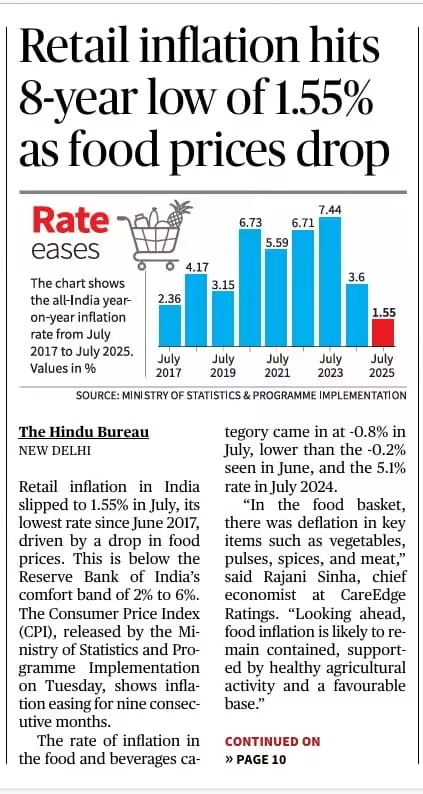
Retail inflation in India slipped to 1.55% in July, its lowest rate since June 2017, driven by a drop in food prices. This is below the Reserve Bank of India’s comfort band of 2% to 6%. The Consumer Price Index (CPI), released by the Ministry of Statistics and Programme Implementation.
UPSC Relevance:
UPSC CSE in prelims and mains examination has focused on inflation, causes of inflation and it’s impacts. UPSC had asked multiple questions related to inflation. A case in point is a following PYQ.
UPSC Prelims PYQ 2022:
In India, which one of the following is responsible for maintaining price stability by controlling inflation?
(a) Department of Consumer Affairs
(b) Expenditure Management Commission
(c) Financial Stability and Development Council
(d) Reserve Bank of India
UPSC Prelims PYQ 2022:
With reference to the Indian economy, consider the following statements:
1. If the inflation is too high, Reserve Bank of India (RBI) is likely to buy government securities.
2. If the rupee is rapidly depreciating, RBI is likely to sell dollars in the market.
3. If interest rates in the USA or European Union were to fall, that is likely to induce RBI to buy dollars.
Which of the statements given above are correct?
(a) 1 and 2 only
(b) 2 and 3 only
(c) 1 and 3 only
(d) 1, 2 and 3
About Inflation:
According to IMF: Inflation measures how much more expensive a set of goods and services has become over a certain period, usually a year
OR,
It refers to a sustained rise in general level of prices over a period of time in the economy.
Terminologies:
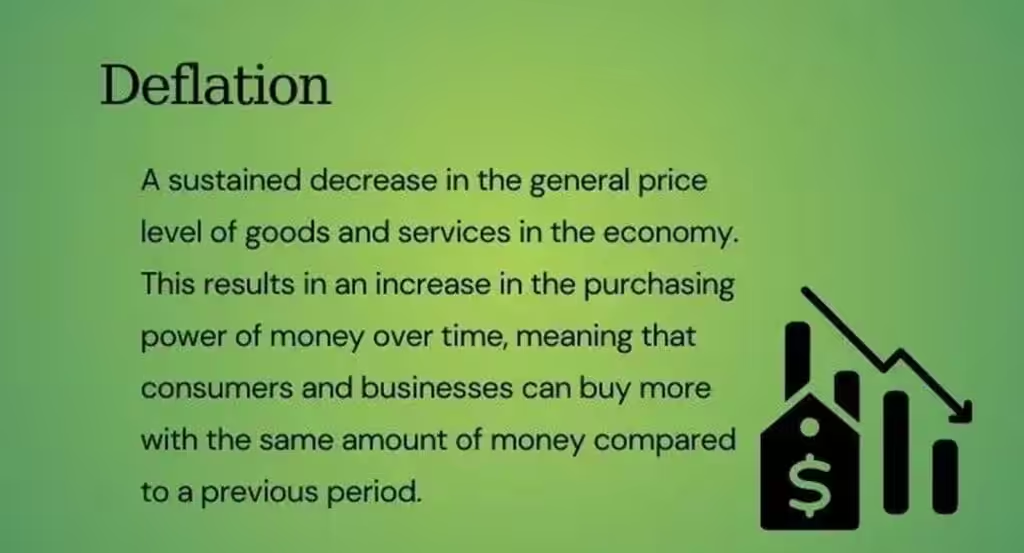
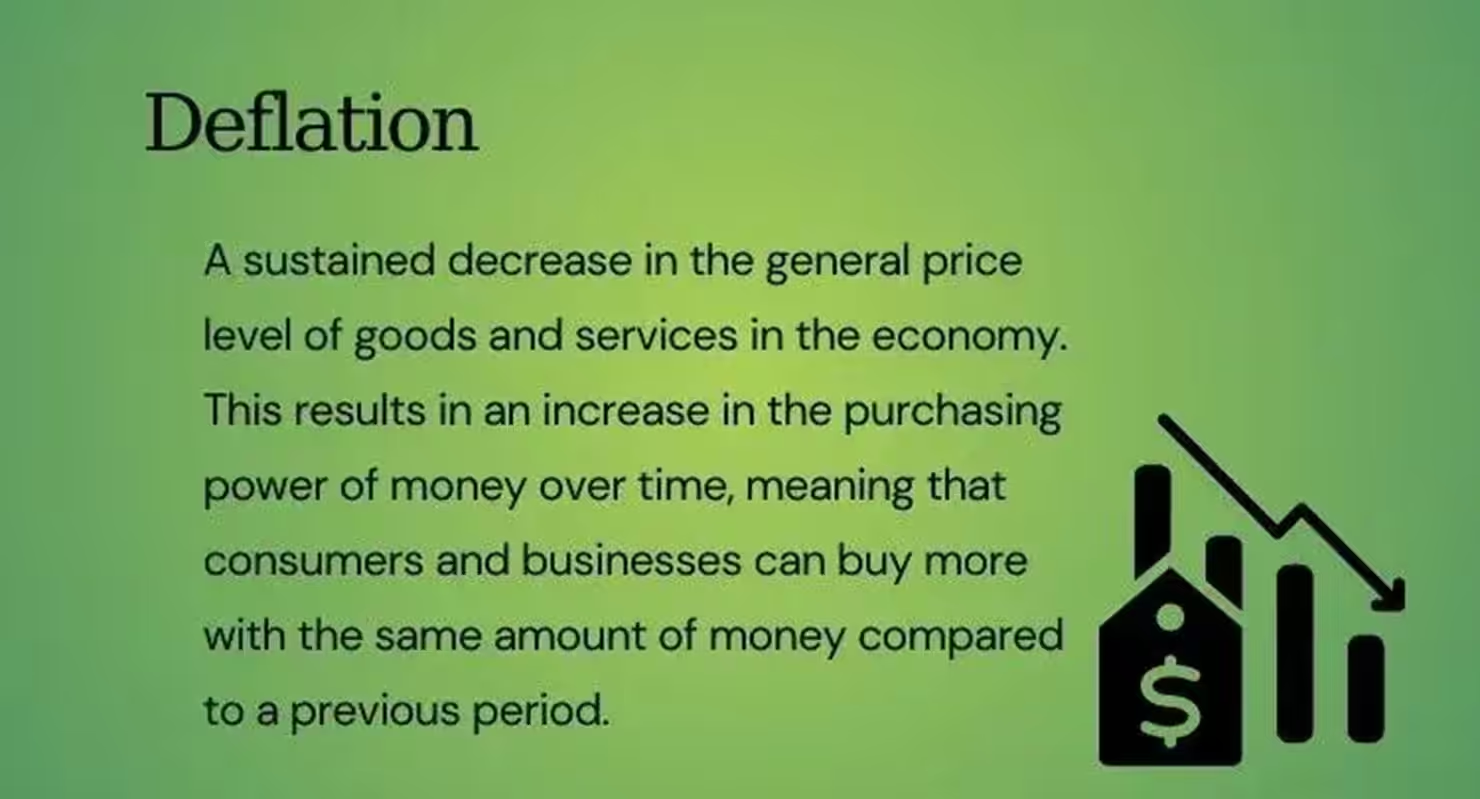
Deflation: Deflation in the context of India refers to a sustained decrease in the general price level of goods and services in the economy.
2. Disinflation: It means slowing down of rate of inflation
Whereas deflation is negative economic growth, such a -5%, disinflation is simply a reduction in the inflation rate. For instance, the inflation rate can fall from 9% in one year to 7% in the next year. It occurs when the rate at which prices are rising is diminishing.
Example:
3. Skewflation:
General price rise over a sustained period of time is skewed to one or a small group of commodities.
For example, in India, skewflation was witnessed in 2009 and 2010 when food prices showed inflation, and the prices of non-food items were majorly stable.
Factors:
Change in Monetary Policy
Fiscal Stimulus
supply chain issue etc.
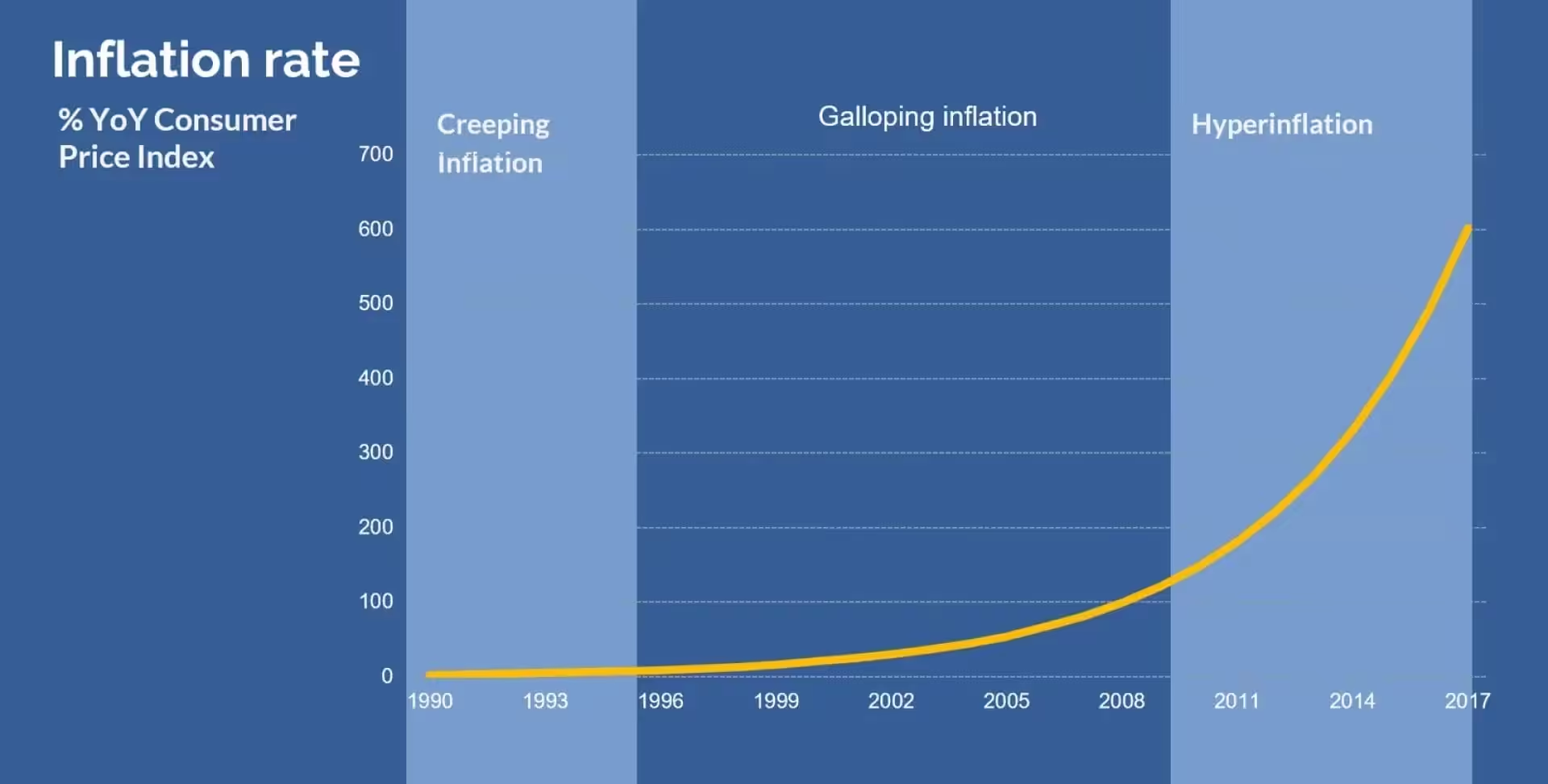
4. Hyperinflation:
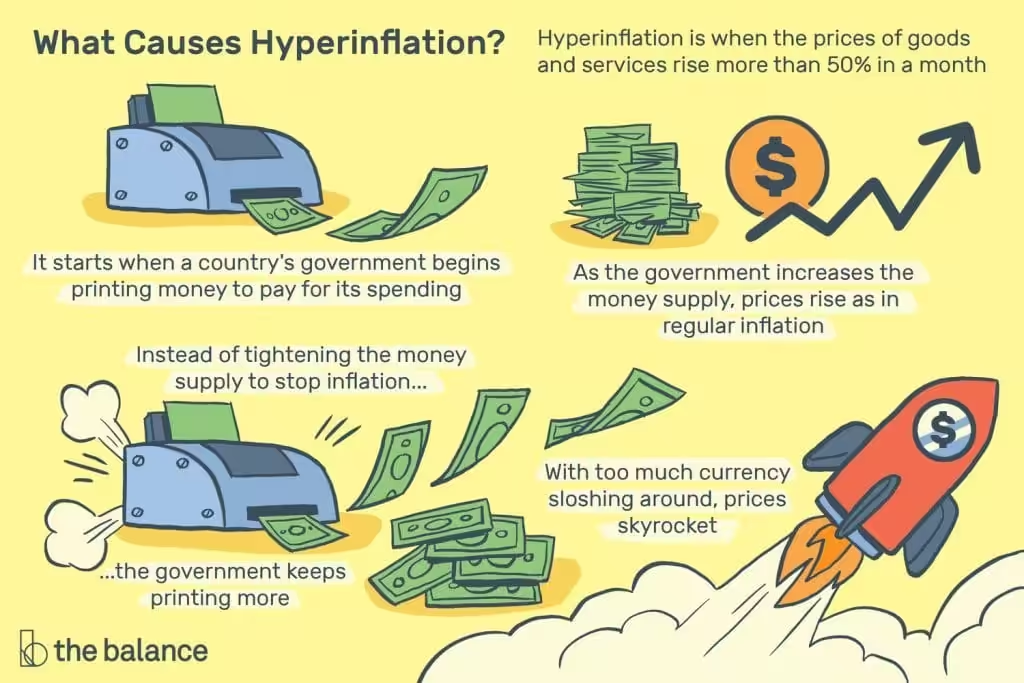
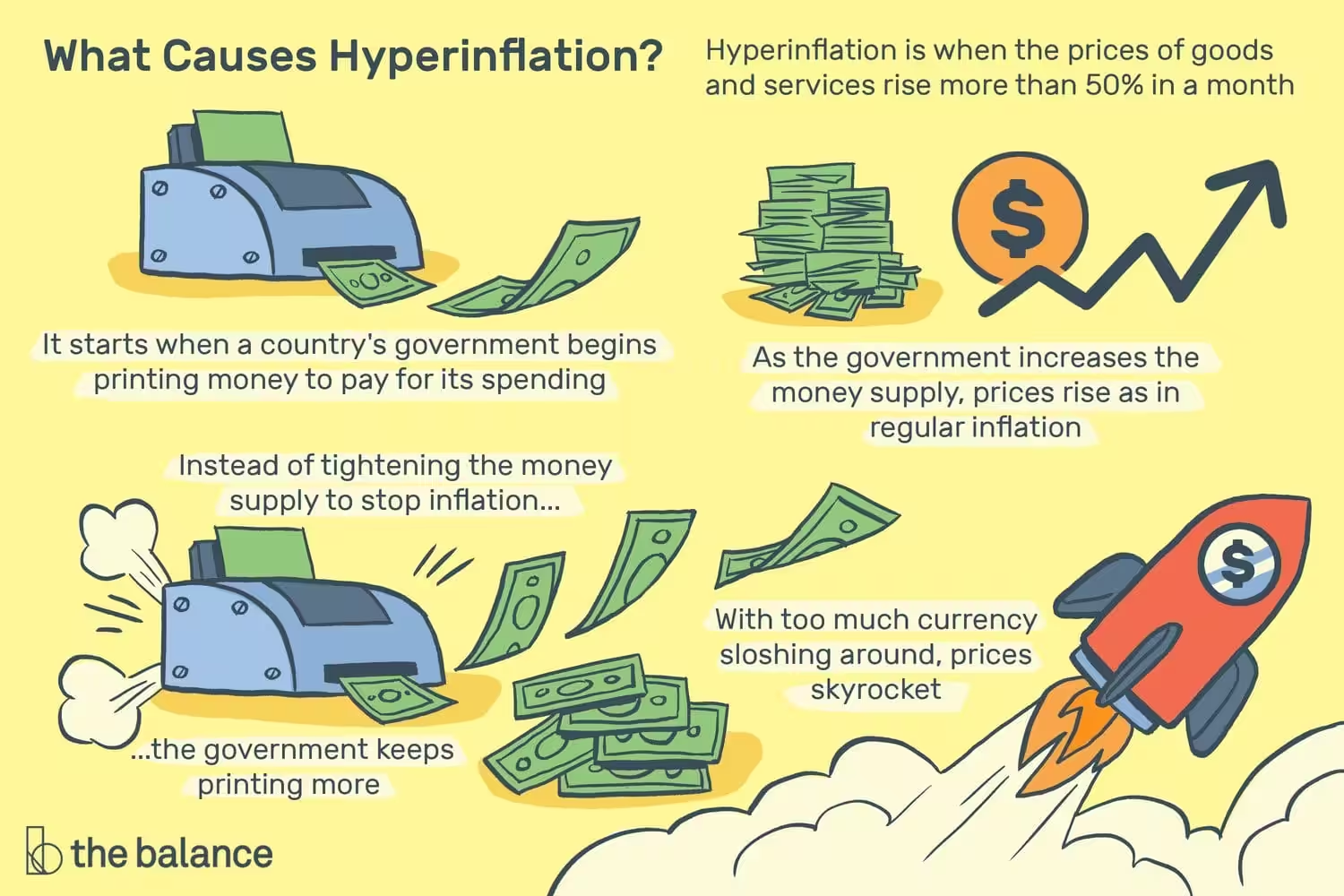
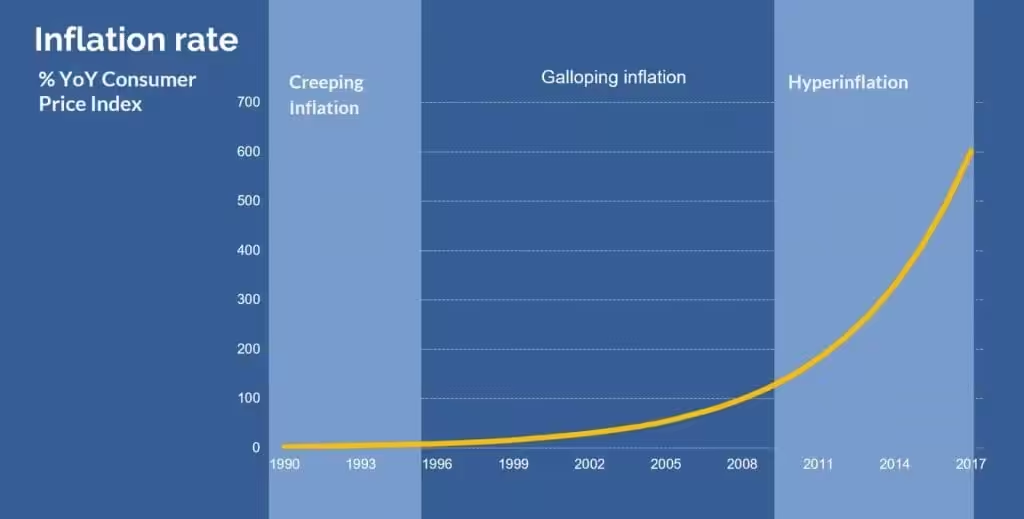
Hyperinflation is large and accelerating inflation, when prices rise by more than 50% a month. During hyperinflationary periods, the price level increases by about 500% to 1000% per year.
5. Creeping Inflation:
It refers to gradual rise in price levels along time. (good for the economy).
For example, the inflation rate rises from 2% to 3%, to 4% a year.
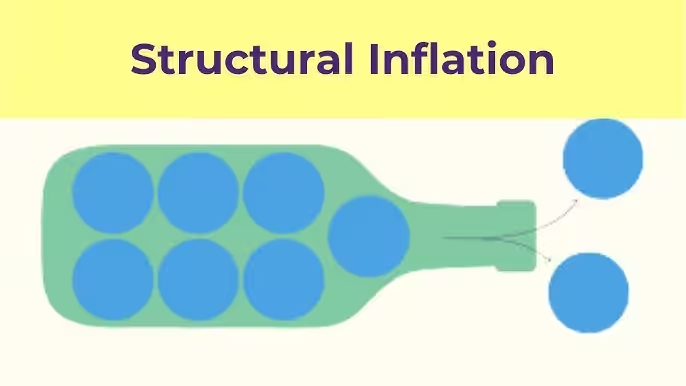
6. Bottleneck Inflation:
Also called as structural inflation it occurs when supply falls drastically and the demand remains at the same level.
7. Galloping inflation:
when prices increase more than creeping inflation but not as much as hyperinflation. For instance, if a country experiences an inflation rate of around 20%, this would be considered galloping inflation because it’s far more than creeping inflation but not as high as hyperinflation at more than 50%.
Common causes can include sudden increases in essential consumer products, such as oil, or significant bumps in employee wages, which result in higher prices.
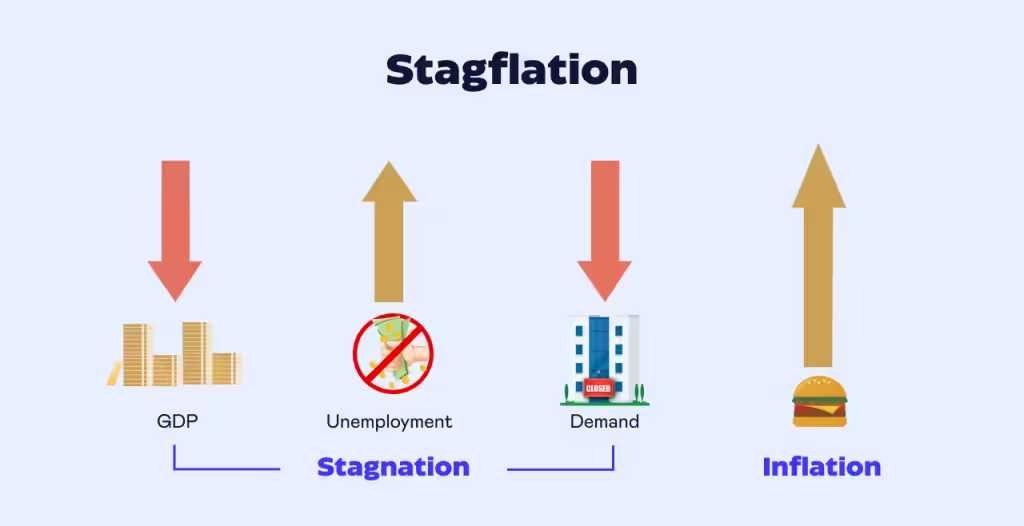
8. Stagflation:
Stagflation is an economic event in which the inflation rate is high, economic growth rate slows, and unemployment remains steadily high. Such an unfavorable combination is feared and can be a dilemma for governments since most actions designed to lower inflation may raise unemployment levels, and policies designed to decrease unemployment may worsen inflation.
Phillip Curve:
Phillip Curve shows the inverse relation between inflation and unemployment. As levels of unemployment decrease, inflation increases.
Types of Inflation:
On the basis of Causes:
Demand-Pull Inflation: Demand-Pull Inflation also known as Excess Demand Inflation takes place when aggregate demand for a good or service outstrips aggregate supply. In other words, when aggregate demand for all purposes- consumption, investment and government expenditure-exceeds the supply of goods at current prices then it is called Demand-Pull Inflation. Demand-Pull inflation gives rise to a situation often economists describe as “Too much money chasing too few goods”.
Cost-Push Inflation: When prices rise due to growing cost of production of goods and services then it is known as Cost-Push Inflation. Cost-push inflation also came to known as “New Inflation” is determined by supply-side factors mainly caused by higher wage-push, Profit-Push and higher costs of raw materials.
Scarcity Inflation: Scarcity inflation occurs due to hoarding by unscrupulous traders and black marketers so as to create an artificial shortage of essential goods like food grains, kerosene, etc. with an intension to sell them only at higher prices to make huge profits.
How to Measure Inflation:
Inflation rate can be measured using either Wholesale Price Index (WPI) or Retail Price Index, which is generally known as Consumer Price (CPI). In many countries, Producers’ Price Index (PPI), in place of WPI, is used to measure Inflation rate. Inflation rate based on PPI or WPI indicate increase in cost of production whereas the rate based on CPI shows a sign of burden on consumers pocket also.
Consumer Price Index?
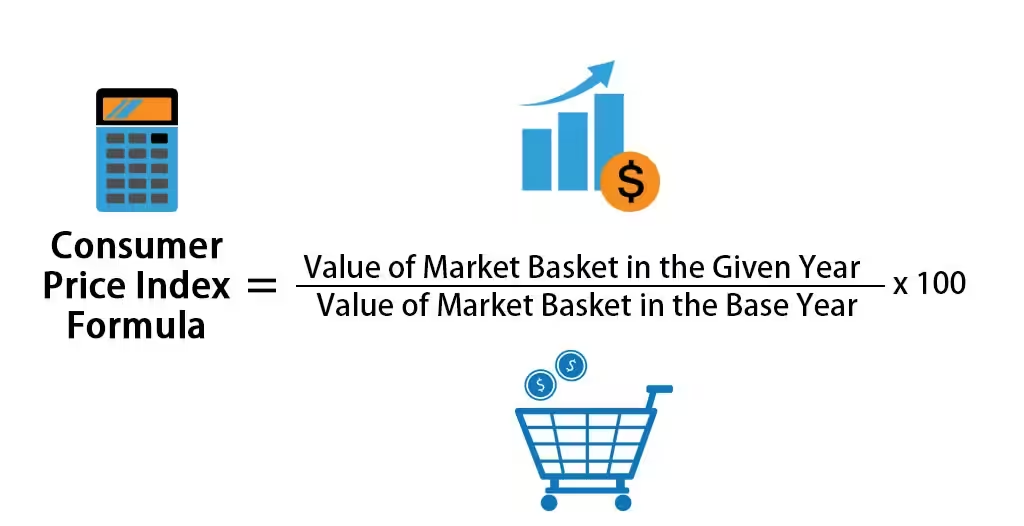
The Consumer price index or CPI is a measure of market changes in prices over time. It is calculated as the average price of a basket of goods and services.
The index is only a conditional cost-of-living measure and does not account for social or environmental factors.
CPI Urban:- The Index is a statistical estimate of how much an average urban household spends on goods and services each year.
CPI Rural:- It would provide the price changes for the entire rural population of the country, a total of 1181 villages have been selected at all India level.
CPI is used to monitor the cost of living and determine economic conditions.
We can measure the rate of inflation and deflation using CPI.
The CPI reflects changes in prices on an individual level during inflation and measures overall inflation.
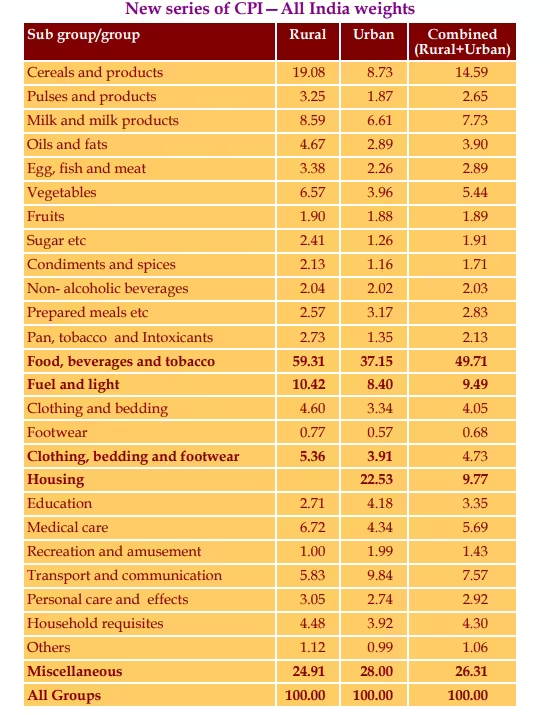
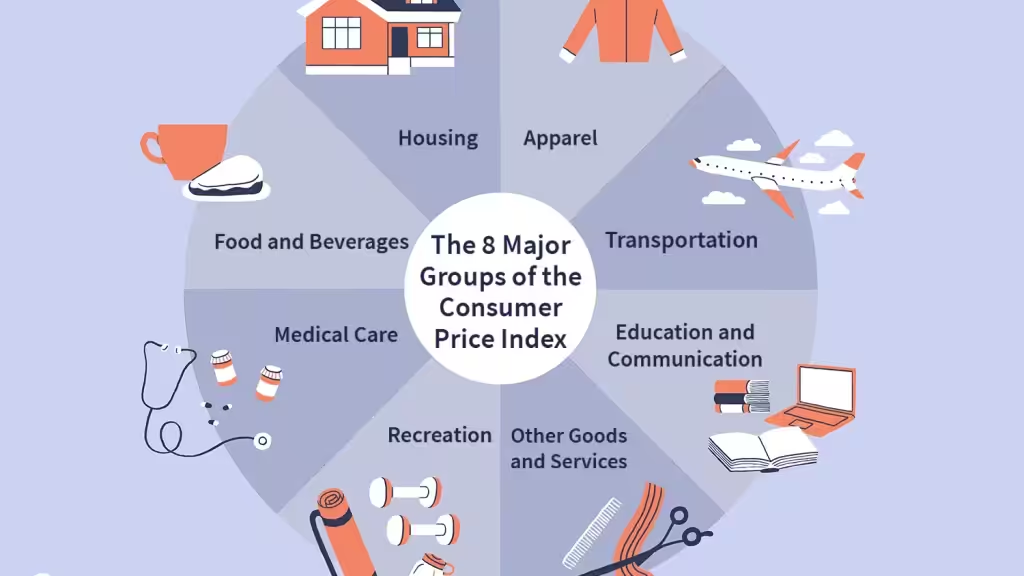
The CPI is based on the weighted average retail prices of eight categories of goods and services. Education, garments, communication, transportation, and medical care.
Calculated by- National Statistical Office, Ministry of Statistics and programme Implementation
Weightage:- Food and beverages (45.86%)Pan, Tobacco and Intoxicants (2.38%) Clothing and Footwear (6.53%)Housing (10%)Fuel and Light (6.84%): Electricity, LPG, Kerosene etc. (Does not include Petrol and Diesel)Miscellaneous- Education, Healthcare, Transportation and Communication etc. (28.32%)
How to Calculate?
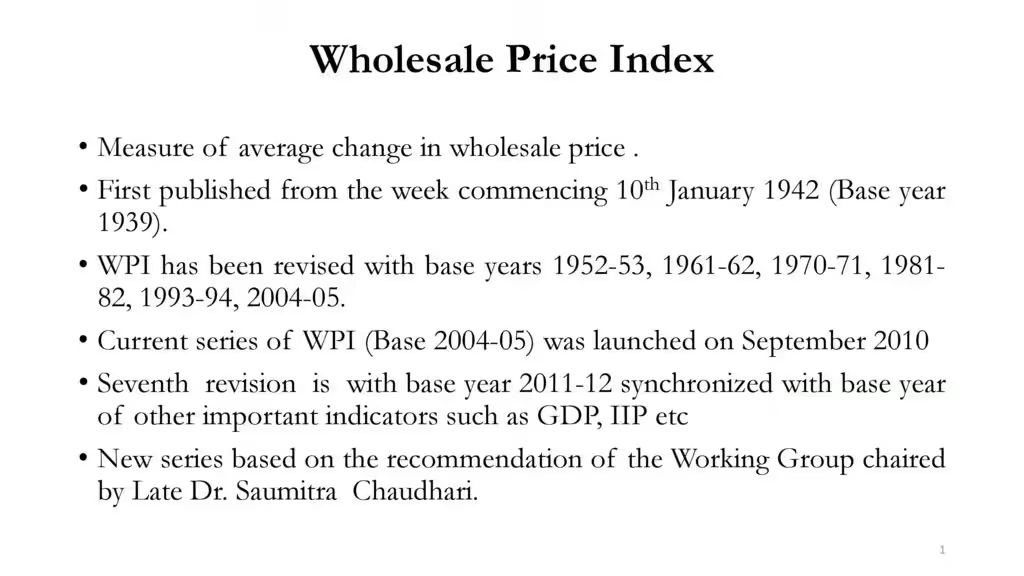
Wholesale Price Index?
The Wholesale Price Index is the central measure of inflation in some countries, including the United States. The WPI measures changes in the wholesale prices of a representative basket of goods.
The WPI is very important in helping the government take necessary action against inflation.
It is important to understand that the wholesale price index is not the same as the retail prices of these goods, so excessive wholesale price inflation can negatively impact the economy and household finances.
The wholesale price index is used in monetary and fiscal policies.
It measures the price increases and decreases of goods in the primary market before reaching the retail sector.
The WPI covers a much larger scale than the CPI, more targeted toward the retail market.
Calculated By- Office of Economic Advisor, Ministry of Commerce and Industry.
Weightage:- Primary Articles: (22.6%)Manufactured products (64.2%)Fuel and Power (13.2%)
How to Calculate?
Generally, the WPI consists of industrial and agricultural goods.
The WPI uses the total costs of goods in a base year, 100. Then, it compares the prices from another year to the base-year total, and the difference is written down as a percentage.
Difference:
Comparison
WPI
CPI
Measurement
Measures the average change in prices received by domestic producers for their output
Measures average change in prices of goods and services consumed by households
Indicator of Inflation
The leading indicator of inflation
Lagging indicator of inflation
Coverage and Sample Size
Covers a smaller sample of goods and services
Covers a broader range of goods and services used by households
Purpose
Mainly used to track inflation in the wholesale market
Primarily used for tracking inflation in the consumer market
Components
Includes prices of primary articles and fuel
Includes prices of food, housing, clothing, transport, medical care, etc.
Weightage
It gives a higher weightage to primary articles and fuel
It provides a higher weightage to food and housing
Base Year
2011-12
2012
Impact on Monetary Policy
Direct impact on monetary policy
Indirect impact on monetary policy
Note: WPI is used as a Price Deflator while CPI is used as a measure of inflation by the RBI.
Food Inflation:
Significance:
For urban households, the share of food expenditure is 39.2%.
Food comprises 45.86 % weightage in consumer price index.
Major cause of headline inflation
Food purchases made 46.5% of the total expenditures rural households made in 2022-23.
Factors contributing to recent trends:
Favourable monsoon with more than average rainfall leading to bumper harvests.
Early onset of monsoon leading to higher sown area under kharif crops.
Reduced or zero import duties on pulses and vegetable oils ensures abundant supply of the same in the domestic market. [ Pulses are imported despite India being the largest producer of pulses, due to high demand for pulses. ]
Causes of concern:
Weakening or stalling of monsoon in coming weeks may affect the crop growth and yield.
Lower stocks of fertilisers despite rising demand due to fall in imports of fertilisers mainly from China owing to China’s export restrictions on phosphatic fertilisers.
Factors affecting food inflation:
Upstreams:
Monsoon pattern
Extreme weather events like flash floods, hailstorms, cloud bursts etc.
Price and supply of fertilisers and other inputs like electricity.
Rural labour wages working in farms.
Cropping patterns biased towards wheat and rice and dependent on MSP announcement often causing Cob web phenomenon.
Downstreams:
Demand of protein-rich items due to rising income and nutritional intelligence and subsequent mismatch in supply.
Availability of food processing and storage infrastructure to preserve perishables.
Supply chain linkages and bottlenecks like transportation, marketing and distribution of agricultural produce.
Black Marketing and Hoarding creating artificial scarcity causing prices to increase.
Measures:
Developing cold storage, food processing and warehousing infrastructure at local levels to reduce post harvest losses under schemes like Pradhan Mantri Kisan Sampada Yojana.
Fork to farm strategy – Increasing production of crops like pulses as per customer preferences.
Promoting Farmers Producer Organisation to increase farmer’s bargaining power and ensure proper value of crops to farmers enabling them to diversify from wheat and rice.
Promoting Research in climate resilient high yielding varieties of fruits, vegetables, oilseeds and pulses under Prime Minister Dhan-Dhaanya Krishi Yojana (PMDDKY) and Clean Plant Programme (CPP) for horticulture, which focuses on providing high-quality, virus-free planting material to increase yields
Developing extension services like weather forecast to prevent loss due to variable climate.
Amend Essential Commodities Act 1955 allowing for development of private storage infrastructure and ensuring government intervention only during exceptional price rise.
Providing farmers options to sell their produce outside Agricultural Produce Market Committees. Promoting e-NAM portal to sell their produce throughout India.
Diversifying sources of fertilisers and promote domestic fertiliser industries to reduce dependence on countries like China.
Promoting organised Food retail via stores like Safal, Big bazaar and via e commerce like Grofers.
Practice Question: (UPSC PYQ)
Consider the following statements:
The weightage of food in Consumer Price Index (CPI) is higher than that in Wholesale Price Index (WPI).
The WPI does not capture changes in the prices of services, which CPI does.
Reserve Bank of India has now adopted WPI as its key measure of inflation and to decide on changing the key policy rates.
Which of the statements given above is/are correct?
Semiconductor Industry – India’s Strategic Tech Frontier
General Studies · Science & Tech
Context: The Union Cabinet has approved four additional semiconductor manufacturing projects under the India Semiconductor Mission (ISM), marking a significant boost to the country’s semiconductor ecosystem.
The new projects come from SiCSem, Continental Device India Private Limited (CDIL), 3D Glass Solutions Inc., and Advanced System in Package (ASIP) Technologies. They will establish semiconductor manufacturing units in Odisha, Punjab, and Andhra Pradesh, addressing growing demands across telecom, automotive, data centres, consumer electronics, and industrial sectors.
UPSC relevance:
GS Paper 1
Factors responsible for the location of primary, secondary, and tertiary sector industries in various parts of the world (including India).
Questions have been regularly asked in mains regarding location factors of various industries:
2022: Describing the distribution of rubber-producing countries indicates their major environmental issues
2021: Discuss the multi-dimensional implications of the uneven distribution of mineral oil in the world.
What are Semiconductors?
Semiconductors are materials whose electrical conductivity lies between that of a conductor and an insulator, enabling their use in microchips and integrated circuits (ICs). Foundation of modern electronics — used in smartphones, automobiles, defense systems, AI, IoT, and 5G.
USD 600+ billion (2023), projected to reach USD 1 trillion by 2030 (McKinsey). India imports 100% of its semiconductors, with an import bill of ~$25 billion annually (Electronics Ministry, 2023).
Global distribution of Semiconductor manufacturing
The semiconductor industry is the aggregate of companies engaged in the design and fabrication of semiconductors and semiconductor devices, such as transistors and integrated circuits. The global semiconductor industry is dominated by companies from the United States, Taiwan, South Korea, Japan and the Netherlands, with Israel and Germany having significant presence in the field.
Factors Influencing Global Location
Example: China’s fab expansion for Huawei, BYD.
Skilled Workforce & R&D Ecosystem
High-end engineering talent, proximity to research hubs.
–Taiwan’s Hsinchu Science Park + National Tsing Hua University.
Case: South Korea’s KAIST–Samsung synergy.
Capital-Intensive Investment Climate
Fabs cost $10–20 billion; need deep capital markets, subsidies.
Strategic Importance – Essential for defense, AI, quantum computing, and cyber security.
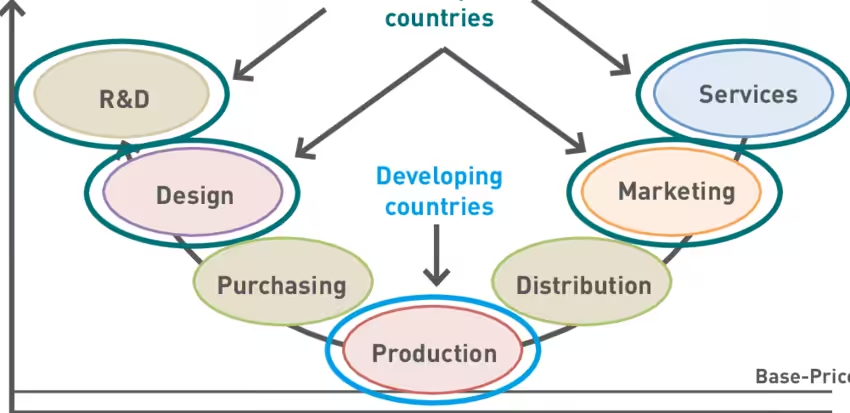
Tech Industry Boost – Move up the Global Value Chain (GVC) smile curve from assembly to design & fabrication.
Employment Generation – High-skill job creation; 5,00,000 jobs projected in ESDM sector.
Tax Revenue Growth – Expansion of formal electronics sector.
Export Potential – Integration into global supply chains; opportunity to supply to automotive & electronics giants.
Import Reduction – Self-reliance in a critical technology domain.
What’s a Smiling curve?
In business management theory, the smiling curve is a graphical depiction of how value added varies across the different stages of bringing a product on to the market in an IT-related manufacturing industry. The concept was first proposed around 1992 by Stan Shih, the founder of Acer Inc., an IT company headquartered in Taiwan.
According to Shih’s observation, in the personal computer industry, the two ends of the value chain – conception and marketing – command higher values added to the product than the middle part of the value chain – manufacturing. If this phenomenon is presented in a graph with a Y-axis for value-added and an X-axis for value chain (stage of production), the resulting curve appears like a “smile”.
Location Factors for Semiconductor Industry in India
Large Domestic Market – 2nd largest internet user base (~880 million users in 2023).
Skilled & Cheap Workforce – Large pool of engineers; India produces ~1.5 million engineers/year.
Capital Access – 100% FDI permitted in electronics manufacturing.
Infrastructure Support – National Infrastructure Pipeline (NIP), electronics clusters.
Government Incentives – Production Linked Incentive (PLI) scheme for semiconductors & display fabs.
Transportation – Port-led connectivity via Sagarmala, dedicated freight corridors.
Challenges for India
Raw Material Dependence – Limited domestic supply of high-purity silicon wafers and rare earths.
High Establishment Cost – Semiconductor fab cost can exceed $10 billion.
Ease of Doing Business Issues – Land acquisition delays, regulatory complexity.
Technological Constraints – Lag in advanced node manufacturing (India has no commercial fabs yet).
Context: SC has issued notice to the Union on multiple petitions arguing §152 is a repackaged sedition law; matters are being tagged with the pending sedition (IPC 124A) challenges.
It penalises whoever “purposely or knowingly… by words (spoken/written), signs, visible representation, electronic communication, financial means, or otherwise, excites or attempts to excite secession, armed rebellion or subversive activities, or encourages feelings of separatist activities, or endangers sovereignty or unity and integrity of India.” Punishment: life imprisonment or up to 7 years + fine. The Explanation says lawful criticism to seek policy change does not constitute the offence.
Procedural status: Classified as cognizable, non-bailable, triable by Court of Session.
Sanction requirement: No court can take cognizance of offences in Chapter VII (which includes 152) without prior sanction of the Central/State Government (BNSS §217).
Courts & current litigation (where the law stands)
High Courts have begun drawing limits:
Allahabad HC: Mere pro-Pakistan social-media support without reference to India doesn’t attract 152.
Rajasthan HC (Tejender Pal Singh): 152 must not cripple legitimate dissent; only deliberate acts with malicious intent fall within it.
SC has issued notice to the Union on multiple petitions arguing §152 is a repackaged sedition law; matters are being tagged with the pending sedition (IPC §124A) challenges.
Press-freedom context: SC recently observed that a journalist’s article/video by itself does not make a prima facie §152 case, while cautioning that misuse is possible.
Apprehensions & why they matter
Though prior-sanction under BNSS 217 exists, critics note sanctions often follow FIRs/arrests, so the process itself becomes punishment in a cognizable, non-bailable offence. (Conviction rates under old sedition were minuscule while arrests were frequent—misuse risk persists.)
Undefined phrases—“subversive activities,” “encourages feelings of separatist activities,” “endangers… unity”—lack clear contours and can rope in protected speech. Editors and legal scholars call this overbroad and constitutionally vague, inviting arbitrary enforcement.
Lower mens rea threshold (“knowingly”)
Moving from a tight intent to incite violence standard (as read into sedition by Kedar Nath Singh, 1962) to “purposely or knowingly” + “attempts to excite/ encourages feelings” dilutes culpability and may capture speech with foreseeability but no call to violence.
Chilling effect on free expression
Editors warn the combination of vague verbs (excites/attempts/encourages) and severe penalties will chill journalism, academia and civic debate—the very concerns that led to the interim suspension of sedition prosecutions earlier.
Absence/fragility of safeguards against misuse
Though prior-sanction under BNSS 217 exists, critics note sanctions often follow FIRs/arrests, so the process itself becomes punishment in a cognizable, non-bailable offence. (Conviction rates under old sedition were minuscule while arrests were frequent—misuse risk persists.)
Speech-crime without a violence/proximate-nexus test
Unlike Kedar Nath and Shreya Singhal (2015) standards (incitement + proximate link to disorder), §152 does not textually require intent/likelihood of imminent violence or public disorder. Petitions argue it fails the legality/necessity/proportionality tests of Article 19(2).
Disproportionate punishment
Life imprisonment or up to seven years for conduct that may be purely expressive (even if misguided) is criticised as disproportionate vis-à-vis the harm, especially when no violence is urged or caused.
Criminalising “attempts” & “encouragement of feelings”
These elastic thresholds make prosecutions hinge on subjective inference about the effect of words/ideas; scholars warn it recreates sedition’s defects under a new label.
Digital & financial reach
Explicit coverage of “electronic communication” and “financial means” broadens liability to tweets/DMs/crowdfunding/donations, risking dragnet cases against journalists, platforms, NGOs, and donors where intent to foment rebellion is absent.
Overlap & double-jeopardy-like stacking with special laws
Section 152 overlaps with UAPA (unlawful activities/secession/terror propaganda), IT-law offences, and public-order provisions, enabling multiple charges with different procedures/penalties—a classic lever for over-charging.
Enforcement experience already shows elasticity
Early FIRs under §152 have targeted political speech; HCs have had to prune usage (see Allahabad HC). This pattern mirrors the old sedition experience where arrests far outstripped convictions.
Reform ideas distilled from commentary
Periodic review & reporting (Parliamentary committee/NCRB) on §152 usage with disaggregated data (FIRs, arrests, convictions, bail). (Misuse signal under old sedition: very low conviction ratios.)
Write-in a proximate-harm/violence element (imminence & likelihood)—align with Kedar Nath/Shreya Singhal standards.
Define key terms (“subversive activities”, “encourages feelings”, “endangers unity”) through a schedule or statutory definitions.
Tighten mens rea to “intentionally incites”; drop “encourages feelings/attempts” for pure speech unless accompanied by intent + likelihood of violence.
Procedural safeguards: make non-cognizable (or require DGP-level written approval), mandate pre-registration legal opinion, and time-bound sanction with reasons on record. (BNSS §217 sanction exists but needs strengthening in practice.)
Avoid overlap with UAPA by inserting a non-derogation clause and clear charging guidance to prevent forum-shopping.
The Crux
The controversy over Section 152 of the Bharatiya Nyaya Sanhita reflects a fundamental conflict between protecting the state and protecting the citizen. Although the section is meant to protect India’s sovereignty against those who want to tear it apart, the broad provisions, vague terminology, and lower threshold of culpability are troublingly easy to imagine would also be applied to journalists, students, activists, or everyday citizens to silence those whose only transgression is an unpopular opinion. Critics view this as an extension of old sedition law, born anew with greater power, sharper teeth, and fewer protections to chill dissent long before any proceedings would reach a court. Advocates of the law believe that lawful criticism still protects against state persecution, and the law is a necessary measure to protect democratic processes in a time of instability. The stakes are not aspirational; they are measured in the space for dissent that we create, the trusting relationship we put in the state, and the lived experience of whether we citizens feel free to voice our opinions without being caught in it.
Context: The Supreme Court admitted an appeal filed by Alphabet Inc., the parent company of Google, against a judgment of the National Company Law Appellate Tribunal (NCLAT). The tribunal had earlier upheld, at least in part, the Competition Commission of India’s (CCI) findings that Google had abused its dominant position in the Google Play Store Billing (GPSB) ecosystem to indulge in anti-competitive practices
UPSC Relevance:
GS 2, Statutory, regulatory and various quasi-judicial bodies
PYQ: 2023 Mains
Discuss the role of the Competition Commission of India in containing the abuse of dominant position by the Multi-National Corporations in India. Refer to the recent decisions.
CCI
It is a statutory quasi-judicial body.
It functions under the Ministry of Corporate Affairs.
It replaced the Monopolies Restrictive Trade Practices Act1969 to align Indian competition law with global standards after the economic liberalization reforms from 1991.
Establishment
Established by the Central Government on 14 October 2003It became fully functional in May 2009.
Governing Law
Created under the Competition Act, 2002Amended in 2007 and 2023
Composition
Chairperson Members- not less than 2 andnot more than 6They are appointed by the Central Government, with professional experience requirements.
Director General (DG)
DG is responsible for conducting investigations into alleged violation of the Competition Act, 2002.The Central Government appoints the DG through a Search-cum-Selection Committee.DG has powers of a Civil CourtCan conduct search and seizure operations to gather evidence with prior approval from a Chief Magistrate.
Powers
Investigate anti-competitive agreements and abuse of dominant position.Approve or block mergers and acquisitions that affect competition.Impose penalties (up to 10% of Global Turnover or thrice the profit earned from violation).Formulate regulations consistent with the Competition Act.Undertake competition advocacy, public awareness, and training.Offer opinions on competition issues on references from statutory authorities.
Jurisdiction
CCI has exclusive jurisdiction over competition issues that affect trade, business, or commerce in India. No other regulator hears such cases.CCI shares some authority with sectoral regulators, but the Competition Act takes precedence when it comes to judging anti-competitive behavior.
Appeals
Decisions of the CCI can be appealed to the National Company Law Appellate Tribunal (NCLAT) within 60 days of receiving the CCI’s order.
Procedural Timelines
The CCI must now form a prima facie opinion within 30 days of receiving a combination notice. Failure to do so results in deemed approval.The maximum review period for combinations is 150 days.A 3 year limitation period has been introduced for filing information or a reference by the company about violation of the Act. Earlier there was no such timeline.
Successes in Curbing Anti-Competitive Practices
Dismantling Cartels
The CCI has been effective in tackling cartels. Cartels are agreements between competitors to fix prices, limit production, or allocate markets. CCI actively monitors key sectors.
Cement Cartel Case (2012) – This landmark case involved the CCI imposing a significant penalty on 11 cement companies for colluding to control prices and supply. Although this decision was later challenged on procedural grounds, it sent a strong message to industries that such practices would not be tolerated.
Airlines Cartel (2015) – The CCI fined three airlines for colluding to fix fuel surcharges on air cargo. This decision clearly showed that it would not hesitate to penalize companies that engaged in anti-competitive behavior.
Regulating Abuse of Dominant Position
The CCI has confronted some of the largest global tech companies to prevent them from abusing their market power.
Google Case – The CCI has imposed penalties on Google in multiple cases for abusing its dominant position.
Promoting Consumer Welfare
By acting against anti-competitive practices, the CCI has directly benefited consumers through better pricing, more choices, and higher-quality products and services.
Automobile Spare Parts Case (2014) – The CCI fined 14 car manufacturers for not making branded spare parts and diagnostic tools available to independent repairers to make car maintenance more affordable.
Ensuring Fairness in Mergers and Acquisitions
The CCI reviews mergers and acquisitions to prevent them from negatively impacting competition. This keeps markets competitive and avoids monopolies.
Walmart-Flipkart Deal (2018) – The CCI approved the acquisition of Flipkart by Walmart but with some conditions. It aimed to protect the interests of smaller players while also supporting foreign investment.
Advocacy and Market Studies
Beyond enforcement, the CCI has engaged in advocacy and conducted market studies to understand and address competition concerns in sectors such as e-commerce and e-delivery platforms like Zomato and Swiggy after complaints against them and called for more transparency.
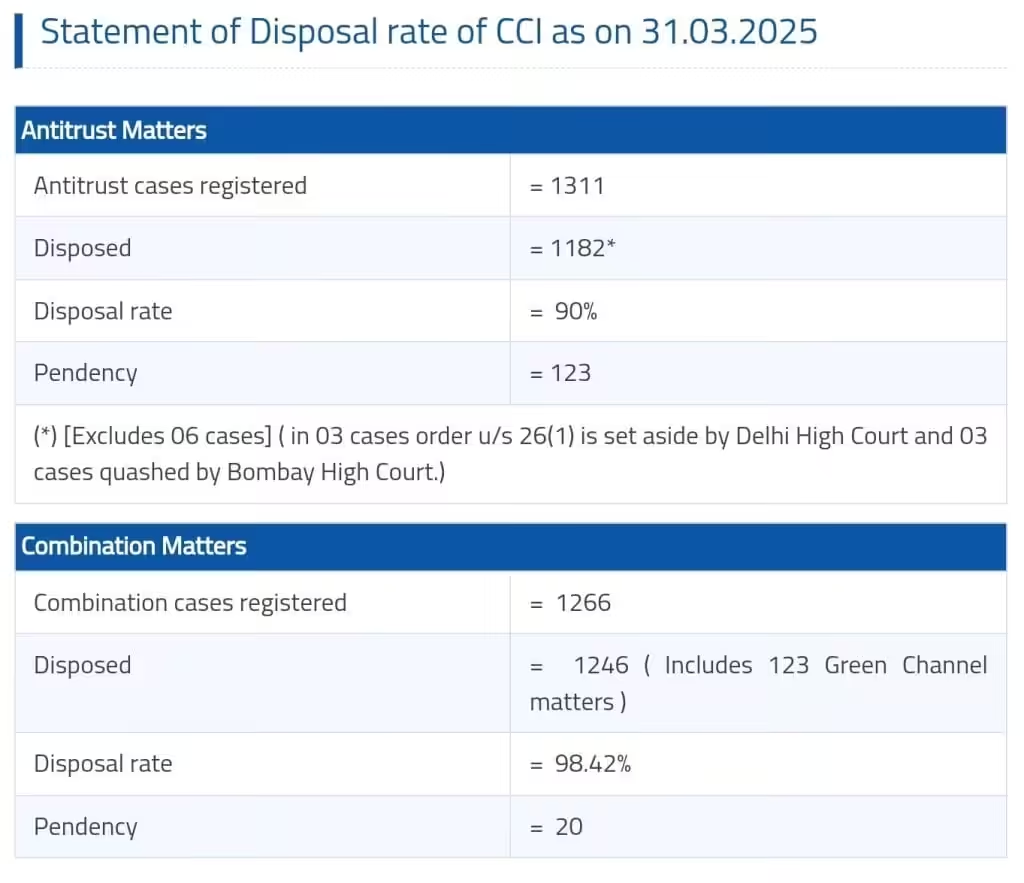
High Disposal rates of case – The disposal rate of cases is more than 90% as per CCI.
Challenges faced by CCI
Adjudication and Procedural Delays -Investigation of any case, especially high-profile cases against companies like Google and Apple go on for years without final orders due to inefficient procedures, such as mandatory prior notices and lengthy legal processes.
Inadequate Enforcement of Penalties – While the CCI has imposed large penalties (over ₹18,000 crore since 2011) but it has only collected 2.3% out of it. The lack of a mandatory deposit for penalties before appealing lets corporations challenge fines without immediate payment of penalty. For Example – Google has not paid any penalty yet , rather it has taken up a long legal battle against CCI.
New Market Structures and Business Models – Rapid technological changes and digital platforms create new challenges. Current competition laws rely on traditional concepts like assets and turnover and do not effectively address issues specific to digital markets, such as data access, network effects, and platform dominance. Proposed measures like the Digital Competition Bill highlight the need for clear policies and guidelines that fit today’s market realities.
Lack of a National Competition Policy (NCP) – India does not have an implemented NCP, which is essential for guiding competition law enforcement and policy across sectors. This gap leaves the CCI overwhelmed and without a clear strategic direction, especially when tackling new economic models.
Judicial and Jurisdictional Challenges – Courts have sometimes restricted the CCI’s authority, particularly in areas like patent law. Judicial decisions that limit the CCI’s investigative power or delay enforcement hurt its ability to regulate effectively. The Supreme Court’s ruling on the applicability of the Competition Act to state-owned enterprises like Coal India Ltd. has helped clarify some of these issues, but challenges remain.
Staffing and Leadership Vacancies – The CCI has faced gaps in leadership and not enough staff. Since 2014-15, it has never run at full capacity. Some leadership roles, like the Chairperson position, have stayed vacant for long periods, including nearly 7 months in 2022. This has led to delays in decision-making and resolving cases.
The Google Case
CCI’s accusations
CCI accused Google of abusing dominance in the Android ecosystem and Google Play Billing System (GPBS). In 2022, CCI fined Google ₹936.44 crore and ordered behavioral remedies like decoupling GPBS from Play Store access and increasing transparency.
Key accusations:
Mandatory use of GPBS for in-app purchases on Play Store, charging 15-30% commission but exempted Youtube from it giving cost advantages.
Android licensing required phone makers to pre-install Google apps (Search, Chrome, YouTube) as a condition to access Play Store.
This bundling restricted consumer choice and stifled innovation by alternative app providers.
Google’s Defence
Google rejected the allegations. It claims that these practices are aimed to enhance user experience, security, and ecosystem sustainability.
Pre-installation of Google apps is for efficiency, user convenience, and does not block competing apps.
Highlighted success of many Indian apps on Android as a sign of a competitive market.
Stakeholders
The case raises issues on how much control dominant platforms like Google should have and how much regulators can intervene.
For consumers – A CCI win could mean more app choice, better prices, greater privacy, and fairer rankings but may lead to inconsistent Android experiences.
For smartphone makers – Could lower licensing costs and increase flexibility for alternative apps and OS versions.
For Indian startups and developers – Potential for better bargaining power and more equitable market access.
For Google – An adverse ruling in India, a major market, could prompt global regulatory challenges and force changes in the Android business model.
Way Forward for CCI to effectively curb anti competitive practices
Adapting to Digital Markets – The CCI needs to create a specialized Digital Markets Division with experts to address the unique challenges of new technologies and business models. It should also conduct market studies proactively instead of waiting for complaints.
Enhanced Enforcement – The CCI must improve its penalty collection, possibly by mandating pre-deposit for appeals.
Stronger Institutional Capacity – Filling vacant positions and providing specialized training to staff are important for managing complex cases effectively.
Promoting Competition Advocacy – Increased cooperation with other government regulators and actively working for a National Competition Policy can help create a unified, pro-competition environment in the economy.
Leveraging the “Leniency Plus” Regime – The Competition (Amendment) Act, 2023, introduced a “leniency plus” mechanism. A firm in a leniency program may receive an additional reduction in penalties if the firm exposes another cartel.
International Cooperations with like minded countries like the EU and learning from their best practices.
Context: In the aftermath of the successful use of long-range stand-off weapons during Operation Sindoor, the Indian Air Force (IAF) is now prioritising the induction of air-to-ground and air-to-air missiles with strike ranges exceeding 200 km.
UPSC Relevance:
PYQ:
2023 Prelims
Consider the following statements:
1. Ballistic missiles are jet-propelled at subsonic speeds throughout their flights, while cruise missiles are rocket powered only in the initial phase of flight.
2. Agni-V is a medium-range supersonic cruise missile, while BrahMos is a solid-fuelled intercontinental ballistic missile.
Which of the statements given above is/are correct?
(a) 1 only
(b) 2 only
(c) Both 1 and 2
(d) Neither 1 nor 2
Operational Success in Operation Sindoor
Effective use of BrahMos, SCALP, Rampage, and Crystal Maze missiles with 250-450 km range.
Neutralised enemy air bases and strategic assets while bypassing Chinese HQ-9 air defence systems.
The IAF set a recordfor shooting down a surveillance aircraft at over 300 km.
Deployment of S-400 systems has deterred Pakistani Air Force flights, forcing changes in their tactics, either staying deep within its territory or flying at low altitudes to avoid detection and targeting.
Future Development & Acquisition Plans
Request to DRDO to accelerate longer-rangevariants of Astra (indigenous air-to-air missile).
Strong interest in acquiring Russian R-37 missiles with a range of over 200 km which could provide a significant tactical edge against both western and northern adversaries.
Push for rapid progress on Project Kusha (long-range air defence missile system by DRDO).
Requests for additional Rafale jets (4.5 Generation) and 5th-generation fighter aircraft.
Feature
BrahMos
SCALP (Storm Shadow)
Rampage
Crystal Maze (Popeye)
Type
Supersonic cruise missile
Air-launched cruise missile
Air-to-ground missile
Air-to-surface missile
Developers
India (DRDO) & Russia (NPO Mashinostroyeniya)
France (MBDA) & UK (MBDA)
Israel (IMI & IAI)
Israel (Rafael Advanced Defense Systems)
Key Characteristics
High supersonic speed (up to Mach 3) throughout its flight, making it difficult to intercept. Can be launched from land, sea, air, and submarines.
Subsonic speed with stealth features and a terrain-hugging flight path to evade radar. Designed for deep-strike missions against high-value targets.
Supersonic speed, standoff range, and GPS/INS guidance with anti-jamming capabilities. Designed to destroy strategic targets.
Precision-guided missile designed for standoff attacks. Uses a “man-in-the-loop” guidance system (for some variants) and a data link for remote control.
Operational Range
800-900 km (land/ship), 450-500 km (air)
250-560 km, depending on the variant and launch conditions.
150-250 km
Varies by variant: 78 km (Popeye 1), 100km (Crystal Maze 1), 250km+ (Crystal Maze 2/ROCKS)
Context: In a first, the Union Ministry of Health & Family Welfare has issued a set of guidelines for the transportation of live human organs. The transport protocols aim to ensure the expeditious movement of life-saving organs from the point of harvest to their destination through effective use of available infrastructure.
UPSC Relevance:
Prelims, UPSC has been asking questions on treatment therapies and regulations.
Prelims 2021
In the context of hereditary diseases, consider the following statements:
1. Passing on mitochondrial diseases from parent to child can be prevented by mitochondrial
replacement therapy either before or after in vitro fertilization of the egg.
2. A child inherits mitochondrial diseases entirely from mother and not from father.
Which of the statements given above is/are correct?
a) 1 only
b) 2 only
c) Both 1 and 2
d) Neither 1 nor 2
Prelims 2022
In the context of vaccines manufactured to prevent COVID-19 pandemic, consider the following statements:
1. The Serum Institute of India produced COVID-19 vaccine named Covishield using mRNA platform.
2. Sputnik V vaccine is manufactured using a vector based platform.
3. COVAXIN is an inactivated pathogen based vaccine.
Which of the statements given above are correct?
(a) 1 and 2 only
(b) 2 and 3 only
(c) 1 and 3 only
(d) 1, 2 and 3
NOTTO’s Advisory on Organ Transplants
The Advisory and its Purpose
The National Organ and Tissue Transplant Organization (NOTTO) has issued an advisory to address a significant gender imbalance in organ transplantation.
The advisory prioritizes women patients and relatives of deceased donors who are awaiting transplants.
This is intended to correct a gender skew where women are more often donors than recipients.
Governing Law : The Transplantation of Human Organs and Tissues Act, 1994, allows harvesting of organs from living donors or brain-dead patients with the consent of family members.
Evidence of Gender Disparity
NOTTO’s Decadal Data (2013-2023):
In 2023, women constituted 63% of all living organ donors.
Despite this, women were a minority among transplant recipients:
Heart: 24%
Kidney: 37%
Liver: 30%
Pancreas: 26%
Lung: 47%
British Medical Journal Analysis:
Over the past five years, women accounted for 36,038 of 56,509 living organ donations in India.
They only received transplants in 17,041 cases, highlighting a significant imbalance.
The latest guidelines
The SOP (Standard Operating Procedure) will serve as a definitive guide for hospitals and states, covering various modes of transport, including road, air, metro, and water.
A unique NOTTO-ID will be assigned to all organ transplant cases to enhance tracking and curb illegal trade.
To prevent illicit organ trade, the guidelines strictly prohibit the transport of organs into or out of India.
Air Transport Guidelines
The box containing the organ should be screened without opening it, but the accompanying staff must undergostandard security checks.
Airport officials will create a “green path” from the ambulance to the aircraft, and from the aircraft to the destination ambulance, to ensure a clear and quick passage.
The flight captain may request priority take-off and landing from Air Traffic Control and make an announcement about the organ on board.
Ground and Water Transport Guidelines
A “green corridor” for road transport may be requested by the concerned authorities to ensure an uninterrupted journey.
A “One Trigger System” will be used, where a request from an organ allocation authority (NOTTO/ROTTO/SOTTO) initiates the green corridor process, ensuring credibility and minimizing security concerns.
Each state or city will appoint a police nodal officer to handle green corridor-related issues, such as jurisdiction and security approvals.
Separate SOPs have been issued for the transfer of organs via railways and metro, as well as for transport by the Ministry of Defence personnel, detailing provisions for priority transit, accommodation, and security.
Potential Challenges and Concerns – highlighted in editorial
Procedural problems : The current organ allocation protocols do not prioritize recipients based on anything other than health-related criteria. The new advisory would require a change to these established rules.
Definition of “Near Relatives”: There is a lack of clarity on who qualifies as a “near relative” of a deceased donor and if the new rule would apply retroactively to all families who have donated organs since 1995.
Fear of Misuse: There are concerns that this new system could be exploited as a “backdoor way” to facilitate out-of-turn allotments for non deserving patients by paying more money, especially given the ongoing issues with organ harvesting rackets.
Balancing Principles: The primary concern for implementers is how to prioritize women without compromising the fundamental principle that the person with the greatest medical need should receive the organ.
The Way Forward
The advisory’s intent to address patriarchal norms and promote inclusivity is appreciable.
NOTTO must ensure this is a “participative process” that involves all relevant agencies to address implementation concerns.
It is crucial to adhere to the Transplantation of Human Organs Act while also working to widen access to the limited pool of organs.
The paramount principle of not denying an organ to the person with the greatest medical need must always be maintained.
National Organ and Tissue Transplant Organization (NOTTO)
It is a national-level organization under the Directorate General of Health Services, Ministry of Health and Family Welfare, Government of India.
It is the apex body for all activities related to organ and tissue donation and transplantation in the country.
It was established as a result of the Transplantation of Human Organs (Amendment) Act, 2011.
Functions
It also implements the National Organ Transplant Program (NOTP).
Maintaining a National Registry of data of organ donors and recipients across the country to ensure fair and equitable allocation.
Acting as the central hub for all-India activities, connecting regional and state-level organizations (ROTTOs and SOTTOs) to facilitate the efficient procurement and distribution of organs and tissues.
Developing and implementing policy guidelines and protocols for various aspects of organ and tissue donation and transplantation, including recent advisories to address gender disparity.
Conducting campaigns and initiatives to create public awareness about organ donation and encourage people to pledge their organs after death.
Two of the Divisions
National Human Organ and Tissue Removal and Storage Network – It is the central networking agency responsible for coordinating the procurement, allocation, and distribution of organs and tissues at a national level. It also serves as the nodal agency for the Delhi and National Capital Region.
National Biomaterial Centre (National Tissue Bank) – It specifically focuses on the donation and banking of human tissues. Its main objective is to bridge the gap between the demand and supply of tissues like bone, skin, corneas, and heart valves, while also ensuring their quality and safety.