Daily Digest
UPSC · Civil Services Examination
Current Affairs · Thursday, 14 August 2025
Current affairs curated and edited by Anantam IAS faculty — pulled from The Hindu, PIB, IDSA, Foreign Affairs and the ministries. Read, annotate, revise.
Old Rajinder Nagar · Delhi 110005 · anantamias.com
Gavari – Rajasthan’s 40-Day Tribal Folk Theatre Ritual
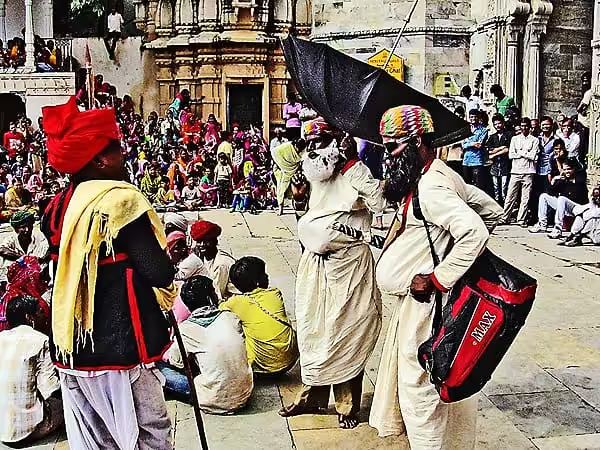
Context: Every year, the Bhil community of Mewar embarks on a 40‑day ritual called Gavri. During this festival, Bhil troupes travel to villages across Udaipur and nearby districts of Rajasthan — where their married sisters and daughters live — performing khels or dance‑dramas, songs, and religious ceremonies in honour of their deity, Gorkhiya Mata.
For the first time, this rich and resplendent world of Bhil rituals and oral literature is open to a wider audience through a photo exhibition at the India International Centre Art Gallery.
UPSC relevance:
Prelims 2021:
With reference to India, the terms ‘Halbi, Ho and Kui’ pertain to
(a) Dance forms of Northwest India
(b) Musical instruments
(c) Pre-historic cave paintings
(d) Tribal languages
Prelims 2018:
Consider the following pairs:
Tradition — State
1. Chapchar Kut Festival — Mizoram
2. Khongjom Parba ballad — Manipur
3. Thang-Ta Dance — Sikkim
Which of the pairs given above is/are correct?
(a) 1 only
(b) 1 and 2
(c) 1 and 2
(d) 2 and 3



What is Gavari?
Gavari (also spelt Gavri) is a unique 40-day-long tribal festival and ritual theatre performed annually between July and September in the Mewar region of Rajasthan, primarily by the Bhil tribal community. It blends religious devotion, environmental reverence, historical memory, and social satire into a travelling folk performance tradition.
The Gavari Season
- Invocation & Permission: Bhopa shamans petition the Goddess for permission, which may be granted once every 4–5 years per village.
- Troupes: Each of ~25 participating Bhil communities forms a troupe of 20–80 members.
- Scale: Collectively perform 600+ village ceremonies, reaching over 2.5 lakh people annually.
- Austerities: During the season, participants avoid sex, alcohol, meat, shoes, beds, bathing, and even eating greens; they take one meal a day.
- Closure: Final performance in home village, immersion rites, and celebrations.
Themes & Dramas
Gavari’s repertoire carries three core values:
- Sacredness of Nature
- Radical Equality
- Feminine Divine Power
Popular Dramas:
- Badalya Hindawa (The Banyan Swing): Goddess punishes a king for desecrating a sacred tree.
- Bhilurana (King of the Bhils): Depicts 500 years of Bhil resistance against Turkic, Mughal, and British invasions.
Performance style:
- No scripts; emphasis on improvisation and trance-like creative state (bhava).
- Players are mostly illiterate farmers/labourers; each play is performed once in 4–5 years.
Characters
- Budia: Fusion of Shaivite and demonic energies, guardian of the arena, accepts offerings, and protects sacred space.
- Rai Consorts: Budia’s twin companions.
- Kutkadia: Master of ceremonies.
- Female roles: Played by men due to menstrual isolation customs.
Religious & Shamanic Aspects
- Two Invocations:
- Initial sanction (before the season).
- Daily confirmation (before each performance).
- Ritual implements: incense, flowers, madal drum, thali cymbals, trishula, dhuni fire.
- Possession and trance are central; believed to connect players and audience with the Goddess.
Social & Cultural Significance
- Environmental Ethic: Damaging nature is seen as blasphemous.
- Egalitarianism: Lampoons kings, corrupt officials, merchants, even shamans.
- Community Bonding: Strengthens inter-village solidarity; keeps youth aware of heritage.
- Economic Awareness: Skits teach rural audiences about trade exploitation, debt traps, and financial self-reliance.
Origins
- Disputed:
- May date to 16th century post-Mewar liberation from Mughals (1579).
- Some trace it to 3rd–4th century Gujarat or as old as Bhil culture itself (~4000 years).
Current Challenges
- School attendance rules prevent youth from joining month-long tours.
- Migration to cities reduces troupe size and continuity.
- No written scripts or training schools—learning is entirely oral and experiential.
Revival Efforts
Increased media, YouTube coverage, and academic interest.
Local NGOs & Bhil organisations actively promoting Gavari.
“Rediscovering Gavari” program (2016) by Rajasthan govt & NGOs—urban performances in Udaipur, later Delhi’s National Tribal Carnival attended by PM Modi.
Push for Sangeet Natak Akademi & UNESCO Intangible Cultural Heritage recognition.
UPSC Quick Facts
Revival status: Actively promoted; seeking UNESCO tag
Region: Mewar, Rajasthan
Community: Bhil tribe
Duration: 40 days
Core themes: Nature worship, equality, feminine divinity
Performance style: Improvised, trance-based folk theatre
Key characters: Budia, Rai consorts, Kutkadia
Significance: Religious, social, environmental, historical, economic
Source: https://anantamias.com/current-affairs/gavari-rajasthans-40-day-tribal-folk-theatre-ritual/
PixxelSpace India-led consortium to establish India’s first commercial earth observation satellite constellation
Context: The Indian National Space Promotion and Authorisation Centre (IN-SPACe) announced the selection of the PixxelSpace India-led consortium to design, build, and operate India’s first fully indigenous commercial earth observation (EO) satellite constellation under the public-private partnership (PPP) model.
It is First of its kind – India’s first fully indigenous commercial Earth Observation (EO) satellite constellation to be established under Public-Private Partnership (PPP) model.

UPSC relevance:
Prelims examination has been testing aspirants on space missions (Indian as well and global). CSE prelims questions are not shallow when it comes to space technology rather it goes into details:
Prelims 2020:
“The experiment will employ a trio of spacecraft flying in formation in the shape of an equilateral triangle that has sides one million kilometres long, with lasers shining between the craft.” The experiment in question refers to
A Voyager-2
B New Horizons
C LISA Pathfinder
D Evolved LISA
Prelims 2016:
Consider the following statements: The Mangalyaan launched by ISRO
- is also called the Mars Orbiter Mission
- made India the second country to have a spacecraft orbit the Mars after USA
- made India the only country to be successful in making its spacecraft orbit the Mars in its very first attempt
Which of the statements given above is/are correct?
A 1 only
B 2 and 3 only
C 1 and 3 only
D 1, 2 and 3
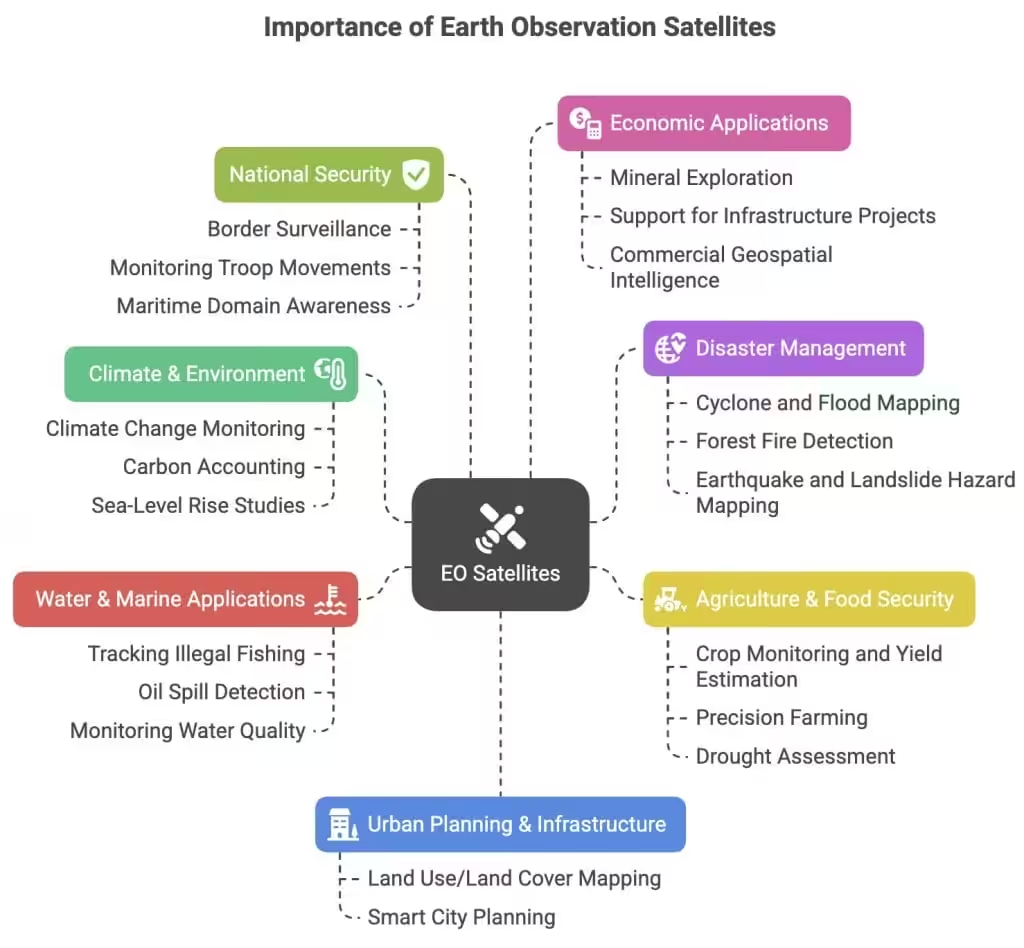
What are Earth Observation (EO) Satellites
Earth Observation Satellites are artificial satellites designed to monitor and collect information about Earth’s physical, chemical, and biological systems. They use remote sensing technologies to capture data in various parts of the electromagnetic spectrum (visible, infrared, microwave, etc.) for civilian, commercial, and military purposes.
Some of the defining features of EO are as follows:
- Operate in Low Earth Orbit (LEO) (generally 500–900 km altitude) for high-resolution imaging.
- Use passive sensors (record natural radiation reflected/emitted from Earth) or active sensors (emit their own signals, e.g., SAR radar).
- Provide repetitive coverage of the same area at intervals (temporal resolution).
Lead Agency for the Project –
- Selected by Indian National Space Promotion and Authorisation Centre (IN-SPACe).
- Lead consortium: Bengaluru-based PixxelSpace India with partners:
- Piersight Space
- Satsure Analytics India
- Dhruva Space
Significance –
- Positions India among global leaders in space-based data solutions.
- First time in Indian space history that a private consortium will invest ₹1,200+ crore over 5 years.
- Reduces reliance on foreign EO data, ensures data sovereignty.
Constellation Specs –
- Will deliver Analysis Ready Data (ARD) and Value-Added Services (VAS).
- Total satellites: 12
- Equipped with panchromatic, multispectral, hyperspectral, and microwave Synthetic Aperture Radar (SAR) sensors.
Prelims-Relevant Technical Terms –
Analysis Ready Data (ARD) – Satellite data pre-processed for immediate analysis.
Panchromatic – Captures images in a single band of the visible spectrum but at high resolution.
Multispectral – Captures image data in a few spectral bands.
Hyperspectral – Captures data in dozens to hundreds of narrow spectral bands for detailed analysis.
SAR (Synthetic Aperture Radar) – Active remote sensing system using microwave to capture images day/night, all-weather.
Creamy Layer in SC, ST Reservation
Context : The Supreme Court is examining a plea for a structured mechanism similar to the OBC creamy-layer concept for Scheduled Castes and Scheduled Tribes (SC/ST). The issue sits alongside the Court’s 1 August 2024 seven-judge judgment in State of Punjab v. Davinder Singh, whose majority held that states may sub-classify SCs and that the creamy-layer principle applies to SC/ST affirmative action, with criteria that may differ from OBC rules.
What has not happened: the judgment did not create a single nationwide income threshold or an automatic creamy-layer certificate. The current plea and any government policy still require a clearly defined, evidence-based implementation framework.

UPSC Relevance:
Prelims , UPSC has asked question based on understanding of Fundamental Rights andcrelated concepts.
2020 Prelims
Which one of the following categories of Fundamental Rights incorporates protection against untouchability as a form of discrimination? (UPSC CSE –)
(a) Right against Exploitation
(b) Right to Freedom
(c) Right to Constitutional Remedies
2018 Prelims
Which of the following are regarded as the main features of the “Rule of Law”?
Limitation of powers
Equality before law
People’s responsibility to the Government
Liberty and civil rights
Select the correct answer using the code given below:
A 1 and 3 only
B 2 and 4 only
C 1, 2 and 4 only
D 1, 2, 3 and 4
Relevant Constitutional Provision – Article 16
Article 16 provides for equality of opportunity in matters of employment under state on grounds only of religion, race, caste, sex, descent, place of birth or residence.
This is subject to exceptions under Article 16 (3), (4),(5) and (6).

Evolution of Creamy Layer
| 1971 | Sattanathan Commission | It was one of the first to propose the exclusion of a “creamy layer” from the benefits of reservation. It didn’t explicitly use the term. |
| 1976 | State of Kerala v. NM Thomas | Though not explicitly named “creamy layer,” the court acknowledged the issue of affluent members within backward classes potentially monopolizing reservation benefits.Justice Krishna Iyer’s observations highlighted the need to ensure that these benefits reach the truly disadvantaged. |
| 1990 | VP Singh government | This government implemented the Mandal Commission’s recommendations in 1990. It proposed a 27% reservation of jobs in central government services and public sector undertakings for the Other Backward Classes (OBCs). |
| 1991 | Narasimha Rao Government | Introduced a provision to give preference to the “poorer sections” among the OBCs.This move was a precursor to the “creamy layer” concept. |
| 1992 | Indra Sawhney v. Union of India (also known as the Mandal Commission case) | The Supreme Court upheld the 27% reservation for Other Backward Classes (OBCs) in central government jobs but mandated the exclusion of the “creamy layer” from within the OBCs as proposed by Narsimha Rao govt. The court, however, clarified that this principle was not applicable to Scheduled Castes (SCs) and Scheduled Tribes (STs) at that time. |
| 2006 | M. Nagaraj v. Union of India | The Court upheld the constitutional amendments enabling reservation in promotions, subject to constitutional limits. It applied a creamy-layer test to SC/ST promotion reservations and required quantifiable data on backwardness and inadequate representation; Jarnail Singh later removed the backwardness-data requirement. |
| 2018 | Jarnail Singh v. Lachhmi Narain Gupta | The Constitution Bench reaffirmed that the creamy-layer principle can apply to SC/ST reservation in promotions. It held that the state need not collect quantifiable data to prove backwardness of SCs/STs, while the constitutional conditions governing inadequate representation and efficiency remain relevant. |
| 2024 | State of Punjab v. Davinder Singh | The seven-judge Bench held that state sub-classification within the SC list is permissible when supported by empirical data and cannot reserve every seat for one sub-group. The majority also held that the creamy-layer principle applies to SC/ST affirmative action and that its criteria may differ from OBC criteria. |
Why creamy layer for SC /ST Reservation?
- The petition argues that the current reservation disproportionately benefits socially and economically well-off groups within SC/ST and the most deprived continue to face extreme poverty without adequate benefits.
- A 2023 parliamentary committee report on SC/ST welfare found that SCs and STs exceed their reserved quotas only in lower-level Group C jobs and among sanitation (safai karamchari) roles. As the level of seniority increases, many reserved SC/ST posts go unfilled, indicating that the “upper crust” among these communities disproportionally gains the benefits, while the poorest segments are left behind.
- Political empowerment has not translated into broad socio-economic development for the entire community.
- The Madiga movement (Madiga Dandora) in Andhra Pradesh and Telangana highlights this disconnect. Despite Dalit political mobilization, dominant SC sub-castes continue to monopolize reservation benefits, while smaller and more marginalized sub-groups remain persistently deprived.
- Petitioner has suggested criteria like economic status, financial capacity, living standards, vocation, and urban-rural divide for creamy layer classification.
- In State of Punjab v. Davinder Singh (1 August 2024), the Court held that:
- States are empowered to sub-classify SC/ST categories to correct internal disparities.
- The majority held that the creamy-layer principle applies to SC/ST affirmative action, but the criteria need not be identical to OBC criteria.
Proposal for Two-Tier Reservation System
- Reform aims to refine and target benefits better without reducing total reservation percentages.
- Emphasis on income-based prioritization, not abolishing caste-based reservation.
- This implies that those relatively well off in the SC/ST category will be considered for reservation only after the economically weaker section in the same category. So the relatively well off shall not be completely excluded owing to creamy layer classification of SC/ST which is the case with OBC’s.
Source: https://anantamias.com/current-affairs/creamy-layer-in-sc-st-reservation/
AI in Financial Sector
Context : RBI has prescribed 7 sutras for AI adoption in the financial sector.

UPSC Relevance:
GS 3, The Indian Economy and issues relating to planning, mobilization of resources, growth, development and employment
PYQ:
What is the status of digitalization in the Indian economy? Examine the problems faced in this regard and suggest improvements. [150 Words] [10 Marks] [2023]
Report on AI in the Financial Sector
The Reserve Bank of India (RBI) committee has published a report recommending a framework for the responsible and ethical use of AI in the financial sector.
The goal is to encourage innovation while managing the associated risks.
Benefits and Opportunities highlighted in the Report
Financial Growth and Investment
- The financial services sector is seeing a rapid global acceleration in AI adoption. This significant investment is driven by the belief that AI will directly contribute to revenue growth.
- According to a 2025 World Economic Forum white paper, investments across banking, insurance, capital markets, and payments are projected to reach over $97 billion (₹8 lakh crore) by 2027.
- The generative AI segment alone is expected to cross $12 billion (₹1.02 lakh crore) by 2033, with a CAGR of 28–34%.
Benefits
- Improving Customer Experience and Employee Productivity – AI chatbots offer 24/7 customer support, while AI-driven analytics provide a deeper understanding of customer behavior.
- Increasing Revenue and Reducing Costs: AI automates repetitive tasks like data entry, reducing operational costs.
- J.P. Morgan claims AI has led to a 15-20% reduction in account validation rejection rates and significant cost savings by improving payment validation screening.
- Risk Management – AI-based early warning signals enhance risk management, and alternate credit scoring models expand credit access to underserved populations.
- Enhanced Cybersecurity Defense: AI-powered tools are being used to bolster defenses. They can perform threat and anomaly detection, predictive analytics, and process vast amounts of data to identify hidden threats that traditional systems might miss.
- AI Systems for autonomous decision making like lending : An AI agent for an SME borrower could interact with multiple lenders to compare and give loan offers in real time.
- Financial Inclusion in India – In developing economies like India, AI can help bring millions into the formal financial system.
- Creditworthiness Assessment – AI can assess the creditworthiness of “thin-file” or “new-to-credit” borrowers i.e who have not taken loan earlier, using non-traditional data sources like utility payments, mobile usage, and e-commerce behavior without formal credit ratings.
- Accessible Financial Guidance – AI-powered chatbots can offer context-aware financial guidance and grievance redressal to low-income and rural populations.
- Voice-Enabled Banking – Voice-enabled banking in regional languages can allow illiterate or semi-literate individuals to access financial services.
- AI and Digital Public Infrastructure (DPI) – The integration of AI with India’s DPI ecosystem, which includes Aadhaar and UPI, provides a robust foundation for enhanced service delivery.
- Next-Gen DPI – This linkage of DPI and AI can lead to a “next-gen DPI” where services are not just digital, but also intelligent, inclusive, and adaptive.
- Specific Applications – Examples include conversational AI embedded with UPI, improved Know Your Customer (KYC) processes with AI and Aadhaar, and personalized services through the Account Aggregator framework.
- Affordable Public Good Models – AI models offered as a public good which is open to all. It can benefit smaller and regional financial players who cannot afford to purchase these AI services individually.
- Synergies with Other Technologies: The exploration of synergies between AI and other emerging technologies, such as quantum computing, is in its early stages. They can further enhance the benefits of each other by strengthening security and helping in decoding financial patterns and trends.
Emerging Risks and Challenges – highlighted in Report
Model Risk Factors – The main risk of AI models is when their output is different from expected results, leading to financial or reputational harm.
- Bias and Opacity – AI models can contain inherent bias due to biased training data or flawed development. They also suffer from the “black box” problem, in which their decision-making process is opaque, making it difficult to audit, understand and explain their outputs.
- Cascading Failures – Flawed datasets, poor algorithmic design, improper calibration, or implementation errors in one business unit can affect other business units too.Even AI-powered systems designed to monitor other AI models can introduce “model-on-model” risks, where a failure in a supervisory AI system could trigger failures in all dependent models.
- Hallucinations: Generative AI models can produce inaccurate information (hallucinations), leading to misleading customer communications and unreliable assessments.
Operational and Third-Party Risks
- System Failures: An AI-powered fraud detection system, might misclassify legitimate transactions, leading to financial losses and reputational damage. AI systems can also degrade over time if not consistently monitored, delivering suboptimal results.
- Third-Party Dependencies: Financial institutions often rely on external vendors and cloud providers for AI implementation. This creates dependency risks, including service interruptions, software defects, and compliance issues if there is any problem at the AI vendor’s end.
Liability and Collusion Risks – It is difficult to fix liability and responsibility on AI.
- Liability and Accountability: The “black box” nature of AI makes it difficult to determine who is liable when decisions, such as credit approvals, lead to biased outcomes or violate any legal norm and regulation. This can expose institutions to legal risks and regulatory sanctions.
- AI-Driven Collusion: While not yet widely proven, there is a theoretical risk that autonomous AI agents, without human oversight, could collude to maintain high prices or manipulate markets, especially in areas like high-frequency trading.
Financial Stability and Stress Testing
- Procyclicality and Herding: AI models that learn from historical data can reinforce market trends, reinforcing boom-bust cycles in the market. When multiple institutions use similar AI models, it can lead to a herding effect which can reduce market diversity and resilience, exposing all players to similar threats.
- Behavior Under Stress: AI models may behave unpredictably during extreme events. For example, during the 2010 “Flash Crash,” automated trading algorithms contributed to a rapid market downturn, highlighting the need for rigorous stress testing of AI tools.
Cybersecurity: A Double-Edged Sword – AI is a powerful tool that can both enhance and threaten cybersecurity.
- New Vulnerabilities: AI introduces new vulnerabilities. Attackers can perform data poisoning by minorly manipulating training data to teach models incorrect patterns. Harmful input attacks involve making inputs to mislead AI models, with hidden commands to trigger unauthorized actions also called prompt injection.
- Advanced Cyberattacks: AI is being used to execute sophisticated attacks like automated phishing, deepfake fraud to impersonate executives, and credential stuffing on an unprecedented scale.
Data Privacy and Ethical Concerns
- Data Over-collection: AI systems often collect more data than necessary, violating data minimization principles and potentially conflicting with data localization requirements.
- Mosaic Attacks: Aggregating or collecting data can inadvertently lead to mosaic attacks, where seemingly innocuous(harmless) data points are combined together to reveal sensitive information.
- Consumer Risks: Algorithmic bias can further exclude marginalized groups. Its use can subtly manipulate consumer behavior. This raises ethical questions around informed consent, exploitation, and the digital divide.
Risk of Non-Adoption of AI (“AI Inertia”)
- Competitive Disadvantage: Institutions that are reluctant to deploy AI risk falling behind competitors in terms of long-term competitiveness and operational efficiency.
- Inability to Counter Threats: Without AI-enabled tools, financial institutions may be unable to effectively counter the advanced cyberattacks being carried out by malicious actors who are using AI.
- Widening the Financial Access Gap: A lack of AI adoption could delay financial inclusion efforts, especially in underserved rural areas where AI-driven solutions like alternative credit scoring are crucial as people have rarely taken formal loans.
Way Ahead
The 7 Guiding Principles (Sutras) to guide the adoption of AI
- Trust is the Foundation: AI systems should be built on a foundation of trust.
- People First: The focus should be on the well-being and needs of people.
- Innovation over Restraint: The framework should foster innovation rather than stifle it.
- Fairness and Equity: AI systems must be fair and equitable for all users.
- Accountability: There must be clear accountability for AI-driven decisions.
- Understandable by Design: AI models should be designed to be explainable and understandable.
- Safety, Resilience and Sustainability: AI systems should be safe, resilient, and sustainable.
Six Strategic Pillars
The report presents 26 actionable recommendations categorized under six strategic pillars, which are divided into two main areas : innovation enablement as well as risk mitigation.

As AI continues to evolve and reshape the financial landscape, it brings with it both transformative opportunities and complex challenges. The Sutras, the Pillars, and the Recommendations of RBI lay down a progressive path forward for all stakeholders, including regulators, financial institutions, technology service providers, to harness the potential of AI in the financial sector.
Source: https://anantamias.com/current-affairs/ai-in-financial-sector/
Income Tax Bill, 2025
Context : Parliament passed a new income tax Bill to replace the Income Tax Act, 1961. The new Bill removes redundant provisions and archaic language, and is likely to come into effect from April 1, 2026.

UPSC Relevance:
Prelims , UPSC has asked questions on taxation, trends and important economic terms.
PYQ:
2022 Prelims
Which one of the following situations best reflects “Indirect Transfers” often talked about in media recently with reference to India ?
A An Indian company investing in a foreign enterprise and paying taxes to the foreign country on the profits arising out of its investment.
B A foreign company investing in India and paying taxes to the country of its base on the profits arising out of its investment.
C An Indian company purchases tangible assets in a foreign country and sells such assets after their value increases and transfers the proceeds to India.
D A foreign company transfers shares and such shares derive their substantial value from assets located in India.
2018 Prelims
With reference to India’s decision to levy an equalization tax of 6% on online advertisement services offered by non-resident entities, which of the following statements is/are correct?
1. It is introduced as a part of the Income Tax Act.
2. Non-resident entities that offer advertisement services in India can claim a tax credit in their home country under the “Double Taxation Avoidance Agreements”.
Select the correct answer using the code given below:
A 1 only
B 2 only
C Both 1 and 2
D Neither 1 nor 2
Important provisions of the Income Tax Bill 2025
For Individual Taxpayers
- Simplified Terminology – The bill eliminates the distinction between “assessment year” and “previous year” .
- The Bill formally introduces the single concept of a “tax year,” which is defined as the 12-month period beginning on April 1st.
- Easier Refund Process – Taxpayers will now be able to claim a refund even if they file their returns after the statutory deadline.ie. if they are late.
- House Property Income – The Bill clarifies that the 30% standard deduction for house property income will be calculated after deducting municipal taxes. It also ensures that the deduction for pre-construction interest on home loans is available for both self-occupied and let-out properties.
- Nil-TDS Certificate – The bill allows taxpayers with no tax liability to obtain a nil-TDS (Tax Deducted at Source) certificate.
- The concept of TDS was introduced with an aim to collect tax from the very source of income. As per this concept, a person (deductor) who is liable to make payment of specified nature to any other person (deductee) shall deduct tax at source and remit the same into the account of the Central Government.
- The deductee from whose income tax has been deducted at source would be entitled to get credit of the amount so deducted on the basis of TDS certificate issued by the deductor.
- Unified Pension Scheme (UPS) – Tax benefits under the Unified Pension Scheme have been aligned with the National Pension System (NPS), including tax-free withdrawal of up to 60% of the corpus at retirement.
- Commuted Pension – The bill provides clarification on the deductions applicable to commuted pension and gratuity payments received by family members.
- TCS on LRS – The bill clarifies that there will be a nil TCS (Tax Collected at Source) on remittances made under the Liberalised Remittance Scheme for educational purposes, as long as they are financed by a financial institution.
- TCS refers to the tax payable by a seller which he collects from the buyer at the time of sale of goods.
- TCS is levied on specified goods like alcohol (1% – 5%), on specified leasing activities (2%), on sale of high value motor vehicles (1%) , and specified remittances under Liberalized Remittance Scheme (LRS) of RBI (5% – 20%).

For Corporate Taxpayers and Businesses
- AMT for LLPs – The Alternate Minimum Tax (AMT) for Limited Liability Partnerships (LLPs) has been aligned with the existing provisions of the Income Tax Act, removing an expanded scope that would have subjected LLPs not claiming specific tax benefits to a higher rate.
- The expanded scope, which would have subjected LLPs not claiming specific tax benefits to a higher AMT rate of 18.5%, has been removed, reverting to the preferential rate of 12.5%.
- A Limited Liability Partnership (LLP) is a business structure that combines the benefits of a traditional partnership with the limited liability protection of a company. In an LLP, partners are not personally liable for the debts and obligations of the business beyond their individual investment. This means their personal assets are generally protected from business liabilities.
- Inter-Corporate Dividend Deduction – The bill reinstates inter-corporate dividend deductions for companies that have opted for concessional tax rates.
- Loss Carry Forward – The provisions for carrying forward and setting off losses have been amended.
- It implies that if loss of any business/profession (other than speculative business) cannot be fully adjusted in the year in which it is incurred, then the unadjusted loss can be carried forward for making adjustment in the next year.
- This provision helps reduce taxable income in subsequent years.
- Electronic Payments for Professionals – Professionals with total annual receipts exceeding Rs 50 crore are now mandated to use electronic payment methods.
- Ambiguities related to transfer pricing provisions have been removed.
- Transfer pricing is the price that is paid for goods or services transferred from one unit of an organization to its other units situated in different countries
- The reference to the “beneficial owner” has been omitted to align with Section 79 of the Income-tax Act, 1961.
- While legal ownership refers to the registered owner of an asset, beneficial ownership focuses on who actually benefits from the asset or controls it.
- Example – A person who owns shares in a company but whose name is not on the register of shareholders.
Other Changes
- Simplified Structure – The bill significantly reduces the number of sections from 819 to 536 and the number of words from 5.12 lakh to 2.6 lakh, making the tax law more concise and easier to understand.
- Donations to NPOs – The exemption for donations to non-profit organizations has been corrected, allowing an exemption for 5% of the “total” donation instead of just 5% of “anonymous” donations.
- Digital Search Powers for Tax Authorities – The bill retains the contentious power for income tax authorities to access “virtual digital spaces,” such as email servers, social media accounts, and online banking accounts during searches and seizures. However, the government has stated it will issue a Standard Operating Procedure (SOP) to govern the handling of personal digital data.
- Expanded Definition of “Undisclosed Income” – The definition of “undisclosed income” has been expanded to include virtual digital assets during search and seizure cases.
Source: https://anantamias.com/current-affairs/income-tax-bill-2025/
Dhirio-Goa Traditional Bull Fight
Context: Mandrem MLA Jit Arolkar has urged the state government to regularise Dhirio, a traditional Goan bullfight, stating that it is an integral part of the state’s cultural heritage.

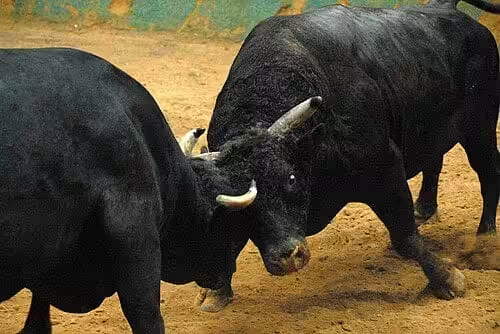
What is it?
- it is a traditional Goan sport from Portuguese era. (similar to Jalikattu)
- Contest of strength between two specially bred bulls, no matador, no ritual killing (unlike Spanish bullfighting).
Historical evolution:
- considered to be linked to church feasts, post-harvest celebrations, and village festivals.
- Acts as a social gathering with local prestige and identity value.
- Tourism potential as a “unique Goan cultural sport”.
How It’s Conducted
- Venue: Paddy fields, football grounds.
- Bulls are trained and matched in contests; injuries are common.
Legal Framework
- Banned in 1997 by Bombay High Court under Prevention of Cruelty to Animals Act, 1960.
- Supreme Court upheld the ban in 1997.
- Prevention of Cruelty to Animals Act prohibits causing unnecessary pain/suffering to animals.
Parallel Case – Jallikattu
- SC ban in 2014 for animal cruelty.
- 2023 SC ruling upheld Tamil Nadu’s law protecting Jallikattu as an expression of cultural heritage.
- Goa’s demand for legalization draws on Jallikattu precedent.
Current Debate
- Opponents: Animal cruelty concerns, injury risks to bulls, conflict with PCA Act principles.
- Supporters: Cultural preservation, rural tourism, regulated humane practices.
Source: https://anantamias.com/current-affairs/dhirio-goa-traditional-bull-fight/
Supreme Court Order to Remove Stray Dogs: Key Highlights & Implications
Supreme Court’s Directive: Stray Dogs to Shelters Permanently
Context: Expressing concern over the “disturbing increase” in dog-bite incidents across the country, the Supreme Court on Friday directed all the States and the Union Territories to “forthwith” remove stray dogs from educational institutions, hospitals, sports complexes, bus stands and depots, and railway stations, and relocate them “to a designated shelter”. The dogs have to be sterilised and vaccinated in accordance with the Animal Birth Control (ABC) Rules, 2023 before relocation.
Earlier a two-judge bench of Justices J.B. Pardiwala and R. Mahadevan issued a sweeping order on August 11, 2025 to make Delhi-NCR “stray dog free” within eight weeks. All street dogs across Delhi and its suburbs (Noida, Gurugram, Ghaziabad, etc.) are to be captured, sterilized, vaccinated, and housed in dedicated shelters, with no dog released back onto the streets. Authorities were directed to create sufficient dog shelters (initially for about 5,000 dogs) staffed for ongoing sterilization and immunization. The Court even warned that any individual or group obstructing the dog-catching drive would face contempt proceedings.

Stray dogs kept in cages at a New Delhi shelter following the Supreme Court’s order (August 2025).
Background & Trigger
Case: In Re: “City Hounded by Strays, Kids Pay Price” – Suo motu writ petition (C) No. 5 of 2025.
Trigger: Surge in dog bites & rabies cases; 25,210 bites in Delhi in 2024; 3,196 in January 2025 alone.
Legal backdrop: Conflict with Animal Birth Control Rules, 2023 which mandate sterilization and release at the same location.
Court’s Rationale (previously)
- Fundamental Rights: Stray dog menace = infringement of Articles 19(1)(d) (freedom of movement) and 21 (right to life & safety).
- Public safety prioritized over the ABC Rules’ release-back provision.
- Systemic failure of authorities under 2001 & 2023 ABC Rules to control population and bites.
Reference to Animal Welfare Board of India v. Union of India (2023): Constitution does not confer fundamental rights on animals; statutory rights are subject to human safety.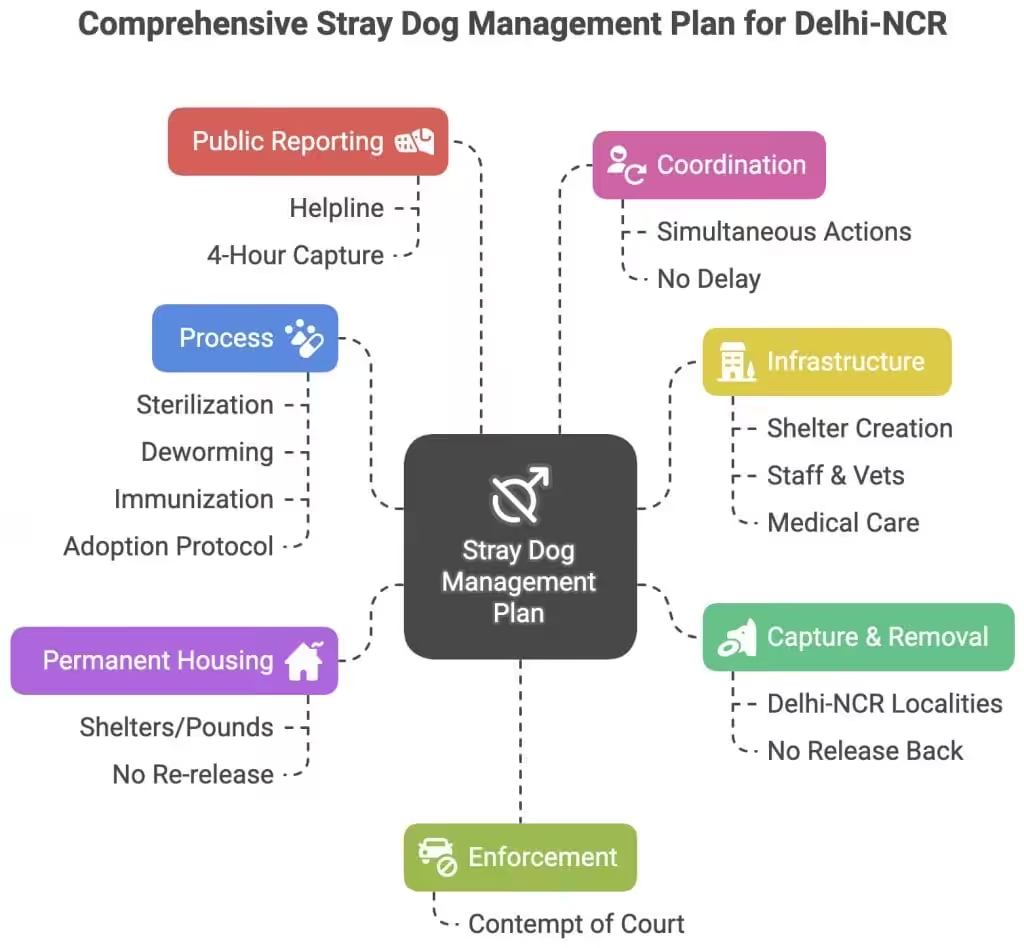
In Re: “City Hounded by Strays, Kids Pay Price” – Suo motu writ petition (C) No. 5 of 2025.
Legal and constitutional Basis
- Prevention of Cruelty to Animals Act, 1960 — read with exceptions permitting removal for human safety.
- Articles 19(1)(d) & 21 – citizens’ right to move freely & live safely.
- Directive Principles: Art. 47 – state duty to improve public health.
- Municipal laws (e.g., Section 399, Delhi Municipal Corporation Act) allowing confinement/destruction of strays.
Public Safety Rationale
The Court underscored citizens’ right to safety, pointing to a surge in dog-bite incidents and fatal rabies cases. Terming the situation “extremely grim,” it stressed immediate action “in larger public interest”. The judges noted that infants, children and the elderly must be able to move freely without fear of stray dog attacks.
Media reports cited nearly 2,000 dog bite incidents per day in Delhi and dozens of rabies deaths in recent months, lending urgency to the Court’s intervention. The bench explicitly stated that “no sentiments should be involved” in removing strays – prioritizing human life and public health over emotional appeals.
Why This Legal Basis is Contentious
- This conflict with the 2024 SC verdict is why the CJI has ordered judicial re-examination by a larger bench.
- The PCA Act + ABC Rules form a statutory framework for stray dog management that explicitly prohibits killing or permanent removal (except in specific situations).
- The Court’s order effectively supersedes delegated legislation without formally striking it down — raising questions about judicial overreach and separation of powers.
Infrastructure Shortfall
The ambitious order starkly exposes an infrastructure gap. Various estimates put Delhi’s stray dog population between 500,000 to 1,000,000 animals. In contrast, the existing shelter capacity (even after urgent expansion) is only a few thousand spots – the Court initially called for around 5,000 shelter slots to be created. This implies over 100× more dogs on the streets than can be housed. Municipal authorities have no precedent or ready facilities for accommodating hundreds of thousands of dogs. Indeed, Delhi has virtually no government-run dog shelters currently, and building the 1,000+ new shelters that would be required (with staff, kennels, food, healthcare, etc.) would cost an estimated ₹10,000–15,000 crore (over $1.2–1.8 billion) – funds the city does not have. Officials and experts are concerned that without massive resources and planning, the order is logistically “unworkable”.
Backlash from Animal Welfare Groups
Animal rights organizations and public figures reacted with outrage, calling the blanket removal order “impractical,” “inhumane” and even illegal. Activists argue the Court’s directive violates India’s long-standing Animal Birth Control (ABC) Rules – most recently updated in 2023 – which mandate that stray dogs be sterilized and returned to their original locations, not permanently caged or killed. Justice Pardiwala’s bench flatly dismissed these rules as “absurd” and ineffective, a stance that animal welfare groups fiercely dispute. PETA India condemned the “large-scale displacement” of dogs as unscientific, warning that “jailing” street dogs has never worked. They point out that Delhi has ~10 lakh (1,000,000) community dogs with under half sterilized – removing them en masse could backfire without addressing root causes. The Federation of Indian Animal Protection Organisations (FIAPO) likewise slammed the move as cruel and counter-productive, urging authorities to focus instead on mass sterilization, vaccination, waste management and public awareness to humanely reduce stray populations. Many critics see the order as a knee-jerk reaction that ignores the “neuter-vaccinate-release” method globally regarded as the only sustainable, humane solution.
Ecological and Health Concerns
Beyond compassion issues, experts warn the mass dog removal could upset the urban ecological balance. Former Union minister and animal advocate Maneka Gandhi castigated the judgment as “not doable” and “potentially harmful”. She cautioned that street dogs play a role in controlling other pests – for example, Delhi’s dogs keep rats and monkeys in check.
Gandhi drew a historical parallel to Paris in the 1880s:
When authorities eliminated stray dogs (and cats) there, the city was soon overrun by rats. She warned that within days of Delhi’s dogs being removed, monkeys from surrounding areas would “come down to the ground” searching for food, and “three lakh new dogs will come” from neighboring districts to fill the void– creating a larger problem. This so-called “vacuum effect” is a well-documented phenomenon: removing territorial stray dogs opens space for other unsterilized, possibly more aggressive dogs to migrate in, drawn by the same food waste and open garbage that fueled the original population. In other words, any gains could be temporary.
Furthermore, packing thousands of dogs into makeshift shelters carries significant health risks. Animal experts note that overcrowded shelters can become hotbeds for infectious and zoonotic diseases. Past instances in India saw outbreaks of leptospirosis, mange, parvovirus and other illnesses when large numbers of stray dogs were confined together without proper biosecurity. If shelters are not adequately designed and maintained, the court’s remedy might swap an outdoor stray problem for indoor disease outbreaks, endangering both animals and caretakers. These concerns underscore why veterinarians and activists insist on community-based, in-situ management (sterilize-release and public hygiene) rather than mass relocation.
Legal Conflict and Judicial Review
The August 11 order has also triggered a legal paradox. Observers point out it directly contradicts a Supreme Court verdict from July 2024, in which another bench had affirmed the ABC Rules and explicitly forbade any wholesale culling or removal of strays. That 2024 judgment (by Justices S. Karol and J.K. Maheshwari) held that “under all circumstances, there cannot be any indiscriminate killing of canines”, emphasizing that showing compassion to all living beings is a constitutional value. In stark contrast, the new two-judge bench in 2025 took a hardline stance to “forget the rules” and remove all dogs for public safety. This dueling precedent – one SC order mandating sterilize-and-return vs. another ordering capture-and-remove – has created confusion over which law now applies.
Acknowledging the conflict, Chief Justice B.R. Gavai intervened on August 14. The CJI withdrew the matter from the original bench and assigned it to a new, larger bench for fresh consideration. He assured that the Court will “look into” the stray dog issue more deeply, taking into account the earlier rulings and current objections. Essentially, the August 11 directives are now under a partial stay/review, and further implementation will be subject to the outcome of this judicial re-examination. The episode highlights an unusual instance of the Supreme Court seemingly revisiting its own order within days, due to concerns of legal inconsistency and public outcry.
Issues involved
- Human Safety vs. Animal Welfare: Provokes the age-old question of rights – protecting human life and safety (an inalienable right) versus providing humane treatment to animals. Under what circumstances should policy weigh citizen safety against animal rights?
- Policy Effectiveness & Top-Down Decisions: The case is an experiment in testing the boundaries of mandating through the courts. It raises the question of whether top-down court fiat (without regard to logistics, infrastructure or cost) can remedy what is fundamentally an administrative problem. It defies examination of policy implementation shortcomings and the necessity of comprehensive planning in place of instant fiat.
- Precedent – Jallikattu Analogy: Draw an analogy with the Jallikattu case (traditional bull-taming sport vs animal cruelty issue). Both present cultural/social pressure against animal welfare legislation. The stray dog ruling also pits community sentiment (pro- and anti-stray) against legal principles – a fascinating side-by-side comparison of how the judiciary weighs public opinion and welfare legislation in India.
- Governance and Urban Responsiveness: The incident demonstrates a failure in governance – there are legislation and court rulings (ABC Rules, civic duties to manage strays) but weren’t enforced by city governments. This loophole allowed the problem to continue and escalate to a crisis. The incident indicates that capacity building in local governance institutions, municipal officials’ accountability, and sustained policy enforcement on the ground, rather than employing extreme measures after decades of doing nothing, is necessary.
What changed on Nov 7, 2025 (new directions)
- Road safety add-on: NHAI, transport & municipal authorities told to remove cattle/stray animals from highways/expressways; next hearing on Jan 13, 2026. The Economic Times+1
- Targeted removal zones: All States/UTs must forthwith remove stray dogs from
schools/colleges, hospitals, sports complexes/grounds, bus stands/depots, and railway stations and relocate them to designated shelters. The Indian Express+2Live Law+2 - Sterilise + vaccinate first (ABC-compliant): Dogs are to be sterilised and vaccinated under ABC Rules, 2023 before relocation. The Indian Express
- No release-back to the same spot (for these institutional/public premises): Dogs removed from such premises shall not be released back to the same locality; purpose is to keep institutional areas free of strays. Live Law
Compliance & oversight:
- Local bodies to act immediately and file compliance reports within 8 weeks.
- State survey (within 2 weeks) to list all institutions requiring removal.
- Each institution must appoint a nodal officer; quarterly inspections mandated.
- Fencing/gates to prevent ingress; effective waste management to cut food sources.
- Hospitals must maintain constant stock of anti-rabies vaccine.
- AWBI to frame uniform SOPs for bite prevention & stray management, to be implemented nationwide. The Indian Express
Overall, the Supreme Court’s stray dog order and its aftermath provide rich material for discussing public policy formulation, humane urban management, legal frameworks vs. executive action, and the interplay between judiciary directives and ground reality – all highly pertinent to UPSC exam themes in governance, law, and ethics.
Expansion of SC/ST scholarships
Context: Ahead of the upcoming financial cycle spanning FY 2026-27 to FY 2030-31, the Union government is considering revising the parental income limit for eligibility in availing post and pre-matric scholarships administered to students from marginalised castes and tribes.
UPSC Relevance
GS Paper II: Welfare schemes for vulnerable sections of the population by the Centre and States and the performance of these schemes; mechanisms, laws, institutions and Bodies constituted for the protection and betterment of these vulnerable sections.
What will the new upper limit be?
Eligible applicants for these scholarships must have parents making less than ₹2.5 lakh per year.
- The Social Justice Ministry is thinking about changing the post and pre-matric scholarship limits for Scheduled Castes (SCs), Other Backward Castes (OBCs), and Denotified Tribes (DNTs).
- The Ministry of Tribal Affairs wants to increase the parental income limit for ST scholarships to ₹4.5 lakh. Additionally, talks are underway to increase the parental income threshold for DNT and OBC college and school scholarships.
These scholarships: what are they?
The government administers the post- and pre-matric scholarships for Scheduled Tribes (STs), OBCs, and SCs as centrally supported programs. This indicates that, with the exception of the northeastern states, where the ratio is 90:10, it is funded by the Union and the States in a 60:40 ratio.
In order to qualify for the post-matric scholarships for SCs, STs, and OBCs, a student must be an Indian national enrolled in post-matriculation coursework, or after the tenth grade. kids in grades IX and X are typically eligible for pre-matric scholarships; however, SC kids in grades 1 through X may also be eligible if their parent or guardian works in a “unclean or hazardous” occupation. For students to be eligible for both post-matric and pre-matric scholarships, their parents’ yearly income must be less than ₹2.5 lakh.
What percentage of people use the scholarships?
Available government data, presented to House panels and tabled in Parliament, indicates that fewer people from all socioeconomic backgrounds have been receiving post- and pre-matric scholarship awards. This demonstrated a 30.63% decrease in the number of recipients of pre-matric scholarships for SCs between 2020–21 and 2024–25. According to data presented in Parliament this week, the number of recipients of SC post-matric scholarships fell by 4.22% during the same time period.
Additionally, data from earlier this year revealed that the number of beneficiaries of pre-matric scholarships for OBCs, EBCs, and DNTs decreased from 58.62 lakh in 2021–2022 to little over 20.25 lakh in 2023–2024. Post-matric scholarships for these groups also saw a decline during that time, going from 43.34 lakh beneficiaries to 38.42 lakh. During this period, the number of STs who received pre-matric scholarships decreased by 4.63 lakh, and those who received post-matric scholarships decreased by 3.52 lakh.
What opinions have House panels expressed regarding the eligibility requirements for these scholarships?
Earlier this year, the Parliamentary Committee on Welfare of OBCs proposed a “suitable rise” in the income cap from the present ₹2.5 lakh for scholarships for OBC students in a report on OBC schemes administered by the Social Justice Ministry. The panel requested a “suitable rise” in the income limitations for recipients of top-tier scholarships for school and college education, but it also asked the government to quadruple the income limit for OBCs who get pre- and post-matric scholarship recipients.
The panel also suggested that the pre-matric scholarship for OBCs be extended to students in Class V and beyond, stating that it was confusing why it was only available until Class IX and X.
These House panels have emphasised the value of these scholarships and noted that many families who require them are unable to obtain them because of the current parental income cap, which they say is excessively low. In order to provide coverage to as many beneficiaries as possible, they have proposed raising the parental income ceiling for these scholarships.
Source: https://anantamias.com/current-affairs/expansion-of-sc-st-scholarships/