Context: Every year, the Bhil community of Mewar embarks on a 40‑day ritual called Gavri. During this festival, Bhil troupes travel to villages across Udaipur and nearby districts of Rajasthan — where their married sisters and daughters live — performing khels or dance‑dramas, songs, and religious ceremonies in honour of their deity, Gorkhiya Mata.
For the first time, this rich and resplendent world of Bhil rituals and oral literature is open to a wider audience through a photo exhibition at the India International Centre Art Gallery.
UPSC relevance:
Prelims 2021:
With reference to India, the terms ‘Halbi, Ho and Kui’ pertain to
(a) Dance forms of Northwest India
(b) Musical instruments
(c) Pre-historic cave paintings
(d) Tribal languages
Prelims 2018:
Consider the following pairs:
Tradition — State
1. Chapchar Kut Festival — Mizoram
2. Khongjom Parba ballad — Manipur
3. Thang-Ta Dance — Sikkim
Which of the pairs given above is/are correct?
(a) 1 only
(b) 1 and 2
(c) 1 and 2
(d) 2 and 3
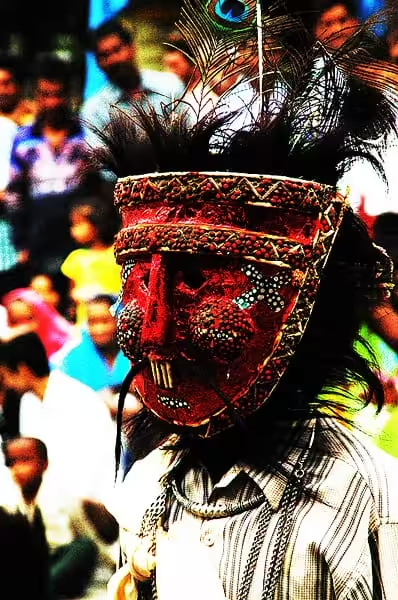
What is Gavari?
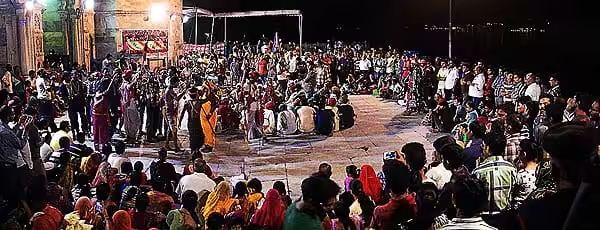
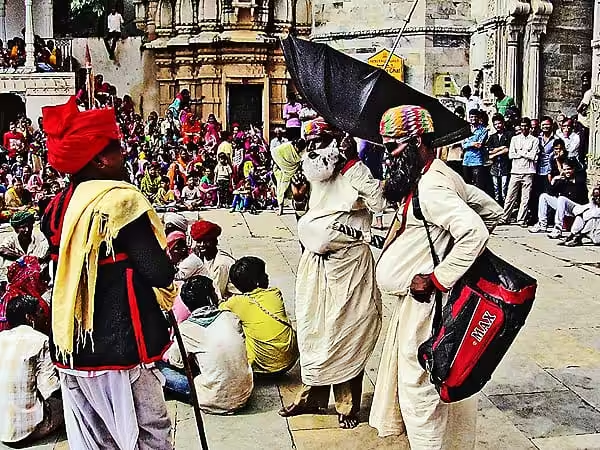
Gavari (also spelt Gavri) is a unique 40-day-long tribal festival and ritual theatre performed annually between July and September in the Mewar region of Rajasthan, primarily by the Bhil tribal community. It blends religious devotion, environmental reverence, historical memory, and social satire into a travelling folk performance tradition.
The Gavari Season
- Invocation & Permission: Bhopa shamans petition the Goddess for permission, which may be granted once every 4–5 years per village.
- Troupes: Each of ~25 participating Bhil communities forms a troupe of 20–80 members.
- Scale: Collectively perform 600+ village ceremonies, reaching over 2.5 lakh people annually.
- Austerities: During the season, participants avoid sex, alcohol, meat, shoes, beds, bathing, and even eating greens; they take one meal a day.
- Closure: Final performance in home village, immersion rites, and celebrations.
Themes & Dramas
Gavari’s repertoire carries three core values:
- Sacredness of Nature
- Radical Equality
- Feminine Divine Power
Popular Dramas:
- Badalya Hindawa (The Banyan Swing): Goddess punishes a king for desecrating a sacred tree.
- Bhilurana (King of the Bhils): Depicts 500 years of Bhil resistance against Turkic, Mughal, and British invasions.
Performance style:
- No scripts; emphasis on improvisation and trance-like creative state (bhava).
- Players are mostly illiterate farmers/labourers; each play is performed once in 4–5 years.
Characters
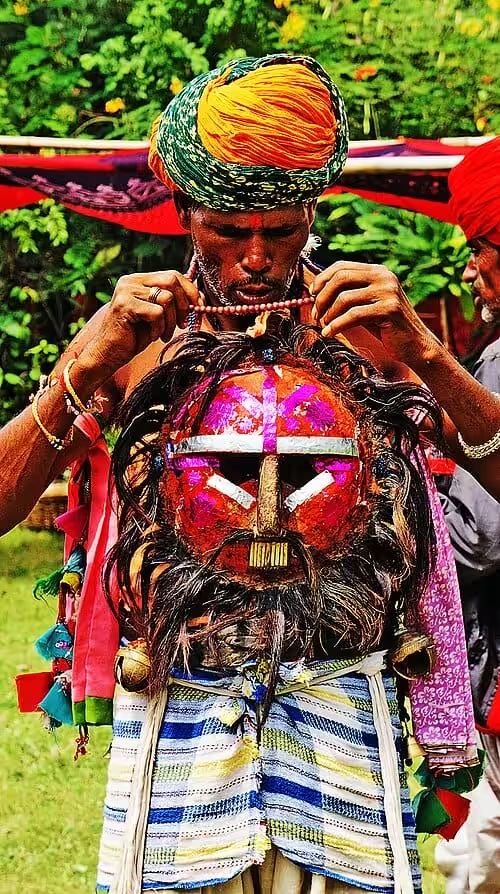
- Budia: Fusion of Shaivite and demonic energies, guardian of the arena, accepts offerings, and protects sacred space.
- Rai Consorts: Budia’s twin companions.
- Kutkadia: Master of ceremonies.
- Female roles: Played by men due to menstrual isolation customs.
Religious & Shamanic Aspects
- Two Invocations:
- Initial sanction (before the season).
- Daily confirmation (before each performance).
- Ritual implements: incense, flowers, madal drum, thali cymbals, trishula, dhuni fire.
- Possession and trance are central; believed to connect players and audience with the Goddess.
Social & Cultural Significance
- Environmental Ethic: Damaging nature is seen as blasphemous.
- Egalitarianism: Lampoons kings, corrupt officials, merchants, even shamans.
- Community Bonding: Strengthens inter-village solidarity; keeps youth aware of heritage.
- Economic Awareness: Skits teach rural audiences about trade exploitation, debt traps, and financial self-reliance.
Origins
- Disputed:
- May date to 16th century post-Mewar liberation from Mughals (1579).
- Some trace it to 3rd–4th century Gujarat or as old as Bhil culture itself (~4000 years).
Current Challenges
- School attendance rules prevent youth from joining month-long tours.
- Migration to cities reduces troupe size and continuity.
- No written scripts or training schools—learning is entirely oral and experiential.
Revival Efforts
Increased media, YouTube coverage, and academic interest.
Local NGOs & Bhil organisations actively promoting Gavari.
“Rediscovering Gavari” program (2016) by Rajasthan govt & NGOs—urban performances in Udaipur, later Delhi’s National Tribal Carnival attended by PM Modi.
Push for Sangeet Natak Akademi & UNESCO Intangible Cultural Heritage recognition.
UPSC Quick Facts
Revival status: Actively promoted; seeking UNESCO tag
Region: Mewar, Rajasthan
Community: Bhil tribe
Duration: 40 days
Core themes: Nature worship, equality, feminine divinity
Performance style: Improvised, trance-based folk theatre
Key characters: Budia, Rai consorts, Kutkadia
Significance: Religious, social, environmental, historical, economic
Tell Google you want more of this.
Add Anantam IAS as a preferred sourceOne tap, and this site shows up more often in your own Top Stories, AI Overviews and AI Mode. Remove it any time.