Daily Digest
UPSC · Civil Services Examination
Current Affairs · Thursday, 9 October 2025
Current affairs curated and edited by Anantam IAS faculty — pulled from The Hindu, PIB, IDSA, Foreign Affairs and the ministries. Read, annotate, revise.
Old Rajinder Nagar · Delhi 110005 · anantamias.com
Gaza Important Locations

Why in news:
The Israel–Hamas war has caused large-scale humanitarian devastation in Gaza, with extensive destruction of infrastructure and mass displacement of civilians. The report highlights the extent of loss of life, housing, and land occupation as of October 2025.
UPSC Relevance:
UPSC PYQ:
Q. Mediterranean Sea is a border of which of the following countries? (2017)
- Jordan
- Iraq
- Lebanon
- Syria
Select the correct answer using the code given below:
(a) 1, 2 and 3 only
(b) 2 and 3 only
(c) 3 and 4 only
(d) 1, 3 and 4 only
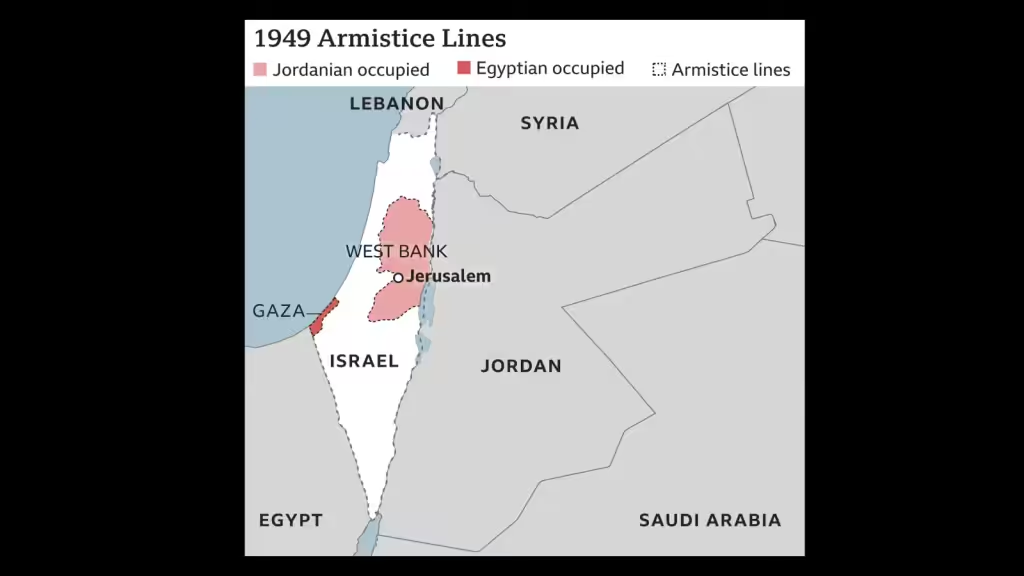
Gaza Important locations:
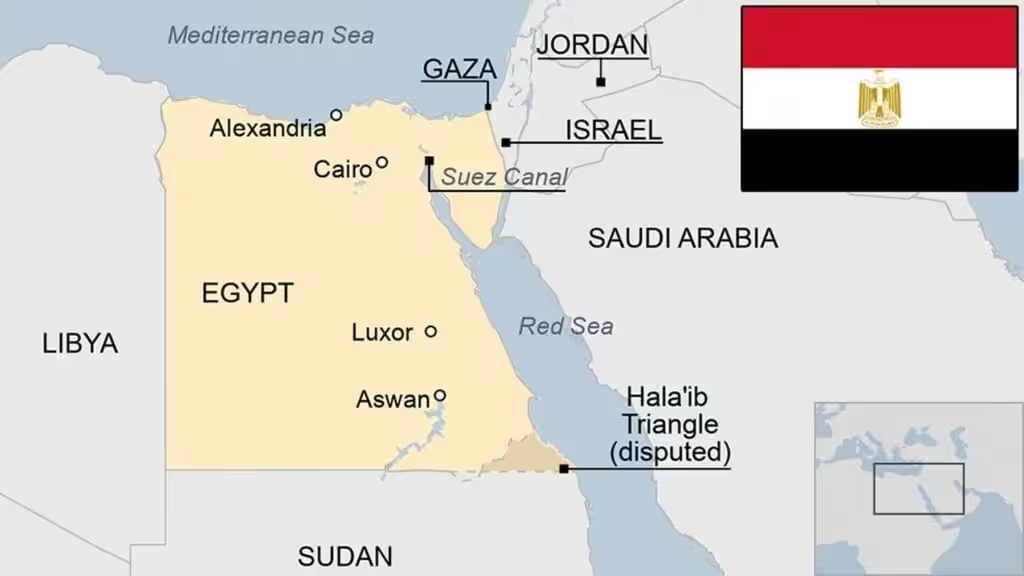
Gaza Share border with Mediterranean sea and Egypt .
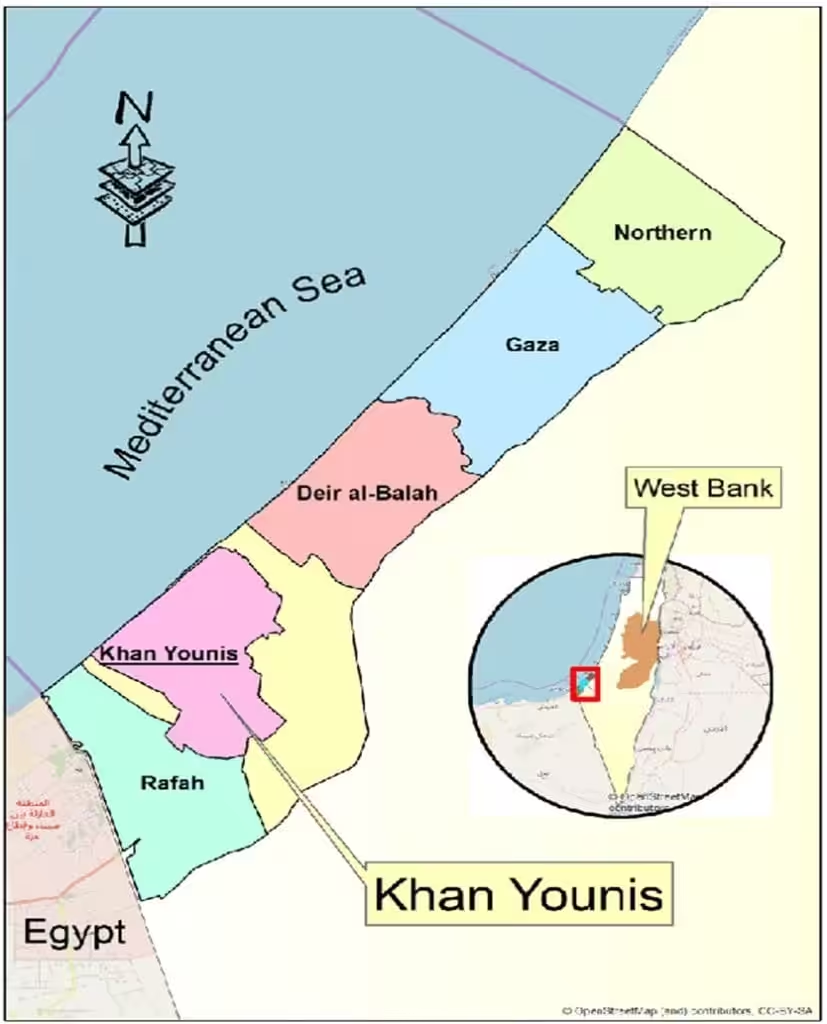
Regions in Gaza:
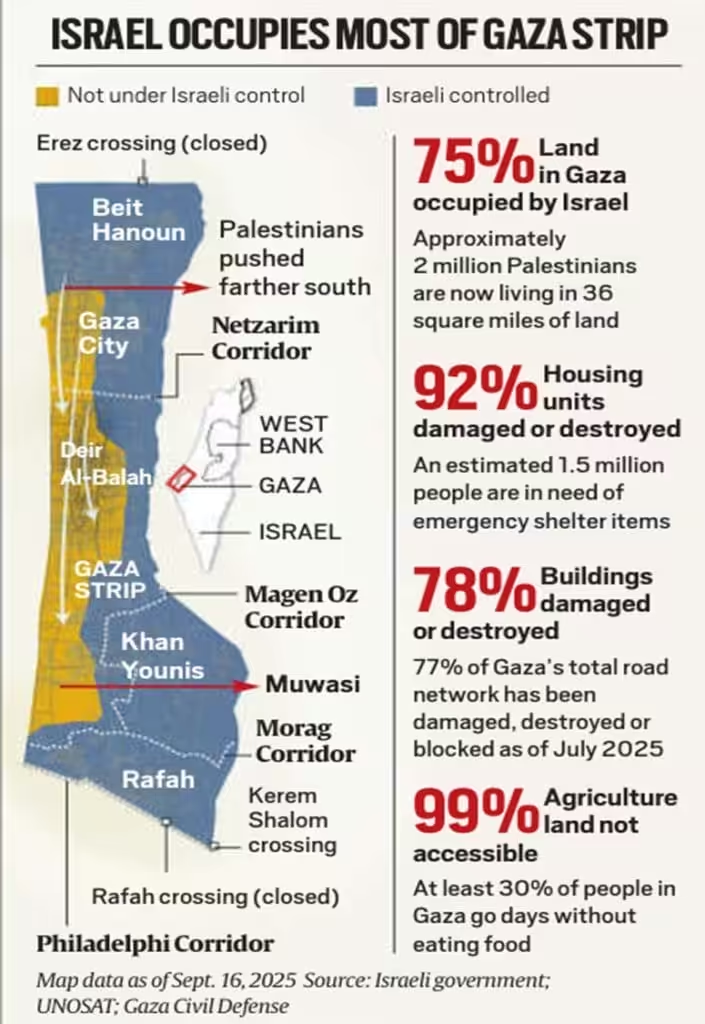
Important Crossings:
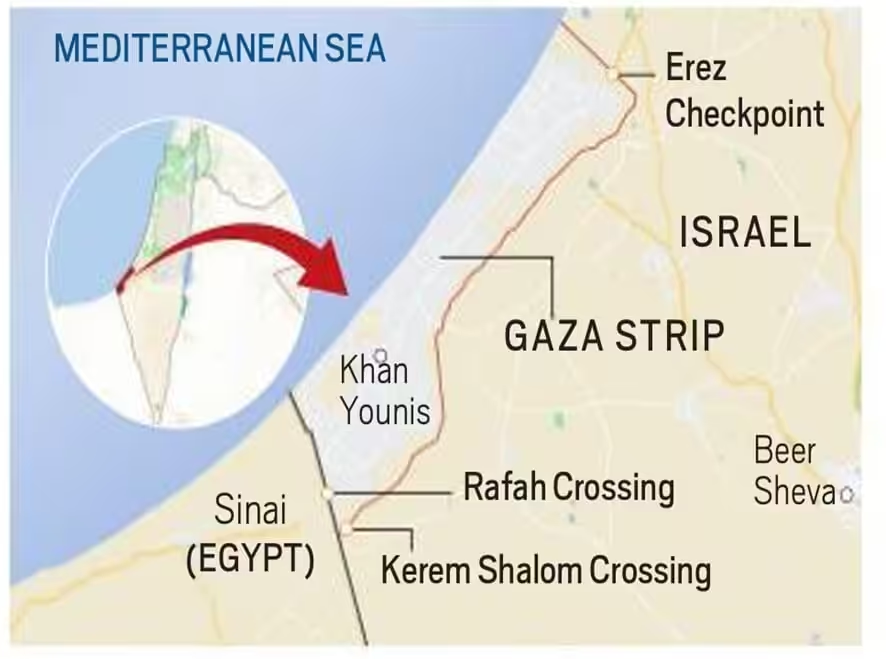
Source: https://anantamias.com/current-affairs/gaza-important-locations/
Myanmar important location in news

Why in news:
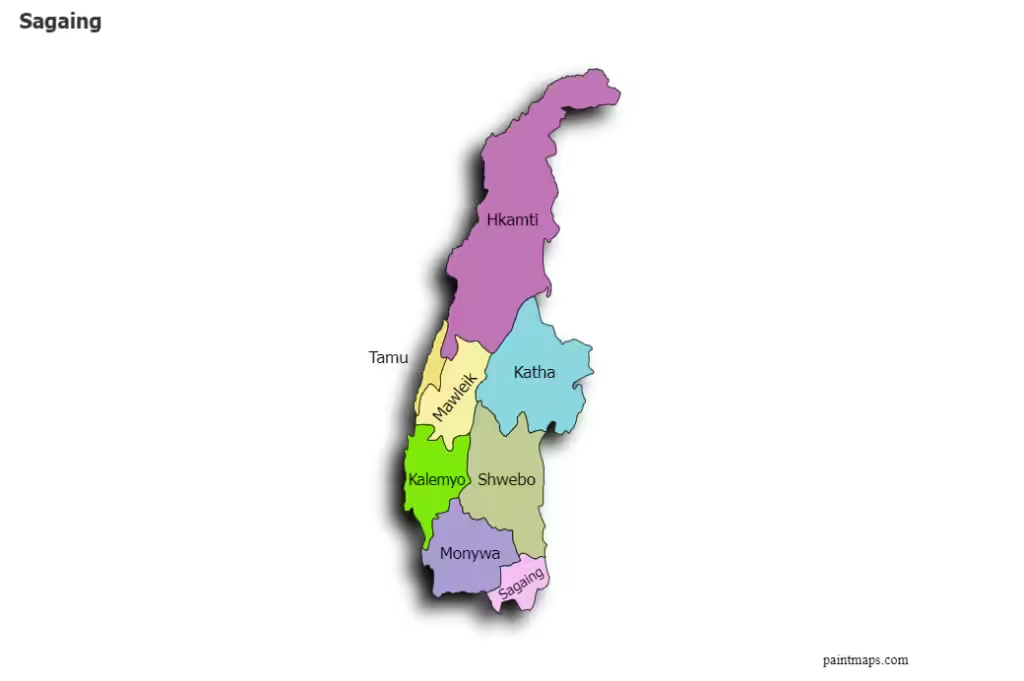
The Myanmar military carried out a paraglider airstrike on a village in the Sagaing region, killing at least 24 civilians, including children, and injuring more than 50 others. The attack took place during a Buddhist festival, which was also calling for the release of political prisoners.
UPSC Relevance:
UPSC PYQ:
Q.In the Mekong-Ganga Cooperation, an initiative of six countries, which of the following is/are not a participant/ participants? (2015)
- Bangladesh
- Cambodia
- China
- Myanmar
- Thailand
Select the correct answer using the code given below:
(a) 1 only
(b) 2, 3 and 4
(c) 1 and 3
(d) 1, 2 and 5
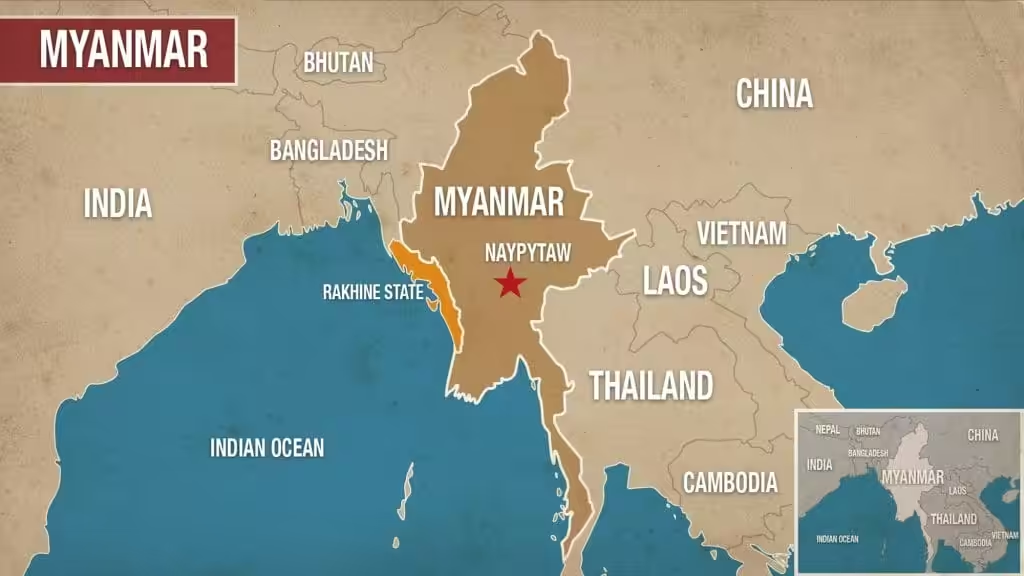
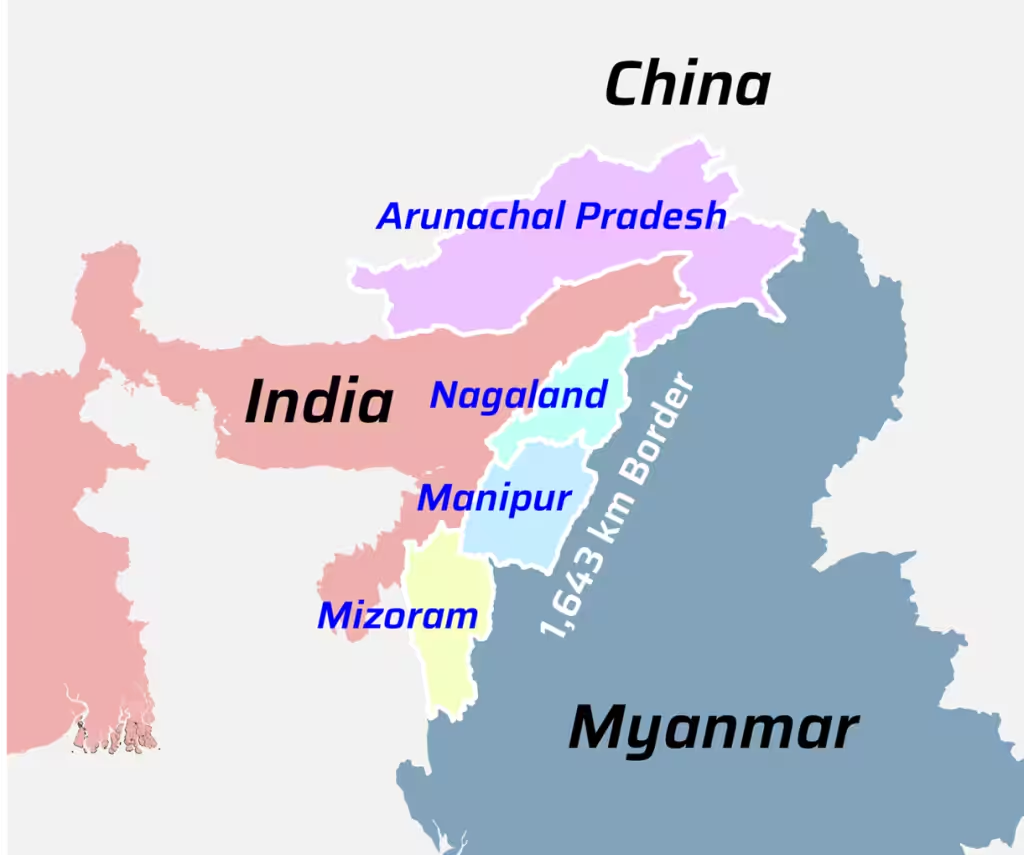
Important locations:
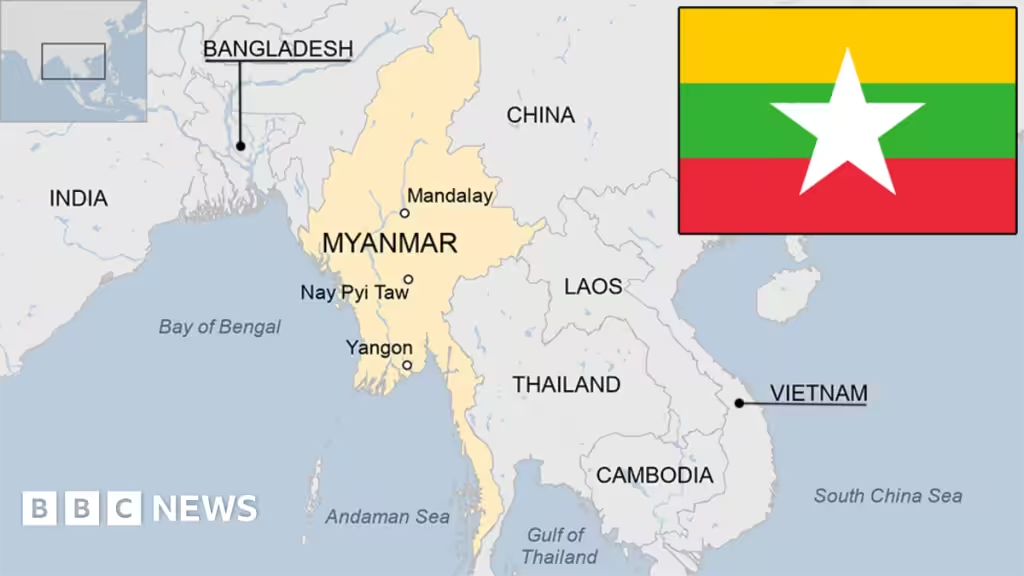
Indian States Border with Myanmar:
Sagaing Region in Myanmar:
Source: https://anantamias.com/current-affairs/myanmar-important-location-in-news/
Governor Issues

Context:
The West Bengal Governor recently made a visit to the Indian President, highlighting the law and order issues in the state, which has given rise to questions regarding implementation of President rule in the state.
UPSC Relevance:
Important Constitutional posts; federalism.
PYQ:
Q.1. With reference to the Indian polity, consider the following statements: (2025)
I. The Governor of a State is not answerable to any court for the exercise and performance of the powers and duties of his/her office.
II. No criminal proceedings shall be instituted or continued against the Governor during his/her term of office.
III. Members of a State Legislature are not liable to any proceedings in any court in respect of anything said within the House.
Which of the statements given above are correct?
(a) I and II only
(b) II and III only
(c) I and III only
(d) I, II and III
Constitutional Role of the Governor: A Balancing Act
- The Governor’s role is defined in Part VI of the Constitution. Article 153 mandates the appointment of a Governor for each state, and Articles 154–162 elaborate on the executive powers of the post. The Governor’s legislative powers include:
- Assenting to Bills (Article 200): The Governor can assent to the Bill, withhold assent, return the Bill (if not a Money Bill) for reconsideration or reserve the Bill for the President.
- Reservation Power (Article 201): The Governor may reserve Bills that may be repugnant to central laws or affect national interest.
- Discretionary Powers: He is generally bound by ministerial advice, but in specific situations (e.g., appointment of Chief Minister in a hung assembly), the Governor has discretionary authority.
The Tamil Nadu Case: Context and Verdict
- In the Tamil Nadu case, Governor R.N. Ravi withheld or delayed action on 10 Bills, including key legislations related to state universities, local governance, welfare schemes, early prisoner releases, etc. Some Bills were held back for over two years. The Tamil Nadu government moved the Supreme Court, arguing that the Governor’s inaction violated constitutional mandates and obstructed the functioning of the legislature.
Key Supreme Court Rulings on the Governor’s Role under Article 200:
- Governor Must Act on Aid and Advice of Council of Ministers: The Governor is not an alternate power centre but a constitutional functionary bound by the aid and advice of the Council of Ministers, especially after the State Assembly re-enacts a bill.
- No Scope for Political Obstruction or Discretionary Delay: The Governor must not delay or obstruct the legislative process for political gain. Such delays undermine parliamentary democracy & federalism.
- Doctrine of Constitutional Trust Must Be Upheld: As a trustee of the Constitution, the Governor must act with neutrality and cannot misuse discretionary powers to subvert the will of the elected government.
- Strict Timelines for Decision on Bills: The Court prescribed 1 month for assent or reservation (with CoM advice), 3 months to return a bill without CoM advice, and 1 month for assent after re-enactment. Delays beyond these timelines invite judicial scrutiny.
- Reservation for President Only at First Stage: If a bill is to be reserved for the President’s assent, it must be done at the initial stage. Once returned and re-passed, the Governor must give assent and cannot reserve it again.
Implications of the Supreme Court Verdict: Enhancing Federalism:
- Curtailing Governor’s Overreach: It establishes clear limits on the Governor’s powers, preventing the use of reservation or delay as political tools. It is especially important in opposition-ruled states.
- Empowering State Legislatures: The verdict reaffirms the primacy of elected assemblies in state law-making, ensuring that their decisions are not subject to arbitrary vetoes.
- Judicial Enforcement of Federal Norms: The judiciary checks executive excesses and upholds the Constitution’s federal spirit. The verdict re-establishes the courts as guardians of cooperative federalism.
- Encouraging Timely Governance: By demanding prompt action from the Governor, the verdict prevents administrative gridlock and promotes efficient governance.
Instances of Governor’s Discretion and Its Misuse:
- Arunachal Pradesh (2016): The Governor preponed the Assembly session, leading to a constitutional crisis and eventual dismissal of the state government.
- Bihar (2005): The State’s governor recommended assembly dissolution despite no floor test being held.
- Maharashtra (2019): The Governor’s early morning swearing-in of a minority government raised concerns about the misuse of discretionary powers.
Judicial Trends in Safeguarding Federal Principles:
The Indian judiciary has, over time, intervened to restore constitutional balance:
- S.R. Bommai versus Union of India (1994): The Court restricted the arbitrary imposition of President’s Rule, stating that the majority of a government must be tested on the Assembly floor.
- Nabam Rebia versus Deputy Speaker (2016): The Court held that Governors cannot act in their discretion to advance assembly sessions without the advice of the Council of Ministers.
- Rameshwar Prasad versus Union of India (2006): The dissolution of the Bihar Assembly was held unconstitutional, reinforcing that Governors are not political actors.
- The Tamil Nadu ruling continues the long-developed tradition of protecting the constitutional architecture and legislative autonomy.
Revisiting Recommendations of Commissions and Committees:
Several constitutional commissions have deliberated on the role of Governors, which are:
- Sarkaria Commission (1988): Governors should embody political neutrality and high integrity. It emphasises the need for consultation with the state Chief Minister before appointments.
- Punchhi Commission (2010): It urged a fixed tenure for Governors to insulate them from political pressures. It also advised restricting discretion and advocated for clear guidelines for Bill reservation.
- National Commission to Review the Working of the Constitution (NCRWC): The Venkatachaliah Commission. It suggested that Articles 200 and 201 be amended to set a time limit for the Governor’s decision on Bills.
Criticism of the Supreme Court’s Verdict:
The Supreme Court’s verdict is widely welcomed, but some critiques persist, which are:
- Encroachment on Executive Domain: Some argue that the judiciary is overstepping into executive functions, undermining the separation of powers.
- Vagueness in Timelines: The timeframes specified are confusing, leaving room for future ambiguity.
- Central Appointments Remain: As long as Governors are centrally appointed without state consultation, political bias cannot be completely ruled out.
Way Forward: Institutional and Structural Reforms
- Codify Governor’s Powers: Define limits to the Governor’s discretion under Articles 200 and 201through legislation or constitutional amendment.
- Mandate Timelines: Establish simple specific deadlines for gubernatorial action on Bills.
- Transparent Appointment Process: Institutionalise a consultative mechanism between the Centre and states while appointing Governors.
- Accountability Mechanisms: Introduce mechanisms for the state legislature to seek clarifications or explanations from the Governor on delays.
- Promote Cooperative Federalism: Encourage Centre–State coordination platforms like the Inter-State Council, NITI Aayog, etc. to address political frictions.
Source: https://anantamias.com/current-affairs/governor-issues/
Renewable energy world leading power source
Context:
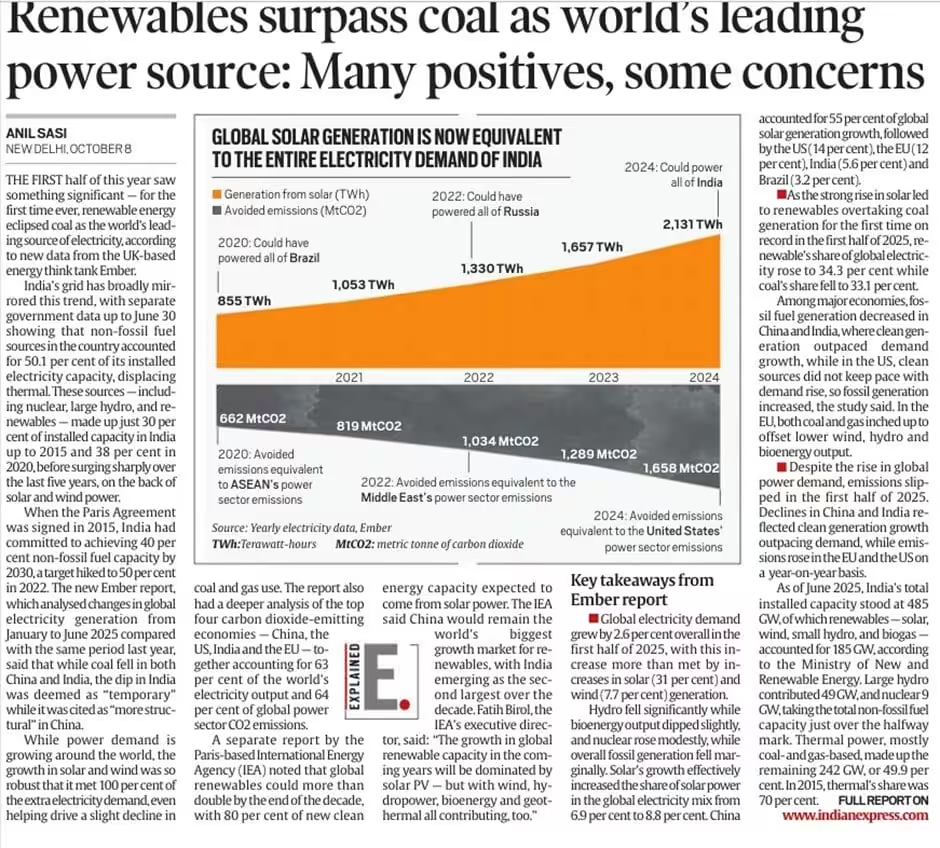
A study has highlighted that for the first time ever, renewable energy has eclipsed coal as the world’s leading source of electricity.
UPSC Relevance:
Energy sources including renewable energy.
PYQ:
Q. With reference to the Indian Renewable Energy Development Agency Limited (IREDA), which of the following statements is/are correct? (2015)
1.It is a Public Limited Government Company.
2.It is a Non-Banking Financial Company.
Select the correct answer using the code given below:
(a) 1 only
(b) 2 only
(c) Both 1 and 2
(d) Neither 1 nor 2
Renewable energy status:
- For the first time ever, renewable energy (34.3%) eclipsed coal (33.1%) as the world’s leading source of electricity.
- In India, Non-fossil sources accounted for 50.1% of its installed electric capacity.
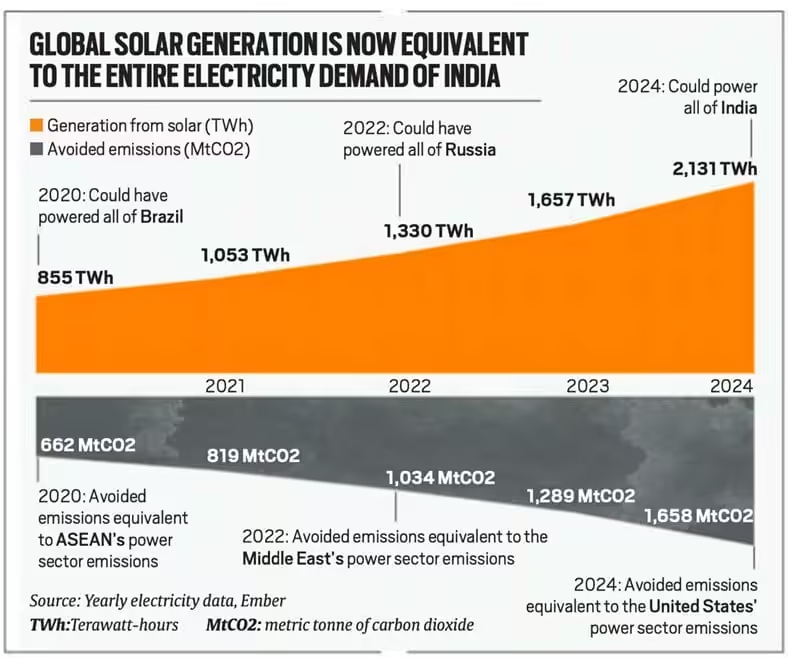
- Global renewables could more than double by the end of the decade, with 80 percent of new clean energy capacity expected to come from solar power.
- China would remain the world’s biggest growth market for renewables, with India emerging as the second largest over the decade.
India Renewable Energy Target:
- 2030 Goal: Achieve 500 GW of non-fossil fuel-based energy capacity.
- Short-Term Milestones: Reach 50% of energy capacity from renewable sources by 2030.
- Current Progress: As of January 2025, India has achieved 217.62 GW of non-fossil fuel-based energy capacity.
- Net-Zero Commitment: Attain net-zero carbon emissions by 2070.
Government schemes driving renewable energy success:
- PM Surya Ghar: Muft Bijli Yojana: Facilitated rooftop solar installations, especially in urban areas.
- Green Energy Corridor (GEC): Strengthened transmission systems for renewable energy-rich states.
- Faster Adoption and Manufacturing of Electric Vehicles (FAME): Promoted electric mobility, indirectly supporting renewable energy adoption.
- International Solar Alliance (ISA): Aimed to foster global cooperation in solar energy deployment.
- National Smart Grid Mission (NSGM): Enhanced grid integration to accommodate variable renewable energy sources.
- Hydrogen Energy Mission: Pushed for green hydrogen production as an alternative fuel.
Challenges to renewable energy in India:
- Land Acquisition Issues: Large-scale projects like solar parks face resistance from local communities over land use.
- Grid Stability: Intermittency of Renewable Energy sources like solar and wind strains grid reliability, especially during peak production.
- Storage Limitations: Lack of large-scale energy storage solutions hinders efficient utilization of renewable power.
- E-Waste Management: Rising deployment of solar panels and batteries creates challenges in end-of-life recycling.
- Resource Dependency: Dependence on imported critical minerals like lithium and cobalt affects the supply chain.
- Policy and Regulatory Hurdles: Delayed approvals and inconsistencies in state-level policies slow down project execution.
Way ahead:
- Floating Solar Projects: Utilize reservoirs and water bodies for solar installations, preserving land and enhancing efficiency.
- Decentralized Energy Systems: Promote blockchain-enabled peer-to-peer energy trading to support small-scale renewable generation.
- Green Hydrogen Push: Establish hydrogen highways and integrate surplus renewable energy for hydrogen production.
- Circular Economy for E-waste: Develop comprehensive policies for recycling solar panels and batteries to reduce environmental risks.
- Urban Renewable Energy Integration: Create incentives for rooftop solar and wind turbines in densely populated urban areas.
- Regional Energy Hubs: Establish Renewable Energy Special Economic Zones (RE-SEZs) for localized manufacturing and innovation.
Source: https://anantamias.com/current-affairs/renewable-energy-world-leading-power-source/