Shaksgam Valley: The Geography and Strategic Stakes of the Trans-Karakoram Tract
Why in News?
The Shaksgam Valley — the high, glaciated Trans-Karakoram Tract wedged between Pakistan-occupied Kashmir and China’s Xinjiang — is back in strategic focus after fresh reports of Chinese road and construction activity in and around the area, close to the Siachen sector.
India holds that the roughly 5,180 sq km tract is its own sovereign territory, illegally handed over by Pakistan to China under the 1963 Sino-Pakistan boundary agreement, since it lies within the erstwhile princely state of Jammu and Kashmir that acceded to India in 1947.
- What it is: the Shaksgam Valley or Trans-Karakoram Tract, a high-altitude expanse north of the Karakoram watershed.
- Area: about 5,180 sq km of largely uninhabited glaciers, ridges and the Shaksgam (Shimshal) river basin.
- The cession: Pakistan transferred administration of the tract to China under the 1963 Sino-Pakistan boundary agreement.
- India’s stand: New Delhi treats the agreement as illegal and void, since Pakistan had no sovereign title to cede Indian territory.
- Strategic proximity: it abuts the Siachen Glacier, the Karakoram Pass and the contested Aksai Chin theatre to the east.
- Latest trigger: open-source imagery has flagged Chinese infrastructure and access roads creeping into the tract, raising fresh concern in India.
The development matters in the context of:
- Three-way frontier: the tract sits where Indian-claimed territory, Pakistani control and Chinese administration converge in the western Himalaya.
- PoK linkage: it adjoins Gilgit-Baltistan, the area of Pakistan-occupied Kashmir through which the China-Pakistan Economic Corridor also runs.
- Siachen overhang: any Chinese consolidation near the tract increases pressure on India’s positions on the Saltoro Ridge and Siachen.
- Cartographic stakes: India’s official maps continue to show the tract as part of the Union Territory of Ladakh, not as Chinese territory.
UPSC Relevance
Prelims Relevance
- Shaksgam Valley location — north of the Karakoram main divide, between PoK / Gilgit-Baltistan and Xinjiang.
- Trans-Karakoram Tract as the formal name; area roughly 5,180 sq km.
- The 1963 Sino-Pakistan boundary agreement and the territory it transferred to China.
- Distinction between the Karakoram and the Himalaya as separate mountain systems.
- The Karakoram Pass — historic trade route linking Ladakh with Central Asia (Yarkand).
- Siachen Glacier and the Saltoro Ridge in relation to the tract.
- Aksai Chin — the China-administered plateau India claims, lying east of the tract.
- Difference between the Line of Control (LoC), the Line of Actual Control (LAC) and an international boundary.
- Gilgit-Baltistan as part of Pakistan-occupied Kashmir; the Instrument of Accession, 1947.
- The K2 massif and major glaciers (Siachen, Baltoro) of the Karakoram zone.
Mains Relevance
GS Paper 1 (Geography)
- Describe the physiography of the Trans-Karakoram region — relief, glaciation and drainage — and explain why such terrain shapes strategic behaviour.
- Locate the Shaksgam Valley with respect to the Karakoram divide, the Siachen sector and the Karakoram Pass, and bring out its watershed significance.
GS Paper 2 (International Relations)
- Examine India’s legal position that the 1963 Sino-Pakistan boundary agreement is void, and its implications for the India-Pakistan-China boundary tangle.
- Assess how Chinese activity in PoK and the Trans-Karakoram Tract intersects with the China-Pakistan strategic partnership and India’s security.
Essay
- Use the tract as a concrete anchor in essays on contested borders, sovereignty and the geography of power.
- Relevant to essays on how physical terrain conditions the strategic choices of states.
Background and Context
Where the Shaksgam Valley sits
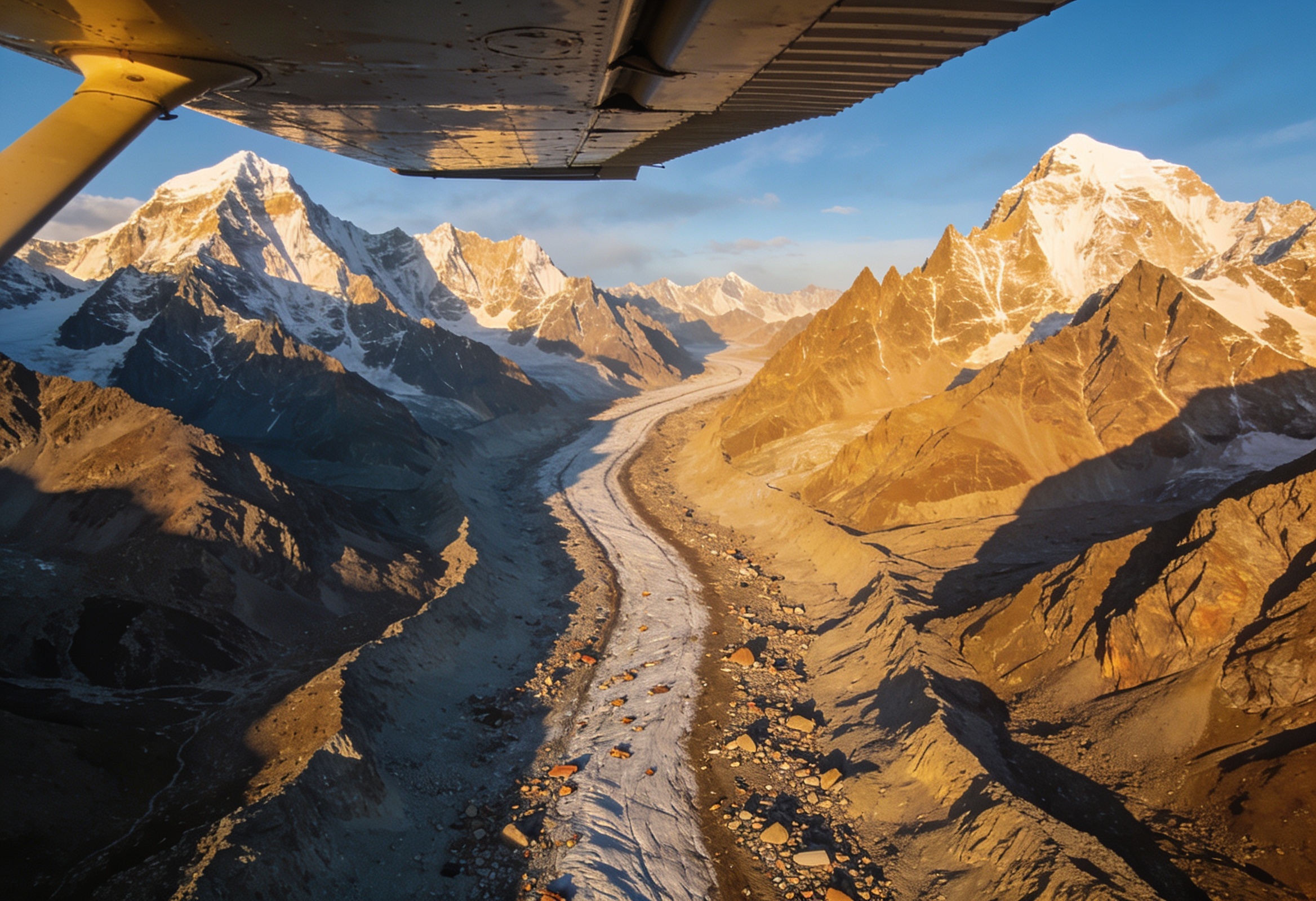
A high, glaciated bowl on the far side of the Karakoram watershed, far from any settled population.
- Setting: the valley lies north of the main Karakoram divide, draining toward the Shaksgam (Shimshal) river that flows into the Yarkand system in Xinjiang.
- Extent: the Trans-Karakoram Tract covers roughly 5,180 sq km of ridges, snowfields and glaciers, almost entirely uninhabited.
- Neighbours: it adjoins Gilgit-Baltistan (in PoK) to the west and China’s Xinjiang to the north and east.
- Mountain context: the Karakoram range here is distinct from the Himalaya proper, hosting some of the world’s highest peaks and longest mid-latitude glaciers.
The 1963 cession and how it happened
The tract changed hands not by conquest but by an agreement India never recognised.
- The deal: under the 1963 Sino-Pakistan boundary agreement, Pakistan transferred administration of the Shaksgam tract to China.
- Provisional clause: the text itself called the settlement provisional, to be renegotiated once the Kashmir dispute was resolved between India and Pakistan.
- Why India objects: New Delhi holds that Pakistan, as an illegal occupier of part of Jammu and Kashmir, had no sovereign title to cede the area.
- Outcome: China gained a contiguous high-altitude frontier with PoK, tightening the China-Pakistan strategic embrace along India’s north-western flank.
Why the legal status matters
The dispute turns on the chain of title that runs back to 1947.
- Accession, 1947: the princely state of Jammu and Kashmir acceded to India through the Instrument of Accession, bringing its entire territory — including Gilgit-Baltistan and the Shaksgam area — under Indian claim.
- Indian position: the whole of the erstwhile state, including Pakistan-occupied Kashmir, is integral to India, so the 1963 transfer is void.
- Parliamentary resolution: India’s Parliament has resolved that PoK and areas ceded to China remain Indian territory awaiting recovery.
- Cartography: official Indian maps continue to depict the tract within the Union Territory of Ladakh.
The strategic neighbourhood: Siachen, Karakoram Pass, Aksai Chin
The tract is hemmed in by some of the most militarised and contested geography on Earth.
- Siachen: the tract lies just north of the Siachen Glacier and the Saltoro Ridge, where Indian and Pakistani troops face off at extreme altitude.
- Karakoram Pass: a historic gateway between Ladakh and Central Asia (Yarkand), it is one of the great high mountain passes of the region.
- Aksai Chin: to the east lies the China-administered plateau India claims, scene of the 1962 conflict and a continuing flashpoint.
- Convergence: control of the tract gives China interior lines linking Xinjiang, Aksai Chin and PoK, with the China-Pakistan Economic Corridor running nearby.
LoC versus LAC versus international boundary
The terminology is exam-critical and explains why the tract is so legally tangled.
- Line of Control (LoC): the military ceasefire line between India and Pakistan in Jammu and Kashmir, formalised after the 1972 Simla Agreement; it is not an international border.
- Line of Actual Control (LAC): the notional line separating Indian-controlled areas from Chinese-controlled areas, including near Aksai Chin; it is undemarcated and disputed.
- International boundary: a settled, mutually recognised border — which neither the India-Pakistan nor the India-China alignment fully is in this sector.
- Shaksgam’s status: India claims it; China administers it; Pakistan handed it over — so it sits at the intersection of all three categories.
What renewed Chinese activity signals
Construction in remote terrain is rarely just about logistics; it changes facts on the ground.
- Roads and access: reported road-building and infrastructure in and around the tract improve Chinese reach toward the Siachen-Karakoram zone.
- Dual-use risk: high-altitude roads, tracks and camps in such terrain typically carry dual civilian-military value.
- Pressure on Siachen: better Chinese mobility north of Siachen can stretch India’s already demanding logistics on the Saltoro Ridge.
- India’s response: New Delhi has repeatedly protested Chinese activity in PoK and the tract as a violation of its sovereignty and territorial integrity.
Way Forward
Hold the legal and diplomatic line
- Consistent protest: keep formally objecting to any third-party activity in PoK and the Trans-Karakoram Tract as illegal occupation of Indian territory.
- Cartographic clarity: continue depicting the tract within Ladakh on official maps and in international forums.
Strengthen situational awareness
- Surveillance: sustain satellite and aerial monitoring of construction near Siachen, the Karakoram Pass and the tract.
- Logistics: deepen all-weather connectivity and high-altitude readiness on the Indian side of the Saltoro-Siachen sector.
Manage the China-Pakistan axis
- Diplomacy: factor the tract into the wider India-China boundary dialogue and India’s engagement on border management.
- Coalition: highlight the legal infirmity of activity in disputed PoK in relevant bilateral and multilateral conversations.
Conclusion
A small tract, an outsized stake: the Shaksgam Valley is empty of people but full of strategic meaning, sitting where Indian claims, Pakistani control and Chinese administration meet in the high Karakoram.
The legal thread is unbroken: India’s case rests on the 1947 accession of Jammu and Kashmir, which makes the 1963 Sino-Pakistan agreement a transfer of territory Pakistan never lawfully held.
Geography is destiny here: with Siachen, the Karakoram Pass and Aksai Chin all in the neighbourhood, every road built in this terrain reshapes the strategic map of India’s northern frontier.
UPSC Practice Questions
Prelims MCQ 1
With reference to the Shaksgam Valley (Trans-Karakoram Tract), consider the following statements:
- It lies north of the main Karakoram watershed, adjoining Gilgit-Baltistan and Xinjiang.
- It was transferred by Pakistan to China under the 1963 Sino-Pakistan boundary agreement.
- India regards the 1963 transfer as legal and final.
How many of the above statements are correct?
(a) Only one (b) Only two (c) All three (d) None
Answer: (b) Only two
Explanation:
Statements 1 and 2 are correct: the tract lies north of the Karakoram divide and was ceded by Pakistan to China in 1963. Statement 3 is wrong — India treats the transfer as illegal and void, since Pakistan had no sovereign title to the area.
Prelims MCQ 2
Which one of the following correctly distinguishes the Line of Control (LoC) from the Line of Actual Control (LAC)?
(a) The LoC separates India and China, while the LAC separates India and Pakistan (b) The LoC is the India-Pakistan ceasefire line in J&K, while the LAC is the disputed India-China separation line (c) Both are fully demarcated international boundaries recognised by all parties (d) The LoC lies in Aksai Chin, while the LAC lies along the Karakoram Pass
Answer: (b) The LoC is the India-Pakistan ceasefire line in J&K, while the LAC is the disputed India-China separation line
Explanation:
The LoC is the India-Pakistan military ceasefire line in Jammu and Kashmir, formalised after the 1972 Simla Agreement. The LAC is the undemarcated, disputed line separating Indian and Chinese controlled areas, including near Aksai Chin. Neither is a settled international boundary.
UPSC Mains Questions
- Locate the Shaksgam Valley with respect to the Karakoram watershed, the Siachen sector and Aksai Chin, and explain why its physiography makes it strategically significant despite being largely uninhabited.
- India regards the 1963 Sino-Pakistan boundary agreement as illegal and void. Examine the legal basis of this position and its implications for the India-Pakistan-China boundary disputes.
- Distinguish between the Line of Control, the Line of Actual Control and an international boundary. How does the status of the Trans-Karakoram Tract illustrate the difficulty of border settlement in this region?
Sources: Ministry of External Affairs, Government of India and Survey of India, Department of Science and Technology.
Frequently Asked Questions
What is the Shaksgam Valley?
The Shaksgam Valley, or Trans-Karakoram Tract, is a high, glaciated expanse of about 5,180 sq km lying north of the main Karakoram divide, between Pakistan-occupied Gilgit-Baltistan and China’s Xinjiang. It is largely uninhabited terrain of ridges, snowfields and the Shaksgam river basin.
How did China come to control it?
Pakistan transferred administration of the tract to China under the 1963 Sino-Pakistan boundary agreement. The agreement itself described the arrangement as provisional, to be revisited once the Kashmir dispute was settled — but China has administered the area ever since.
Why does India call the cession illegal?
Because the tract lies in the erstwhile princely state of Jammu and Kashmir, which acceded to India in 1947. India holds that Pakistan, as an illegal occupier, had no sovereign title to cede the area, so the 1963 transfer is void and the tract remains Indian territory.
How is the valley linked to Siachen?
The tract sits just north of the Siachen Glacier and the Saltoro Ridge, where Indian and Pakistani forces are deployed at extreme altitude. Chinese roads and infrastructure near the tract can improve access toward this sector and add pressure on India’s high-altitude positions.
What is the difference between Shaksgam and Aksai Chin?
Both are areas India claims but does not control. Aksai Chin is a plateau east of the tract, administered by China and central to the 1962 conflict. The Shaksgam Valley lies to its west and was handed to China by Pakistan in 1963, rather than seized directly.
Why is the valley back in the news?
Open-source satellite imagery has flagged renewed Chinese road-building and construction in and around the tract, close to the Siachen-Karakoram zone. India has protested such activity in Pakistan-occupied Kashmir and the tract as a violation of its sovereignty and territorial integrity.