Epigenetics: How Lifestyle and Environment Switch Your Genes On and Off
Epigenetics for UPSC: how DNA methylation, histone modification and microRNA control gene expression without changing DNA sequence, the 2024 Nobel Prize for microRNA discovery, and applications from cancer therapy to epigenetic clocks.
For most of the twentieth century, biology textbooks taught a clean story. Your DNA is the script. The script is set at conception and stays the same all your life. Your traits, from eye colour to disease risk, follow from this script. The story was elegant, and it was incomplete. It could not explain why identical twins, who share the same DNA, often develop different diseases. It could not explain how a fertilized egg, with one DNA sequence, gives rise to over 200 different cell types in the body. It could not explain how a famine in a grandparent’s childhood could affect a grandchild’s metabolism decades later.
The missing layer is epigenetics. The word literally means “above genetics,” and it captures the idea that there is a control system on top of DNA that determines which genes get read in which cells at which times. The DNA sequence itself does not change. What changes is whether each gene is switched on, switched off, dialed up or dialed down. This switching is shaped by chemical tags placed on the DNA, by how the DNA is packaged inside the cell, and by tiny regulatory RNA molecules that intercept the messages sent out from active genes.
Epigenetics matters for UPSC GS-III because of three large reasons. First, it is now central to modern cancer therapy. Most cancers involve epigenetic disruptions, and several new treatments target the epigenetic machinery rather than the DNA sequence. Second, the 2024 Nobel Prize in Physiology or Medicine was awarded for a key epigenetic discovery, the existence and function of microRNA. Third, the technology of epigenetic editing, including CRISPR-based tools that modify gene activity without cutting DNA, is reshaping what is possible in medicine.
This guide walks through the three main mechanisms, the genetics-versus-epigenetics distinction, the 2024 Nobel context, current therapeutic applications and the policy questions ahead.
Quick Facts: Epigenetics at a Glance
- Definition: The study of changes in gene expression that do not alter the DNA sequence
- Key feature: Epigenetic changes are reversible, unlike genetic mutations
- Three main mechanisms: DNA methylation, histone modification, and non-coding RNA including microRNA
- 2024 Nobel in Physiology or Medicine: Awarded to Victor Ambros and Gary Ruvkun for the discovery of microRNA
- First microRNA discovered: lin-4 in the worm Caenorhabditis elegans, reported by Ambros in 1993
- Number of human protein-coding genes: About 19,000 to 20,000
- Number of microRNAs in humans: About 2,000, regulating up to 60 percent of human genes
- Casgevy: First CRISPR-based gene therapy approved (2023), used for sickle cell disease
What Is Epigenetics?
Epigenetics is the study of heritable and reversible changes in gene expression that do not involve changes in the DNA sequence. The term was coined by the British developmental biologist Conrad Waddington in 1942, when he was trying to explain how a single genome could produce a complex organism with many different cell types. Modern molecular biology has filled in the chemical details that Waddington could only sketch.
Inside every cell of your body, the DNA is the same. The 19,000 protein-coding genes you inherited at conception sit in every single one of your cells. Yet a liver cell looks and behaves entirely differently from a neuron, a muscle fibre or a skin cell. The reason is that different sets of genes are turned on in different cells. Liver cells switch on genes for detoxification enzymes and switch off genes for muscle proteins. Neurons do the opposite. The pattern of which genes are on and which are off is what makes a cell what it is, and that pattern is set, maintained and modified by epigenetic mechanisms.
Epigenetics also responds to the environment. Diet, exercise, smoking, stress, exposure to pollutants and even early childhood experiences can leave epigenetic marks on the genome. Some of these marks fade. Others persist for decades and may even be transmitted, in part, to the next generation. The science here is still developing, and not every claim about transgenerational epigenetics holds up to scrutiny, but the basic point is well established. Genes are not your destiny. They are a starting hand, and how that hand is played depends substantially on epigenetics.
For the broader molecular biology context that epigenetics sits inside, see our coverage of types of DNA and biotechnology in India.
Background and Historical Context
The concept of epigenetics predates the molecular tools to study it by half a century. Conrad Waddington’s 1942 framing of an “epigenetic landscape” was metaphorical, picturing cell development as a marble rolling down a hillside with branching valleys. The molecular era began in the 1960s and 1970s, when researchers showed that DNA could be modified by methyl groups, that this modification correlated with gene silencing, and that proteins called histones around which DNA is wrapped could themselves be modified in ways that affected gene expression.
The third major mechanism, microRNA, was discovered in 1993 by Victor Ambros and his colleagues, working on the tiny worm Caenorhabditis elegans. They showed that a small piece of non-coding RNA called lin-4 controlled the timing of larval development by binding to a target messenger RNA and shutting it down. Gary Ruvkun, working in parallel, identified the target gene and explained the mechanism. For years, microRNA was thought to be an oddity of worms. By the early 2000s, it was clear that microRNAs were ubiquitous in animals, plants and even some viruses. Humans have around 2,000 different microRNAs, collectively regulating an enormous fraction of all genes. Ambros and Ruvkun shared the 2024 Nobel Prize in Physiology or Medicine for this foundational discovery.
The applied side of epigenetics has accelerated rapidly. The first epigenetic cancer drug, azacitidine for myelodysplastic syndrome, was approved by the United States Food and Drug Administration in 2004. It works by inhibiting DNA methylation. Several histone deacetylase inhibitors followed, including vorinostat for cutaneous T-cell lymphoma. The CRISPR revolution from 2012 onward gave scientists tools that could be re-engineered to edit not just DNA sequence but also the epigenetic state of a gene without cutting the DNA. The first CRISPR-based therapy, Casgevy, was approved in late 2023 for sickle cell disease.
In parallel, epigenetic clocks based on methylation patterns at hundreds of sites across the genome can now estimate biological age, sometimes more accurately than chronological age, and predict mortality risk. The science here is still settling, but the trajectory is clear.
The Three Main Mechanisms of Epigenetics
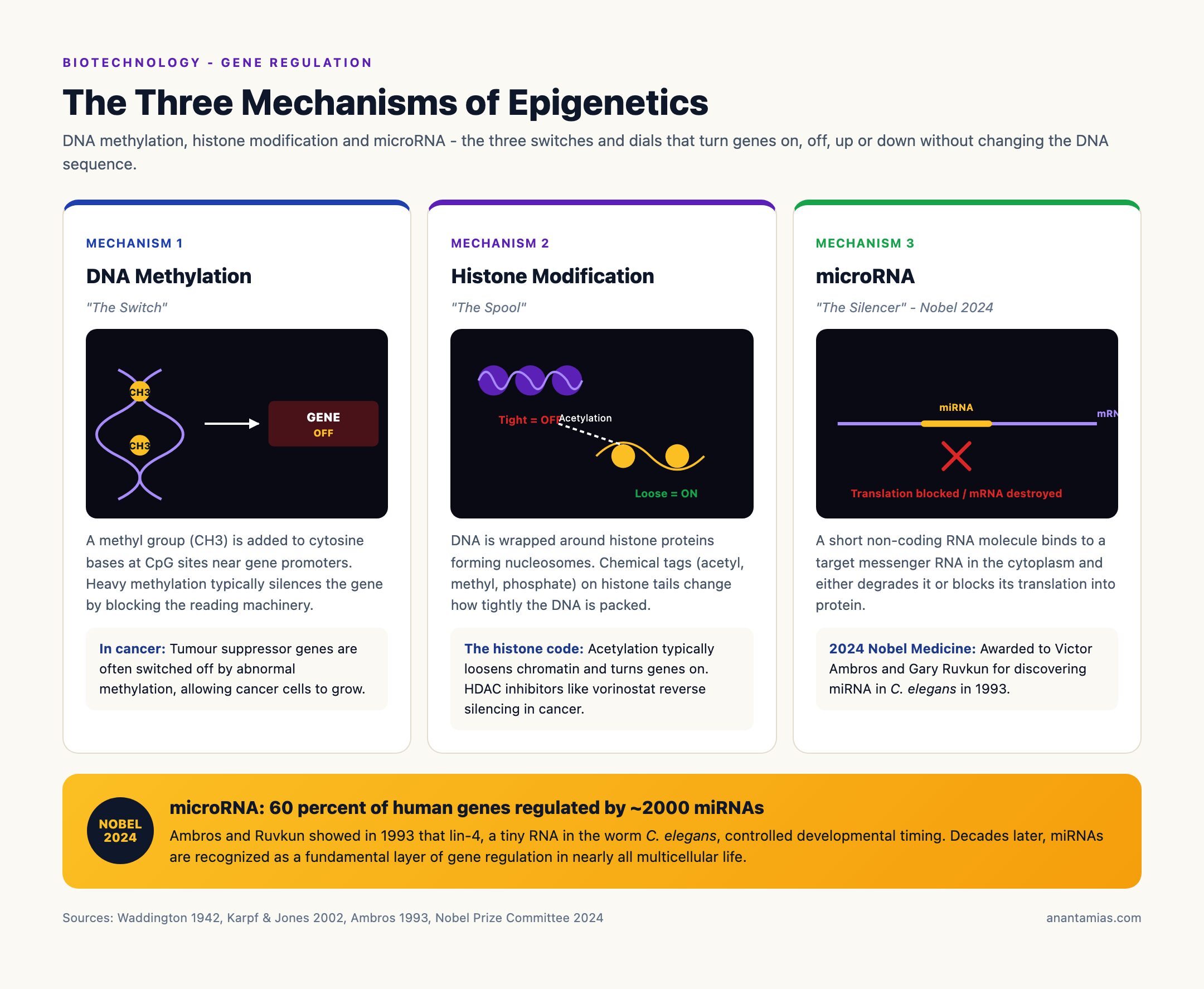
The three main mechanisms of epigenetic regulation work together to determine which genes are read and how strongly. The first is DNA methylation. A small chemical tag, a methyl group, is added to certain cytosine bases of the DNA, particularly in regions called CpG islands found near gene promoters. Heavy methylation typically silences a gene, like an “off” switch. Demethylation reactivates it. The pattern of methylation is set early in development, maintained through cell division by maintenance methyltransferases, and modified by enzymes responsive to cellular and environmental signals. In cancer, this system often goes wrong. Tumour suppressor genes can be silenced by abnormal methylation, allowing the cancer to grow.
The second mechanism is histone modification. DNA in the cell nucleus is not loose. It is wrapped around protein spools called histones, which together form structures called nucleosomes. Hundreds of these spools, packed tightly, fold into the chromatin fibres that we see as chromosomes. The histones themselves carry tail ends that stick out of the nucleosome and can be modified by various chemical tags including acetyl, methyl, phosphate and ubiquitin groups. These tags act as a code. Heavy acetylation typically loosens the chromatin and makes the gene accessible for reading. Certain methylation patterns on histones do the opposite, condensing the chromatin and silencing the gene. The combination of histone modifications is sometimes called the “histone code.”
The third mechanism involves non-coding RNAs, especially microRNAs. A microRNA is a short, single-stranded RNA molecule that does not code for a protein. Instead, it binds to messenger RNAs in the cytoplasm through partial sequence matching and either degrades the mRNA or blocks its translation into protein. A single microRNA can target dozens or hundreds of mRNAs. About 60 percent of human protein-coding genes are estimated to be regulated by microRNAs. This third mechanism is the focus of the 2024 Nobel Prize and is the most rapidly evolving area of epigenetic medicine.
Comparative: Genetics vs Epigenetics
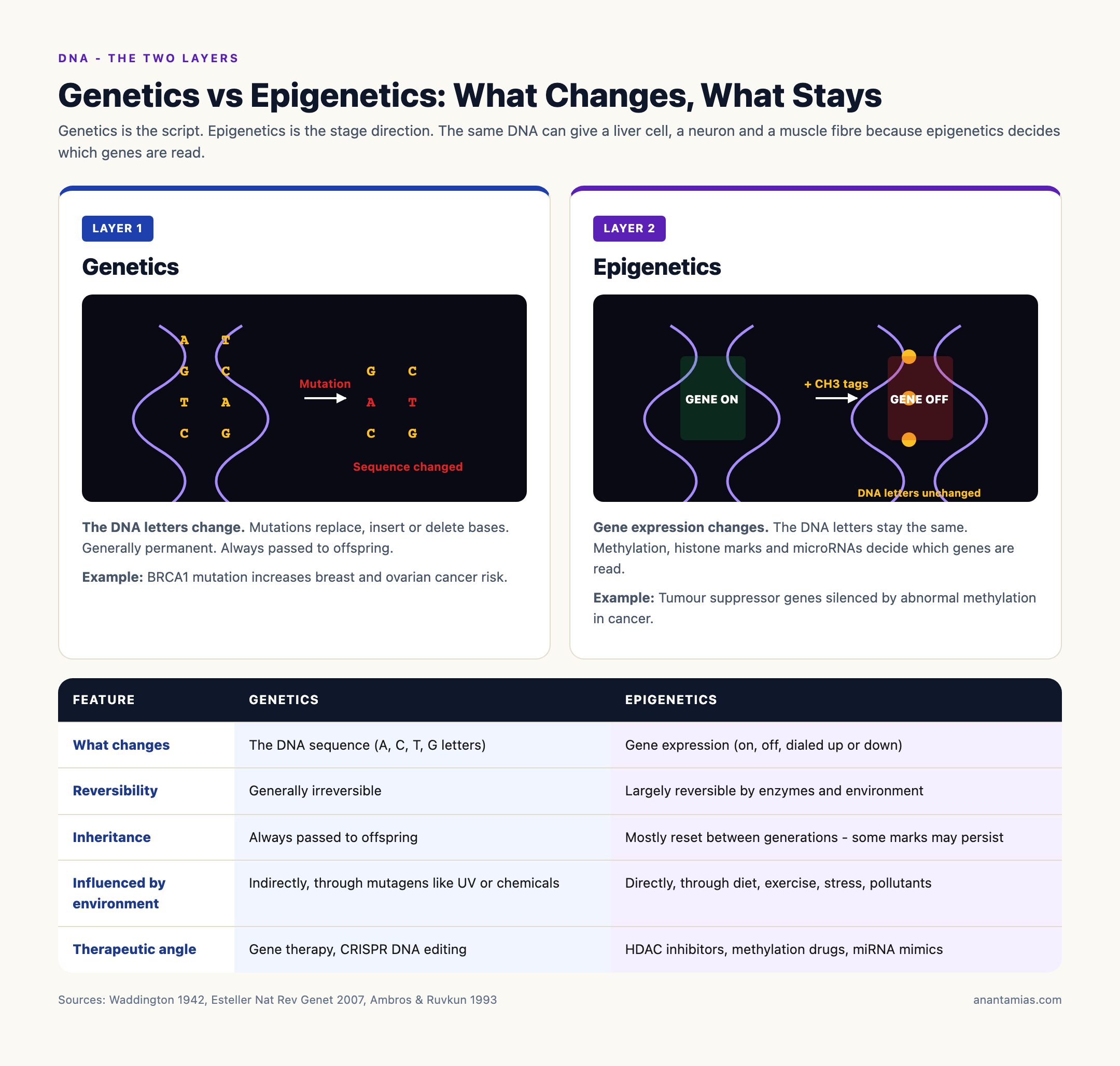
| Feature | Genetics | Epigenetics |
|---|---|---|
| What changes | The DNA sequence (A, C, T, G letters) | Gene expression (on/off, dialed up or down) |
| Reversibility | Generally irreversible (mutations are permanent) | Largely reversible through enzyme action and environmental change |
| Inheritance | Always passed from parent to offspring | May be partially passed but most marks reset between generations |
| Time of onset | Set at conception or by mutation events | Set during development and modified throughout life |
| Influence by environment | Limited and indirect | Direct, through diet, exercise, pollutants, stress |
| Therapeutic target | Gene editing (CRISPR, gene therapy) | Methylation inhibitors, HDAC inhibitors, microRNA mimics or blockers |
| Key example | BRCA1 mutation raising breast cancer risk | Methylation-driven silencing of tumour suppressor genes |
Why Epigenetics Matters: Cancer, Ageing and Beyond
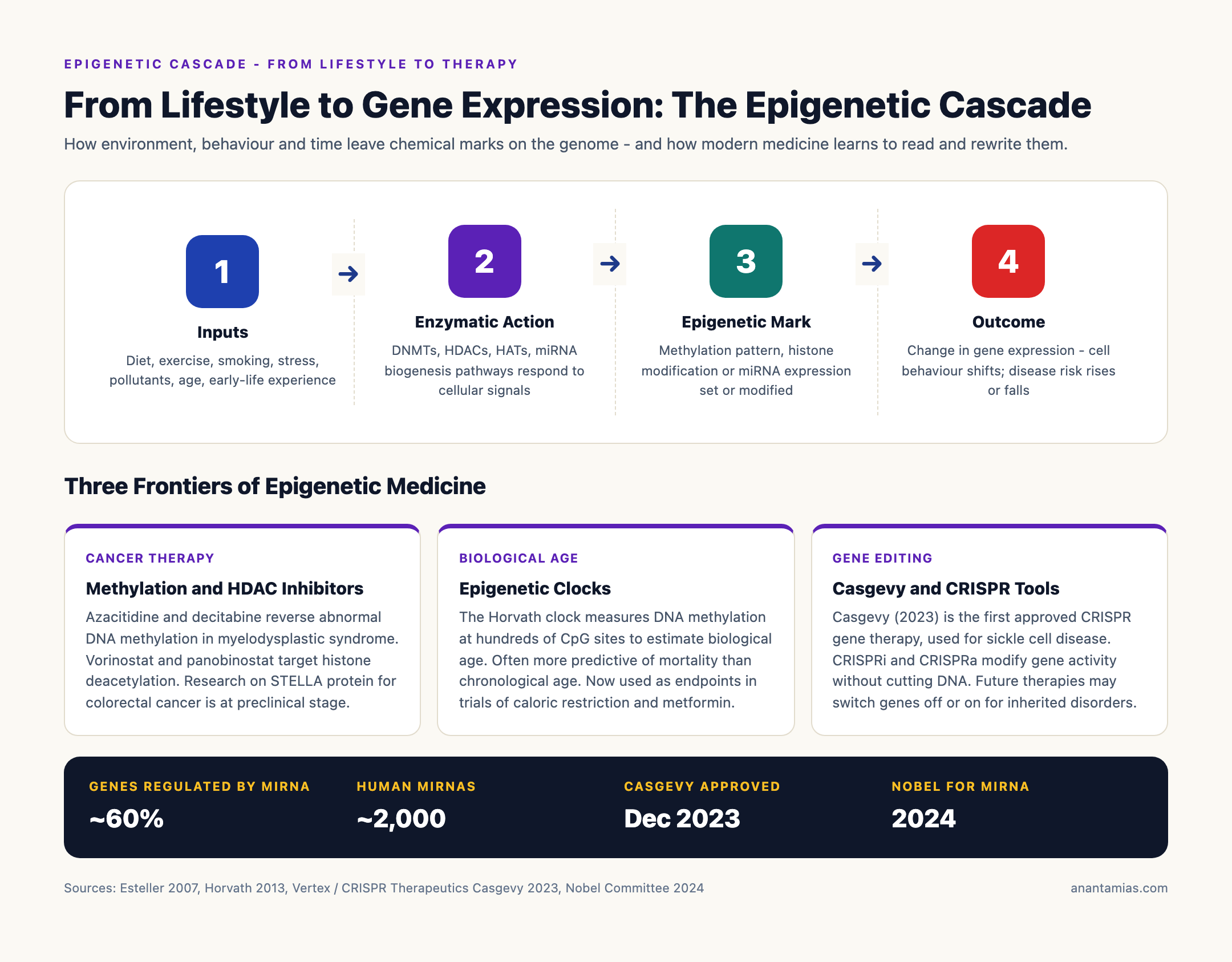
Cancer is where epigenetic medicine has had its biggest practical impact so far. Most cancers involve a combination of genetic mutations and epigenetic disruptions. Tumour suppressor genes that normally restrain cell division can be silenced by aberrant methylation. Oncogenes that drive proliferation can be activated by inappropriate histone modifications. Drugs that reverse these epigenetic marks have moved from the bench into the clinic. Azacitidine and decitabine, both DNA methyltransferase inhibitors, are standard treatments for myelodysplastic syndrome and acute myeloid leukaemia. Histone deacetylase inhibitors like vorinostat and panobinostat are used in certain lymphomas and multiple myeloma. Each works by restoring a more normal epigenetic state, allowing the cancer cell either to die naturally or to be more vulnerable to other treatments.
A particularly striking development in colorectal cancer is the discovery that a protein called STELLA can block adverse epigenetic changes that drive tumour growth. Early-stage research suggests that targeting STELLA-related pathways could offer a way to treat colorectal tumours without the toxicity of chemotherapy. This work is at preclinical and early clinical stages and is being closely watched.
Beyond cancer, epigenetic clocks are reshaping how we measure biological ageing. The Horvath clock and several successor clocks measure DNA methylation at hundreds of specific sites across the genome and produce an estimated biological age. People whose biological age exceeds their chronological age tend to have higher mortality risk. The clocks are now being used as endpoints in clinical trials of interventions ranging from caloric restriction to specific drugs, though their use in routine clinical care is still emerging.
The newest frontier is epigenetic editing. Casgevy, the first approved CRISPR-based therapy, uses a modified Cas9 enzyme to edit the DNA sequence of the BCL11A gene in blood stem cells, restoring fetal haemoglobin production in sickle cell patients. While Casgevy itself edits the DNA, related techniques called CRISPRi and CRISPRa use a catalytically inactive Cas9 fused to repressor or activator proteins to silence or activate genes without cutting the DNA at all. These tools are now being explored for diseases ranging from Huntington’s disease to common metabolic disorders.
The wider biotech context is covered in our biotechnology guide, which complements this article.
Lifestyle, Environment and Epigenetic Health
The link between lifestyle and epigenetics is one of the most popularised areas of the science, and it is also where claims sometimes outrun evidence. The well-supported findings are these. Smoking causes characteristic methylation changes at thousands of sites across the genome, many of which fade after quitting but some of which persist for decades. Diet quality, particularly intake of folate and other B vitamins, affects methylation patterns because the methyl groups themselves are derived from dietary sources. Physical exercise produces consistent epigenetic changes in skeletal muscle and immune cells. Chronic stress, particularly in early life, leaves measurable methylation signatures on stress-response genes.
The transgenerational claims are more controversial. Studies of populations that survived famines, including the Dutch Hunger Winter of 1944 and famines in China and elsewhere, have found that grandchildren of survivors show altered metabolic and developmental profiles. Whether these effects are mediated by epigenetic transmission, by in-utero effects on the parents’ development, or by social and cultural factors is still being worked out. The mechanism is not fully understood and the magnitude of true epigenetic inheritance in humans is debated.
For UPSC purposes, the takeaway is that epigenetics provides a molecular bridge between environment and biology. Public health interventions, nutrition policy and chronic disease prevention all sit on this bridge. So do research questions about why noncommunicable disease burden in India is rising even in populations whose genetic background has not changed.
Prelims Pointers
- Epigenetics is the study of heritable and reversible changes in gene expression that do not alter the DNA sequence.
- The term was coined by Conrad Waddington in 1942.
- The three main mechanisms are DNA methylation, histone modification, and non-coding RNA including microRNA.
- DNA methylation typically adds a methyl group to cytosine bases at CpG sites, often silencing genes.
- Histones are the protein spools around which DNA is wrapped to form nucleosomes and chromatin.
- The 2024 Nobel Prize in Physiology or Medicine was awarded to Victor Ambros and Gary Ruvkun for the discovery of microRNA.
- The first microRNA, lin-4, was identified in the worm Caenorhabditis elegans by Ambros in 1993.
- Humans have approximately 2,000 microRNAs that regulate up to 60 percent of protein-coding genes.
- Azacitidine and decitabine are DNA methyltransferase inhibitors used to treat blood cancers.
- Casgevy, approved in late 2023, is the first CRISPR-based gene therapy and is used for sickle cell disease.
- Epigenetic clocks measure biological age based on methylation patterns at specific sites.
- Epigenetic changes are reversible, while genetic mutations are generally permanent.
Mains Practice Questions
- Discuss the three main mechanisms of epigenetic regulation and explain why they are central to modern medicine. (250 words)
- Distinguish between genetics and epigenetics and analyze the implications for cancer therapy and pandemic preparedness. (250 words)
- The 2024 Nobel Prize in Physiology or Medicine recognized the discovery of microRNA. Explain its significance for biology and biomedicine. (150 words)
- Lifestyle and environment shape gene expression through epigenetic mechanisms. Examine the public health policy implications for India. (250 words)
Way Forward
India needs an integrated epigenetics strategy that connects basic research, clinical translation and public health. On the research side, the Department of Biotechnology and the Indian Council of Medical Research should support a national epigenetics consortium that brings together major research institutions, including the Centre for Cellular and Molecular Biology in Hyderabad, the National Institute of Biomedical Genomics in Kalyani, the Institute of Genomics and Integrative Biology in Delhi and major university genomics laboratories. The consortium can pool data, standardize methods and accelerate Indian-context discoveries.
On the clinical side, the country’s growing capacity in stem cell research and oncology should integrate epigenetic biomarkers into routine cancer diagnosis and treatment monitoring. The Tata Memorial Centre, AIIMS and major regional cancer centres are already piloting this, and standardized national guidelines would speed adoption. Epigenetic clocks should be assessed for use in chronic disease cohorts, including the diabetes and hypertension populations where India has unusually high noncommunicable disease burden.
On the technology side, India’s biotech industry should invest in microRNA-based diagnostics and therapeutics. Several Indian start-ups are working in this area, supported by the Biotechnology Industry Research Assistance Council. Scaling these efforts requires sustained capital and clearer regulatory pathways at the Central Drugs Standard Control Organisation. The same regulatory architecture is needed for next-generation epigenetic editing therapies, which are likely to move from experimental to standard care over the next decade.
Public health communication is the final piece. The science of lifestyle epigenetics, where evidence-based, can support nutrition campaigns, anti-smoking efforts and the reduction of childhood adverse experiences. Communication needs to be careful, because oversimplified epigenetic claims have been used to market many unproven products. A clear scientific voice from agencies like ICMR can both help policy and protect the public from pseudoscience.
Frequently Asked Questions
What is epigenetics in simple terms?
Epigenetics is the system of chemical tags and structural changes that determine which genes get switched on and off in a cell, without changing the DNA sequence itself. It explains how the same DNA can produce many different cell types and how lifestyle and environment can affect gene activity.
What is the difference between genetics and epigenetics?
Genetics deals with the actual sequence of DNA letters, which is set at conception and only changes through mutation. Epigenetics deals with how those genes are expressed. Epigenetic changes are reversible and respond to environment, while genetic mutations are generally permanent.
Who won the 2024 Nobel Prize for epigenetics work?
The 2024 Nobel Prize in Physiology or Medicine was awarded to Victor Ambros and Gary Ruvkun for the discovery of microRNA, a major class of non-coding regulatory RNAs that control gene expression after transcription.
What are the three main mechanisms of epigenetic regulation?
The three main mechanisms are DNA methylation, where methyl groups silence genes by tagging cytosine bases; histone modification, where chemical tags on histone proteins change how tightly DNA is wrapped; and non-coding RNAs, especially microRNAs, which bind to messenger RNAs and silence them after transcription.
Are epigenetic changes inherited by children?
Some epigenetic marks can be passed from parents to children, but most are reset during early embryonic development. Strong claims of transgenerational epigenetic inheritance in humans are still debated. The clearest cases are in plants and some animal models. In humans, partial transmission has been observed but the overall scale is uncertain.
How does epigenetics relate to cancer?
Most cancers involve epigenetic disruptions in addition to genetic mutations. Tumour suppressor genes can be silenced by abnormal DNA methylation, while oncogenes can be activated by altered histone modifications. Several approved cancer drugs target the epigenetic machinery, including azacitidine and the histone deacetylase inhibitor vorinostat.
What is an epigenetic clock?
An epigenetic clock is a tool that estimates biological age based on DNA methylation patterns at specific sites in the genome. The Horvath clock and similar models can sometimes predict mortality risk and lifespan more accurately than chronological age, and they are used in research on ageing interventions.
Can lifestyle really change my epigenetics?
Yes, in measurable ways. Smoking, diet, exercise and chronic stress all leave specific methylation marks on the genome. Some marks fade quickly when the exposure stops, others persist for years. The magnitude of effect for any single behaviour is modest, but the cumulative pattern over a lifetime is meaningful.
What is microRNA and why was its discovery important?
A microRNA is a short, single-stranded RNA molecule that does not code for a protein. It binds to messenger RNAs and either destroys them or blocks their translation, regulating gene expression after transcription. The discovery, made by Victor Ambros and Gary Ruvkun in the 1990s, established a new layer of biological regulation and has transformed our understanding of development, disease and therapy.
How is CRISPR being used in epigenetic medicine?
CRISPR can be re-engineered to edit not just DNA sequence but also the epigenetic state of a gene. CRISPRi uses an inactive Cas9 fused to a repressor to silence specific genes without cutting DNA. CRISPRa uses an activator to switch genes on. Casgevy, approved in 2023, is the first CRISPR-based therapy in clinical use and is used for sickle cell disease.