Biotechnology in India: Applications & UPSC Notes
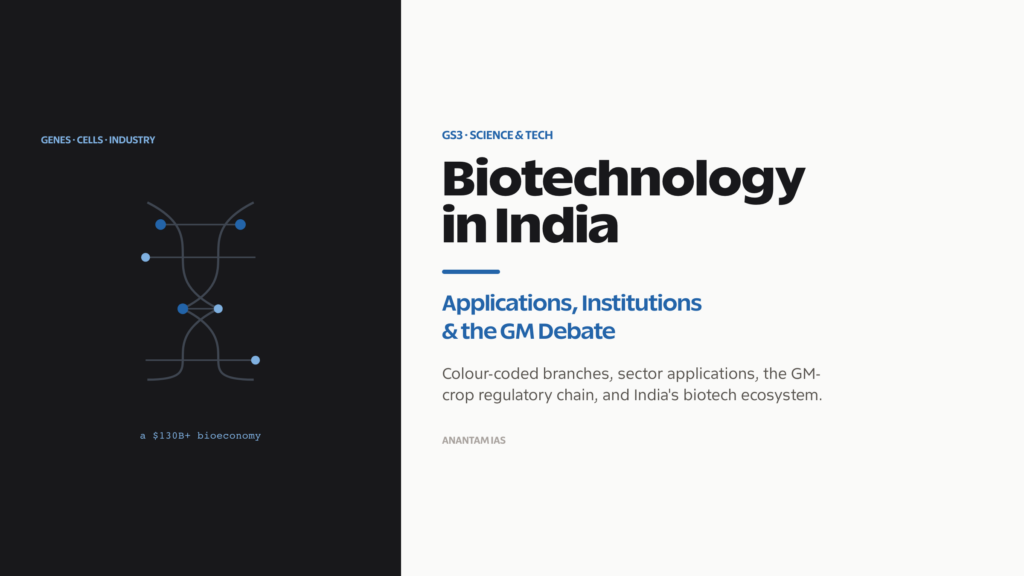
Biotechnology is the use of living organisms, biological systems, and cellular processes to develop products, technologies, and solutions for human benefit. India’s biotech sector has grown to over $130 billion (2024-25 estimates), making it among the top 12 biotech destinations globally. The Department of Biotechnology (DBT) under the Ministry of Science and Technology drives policy, while institutions like ICGEB, NBRC, and NCBS lead research. For UPSC, biotechnology is a recurring Science and Technology topic in both Prelims and Mains (GS Paper III).
Branches of Biotechnology
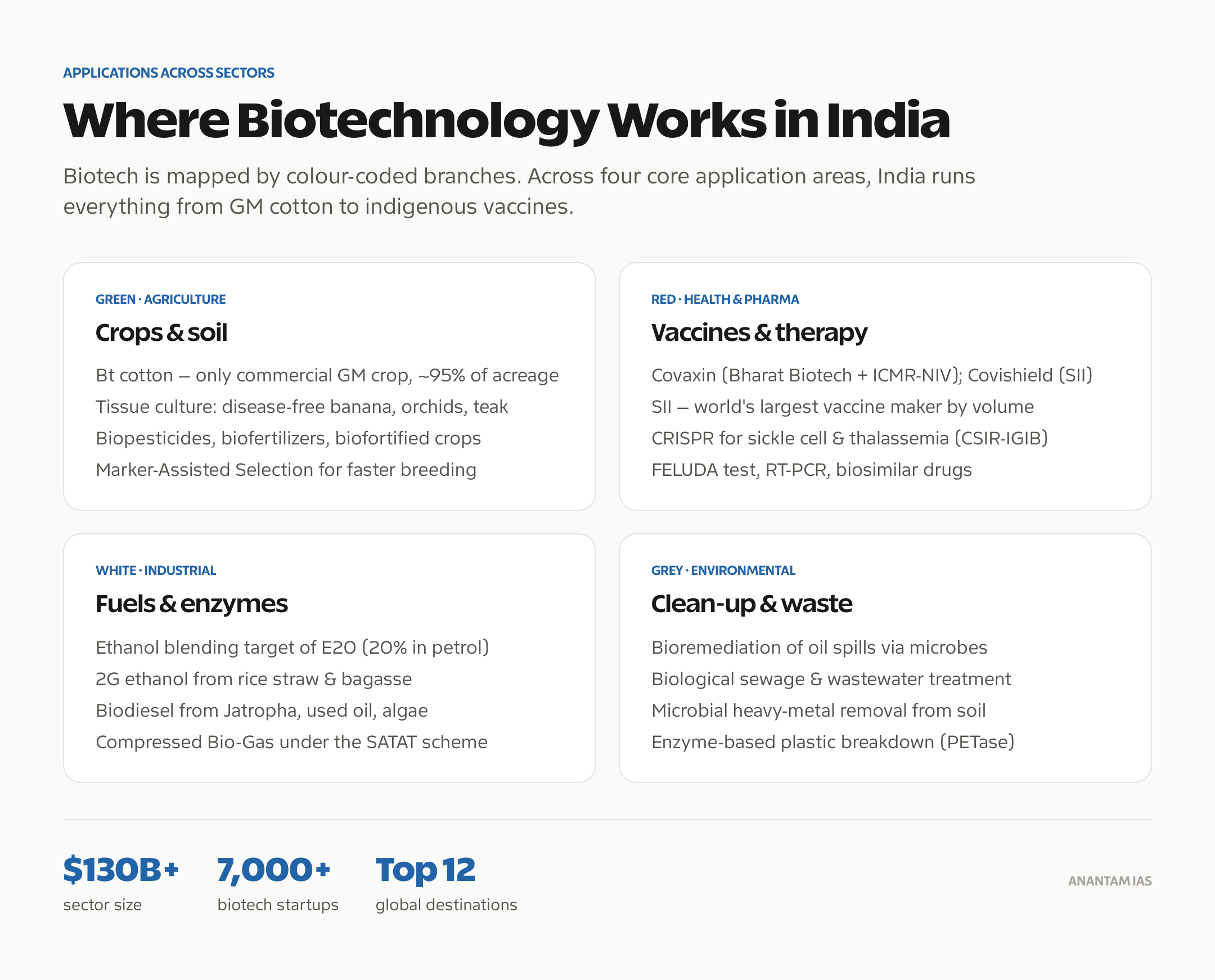
Biotechnology is classified by color-coded branches based on application areas.
| Branch | Color Code | Application Area | Examples |
|---|---|---|---|
| Medical/Pharma | Red | Human health | Vaccines, gene therapy, diagnostics |
| Agricultural | Green | Agriculture | GM crops, biopesticides, tissue culture |
| Industrial | White | Industrial processes | Biofuels, enzymes, bioplastics |
| Marine | Blue | Marine organisms | Algal biofuels, marine drugs |
| Environmental | Grey | Environment | Bioremediation, waste treatment |
| Bioinformatics | Gold | Computational biology | Genomic databases, drug design |
Key Concepts for UPSC
- Genetic Engineering: Directly manipulating an organism’s genome using biotechnology tools
- Gene Editing (CRISPR-Cas9): Precise cutting and modification of DNA sequences
- Recombinant DNA Technology: Combining DNA from different sources to create new genetic combinations
- Cloning: Creating genetically identical copies of organisms or DNA fragments
- Stem Cell Technology: Using undifferentiated cells to regenerate damaged tissues
- Genomics: Study of the complete set of genes and their functions
- Proteomics: Large-scale study of proteins, their structures, and functions
Biotechnology in Agriculture
Agricultural biotechnology has been one of the most debated and impactful areas in India.
GM Crops in India
India’s experience with Genetically Modified (GM) crops centers around Bt cotton, the only commercially approved GM crop.
Bt Cotton:
- Approved in 2002 by the Genetic Engineering Appraisal Committee (GEAC)
- Contains Cry1Ac and Cry2Ab genes from Bacillus thuringiensis
- India is the world’s largest cotton producer, with Bt cotton covering ~95% of cotton acreage
- Reduced pesticide use by 30-40% and increased yields significantly
- Concerns: Bollworm resistance development, farmer debt, seed monopoly
GM Mustard (DMH-11):
- Developed by Delhi University’s Centre for Genetic Manipulation of Crop Plants
- GEAC recommended environmental release in October 2022
- Supreme Court involvement due to environmental and safety concerns
- Uses barnase-barstar-bar gene system for hybrid seed production
BT Brinjal:
- Developed by Mahyco in collaboration with the Indian Institute of Vegetable Research
- GEAC approved environmental release in 2009
- Moratorium imposed by Environment Minister Jairam Ramesh in 2010 following public consultations
- Remains under moratorium — a landmark case in India’s GM policy
Regulatory Framework for GM Crops
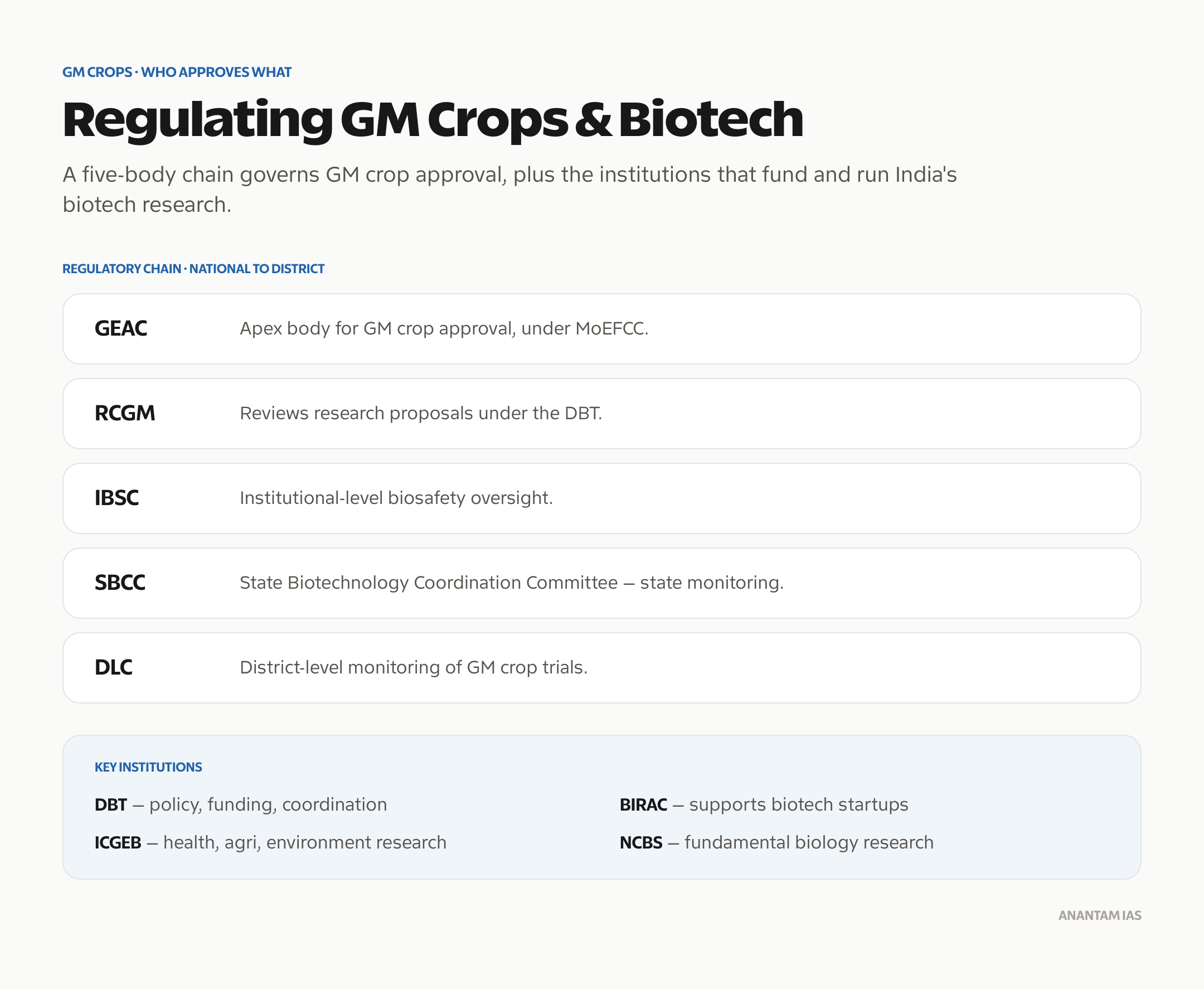
| Body | Role |
|---|---|
| GEAC (Genetic Engineering Appraisal Committee) | Apex body for GM crop approval under MoEFCC |
| RCGM (Review Committee on Genetic Manipulation) | Reviews research proposals under DBT |
| IBSC (Institutional Biosafety Committee) | Institutional-level oversight |
| SBCC (State Biotechnology Coordination Committee) | State-level monitoring |
| DLC (District Level Committee) | District-level monitoring of GM crop trials |
Other Agricultural Biotech Applications
- Tissue culture: Mass propagation of disease-free planting material (banana, orchids, teak)
- Biopesticides: Trichoderma, Pseudomonas, and NPV-based biological pest control
- Biofertilizers: Rhizobium, Azotobacter, and mycorrhiza for sustainable soil nutrition
- Marker-Assisted Selection (MAS): Using DNA markers to speed up conventional plant breeding
- Biofortification: Developing nutrient-enriched crop varieties (iron-rich rice, zinc-rich wheat)
Biotechnology in Healthcare
Medical biotechnology has seen explosive growth in India, especially after COVID-19.
Vaccines and Biologics
- Covaxin (BBV152): India’s indigenous COVID-19 vaccine developed by Bharat Biotech with ICMR-NIV
- Covishield: AstraZeneca-Oxford vaccine manufactured by Serum Institute of India (SII)
- SII (Serum Institute of India): World’s largest vaccine manufacturer by volume
- Biosimilars: India is a major producer of biosimilar drugs (copies of biologic medicines) — cheaper alternatives to expensive biologics
Gene Therapy and Gene Editing
- CRISPR-Cas9: Revolutionary gene-editing tool — Indian researchers are working on sickle cell disease, thalassemia, and crop improvement applications
- Gene therapy trials: AIIMS and other institutions conducting clinical trials for genetic disorders
- CSIR-IGIB: Leading institution in India for CRISPR research
Diagnostics
- RT-PCR technology: Became household knowledge during COVID-19
- FELUDA test: CRISPR-based COVID diagnostic developed by CSIR-IGIB
- Point-of-care diagnostics: Low-cost biotech diagnostic kits for TB, malaria, and dengue
Industrial and Environmental Biotechnology
Biofuels
- Ethanol Blending Programme: Target of 20% ethanol blending in petrol (E20) by 2025-26
- Second-generation (2G) ethanol: Producing ethanol from agricultural waste (rice straw, bagasse)
- Biodiesel: From Jatropha, used cooking oil, and algae
- Biogas (CBG): SATAT scheme for Compressed Bio-Gas production from waste
Bioremediation
- Oil spill cleanup: Using hydrocarbon-degrading microorganisms
- Sewage treatment: Biological treatment of urban and industrial wastewater
- Heavy metal removal: Using microbes to absorb toxic metals from contaminated soil and water
- Plastic degradation: Research into enzyme-based plastic breakdown (PETase)
India’s Biotech Ecosystem
Key Institutions
| Institution | Focus Area |
|---|---|
| DBT (Department of Biotechnology) | Policy, funding, and coordination |
| ICGEB (International Centre for Genetic Engineering and Biotechnology) | Research in health, agriculture, environment |
| NBRC (National Brain Research Centre) | Neuroscience and brain biotechnology |
| BIRAC (Biotechnology Industry Research Assistance Council) | Supporting biotech startups and innovation |
| NCBS (National Centre for Biological Sciences) | Fundamental biology research |
| CDRI (Central Drug Research Institute) | Drug discovery and development |
Biotech Industry Data
- Sector size: $130+ billion (2024-25)
- Biotech startups: Over 7,000 recognized startups
- BIRAC-funded startups: 1,200+ through various funding instruments
- Major hubs: Hyderabad (Genome Valley), Bengaluru, Pune, Chennai, Delhi-NCR
- Employment: Over 1 million direct and indirect jobs
National Biotechnology Development Strategy (2021-25)
The strategy aims to:
- Make India a global bio-manufacturing hub
- Achieve $150 billion bioeconomy
- Launch Bio-RIDE (Research Innovation and Development of Entrepreneurship)
- Strengthen biotech regulatory framework
- Build human capital through training programmes
Ethical Issues in Biotechnology
Biotechnology raises profound ethical questions relevant to UPSC Ethics (GS Paper IV).
Key Ethical Debates
- GM food safety: Long-term health effects unknown; precautionary principle vs innovation
- Genetic privacy: Who owns genetic data? Risk of genetic discrimination
- Human cloning: Universally banned but technology exists — ethical boundaries remain debated
- Gene editing in humans: CRISPR could eliminate genetic diseases but also enable “designer babies”
- Biopiracy: Exploitation of traditional biological resources without benefit-sharing (neem, turmeric, basmati rice cases)
- IPR and access: Patenting of life forms raises questions about equitable access to biotech benefits
- Biosecurity: Dual-use research that could create biological weapons
India’s Bioethical Framework
- Biological Diversity Act, 2002: Protects biological resources and traditional knowledge
- National Ethical Guidelines for Biomedical and Health Research (ICMR): Governs human research ethics
- Cartagena Protocol on Biosafety: India is a signatory — governs transboundary movement of GMOs
- Nagoya Protocol: Access and benefit-sharing for genetic resources
UPSC Exam Strategy for Biotechnology
Prelims Focus
- Basic concepts (DNA, RNA, genetic engineering, CRISPR)
- GM crops in India (Bt cotton, GM mustard status)
- Regulatory bodies (GEAC, RCGM, DBT)
- COVID-19 vaccines and diagnostic technologies
- Biofuels and ethanol blending programme
Mains (GS Paper III)
- Applications of biotechnology in agriculture and health
- GM crop debate — benefits vs risks
- Bioethics and regulatory challenges
- India’s bioeconomy and startup ecosystem
- Environmental biotechnology applications
Nanotechnology: Applications & UPSC Science Notes
Space Technology: Satellites, Rockets & India’s Role
Artificial Intelligence in India: Policy & UPSC Notes
Frequently Asked Questions
What is the only commercially cultivated GM crop in India?
Bt cotton is the only GM crop approved for commercial cultivation in India. Approved in 2002, it now covers about 95% of India’s cotton acreage. GM mustard (DMH-11) has received GEAC recommendation but awaits final government approval amid legal and environmental debates.
What is CRISPR-Cas9 and why is it important?
CRISPR-Cas9 is a gene-editing technology that allows precise cutting and modification of DNA sequences in any organism. Often called u0022genetic scissors,u0022 the technology won the 2020 Nobel Prize in Chemistry. Indian researchers use CRISPR for sickle cell disease research, crop improvement, and COVID-19 diagnostics (FELUDA test).
What is GEAC and what does it do?
The Genetic Engineering Appraisal Committee (GEAC) is the apex regulatory body for approving GM organisms in India. Operating under the Ministry of Environment, Forest and Climate Change, GEAC evaluates biosafety data and grants permission for environmental release of genetically modified organisms.
How large is India’s biotech industry?
India’s biotechnology sector is valued at over $130 billion (2024-25 estimates), with more than 7,000 biotech startups. The sector is supported by institutions like BIRAC and aims to reach $150 billion under the National Biotechnology Development Strategy. Hyderabad’s Genome Valley is the largest biotech cluster.
Tell Google you want more of this.
Add Anantam IAS as a preferred sourceOne tap, and this site shows up more often in your own Top Stories, AI Overviews and AI Mode. Remove it any time.