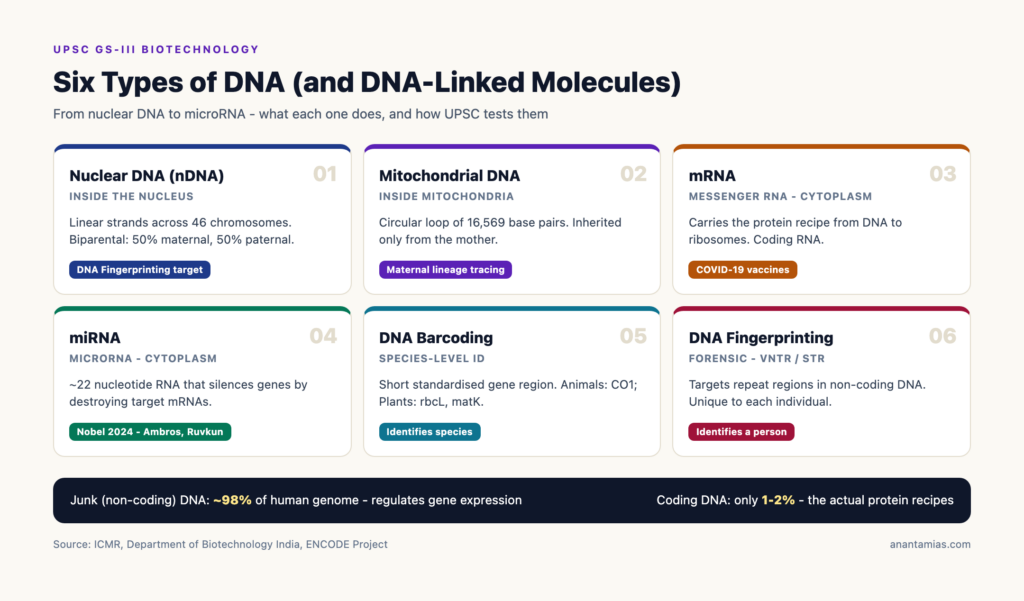
When biologists say that any two unrelated humans share 99.9 percent of the same DNA, the line is technically true and educationally misleading. The 0.1 percent that differs is the entire space within which forensic scientists, conservation biologists, vaccine designers and ancestry trackers do their work. To make sense of that 0.1 percent, you need to know that DNA is not one thing. It comes in several distinct types, lives in different parts of the cell, behaves differently in inheritance, and is read using different molecular tools. Some of the molecules people call DNA, like mRNA and miRNA, are not even DNA in the strict chemical sense. They are RNA cousins. But they share the question UPSC asks: how does genetic information travel, and how do we use that travel to solve real-world problems?
This guide walks through the six categories most relevant to UPSC GS-III biotechnology: nuclear DNA, mitochondrial DNA, mRNA, miRNA, DNA barcoding and DNA fingerprinting, with a separate note on junk DNA. We also look at where the 2024 Nobel Prize fits in.
Quick Facts: Types of DNA at a Glance
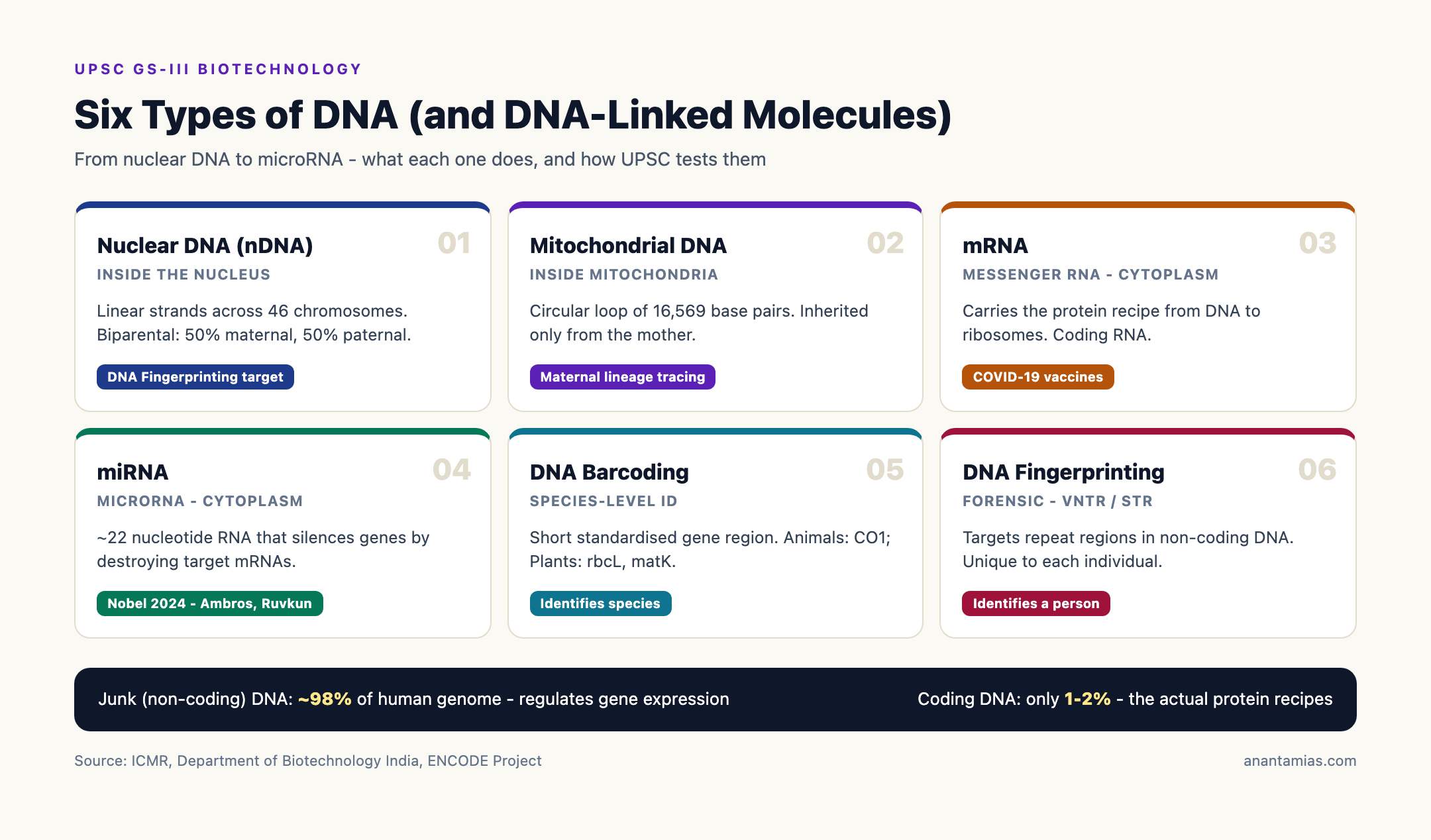
- Total human genome size: About 3 billion base pairs in nuclear DNA; about 16,569 base pairs in mitochondrial DNA
- Coding DNA in humans: Only about 1 to 2 percent of the genome codes for proteins; the rest is regulatory or non-coding
- Inheritance patterns: Nuclear DNA is biparental; mitochondrial DNA is maternal only
- Key forensic targets: STRs (Short Tandem Repeats) and VNTRs (Variable Number Tandem Repeats) in non-coding nuclear DNA
- DNA barcoding gene for animals: Cytochrome c Oxidase 1 (CO1) in mitochondria
- DNA barcoding genes for plants: rbcL and matK in chloroplasts
- 2024 Nobel in Physiology or Medicine: Awarded to Victor Ambros and Gary Ruvkun for discovery of microRNA (miRNA)
What Is DNA?
DNA, short for deoxyribonucleic acid, is the molecule that carries the heritable instructions for the development, functioning and reproduction of all known cellular life. It is a double-stranded helix of four nucleotide bases, adenine, thymine, guanine and cytosine, arranged in sequences that the cell reads to make proteins or to regulate when other genes turn on or off. RNA is a single-stranded molecule that uses uracil instead of thymine and serves as a working copy or regulatory tool of the DNA blueprint.
The phrase types of DNA in textbooks and exam papers usually mixes two distinct ideas. One idea is structural location: where the DNA sits inside the cell, that is, nuclear DNA versus mitochondrial DNA. The other idea is functional category: which information-carrying or regulatory molecule we are discussing, that is, coding DNA, non-coding DNA, mRNA and miRNA. Both ideas matter, and a clean answer in the exam will keep them apart while showing how they fit together.
Background and Historical Context
DNA was first identified as the carrier of heredity by the Avery-MacLeod-McCarty experiment in 1944, and the double-helix structure was published by James Watson and Francis Crick in 1953, building on Rosalind Franklin’s X-ray crystallography. The next four decades unspooled the consequences. Mitochondrial DNA was characterised in the 1960s and 1970s, and its strict maternal inheritance made it a powerful tracer for human migration studies. The Human Genome Project, completed in 2003, gave a reference sequence for nuclear DNA, and almost as a side-product, made it clear that only a small fraction of the genome codes for proteins. The rest, once dismissed as junk, is now understood to include critical regulatory regions.
The RNA story moved in parallel. The messenger RNA concept was established by François Jacob, Jacques Monod and others in 1961. The microRNA discovery came in 1993, when Victor Ambros and his collaborators showed in the worm Caenorhabditis elegans that a tiny non-coding RNA called lin-4 could shut down a target mRNA. Gary Ruvkun extended the discovery to other species. They shared the Nobel Prize in Physiology or Medicine in 2024.
The applied side moved fastest. DNA fingerprinting, invented by Alec Jeffreys in 1984, became the gold standard of forensic identification. DNA barcoding, proposed by Paul Hebert in 2003, became the global standard for species identification, used now in everything from customs seizures of endangered wildlife to detecting fraud in herbal supplements. The mRNA platform, decades old in concept, finally entered mainstream medicine with the COVID-19 vaccines from Pfizer-BioNTech and Moderna in 2020. Read the parallel article on stem cell research to see how these molecular tools intersect with cellular medicine.
Nuclear DNA (nDNA)
Nuclear DNA is the genetic material located inside the cell nucleus. It is organised into 46 chromosomes in human somatic cells, 23 from each parent. Structure is linear, double-stranded and tightly packaged with histone proteins into chromatin. The total length, when stretched out, is about two metres per cell. Inheritance is biparental: roughly half from the mother and half from the father, with recombination during gamete formation producing the genetic uniqueness of each individual (except identical twins).
For UPSC, three points about nuclear DNA matter. First, it is the genetic material that determines the vast majority of inherited traits, including most disease susceptibilities. Second, because of its biparental inheritance and recombination, it is uniquely suited to identifying an individual, which is why DNA fingerprinting targets STR or VNTR regions in nuclear DNA. Third, the regulatory regions of nuclear DNA, the so-called non-coding sections, control how, when and where each gene turns on, which is why epigenetics and gene expression studies focus there.
Mitochondrial DNA (mtDNA): The Maternal Battery Pack
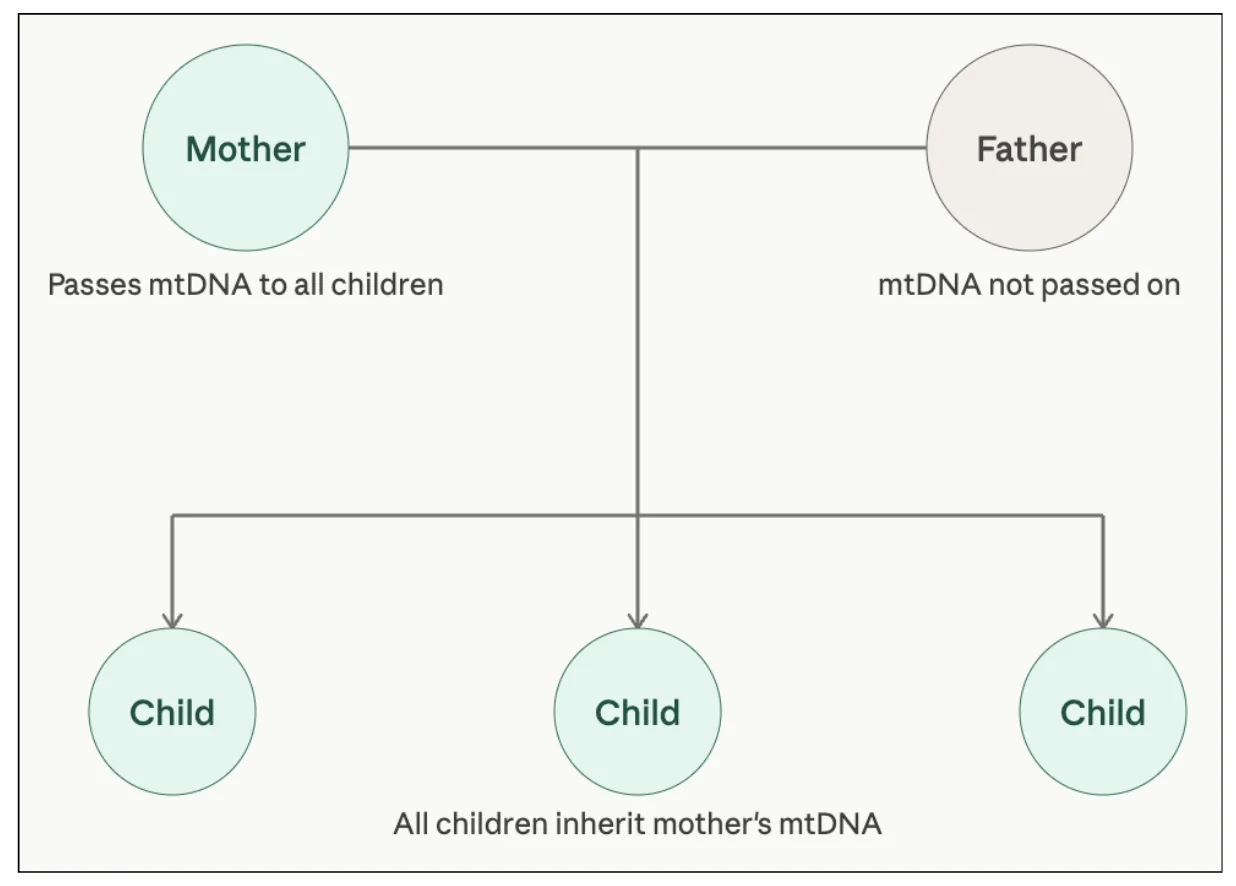
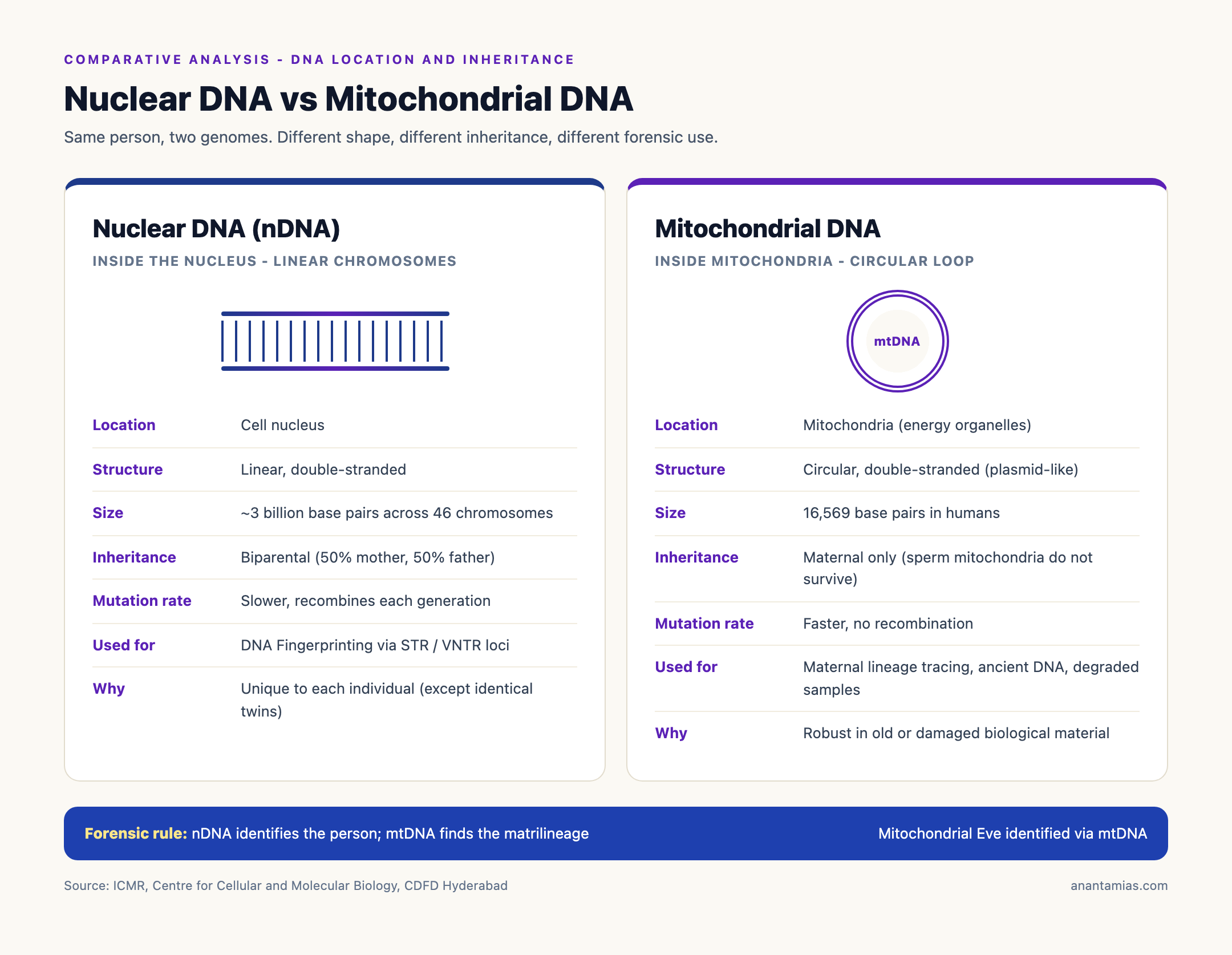
Mitochondria are the energy organelles of the cell, often called its power plants. Each mitochondrion carries its own small, circular DNA molecule, distinct from the linear nuclear DNA. The human mitochondrial genome is just 16,569 base pairs and codes for 37 genes that are essential to the cell’s energy machinery.
Two features make mtDNA scientifically and forensically powerful. First, it is inherited only from the mother. Sperm mitochondria do not survive fertilisation, so every child gets their mitochondrial DNA exclusively from the maternal lineage. This makes mtDNA a clean marker for tracing maternal ancestry across generations. Second, mtDNA mutates faster than nuclear DNA, accumulating differences that can be used to estimate how long ago two populations diverged.
mtDNA is therefore the workhorse of population genetics and ancient-DNA studies. The famous Mitochondrial Eve, the most recent common female ancestor of all living humans, was identified through mtDNA analysis. In forensics, mtDNA is used when nuclear DNA is too degraded for STR profiling, as is common in old skeletal remains, hair shafts without roots and badly decomposed tissue.
mRNA (Messenger RNA): The Recipe Carrier
Messenger RNA is not DNA. It is a single-stranded RNA molecule that the cell creates by transcribing a gene from nuclear DNA. The mRNA then travels out of the nucleus to the ribosome, where it is translated into a specific protein. mRNA is the working copy of the gene, the bridge between blueprint and product.
The COVID-19 pandemic put mRNA in every newspaper. mRNA vaccines from Pfizer-BioNTech and Moderna delivered a synthetic strand of mRNA wrapped in a lipid nanoparticle. Once inside the body, the mRNA instructed cells to make the spike protein of the virus, training the immune system. The platform is now being adapted for cancer vaccines, rare diseases and influenza.
For UPSC, three takeaways. First, mRNA is coding RNA: it carries the protein recipe. Second, it is short-lived; once it has been read, it is degraded, which is why mRNA vaccines do not alter the body’s DNA. Third, mRNA technology is the foundation of a new generation of gene therapy and personalised medicine.
miRNA (microRNA): The Gene Silencer
Where mRNA carries the recipe, microRNA cancels it. miRNA is a tiny piece of RNA, typically 21 to 23 nucleotides long, that sticks to a complementary mRNA and either prevents its translation or marks it for destruction. miRNA does not code for any protein. Its function is regulatory: gene silencing.
This regulation is why our cells differentiate properly. A skin cell and a heart cell carry the same nuclear DNA, but they express different sets of proteins because miRNAs (and other regulatory layers) silence the wrong instructions in each cell type. Without miRNA, cells would produce proteins chaotically and the body would not develop into specialised tissues.
Victor Ambros and Gary Ruvkun won the 2024 Nobel Prize in Physiology or Medicine for the discovery of miRNA in C. elegans, work that has reshaped our understanding of gene regulation. Therapeutic miRNAs and miRNA inhibitors are in clinical trials for cancers, fibrosis and cardiovascular disease.
DNA Barcoding: Naming Species in a Sequence
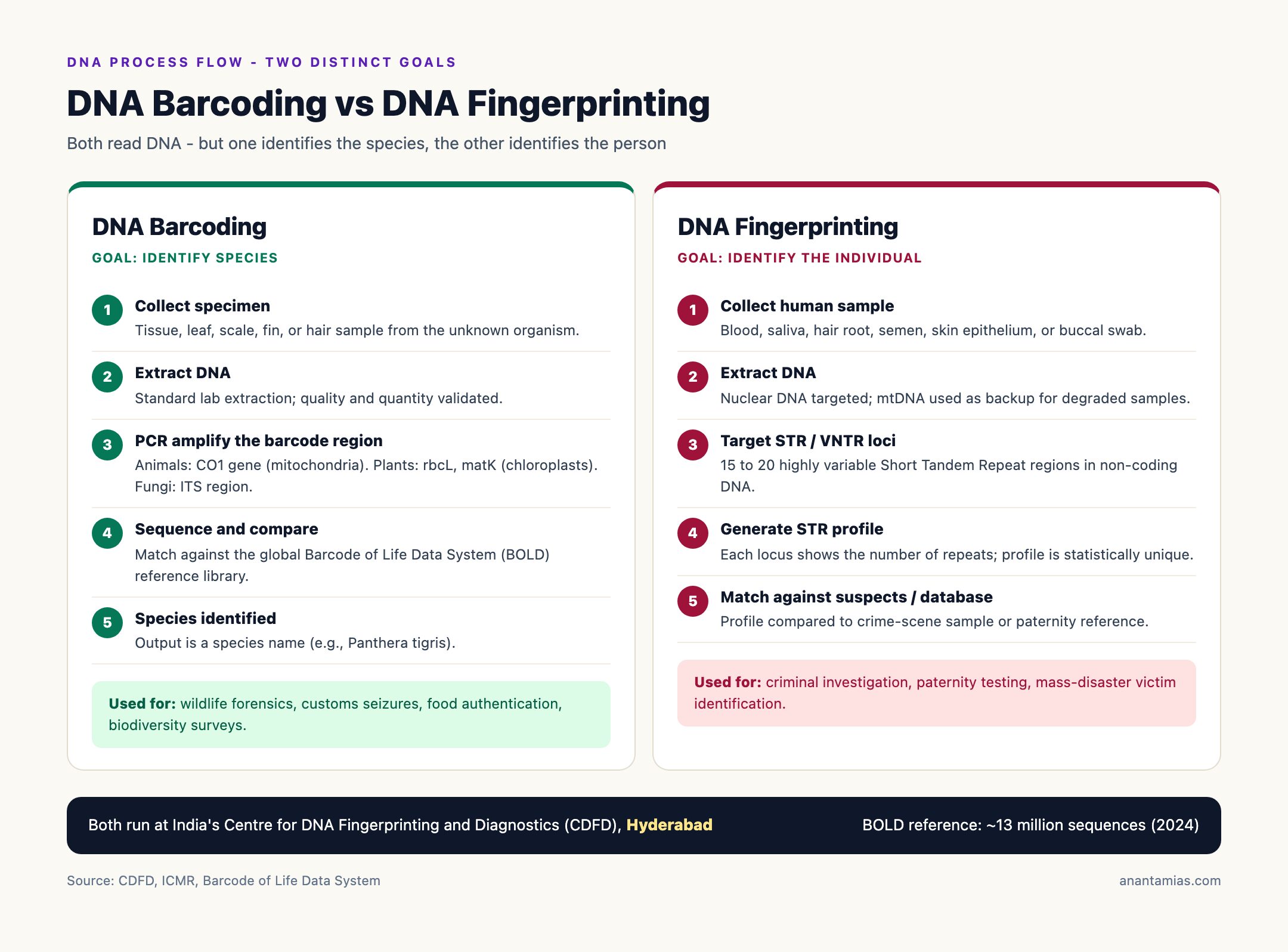
DNA barcoding is a taxonomic method that identifies an organism to species level using a short, standardised genetic region. The metaphor is the supermarket barcode: a single short sequence that uniquely tags a product. For animals, the standard barcode region is the cytochrome c oxidase subunit 1 (CO1) gene in mitochondrial DNA. For plants, the chloroplast genes rbcL and matK are the most widely used markers. For fungi, the internal transcribed spacer (ITS) region is the standard.
DNA barcoding has revolutionised biodiversity research, customs enforcement and food authentication. Wildlife inspectors use it to identify pangolin scales, tiger products and rare timber from seized shipments. Health agencies use it to detect adulterated herbal supplements. India’s Botanical Survey, Zoological Survey and the Centre for Cellular and Molecular Biology run barcoding programmes contributing to the global Barcode of Life Data System (BOLD).
The goal of DNA barcoding is to distinguish species from species. It does not identify individuals.
DNA Fingerprinting: Identifying Individuals
DNA fingerprinting, also called DNA profiling, is a forensic technique that identifies a specific individual using unique patterns in their non-coding nuclear DNA. The targets are highly variable repeat regions called Variable Number Tandem Repeats (VNTRs) and, in modern practice, Short Tandem Repeats (STRs). Across the population, the number of repeats at each STR locus varies enormously, so a profile of 15 to 20 STR loci is statistically unique to one person, except for identical twins.
DNA fingerprinting is used in criminal investigation, paternity testing, identification of victims of mass disasters, and verification of family relationships in immigration cases. India’s Centre for DNA Fingerprinting and Diagnostics (CDFD), Hyderabad, is the principal national institute. The DNA Technology (Use and Application) Regulation Bill, debated since 2019, seeks to formalise the legal regime around DNA databanks. For applied detail, see the dedicated guide on DNA profiling.
The goal of DNA fingerprinting is to distinguish person from person. It does not identify the species, which is already known.
Junk DNA: The Misnamed Majority
Junk DNA is the colloquial label for non-coding DNA: sequences that do not encode proteins. Roughly 98 percent of the human genome falls into this category. Only 1 to 2 percent codes for proteins (the exons of genes). The rest is regulatory regions, structural elements, transposons, pseudogenes and sequences whose function is still being mapped.
The label is misleading. We now know that much of the so-called junk is critical: enhancers and silencers that control gene expression, microRNA precursors, structural sequences that maintain chromosome architecture, and regions whose disruption causes disease. The human ENCODE project has assigned biochemical activity to large fractions of the genome that earlier appeared inert.
For UPSC, the safe statement is that junk DNA refers to non-coding DNA, but its biological roles are increasingly recognised; the term is a historical artefact rather than a scientific dismissal.
Why It Matters: Strategic and Ethical Dimensions
The four practical applications of DNA-related knowledge that frequently appear in UPSC are forensics, public health, biodiversity and medicine. Forensics relies on STR profiling and mtDNA recovery from degraded remains. Public health uses mRNA vaccines and miRNA-based diagnostics. Biodiversity conservation uses DNA barcoding to police wildlife trade and document species. Medicine uses gene-editing and gene-therapy tools that ultimately operate on either nuclear DNA or its RNA intermediates.
Each application carries ethical concerns. DNA databanks raise questions about privacy, consent and possible misuse. Genetic testing without counselling can cause psychological harm. The patenting of genetic sequences clashes with the principle that nature itself cannot be owned. Gene therapy and germline editing, once experimental, are increasingly capable of producing heritable changes, raising concerns about designer babies. India’s regulatory architecture, including the ICMR ethics framework and the Department of Biotechnology guidelines, will need continuous strengthening as the technology accelerates.
Comparative Analysis
| Feature | Nuclear DNA (nDNA) | Mitochondrial DNA (mtDNA) | mRNA | miRNA | DNA Barcoding | DNA Fingerprinting |
|---|---|---|---|---|---|---|
| Type of molecule | DNA | DNA | RNA (coding) | RNA (non-coding) | Application of DNA sequence | Application of DNA pattern |
| Location | Cell nucleus | Mitochondria | Cytoplasm | Cytoplasm | Across genomes (organelle markers) | Non-coding nuclear DNA |
| Inheritance | Biparental | Maternal only | Not inherited (transient) | Not inherited (transient) | Not applicable | Not applicable |
| Structure | Linear, double-stranded | Circular, double-stranded | Single-stranded | Single-stranded, ~22 nt | Standard short region | Multiple STR / VNTR loci |
| Function or use | Carries most genes | Codes for energy machinery | Carries protein recipe | Silences gene expression | Identify species | Identify individual |
| UPSC keyword | Genome, recombination | Maternal lineage, ancient DNA | Vaccines, gene therapy | Nobel 2024, gene silencing | CO1 gene, rbcL, matK | STR, VNTR, CDFD |
Challenges and Open Questions
Three challenges run across the entire field. First, data privacy: DNA is the most identifying data a person can produce, and India still lacks a comprehensive DNA databank law. Second, accessibility: state-of-the-art sequencing remains concentrated in metropolitan labs, leaving rural healthcare without genomic medicine. Third, ethics in clinical practice: pre-implantation genetic testing and the prospect of germline editing raise questions that medical ethics committees in India are still equipped only loosely to handle. Read the Genome India Project for the public-sector effort to bring genomics into Indian medicine.
Prelims Pointers
- Nuclear DNA is biparental and linear; mitochondrial DNA is maternal and circular.
- Human mitochondrial DNA is about 16,569 base pairs.
- mRNA carries the protein recipe; miRNA silences gene expression.
- The 2024 Nobel Prize in Physiology or Medicine was awarded to Victor Ambros and Gary Ruvkun for the discovery of microRNA.
- COVID-19 vaccines by Pfizer-BioNTech and Moderna are mRNA vaccines.
- DNA barcoding for animals uses the CO1 (cytochrome c oxidase 1) gene; for plants, rbcL and matK; for fungi, the ITS region.
- DNA fingerprinting targets VNTR and STR regions in non-coding nuclear DNA.
- Alec Jeffreys invented DNA fingerprinting in 1984.
- The Centre for DNA Fingerprinting and Diagnostics (CDFD) is located in Hyderabad.
- Approximately 98 percent of the human genome is non-coding (junk) DNA; only 1 to 2 percent codes for proteins.
Mains Practice Questions
- Distinguish between nuclear DNA and mitochondrial DNA. How are these two types used differently in forensic and ancestry studies? (GS Paper 3, 150 words)
- Explain the difference between DNA barcoding and DNA fingerprinting. Discuss their applications in India. (GS Paper 3, 250 words)
- The 2024 Nobel Prize for the discovery of microRNA highlights the role of regulatory RNA in human health. Discuss its scientific significance and therapeutic potential. (GS Paper 3, 250 words)
- Examine the ethical and regulatory issues that arise from the increasing application of DNA technologies in India. (GS Paper 2 / 3, 250 words)
Way Forward
Three priorities will shape India’s biotech response over the next decade. First, pass and operationalise the DNA Technology (Use and Application) Regulation Bill so that DNA databanks have a clear legal regime, including consent, retention and destruction rules. Second, scale up the genomic infrastructure at district and state levels, including the Genome India Project, so that benefits of pharmacogenomics, rare-disease diagnosis and personalised medicine reach beyond metro hospitals. Third, build public scientific literacy: the difference between DNA fingerprinting and DNA barcoding, between mRNA vaccines and gene therapy, and between coding and non-coding DNA needs to be common knowledge for any country that wants its citizens to make informed health and policy choices.
Frequently Asked Questions
What are the main types of DNA in a human cell?
The two structural types are nuclear DNA, located in the cell nucleus, and mitochondrial DNA, located in the mitochondria. Functional categories of nucleic acid that are commonly grouped with DNA include mRNA (messenger RNA, which carries protein recipes) and miRNA (microRNA, which silences genes), although these are RNA, not DNA.
Is mRNA a type of DNA?
No. mRNA is RNA, a related but distinct molecule. mRNA is single-stranded, uses uracil instead of thymine, and is created by transcribing DNA. It carries the protein recipe to the ribosome.
Why is mitochondrial DNA inherited only from the mother?
Sperm mitochondria are eliminated after fertilisation, so the embryo receives all its mitochondria, and therefore its mitochondrial DNA, from the egg. This makes mtDNA a clean tracer of maternal lineage.
What is the difference between DNA barcoding and DNA fingerprinting?
DNA barcoding identifies the species an organism belongs to, using a short standardised genetic region. DNA fingerprinting identifies a specific individual within a species, using highly variable repeat regions in non-coding nuclear DNA.
What is junk DNA and is it really junk?
Junk DNA is non-coding DNA, the roughly 98 percent of the human genome that does not code for proteins. The label is historical; modern research shows much of it has regulatory and structural roles.
What did the 2024 Nobel Prize for miRNA recognise?
The Nobel Prize in Physiology or Medicine 2024 was awarded to Victor Ambros and Gary Ruvkun for the discovery of microRNA, a class of small non-coding RNAs that regulate gene expression by silencing target mRNAs.
Which gene is used for DNA barcoding in animals and plants?
For animals, the cytochrome c oxidase subunit 1 (CO1) gene in mitochondria is the standard marker. For plants, the chloroplast genes rbcL and matK are most widely used.
What are STRs and VNTRs in DNA fingerprinting?
STRs are Short Tandem Repeats and VNTRs are Variable Number Tandem Repeats. Both are repeat sequences in non-coding DNA that vary widely between individuals, making them ideal markers for identifying a specific person.
Where is the Centre for DNA Fingerprinting and Diagnostics located?
The Centre for DNA Fingerprinting and Diagnostics (CDFD) is located in Hyderabad and is a research and reference centre for forensic and diagnostic DNA work in India.
Are mRNA vaccines safe and do they alter our DNA?
mRNA vaccines do not enter the cell nucleus and do not alter human DNA. The mRNA delivered by the vaccine is translated to make a target protein and is then degraded by the cell, like any other mRNA.
Tell Google you want more of this.
Add Anantam IAS as a preferred sourceOne tap, and this site shows up more often in your own Top Stories, AI Overviews and AI Mode. Remove it any time.