Sucheta Kripalani: India’s First Woman Chief Minister
Sucheta Kripalani became India's first woman Chief Minister in 1963, leading Uttar Pradesh. From Quit India to the Constituent Assembly, her freedom-struggle and political legacy.
Sucheta Kripalani is the answer to one of the most-asked one-line facts in Indian polity — she was the first woman Chief Minister of any Indian state. She took oath as Chief Minister of Uttar Pradesh on 2 October 1963, exactly fifty-five years after Mahatma Gandhi‘s birth, and held the office until March 1967. She did so in the country’s most populous and politically restless state, at a moment when Jawaharlal Nehru had just died and the Congress was searching for stability.
Sucheta Kripalani’s importance for UPSC stretches beyond the trivia answer. She was a Quit India underground organiser who worked closely with Aruna Asaf Ali and Ram Manohar Lohia. She was a member of the Constituent Assembly that drafted the Constitution. She sang Vande Mataram and a verse of Sare Jahan Se Achha in the Constituent Assembly on the eve of Independence, immediately before Nehru’s “Tryst with Destiny” speech. She founded the All India Mahila Congress. She married Acharya J. B. Kripalani, the Congress president of 1946-47, and remained an independent political voice within the party her husband eventually left.
This explainer covers Sucheta Kripalani’s life, her role in the freedom struggle, her work in the Constituent Assembly, her tenure as Chief Minister of Uttar Pradesh, and her legacy in the history of women’s political leadership in India.
Sucheta Kripalani: Quick Snapshot
| Full name | Sucheta Kripalani (née Mazumdar) |
| Born | 25 June 1908, Ambala (Punjab) |
| Died | 1 December 1974, New Delhi |
| Best known as | First woman Chief Minister of any Indian state |
| Office | Chief Minister of Uttar Pradesh |
| Tenure | 2 October 1963 – 13 March 1967 |
| Freedom struggle | Quit India underground organiser (1942); arrested 1944 |
| Constituent Assembly | Member from United Provinces; sang Vande Mataram at the midnight session, 14 August 1947 |
| Founded | All India Mahila Congress (1940) |
| Spouse | Acharya J. B. Kripalani (Congress President, 1946–47) |
Early Life and Education
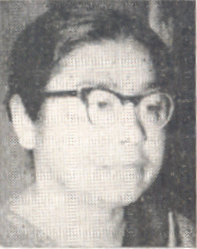
Sucheta Mazumdar was born on 25 June 1908 in Ambala, Punjab, into a Bengali Brahmo family. Her father, S. N. Mazumdar, was a doctor in the colonial medical service whose postings took the family across northern India.
Schooling and university
She attended schools in Delhi and Lahore and went on to St. Stephen’s College and then Indraprastha College for Women, Delhi, where she completed her undergraduate degree. She joined Banaras Hindu University as a lecturer in Constitutional History in 1932 at the age of 24, an unusual position for an unmarried woman of her generation.
Marriage to Acharya Kripalani
In 1936 she married Acharya J. B. Kripalani, twenty years her senior and already a senior Congress leader. The marriage was opposed both by her family, on the grounds of age and caste difference, and by Mahatma Gandhi himself, who later relented. The Mazumdar-Kripalani household became one of the most politically influential addresses in nationalist India.
Sucheta Kripalani in the Freedom Struggle
Sucheta Kripalani entered active politics through her work with women’s organisations and the Indian National Congress in the 1930s.
Noakhali and the Gandhian frontline
She joined Mahatma Gandhi during his Noakhali tour in 1946-47, when communal violence had broken out in East Bengal. She walked with Gandhi from village to village as part of his peace mission. The Noakhali experience was decisive in shaping her later public stance on communal harmony.
Quit India Movement
The Quit India Movement of August 1942 is where Sucheta Kripalani made her national reputation. After the arrest of the top Congress leadership on 9 August 1942, the movement went underground. Sucheta Kripalani worked with Aruna Asaf Ali, Ram Manohar Lohia and Jayaprakash Narayan in the underground Congress Radio and clandestine pamphlet network. She was arrested in 1944 and spent over a year in detention.
All India Mahila Congress
In 1940, with Sarojini Naidu’s encouragement, Sucheta Kripalani helped found the All India Mahila Congress, the women’s wing of the Indian National Congress. The body was created to channel the energies of women activists who had joined the civil disobedience and salt satyagrahas of the 1930s.
In the Constituent Assembly
Sucheta Kripalani was one of fifteen women members of the Constituent Assembly of India, alongside Sarojini Naidu, Vijaya Lakshmi Pandit, Hansa Mehta, Rajkumari Amrit Kaur, Durgabai Deshmukh and others. She represented United Provinces.
Vande Mataram at the midnight session
On 14 August 1947, on the eve of Independence, the Constituent Assembly opened its midnight session with Sucheta Kripalani singing the first stanza of Vande Mataram and a verse of Iqbal’s Sare Jahan Se Achha, immediately followed by Jawaharlal Nehru’s “Tryst with Destiny” speech. The Assembly’s official record preserves this sequence. It is one of the iconic moments of Indian independence and a piece of cultural memory directly attached to Sucheta Kripalani.
Constitutional contributions
Within the Assembly, she spoke on questions of women’s rights, the language formula, and the form of government. She supported the framework of fundamental rights set out in our Fundamental Rights overview and engaged in debates over the Preamble, the working document of which is summarised in our Preamble explainer. Her interventions were practical rather than declamatory, more in the mould of Hansa Mehta than Sarojini Naidu.
Member of Parliament and Junior Minister
After the Constitution came into force, Sucheta Kripalani entered the Provisional Parliament and then the Lok Sabha.
Lok Sabha 1952 and 1957
She won from New Delhi as a Kisan Mazdoor Praja Party candidate in 1952, the party her husband had founded after leaving Congress, and then as an independent in 1957 from the same constituency. She rejoined Congress in 1958.
Minister of State
She served briefly as Minister of State for Small-Scale Industries in the Union Cabinet under Jawaharlal Nehru. Her parliamentary record from this period focuses on labour, women’s welfare, and refugee resettlement after Partition.
Chief Minister of Uttar Pradesh, 1963-1967
The Kamaraj Plan of 1963, in which senior Congress leaders resigned from government to revitalise the party organisation, opened up the chief ministership of several states. C. B. Gupta, the incumbent Chief Minister of Uttar Pradesh, was one of those who stepped down. Sucheta Kripalani was chosen as his successor.
Taking oath, 2 October 1963
Sucheta Kripalani was sworn in as Chief Minister of Uttar Pradesh on 2 October 1963 — Gandhi Jayanti. With that oath she became the first woman to hold the office of Chief Minister in any Indian state. She was 55. She remained in office until 13 March 1967.
Major policy decisions
Her three-and-a-half-year term covered the second half of the Nehru years and the Lal Bahadur Shastri prime ministership. Key actions:
- State employees’ strike, 1966 — a 62-day strike by state government employees was suppressed firmly. Her refusal to settle on the strikers’ terms became controversial and is sometimes seen as a precursor to the later confrontational style of Indian state governments with public-sector unions.
- Land reforms and ceilings — she pushed Uttar Pradesh’s ceiling-on-agricultural-holdings legislation forward, consistent with the Congress’s national programme.
- Education and women’s welfare — she expanded girls’ schools and the network of women’s self-help institutions, building on her All India Mahila Congress work.
- Agriculture and the food crisis — UP was one of the worst-hit states in the 1965-66 food crisis. Her government’s handling of the crisis, including reliance on PL-480 wheat imports, drew criticism from the Lohia opposition.
Working with Indira Gandhi
When Indira Gandhi became Prime Minister in January 1966 after Shastri’s death in Tashkent, Sucheta Kripalani was one of the senior state Congress leaders she had to work with. The Congress split of 1969 came after Sucheta Kripalani’s chief ministership had ended, but the tensions that produced the split were visible during her last year in office.
Sucheta Kripalani’s Legacy
A pathbreaker for women in executive office
Sucheta Kripalani’s chief ministership is the institutional precedent for every woman Chief Minister who came after — Sashikala Kakodkar, Nandini Satpathy, Anwara Taimur, V. N. Janaki Ramachandran, J. Jayalalithaa, Mayawati, Rabri Devi, Sheila Dikshit, Vasundhara Raje, Uma Bharti, Mamata Banerjee, Mehbooba Mufti, Atishi. The pattern of women rising through state-level politics rather than dynastic shortcut was set by her.
The Mahila Congress tradition
The All India Mahila Congress remains the recognised women’s wing of the party. Its programmatic agenda — women’s literacy, reservation, anti-violence work, microcredit — derives from Sucheta Kripalani’s organising in the 1940s. Her work also fed into the political pressure that led to later affirmative measures, the long arc of which we discuss in our piece on women’s reservation and women in MGNREGS.
A complicated political identity
Sucheta Kripalani never fit neatly into a faction. She was Congress, then Kisan Mazdoor Praja Party with her husband, then independent, then Congress again. She was loyal to Gandhi but contested Acharya Kripalani’s leftward turn. She was a champion of women’s rights but resisted symbolic politics, preferring administrative work. Her independence is itself a model for political women trying to operate within parties without being captured by them.
She died on 1 December 1974 in New Delhi at the age of 66.
Quick Reference for UPSC
- Born — 25 June 1908, Ambala.
- Died — 1 December 1974, New Delhi.
- Spouse — Acharya J. B. Kripalani, Congress President 1946-47.
- Freedom struggle — Quit India Movement underground activist; arrested 1944; worked with Aruna Asaf Ali, Ram Manohar Lohia.
- All India Mahila Congress — co-founder, 1940.
- Constituent Assembly — member from United Provinces; sang Vande Mataram at the midnight session of 14 August 1947.
- Lok Sabha — New Delhi 1952 (KMPP), 1957 (Independent).
- Minister of State — Small-Scale Industries, Union Government.
- First woman Chief Minister of India — Uttar Pradesh, 2 October 1963 to 13 March 1967.
- Key episode in tenure — handling of the 62-day state employees’ strike of 1966 and the UP food crisis.
Frequently Asked Questions
Who was Sucheta Kripalani?
Sucheta Kripalani was an Indian freedom fighter, member of the Constituent Assembly, parliamentarian and the first woman Chief Minister of any Indian state. She led Uttar Pradesh from 2 October 1963 to 13 March 1967 and is remembered for her role in the Quit India Movement and her singing of Vande Mataram at the Constituent Assembly’s midnight session.
When did Sucheta Kripalani become the first woman Chief Minister?
Sucheta Kripalani took oath as Chief Minister of Uttar Pradesh on 2 October 1963, Gandhi Jayanti, becoming the first woman Chief Minister of any Indian state. She held the office until 13 March 1967.
What was Sucheta Kripalani’s role in the Quit India Movement?
After the Congress leadership was arrested on 9 August 1942, Sucheta Kripalani worked underground alongside Aruna Asaf Ali, Ram Manohar Lohia and Jayaprakash Narayan. She coordinated clandestine pamphlets and Congress Radio activity. She was arrested in 1944 and detained for over a year.
What did Sucheta Kripalani sing in the Constituent Assembly?
On the eve of Independence, at the midnight session of 14 August 1947, Sucheta Kripalani sang the first stanza of Vande Mataram and a verse of Iqbal’s Sare Jahan Se Achha, immediately before Jawaharlal Nehru’s u0022Tryst with Destinyu0022 speech.
Who founded the All India Mahila Congress?
Sucheta Kripalani helped found the All India Mahila Congress in 1940, with the encouragement of Sarojini Naidu. The body was the women’s wing of the Indian National Congress and organised women activists across the civil disobedience and Quit India phases.
Who was Sucheta Kripalani’s husband?
Sucheta Kripalani married Acharya J. B. Kripalani in 1936. Acharya Kripalani was a senior Gandhian, served as President of the Indian National Congress in 1946-47 during the Partition negotiations, and later founded the Kisan Mazdoor Praja Party after leaving Congress.
Where did Sucheta Kripalani study?
Sucheta Kripalani studied at St. Stephen’s College and Indraprastha College for Women in Delhi. She later taught Constitutional History at Banaras Hindu University from 1932 onwards before entering full-time politics.
How long was Sucheta Kripalani Chief Minister of Uttar Pradesh?
Sucheta Kripalani served as Chief Minister of Uttar Pradesh for around three and a half years, from 2 October 1963 to 13 March 1967. Her tenure covered the late Nehru period, the Shastri prime ministership and the first year of Indira Gandhi’s first term.