Sufi Movement in India: Silsilas, Saints, and Syncretic Culture
The Sufi movement reached India from Central Asia in the 12th century, organised into Chishti, Suhrawardi, Qadri and Naqshbandi silsilas, and shaped a syncretic devotional culture. UPSC notes.
The Sufi movement reached India through Arab traders along the Konkan and Malabar coasts in the eighth century and arrived in force with the Turkish conquest of the twelfth century. By the time the Delhi Sultanate stabilised under Iltutmish, the Sufi movement was the dominant Islamic mystical tradition in the subcontinent, organised into silsilas — chains of master-and-disciple lineage — and headquartered in khanqahs that doubled as soup kitchens, hospices, and schools.
The Sufi movement matters for Indian history not because it converted millions, which it did, but because it built the cultural bridge that made medieval India a recognisably composite civilisation. Sufis sang in Hindavi, Punjabi, and Bengali. They borrowed yogic vocabulary. They opened their dargahs to Hindu pilgrims. They corresponded with Bhakti movement saints. They shaped Urdu, qawwali, and ghazal. Some served the Sultanate court; many refused it on principle.
This article reads the Sufi movement with a UPSC History and Art-and-Culture lens. It traces the entry of the Sufi movement into India, the four principal silsilas — Chishti, Suhrawardi, Qadri, Naqshbandi — the doctrinal debate between Wahdat-ul-Wujud and Wahdat-ul-Shuhud, the institutional life of the dargah, and the lasting interaction with Bhakti.
Origins and Entry into India
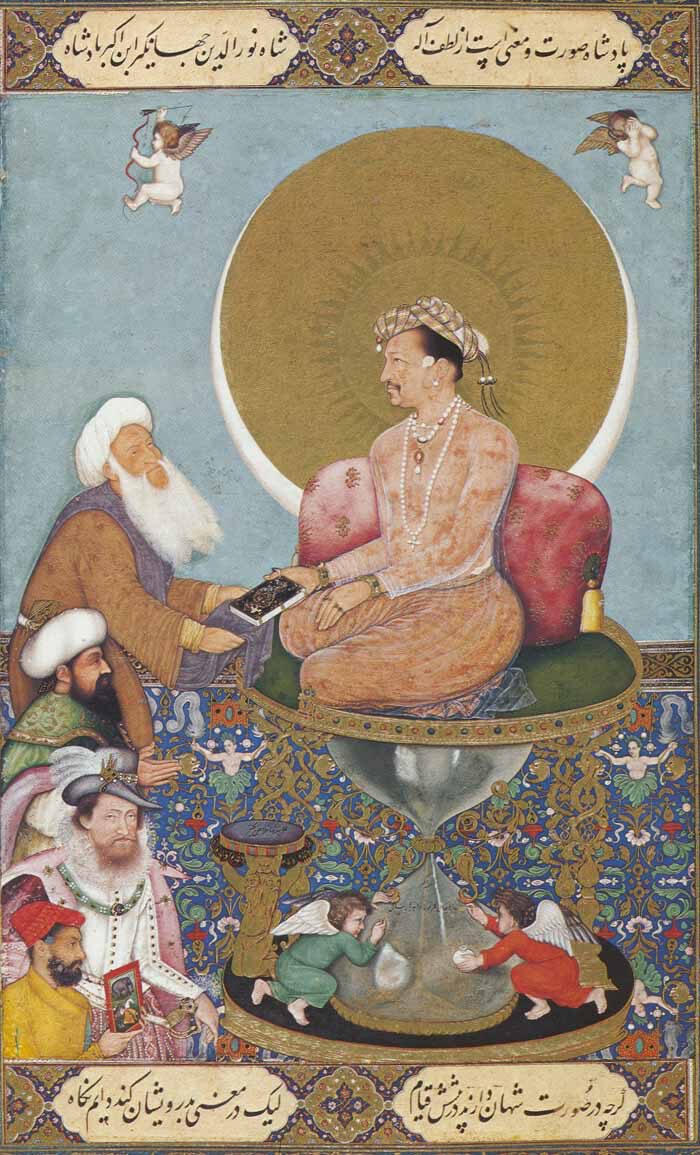
Sufism began in eighth-century Iraq and Iran as an ascetic reaction against the legalism of the Umayyad court. Early figures like Hasan al-Basri, Rabia al-Adawiyya, Bayazid Bistami, and Junayd of Baghdad set the vocabulary — tawakkul (trust), fana (annihilation in god), zikr (remembrance), sama (devotional music). By the eleventh century the silsila system had crystallised. A pir (master) transmitted spiritual authority to a murid (disciple) in an unbroken chain that traced back to the Prophet Muhammad through Ali or Abu Bakr.
The Sufi movement entered India in two waves. Arab traders carried it to coastal Kerala and Sindh from the eighth century. The decisive entry, however, came with the Ghurid conquest of northern India between 1175 and 1206. Moinuddin Chishti, the founder of the Chishti silsila in India, arrived around 1192 — the same year as Muhammad of Ghor’s victory at the Second Battle of Tarain — and settled at Ajmer. By the early thirteenth century the Sufi movement was institutionally established at Multan, Delhi, Ajmer, and Pandua.
The Chishti Silsila
The Chishti silsila is the most important order of the Sufi movement in India. It was founded in the Khorasanian town of Chisht by Abu Ishaq al-Shami and brought to India by Khwaja Moinuddin Chishti (1141–1236), whose dargah at Ajmer remains the most visited Muslim shrine in the subcontinent. The Chishti method emphasised poverty, charity, sama, and complete refusal of state patronage.
The early Chishti chain in India runs through five great saints — the Panj Pir of north Indian Sufism:
- Khwaja Moinuddin Chishti of Ajmer (d. 1236) — founder, called Gharib Nawaz.
- Qutbuddin Bakhtiyar Kaki of Delhi (d. 1235) — disciple of Moinuddin, buried at Mehrauli.
- Baba Farid (Fariduddin Ganjshakar) of Ajodhan/Pakpattan (d. 1265) — disciple of Kaki, the first major Sufi to compose poetry in a north Indian vernacular (Punjabi). Verses attributed to Baba Farid are included in the Adi Granth.
- Nizamuddin Auliya of Delhi (1238–1325) — disciple of Baba Farid, perhaps the most influential Sufi in Indian history. Refused to attend the courts of seven Delhi sultans. His Fawaid al-Fuad, recorded by Amir Hasan Sijzi, is the standard source for early Chishti practice. His dargah at Nizamuddin in Delhi is the spiritual capital of South Asian Sufism.
- Naseeruddin Chiragh-i-Delhi (d. 1356) — Nizamuddin’s principal khalifa.
After Chiragh-i-Delhi the central Chishti silsila fractured. Disciples carried the order across India — Burhanuddin Gharib to Khuldabad in the Deccan, Muhammad Banda Nawaz Gesudaraz to Gulbarga, Salim Chishti to Fatehpur Sikri, where Akbar would consult him for the birth of Jahangir.
Amir Khusrau (1253–1325), Nizamuddin Auliya’s most famous disciple, was the architect of much of what we now call Indo-Islamic culture — qawwali, ghazal in Hindavi, the introduction of new musical forms, and the philosophical-poetic vocabulary of the Sufi movement in vernacular India.
The Suhrawardi Silsila
The Suhrawardi silsila was founded by Shihabuddin Suhrawardi of Baghdad (d. 1234) and brought to India by Bahauddin Zakariya (1182–1262), who settled at Multan. Unlike the Chishtis, the Suhrawardis accepted state patronage, held jagirs, lived in style, and worked within the Sultanate administration. Bahauddin Zakariya cooperated with Iltutmish and accumulated significant wealth. His descendants continued as elite religious figures in Multan and Sindh.
The Suhrawardi line produced Jalaluddin Surkh-Posh of Uch, Sayyid Jalaluddin Makhdum Jahaniyan Jahangasht (the Travelling World-Sweeper, who claimed to have visited Mecca thirty-six times), and other major saints. The Suhrawardis dominated the Sufi movement in the western Punjab, Sindh, and Multan, while the Chishtis dominated the Indo-Gangetic plain.
The Qadri Silsila
The Qadri silsila, founded by Abdul Qadir Jilani of Baghdad (1077–1166), entered India in the fifteenth century. Sayyid Muhammad Ghaus established it at Uch and Sindh. The Qadris worked closely with the Mughal court — Dara Shukoh, Shah Jahan’s eldest son, was a Qadri murid of Miyan Mir of Lahore, the same Miyan Mir who laid the foundation stone of the Harmandir Sahib at Amritsar at the invitation of Guru Arjan.
Dara Shukoh’s Majma-ul-Bahrain (The Mingling of Two Oceans) and his Sirr-i-Akbar translation of fifty-two Upanishads into Persian represent the high-water mark of Qadri-Bhakti synthesis. His execution by Aurangzeb in 1659 cut short this current.
The Naqshbandi Silsila
The Naqshbandi silsila was founded by Bahauddin Naqshband of Bukhara (d. 1389) and brought to India by Khwaja Baqi Billah in 1599. Naqshbandis differed sharply from Chishtis: they rejected sama, insisted on strict adherence to sharia, kept zikr silent rather than vocal, and were sceptical of the dargah cult.
The decisive Naqshbandi figure in India was Shaikh Ahmad Sirhindi (1564–1624), called Mujaddid-i-Alf-i-Sani (Renewer of the Second Millennium). Sirhindi opposed Akbar’s syncretic Din-i-Ilahi and the Wahdat-ul-Wujud doctrine, propounded instead Wahdat-ul-Shuhud, and pressed for a return to orthodox Islam. He corresponded with Mughal nobles and even Jahangir, who briefly imprisoned him. The Naqshbandi-Mujaddidi current shaped subsequent Indian Islamic thought, including the eighteenth-century reformer Shah Waliullah and the nineteenth-century Deoband and Barelvi movements.
Wahdat-ul-Wujud vs Wahdat-ul-Shuhud
The Sufi movement carried two competing metaphysical doctrines.
Wahdat-ul-Wujud — Unity of Being — was articulated by the Andalusian Sufi Ibn Arabi (1165–1240) and dominant in early Indian Sufism, especially among the Chishtis. It holds that all existence is one with the divine; creation is the manifestation of god’s attributes; the apparent multiplicity of the world is illusion. This doctrine made it easy for the Sufi movement to interact with Hindu Vedanta, which holds a structurally similar position in Advaita.
Wahdat-ul-Shuhud — Unity of Witness — was propounded by Sirhindi against Wahdat-ul-Wujud. It holds that the experience of unity is a subjective state of the mystic, not an ontological fact; god remains transcendent and separate from creation. This corrects what Sirhindi saw as the dangerous pantheistic drift in Indian Sufism and aligns the Sufi movement with sharia-bound orthodoxy.
The debate is not academic. It maps onto two political postures — the syncretic accommodation associated with Akbar’s navratnas and Dara Shukoh on one side, and the orthodox revivalism associated with Aurangzeb on the other.
Dargah Culture and Sama
The Sufi movement built a distinctive institution — the dargah, the shrine over a pir’s grave. The dargah functions simultaneously as pilgrimage site, soup kitchen (langar), school (madrasa), and musical performance space. The urs, the annual death anniversary of the saint, is celebrated as a wedding — the saint’s union with the beloved — and draws lakhs of pilgrims of all faiths.
Ajmer Sharif (Moinuddin Chishti), Nizamuddin Dargah (Delhi), Hazratbal (Srinagar), Haji Ali (Mumbai), Bahmani Gulbarga (Banda Nawaz), Pakpattan (Baba Farid), and Fatehpur Sikri (Salim Chishti) — these are the major nodes of the Sufi movement’s living geography.
Sama — devotional listening to qawwali — is the Chishti and Qadri signature. Amir Khusrau invented or codified the qawwali form, and the Nizamuddin dargah hosts the unbroken tradition through to today’s qawwals. The Naqshbandis reject sama; the Chishtis treat it as a primary spiritual exercise.
Impact on Bhakti and on Indian Culture
The Sufi movement and the Bhakti movement ran in close conversation. They shared geography, audiences, vocabulary, and music. The Sant tradition — Kabir, Nanak, Dadu — drew on Sufi metaphors of the inner heart, the divine lover, the beloved, fana. Sufis adopted yogic breath-control practices documented in texts like the Amrtakunda. Dargahs welcomed Hindu pilgrims as easily as Muslim ones — the syncretic devotional space that survives at Ajmer and Nizamuddin today is a direct inheritance from medieval Sufism.
The Sufi movement also shaped:
- Urdu and Hindavi — Khusrau, Khwaja Mir Dard, and later Sufis composed in vernaculars and helped form what became Urdu.
- Music — qawwali, ghazal, dhrupad’s devotional turn.
- Architecture — the dargah typology, the chillah, the khanqah.
- Literature — premakhyans like Padmavat by Malik Muhammad Jayasi (a Sufi who composed in Awadhi) reframed Hindu romance through Sufi allegory.
- Mughal court culture — Salim Chishti for Akbar, Miyan Mir for Dara, Sirhindi for the orthodox faction — Sufis advised emperors and shaped state policy on religion.
Decline and Continuing Presence
The Sufi movement weakened as an institutional force after the eighteenth century. Reform movements both Islamic (Deobandi, Salafi) and Hindu (Arya Samaj) attacked the dargah cult for shirk or for being insufficiently Hindu. Modern political Islam treats the Sufi movement with suspicion. Yet the dargah economy, the qawwali tradition, and the everyday popular religion of north India remain saturated with Sufi vocabulary. The most popular Bollywood devotional songs draw directly from the Sufi movement’s poetic register.
For UPSC purposes, the Sufi movement is one of the three or four most important religious-cultural developments in medieval India, alongside the Bhakti movement, the rise of Sikhism, and the temple-building traditions seen in monuments like the Brihadeeswara Temple at Thanjavur.
Frequently Asked Questions
What is the Sufi movement?
The Sufi movement is the mystical tradition of Islam that emphasises personal experience of god through love, remembrance (zikr), and surrender (tawakkul). In India it organised itself into silsilas — chains of master-disciple lineage — headquartered in khanqahs, with the dargah as its principal popular institution.
When did the Sufi movement reach India?
The Sufi movement entered India in two phases. Arab traders carried it to Kerala and Sindh in the eighth century. The decisive entry came with the Ghurid conquest of the late twelfth century. Khwaja Moinuddin Chishti settled at Ajmer around 1192 and established the Chishti silsila that became the dominant Sufi order in India.
What are the four major Sufi orders in India?
The four major silsilas of the Sufi movement in India are the Chishti (founded in India by Moinuddin Chishti, Ajmer), the Suhrawardi (founded by Bahauddin Zakariya, Multan), the Qadri (associated with Miyan Mir and Dara Shukoh), and the Naqshbandi (brought by Khwaja Baqi Billah, defined by Shaikh Ahmad Sirhindi).
Who was Nizamuddin Auliya?
Nizamuddin Auliya (1238–1325) was the fourth great saint of the Chishti silsila and arguably the most influential Sufi in Indian history. Based in Delhi, he refused to attend the courts of seven sultans, taught a deeply popular Sufism, and counted Amir Khusrau among his disciples. His dargah at Nizamuddin remains the spiritual capital of South Asian Sufism.
What is the difference between Wahdat-ul-Wujud and Wahdat-ul-Shuhud?
Wahdat-ul-Wujud, articulated by Ibn Arabi and dominant among the Chishtis, holds that all existence is identical with the divine. Wahdat-ul-Shuhud, propounded by Shaikh Ahmad Sirhindi of the Naqshbandi order, holds that the mystic only experiences unity as a subjective state — god remains ontologically separate from creation.
How did the Sufi movement interact with the Bhakti movement?
The Sufi movement and the Bhakti movement ran in parallel across medieval north India. They shared the language of personal devotion, used regional vernaculars, drew shared audiences, and exchanged metaphors. Saints like Kabir and Nanak borrowed openly from Sufi vocabulary. Dargahs to this day welcome Hindu pilgrims, reflecting this medieval synthesis.
What is a dargah and why is it important?
A dargah is the shrine built over the grave of a Sufi pir. It serves as pilgrimage site, langar, madrasa, and qawwali venue. Dargahs like Ajmer Sharif, Nizamuddin (Delhi), and Pakpattan are continuous centres of devotional life from the thirteenth century to the present, and they remain the most visible institutional inheritance of the Sufi movement.
Why is the Sufi movement important for UPSC?
The Sufi movement is core to UPSC GS-I Medieval History and Art and Culture. Expected coverage includes the silsilas and their founders, doctrinal debates (Wahdat-ul-Wujud vs Wahdat-ul-Shuhud), dargah culture, the relationship with Bhakti, and the role of Sufis in shaping Indo-Islamic music, language, and Mughal court politics.