V.P. Singh: The 7th Prime Minister Who Brought Mandal to Indian Politics
V.P. Singh served as India’s 7th Prime Minister from 2 December 1989 to 10 November 1990 — a tenure of 343 days that reshaped Indian politics more than many longer ones. V.P. Singh rode into office on an anti-corruption mandate built around the Bofors howitzer commissions, led the National Front coalition with outside support from the BJP and the Left, and on 7 August 1990 announced implementation of the Mandal Commission report — 27 percent reservation for Other Backward Classes in central government jobs. The decision pulled the BJP into the Rath Yatra mobilisation, broke his coalition by November 1990, and embedded caste-based social justice as a permanent fault line of national politics.
In the list of India’s Prime Ministers, V.P. Singh comes seventh, after Jawaharlal Nehru, Lal Bahadur Shastri, Indira Gandhi, Morarji Desai, Charan Singh and Rajiv Gandhi, and before Chandra Shekhar. For the full chronology from 1947 to today, see our list of India’s Prime Ministers.
V.P. Singh combined an aristocratic Rajput-Thakur background, Allahabad University education, painter’s sensibility and ascetic personal style with a politician’s willingness to break with his patrons. He turned on Rajiv Gandhi from inside the Congress, on Devi Lal from inside his own coalition, and on conventional caste arithmetic by mainstreaming the Mandal recommendations. He died on 27 November 2008, his legacy contested but inescapable.
Early life and the Congress years
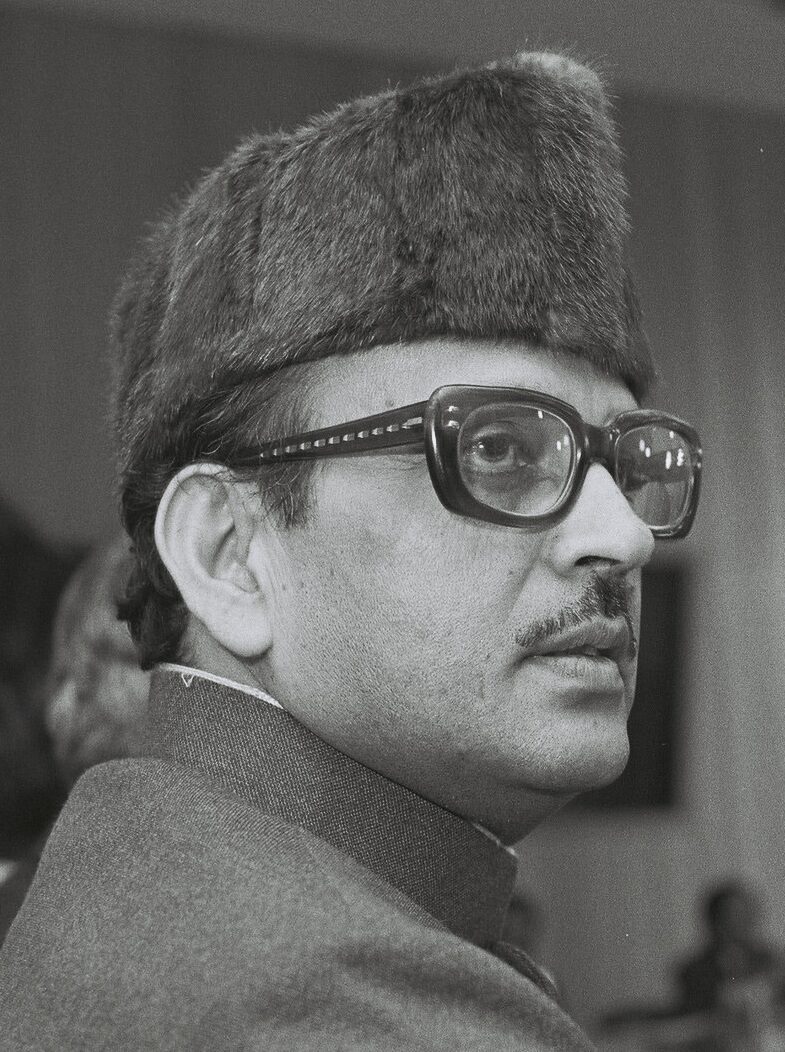
Vishwanath Pratap Singh was born on 25 June 1931 in Allahabad into the royal family of Manda (Daiya). He was adopted into the Manda estate, studied at Colonel Brown Cambridge School, Dehradun, and took his BSc from Allahabad University and LLB from Poona University. He gave up his hereditary zamindari rights — a fact often invoked by his admirers — and entered politics through the Allahabad University Students’ Union.
He was elected to the UP Legislative Assembly in 1969 and to the Lok Sabha in 1971. Indira Gandhi made him Deputy Commerce Minister, then Commerce Minister. After the 1980 election he served as Chief Minister of Uttar Pradesh from 1980 to 1982 — a tenure remembered for his crackdown on the Chambal dacoits, including a personal trip to Etawah after the death of his brother in a dacoit attack.
Finance Minister and the corruption crusade
Rajiv Gandhi appointed V.P. Singh Finance Minister in 1984. He acquired a reputation as the “Raid Raja” for tax raids on industrial houses — Dhirubhai Ambani’s Reliance Industries among them — that broke the unspoken Delhi compact between Congress and big business. Rajiv shifted him to Defence in 1987. There V.P. Singh probed the HDW submarine deal commissions and, soon after, the Bofors gun deal. Within months he was eased out of the Cabinet and the Congress.
Jan Morcha to National Front
V.P. Singh launched the Jan Morcha in 1987, then merged with the Lok Dal, Janata Party and Congress (S) to form the Janata Dal in October 1988. The National Front coalition, built with Telugu Desam Party, DMK, AGP and others, contested the 1989 election. The Congress lost. V.P. Singh became Prime Minister on 2 December 1989, supported externally by the BJP (85 seats) and the Left Front. The arrangement was inherently unstable but the political message was sharp.
The Mandal moment
The Mandal Commission, headed by B.P. Mandal, had been set up under Morarji Desai’s Janata government in 1979 and submitted its report in 1980. It identified 3,743 castes as socially and educationally backward, estimated OBCs at 52 percent of the population, and recommended 27 percent reservation in central government jobs and PSUs — within the 50 percent ceiling, since SC and ST quotas accounted for 22.5 percent.
V.P. Singh announced implementation in Parliament on 7 August 1990. The political effect was instant. Anti-Mandal protests erupted in Delhi, North India and parts of the West. On 19 September 1990, student Rajiv Goswami’s self-immolation outside Deshbandhu College became the searing image of the agitation. The Supreme Court’s nine-judge bench in Indra Sawhney v. Union of India (1992) upheld the 27 percent OBC reservation, capped total reservations at 50 percent, and introduced the “creamy layer” exclusion.
The Rath Yatra and the coalition collapse
The BJP, under L.K. Advani, launched the Ram Janmabhoomi Rath Yatra from Somnath on 25 September 1990. V.P. Singh ordered Advani’s arrest in Samastipur, Bihar, on 23 October 1990 — Lalu Prasad Yadav’s first major political moment as CM. The BJP withdrew outside support. V.P. Singh lost the confidence vote 142-346 on 7 November 1990 and resigned on 10 November.
Mandal and Mandir, in that sequence, defined the next decade of Indian politics — including the rise of Atal Bihari Vajpayee and the BJP, the Congress reset under P.V. Narasimha Rao, and eventually the welfare-rights expansion under Manmohan Singh.
Other initiatives during V.P. Singh’s tenure
In a tenure compressed to 11 months, V.P. Singh pushed several decisions beyond Mandal:
- Conferred Bharat Ratna on B.R. Ambedkar in 1990 — a recognition long overdue, dovetailing with the Mandal social-justice frame.
- Jammu and Kashmir — appointed Jagmohan as Governor in January 1990, a period of intense Kashmir insurgency and the exodus of Kashmiri Pandits. The Centre-state crisis remains debated.
- Punjab — engaged the Akali leadership; the militancy phase continued.
- Defence and intelligence shake-up — initiated review of the Bofors and HDW files he had opened as Defence Minister.
- Foreign exchange stress — the Gulf War of August 1990 spiked oil prices, evacuated 1.7 lakh Indian workers from Kuwait, and seeded the 1991 BoP crisis that landed in the next government.
Politics, painting, and final years
V.P. Singh was a recognised landscape painter who held exhibitions in Delhi and Mumbai. He suffered from multiple myeloma and renal failure for the last two decades of his life, undergoing dialysis while continuing to comment on public affairs. He campaigned for displaced communities, especially those affected by the Sardar Sarovar dam and Delhi slum demolitions, alongside activists like Medha Patkar. He died on 27 November 2008 at AIIMS Delhi at age 77.
For the broader policy ecosystem of the late 1980s and 1990s — including the institutional shift from the Planning Commission to Niti Aayog — V.P. Singh is the political pivot. Without Mandal, the OBC political consolidation that drives state and national elections through the 2020s does not happen. Without the corruption crusade that brought him to office, the public language of probity in office does not enter Indian electoral discourse the way it did.
Federal experiments and economic stress
The V.P. Singh government also experimented with federal innovations. It set up the Inter-State Council under Article 263 — recommended by the Sarkaria Commission — operationalising a mechanism that successor governments have used unevenly. It expanded the Antyodaya focus through targeted rural-employment programmes that prefigured the architecture later legislated as MGNREGA. The Rashtriya Mahila Kosh, set up in March 1993 under P.V. Narasimha Rao, was conceptually seeded under V.P. Singh’s Department of Women and Child Development push. He also revived the Sarkaria Commission’s recommendations on Centre-state financial relations, pressing for greater predictability in the divisible pool of taxes — a debate Finance Commissions have continued to refine since. The Janata Dal’s federalism rhetoric drew on this brief institutional moment.
Economically, V.P. Singh inherited the fiscal strain that the Rajiv Gandhi years had bequeathed. The Gulf War from 2 August 1990 spiked Brent crude past USD 40 per barrel and forced the evacuation of about 1.7 lakh Indian workers from Kuwait — Operation Desert Sahayata. The foreign exchange position deteriorated through the autumn. The Chandra Shekhar government that succeeded V.P. Singh in November 1990 pledged 47 tonnes of gold to the Bank of England in May 1991 — the visible peak of the crisis Manmohan Singh and P.V. Narasimha Rao would resolve weeks later.
V.P. Singh’s tenure thus sits as a hinge between two structural transitions — the social-justice transition triggered by Mandal, and the economic transition forced by the 1991 BoP shock. Both reshaped the political economy in ways still being adjudicated three decades later.
Frequently Asked Questions
Who was V.P. Singh and how long was he Prime Minister?
V.P. Singh was India’s 7th Prime Minister, serving from 2 December 1989 to 10 November 1990 — a tenure of 343 days. He led the National Front coalition with outside support from the BJP and the Left. He was previously Chief Minister of Uttar Pradesh, Union Finance Minister, and Defence Minister under Rajiv Gandhi.
What was the Mandal Commission and what did V.P. Singh do with it?
The Mandal Commission, set up in 1979 and headed by B.P. Mandal, recommended in 1980 that 27 percent of central government jobs be reserved for Other Backward Classes. V.P. Singh announced implementation on 7 August 1990 — a decade after the report. The Supreme Court upheld the move with a 50 percent cap and a creamy-layer exclusion in Indra Sawhney v. Union of India (1992).
Why did V.P. Singh’s government fall in November 1990?
The BJP withdrew outside support after V.P. Singh ordered L.K. Advani’s arrest during the Ram Janmabhoomi Rath Yatra on 23 October 1990. V.P. Singh lost the confidence vote 142-346 on 7 November 1990 and resigned on 10 November. Chandra Shekhar then formed a short-lived government with Congress outside support.
What role did V.P. Singh play in the Bofors scandal?
V.P. Singh, as Defence Minister in 1987, ordered probes into commission payments in the Bofors howitzer deal and the HDW submarine deal. Allegations of payouts to middlemen including the Hinduja brothers and Ottavio Quattrocchi surfaced. V.P. Singh was eased out of the Cabinet, left the Congress, and built his 1989 campaign around the Bofors arrow — Rajiv’s election defeat followed.
What was V.P. Singh’s role in the Kashmiri Pandit exodus?
V.P. Singh’s government appointed Jagmohan as Governor of Jammu and Kashmir in January 1990, during the intensification of militancy and the exodus of Kashmiri Pandits from the Valley. Critics fault the Centre for failing to protect the Pandit community; defenders argue the militancy was already in full flow before the Governor’s appointment. The episode remains historically contested.
Did V.P. Singh confer Bharat Ratna on B.R. Ambedkar?
Yes. V.P. Singh’s government conferred the Bharat Ratna on Dr B.R. Ambedkar posthumously on 31 March 1990, recognising his role as the principal architect of the Indian Constitution and as the chief Dalit leader of the 20th century. The decision aligned with the Mandal frame of social justice.
How did V.P. Singh’s Mandal decision reshape Indian politics?
The Mandal implementation produced the OBC political consolidation that drives north Indian electoral politics — Lalu Prasad Yadav, Mulayam Singh Yadav, Nitish Kumar, and the entire Janata Dal lineage emerged as OBC political leaders. The Mandir-Mandal counterposition reshaped the BJP’s mobilisation. The Indra Sawhney 50 percent ceiling and creamy-layer doctrine became constitutional law on reservations.
How is V.P. Singh remembered today?
V.P. Singh is remembered as the Prime Minister who brought social-justice politics to the centre of Indian governance, broke the Congress organisational lock on national politics, and paid the political price for it within a year. His painter’s aesthetic, frail health and post-PM activism for the displaced add an unusual moral dimension to a brief but consequential prime ministership.