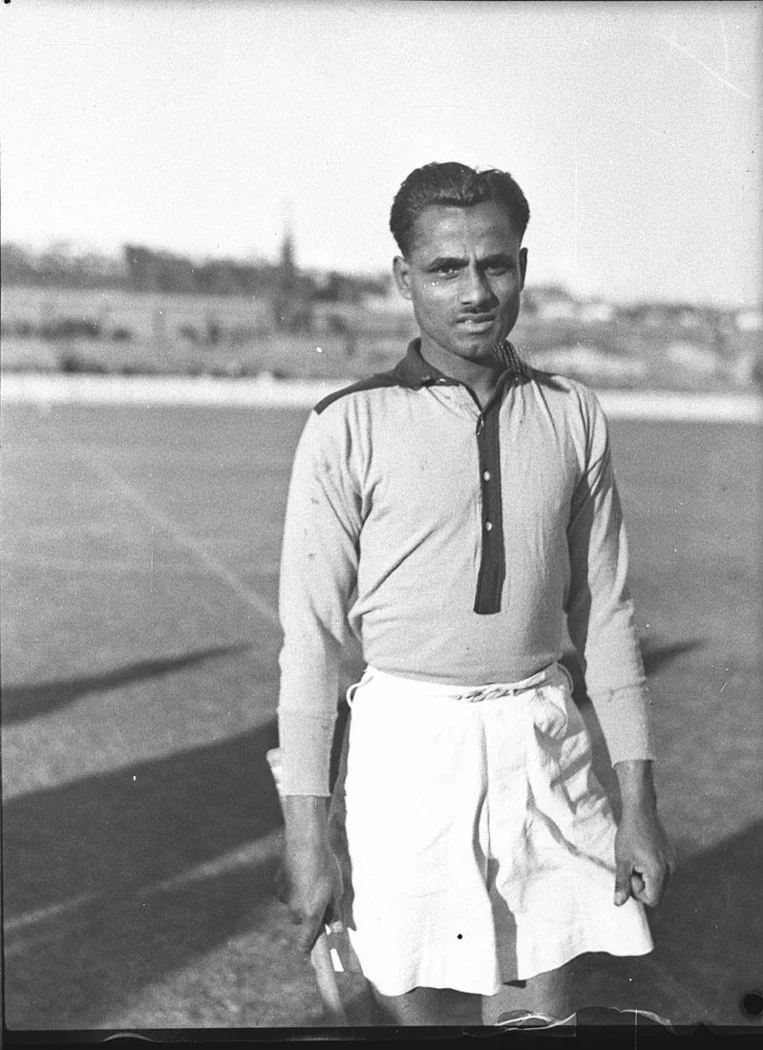
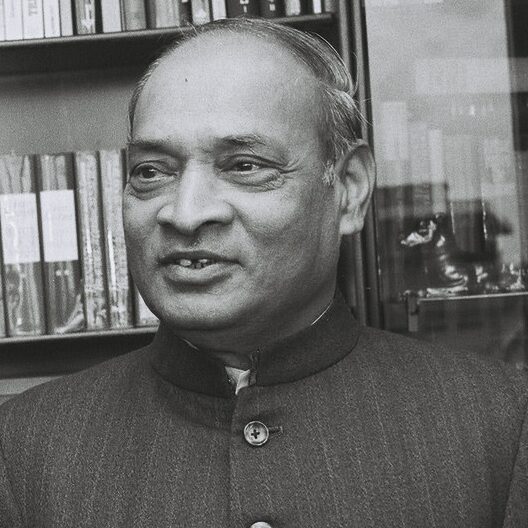
P.V. Narasimha Rao served as India’s 9th Prime Minister from 21 June 1991 to 16 May 1996, leading the country through the most consequential economic transition in its post-independence history. When P.V. Narasimha Rao took oath, India had foreign exchange reserves sufficient for barely two weeks of imports, was pledging gold to the Bank of England, and faced a balance-of-payments crisis that threatened sovereign default. Within months, his minority Congress government dismantled the Licence Raj, devalued the rupee, opened sectors to private and foreign capital, and reset India’s place in the world economy.
Although remembered as a reluctant reformer, P.V. Narasimha Rao combined scholarly depth, political shrewdness, and a willingness to delegate hard economics to a non-political technocrat — Manmohan Singh — that produced a quiet revolution. Critics fault him for the Babri Masjid demolition of December 1992, the Jharkhand Mukti Morcha bribery case, and an austere personal style that left the Congress organisation rudderless. Three decades on, the Bharat Ratna conferred posthumously in 2024 has restored him to the rank of architect of modern India.
Early life and political apprenticeship
Pamulaparthi Venkata Narasimha Rao was born on 28 June 1921 in Laknepalli village (then Hyderabad State, present-day Telangana) into a Niyogi Brahmin agricultural family. He took an MA in Law from Nagpur University, learned ten languages including Spanish and Persian, and translated Telugu and Marathi literary works alongside his political career.
He joined the Hyderabad State Congress during the 1948 Police Action against the Nizam, served three terms in the Andhra Pradesh Legislative Assembly, and became Chief Minister of Andhra Pradesh from 1971 to 1973 under Indira Gandhi. As CM he piloted the Land Ceiling Act and Mulki rules, but stepped down after the Jai Andhra agitation. Rao then moved to the Lok Sabha in 1977 and held External Affairs, Home, Defence and Human Resource Development portfolios across Indira and Rajiv Gandhi cabinets — a near-unique CV by the time he became Prime Minister.
Path to 7 Race Course Road
Rao had retired from electoral politics ahead of the 1991 general election, packing his books in Delhi. The assassination of Rajiv Gandhi on 21 May 1991 changed everything. Congress emerged as the single largest party with 244 seats — short of majority — and the leadership vacuum tilted toward a consensus figure who carried no factional baggage. P.V. Narasimha Rao was elected Congress Parliamentary Party leader on 20 June 1991 and sworn in the next day. He later contested and won the Nandyal by-election to enter the Lok Sabha.
The 1991 balance-of-payments crisis
When P.V. Narasimha Rao assumed office, the macroeconomic dials were flashing red. Foreign exchange reserves had collapsed to roughly USD 1.2 billion — about two to three weeks of imports. The fiscal deficit had widened past 8 percent of GDP. The Chandra Shekhar government had already airlifted 47 tonnes of gold to the Bank of England as collateral. Standard & Poor’s downgraded India to junk status. Oil prices had spiked after the Gulf War, and remittances from Indian workers in Kuwait had stopped.
Rao’s first decision was strategic. He brought in Manmohan Singh — former RBI Governor and Finance Secretary, then heading the University Grants Commission — as Finance Minister. The combination signalled both political ownership and technocratic credibility. For deeper context on the policy package that followed, our explainer on the 1991 economic reforms traces the LPG framework in detail.
Liberalisation, Privatisation, Globalisation
Between July 1991 and the 1996 Lok Sabha election, the Rao-Singh duo introduced reforms that abolished the Industrial Licensing regime for most sectors, devalued the rupee by about 18 percent in two tranches, scrapped the Monopolies and Restrictive Trade Practices investment cap, opened automobiles, telecom, power, banking and insurance to private capital, lowered peak customs duties from 150 percent toward 50 percent, and allowed foreign institutional investors into Indian equities. The Securities and Exchange Board of India was given statutory status in 1992. The New Industrial Policy of 24 July 1991 — issued the same day as Manmohan Singh’s first Budget — reserved only 18 industries for the public sector, down from 17 reserved exclusively earlier.
P.V. Narasimha Rao’s role was not passive. He absorbed political risk inside Congress, talked the Left and trade unions down from strike threats, and used Parliament to ratify each step. When the Harshad Mehta scam broke in 1992, his government did not roll back the capital market opening; it strengthened SEBI.
Foreign policy: Look East and beyond
P.V. Narasimha Rao reset Indian diplomacy after the Soviet collapse. He launched the Look East Policy in 1992, establishing sectoral dialogue partnership with ASEAN and ending three decades of cool relations with Southeast Asia. He opened full diplomatic ties with Israel in January 1992 — a decision long delayed by domestic political caution. He visited China in 1993 and signed the landmark Agreement on Maintenance of Peace and Tranquillity along the Line of Actual Control, the first such bilateral CBM since 1962.
Nuclear preparedness
Less visibly, P.V. Narasimha Rao authorised preparations for nuclear tests at Pokhran in December 1995. American satellites detected the activity and forced a pause. When Atal Bihari Vajpayee took oath in 1996 for 13 days, Rao reportedly handed him a note saying: “Saamagri tayyar hai” — the material is ready. Pokhran-II in May 1998 thus belongs to a continuum that began under Rao.
Domestic milestones and controversies
Rao’s tenure also produced the 73rd and 74th Constitutional Amendments (1992-93) institutionalising Panchayati Raj and Urban Local Bodies, the National Stock Exchange (launched 1994), and the Telecom Policy of 1994 that opened mobile services. He fast-tracked the unique identification debates that later flowered into Aadhaar under Manmohan Singh, and seeded the planning architecture that today’s Niti Aayog inherited from the Planning Commission.
The Babri Masjid demolition
The disputed structure at Ayodhya was demolished on 6 December 1992 while the BJP-led Uttar Pradesh government failed to prevent it. P.V. Narasimha Rao faced criticism for inaction — his decision not to invoke President’s Rule earlier remains contested. He dismissed the UP, MP, Rajasthan and Himachal BJP governments soon after and banned the RSS, VHP and Bajrang Dal under the Unlawful Activities Prevention Act. The Liberhan Commission, set up in his term, took 17 years to report. Communal riots that followed in Mumbai and elsewhere left over 2,000 dead.
JMM bribery case
In 1993 Rao survived a no-confidence motion 265-251 in the Lok Sabha. Allegations later surfaced that Jharkhand Mukti Morcha MPs had been paid to vote with the government. P.V. Narasimha Rao was convicted by a trial court in 2000 but acquitted on appeal in 2002, with the courts ruling that parliamentary privilege under Article 105 shielded MPs but not the bribe-givers in their individual capacity.
Legacy and Bharat Ratna 2024
P.V. Narasimha Rao left office in May 1996 after losing the general election. The Congress treated him coolly thereafter — his body was famously not allowed inside the AICC headquarters in 2004. The Bharat Ratna announced on 9 February 2024 corrected that historical slight. Today P.V. Narasimha Rao is recognised across party lines as the political authoriser of the reforms that doubled India’s per-capita GDP within a decade and made the country the world’s fifth-largest economy by the 2020s.
For UPSC aspirants, the Rao years anchor the modern history syllabus where coalition politics, economic liberalisation, and foreign-policy reorientation intersect. Compare his stewardship with the tenure of Manmohan Singh, who completed in 2004-14 the second-generation reforms that P.V. Narasimha Rao began in 1991, and with Atal Bihari Vajpayee, who carried disinvestment, fiscal responsibility and infrastructure-led growth into the NDA-I years.
Administrative reforms and cultural touch
P.V. Narasimha Rao also expanded the institutional space for higher education and culture. He set up the National Commission for Backward Classes in 1993 following the Indra Sawhney judgment, expanded the Indian Institutes of Information Technology framework that flowered later, and quietly approved investment in the Cellular Operators Association of India that anchored the mobile telephony boom. A polyglot who wrote the autobiographical novel The Insider, he insisted that the Sahitya Akademi and central universities remain insulated from political appointment churn — a record of restraint that successor governments did not always match.
Frequently Asked Questions
Who was P.V. Narasimha Rao and why is he important?
P.V. Narasimha Rao was India’s 9th Prime Minister, serving 1991-96. He is important because he led the country out of the 1991 balance-of-payments crisis by launching the LPG (Liberalisation, Privatisation, Globalisation) reforms, opening Indian markets to private and foreign capital, devaluing the rupee, abolishing industrial licensing, and beginning the Look East policy.
Why was Narasimha Rao called a u0022reluctant reformeru0022?
He inherited socialist-era policies and a minority government with limited room for political risk, but pushed through reforms anyway. He delegated economic strategy to Finance Minister Manmohan Singh while absorbing political cost inside the Congress. His scholarly, low-key public style created the impression that the reforms happened around him, when in fact every major step had his explicit clearance.
What were the main 1991 reforms under Narasimha Rao?
The July 1991 New Industrial Policy abolished licensing for most industries, opened automobiles, telecom, power and banking to private investment, devalued the rupee by about 18 percent, cut customs duties, allowed FII inflows into equities, and granted SEBI statutory status in 1992. The 73rd and 74th Constitutional Amendments institutionalised local self-government in the same window.
What was Narasimha Rao’s role in the Babri Masjid demolition?
P.V. Narasimha Rao was Prime Minister when the structure was demolished on 6 December 1992. Critics argue he failed to impose President’s Rule on the BJP-led UP government in advance despite intelligence inputs. After the demolition he dismissed four BJP state governments and banned the RSS and VHP. The Liberhan Commission set up under him examined responsibility.
Did Narasimha Rao plan the Pokhran nuclear tests?
Yes. P.V. Narasimha Rao authorised preparations at Pokhran in December 1995. American satellites detected the activity and diplomatic pressure forced a pause. He reportedly told incoming PM Atal Bihari Vajpayee in 1996 that the material was ready, enabling Pokhran-II in May 1998.
Why did Narasimha Rao receive the Bharat Ratna in 2024?
The Bharat Ratna was conferred posthumously on 9 February 2024 in recognition of his role in launching the 1991 economic reforms, the Look East policy, Panchayati Raj amendments and overall contribution to modern Indian statecraft. The award was widely read as a cross-party reconciliation with a leader the Congress had distanced itself from after 1996.
What was the JMM bribery case involving Narasimha Rao?
In 1993 his government survived a no-confidence motion 265-251. Allegations later surfaced that Jharkhand Mukti Morcha MPs were paid to vote for the government. P.V. Narasimha Rao was convicted by a trial court in 2000 but acquitted in 2002 under Article 105 parliamentary privilege protections.
How does Narasimha Rao compare to other Indian Prime Ministers?
Among post-1990 Prime Ministers, P.V. Narasimha Rao stands out for engineering a structural break with the pre-1991 economy. Manmohan Singh consolidated the reforms in 2004-14, Atal Bihari Vajpayee pushed disinvestment and infrastructure in 1998-2004, and V.P. Singh shaped the Mandal social-justice trajectory in 1989-90. Rao’s distinction is the simultaneous economic, foreign-policy and federal restructuring he led from a minority government.
Tell Google you want more of this.
Add Anantam IAS as a preferred sourceOne tap, and this site shows up more often in your own Top Stories, AI Overviews and AI Mode. Remove it any time.