Why in News:
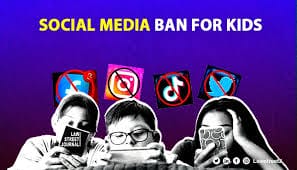
Following a recent tragedy involving death of 3 minor girls in Ghaziabad, renewed demands have emerged in India to ban social media for children, amid global moves by countries such as Australia and Spain to restrict under-16 access to social media platforms.
UPSC Relevance: GS-I Society and Social Issues, GS-II Governance, GS-III Technology Regulation
Background:
The tragic suicide of three minor sisters in Ghaziabad, Uttar Pradesh, by jumping from the ninth floor of their residential has once again spotlighted the perils of excessive digital engagement among adolescents. Preliminary police investigations point to addiction to a Korean task-based online game, obsession with Korean culture (K-dramas, K-pop, cartoons), school dropout since 2020, parental restrictions (confiscation and sale of phones), family conflicts, and a suicide note (“Sorry papa”) along with diary entries expressing deep attachment to Korean elements. This incident has fueled demands for a blanket ban on social media/gaming for minors under 16, inspired by models like Australia’s Online Safety Amendment Act (effective December 10, 2025), which prohibits under-16s from holding accounts on major platforms (Instagram, TikTok, YouTube, X, Snapchat, etc.) with mandatory age verification and hefty fines.
Evidence Linking Social Media/Screen Addiction to Adolescent Mental Health
- Global meta-analyses and systematic reviews establish small but consistent associations between heavy/problematic social media use and increased risks of anxiety, depression, self-harm, body image dissatisfaction, and suicidality, particularly among girls (due to cyberbullying, FOMO, and social comparison).
- In India, local studies indicate stronger correlations, exacerbated by academic pressure, family dynamics, and socio-cultural stressors.
Limitations of Existing Research
- Majority of studies are conducted in Western contexts
- Correlation does not imply causation
- Mental health outcomes are influenced by:
- Family environment
- Socio-economic stress
- Gender norms
- Access to support systems
Evidence warrants caution and regulation, not moral panic or prohibition.
Moral Panic and the Global Turn to Bans
Sociologist Stanley Cohen’s theory of “moral panic” explains how societies, when confronted with unresolved structural problems, identify “folk devils” and respond with symbolic crackdowns.
Global Examples
- Australia (2024): Blanket ban on social media accounts for under-16s with mandatory age verification
- Spain (2026 proposal): Criminal liability for algorithmic amplification of harmful content
In India, calls for similar bans (e.g., private member’s bill, celebrity endorsements like Sonu Sood) reflect this pattern, prioritizing “doing something” over nuanced solutions.
While emotionally appealing, such measures risk oversimplifying the problem and exporting unsuitable solutions to the Indian context.
Why Blanket Bans Are Unsuitable for India?
Blanket age-based prohibitions face severe challenges in India’s unique socio-economic, technological, and democratic landscape:
- Technical Enforceability and Unintended Consequences Adolescents often outpace regulators in digital literacy. Strict age-gating in other jurisdictions has led to widespread VPN use, fake declarations, and migration to unregulated/dark web spaces, heightening risks of grooming, extremism, and unmoderated harm. Enforcement via platforms risks inefficacy without addressing root algorithmic designs.
- Privacy and Surveillance Risks Mandatory age verification, potentially linked to Aadhaar/government IDs, could create a mass surveillance framework, violating the right to privacy under Article 21 (Justice K.S. Puttaswamy v. Union of India, 2017). Child protection cannot justify normalizing digital authoritarianism.
- Ignoring Positive Roles and Lived Realities For marginalized adolescents (rural, urban slums, LGBTQ+ adolescents, differently-abled), platforms serve as lifelines for peer support, self-expression, education, and community access. Bans overlook these developmental benefits, treating youth as passive subjects rather than rights-holders (UNCRC Article 12: right to participation).
- Exacerbating Gender and Socio-Economic Inequalities NSSO data reveals a stark digital gender gap: ~33% of women have ever used the internet vs. ~57% of men, worse in rural/patriarchal settings. Bans could prompt families to confiscate devices entirely from girls (viewed suspiciously), widening exclusion from online learning, economic opportunities, and social mobility – undermining “Digital India” and SDGs 5 (Gender Equality) & 10 (Reduced Inequalities).
- Democratic Deficit in Policymaking Policies for youth routinely exclude youth voices, violating participatory governance. The Digital Personal Data Protection Act, 2023’s flawed consent mechanisms illustrate exclusionary pitfalls (false declarations or digital denial).
Alternative Regulatory Path: From Censorship to Accountability
India must shift from over-reliance on blunt censorship (IT Act, 2000 notice-and-takedown regime) to sophisticated, enforceable tools confronting Big Tech’s economic and algorithmic power:
- Legally Enforceable Duty of Care for platforms towards minors, including algorithmic transparency, reduced harmful amplification, and child-safety-by-design.
- Robust Digital Competition Law to curb engagement-maximizing monopolies prioritizing profit over well-being.
- Meaningful Penalties for non-compliance, enforced by an independent, expert regulator (insulated from political influence, akin to TRAI model) rather than bureaucracy-heavy MeitY.
- India-Specific Evidence Generation through public-funded longitudinal research (class, caste, gender, region), with youth as active participants in design and evaluation.
- Consistent Regulation Across Technologies :
- Why Regulation Must Also Address Artificial Intelligence
- Emerging Concerns
- Adolescents increasingly use AI chatbots for:
- Emotional support
- Mental health advice
- Early research indicates:
- Cognitive dependency
- Reduced critical thinking
- Child Safety Failures in AI
- Reports of inappropriate interactions with minors
- Alleged links to self-harm and emotional harm
- Selective moral outrage – social media is demonised while AI remains under-regulated.
Conclusion
The Ghaziabad tragedy underscores urgent needs for adolescent mental health safeguards amid digital proliferation, but blanket bans offer illusory control at prohibitive costs – rights erosion, deepened inequalities, enforcement failure, and democratic exclusion. As media scholar Neil Postman noted, being “pro” or “anti” technology is futile; the task is cultivating a healthy media ecology balancing innovation, accountability, protection, and rights.
In a constitutional democracy like India (Articles 14 equality, 21 life/privacy, 39(f) child opportunities), policy must prioritize evidence-led, inclusive, youth-centered regulation over outrage-driven prohibition. This nuanced path – tougher but sustainable – aligns with child rights, equity, and sustainable digital development
Tell Google you want more of this.
Add Anantam IAS as a preferred sourceOne tap, and this site shows up more often in your own Top Stories, AI Overviews and AI Mode. Remove it any time.