
UPSC CSE 2025 Results
Three Stories.
Five Ranks. One Foundation.
When the UPSC CSE 2025 results were declared, five names from Anantam IAS appeared in the top 100 — AIR 44, 56, 73, 96 and 99. We sat down with three of them: Deeksha, Aakash and Devyanshi. What follows is not the polished version. It is the real one.

AIR 44
AIR 56
Samiksha Dwivedi
GS Foundation · QIP · IGP
AIR 73
AIR 96
Kashish Kalra
PSIR Foundation · Mentorship
AIR 99
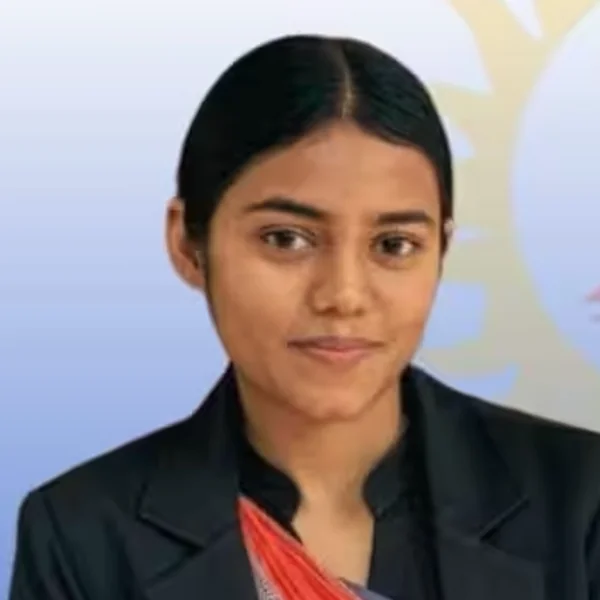
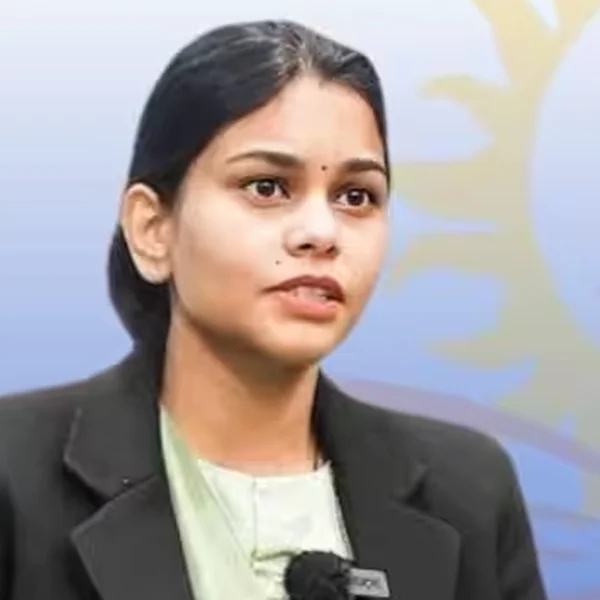
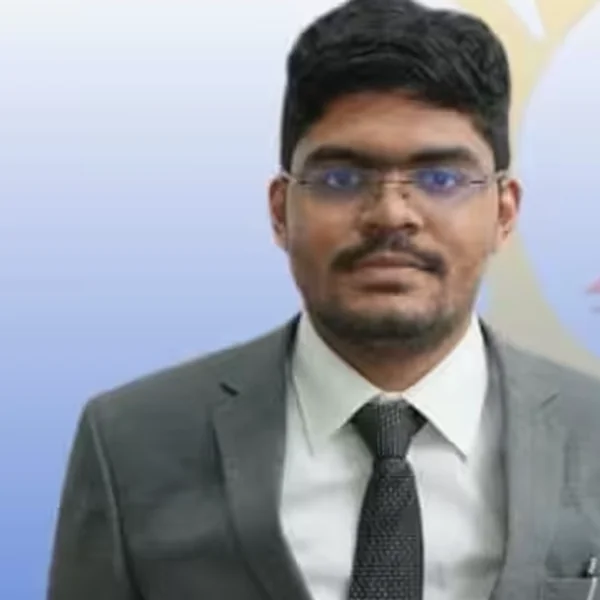
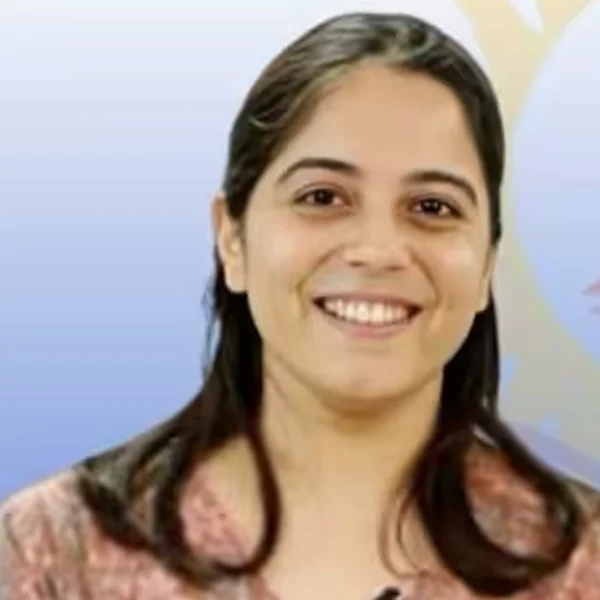
The class of 2025
Free demo classDuring his podcast, Aakash said something that stayed with us
Aakash Om Trivedi · AIR 73
He was talking about three years of preparation — failed attempts, fresh starts, small-town beginnings in Maharashtra — that led to AIR 73 in one of the toughest exams in the world.
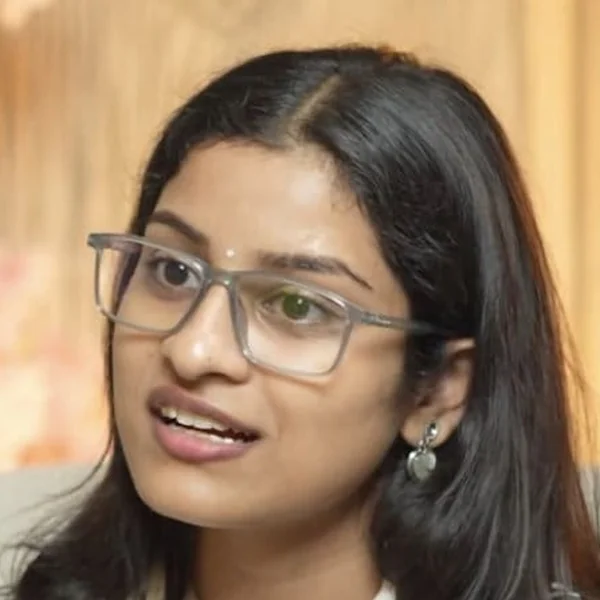
AIR 44
Deeksha Chourasiya
GS Foundation & QIP · History Optional · 4th Attempt
Deeksha's UPSC story starts with her mother — a woman who wanted to be a civil servant herself but couldn't, because she got married too young. That unfulfilled dream was the backdrop of Deeksha's childhood in Indore. Then, as a teenager, she watched Tina Dabi speak at a local event. She sat on the stairs because every seat was taken. By the time she walked out, the decision was clear: Humanities, then Delhi, then civil services.
She scored 97% in 12th and headed to Delhi University. A form-filling error in the DU application meant her first-choice subjects at Hindu College were unavailable. She ended up with History Honours at Miranda House instead — and it turned out to be exactly what her preparation needed. Miranda House opened her up to gender studies, diverse historical perspectives, and intellectual freedom she hadn’t experienced before. She organized the history department festival “Tareekh,” served as Vice President during COVID, and once invited Ramachandra Guha for an online event.
“I needed coaching not for content, but for exam readiness. I didn’t know what UPSC actually required from me — even with a Humanities background.”
— Deeksha Chourasiya, AIR 44
Her first attempt, in 2022, ended at Prelims. The day the result came, she called her mentor. “Sir, nahi hua.” His response: start Mains preparation today. That evening she wrote an essay and sent it over. That refusal to let failure become a pause defined her next three years.
She cleared Prelims in 2023 but missed the Mains cutoff narrowly. In 2024, Prelims knocked her out again — this time from overconfidence. She admits it openly: she got the hard questions right but missed basics because she assumed Prelims gets easier once you’ve cleared it. It doesn’t. Through all of this, she kept herself grounded with Kathak — she has seven to eight years of classical training and completed her Visharatan — practiced silently in her room as a form of stress relief. She painted between exam seasons. And she kept a journal with unusual honesty. Her elder brother, an IIT Bombay graduate, helped her with CSAT math and gave her early warnings about the emotional toll of this journey.
“After Prelims 2024 failed, I wrote in my journal: 2025 is going to be your year. I still have it written there. Sometimes positive manifestation really does help.”
On History Optional
Deeksha scored around 280 in History Optional — a strong result in what she calls “a bloodbath subject.” Her approach is clear: PYQs are the foundation — 70 to 80 percent of the paper draws from previous years. But beyond that, History rewards the ability to hold multiple perspectives at once. Conservative readings, Marxist readings, nationalist and subaltern interpretations — the best answers don’t pick a side but arrive at a conclusion that acknowledges the tension between them.
- PYQs are non-negotiable — 70–80% of History Optional repeats from previous years.
- Write specific answers, not generic ones. Value addition matters more than volume.
- Mental health on exam day matters. Being in the right headspace is half the battle.
- Start Mains preparation before Prelims results — 86% of the total weightage is there.
- For interview: deep DAF research, solid current affairs, and honest self-reflection.
Her interview score was 198 — outstanding by any standard. She scored 816 in Mains written. Years of Kathak and painting, the intellectual culture at Miranda House, and the discipline of showing up after repeated failures — the board could see all of it. As she put it in the podcast: “I’ve just opened the door. I haven’t walked through it yet.”
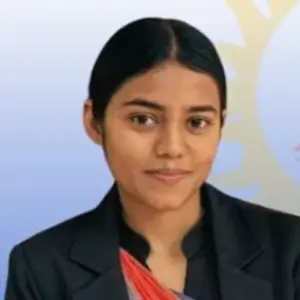
AIR 73
Aakash Om Trivedi
QIP · Mathematics Optional · 2nd Attempt
Aakash grew up in Erandol, a small town in the Jalgaon district of Maharashtra. His father is a lawyer, his mother a homemaker who was relentless about academics. The early turning point was almost comically small: in Class 3 or 4, he topped a local coaching entrance exam, his photo appeared in the newspaper, and his father's phone didn't stop ringing all day. That taste of recognition stuck with him.
By Class 8 he was at a Resonance summer camp in Kota — and loved it so much he convinced his parents to let him stay. His father resisted at first; the boy was too young. But Kota’s competitive ecosystem pulled him in completely. Science Olympiads, competitive mathematics, KVPY. He got AIR 226 in IIT-JEE and joined IIT Kanpur for Computer Science, graduating with an 8.8 CGPA. He didn’t love coding. What he loved was mathematics, philosophy, and a professor named Sen Gupta who taught art courses where students described paintings and debated the politics embedded in Abanindranath Tagore’s watercolours.
“Every day in Kota I would go into the battlefield, get defeated, have sand all over my face, cry, go home, rest — and come back the next day. Because that’s what I enjoyed.”
— Aakash Om Trivedi, AIR 73
His move to UPSC came from multiple directions. A talk by Durga Shankar Mishra at IIT Kanpur — a fellow IITK CSE alumnus who went on to become Chief Secretary of UP and led major infrastructure projects — planted the idea that the civil services, done seriously, could be deeply satisfying work. He also studied the careers of Parameswaran Iyer, who drove Swachh Bharat, and Gaurav Agarwal, the 2013 UPSC topper from IIT Kanpur. Then came an internship at a tech company in Bengaluru. He enjoyed the work, but evenings and weekends felt hollow. He found himself reading his Mathematics optional textbooks in Bengaluru, not his codebase. The choice became obvious.
On Mathematics Optional & GS
Aakash scored 340 in Mathematics Optional — among the highest in recent years. His biggest regret from the first attempt, which landed him on the Reserve List, was over-investing in mock test series instead of focusing on PYQs from both UPSC and Forest Service papers. He points out that since 2020, Forest Service Maths papers have become significantly harder and now set the tone for UPSC — proof-based questions like “Every continuous function is Riemann integrable” are routine 10-markers.
Between attempts, he kept his GS improvement targeted: better presentation, mini diagrams in Art & Culture answers, current-affairs-linked conclusions, and careful revision of gaps that QIP classes helped surface. He talks about re-watching QIP Polity lectures and catching real errors in his own understanding — confusing when the Speaker casts a casting vote, missing Article 143 nuances, skipping over negative and positive liberty in NCERTs. Small gaps, but the kind that cost marks.
- The exam is 95% system, 5% random. Master the game — write class A answers consistently.
- Track your hours. Minimum 8–10 daily. What gets measured gets improved.
- Stay in the zone even when not at your desk. Let concepts circulate passively.
- Vipassana before the interview. Walk in as your most stable self.
- Don’t over-invest in mock series. PYQs — UPSC and Forest Service both — are the primary resource for Maths.
Aakash does 50 to 60 Surya Namaskars daily — a habit his mother pushed him into during Kota, which he never dropped. He has completed multiple 10-day Vipassana courses; his father is a longtime practitioner. The last one was right before his interview. His mother told him he looked less radiant than after his previous course — but he credits that session with the calm he carried into the board room. Football kicked against a wall in his room remained his mental reset through the entire preparation.

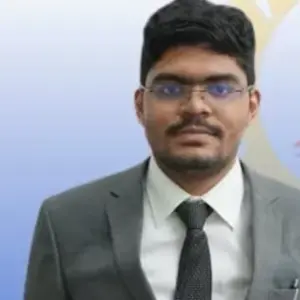
AIR 99
Devyanshi Verma
GS Foundation & QIP · Sociology Optional · 1st Attempt
Devyanshi cleared UPSC CSE 2025 on her first attempt. She's not from IIT, AIIMS, or any institution that typically gets name-dropped in UPSC success stories. She studied at Delhi College of Arts & Commerce (South Campus, DU) through correspondence while simultaneously doing a Journalism course — a deliberate choice, since journalism overlapped with UPSC preparation and gave her an independent career backup. She joined GS Foundation at Anantam IAS in her third year of college, but her preparation had started much earlier: newspaper reading from first year, NCERTs alongside her regular coursework.
Her decision came in mid-Class 12. She had PCM — Science stream — but something about ground-level administration had been pulling at her. A cousin’s friends who were already in the services gave her early exposure to what the work actually looked like. Her parents were worried. Her brother, who could see her academic drive clearly, helped reason through it with them.
“My identity doesn’t come from any tag. I never had FOMO about not being from an IIT. My identity is my own power. That’s it.”
— Devyanshi Verma, AIR 99
On Busting the IIT-UPSC Myth
Devyanshi is direct about this. She acknowledges that competitive exam backgrounds build a useful mindset. But she won’t let that become anyone’s inferiority complex. The most important skill in UPSC Mains is answer writing — and that is a learnable skill, not something you inherit from an institution. Humanities students, she adds, come with their own advantage in structure and perspective. She solved 7,000 to 8,000 Prelims questions before exam day, starting her test series in December. Her accuracy target: 60 out of 75 correct, consistently.
On social media, her thinking is characteristically sociological. She quit Instagram around August 2024 — not because it was distracting, but because she genuinely found it boring and homogenous. She applies Merton’s theory of deviance to her own study habits, asking herself: am I being ritualistic — going through the motions of studying without actually improving? That kind of self-monitoring is what she means when she talks about clarity of thought.
On Newspapers, Coaching, and Trust
Devyanshi is firm: no magazine replaces a daily newspaper. The newspaper builds analytical ability, vocabulary, and real recall. Magazines summarise — they work as revision, not foundation. She started the newspaper habit in her first year of college, well before formal coaching, which is why she could sustain it without it feeling like a chore. On coaching, she’s pragmatic: it gives you speed and removes the anxiety of “what do I study.” But the student’s role in extracting value is what makes the difference — same lecture, different outcomes. “Trust comes from actions,” she says. “Whatever they advised, I tested it. It worked. That’s it.”
She also strongly recommends reading the Bare Act directly for Polity. Exam questions use the language of the Act, and Laxmikanth, while excellent, doesn’t always include article numbers.
- Start early. Build habits in Year 1 — newspaper, NCERTs, discipline — before exam pressure hits.
- Test yourself constantly. Start Prelims test series early. Scores are the only objective feedback you have.
- Trust your coaching, but verify through results. Test the advice, see if it works, then commit.
- Don’t force-quit social media. Let the disinterest come from within — forced deletion doesn’t last.
- After a bad result: give yourself one day to feel sad. Accept it. Then get back to work — next year needs to happen regardless.
Her interview score was 200 out of 275 — one of the highest among selected candidates. She had been doing parliamentary debates in college since first year: timed speeches of seven minutes twenty seconds with just fifteen to twenty minutes of preparation, arguing positions she disagreed with, spotting logical fallacies, collaborating with people who thought nothing like her. The board saw someone who had built genuine communication skills over years, not someone performing polish for the interview. She had a tough board. The score reflects it.
What the marksheets say
Three journeys, in numbers
816
Mains written total
Deeksha Chourasiya · AIR 44
340
Mathematics Optional
Aakash Om Trivedi · AIR 73
200
Interview score, out of 275
Devyanshi Verma · AIR 99
1st · 2nd · 4th
The attempt each of them cleared on
Devyanshi · Aakash · Deeksha
Every figure here is one the candidates state themselves in the conversations above.
Join the Batch That
Produced These Results
GS Foundation and QIP — the same programmes Deeksha, Aakash and Devyanshi studied in. Limited seats.
Enquire Now →See the programmes