
UPSC Mains Optional · Live + Zoom
PSIR Optional for UPSC, taught the Rahul Puri way.
A six-month Political Science & International Relations program from Old Rajinder Nagar, taught by Rahul Puri — ex-Rau's IAS PSIR faculty of a decade. Sixteen tests, Mains Crash Course and weekly answer-writing built around the optional with the deepest GS II and Essay overlap.
Why PSIR
Why serious aspirants keep returning to PSIR.
PSIR is not a fashionable optional. It is a structural one. It pays back across GS II, Essay and Interview — without the boom-bust cycles other optionals have lived through.
~40% GS II & III overlap
Polity, Governance, IR, India and the World, Internal Security and Economic Development overlap directly. Nothing studied is wasted.
Essay paper, unlocked
Philosophy section (Liberty, Justice, Democracy, Nationalism) draws directly from PSIR Paper 1. You arrive with frameworks, not scrambled quotes.
Current affairs linkage
Cabinet reshuffles, G-20 summits, federalism judgments — all PSIR. Answers turn analytical the moment you have the vocabulary.
Consistent, writeable scoring
A decade-long 280–310 scorer. No fashion-cycle collapse. Marks come from structure and argument, not factual recall.
Syllabus
Two papers. 500 marks. A syllabus you can map in one sitting.
The course follows the UPSC PSIR Optional syllabus exactly, in the proportion the exam actually demands. Each section is anchored to thinker maps, PYQs and answer-writing practice.
Paper I
Political Theory & Indian PoliticsSection A · Political Theory & Thought
- Political Theory — meaning and approaches
- Theories of the State — Liberal, Neo-liberal, Marxist, Pluralist, Post-colonial, Feminist
- Justice (Rawls and after), Equality, Rights
- Democracy — Classical and Contemporary theories
- Power, Hegemony, Ideology, Legitimacy
- Political Ideologies — Liberalism, Socialism, Marxism, Fascism, Gandhism, Feminism
- Indian Political Thought — Dharamshastra, Arthashastra, Buddhist; Sir Syed, Aurobindo, Gandhi, Ambedkar, M.N. Roy
- Western Political Thought — Plato to Hannah Arendt
Section B · Indian Government & Politics
- Indian Nationalism — National Movement, social & economic dimensions, Partition
- Making of the Indian Constitution & salient features
- Principal Organs of the Union & State Governments
- Grassroots Democracy
- Statutory Institutions & Commissions (EC, CAG, FC, UPSC, NCW, NHRC, NCM, NCBC, NCST, NCSC)
- Federalism, Planning & Economic Development
- Caste, Religion & Ethnicity in Indian Politics
- Party System · Social Movements
Paper II
Comparative Politics & IRSection A · Comparative Politics & IR
- Comparative Politics — nature and major approaches
- State in comparative perspective — capitalist, socialist, developing societies
- Politics of representation and participation
- Globalisation — responses from developed and developing societies
- Approaches to the study of International Relations
- Key Concepts — national interest, security, power, balance of power, deterrence, collective security, globalisation
- Changing international political order — Cold War, collapse of USSR, unipolarity, NAM
- Evolution of the international economic system — Bretton Woods to WTO, G-77, G-20
- United Nations & specialised agencies
- Regionalisation — EU, ASEAN, APEC, SAARC, NAFTA
- Contemporary global concerns — democracy, human rights, environment, gender, terrorism, nuclear proliferation
Section B · India and the World
- Indian Foreign Policy — determinants, non-alignment, Nehru
- India's contribution to NAM
- India and South Asia — neighbours, SAARC, Look/Act East
- India and the Global South
- India and global centres of power — US, EU, Japan, China, Russia
- India and the UN System — peacekeeping, UNSC reforms
- India and the Nuclear Question
- Recent developments in Indian Foreign Policy
Six-month roadmap
A phased, six-month roadmap to PSIR readiness.
The course is not a content dump. Each phase has one job — foundation, Indian deep dive, IR sprint, India-and-the-world consolidation — with answer writing and tests sequenced underneath.
Foundation & thinkers
Paper 1 Section A — Gauba, Western & Indian Thought. Thinker-quote bank (50). Answer writing 2/week.
Indian polity deep dive
Paper 1 Section B — Fadia, D.D. Basu, NCERT XII. Link to recent SC judgments. First thematic test.
IR & comparative
Paper 2 Section A — Heywood, Hague & Harrop. Daily editorial. Second thematic test.
India & world + revision
Paper 2 Section B — Sikri, Malone, periodicals. Four full-length mocks. PYQ second pass with model answers.
Booklist
Sixteen essential books. The rest is noise.
A tight, time-tested booklist trumps an overflowing shelf. Chapter-level guidance is given in class so reading hours go where they earn marks.
| Book | Author / Source |
|---|---|
| Paper 1 · Political Theory & Indian Politics | |
| An Introduction to Political Theory | O.P. Gauba |
| Modern Indian Political Thought | V.P. Verma & Bidyut Chakrabarty |
| Western Political Thought | Bhagwan · Vidya Bhushan |
| Indian Government and Politics | B.L. Fadia |
| Introduction to the Constitution of India | D.D. Basu |
| Politics in India since Independence | NCERT (Class XII) |
| Paper 2 · Comparative Politics & IR | |
| Global Politics | Andrew Heywood |
| Comparative Government and Politics | Rod Hague & Martin Harrop |
| International Relations | Peu Ghosh |
| Challenge and Strategy — Rethinking India's Foreign Policy | Rajiv Sikri |
| Does the Elephant Dance? Contemporary Indian Foreign Policy | David M. Malone |
| India's Foreign Policy — Retrospect & Prospect | Sumit Ganguly (ed.) |
| Periodicals & class material | |
| The Economist · Foreign Affairs · IDSA commentary | Periodicals |
| Perspective — PSIR Monthly Magazine | Anantam IAS |
| PSIR PYQ bank (2013–2024) | Anantam IAS |
| Class notes | Rahul Puri · batch material for enrolled students |
Faculty
Rahul Puri has been teaching PSIR in Old Rajinder Nagar for over a decade.
His approach is the opposite of what most UPSC aspirants expect — concept first, thinker next, answer third. The classroom is small, the focus is on writing, and every student is known by name.
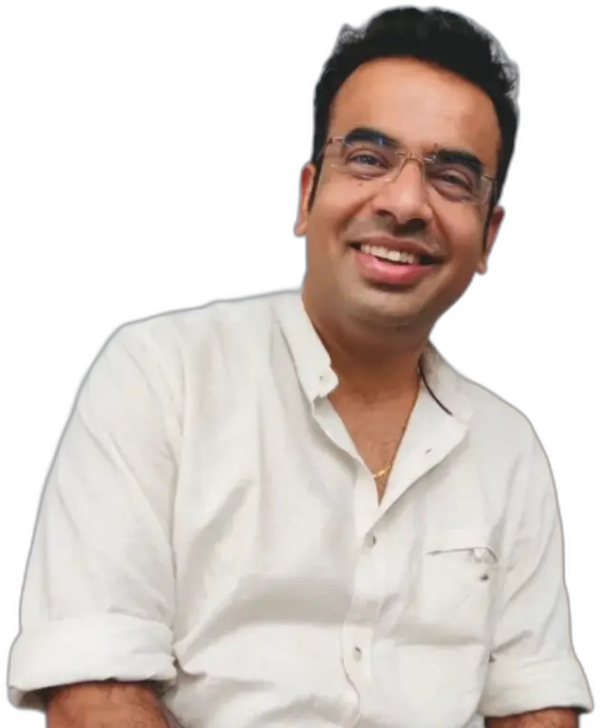
Rahul Puri
Founder Faculty, Anantam IAS · Ex-Rau's IAS PSIR (10+ years)
Taught PSIR at Rau's IAS for ten years before co-founding Anantam IAS as the flagship initiative of its ex-faculty. Vaibhav Mishra co-leads Polity and mentorship for Paper 1 Section B and Paper 2 Section B. Small batches, no ghost classes, answer review by faculty — not interns.
Tests & answer writing
Sixteen tests plus Mains crash course, all included.
Answer writing runs through the course from week one. Tests are evaluated by faculty, discussed in class and turned into a list of next-actions, not just a score.
Test series
Sectional + thematic
- Paper 1 Section A — Theory & Thought
- Paper 1 Section B — Indian Politics
- Paper 2 Section A — Comparative + IR
- Paper 2 Section B — India & the World
Full-length
- Paper 1 full-length tests
- Paper 2 full-length tests
- Combined revision-based simulations
Answer-writing rhythm
Weekly cadence
- Months 1–2: 2 answers/week · 150 words
- Months 3–4: 3 answers/week · 200 words
- Months 5–6: 3 thinker integrations per answer
Mains crash course
- Revision sprints across both papers
- Model answers & structure templates
- PYQ second pass with faculty discussion
Why this course
What makes PSIR at Anantam IAS different.
The differentiation is not marketing copy. It is the four things you can verify in a demo class — faculty, batch size, answer review and depth of historiography.
| Pillar | What you get | Why it matters |
|---|---|---|
| Faculty-led teaching | Rahul Puri teaches the bulk of Paper 1 and Paper 2 personally. | No ghost classes. Class quality stays consistent across the 6 months. |
| Small batches | Old Rajinder Nagar morning batch + Zoom parallel for outstation. | Doubt-resolution and faculty access stay practical, not symbolic. |
| Historiography depth | Thinkers, debates and scholar references built into every topic. | Answers move from textbook to Mains-grade. |
| Faculty answer review | Tests evaluated by faculty, not interns. | Feedback is specific, actionable and remembered week to week. |
Fee and batch
Two modes. One inclusive fee.
One inclusive programme in two modes. No surprise add-ons, no separate test-series invoice — the only thing that changes is whether you sit in Old Rajinder Nagar or on Zoom.
| Mode | Fee (incl. taxes) | What is included |
|---|---|---|
| OfflineOld Rajinder Nagar, Delhi | ₹55,000One-time, all taxes included | Full 6-month PSIR programme, Paper 1 + Paper 2, 16 tests, Mains Crash Course, dedicated Prelims and Mains test series, faculty answer review, classroom peer group and library access. |
| OnlineLive on Zoom + recordings | ₹45,000One-time, all taxes included | The same 6-month programme, taught live over Zoom with recordings. Same faculty, same 16 tests, same answer review — attend from any city. |
Call 9844556580 or 6350381242 · WhatsApp +91 87969 87675
Deep-dive resources
Read these before your demo.
Published Anantam IAS resources that let you stress-test PSIR before you commit. Optional choice is a long-running decision — make it with eyes open.
FAQs
PSIR Optional questions aspirants ask before joining.
Who teaches the PSIR Optional course at Anantam IAS?
How long is the PSIR Optional course?
What is the fee for the PSIR Optional course?
Is PSIR good for UPSC GS overlap?
Is the course offline or online?
Can a first-time PSIR aspirant take this course?
How do I enrol?
Next step
Sit through one lecture. Then commit to PSIR.
Book a free demo class — no counsellor call, no brochure in your inbox. Show up on Zoom, watch Rahul Puri teach a real Paper 1 Section A topic, then decide if this is the year you write PSIR.