Daily Digest
UPSC · Civil Services Examination
Current Affairs · Friday, 17 April 2026
Current affairs curated and edited by Anantam IAS faculty — pulled from The Hindu, PIB, IDSA, Foreign Affairs and the ministries. Read, annotate, revise.
Old Rajinder Nagar · Delhi 110005 · anantamias.com
Subhas Chandra Bose: the paradox of a revolutionary’s theory and praxis

Why in News?
The articles highlight the “paradox” in Subhas Chandra Bose’s thought and action:
- He combined idealism (spiritual + moral philosophy)
- with hard pragmatism (authoritarian state, militarism, planning)
A moral philosopher who justified strong, even authoritarian, political methods for national reconstruction.
UPSC Relevance:
GS-I: Role in freedom struggle, Differences with Gandhi
GS – IV (Ethics): Ethical pragmatism, Ends vs Means debate, Moral justification of violence
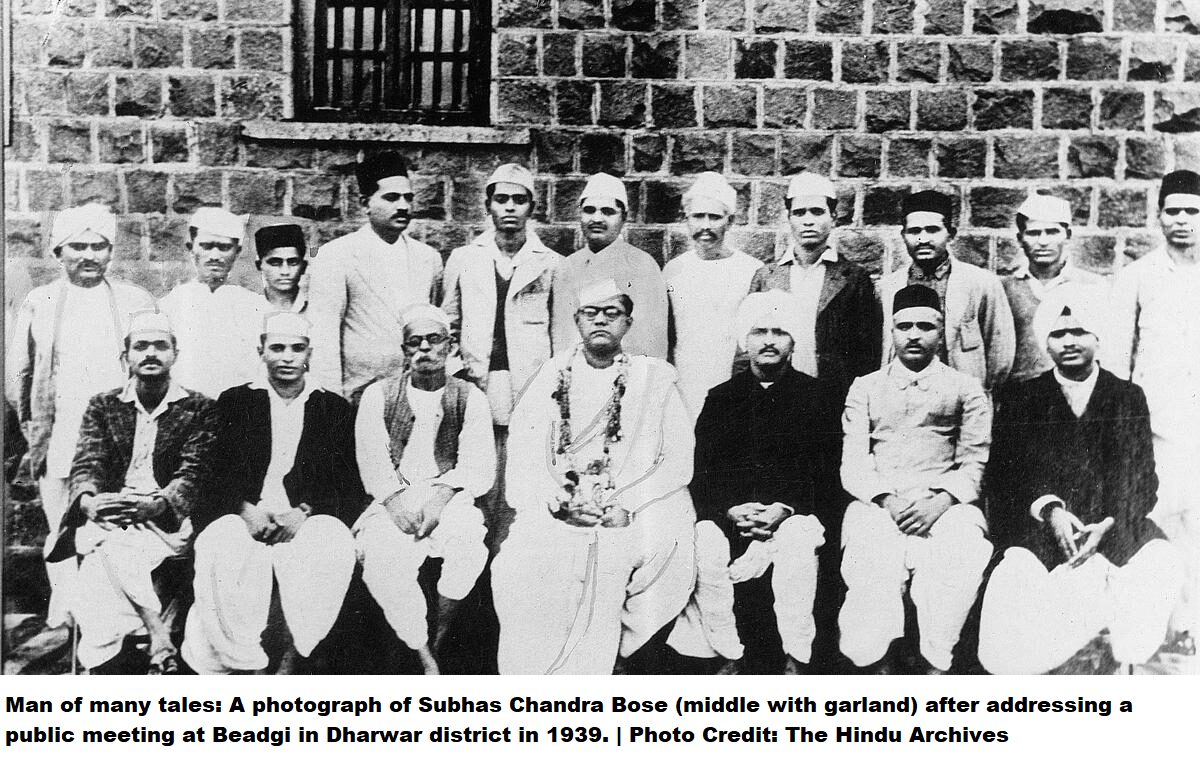
I. Philosophical Foundations
1. Shift from Idealism to Pragmatism
- Initially influenced by Adi Shankaracharya’s Vedanta
- Believed in Maya (world is illusion)
- Later rejected it because:
- A revolutionary needs action, not illusion
- Bose represents practical idealism
- “What is not workable should be discarded” → Ethics + practicality balance
2. The Spirit of Reality (Love & Evolution)
Unlike Marxists, Bose rejected pure materialism. He believed the universe was driven by a Spiritual Force:
- The World is Real: He dismissed the idea that the world is an illusion (Maya). For him, it is an evolving reality that demands active participation.
- Love as a Force: He identified Love (the urge to unite) as the fundamental creative principle.
- Moral Politics: Because reality is spiritual, politics cannot be a “dirty game” of power. It must have a moral foundation, aiming for the upliftment of humanity.
3. Hegelian Dialectics: The Logic of Struggle
Bose adapted G.W.F. Hegel’s “Thesis-Antithesis-Synthesis” to justify his revolutionary path:
- Progress through Conflict: He believed history doesn’t move in a straight line; it moves through the clash of opposing forces.
- Justification for War: To Bose, Armed Struggle was the “Antithesis” required to break the “Thesis” of British Colonialism. This friction was the only way to achieve the “Synthesis”—a Free India.
- Revolution as Necessity: While Gandhi saw non-violence as a moral absolute, Bose saw violence and war as a “historical necessity” for progress. You cannot have the synthesis (freedom) without the struggle (conflict).
The Synthesis
This mindset allowed Bose to be both a spiritualist and a warrior. He believed that fighting for independence was a moral duty because it aligned with the “Spirit of History” moving toward justice.
II. Doctrine of Samyavada
Meaning
- From Sanskrit:
- Samya = equality/harmony
- Vada = doctrine
It is Doctrine of Harmonious Equality
Key Features
- Synthesis of ideologies
- Between:
- Fascism (discipline, nationalism)
- Communism (equality, socialism)
- Between:
- Not blind imitation of West
- Indigenous Indian model
- Dynamic and evolving
- No ideology is final
Bose argued that India should not blindly adopt Western models like orthodox communism or capitalism. Instead, he proposed blending the economic planning and social equality of Socialism/Communism with the nationalistic discipline found in strong-state systems, specifically adapted for India’s unique social context
- Similar to:
- “Third Way” politics
- Indian model of development
III. Economic & Political Vision
1. Socialist Economy
Bose supported:
- State control of economy
- Industrialisation
- Heavy industries
- Abolition of landlordism
2. National Planning
- Set up National Planning Committee (1938)
Shows: Early vision of planned development
3. Social Justice Vision
He wanted:
- Equality (rich–poor)
- Gender equality
- End of caste system
- Religious freedom
- Inclusive nationalism
- Social democracy
IV. Authoritarianism Debate
Bose’s Position
- Supported temporary authoritarian state
- Reason:
- India was:
- Poor
- Divided
- Backward
- India was:
- Democracy may be too slow for:
- Rapid economic transformation
Strong central authority needed for reconstruction, but only temporarily
Contextual Understanding
- Influenced by global trends:
- Nazi Germany
- Soviet Union
- Imperial Japan
- Kemalist Turkey
These states achieved rapid modernization under centralised rule
Critical Evaluation
✔ Strengths:
- Fast decision-making
- Strong national unity
- Effective economic planning
❌ Weaknesses:
- Risk of dictatorship
- Suppression of rights
- Against modern democratic values
Bose’s model reflects the tension between efficiency and liberty, still relevant in developing countries.
V. “Paradox” Explained
Why is Bose called paradoxical?
| Idealism | Pragmatism |
| Belief in morality, love, spirituality | Supported war & armed struggle |
| Equality & justice | Supported authoritarian rule |
| Democratic end goal | Temporary dictatorship |
This contradiction = Theory vs Praxis
Conclusion
Subhas Chandra Bose represents a unique synthesis of spiritual idealism and political realism, where moral purpose coexisted with strategic pragmatism. His vision highlights the enduring dilemma in governance: whether rapid progress justifies strong, even coercive, state power.
This Part-2 shows how Subhas Chandra Bose translated his philosophy (Samyavada + dialectics) into real-world action (praxis)—in society, military organisation, and international politics.
From ideas → implementation → contradictions → legacy
UPSC Relevance:
GS-I: INA as tool of Unity, Social reform
GS Paper IV (Ethics): Ends vs Means debate, Ethical pragmatism, Moral courage vs political compromise
VI. Equality in Action (Praxis)
1. Anti-Caste & Social Reform
- Early advocate of:
- Abolition of caste system
- Removal of superstition
- Mobilised:
- Workers
- Peasants
- Women
- Social transformation + political freedom linked
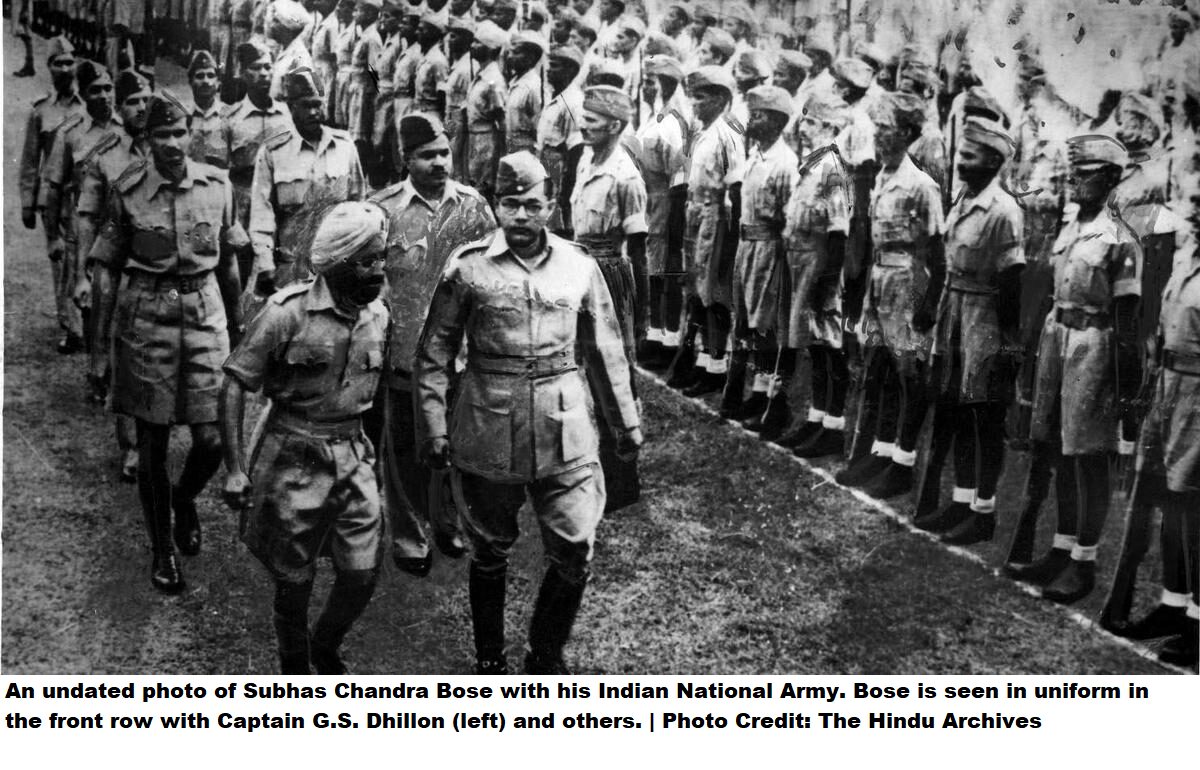
2. Military as Social Laboratory (INA Reforms)
- Abolished caste/ethnic divisions in army
- Promoted national unity over identity
Army used as a tool for nation-building
Example:
- Soldiers ate together (breaking caste taboos)
- No “martial race” concept (British policy rejected)
3. Communal Harmony
- Promoted:
- “Jai Hind” as inclusive slogan
- Hindustani language
- Formation of Rani of Jhansi Regiment
- Encouraged active participation of women in combat
- Thi is the Early example of gender equality in military roles
5. Labour & Socialist Commitment
- Supported:
- Living wages
- Workers’ dignity
Positioned himself:
- Between:
- Soviet-style communism
- Moderate reformism
- Indigenous socialism
VII. Pragmatism in Foreign Policy (Most Controversial Part)
Bose’s foreign policy is often misunderstood as ideological, but it was actually a masterclass in radical pragmatism. Here is the breakdown:
1. The “Enemy’s Enemy” Strategy
Bose partnered with Germany and Japan not out of love for their systems, but because they were the only powers capable of militarily challenging the British Empire. To him, the liberation of 380 million Indians outweighed the optics of the alliance.
2. Moral Independence
Despite the alliance, Bose maintained his ethical boundaries:
- Anti-Nazi: He openly criticized Hitler’s racial theories and warned that Nazi “Nordic supremacy” was a threat to Asians.
- Pro-China: Even while receiving Japanese aid, he expressed deep sympathy for China, famously sending a medical mission (Dr. Kotnis) to help them against Japanese aggression. This proved his Ethical Internationalism.
3. Exposing Allied Hypocrisy
Bose viewed the “Atlantic Charter” and Allied claims of fighting for “democracy” as hollow. He argued that if Britain truly cared about freedom, they would start by decolonizing India. This critique remains a cornerstone of Third World anti-colonialism.
4. The Takeaway
Bose’s approach was Realpolitik with a Conscience:
- National Interest First: Independence was the non-negotiable goal.
- Ideological Neutrality: He refused to let European “isms” (Fascism vs. Liberalism) dictate India’s path.
- Sovereignty: He proved that a colonized leader could deal with superpowers as an equal, not a puppet.
5. Key Interpretation
Bose’s foreign policy =
Realpolitik + National Interest > Ideology
VIII. The “Higher Synthesis” (Philosophical Vision)
1. India’s Global Role
- India to combine:
- Western material progress
- Eastern spiritual wisdom
Civilisational leadership
2. Role of Youth
- Youth as agents of:
- Nation-building
- Social transformation
3. Moral Nationalism
- Moral Nationalism is a political and ethical framework that treats the nation as a moral agent capable of holding responsibilities, expressing virtues, and being held accountable for its actions.
Ethical dimension:
- This framework serves as a direct rebuttal to Cynical Realism (or Realpolitik), which dominates much of international relations theory.
4. Faith in Destiny
Subhash Chandra Bose’s Faith in Destiny, specifically during the collapse of the INA in 1945, is a masterclass in psychological and political resilience. It moves beyond simple “positive thinking” into the realm of Dialectical Optimism.
- Defiance of Defeat (1945): Even as the INA collapsed and Japan surrendered, Bose remained certain of India’s freedom. He viewed military failure as a temporary setback, not a final outcome.
- Dialectical Optimism: This was his “logic of progress.” He believed history moves through struggle: the thesis (Indian resistance) and antithesis (British suppression) would inevitably result in the synthesis (Independence).
- The Moral Catalyst: He believed that the INA’s “sacrifice” would spark a psychological revolution within India. To him, the spirit of the struggle was more important than the immediate military result.
- The Result: His optimism was proven right; the subsequent INA trials unified Indians and signaled the end of British rule, turning a military defeat into a political victory.
IX. Final Evaluation: “Eternal Rebel”
Bose’s Core Contradictions
| Dimension | Position |
| Spiritual | Believed in moral universe |
| Political | Supported authoritarian state |
| Economic | Socialist planning |
| Military | Violent struggle |
| Global | Human unity |
Significance:
1. Alternative Nationalism
- Different from Mahatma Gandhi:
- Gandhi → Non-violence, decentralisation
- Bose → Militarism, centralisation
2. Influence on Modern India
- Planning → Influenced post-independence policies
- Secularism → Practical (not just constitutional)
- Equality → Social + economic
3. Key Debate
Can authoritarianism be justified for development?
- Bose → Yes (temporarily)
- Modern view → Risky, rights must prevail
Conclusion
Subhas Chandra Bose’s life represents the fusion of radical idealism with uncompromising pragmatism, where equality, unity, and national liberation were pursued through bold and sometimes controversial means. His vision of a “higher synthesis” continues to challenge India to balance power, morality, and inclusivity in its journey as a modern nation.
Centre Seeks Inter-State Redistribution of Lok Sabha Seats based on 2011 Census

Why in News?
The Government of India is considering redistribution of Lok Sabha seats among states using 2011 Census data.
This means:
- States with higher population growth may get more seats
- States with lower population growth may get fewer seats (relative share)
This is linked to the upcoming delimitation exercise after 2026.
UPSC Relevance
- GS-I: Demographic dividend, demographic trap
- GS-II: Delimitation Commission, Federalism (asymmetric federalism, cooperative federalism). Women’s reservation, population policy, north-south debate, electoral reforms.
Two inter-linked Bills:
- Constitution (131st Amendment) Bill, 2026: Amends Articles 81, 82 (Lok Sabha) and Article 170 (State Assemblies). Increases maximum Lok Sabha strength from the current constitutional cap of 550 (530 states + 20 UTs) to 850 seats (815 from States + 35 from UTs). Removes the long-standing “freeze” on seat allocation. Allows Parliament to decide (by ordinary law) which census data will be used for “population” — effectively enabling use of the 2011 Census (latest published).
- Delimitation Bill, 2026: Constitutes a new Delimitation Commission to:
- Reallocate seats between states (inter-state redistribution) using 2011 population data.
- Redraw constituency boundaries within each state (intra-state delimitation).
- Readjust SC/ST reserved seats and implement 33% women’s reservation (rotational, for 15 years).
What is Delimitation?
Delimitation is the process of fixing the number of seats and boundaries of constituencies based on population
Why is it done?
- To ensure equal representation
- To maintain principle of:
“One person, one vote, one value”
Who does it?
- Delimitation Commission of India
- It is an independent body whose decisions have the force of law
Constitutional Provisions
Article 81
- Seats in Lok Sabha should be proportional to population
Article 82
- After every Census → Parliament should enact a Delimitation Act
Why is This Issue Coming Now?
Freeze on Delimitation
India has not redistributed seats among states since 1971 Census.
Why?
Because of:
- 42nd Constitutional Amendment Act
- 84th Constitutional Amendment Act
These amendments froze seat allocation till 2026 to:
- Encourage population control
- Avoid penalising states that reduced population growth
Why Now? Link to Women’s Reservation
- 106th Constitutional Amendment Act, 2023 (Nari Shakti Vandan Adhiniyam): Provides 33% reservation for women in Lok Sabha and State Assemblies.
- It can take effect only after a new delimitation exercise (and will be in force for 15 years, with rotational seats).
- The 2023 Act explicitly tied implementation to the post-2026 census. These 2026 Bills fast-track it by using 2011 Census + expanding the House. One-third of the new 850 seats (~273) will be reserved for women (with sub-quotas for SC/ST women).
What Will Happen After 2026?
After the freeze ends:
A new delimitation exercise will happen
Now the key question is:
- Should seats be redistributed using 2011 Census data?
Recent developments suggest the Government is considering using 2011 Census for faster delimitation
Why is Redistribution Controversial?
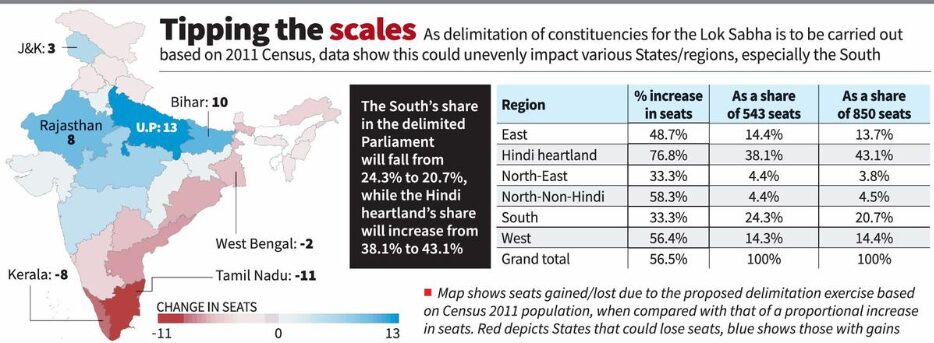
1. North vs South Divide
Northern States:
- Higher population growth
- Likely to gain seats
Examples:
- Uttar Pradesh
- Bihar
Southern States:
- Lower population growth (due to better family planning)
- Likely to lose relative share of seats
This creates a perception of:
- “Punishment for good governance”
2. Federal Imbalance
India is a federal country, and Lok Sabha represents states.
If redistribution happens:
- Some states will gain more political power
- Others will lose influence
This may disturb Centre-State balance
3. Political Implications
- Parties strong in high-population states may benefit
- Could reshape national politics
4. Representation Inequality (Current Problem)
Because delimitation is frozen:
- Some MPs represent very large populations
- Others represent smaller populations
This creates unequal representation
5. Other Effects:
- Smaller constituencies → better representation.
- Increased Lok Sabha strength affects Presidential election (electoral college weight shifts towards LS) and joint sittings (LS dominance increases).
- State Assemblies will also see similar expansion and delimitation.
Key Constitutional Dilemma
How should Lok Sabha seats be distributed among states?
There are two competing ideas, and both are correct in their own way.
Option 1: Equality of Representation
- Seats proportional to population
- Ensures fairness
✔ Fair for individuals
❌ Unfair for some states
Option 2: Federal Balance
- Protects interests of all states
- Avoids dominance by few states
✔ Maintains federal balance
❌ Violates equal representation
This is the core tension in the debate
Possible Solutions Being Discussed
1. Increase Total Seats
- Instead of reducing seats of some states
- Increase total Lok Sabha seats
So all states gain, but proportion adjusts
2. Maintain Status Quo
- Keep current distribution
- Avoid conflict
But this worsens representation inequality
3. Hybrid Formula
- Balance population + federal considerations
- Similar to some other federal systems
Broader Implications
1. Democracy
- Affects fair representation of citizens
2. Federalism
- Impacts power balance among states
3. Governance
- Influences:
- Policy making
- Resource allocation
Conclusion
The delimitation debate reflects the tension between democratic equality and federal balance. While proportional representation is constitutionally mandated, it must be harmonised with the principles of cooperative federalism to ensure that India’s unity in diversity is preserved. Delimitation after 2026 may redraw India’s political map by reallocating Lok Sabha seats based on population, raising concerns of federal imbalance and regional inequality.”
Mains Questions:
- “The proposed inter-state redistribution of Lok Sabha seats may alter the balance of Indian federalism.” Critically analyse.
- “Delimitation based solely on population may penalise states that have successfully implemented population control policies.” Evaluate this statement.
- Examine the political, social, and federal implications of delimitation after 2026 in India.
- “India’s model of representation must balance democratic equality with regional equity.”
Discuss in the context of the ongoing delimitation debate.
USTR Section 301 investigation on India
Why in News?
The United States Trade Representative (USTR) has initiated a probe under Section 301 of the Trade Act of 1974 into the “acts, policies and practices” of certain economies (including India) concerning ‘structural excess capacity and production in manufacturing sectors’ and ‘forced labour.’
India has categorically denied the allegations, calling them misplaced and factually incorrect.
| UPSC Relevance: GS-3 Economy: External Sector; GS-3 Science and Technology: IP Rights Prelims: Special 301 Report of the United States Trade Representative. Mains: IPR Protection in India- Challenges Associated. |
Special 301 Report of the United States Trade Representative:
- The USTR conducts an annual review to identify countries that:
- deny adequate and effective protection of intellectual property (IP) rights.
- deny fair and equitable market access to the US.
- Based on the review, the USTR identifies countries as Priority Foreign Countries or places them on the Priority Watch List.
- Priority Foreign Countries: Countries whose acts, policies, or practices have the greatest adverse impact on the relevant US products.
- Priority Watch List: Problems exist in that country with respect to IP protection, enforcement, or market access for the US persons relying on IP.
- Section 301 of the US Trade Act of 1974 is a key legal tool that allows the US to investigate and respond to foreign trade practices that it considers unfair or harmful to American commerce. USTR can launch such investigations on its own initiative.
Why India remains on the Priority Watch List?
India remains on the USTR Priority Watch List in 2026. The key reasons for placing India on the Priority Watch List include-
- Persistent Online Piracy & Weak IPR Enforcement: The report confirms “rampant internet piracy” in India. It reports a rise of Piracy-as-a-Service (PaaS) platforms, Pirate cyberlockers and hosting infrastructure (theft of digital content). Delayed compliance by ISPs (Internet Service Providers) in implementing blocking orders & inconsistent criminal enforcement across states. It calls for faster takedowns of infringing content under the IT Rules, 2021 and enforcement of the Cinematograph (Amendment) Act, 2023, to criminalise camcording and unauthorised transmission of films online.
- Gaps in the Copyright Legal Framework: Despite a Copyright Act, widespread piracy of copyrighted materials persists. E.g., Commercial-scale photocopying and unauthorised reprints of academic books. The report explicitly highlights the absence of Technological Protection Measures (TPMs), Rights Management Information (RMI) and Copyright term below the global standard (70 years). It calls on India to fully implement the World Intellectual Property Organisation (WIPO) Copyright Treaty.
- Patent Issues: Continued concern over the interpretation and application of stringent patentability criteria (Section 3(d) of the Patents Act). It creates uncertainty for investors and innovators. The lengthy patent examination process in India can lead to long waiting periods to receive patent grants. The threat of patent revocations and the procedural and discretionary invocation of patentability criteria under the Indian Patents Act impact the US companies across various sectors.
- Trade Secrets: Lack of a specific, comprehensive legal framework to protect against the misappropriation of trade secrets.
- Market Access: High tariffs on IP-intensive products, particularly in the ICT (Information and Communications Technology) and pharmaceutical sectors. This is viewed as denying fair and equitable market access to the US.

USTR Section 301 investigation on India:
India is part of a USTR investigation into industrial policies, specifically concerning “structural excess capacity” in sectors such as petrochemicals and textiles & “forced labour.” India has categorically denied the allegations, calling them misplaced and factually incorrect.
1. Structural Excess Capacity and Production in Manufacturing Sectors:
- Structural excess capacity refers to a long-term situation where a country’s industrial production capacity exceeds both domestic and global demand. When excess capacity leads to overproduction, firms try to sell surplus output abroad.
- The US concerns include:
- Global price suppression: Subsidies, incentives (E.g., PLI schemes), and state support artificially lower production costs. Excess output is exported at low prices (sometimes close to or below cost). This leads to global price suppression & dumping concerns.
- Trade imbalances: Increased imports into the US. Pressure on domestic manufacturing and jobs.
- Competitive disadvantage to the US manufacturers, especially in sectors like steel, chemicals and Pharmaceuticals (generics).
- India’s Position: India has formally rejected these allegations, arguing that its trade surplus results from macroeconomic factors (manufacturing is demand-driven; the PLI scheme aims at import substitution) rather than unfair trade practices.
2. Forced Labour:
- India’s Position: India has ratified the Forced Labour Convention, 1930 (No. 29) and the Abolition of Forced Labour Convention, 1957 (No. 105), both of which prohibit forced labour in all forms.
| Evergreening of Patents: • Section 3(d) of the Indian Patents Act, 1970 states that the mere discovery of a new form of a known substance that does not result in increased efficacy, or the use of a known process with insignificant changes, may not be considered patentable. • From the Indian point of view, the section prevents “evergreening of patents” (an extension of patent life through minor changes). • But the US (and other countries) view it as a concern, as it reduces the patent protection period, allows early entry of generics, and discourages investment in drug innovation. Further, determining whether a modification or improvement qualifies as a substantial enhancement of efficacy can be subjective and prone to legal disputes. |
Practice MCQ
Q. Which of the following best describes “Priority Watch List” under the Section 301 framework?
(a) Countries that have fully complied with global IPR norms
(b) Countries requiring bilateral trade agreements with the U.S.
(c) Countries with serious deficiencies in IPR protection or enforcement
(d) Countries facing automatic WTO dispute settlement
Answer: (c)
UPSC PYQ 2018
Q. International Labour Organisation’s Conventions 138 and 182 are related to:
(a) Child labour
(b) Adaptation of agricultural practices to global climate change
(c) Regulation of food prices and food security
(d) Gender parity at the workplace
Answer: (a)
Source: https://anantamias.com/current-affairs/ustr-section-301-investigation-on-india/
Parkinson’s Disease
Why in News?
April marks Parkinson’s Disease Awareness month, highlighting the need for early recognition of this progressive neurodegenerative disorder.
| UPSC Relevance: GS-3 Science and Technology: Biology & Biotechnology (Diseases) Prelims: Parkinson’s Disease; Potential applications of Stem Cell Therapy |
Parkinson’s Disease:
- Parkinson’s disease is a progressive neurodegenerative disorder of the central nervous system.
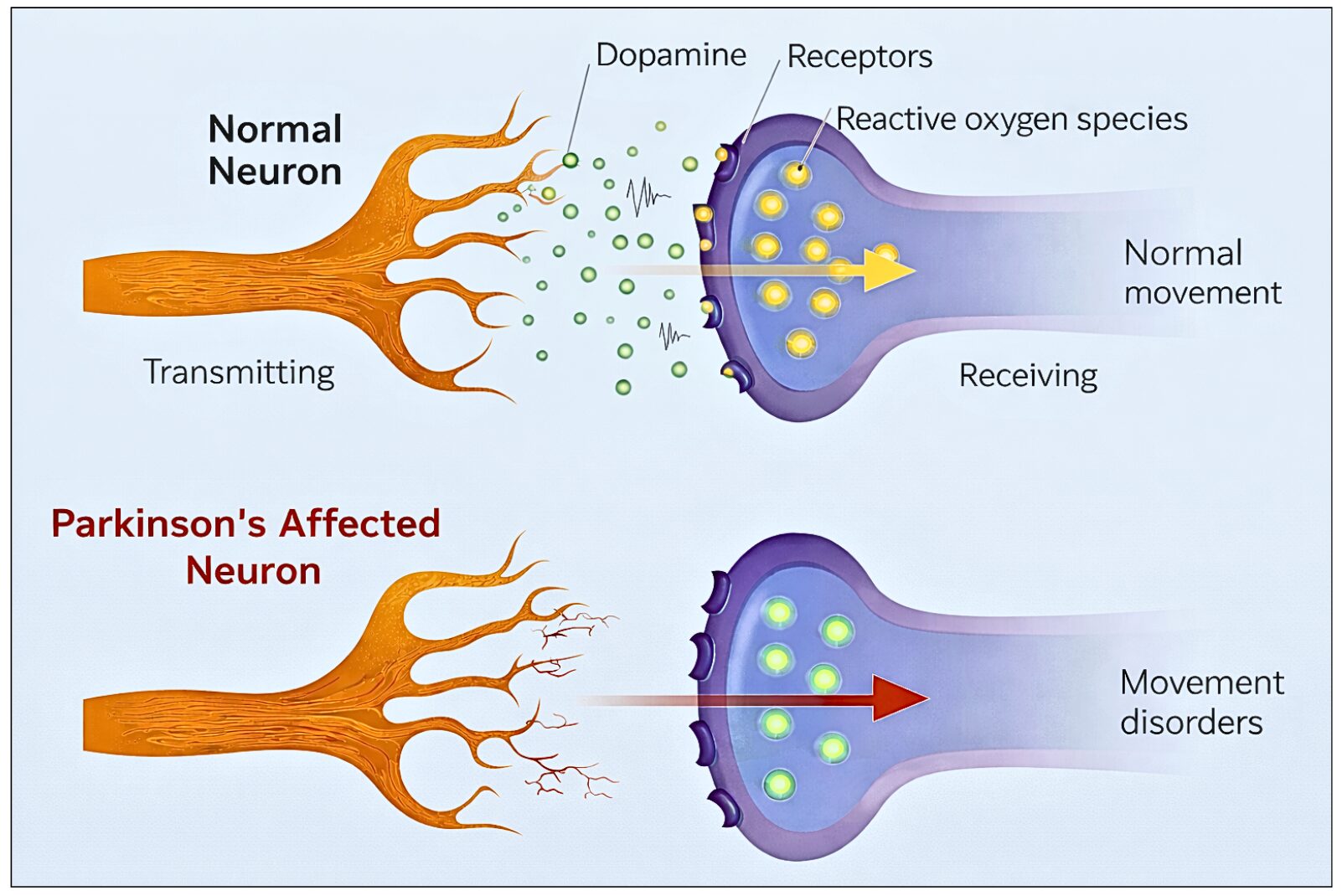
- It primarily affects movement due to the loss of dopamine-producing neurons in the brain. It affects both the motor system and non-motor systems.
- Symptoms:
- Motor: Tremors, stiffness, slowness of movement (bradykinesia), and balance issues.
- Non-motor: Depression, speech and swallowing problems, Dementia in advanced stages.
Causes of Parkinson’s Disease:
The exact underlying cause of Parkinson’s Disease is unknown. It is assumed to be influenced primarily by an interaction of genetic and environmental factors.
- Genetic: Notable risk genes include SNCA and LRRK2. The accumulation of misfolded SNCA protein in dopamine-producing (dopaminergic) neurons disrupts overall cellular functioning, leading to neuronal death. This leads to the loss of dopamine-producing neurons.
- Environmental: Traumatic brain injury; Pesticide exposure; Contact with heavy metals (manganese, lead, mercury, cadmium).
Treatment:
- No known cure exists; medications and therapies can manage symptoms.
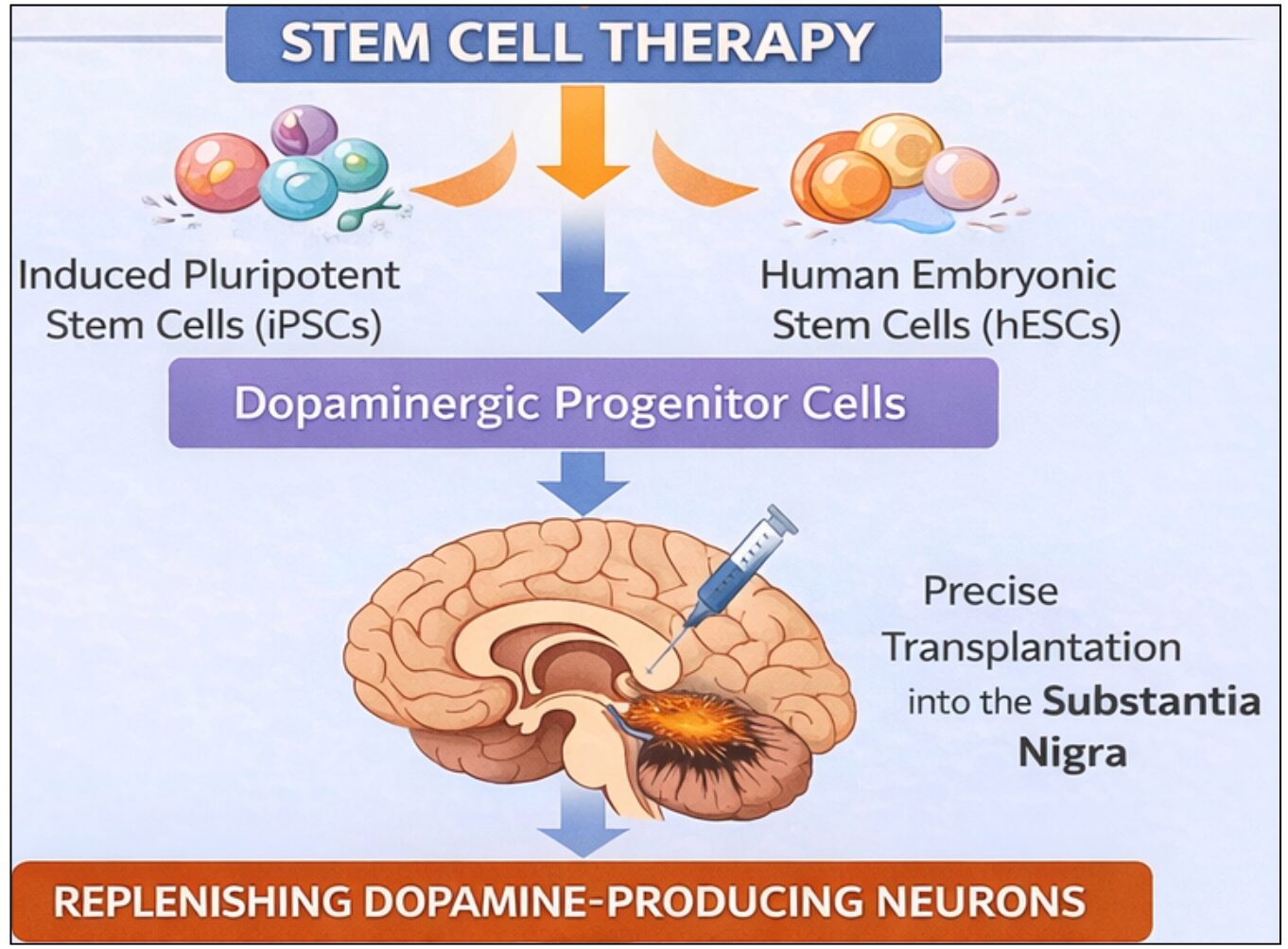
- Stem Cell therapy aims to replace lost dopaminergic neurons in the brain (experimental/clinical trial stages).
Parkinson’s Disease and Stem Cell Therapy:
Stem cell therapy aims to replace lost dopaminergic neurons in the brain. The clinical trials are being conducted utilising induced pluripotent stem cells & human embryonic stem cells.
- Using Induced Pluripotent Stem Cells (iPSCs): Patients received transplantation of dopaminergic progenitor cells derived from human induced pluripotent stem cells (iPSCs). Dopaminergic progenitor cells are stem cells capable of differentiating into dopamine-producing neurons. Cell survival and dopamine production were observed in the patient via imaging (e.g., PET scans).
- Using Human Embryonic Stem Cells (hESCs): Patients received surgical transplantation of a dopaminergic neuron progenitor cell product derived from human embryonic stem cells. Evidence of dopamine activity and some improvement in motor function in patients.
Practice MCQ:
Q. With reference to Stem Cell Therapy in Parkinson’s Disease, consider the following statements:
1. It aims to replace lost dopaminergic neurons.
2. It is currently an established cure for Parkinson’s Disease.
3. Both induced pluripotent stem cells and embryonic stem cells are being studied.
Which of the statements given above are correct?
(a) 1 and 3 only
(b) 1 and 2 only
(c) 2 and 3 only
(d) 1, 2 and 3
Answer: (a)
Source: https://anantamias.com/current-affairs/parkinsons-disease/