Why in News?
April marks Parkinson’s Disease Awareness month, highlighting the need for early recognition of this progressive neurodegenerative disorder.
| UPSC Relevance: GS-3 Science and Technology: Biology & Biotechnology (Diseases) Prelims: Parkinson’s Disease; Potential applications of Stem Cell Therapy |
Parkinson’s Disease:
- Parkinson’s disease is a progressive neurodegenerative disorder of the central nervous system.
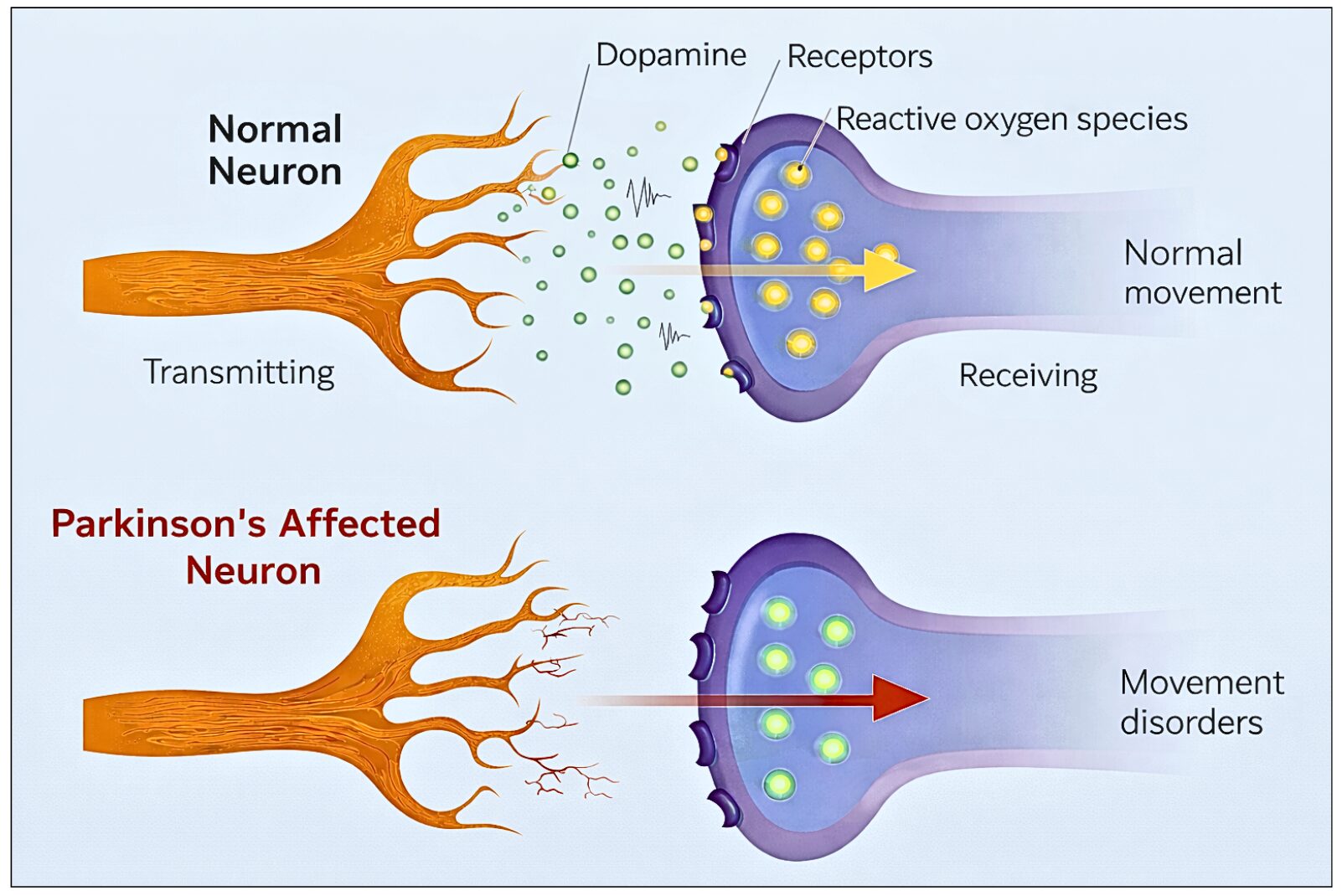
- It primarily affects movement due to the loss of dopamine-producing neurons in the brain. It affects both the motor system and non-motor systems.
- Symptoms:
- Motor: Tremors, stiffness, slowness of movement (bradykinesia), and balance issues.
- Non-motor: Depression, speech and swallowing problems, Dementia in advanced stages.
Causes of Parkinson’s Disease:
The exact underlying cause of Parkinson’s Disease is unknown. It is assumed to be influenced primarily by an interaction of genetic and environmental factors.
- Genetic: Notable risk genes include SNCA and LRRK2. The accumulation of misfolded SNCA protein in dopamine-producing (dopaminergic) neurons disrupts overall cellular functioning, leading to neuronal death. This leads to the loss of dopamine-producing neurons.
- Environmental: Traumatic brain injury; Pesticide exposure; Contact with heavy metals (manganese, lead, mercury, cadmium).
Treatment:
- No known cure exists; medications and therapies can manage symptoms.
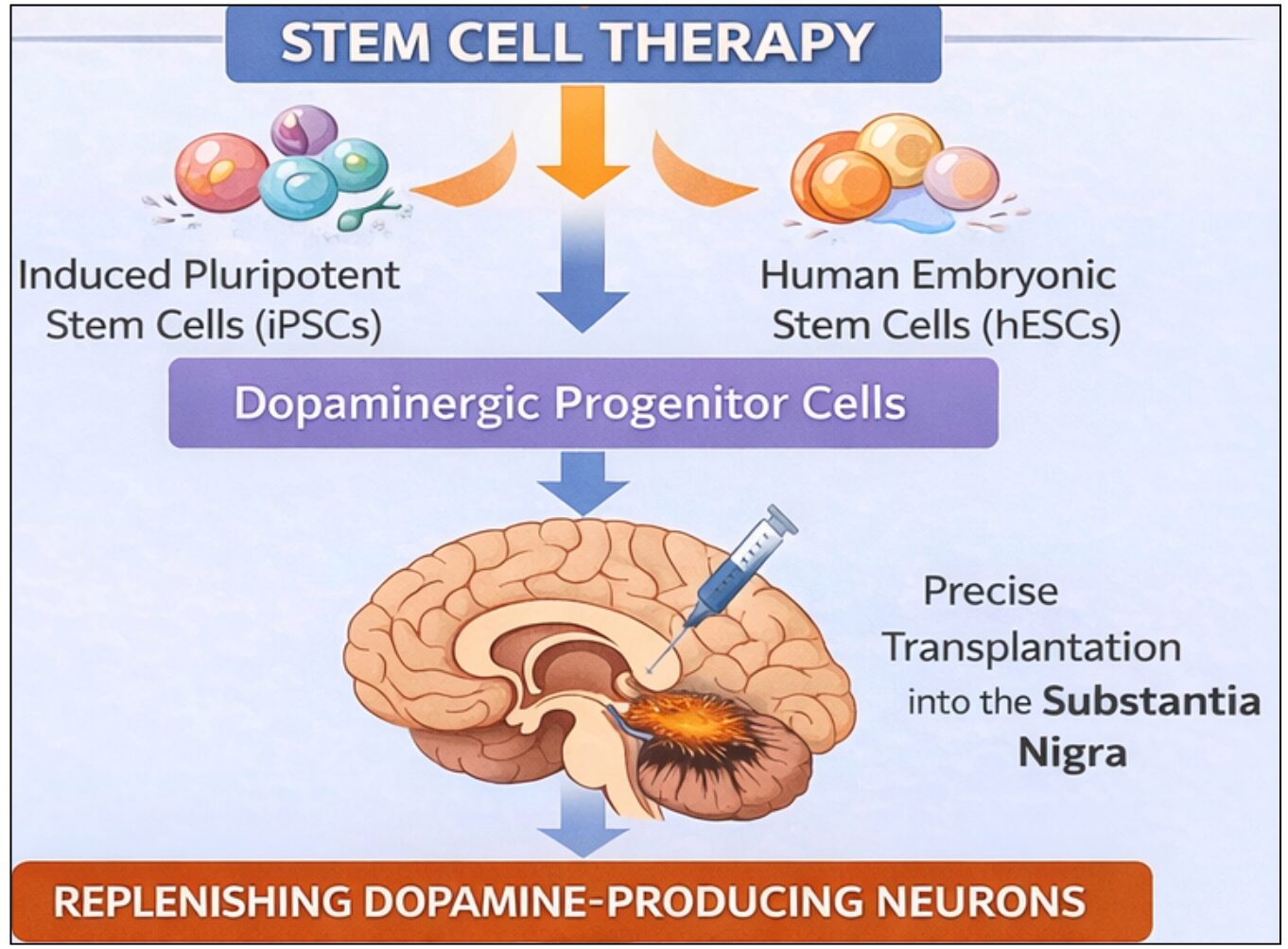
- Stem Cell therapy aims to replace lost dopaminergic neurons in the brain (experimental/clinical trial stages).
Parkinson’s Disease and Stem Cell Therapy:
Stem cell therapy aims to replace lost dopaminergic neurons in the brain. The clinical trials are being conducted utilising induced pluripotent stem cells & human embryonic stem cells.
- Using Induced Pluripotent Stem Cells (iPSCs): Patients received transplantation of dopaminergic progenitor cells derived from human induced pluripotent stem cells (iPSCs). Dopaminergic progenitor cells are stem cells capable of differentiating into dopamine-producing neurons. Cell survival and dopamine production were observed in the patient via imaging (e.g., PET scans).
- Using Human Embryonic Stem Cells (hESCs): Patients received surgical transplantation of a dopaminergic neuron progenitor cell product derived from human embryonic stem cells. Evidence of dopamine activity and some improvement in motor function in patients.
Practice MCQ:
Q. With reference to Stem Cell Therapy in Parkinson’s Disease, consider the following statements:
1. It aims to replace lost dopaminergic neurons.
2. It is currently an established cure for Parkinson’s Disease.
3. Both induced pluripotent stem cells and embryonic stem cells are being studied.
Which of the statements given above are correct?
(a) 1 and 3 only
(b) 1 and 2 only
(c) 2 and 3 only
(d) 1, 2 and 3
Answer: (a)
Tell Google you want more of this.
Add Anantam IAS as a preferred sourceOne tap, and this site shows up more often in your own Top Stories, AI Overviews and AI Mode. Remove it any time.