Daily Digest
UPSC · Civil Services Examination
Current Affairs · Thursday, 8 January 2026
Current affairs curated and edited by Anantam IAS faculty — pulled from The Hindu, PIB, IDSA, Foreign Affairs and the ministries. Read, annotate, revise.
Old Rajinder Nagar · Delhi 110005 · anantamias.com
NATGRID and the Architecture of Surveillance: Security vs Privacy
Why in News?
The operationalisation of NATGRID (the National Intelligence Grid) is back in focus as a unified intelligence-sharing backbone that connects sensitive citizen databases for India’s security and intelligence agencies. Conceived in the aftermath of the 26/11 Mumbai attacks (2008), it is meant to give authorised users near-real-time, searchable access to scattered government data for counter-terror investigations.
Its roll-out has revived a sharp constitutional debate: the platform sits inside a country that still lacks a dedicated surveillance law, even after the Supreme Court recognised privacy as a fundamental right in Justice K.S. Puttaswamy (2017) and Parliament passed the Digital Personal Data Protection (DPDP) Act, 2023.
- NATGRID integrates roughly 21 databases spanning banking, telecom, immigration, travel, tax and other records.
- It was sanctioned in 2009-10 as a direct institutional response to intelligence failures around 26/11.
- It functions as a secure search-and-retrieval layer, not a new database — it queries existing data held by other agencies.
- Access is meant to be restricted to designated central security and intelligence agencies, not open-ended.
- The debate it triggers turns on the proportionality test laid down in Puttaswamy and the absence of standalone surveillance legislation.
The development matters in the context of:
- Matters because India’s counter-terror response depends on fusing data that today sits in silos across ministries and agencies.
- Matters because surveillance powers are still exercised under colonial-era and pre-internet statutes rather than a modern, rights-aware framework.
- Matters because the DPDP Act, 2023 grants the State broad exemptions, leaving the citizen-versus-state balance largely to executive discretion.


UPSC Relevance
Prelims Relevance
- NATGRID — National Intelligence Grid, under the Ministry of Home Affairs (MHA)
- Origin: institutional response to the 26/11 Mumbai attacks (2008)
- Links approximately 21 sensitive databases (banking, telecom, immigration, travel, tax)
- Justice K.S. Puttaswamy v. Union of India (2017) — right to privacy under Article 21
- The proportionality doctrine: legitimate aim, suitable means, necessity, balancing
- Digital Personal Data Protection (DPDP) Act, 2023 and State exemptions
- Interception powers: Section 5(2), Indian Telegraph Act, 1885 and Section 69, IT Act, 2000
- Related bodies: NIA, Intelligence Bureau (IB), R&AW, NCTC (proposed)
- CMS (Centralised Monitoring System) and NETRA — distinct surveillance projects
Mains Relevance
GS Paper 3
- Linkages between development and the spread of extremism; the role of an integrated intelligence grid in India’s internal-security architecture.
- Challenges to internal security through communication networks; the role of media and social networking sites; basics of cyber security and data protection.
GS Paper 2
- Government policies and interventions; the need for a dedicated surveillance/data-protection law and parliamentary oversight of intelligence agencies.
- Fundamental rights — the right to privacy as a facet of Article 21 and reasonable restrictions in the interest of security.
Essay
- Liberty and security are not opposites but conditions for each other.
- A surveillance State protects no one if it answers to no one.
Background and Context
What NATGRID is — and what it is not
NATGRID is a secure intelligence-sharing platform, not a fresh data-collection machine.
- It is a federated search-and-retrieval system that lets authorised agencies query data already held by other departments.
- It connects around 21 source databases — including banking, telecom, immigration, railway and air travel, and income-tax records.
- It does not create a new central pool of citizen data; it acts as a fast indexing-and-access layer over distributed silos.
- Access is designed to be limited to designated central security and intelligence agencies for counter-terror and security work.
- The goal is speed: turning days of inter-agency paperwork into a single authenticated query.

Why it was conceived — the 26/11 lesson
The grid is a structural fix for the intelligence fragmentation exposed by the 2008 attacks.
- The 26/11 Mumbai attacks revealed that critical leads lay scattered across agencies that did not share data in time.
- NATGRID was sanctioned in 2009-10 under the Ministry of Home Affairs to break those silos.
- It sits alongside other post-26/11 reforms within India’s internal security framework — the National Investigation Agency (NIA), coastal-security upgrades, and the proposed NCTC.
- The animating idea is intelligence fusion — connecting dots across financial, travel and communication footprints before an attack.
- Several states and agencies initially resisted, citing turf and the risk of a single point of data failure.
The constitutional anchor — Puttaswamy and proportionality
Any large-scale surveillance system must clear the bar the Supreme Court set in 2017.
- In Justice K.S. Puttaswamy v. Union of India (2017), a nine-judge bench held that the right to privacy is a fundamental right under Article 21.
- The court laid down a proportionality test: a legitimate State aim, a rational nexus, necessity (least-restrictive means), and a fair balance with rights.
- Surveillance must also satisfy legality — it needs the backing of a clear, publicly known law, not just executive instruction.
- The verdict implies that bulk or open-ended data access without safeguards is constitutionally suspect.
- Courts have since stressed procedural safeguards, independent review, and data-minimisation as conditions for lawful interception.
The legal vacuum — no dedicated surveillance law
India authorises interception under old statutes never written for an integrated data grid.
- Telephone interception rests on Section 5(2) of the Indian Telegraph Act, 1885 and its rules.
- Digital interception and monitoring rest on Section 69 of the Information Technology Act, 2000.
- Neither statute contemplates a federated grid linking financial, travel and communication records at scale.
- There is no standalone law that defines who may be surveilled, on what threshold, with what judicial or parliamentary oversight.
- Critics argue this leaves NATGRID-type access governed largely by executive discretion and internal guidelines.
DPDP Act 2023 — protection with broad State exemptions
The data-protection law tightens private-sector rules but carves out wide space for the State.
- The Digital Personal Data Protection (DPDP) Act, 2023 is India’s first horizontal data-protection statute.
- It allows the Central Government to exempt notified agencies from the Act’s obligations on grounds such as sovereignty, integrity and security of the State.
- These exemptions can switch off consent, purpose-limitation and data-minimisation duties for security agencies.
- The Act does not create an independent surveillance oversight body or judicial warrant requirement.
- So the citizen-versus-State balance is shaped less by hard statutory limits and more by how exemptions are written and used.
Security gains versus privacy risks
The grid promises faster counter-terror action but concentrates power over sensitive data.
- Security upside: rapid intelligence fusion, quicker tracing of suspects, fewer fatal delays in fast-moving plots.
- Privacy risk: profiling and function creep, where a counter-terror tool drifts into routine monitoring.
- Governance risk: weak audit trails and the absence of independent review invite misuse or chilling effects on dissent.
- Security risk: a high-value, integrated access layer is itself an attractive target for breaches and insider threats.
- Trust risk: opacity around who queries what, and when, erodes public confidence in the State’s restraint.
Way Forward
Enact a dedicated surveillance law
- Replace the patchwork of 1885 and 2000 statutes with a modern, rights-aware surveillance framework.
- Codify clear thresholds, time limits, and a least-restrictive-means requirement consistent with Puttaswamy.
Build independent oversight
- Introduce judicial or quasi-judicial authorisation for access to sensitive linked data.
- Create a standing parliamentary intelligence-oversight committee, as in many democracies.
Engineer privacy into the system
- Apply data-minimisation, purpose-limitation and tamper-proof audit logs by design.
- Mandate periodic independent security and privacy audits, with summary findings placed before Parliament.
Conclusion
NATGRID answers a real and proven need: the 26/11 failure to connect intelligence in time cost lives, and a federated grid can close that gap. The question is not whether the State should fuse intelligence, but on what terms — and who watches the watchers.
The Puttaswamy framework and the DPDP Act, 2023 give India the constitutional vocabulary; what is missing is a dedicated surveillance law, independent oversight, and privacy-by-design. Get those right, and security and liberty reinforce rather than cancel each other.
UPSC Practice Questions
Prelims MCQ 1
With reference to NATGRID (National Intelligence Grid), consider the following statements:
- It was conceived as an institutional response in the aftermath of the 26/11 Mumbai attacks.
- It functions primarily as a single new central database that collects citizen information directly from the public.
- It is meant to link multiple existing government databases such as banking, telecom and immigration records.
How many of the above statements are correct?
(a) Only one (b) Only two (c) All three (d) None
Answer: (b) Only two
Explanation:
Statements 1 and 3 are correct. Statement 2 is wrong — NATGRID is a secure search-and-retrieval layer over existing databases, not a fresh central data-collection pool.
Prelims MCQ 2
The proportionality test for restricting the right to privacy was authoritatively laid down by the Supreme Court in which case?
(a) Maneka Gandhi v. Union of India (1978) (b) Kesavananda Bharati v. State of Kerala (1973) (c) Justice K.S. Puttaswamy v. Union of India (2017) (d) Shreya Singhal v. Union of India (2015)
Answer: (c) Justice K.S. Puttaswamy v. Union of India (2017)
Explanation:
The nine-judge bench in Puttaswamy (2017) held privacy to be a fundamental right under Article 21 and set out the proportionality test for State restrictions.
UPSC Mains Questions
- NATGRID was conceived to fuse intelligence after 26/11, yet India still lacks a dedicated surveillance law. Examine the constitutional and governance challenges of operating such an intelligence grid in light of the Puttaswamy judgment. (250 words)
- “Security and privacy are not rival claims but interdependent goods.” Critically analyse this statement with reference to India’s surveillance architecture and the Digital Personal Data Protection Act, 2023. (250 words)
- Discuss the case for independent oversight of intelligence agencies in India. What institutional safeguards would make data-integration systems like NATGRID compatible with fundamental rights? (150 words)
Sources: Ministry of Home Affairs, Government of India and Press Information Bureau.
Frequently Asked Questions
What is NATGRID in simple terms?
NATGRID, the National Intelligence Grid, is a secure platform under the Ministry of Home Affairs that lets authorised security and intelligence agencies quickly search data already held across various government departments. It links roughly 21 databases, such as banking, telecom and travel records, to support counter-terror investigations rather than creating a brand-new central database of its own.
Why was NATGRID created?
It was conceived after the 26/11 Mumbai attacks of 2008, which exposed how critical intelligence leads were scattered across agencies that did not share information in time. Sanctioned around 2009-10, NATGRID was designed to break these data silos and enable faster intelligence fusion, so that financial, travel and communication footprints could be connected before, not after, an attack.
Which databases does NATGRID link?
It connects approximately 21 sensitive source databases. These include banking and financial records, telecom data, immigration and visa records, railway and air-travel bookings, and income-tax information, among others. NATGRID does not own this data; it queries the systems that already hold it, acting as a fast, authenticated access-and-indexing layer for designated central agencies.
How does the right to privacy affect NATGRID?
In Justice K.S. Puttaswamy v. Union of India (2017), the Supreme Court held that privacy is a fundamental right under Article 21. Any surveillance or data-integration system must then pass a proportionality test — pursuing a legitimate aim, using the least-restrictive means, and balancing security against individual rights — and rest on a clear, publicly known law.
Does the DPDP Act 2023 cover surveillance by the State?
The Digital Personal Data Protection Act, 2023 governs how personal data is handled, but it allows the Central Government to exempt notified agencies on grounds like the security of the State. These exemptions can switch off consent and data-minimisation duties for security agencies, and the Act does not create an independent surveillance oversight body or a warrant requirement.
Why do critics worry about surveillance in India?
Critics point out that India authorises interception under old laws — Section 5(2) of the Indian Telegraph Act, 1885 and Section 69 of the IT Act, 2000 — that were never written for an integrated data grid. With no dedicated surveillance law and limited independent oversight, they fear function creep, profiling, and a chilling effect on free expression and dissent.
Source: https://anantamias.com/current-affairs/natgrid-surveillance-architecture-2026/
The Doomsday Glacier: Why Thwaites Matters for Global Sea Levels
Why in News?
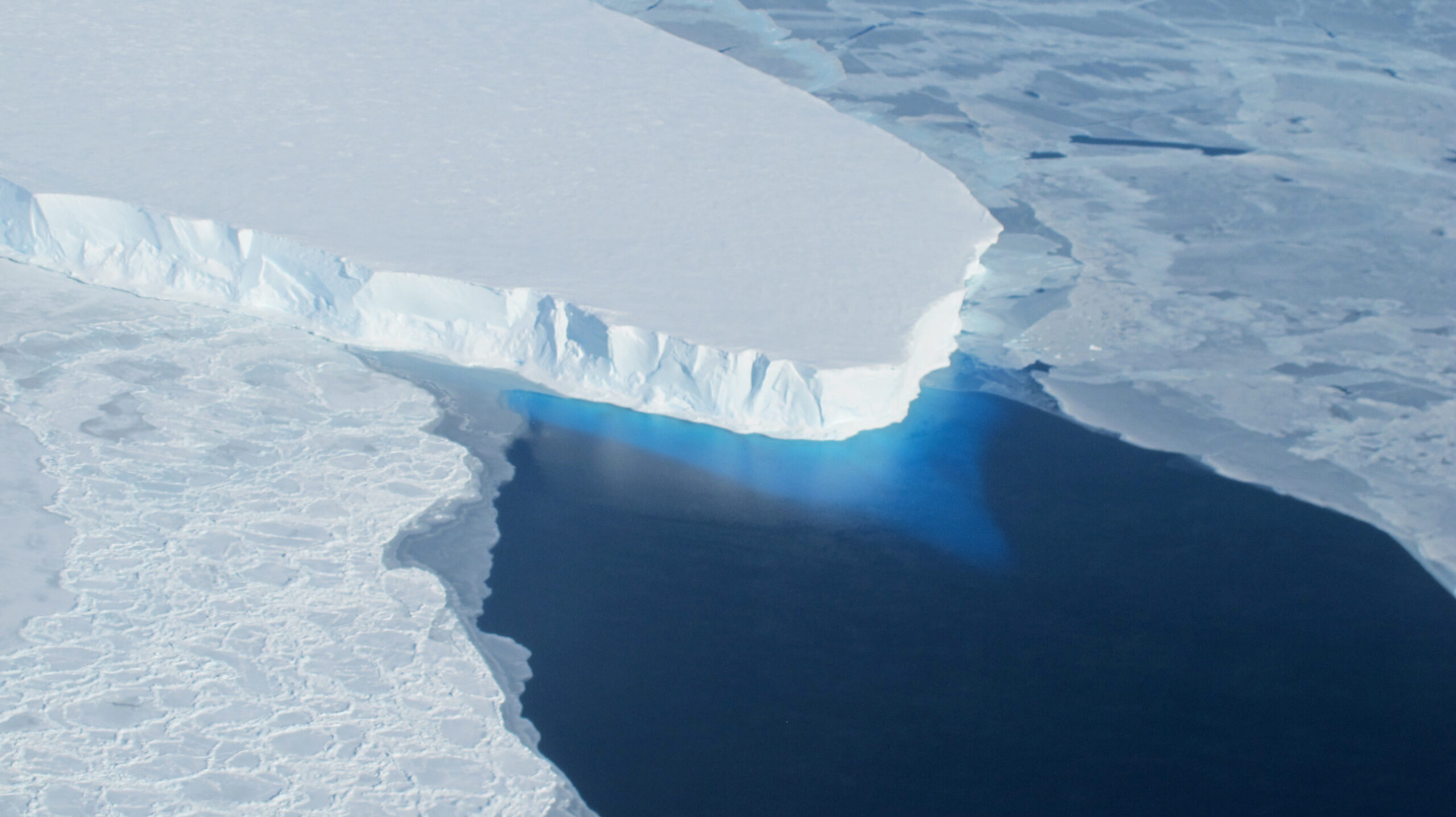
Thwaites Glacier in West Antarctica — popularly called the Doomsday Glacier — remains the most closely watched ice mass on Earth, with researchers warning that its grounding line is retreating faster than models predicted as warm ocean water melts it from below.
Roughly the size of Florida (about 192,000 sq km), Thwaites alone holds enough ice to lift global mean sea level by around 65 cm, and its loss could unpin the wider West Antarctic Ice Sheet (WAIS), with far larger long-term consequences for coastal nations including India.
- Nickname: dubbed the Doomsday Glacier for its outsized, potentially abrupt impact on global sea level.
- Scale: roughly Florida-sized (~192,000 sq km), one of the widest glaciers on the planet.
- Direct contribution: full collapse could raise global sea level by about 65 cm.
- Tipping risk: acts as a cork holding back the West Antarctic Ice Sheet, which stores enough ice for several metres of rise.
- Mechanism: warm Circumpolar Deep Water is melting the glacier at its grounding line, accelerating retreat.
- India link: rising seas threaten low-lying coasts, deltas and island groups, sharpening the case for polar research from stations Maitri and Bharati.
The development matters in the context of:
- Cryosphere stress: Antarctica and Greenland are now the dominant drivers of accelerating sea-level rise, overtaking thermal expansion.
- Marine ice-sheet instability: glaciers grounded below sea level on inward-sloping beds, like Thwaites, can retreat in a self-sustaining feedback once destabilised.
- IPCC framing: the IPCC flags polar ice loss as a low-probability, high-impact tail risk that could push sea levels beyond central projections.
- Coastal India: Mumbai, Kolkata, Chennai, the Sundarbans and Lakshadweep are highly exposed to even decimetre-scale sea-level change.
UPSC Relevance
Prelims Relevance
- Thwaites Glacier location — West Antarctica, draining into the Amundsen Sea embayment.
- Meaning of an ice shelf versus a grounding line versus sea ice.
- West Antarctic Ice Sheet (WAIS) as a marine-based ice sheet grounded below sea level.
- Circumpolar Deep Water (CDW) — a relatively warm, salty water mass circling Antarctica.
- Concept of thermohaline circulation and the role of polar waters in it.
- Components of the cryosphere: glaciers, ice sheets, ice shelves, sea ice, permafrost.
- India’s Antarctic research stations — Maitri, Bharati (and historic Dakshin Gangotri).
- Nodal Indian body for polar science — NCPOR, under the Ministry of Earth Sciences.
- The IPCC as the UN body assessing climate science and sea-level projections.
- Difference between thermal expansion and land-ice melt contributions to sea-level rise.
Mains Relevance
GS Paper 1 (Geography)
- Explain how grounding-line retreat and warm ocean intrusion destabilise marine-based ice sheets, and why this matters for global geomorphology.
- Discuss the cryosphere’s role in regulating sea level and ocean circulation, using Thwaites as a case study.
GS Paper 3 (Environment)
- Assess the implications of polar ice-sheet instability for India’s coastal vulnerability and disaster preparedness.
- Evaluate the significance of international and Indian polar research in monitoring climate tipping points.
Essay
- Use Thwaites as a vivid anchor in essays on climate tipping points, intergenerational equity and the limits of prediction.
- Relevant to essays on the commons, planetary boundaries and the ethics of acting under deep uncertainty.
Background and Context
Where Thwaites sits and why it is called the Doomsday Glacier
A vast, fast-flowing outlet glacier with disproportionate leverage over global sea level.
- Setting: lies in West Antarctica, draining into the Amundsen Sea.
- Size: about Florida-sized (~192,000 sq km) and exceptionally wide at its ocean front.
- Nickname: called the Doomsday Glacier because its collapse could trigger large, hard-to-reverse sea-level rise.
- Cork effect: it buttresses neighbouring ice; losing Thwaites could unplug a much larger reservoir of inland ice.
Cryosphere basics: ice shelves, grounding lines and sea ice
Getting the vocabulary right is half the battle in answering questions on polar ice.
- Cryosphere: the frozen parts of the Earth system — glaciers, ice sheets, ice shelves, sea ice and permafrost.
- Ice shelf: the floating extension of a glacier or ice sheet over the ocean; it already displaces water, so its melt adds little directly to sea level.
- Grounding line: the boundary where the ice lifts off the bedrock and begins to float; its inland retreat signals real ice loss.
- Sea ice: frozen seawater that forms and melts seasonally — distinct from land-based glacial ice.
How warm water is undermining the glacier
The threat to Thwaites comes mainly from the ocean below, not the air above.
- Circumpolar Deep Water: relatively warm, salty water is being drawn beneath the floating ice, melting it from underneath.
- Grounding-line retreat: as the line shifts inland over a downward-sloping bed, thicker ice meets the ocean and melts faster — a self-reinforcing loop.
- Marine ice-sheet instability: glaciers grounded below sea level on reverse-sloping beds can retreat in a runaway fashion once tipped.
- Thinning shelf: weakening of the floating ice shelf reduces the back-pressure that slows the glacier’s flow to the sea.
Sea-level rise and the link to thermohaline circulation
Polar ice does not only raise seas; it also helps power the global ocean conveyor.
- Direct rise: a full Thwaites collapse adds roughly 65 cm to global mean sea level; destabilising the wider WAIS could add several metres over centuries.
- Two drivers: sea-level rise comes from thermal expansion of warming water plus land-ice melt from glaciers and ice sheets.
- Thermohaline circulation: cold, dense polar water sinks and drives the deep-ocean conveyor belt; large freshwater pulses from melting ice can disrupt it.
- IPCC view: the IPCC treats rapid polar ice loss as a high-impact risk that could push rise above central projections.
India's stake and its polar research footprint
A glacier on the far side of the planet has direct consequences for Indian coasts.
- Exposed coasts: Mumbai, Kolkata, Chennai, the Sundarbans delta and Lakshadweep are highly vulnerable to even small rises.
- India in Antarctica: research is run from the stations Maitri and Bharati, coordinated by NCPOR under the Ministry of Earth Sciences.
- Monitoring: Indian glaciology and ocean science feed into global assessments of ice loss and sea-level projections.
- Adaptation: coastal zone management, mangrove protection and disaster preparedness become central planning priorities.
Why prediction is hard and the stakes of uncertainty
The honest answer is that scientists cannot yet date the collapse precisely.
- Deep uncertainty: the timing of any rapid collapse spans decades to centuries, but the direction of travel is clear.
- Inaccessibility: the glacier’s remote, harsh setting makes direct measurement difficult and costly.
- Irreversibility: once marine ice-sheet instability is triggered, retreat may continue even if warming stabilises.
- Precaution: high-impact tail risks justify aggressive emission cuts and serious investment in polar observation.
Way Forward
Strengthen polar observation
- Sustained monitoring: expand under-ice ocean sensors, satellite altimetry and grounding-line surveys to narrow timing estimates.
- Indian capacity: deepen NCPOR-led glaciology and Southern Ocean research from Maitri and Bharati.
Cut emissions and plan for the long tail
- Mitigation: rapid decarbonisation remains the only lever that meaningfully lowers worst-case sea-level outcomes.
- Scenario planning: incorporate high-end ice-loss scenarios into long-term coastal and infrastructure decisions.
Build coastal resilience in India
- Coastal management: enforce coastal regulation zones, protect mangroves and restore natural buffers.
- Preparedness: map flood-exposed assets and embed sea-level rise into city master plans and disaster frameworks.
Conclusion
The leverage point: Thwaites earns its grim nickname because a single, remote glacier can swing global sea level by tens of centimetres and unlock far more by destabilising the West Antarctic Ice Sheet.
The mechanism is clear: warm Circumpolar Deep Water eroding the grounding line is a textbook case of how the ocean, not just the air, drives modern ice loss.
The Indian lesson: a frozen continent’s fate is tied to the safety of Indian deltas and cities, which is exactly why polar research and decisive climate action are national, not distant, concerns.
UPSC Practice Questions
Prelims MCQ 1
With reference to Thwaites Glacier, consider the following statements:
- It is located in West Antarctica and drains into the Amundsen Sea.
- Its destabilisation is driven mainly by warm Circumpolar Deep Water melting it at the grounding line.
- It is roughly the size of the state of Florida.
How many of the above statements are correct?
(a) Only one (b) Only two (c) All three (d) None
Answer: (c) All three
Explanation:
Thwaites lies in West Antarctica draining into the Amundsen Sea, is roughly Florida-sized, and is being undermined by warm Circumpolar Deep Water at its retreating grounding line. All three statements are correct.
Prelims MCQ 2
Which one of the following best explains why melting of a floating ice shelf adds little directly to global sea level?
(a) Ice shelves are made of frozen seawater, which is denser than ice (b) The floating ice already displaces ocean water before it melts (c) Ice shelves are located above the grounding line on bedrock (d) Meltwater from ice shelves evaporates before reaching the ocean
Answer: (b) The floating ice already displaces ocean water before it melts
Explanation:
A floating ice shelf already displaces its own weight of water (Archimedes’ principle), so its melt adds little directly. Loss of land-based grounded ice, and the loss of buttressing that speeds up glaciers, is what raises sea level.
UPSC Mains Questions
- Explain the mechanism of marine ice-sheet instability with reference to Thwaites Glacier. Why is the retreat of the grounding line considered a more reliable indicator of ice loss than the melting of floating ice shelves?
- Polar ice-sheet instability is a low-probability, high-impact climate risk. Discuss its implications for India’s coastal regions and the role of Indian polar research in addressing this challenge.
- Distinguish between thermal expansion and land-ice melt as drivers of sea-level rise. How might large freshwater inputs from Antarctic melting affect global thermohaline circulation?
Sources: National Centre for Polar and Ocean Research (NCPOR), Ministry of Earth Sciences and Intergovernmental Panel on Climate Change (IPCC).
Frequently Asked Questions
Why is Thwaites called the Doomsday Glacier?
Because its collapse could raise global sea level by around 65 cm on its own and, by unplugging the wider West Antarctic Ice Sheet, eventually contribute several metres more. A single glacier with that much leverage over the world’s coastlines earns the dramatic nickname.
Where is Thwaites Glacier located?
It lies in West Antarctica, draining into the Amundsen Sea. Roughly the size of Florida (about 192,000 sq km), it is one of the widest glaciers on Earth and a key part of the marine-based West Antarctic Ice Sheet.
What is making the glacier retreat?
Mainly the ocean, not the air. Relatively warm, salty Circumpolar Deep Water is drawn beneath the floating ice and melts it from below. As the grounding line retreats inland over a downward-sloping bed, melting accelerates in a self-reinforcing loop.
What is the difference between an ice shelf and a grounding line?
An ice shelf is the floating extension of a glacier over the sea; because it already displaces water, its melt adds little directly to sea level. The grounding line is where ice lifts off bedrock and starts to float — its inland retreat marks genuine loss of land-based ice.
How does Thwaites threaten coastal India?
Sea-level rise from Antarctic ice loss endangers low-lying Indian coasts and deltas — Mumbai, Kolkata, Chennai, the Sundarbans and Lakshadweep. Even decimetre-scale rise worsens flooding, erosion and saltwater intrusion, making coastal management and disaster preparedness urgent.
What is India’s role in polar research?
India runs Antarctic science from its stations Maitri and Bharati, coordinated by the NCPOR under the Ministry of Earth Sciences. This work on glaciers and the Southern Ocean feeds into global assessments of ice loss and sea-level rise.
Source: https://anantamias.com/current-affairs/thwaites-doomsday-glacier-2026/