Internal security is one of the most dynamic and high-scoring topics in UPSC GS-III. It covers a wide spectrum — from cross-border terrorism and Maoist violence to cyber threats and border management. The challenge for India is that most of its internal security threats are not purely domestic — they have external dimensions, whether it’s Pakistan’s support for terrorist groups, China’s cyber intrusions, or Myanmar’s ungoverned spaces sheltering Northeast insurgents. Understanding the threat landscape, institutional framework, and key laws is the foundation of any serious GS-III preparation.
Dimensions of Internal Security
Internal security threats in India can be classified into six broad categories:
1. Terrorism
Cross-border terrorism — supported, financed, or trained by external state actors — is India's primary security challenge. The key state actor is Pakistan, through groups like:
- Lashkar-e-Taiba (LeT): 2001 Parliament attack, 26/11 Mumbai attacks (2008), continued infiltration attempts in J&K
- Jaish-e-Mohammed (JeM): 2016 Pathankot airbase attack, 2019 Pulwama suicide bombing (40 CRPF personnel killed), Uri 2016
- Hizbul Mujahideen: Active in the Kashmir Valley
Domestic terrorism: The Islamic State's Indian module (ISIS-K recruitment), radicalisation through social media, lone-wolf attacks.
Separatist terrorism in J&K: Post-Article 370 abrogation (August 2019), large-scale stone-pelting and militant attacks have reduced significantly. But targeted killings of security forces, Kashmiri Pandits, and "outsiders" continue.
Left-Wing Extremism (LWE): Covered separately in the Left Wing Extremism article. Maoist violence in the "Red Corridor" — considered the most significant internal security threat by multiple government assessments.
2. Insurgency in the Northeast
India's Northeast has a long history of insurgency driven by ethnic identity, territorial demands, and historical grievances about integration into the Indian Union.
| State | Groups | Status |
|---|---|---|
| Nagaland | NSCN-IM (Isak-Muivah), NSCN-K | Peace talks ongoing since 1997; framework agreement 2015 |
| Manipur | UNLF, PLA, MNPF, Meitei-Kuki conflict | Active violence; Kuki-Meitei ethnic conflict (2023) serious |
| Assam | ULFA-I (Pro-talks ULFA signed accord 2023), ULFA-I (Paresh Barua-led anti-talks) | Peace accord signed September 2023 with ULFA |
| Mizoram | MNF (signed Mizoram Peace Accord 1986) | Largely peaceful; hosting Kuki-Chin Myanmar refugees complicates |
| Tripura | NLFT, ATTF | Largely controlled |
| Meghalaya | HNLC | Low-level activity |
The 2023 Manipur ethnic violence between the Meitei majority and Kuki-Zo tribal communities — triggered by a High Court recommendation on Meitei ST status — killed over 200 people and displaced 60,000. It revealed the limits of the state machinery in controlling communal-ethnic conflict.
3. Left-Wing Extremism (Naxalism)
CPI (Maoist) and its armed wing, the People's Liberation Guerrilla Army (PLGA), operate across Chhattisgarh, Jharkhand, Odisha, and surrounding states. This is covered in depth separately — see Left Wing Extremism in India.
4. Cyber Security Threats
India is one of the world's most targeted countries for cyberattacks:
- State-sponsored attacks: China's APT groups (APT41, Volt Typhoon) have targeted India's power sector, telecom, and financial systems
- Pakistan-linked groups: SideCopy, APT36 target defence and government systems
- Critical infrastructure: AIIMS Delhi ransomware attack (November 2022), Mumbai power grid disruption (2020 — attributed to China by Recorded Future)
- Financial fraud: UPI fraud, banking malware, phishing targeting digital payment systems
- Misinformation: Social media-driven communal unrest; fake news during COVID and communal incidents
India's National Cyber Security Policy (2013) is outdated. The new National Cybersecurity Strategy has been in draft for years. The government has established:
- CERT-In (Computer Emergency Response Team-India) for incident response
- NCIIPC (National Critical Information Infrastructure Protection Centre) under NTRO for protecting critical infrastructure
- Indian Cyber Crime Coordination Centre (I4C) under MHA
5. Border Security
India has:
- 15,106 km land border shared with 7 countries
- 7,516 km coastline
Key border challenges:
- India-Pakistan: Cross-border terrorism, infiltration, arms and drug smuggling through Punjab and J&K borders
- India-Bangladesh: Illegal immigration, cattle smuggling, drug trafficking (Yaba tablets from Myanmar via Bangladesh), fake currency
- India-Myanmar: Insurgent sanctuaries on both sides; used by Northeast groups; drug trafficking from Golden Triangle; post-2021 coup instability
- India-China: LAC tensions, Chinese border infrastructure buildup, incursions
- Coastal security: 26/11 attackers came by sea from Pakistan; drug trafficking by sea; human trafficking
Post-26/11 coastal security overhaul:
- National Coastal Mission integrating Coast Guard, Marine Police, Navy
- Sagar Kavach exercises
- Vessel traffic management systems
6. Organised Crime and Narco-Terrorism
- Punjab's drug problem — heroin from Afghanistan-Pakistan-Punjab corridor; linked to funding of Sikh separatist networks
- D-Company (Dawood Ibrahim's network) — listed terrorist organisation; links to Pakistan's ISI; involvement in 1993 Mumbai bombings
- Drug trafficking: Punjab corridor, Mizoram-Myanmar route (Yaba tablets), Kerala coast (heroin, cocaine by sea)
- Terror financing: Hawala networks, cryptocurrency, abuse of charitable organisations
Institutional Framework
National Investigation Agency (NIA)
Established by the National Investigation Agency Act, 2008 after the 26/11 Mumbai attacks, the NIA is India's central counter-terrorism investigative agency.
Jurisdiction:
- Terrorist acts (UAPA offences)
- Attacks on nuclear, atomic, railway installations
- Counterfeiting of currency
- Crimes at sea involving Indian nationals
- Offences under the Explosive Substances Act, Arms Act related to terrorism
Powers:
- Concurrent jurisdiction with state police — can take over investigation of any terror case without state's consent
- Its officers have all powers of an officer-in-charge of a police station across India (no geographical limitation)
Criticism: Overreach into cases with political dimensions; critics argue it has been used to target civil society activists (Bhima Koregaon case).
National Security Advisor (NSA) and National Security Council
The National Security Council (NSC) is the apex body for national security planning:
- Strategic Policy Group (SPG): Bureaucratic committee chaired by Cabinet Secretary
- NSC Secretariat: Headed by the Deputy NSA
- National Security Advisor (NSA): Principal advisor to PM on security matters; not a constitutional post but critically important
The NSA chairs the Joint Intelligence Committee (JIC) which coordinates intelligence assessment across RAW, IB, NTRO, and military intelligence.
NATGRID
NATGRID (National Intelligence Grid) was announced after 26/11 to integrate databases of 21 security and intelligence agencies:
- Immigration, visa databases (Bureau of Immigration)
- Bank account transactions
- Credit card usage
- Air/rail travel records
- Telecom call data records
- Income tax returns
NATGRID allows authorised security agencies to access relevant data across these silos for tracking suspects. It was operationalised in phases from 2021.
Privacy concerns: NATGRID's data integration raises significant civil liberties concerns — mass surveillance infrastructure with limited judicial oversight.
Multi-Agency Centre (MAC)
The MAC (Multi-Agency Centre) under the Intelligence Bureau coordinates real-time intelligence sharing between:
- IB (Intelligence Bureau)
- RAW (Research and Analysis Wing)
- Military Intelligence
- State police and CID
- NSG
State-level versions called SMAC (Subsidiary Multi-Agency Centres) facilitate intelligence sharing within states.
MAC was set up after the Kargil Review Committee (2000) identified intelligence failures. Post-26/11, MAC was strengthened significantly.
Other Key Agencies
| Agency | Parent | Function |
|---|---|---|
| IB (Intelligence Bureau) | MHA | Domestic intelligence gathering |
| RAW (Research and Analysis Wing) | Cabinet Secretariat | Foreign intelligence |
| NTRO (National Technical Research Organisation) | Cabinet Secretariat | Technical intelligence, cyber monitoring |
| NSG (National Security Guard) | MHA | Counter-terrorism, VIP protection |
| CISF (Central Industrial Security Force) | MHA | Security of airports, nuclear plants, PSUs |
| CRPF | MHA | Counterinsurgency, crowd control, anti-Naxal operations |
| BSF | MHA | Border security (Pakistan, Bangladesh) |
| SSB | MHA | Border security (Nepal, Bhutan) |
| ITBP | MHA | Border security (China/LAC) |
Key Laws
UAPA: Unlawful Activities (Prevention) Act, 1967 (as amended 2004, 2008, 2019)
UAPA is India's primary anti-terrorism and anti-insurgency law.
Key provisions:
- Defines "unlawful activity" and "terrorist act"
- Allows designation of organisations as "terrorist organisations" (Schedule I)
- 2019 Amendment: Allows designation of individuals as terrorists (not just organisations) — India can designate a person as a terrorist before conviction
- Bail provisions: Section 43D(5) — bail cannot be granted if the court is of prima facie opinion that the accusations are prima facie true
- UAPA courts: Designated courts for trial
- Maximum punishment: Death or life imprisonment for certain offences
Criticism:
- Bail is practically impossible — accused spend years in jail as undertrials
- "Prima facie true" standard for rejecting bail is extremely low
- 2019 individual designation power has no sunset clause; no appeal mechanism initially (Supreme Court upheld the provision but noted due process concerns)
- Used against journalists, academics, tribal activists in Bhima Koregaon case — "Urban Naxal" narrative
AFSPA: Armed Forces (Special Powers) Act, 1958
AFSPA gives the armed forces special powers in "disturbed areas":
Powers under AFSPA:
- Army/paramilitary can arrest without warrant
- Search and seize premises without warrant
- Use force, including lethal force, against persons contravening law or assembly of 5+ persons
- Immunity from prosecution: No prosecution without prior Central Government sanction
Where in force (as of 2024):
- Nagaland (since 1958)
- Manipur (partially — removed from Imphal valley but retained in hill districts; further reduction being considered)
- Assam (reduced)
- J&K (Jammu and Kashmir Armed Forces Special Powers Act, 1990 — whole of J&K except Jammu city)
- Arunachal Pradesh (parts bordering Nagaland)
Controversy:
- Used to shield perpetrators of fake encounters (extrajudicial killings)
- Supreme Court ruling (2016): AFSPA does not provide blanket immunity — any killing that is not in good faith can be investigated; army cannot claim immunity for every act
- The People's Tribune on Human Rights (AFSPA Committee) under Justice Jeevan Reddy (2005) recommended repealing AFSPA and replacing it with a more balanced law — recommendation not implemented
- Irom Sharmila's 16-year hunger strike (2000–2016) protesting AFSPA in Manipur brought international attention
NSA: National Security Act, 1980
Allows preventive detention of persons acting in ways prejudicial to national security or public order for up to 12 months. Extended detention is possible with review by an Advisory Board. No trial is required.
Used against:
- Alleged terrorists and stone-pelters in J&K
- Drug traffickers
- Critics argue misuse against political opponents
Security Forces' Operations
CRPF's Role in Anti-Naxal Operations
The Central Reserve Police Force leads counter-Maoist operations in the Red Corridor. The CRPF's CoBRA (Commando Battalion for Resolute Action) units are specially trained for jungle warfare and anti-Naxal operations.
Combined operations with state police, CRPF, and occasionally the National Security Guard have significantly reduced Naxal geographic spread since 2010.
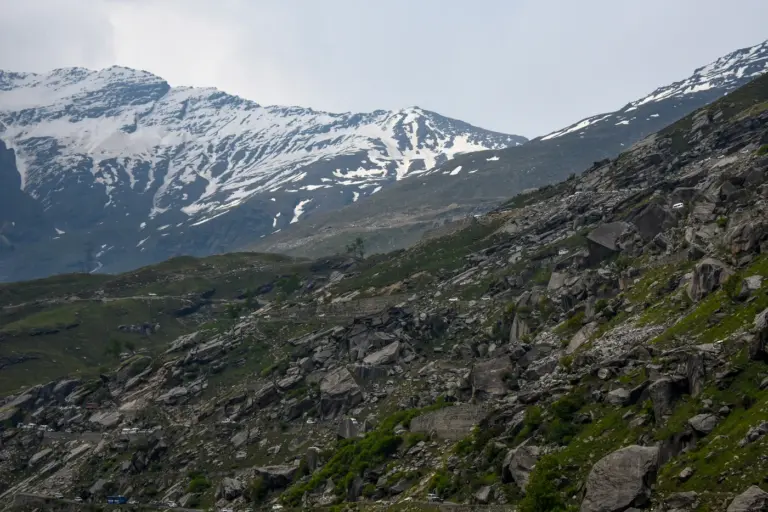
Defence of the Northern Borders Post-Galwan
After the 2020 Galwan clash, India has:
- Accelerated construction of border roads and tunnels under the Border Roads Organisation (BRO)
- Forward deployed additional troops to Ladakh permanently
- Inducted new systems: Pinaka rocket artillery, Bofors FH-77B, Excalibur precision shells, anti-drone systems
- Opened previously closed airstrips in Ladakh and Arunachal
FAQ
Q1. What is the difference between NIA and CBI? The NIA (National Investigation Agency) handles terrorism, insurgency, and related offences under specific central laws. Its jurisdiction is nationwide without needing state consent. The CBI (Central Bureau of Investigation) handles corruption, major fraud, and some criminal cases — but needs state consent to investigate crimes in a state's territory (except for Central Government employees and cases referred by the Supreme Court or High Courts). Both are central agencies but with different mandates.
Q2. What is NATGRID and why is it controversial? NATGRID integrates 21 government databases (immigration, banking, telecom, travel) for security agencies to access to track suspects. It's controversial because it creates a mass data surveillance infrastructure — security agencies can access citizens' financial, communication, and movement data without specific court orders in every case. Privacy advocates argue it enables surveillance without adequate legal safeguards.
Q3. Why is UAPA's bail provision controversial? Section 43D(5) of UAPA provides that bail shall not be granted if the court is of prima facie opinion that the accusations are "prima facie true." This is a circular standard — and in practice courts refuse bail even when they have doubts about the case. Undertrial periods of 5–10 years are not uncommon, making pre-trial imprisonment itself a form of punishment. The Supreme Court has begun recognising "default bail" rights but the law remains harsh.
Q4. What are the arguments for and against AFSPA? For AFSPA: Security forces cannot operate effectively in insurgent areas without protection from vexatious prosecutions; insurgents deliberately try to tie down forces with legal complaints; AFSPA is temporary and can be removed when normalcy is restored. Against AFSPA: Creates effective impunity for human rights violations including fake encounters and custodial deaths; damages community trust in the security forces; the SC has found the “good faith” immunity too broad.
Q5. What is the role of the NSA in India's security architecture? The National Security Advisor is the PM's principal advisor on security issues. The NSA chairs the National Security Council Secretariat, the Joint Intelligence Committee, and the Strategic Policy Group. The NSA also heads the Nuclear Command Authority's Executive Council. The post has enormous informal power — all intelligence agencies, military operations, and diplomatic security decisions flow through the NSA's office.
Related: Left Wing Extremism in India Related: India's Foreign Policy Related: India-China Relations
Tell Google you want more of this.
Add Anantam IAS as a preferred sourceOne tap, and this site shows up more often in your own Top Stories, AI Overviews and AI Mode. Remove it any time.