Why in News?
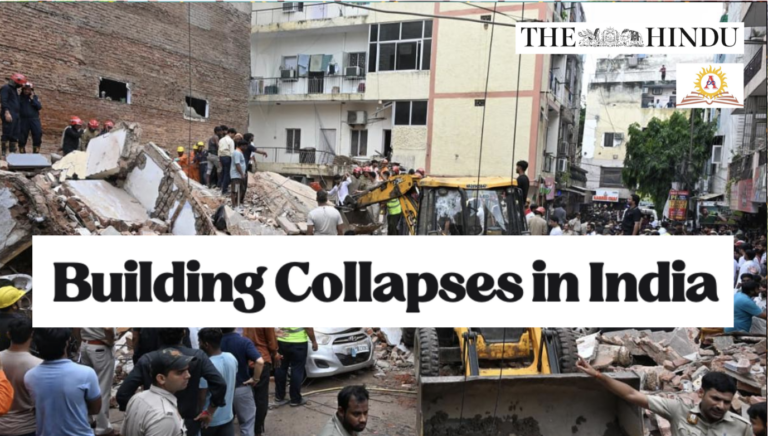
A boiler explosion at Vedanta Limited’s thermal power plant in Sakti district, Chhattisgarh, has resulted in a death toll of at least 24 workers. The incident reflects systemic lapses facing the Indian industry— inadequate safety protocols, insufficient training, and weak enforcement of regulations.
| UPSC Relevance: GS-3 Disaster Management: Industrial Disasters; GS-3 Economy: Industrial Policy. Mains: Industrial Disasters: Causes, Consequences and Way Forward. |
What are Industrial Disasters?
- Industrial disasters are human-induced catastrophic events caused by failures in industrial processes, hazardous material handling, or safety mechanisms.
- India’s rapid industrialisation, coupled with weak regulatory enforcement, has led to recurring accidents. E.g., Bhopal Gas Tragedy (1984), Oleum Gas Leak Case (1986), Vizag Gas Leak (2020), Neyveli Lignite Plant Explosion (2020), Vedanta Ltd.’s Thermal Power Plant explosion (2026), etc.
Causes of Industrial Disasters:
- Human and Organisational Factors: Negligence and human error (fatigue, lack of training, poor supervision); Violation of safety norms to meet production targets; Poor ventilation, exposure to toxic chemicals; Inadequate use of PPE (Personal Protective Equipment).
- Technical and Infrastructure Failures: Ageing machinery and lack of maintenance; Faulty design and use of substandard materials; Sudden operational changes (e.g., boiler overloads in recent accidents)
- Regulatory and Governance Issues:
- Weak enforcement of laws, such as: (i) Factories Act, 1948; (ii) Explosives Act, 1884; Low inspection rates and corruption.
- Relaxation of Industrial Regulations, as industrial regulations are viewed as a barrier to ease of doing business in India.
- Structural Factors: Rapid industrialisation without adequate safeguards; Informalisation of labour and contract workers; Urban-industrial clustering increases vulnerability.
Govt. Efforts & Legal Measures for Industrial Safety in India:
- The Factories Act, 1948: The Act aims to provide a safe working environment to factory workers by mandating safety measures and assigning enforcement powers to inspectors.
- Regulates the health, safety, and welfare of workers in factories. It covers working conditions, ventilation, sanitation, machinery safety and accident prevention; Fire safety provisions.
- Mandates the appointment of safety officers in hazardous industries.
- The 1987 Amendment to the Factories Act (post the Bhopal Gas Tragedy and Oleum Gas Leak) expanded the focus of the Act from solely internal worker safety to include external public and environmental safety. It introduced:
- Hazardous process industries classification: To include any activity that threatens the health/safety of workers or the general public in the vicinity.
- Site Appraisal Committees: Mandated to advise the state government on locating and setting up factories involving hazardous processes.
- Mandatory Disclosure: Occupiers of every factory involving a hazardous process must disclose health hazards and emergency measures to workers, local authorities, and the surrounding public.
- Emergency Preparedness: Required the formulation of onsite emergency plans and disaster management protocols.
- The Environment Protection Act, 1986 (EPA): Umbrella legislation empowering the Central Government to take measures to protect and improve the environment.
- Set environmental standards for emissions and discharge of pollutants.
- Regulate industrial location & restrict areas where industries can operate.
- Conduct inspections, seize equipment, and close/regulate industries.
- The EIA Notification, 2006 (under EPA) mandates Prior Environmental Clearance (EC) for new projects, expansion, or modernisation of industries listed in its Schedule. The project proponents must obtain EC before starting construction. It also includes provisions for monitoring, and industries are liable for environmental damages.
- The Public Liability Insurance Act, 1991, provides immediate relief to victims of accidents involving hazardous substances. It mandates: (i) hazardous industries must take insurance policies; (ii) Establishment of the Environment Relief Fund (ERF). The Act provides for the “no-fault liability” principle, which means that the industry can be held liable even if it had done everything in its power to prevent the accident.
- Disaster Management Act, 2005: Established the National Disaster Management Authority (NDMA). NDMA issues guidelines on chemical and industrial disasters.
- The Occupational Safety, Health and Working Conditions Code, 2020: The OSH Code replaces 13 Central Labour laws with a single comprehensive legislation. It enhances safety standards by setting mandatory rules for machinery use, ventilation, fire safety, and hazardous material handling, while introducing a single registration for businesses to improve compliance.
Way Forward:
- Frame a National Policy on Industrial Disasters: Industrial disaster management in India is regulated by a combination of the Environment (Protection) Act, Factory Act, and NDMA guidelines rather than a single policy document. India needs a more streamlined, centralised approach for better coordination and improved accountability.
- Adoption of ILO conventions and global safety standards: India has not ratified the Occupational Safety and Health Convention, 1981 (No. 155) or the Promotional Framework for Occupational Safety and Health Convention, 2006 (No. 187).
- Proper Inspection: Ensure compliance with the parameters of storage of raw materials, manufacturing processes, and storage. Timely inspection of all equipment as per the safety protocols. Ensure adequate training and equip inspectors with modern tools (AI). Impose higher penalties for non-compliance, punitive action and immediate closure of non-compliant units.
- Improved Governance: Regular third-party safety audits. Worker participation in safety audits. Use of AI/IoT for real-time monitoring.
- Industrial Zoning: Zoning/ Mapping of industrial zones based on hazard potential. Strict enforcement of the Central Pollution Control Board (CPCB) guidelines to maintain a minimum distance (often 50-100+ meters) between hazardous units and residential areas, schools, or hospitals.
India provides the right to a safe workplace, derived mainly from Article 21, and supported by labour and environmental laws. However, to make it fully effective, India needs a shift from mere legal recognition to strict enforcement and accountability.
Mains Practice Question:
Q. Industrial disasters in India highlight the gap between legal provisions and ground-level enforcement. Discuss.
Tell Google you want more of this.
Add Anantam IAS as a preferred sourceOne tap, and this site shows up more often in your own Top Stories, AI Overviews and AI Mode. Remove it any time.