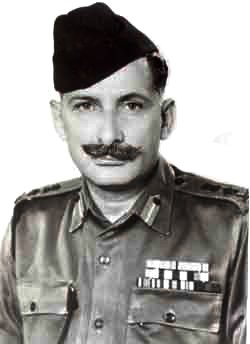
India has conferred the rank of Field Marshal — the highest, five-star ceremonial rank in the Indian Army — on only two officers: Sam Manekshaw (1 January 1973) and K. M. Cariappa (15 January 1986). It is a lifetime appointment: a Field Marshal never retires and draws the full pay of a serving General for life. The Air Force equivalent, Marshal of the Indian Air Force, has been held once — by Arjan Singh (2002) — and India has never appointed an Admiral of the Fleet in the Navy.
Introduction
The rank of Field Marshal in the Indian Army is the highest possible in the land forces, a ceremonial five-star appointment granted for exceptional service in war. Unlike regular ranks in the Army, it is a lifetime appointment; a Field Marshal never formally retires. In the history of independent India, only two officers have held this rank, both of them central figures in the making of the modern Indian Army.
For UPSC aspirants, the Field Marshal rank is relevant to GS Paper 3 under internal and external security, and to current affairs coverage of the armed forces. It is also a staple of Prelims factual questions, where candidates are expected to know the five-star equivalents across the Army, Navy and Air Force, the year each Indian Field Marshal was conferred, and the distinction between the rank and the Chief of Defence Staff.
Quick Facts at a Glance
| Attribute | Detail |
|---|---|
| Rank type | Five-star, ceremonial |
| Service | Indian Army |
| Navy equivalent | Admiral of the Fleet (never conferred in India) |
| Air Force equivalent | Marshal of the Indian Air Force |
| Tenure | Lifetime; officer is never retired |
| Baton | Gold-embroidered, with the state emblem |
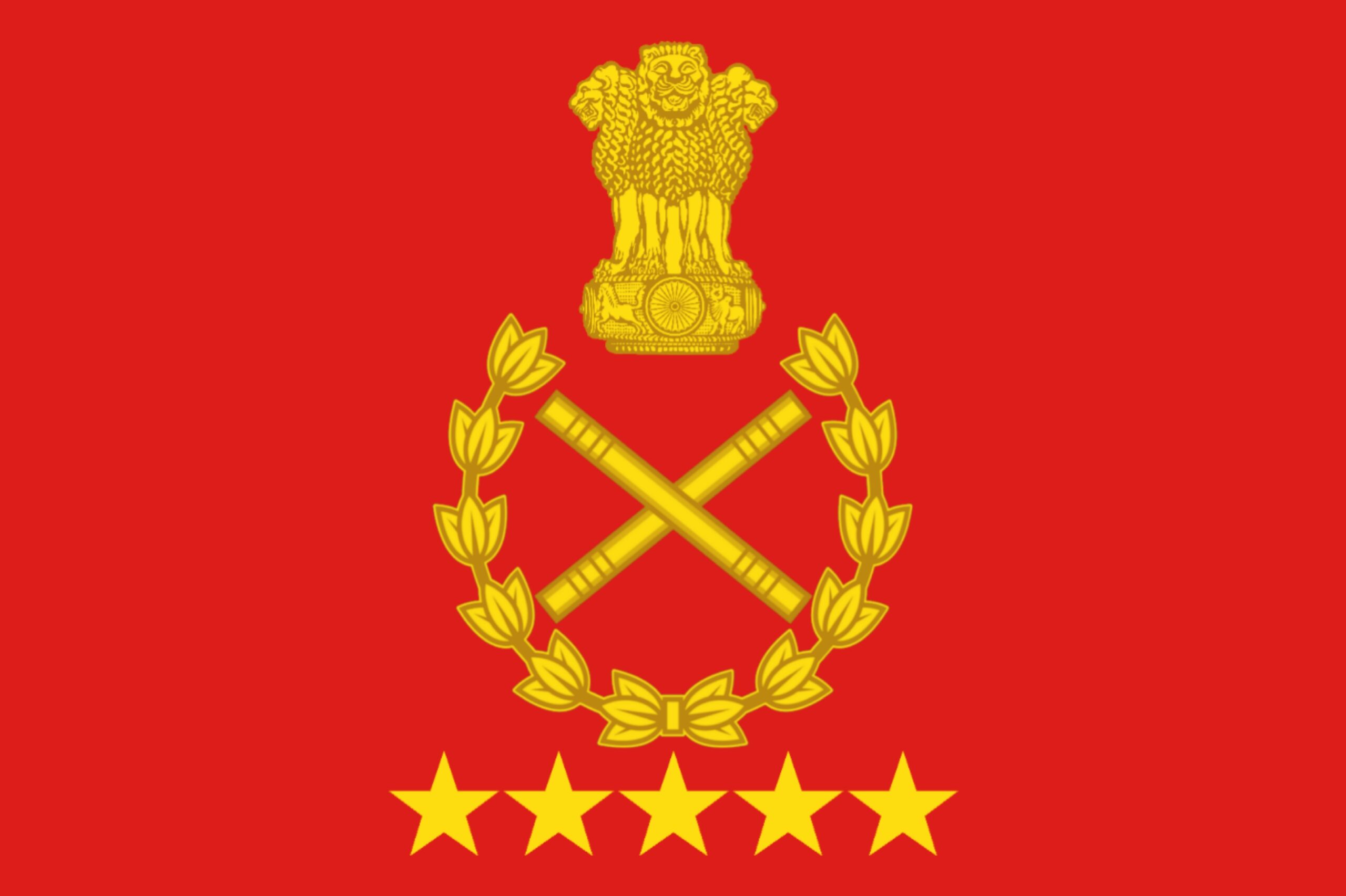
| Insignia | National emblem over crossed batons in a lotus wreath |
| First Indian Field Marshal | K. M. Cariappa (1986) |
| Second Indian Field Marshal | Sam Manekshaw (1973) |
| Marshal of the IAF | Arjan Singh (2002) |
| Constitutional basis | President of India as Supreme Commander, Article 53(2) |
Background and Historical Context
The rank of Field Marshal originated in sixteenth-century Europe as the senior commander of a field army, literally the marshal of the field. The British Army formalised it in 1736, and the British Indian Army adopted the rank structure on Independence in 1947. The earliest Field Marshals associated with India were British: Lord Roberts of Kandahar, Lord Kitchener of Khartoum, Sir Claude Auchinleck, and Viscount Wavell, all of whom served in various senior Indian commands.
After Independence, India retained the British rank structure but initially did not operate the five-star rank. The first post-Independence Chief of the Army Staff, General K. M. Cariappa, led the Army during the 1947-48 Jammu and Kashmir war. His elevation to Field Marshal was discussed at the time but not granted. The rank was first conferred on General Sam Manekshaw on 1 January 1973 in recognition of his leadership during the 1971 Indo-Pakistan war that liberated Bangladesh. General Cariappa was belatedly elevated in 1986 at the age of 86.
The rank has not been conferred since. There has been no Indian Admiral of the Fleet in the Navy. In the Indian Air Force, the equivalent rank of Marshal of the Indian Air Force was conferred once, on Air Chief Marshal Arjan Singh, in 2002 for his leadership during the 1965 war.
The rationale for the sparing use of the rank is historical and strategic. The Ministry of Defence has treated it as a reserve honour to be granted only in cases of demonstrated victory in a full-scale conventional war, and in recognition of broader institutional contribution. Other Chiefs of Staff who led successful campaigns, including General G. G. Bewoor (1973-75) and General K. Sundarji (1986-88), have not been elevated.
Key Features and Provisions
Constitutional and statutory basis
The President of India is the Supreme Commander of the armed forces under Article 53(2) of the Constitution. Commissions and ranks in the armed forces are issued in the President’s name under the Army Act, 1950. The five-star rank is conferred by an order of the President on the recommendation of the government, usually in recognition of conduct of a major war.
Tenure and emoluments
A Field Marshal does not retire. The officer is considered to remain on the active list for life and is entitled to full pay and allowances of a serving General until death. The rank comes with a ceremonial uniform, a gold-embroidered baton, and the right to wear the full uniform on formal occasions.
Eligibility
There are no codified statutory eligibility rules. In practice, eligibility has required:
- Service as Chief of the Army Staff
- Leadership of India in a full-scale war, with a clear and decisive outcome
- Demonstrated broader institutional contribution beyond the immediate command
Insignia
The Field Marshal’s insignia consists of the national emblem of India above two crossed batons enclosed by a wreath of lotus leaves. On parade, the officer carries a ceremonial baton. The shoulder board does not use the standard star arrangement of other General officer ranks.
Relationship with the Chief of Defence Staff
The post of Chief of Defence Staff (CDS), created in 2019, is a four-star appointment. The CDS is not senior in rank to a Field Marshal or Marshal of the IAF. The Field Marshal rank is purely ceremonial and does not carry command authority; the CDS is the operational and administrative head of the tri-service structure.
Significance for UPSC and General Knowledge
- Only two Indian Field Marshals (Manekshaw, Cariappa); one Marshal of the IAF (Arjan Singh); no Admiral of the Fleet.
- A recurring Prelims factual area on five-star ranks and equivalents.
- Sam Manekshaw’s conferment (1973) is a direct link to the 1971 Bangladesh Liberation War syllabus topic.
- Illustrates the distinction between ceremonial and operational command in Indian civil-military relations.
- Example of civilian control over the armed forces, a key GS Paper 2 theme.
- Context for the Chief of Defence Staff reform of 2019-2020.
State-wise Distribution of Indian Field Marshals
India has had two Field Marshals in the Army and one Marshal of the Indian Air Force. Their profiles span different regions, services and conflicts.
Field Marshal K. M. Cariappa (1899-1993)
Born Kodandera Madappa Cariappa in Shanivarasanthe, Kodagu (then Coorg), Karnataka. Commissioned into the Rajput Regiment in 1919 after training at the Royal Military College, Sandhurst. He became the first Indian Commander-in-Chief of the Indian Army on 15 January 1949, a date now commemorated as Army Day. He led Indian operations in the 1947-48 Jammu and Kashmir war and retired in 1953. He served as Indian High Commissioner to Australia and New Zealand from 1953 to 1956. His elevation to Field Marshal came late, on 15 January 1986, when he was 86 years old. He died in 1993. The Bangalore cantonment’s main road, the Cariappa Parade Ground in Delhi, and the Kumaon Regiment’s training centre are named in his honour.
Field Marshal Sam Hormusji Framji Jamshedji Manekshaw (1914-2008)
Born in Amritsar, Punjab, to a Parsi family from Valsad, Gujarat. Commissioned in 1934 from the first course at the Indian Military Academy, Dehradun, into the 4th Battalion, 12th Frontier Force Regiment. He saw action in Burma during the Second World War and was awarded the Military Cross for bravery at the Sittang Bridge. As Chief of the Army Staff from 1969, he led the Indian Army in the 1971 Indo-Pakistan war. On 1 January 1973, he was promoted to Field Marshal, becoming India’s first. He was also awarded the Padma Vibhushan and Padma Bhushan. He died at Wellington, Tamil Nadu, in 2008.
Marshal of the Indian Air Force Arjan Singh (1919-2017)
Born in Layallpur (now Faisalabad, Pakistan) in 1919. Commissioned into the Royal Indian Air Force in 1939 from the Royal Air Force College, Cranwell. He led No. 1 Squadron in Burma during the Second World War and was awarded the Distinguished Flying Cross. As Chief of the Air Staff from 1964 to 1969, he led the IAF during the 1965 war. He was promoted to Marshal of the Indian Air Force in January 2002, becoming the only officer to hold the rank in the IAF. He served as Lt Governor of Delhi (1989-1990) and as Indian ambassador to Switzerland.
Comparative Perspective
| Service | Five-star rank | Number conferred | First recipient | Year |
|---|---|---|---|---|
| Indian Army | Field Marshal | 2 | Sam Manekshaw | 1973 |
| Indian Air Force | Marshal of the IAF | 1 | Arjan Singh | 2002 |
| Indian Navy | Admiral of the Fleet | 0 | – | – |
| British Army | Field Marshal | 141 (historical) | John Churchill | 1736 |
| United States Army | General of the Army | 5 | George Marshall | 1944 |
| Chinese PLA | Marshal of PRC | 10 (1955 only) | Zhu De | 1955 |
India has been more sparing than peers such as the United Kingdom and the former Soviet Union, which conferred the rank more liberally during and after the Second World War. The United States created its five-star rank, General of the Army, only for the Second World War; it has not been used since. China last conferred the rank in 1955.
Controversies and Debates
The rank has attracted three kinds of debate. The first concerns pay and perquisites. Field Marshal Manekshaw reportedly did not receive full Field Marshal pay for years; the arrears were settled only shortly before his death in 2008 by the President. Similar reports have circulated about Arjan Singh, though he was paid more regularly. These episodes fed a broader controversy about civil bureaucracy delays in settling entitlements of the highest military officers.
The second debate concerns selection. Some commentators have argued that leaders of other successful campaigns, including operations on the Siachen Glacier (Operation Meghdoot, 1984), the Kargil War (1999) and the 2019 Balakot airstrike, merited similar recognition. Others argue that the rank should be restricted to conduct of a full conventional war with a decisive outcome comparable to 1971.
The third debate concerns institutional relevance. With the creation of the Chief of Defence Staff in 2019 and the pending theatre-command reform, some argue that the ceremonial five-star rank is a colonial residue to be retired. Defenders argue that it is part of the ceremonial vocabulary of democratic civil-military relations, a visible marker of the state’s gratitude for exceptional service, and costs the exchequer very little in practice.
Prelims Pointers
- Field Marshal is a five-star ceremonial rank in the Indian Army.
- Air Force equivalent: Marshal of the Indian Air Force; Navy: Admiral of the Fleet.
- Sam Manekshaw: promoted to Field Marshal on 1 January 1973.
- K. M. Cariappa: promoted on 15 January 1986 at age 86.
- Arjan Singh: promoted to Marshal of the IAF in January 2002.
- India has never conferred the rank of Admiral of the Fleet.
- Army Day is celebrated on 15 January, marking Cariappa taking over as Commander-in-Chief in 1949.
- Cariappa was commissioned into the Rajput Regiment; Manekshaw into the 4/12 Frontier Force.
- Manekshaw was awarded the Military Cross for action at Sittang Bridge, Burma.
- Arjan Singh was awarded the Distinguished Flying Cross in the Second World War.
- The rank is a lifetime appointment; the officer is never retired.
- President of India is the Supreme Commander under Article 53(2).
Mains Practice Questions
Q1. Discuss the constitutional and ceremonial basis of five-star ranks in India’s armed forces and their relevance in a modern civil-military framework. (250 words)
- Supreme Commander under Article 53(2); Army Act, 1950.
- Ceremonial v/s operational distinction; Chief of Defence Staff.
- Civil-military relations and democratic symbolism.
Q2. Evaluate the contribution of Field Marshal Sam Manekshaw to India’s victory in the 1971 Bangladesh Liberation War. (250 words)
- Strategic advice on timing of operations to the Prime Minister.
- Coordination of Army, IAF and Navy in joint operations.
- Outcome: liberation of Bangladesh, surrender at Dhaka, legacy.
Conclusion
The Field Marshal rank is small in numbers but large in meaning. Only three officers across India’s three armed forces have held a five-star rank in seventy-five years. Each of those careers, Cariappa’s stewardship of the newly independent Army, Manekshaw’s conduct of the 1971 war, and Arjan Singh’s leadership of the IAF in 1965, captures a defining moment in the evolution of India as a republic and a military power.
For UPSC preparation, the utility of this topic lies in the dense factual material it offers for Prelims and the institutional discussion it invites in Mains. An aspirant should be able to place the five-star rank within the framework of the Constitution, the Army and Air Force Acts, the Chief of Defence Staff reform, and the broader principle of civilian control over the armed forces. Holding those threads together turns a factual question into a strong answer.
Frequently Asked Questions
What is the rank of Field Marshal in India?
Field Marshal is the highest rank in the Indian Army, a ceremonial five-star appointment. It is conferred by the President of India for exceptional service in war. The rank is held for life; a Field Marshal is never retired and continues to draw the full pay and allowances of a serving General until death.
Why is the Field Marshal rank important for UPSC?
It is a recurring Prelims factual topic and a useful GS Paper 3 case study in civil-military relations. Aspirants should know the two Indian Field Marshals, the equivalent ranks in the Navy and Air Force, the conferment dates, and the distinction between ceremonial five-star ranks and the operational post of Chief of Defence Staff created in 2019.
How is the Field Marshal rank related to the Chief of Defence Staff?
The Chief of Defence Staff, created in 2019, is a four-star appointment with operational and administrative authority across the three services. A Field Marshal holds a ceremonial five-star rank but no command authority. The two are therefore not substitutable; the Field Marshal is a lifetime honour while the CDS is a functional post.
Who were the Indian Field Marshals?
Only two officers have been conferred the rank. Sam Manekshaw was promoted on 1 January 1973 after the 1971 war. K. M. Cariappa was promoted on 15 January 1986 at the age of 86 in recognition of his foundational role as independent India’s first Commander-in-Chief and his leadership during the 1947-48 Jammu and Kashmir war.
What is the Navy and Air Force equivalent of Field Marshal?
The Navy equivalent is Admiral of the Fleet; the Air Force equivalent is Marshal of the Indian Air Force. India has never conferred the rank of Admiral of the Fleet. The Marshal of the IAF rank has been conferred once, on Air Chief Marshal Arjan Singh in 2002, in recognition of his leadership during the 1965 war.
When and why was Sam Manekshaw promoted to Field Marshal?
Sam Manekshaw, then Chief of the Army Staff, was promoted to Field Marshal on 1 January 1973. The promotion recognised his leadership in the 1971 Indo-Pakistan war that resulted in the liberation of Bangladesh and the surrender of over ninety thousand Pakistani troops at Dhaka, one of the largest surrenders since the Second World War.
Does a Field Marshal retire?
No. A Field Marshal is considered to remain on the active list for life and continues to draw the full pay and allowances of a serving General until death. The officer is entitled to wear the ceremonial uniform on formal occasions, carry the gold-embroidered baton, and be accorded the courtesies of the rank for life.
What is the insignia of a Field Marshal in India?
The insignia consists of the national emblem of India above two crossed batons enclosed by a wreath of lotus leaves. On ceremonial occasions, the Field Marshal carries a gold-embroidered baton. The insignia differs from the standard General-officer shoulder-board and marks the five-star ceremonial character of the rank.
Tell Google you want more of this.
Add Anantam IAS as a preferred sourceOne tap, and this site shows up more often in your own Top Stories, AI Overviews and AI Mode. Remove it any time.