Lucent GK: Which Edition to Buy, What to Read and What to Skip for UPSC and State PSC
Lucent's General Knowledge, section by section: the 2026 edition to buy, the four sections worth reading, a 30-day plan and what it will not do for UPSC.
Lucent GK is the small book on every coaching shelf in India, and the question you walked in with is the right one: does it belong in a UPSC plan at all? Lucent’s General Knowledge is a lookup book. It compresses static facts, the ones that don’t change from year to year, into about 460 pages with no explanation attached. For UPSC Prelims that makes it a supplement you open to plug a specific gap. For a state PSC, an SSC paper or a defence entrance it’s a core book, because those papers still ask the one-line fact it was built to hold.
Most aspirants handle it in one of two ways. The first group reads it cover to cover in month one, memorises the abbreviations chapter and then wonders why the Prelims paper never asks for any of it. The second group hears a topper say Lucent is not for UPSC, never opens it and loses the two or three factual questions a year that it would have settled in a minute.
The middle path is smaller than either camp makes it. Buy the current edition, read four of its sections properly, treat the rest as a dictionary and let the previous-year questions tell you where those facts actually show up. I want to settle the edition question first, because half the confusion about Lucent starts with someone reading a scan from 2019.
What Lucent GK is, and which edition to buy
Lucent’s General Knowledge is a one-volume compilation of static facts from Lucent Publications, Patna, revised every year. The 2026 English print is the 15th revised edition, about 460 pages, with Dr. Binay Karna as the lead author. The Hindi edition, Lucent Samanya Gyan, is on its 18th revised edition for 2026 at about 474 pages. Both are paperbacks, both are cheap and both are on Amazon.in as the current year’s print.
Static means the facts that don’t move. Which article of the Constitution deals with the Right to Equality, where the Godavari rises, who wrote the Arthashastra. Current affairs are not in the book, and they shouldn’t be. A book printed in January cannot know what happened in July, and any edition that pretends otherwise is padding.
Edition matters more here than it does for most books, for three reasons:
- A print older than 2020 predates the Jammu and Kashmir reorganisation of 2019. Its polity and geography tables still count 29 states and carry a state that no longer exists.
- District, division and headquarters tables change every year, and the miscellaneous lists of awards and first-in-India entries date fastest.
- The scans that circulate as a Lucent GK PDF are almost always an old print, so you would be memorising errors the publisher fixed years ago.
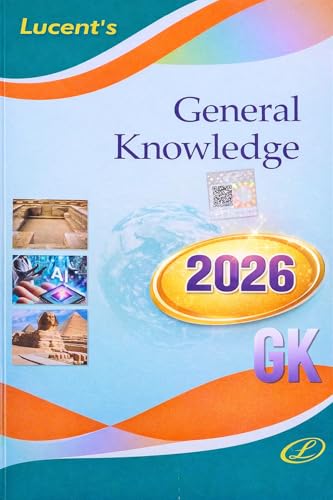
Lucent's General Knowledge 2026 — English (15th revised edition)
- About 460 pages, Lucent Publications, lead author Dr. Binay Karna
- Static facts only: history, geography, polity, economy, science, computer and the miscellaneous lists
- The current print; editions before 2020 predate the Jammu and Kashmir reorganisation
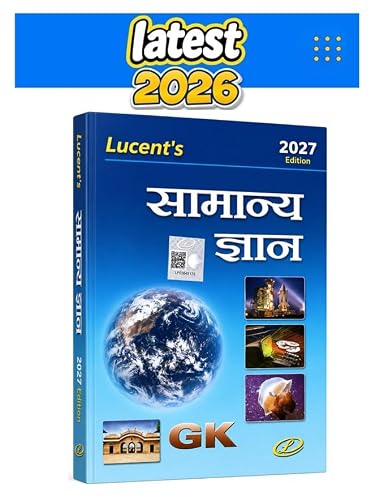
Lucent सामान्य ज्ञान 2026 — हिंदी (18वाँ संशोधित संस्करण)
- लगभग 474 पेज, Lucent Publications, 2026-27 संस्करण
- सिर्फ़ static तथ्य: इतिहास, भूगोल, राजव्यवस्था, अर्थव्यवस्था, विज्ञान, कंप्यूटर और विविध सूचियाँ
- हिंदी माध्यम में परीक्षा देने वालों के लिए यही संस्करण, अंग्रेज़ी वाला नहीं
If you write the exam in Hindi, buy the Hindi edition and not the English one plus a dictionary. The terminology in the paper is the terminology in the Hindi book, and half of what Lucent teaches is the exact word.
Who Lucent GK is for, and who should leave it on the shelf
For a state PSC prelims, SSC CGL, NDA or CDS, Lucent is a core book: those papers still set the direct factual question it was built for. For a UPSC-only aspirant it’s a supplement, and a small one.
Our Prelims question bank holds every GS Paper I question from 2013 to 2026, 1,403 of them, tagged by subject and topic. Four subjects carry 61% of the paper, and the questions inside them are statement questions: which of the statements given above is or are correct, with two or three statements to judge. A one-line fact book cannot answer a statement question on its own. It can confirm one fact inside it, which is useful, and it’s the whole of what it does.
Where it earns its keep is the exams that never left the direct question. Look at a recent paper for KPSC KAS, BPSC or WBCS and you will find the year a dam was commissioned, the state that grows the most of a crop, the author of a nineteenth-century novel. That is Lucent’s home ground, and the state guides on this site say so in their own book sections.
Read it as a core book if:
- A state PSC prelims is in your plan, this year or next.
- You are also writing SSC, railway or banking papers.
- NDA, CDS or CAPF is the target.
- Your mocks keep exposing plain factual gaps that no textbook chapter fixes.
Treat it as a supplement if:
- UPSC is the only exam you are preparing for.
- You already own Laxmikanth, Spectrum and Ramesh Singh and have actually read them.
- You are past Prelims and in the Mains-heavy months, when it has no job at all.
It isn’t wise to treat it as a syllabus, and it isn’t wise to be snobbish about it either. It’s a dictionary you keep on the desk. Nobody reads a dictionary cover to cover, and nobody serious works without one.
The section map, and what each section is worth
The book has eight sections and they are not equal. Four of them are worth reading properly; the rest are for looking things up. This is how they sort out for the two kinds of reader.
| Section | What it holds | UPSC Prelims | State PSC, SSC, defence |
|---|---|---|---|
| Indian History (ancient, medieval, modern) | Dynasty and date tables, movements, Congress sessions, viceroys | Read the modern-history tables after Spectrum; skip the rest | Core, all three parts |
| World History | Revolutions, the world wars, a handful of dates | Skip | Read once |
| Geography, world and Indian | Rivers, passes, soils, crops, states and capitals, highest and longest lists | Read the Indian tables with an atlas open | Core |
| Indian Polity and Constitution | Articles, schedules, amendments, constitutional bodies, Parliament facts | Read the tables after Laxmikanth; the best section in the book | Core |
| Indian Economy | Plans, institutions, banking terms, a few figures | Skim; the figures date fast | Read once, cross-check every figure |
| General Science | Physics, chemistry and biology facts: units, discoveries, diseases, vitamins | Read; these are the facts you will otherwise forget | Core |
| Computer | Basics, generations, abbreviations | Skip | Read once for SSC and banking |
| Miscellaneous | Sports, awards, important days, books and authors, first in India and the world, UN and other organisations, abbreviations | Skip | Core for SSC, useful for state PSC |
That leaves Polity, Geography, General Science and the modern-history tables as the reading list for a UPSC aspirant. Everything else you open only when a practice test proves you don’t know it.
How to read Lucent GK in 30 days, and never cover to cover
The method is lookup and recall, not reading. Thirty to forty minutes a day for four weeks, one section a week, and every session ends with the book closed.
- Week 1, Polity. After each chapter of Laxmikanth, open the matching Lucent table, close the book and write ten facts from memory. Check, then mark the misses in the margin.
- Week 2, Geography. Indian tables only, with an atlas open. Rivers, passes, soils, states and capitals. Trace a river on the map before you memorise anything about it.
- Week 3, General Science. Units, vitamins, diseases, discoveries. This is the section that pays most per minute for UPSC, because nobody revises it.
- Week 4, History tables, and a second pass through only the margin marks from the first three weeks.
The lookup rule runs alongside the plan. After every mock or PYQ set, every factual miss gets looked up in Lucent and written into your own one-page sheet. The 500 practice MCQs on this site are built for exactly that pass, and the topic-wise question bank tells you which sections deserve a third look.
If your recall after a table is under six out of ten, you are reading, not studying. Halve the table and try again. Nobody’s first pass on the Polity schedules is good, and that is the whole point of writing them down.
What to skip, and what to cross-check
Skip for UPSC: sports, awards and honours, books and authors, the first-in-India lists, abbreviations and the computer chapter. UPSC stopped asking that kind of one-mark question a decade ago, and the best GK books page on this site has said so for a while.
Cross-check everything that moves. Lucent is a compilation, not a source, and it lags the news by about a year:
- District and division counts, which change every year. Never quote one from the book in an answer.
- Latest amendment numbers, and every figure in the Economy section with a year attached.
- Office-holders, award winners and anything else dated after the print month.
The habit that fixes this is cheap: when a fact has a year attached, check it against the NCERT or the official site before it goes into your notes. Lucent is where you find the fact. It isn’t where you confirm it.
What Lucent GK will not do
It won’t explain anything. Every fact arrives without a why, so it cannot build the understanding a statement question tests. It won’t cover current affairs; that job belongs to the monthly compilations. It won’t help in Mains at all, and it won’t replace Laxmikanth for polity, Spectrum for modern history or Ramesh Singh for economy. Those three teach; Lucent lists. Read it after them, not instead of them.
Coaching shelves sell it as the first book. It’s the last one you open before a test.
Lucent GK vs Arihant GK vs Manorama Yearbook
Three books get bought for the same job, and only one of them is that job.
| Book | Pages and edition | What it is | Verdict |
|---|---|---|---|
| Lucent’s General Knowledge 2026 | About 460, 15th revised | A static-fact bank, the most compact of the three | The pick for static recall |
| Arihant General Knowledge 2027, Manohar Pandey | About 600, 2026 edition | The same job with more one-liners and MCQs | Only if you prefer its MCQ layout |
| Manorama Yearbook 2026 | About 1,012, annual | A reference and current-affairs volume | A different job: the yearbook, not a lookup book |
For a UPSC-only aspirant who wants one book that includes practice, the McGraw Hill General Studies Paper 1 Manual is a better spend than any of the three, because it drills statement questions instead of listing facts.
Is there a Lucent GK PDF?
No official one. Lucent Publications sells the paperback and its own app; it does not give the book away as a PDF. The files that circulate as a Lucent GK PDF are scans of older prints, and an older print is exactly the copy you don’t want, for the reasons above. The paperback is cheap and the current print is the only one worth learning from.
Lucent GK is a good book being used for the wrong job by most of the people who buy it. Buy the current edition, read Polity, Geography, General Science and the history tables the way described above, keep the rest for lookups and let the question bank tell you when a factual gap is worth closing. Do that and it earns its place on the desk. Read it cover to cover in month one and it costs you the month. Start with the Polity tables tonight, after whichever Laxmikanth chapter you are on.
Frequently Asked Questions
Is Lucent GK enough for UPSC Prelims?
No. Lucent confirms facts; it cannot answer the statement questions that make up most of GS Paper I. Use it as a lookup book alongside Laxmikanth, Spectrum, Ramesh Singh and the NCERTs, and open it after a mock to plug the factual gaps the test exposed.
Which edition of Lucent GK should I buy in 2026?
The current year’s print: the 15th revised English edition or the 18th revised Hindi edition, both for 2026. Do not buy or read a print older than 2020; it predates the Jammu and Kashmir reorganisation and its polity and geography tables are wrong.
Should I buy Lucent GK in Hindi or English?
In the language you will write the exam in. The Hindi edition, Lucent Samanya Gyan, uses the terminology the Hindi-medium paper uses, which is half of what the book teaches.
How long does it take to finish Lucent GK?
Do not finish it. Read the four sections that matter for your exam, one a week at thirty to forty minutes a day, and use the rest as a dictionary. Cover to cover is the reading plan that wastes a month.
Is Lucent GK useful for SSC CGL and state PSC exams?
Yes, and that is where it is a core book rather than a supplement. State PSC prelims, SSC, railway, banking and defence papers still ask the direct factual question Lucent is built for.
Does Lucent GK cover current affairs?
No. It is a static-fact book. Anything with a recent date, a current office-holder or a latest figure has to come from a monthly current-affairs compilation and should be cross-checked before it goes into your notes.
Lucent GK or Arihant GK, which is better?
They do the same job. Lucent is more compact and cheaper; Arihant carries more one-liners and MCQs. Pick one, read the four sections that matter and do not buy both.
Is there a free Lucent GK PDF?
There is no official PDF. The scans that circulate are old prints with facts the publisher has since corrected. The paperback is the current, cheap and accurate version.