
Disclosure: this guide contains Amazon affiliate links. As an Amazon Associate, Anantam IAS earns from qualifying purchases — at no extra cost to you.
Most aspirants buy a fat “general knowledge” book early, feel productive for a week, then quietly abandon it when they realize UPSC almost never asks the kind of static trivia these books are built for. The confusion is fair. The UPSC syllabus says “General Studies,” the bookshop shelf says “General Knowledge,” and the two are not the same thing.
So before you spend money, get the distinction straight. A GK book is a fact warehouse, useful for state PSC prelims, banking, SSC, and the occasional one-mark UPSC question. A GS manual is closer to what UPSC actually rewards: linked concepts, current relevance, and analysis. This guide tells you which of the four popular GK and GS books earn a place on your desk, exactly what to read inside each one, and where most of them are better used as a reference than a textbook.
How many GK books do you actually need for UPSC?
One, maybe two, and probably not the ones you think. For UPSC specifically, your core comes from NCERTs, standard subject books, and a current-affairs habit, not from a single GK compendium. A general knowledge book earns its place only as a fast-revision reference for static facts (dates, awards, important firsts, capitals, organizations) that show up as low-effort one-markers in Prelims and in interview small talk.
Here’s the honest split. If your foundation is shaky, fix that first with the right set of NCERTs before any GK manual, because facts without a framework don’t stick. If you’re targeting state PSCs alongside UPSC, a Lucent-style book pulls real weight there. And if you want a single “everything in one place” volume to flip through during downtime, a yearbook does that better than any GK guide. That’s the whole secret: match the book to the exam and the role, don’t buy on reputation alone.
Lucent General Knowledge: the one most people overrate for UPSC, underrate for PSCs
Buy Lucent’s General Knowledge if you’re writing state PSC, SSC, or railway exams, and treat it as a supplementary fact-bank if you’re a UPSC-only aspirant. At roughly 460 pages and very affordable, it’s the most efficient static-GK book in the market, which is exactly why it became a coaching-shelf default. The Lucent GK reading guide goes section by section on what to read and what to skip.
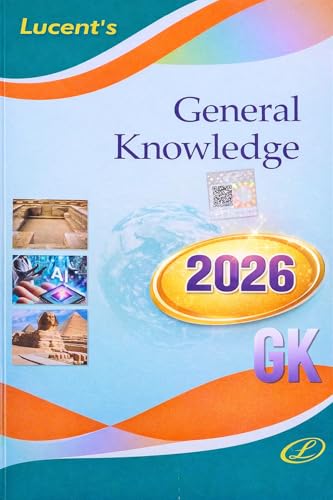
Lucent's General Knowledge 2026 (English)
- 460 pages, subject-wise static GK
- Compact factual recall in one volume
- Overrated for UPSC, genuinely useful for State PSCs
What to actually read inside it: the History, Geography, and Indian Polity sections are tight and well-organized, and the General Science chapters are surprisingly clean for quick revision of facts you’ll otherwise forget. The Polity tables (fundamental rights, constitutional bodies, important articles) are genuinely good for a five-minute memory refresh before a mock test. What to skip for UPSC: the “miscellaneous GK,” sports, and abbreviations sections. They’re built for exams that ask “who won X in year Y,” and UPSC has moved away from that style of one-mark question for a decade. Popular advice says “Lucent is a must-buy.” My version: it’s a must-buy if a state PSC is in your plan, and an optional revision aid if it isn’t. Don’t read it cover to cover; use it to plug specific factual gaps you keep getting wrong in practice tests.
One practical caution. Static-GK books like this lag the news cycle by a year, so anything time-sensitive (latest scheme figures, current office-holders, recent indices) should be cross-checked against your current-affairs notes rather than trusted blindly from the book. Use Lucent for the things that don’t change, the structural facts, and let your daily reading handle the rest.
Manorama Yearbook: the reference desk you’ll keep, even if you don’t “study” it
Keep the Manorama Yearbook on your desk as a reference, not as a syllabus book. At over 1,000 pages, edited under Mammen Mathew, it’s a genuine almanac: India and the world by the numbers, schemes, surveys, sports, science updates, and ready-reference data that’s annoying to hunt for online during revision.
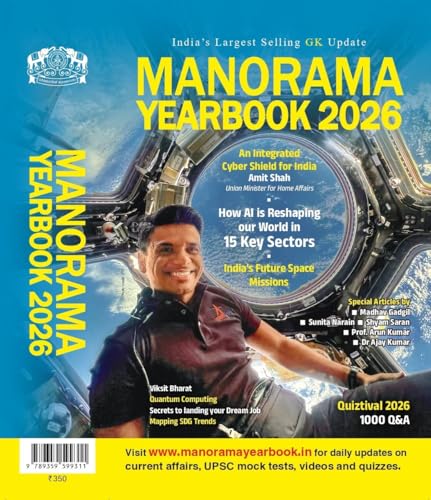
- 1,012 pages of reference data, indices and yearly events
- Country profiles, awards, sports and science round-ups
- Built as a lookup volume, not a read-through book
Use it this way. When you read about a government scheme, a census figure, or an index ranking in the news, the yearbook is where you verify the static spine of that story in one place. The country profiles, the “India at a glance” tables, and the schemes-and-policies digest are the parts that repay flipping through. What to ignore: don’t try to memorize it, and don’t mistake a yearbook for current affairs. It’s a snapshot, and a smart daily routine built around a structured preparation plan matters far more than re-reading an almanac. This is the one book on the list everyone underestimates, because its value shows up in revision, not in first reading.
McGraw Hill General Studies Paper 1 Manual: the closest thing to a UPSC-shaped GS book
Of the four, the McGraw Hill General Studies Paper 1 Manual is the one genuinely built for the UPSC Prelims pattern rather than generic GK. It’s a heavy book, close to 928 pages, and the priciest on this list, because it tries to cover the entire Paper 1 spread: History, Geography, Polity, Economy, Environment, Science and Tech, and current affairs framing.
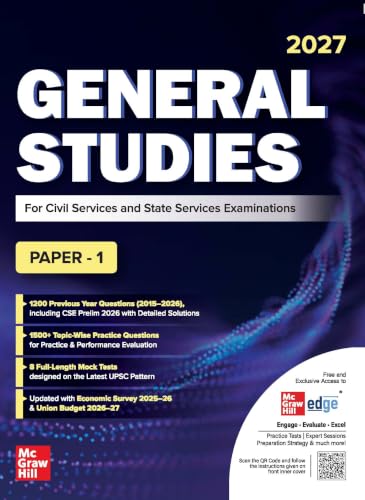
UPSC Prelims 2026–27: General Studies Paper 1 Manual — McGraw Hill
- 916 pages covering every Prelims GS subject
- 1,200+ practice questions built into the chapters
- Single-volume coverage when your shelf is already too full
Here’s the stance most coaching pages won’t take. A single GS manual is a map, not the territory. It’s excellent for a first quick pass over an unfamiliar subject and for last-month consolidation, but it cannot replace standard sources: Laxmikanth for Polity, NCERTs plus GC Leong for Geography, and a serious newspaper habit for current affairs. Read the manual to see how the whole syllabus connects and to revise fast under time pressure. Don’t read it as your only Polity or Economy text, because the depth UPSC tests in Mains lives in the subject books, not the manual. If you’re still building your core, anchor on the standard Prelims booklist first, then layer this manual on top for revision. Buy it if you want one consolidated GS reference and can afford it; skip it if your budget is tight and your subject books are already in place.
A word on the price, since it’s the heaviest single purchase here. Because the manual tries to do everything, no individual section goes as deep as the dedicated book for that subject, so you’re paying for breadth and convenience, not for best-in-class coverage of any one area. If you’ve already invested in Laxmikanth, the Economy and Environment subject books, and the NCERT set, the manual’s main job shrinks to revision and gap-filling. That’s a real use, but be honest about whether you need a 928-page consolidation when your subject shelf already covers the same ground in more depth.
Arihant General Knowledge: a leaner alternative to Lucent for fast static revision
Consider Arihant’s General Knowledge as an either-or with Lucent, not an addition to it. At around 600 pages and similarly affordable, the Arihant volume covers the same static-GK ground (History, Geography, Polity, Science, current-affairs snapshots) with frequent year-on-year updates, which is its main edge.
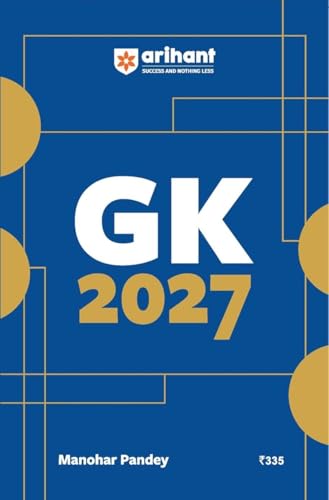
General Knowledge 2027 — Arihant (Manohar Pandey)
- 600 pages, leaner layout than Lucent
- Static GK organised for rapid revision passes
- Annual edition, so the currency sections stay fresh
The honest comparison: Lucent is leaner and the long-standing favorite for clarity, while Arihant tends to pack in more recent data and a wider miscellany. Pick one, not both. Owning two near-identical GK books is the kind of overlap that quietly eats study time, and that trips up almost everyone in their first year. For UPSC, use Arihant the same way you’d use Lucent, as a static-fact reference for low-hanging Prelims one-markers, never as a primary text. If you already own one of the two, you don’t need the other.
Best GK and GS books for UPSC compared
| Book | Author / Publisher | Best for / Notes |
|---|---|---|
| General Knowledge | Lucent | State PSC, SSC, railways. Compact static-GK reference. Optional add-on for UPSC-only aspirants. |
| Manorama Yearbook | Mammen Mathew (Malayala Manorama) | Desk-reference almanac. Schemes, data tables, country profiles. Verify static facts, don’t memorize. |
| General Studies Paper 1 Manual | McGraw Hill | Closest to UPSC Prelims pattern. Good for first pass and revision. Not a replacement for subject books. |
| General Knowledge | Arihant | Leaner Lucent alternative with frequent updates. Pick one of the two, not both. |
How to actually use this list: a reading order that respects your time
Don’t read these front to back. Use them in this order, and only the ones your exam profile needs.
- Fix the foundation first. NCERTs and core subject books come before any GK or GS manual. A manual on top of a weak base just hides the gaps.
- Pick one static-GK book. Choose either Lucent or Arihant based on which you find clearer. If a state PSC is in your plan, lean Lucent. Use it to revise facts, not to learn concepts.
- Add the GS manual for consolidation. Bring in the McGraw Hill GS Paper 1 Manual for a quick first pass on weak subjects and for last-month revision across the syllabus.
- Keep the yearbook as a lookup tool. Reach for the Manorama Yearbook when a news item needs its static backbone (scheme details, data, country facts), then put it back.
- Let current affairs do the heavy lifting. No GK book substitutes for daily news analysis, which is where most UPSC marks now live.
The honest bottom line
If you remember one thing: UPSC rewards linked understanding and current relevance, not static trivia, so these books are supporting cast, never the lead. A UPSC-only aspirant on a budget can get away with just one static-GK book plus the GS manual for revision, and skip the yearbook unless they like having a reference almanac. A multi-exam aspirant (UPSC plus a state PSC) gets the most from Lucent and the yearbook together. Buy the one that fits your exam and your role on the desk, give yourself permission to leave whole sections unread, and put the hours you save into NCERTs and current affairs. That’s where the real marks are.
Frequently Asked Questions
Which is the best GK book for UPSC?
There’s no single best GK book, because UPSC tests linked General Studies more than static general knowledge. For static-fact revision, Lucent or Arihant General Knowledge work well. For a UPSC-shaped overview, the McGraw Hill General Studies Paper 1 Manual is closest to the exam pattern. Treat all of them as references on top of NCERTs and subject books.
Is Lucent General Knowledge enough for UPSC?
No. Lucent is excellent for state PSCs, SSC, and railways, but UPSC Prelims and Mains demand conceptual depth and current relevance that a static-GK book doesn’t cover. Use Lucent to revise facts quickly, and rely on NCERTs, standard subject books, and daily current affairs for the bulk of your preparation.
Should I buy both Lucent and Arihant General Knowledge?
No, they overlap heavily. Both cover the same static-GK ground: History, Geography, Polity, Science, and current-affairs snapshots. Pick whichever you find clearer. Lucent is leaner and a long-standing favorite, while Arihant tends to pack in more recent data. Owning both just duplicates content and wastes study time.
Is the Manorama Yearbook useful for UPSC?
Yes, but as a reference, not a study book. The Manorama Yearbook is a 1,000-plus-page almanac of schemes, data tables, and country profiles. Use it to verify the static spine of news stories during revision. Don’t try to memorize it, and don’t mistake a yearbook for current affairs, which needs a daily newspaper habit.
Do GS manuals replace standard subject books for UPSC?
No. A GS manual like the McGraw Hill General Studies Paper 1 Manual is great for a quick first pass and last-month revision, but it can’t match the depth UPSC tests. You still need Laxmikanth for Polity, NCERTs and GC Leong for Geography, and a serious current-affairs routine. The manual is a map, not the territory.
How many GK books does a UPSC aspirant really need?
Usually one or two. A UPSC-only aspirant on a budget can manage with a single static-GK book plus a GS manual for revision. A multi-exam aspirant writing a state PSC alongside UPSC benefits from Lucent and the Manorama Yearbook together. Beyond that, more GK books add overlap, not value, since NCERTs and current affairs carry most of the marks.
Tell Google you want more of this.
Add Anantam IAS as a preferred sourceOne tap, and this site shows up more often in your own Top Stories, AI Overviews and AI Mode. Remove it any time.