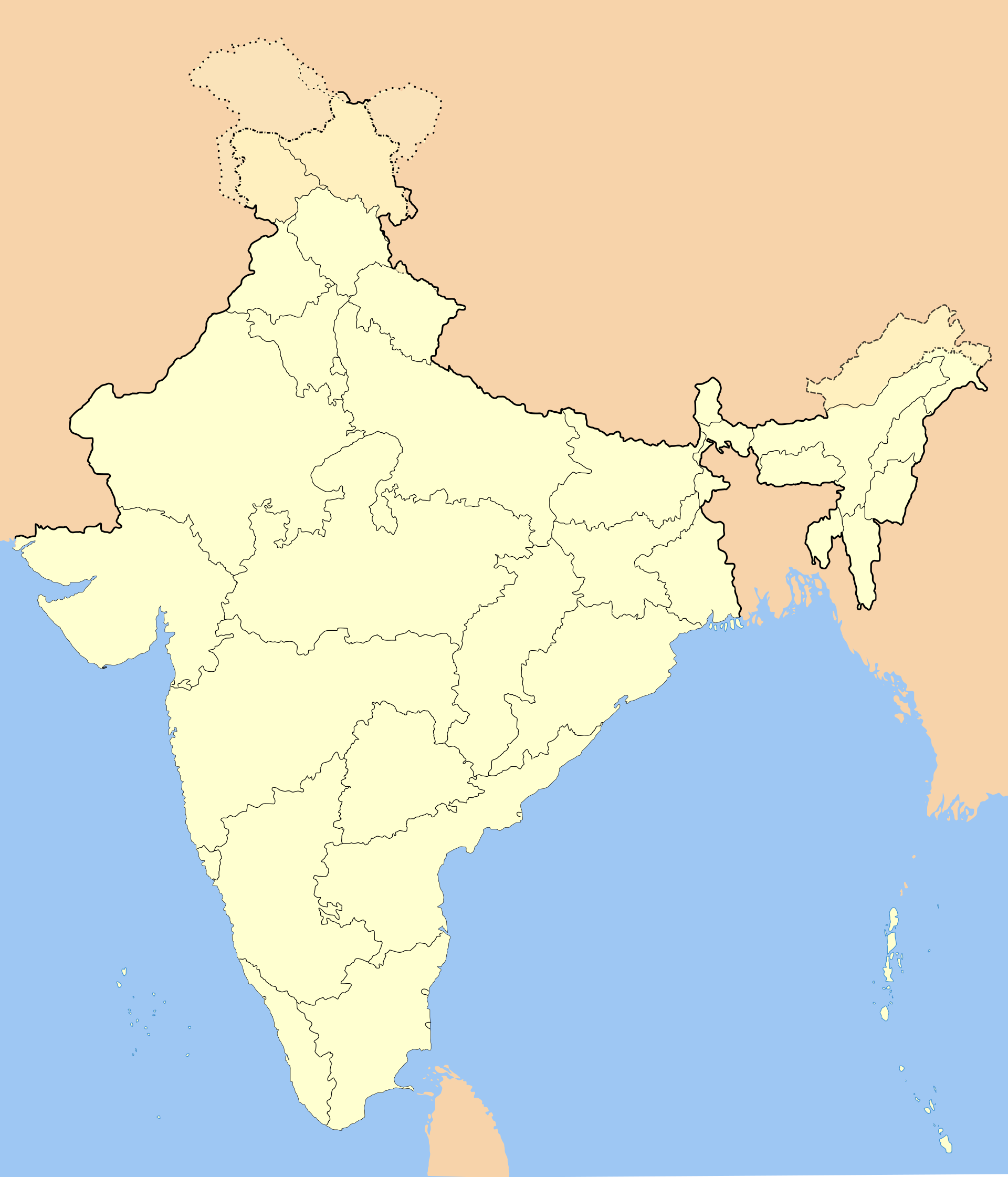
India has 28 states and 8 Union Territories in 2026. That count has remained unchanged since the Union Territories of Dadra and Nagar Haveli and Daman and Diu merged on 26 January 2020.
The current structure followed the 2019 reorganisation of the former state of Jammu and Kashmir into two Union Territories: Jammu and Kashmir, and Ladakh. Telangana, formed on 2 June 2014, remains India’s newest state.
The complete lists below include capitals and formation history. Cross-check names and administrative status on the Government of India’s States and Union Territories directory.
Quick Facts at a Glance
| Attribute | Value |
|---|---|
| Total states in India (2026) | 28 |
| Total Union Territories | 8 |
| Most recent state formed | Telangana (2 June 2014) |
| Most recent reorganisation | Jammu and Kashmir, 31 October 2019 |
| Largest state by area | Rajasthan (3,42,239 sq km) |
| Largest state by population | Uttar Pradesh (Census 2011: 19.98 crore) |
| Smallest state by area | Goa (3,702 sq km) |
| Smallest state by population | Sikkim (Census 2011: 6.1 lakh) |
| Largest UT by area | Ladakh (59,146 sq km) |
| Smallest UT by area | Lakshadweep (32 sq km) |
| Governing constitutional provisions | Articles 1 to 4 |
| Relevant law | States Reorganisation Act, 1956 |
Background and Historical Context
At independence on 15 August 1947, British India comprised 17 provinces and more than 560 princely states. The States Department under Sardar Vallabhbhai Patel and V. P. Menon secured the accession of princely states through the Instrument of Accession, with Junagadh, Hyderabad and Jammu and Kashmir requiring special handling. Upon commencement of the Constitution on 26 January 1950, states were classified into four categories: Part A (former governors’ provinces, 9 states), Part B (former princely states with rajpramukhs, 9 states), Part C (chief commissioners’ provinces and some princely states, 10 units) and Part D (Andaman and Nicobar Islands).
The demand for linguistic reorganisation intensified in the early 1950s. The death of Potti Sriramulu after a 58-day hunger strike in December 1952 led to the carving out of Andhra State in 1953 from Madras on a linguistic basis. This triggered the appointment of the States Reorganisation Commission in December 1953, chaired by Justice Fazl Ali with K. M. Panikkar and H. N. Kunzru as members. The Commission’s 1955 report accepted language as the primary but not sole basis for state formation and recommended the abolition of the Part A, B, C, D classification.
The States Reorganisation Act 1956, together with the Seventh Constitutional Amendment, abolished the fourfold classification and created 14 states and 6 Union Territories. This architecture has expanded over seven decades through the creation of Maharashtra and Gujarat in 1960, Nagaland in 1963, Haryana in 1966, Himachal Pradesh upgraded to statehood in 1971, the North Eastern states through the North-Eastern Areas (Reorganisation) Act 1971 effective 1972 (Manipur, Tripura, Meghalaya), Sikkim by the 36th Amendment in 1975, Mizoram and Arunachal Pradesh in 1987, Goa in 1987, Chhattisgarh, Uttarakhand and Jharkhand in 2000, Telangana in 2014 and the Jammu and Kashmir Reorganisation in 2019.
Key Features and Constitutional Framework
Article 1 and the Union of States
Article 1 of the Constitution declares India, that is Bharat, as a Union of States. The phrasing is deliberate. Unlike the United States or Australia, Indian states did not come together by voluntary compact, and they have no right of secession. The federal structure is a union with strong centripetal tendencies, a feature constitutional historians trace back to the Drafting Committee’s desire to contain partition-era centrifugal pressures.
Article 2 and Article 3
Article 2 empowers Parliament to admit into the Union or establish new states on such terms as it thinks fit. Article 3 governs the formation of new states and alteration of areas, boundaries or names of existing states. A bill under Article 3 requires Presidential recommendation before introduction and a reference to the affected state legislature for its views, though those views are not binding. This procedure was followed for the Jammu and Kashmir reorganisation.
Full list of 28 states
The 28 states are Andhra Pradesh, Arunachal Pradesh, Assam, Bihar, Chhattisgarh, Goa, Gujarat, Haryana, Himachal Pradesh, Jharkhand, Karnataka, Kerala, Madhya Pradesh, Maharashtra, Manipur, Meghalaya, Mizoram, Nagaland, Odisha, Punjab, Rajasthan, Sikkim, Tamil Nadu, Telangana, Tripura, Uttar Pradesh, Uttarakhand and West Bengal.
Full list of 8 Union Territories
The 8 UTs are Andaman and Nicobar Islands, Chandigarh, Dadra and Nagar Haveli and Daman and Diu, Delhi (National Capital Territory), Jammu and Kashmir, Ladakh, Lakshadweep and Puducherry.
Special category of UTs with legislature
Three UTs have their own legislatures: Delhi (NCT by the 69th Amendment, 1991), Puducherry (by the Union Territories Act 1963) and Jammu and Kashmir (by the Jammu and Kashmir Reorganisation Act 2019). The rest are administered directly by the Centre through Administrators or Lieutenant Governors.
Special provisions under Articles 370 (abrogated) and 371
Article 370 granted special status to Jammu and Kashmir. It was rendered inoperative by a Presidential Order on 5 August 2019 and by the Jammu and Kashmir Reorganisation Act passed on 9 August 2019. Article 371 and its sub-clauses A to J provide varying special provisions for states including Nagaland (371A), Assam (371B), Manipur (371C), Andhra Pradesh and Telangana (371D), Sikkim (371F), Mizoram (371G), Arunachal Pradesh (371H) and Goa (371I).
Significance for UPSC and General Knowledge
- Prelims routinely tests the exact count of states and UTs, the most recent reorganisation, and the constitutional articles governing state formation.
- Mains GS2 questions on Centre-state relations, federalism, Article 3 procedure and the 2019 J&K reorganisation draw directly on this material.
- GS1 essay and mains questions on linguistic reorganisation and the Fazl Ali Commission require familiarity with the 1953-1956 sequence.
- Current affairs on statehood demands (Gorkhaland, Bodoland, Vidarbha) frame policy debates.
- Interview questions often probe the federal quasi-federal debate and the strong-Centre logic of Articles 2 and 3.
- Understanding Article 371 provisions is important for GS2 answers on tribal autonomy and integration of the northeast.
Detailed Analysis: Formation History Timeline
The 1956 States Reorganisation Act was a watershed. It created Andhra Pradesh (by merging Telugu-speaking areas of Hyderabad with Andhra), Karnataka (then Mysore), Kerala, Madhya Pradesh, Madras (later Tamil Nadu), Maharashtra (though Bombay state was split later), Orissa, Punjab, Rajasthan, Uttar Pradesh, West Bengal, Bihar, Assam and Jammu and Kashmir. Five years later, agitation in Bombay led the Bombay Reorganisation Act 1960 to create Maharashtra and Gujarat on linguistic lines.
Nagaland was carved out of Assam on 1 December 1963 following the Naga Peoples’ Convention and the sixteen-point agreement. Haryana emerged from the Punjab Reorganisation Act 1966 on 1 November 1966, partitioning Punjab on linguistic lines. Chandigarh became a UT and served as joint capital of Punjab and Haryana. Himachal Pradesh, a UT since 1956, attained statehood on 25 January 1971 through the State of Himachal Pradesh Act 1970.
The North-Eastern Areas (Reorganisation) Act 1971, effective 21 January 1972, created Manipur and Tripura as states (elevated from UTs) and Meghalaya as a full state (earlier an autonomous state within Assam since 1970). Arunachal Pradesh was carved out as a UT in 1972 and became a state in 1987. Mizoram, an autonomous district of Assam, was made a UT in 1972 and a state in 1987 under the Mizo Accord. Sikkim merged with India as the 22nd state by the 36th Constitutional Amendment 1975 after a referendum and constitutional reform.
Goa, Daman and Diu were liberated from Portuguese rule through Operation Vijay in December 1961 and became a UT. The Goa, Daman and Diu Reorganisation Act 1987 created Goa as a state on 30 May 1987, with Daman and Diu continuing as UTs. In 2000, three new states emerged through separate Acts: Chhattisgarh from Madhya Pradesh on 1 November 2000, Uttarakhand from Uttar Pradesh on 9 November 2000, and Jharkhand from Bihar on 15 November 2000. Telangana was created from Andhra Pradesh on 2 June 2014 through the Andhra Pradesh Reorganisation Act 2014, a process that included contested disputes over Hyderabad, river water sharing and asset division.
The most recent reorganisation on 31 October 2019 bifurcated Jammu and Kashmir state into the UTs of Jammu and Kashmir (with legislature) and Ladakh (without legislature). On 26 January 2020, Daman and Diu merged with Dadra and Nagar Haveli to form a single UT, reducing the UT count from 9 to 8.
Comparative Perspective
India’s federal design can be compared with other large federations to highlight what is distinctive.
| Country | Sub-units | Basis | Power to alter boundaries |
|---|---|---|---|
| India | 28 states + 8 UTs | Language, administration | Parliament (Article 3) |
| USA | 50 states | Territorial, historical | State consent required |
| Australia | 6 states + 10 territories | Colonial boundaries | State consent required |
| Germany | 16 Lander | Historical regions | Lander consent required |
| Brazil | 26 states + 1 federal district | Colonial provinces | Complex constitutional process |
| Nigeria | 36 states + FCT | Ethnic and administrative | Constitutional amendment |
India stands out for the comparative ease with which the Centre can redraw internal boundaries. Article 3 requires only Presidential recommendation and parliamentary majority, not state consent. This is why political scientists often describe India as federal in form but quasi-federal or unitary-biased in practice, drawing on Granville Austin’s characterisation.
Controversies and Debates
Statehood movements continue to press for new units. The Gorkhaland demand in West Bengal seeks a state carved from Darjeeling and surrounding hill areas. The Bodoland movement in Assam, partially addressed by the Bodoland Territorial Council and the 2020 Bodoland Territorial Region accord, still has political support for full statehood. Vidarbha in Maharashtra, Harit Pradesh and Purvanchal in Uttar Pradesh, and Saurashtra in Gujarat surface periodically in state assemblies and Lok Sabha debates.
The 2019 bifurcation of Jammu and Kashmir has been the most litigated reorganisation in Indian history. The Supreme Court’s Constitution Bench judgment in In Re: Article 370 of the Constitution, delivered on 11 December 2023, upheld the abrogation but directed that statehood be restored to Jammu and Kashmir at the earliest and that elections to the Legislative Assembly be held by 30 September 2024. Elections were held in October 2024. As of early 2026, full statehood restoration had not yet occurred, and this remains a live constitutional and political question.
A second debate concerns the asymmetric character of Indian federalism. Article 371 provisions, the Sixth Schedule for tribal areas of the northeast, and the special status of Delhi under Article 239AA create varied tiers of autonomy. Critics argue this creates administrative complexity; defenders argue it reflects India’s diversity and allows tailored solutions for historically sensitive regions.
Prelims Pointers
- India has 28 states and 8 Union Territories as of 2026.
- Telangana is the 29th and most recently created state, formed on 2 June 2014.
- Jammu and Kashmir was bifurcated into two UTs on 31 October 2019.
- Article 1 declares India a Union of States.
- Article 3 governs creation and alteration of states by Parliament.
- The States Reorganisation Act 1956 created 14 states and 6 UTs.
- The Fazl Ali Commission submitted its report in 1955.
- Delhi, Puducherry and Jammu and Kashmir are the three UTs with legislatures.
- Ladakh is the largest UT by area at 59,146 sq km.
- Lakshadweep is the smallest UT by area at 32 sq km.
- Rajasthan is the largest state by area at 3,42,239 sq km.
- The 36th Constitutional Amendment 1975 made Sikkim India’s 22nd state.
Mains Practice Questions
- “India’s federal design makes it easier for the Centre to redraw internal boundaries than to respect them.” Examine this statement with reference to Articles 2, 3 and the Jammu and Kashmir Reorganisation Act 2019. (GS2, 15 marks, 250 words)
- Lay out the constitutional architecture under Articles 2 and 3, contrasting with US or Australian federations.
- Apply to the 2019 J&K case, including the In Re: Article 370 judgment.
- Balance the argument with safeguards such as Article 371 and the Sixth Schedule.
- Trace the linguistic reorganisation of Indian states from 1953 to 2014. To what extent has it served national integration? (GS1, 10 marks, 150 words)
- Begin with Potti Sriramulu, Andhra State 1953 and the Fazl Ali Commission.
- Move through the 1956 Act and subsequent creations up to Telangana 2014.
- Assess pros (democratic legitimacy, administrative efficiency) and cons (identity politics, ongoing statehood demands).
Conclusion
India’s map is not finished. The count of 28 states and 8 Union Territories is an accurate snapshot in 2026, but the processes that produced it are live. Statehood demands continue, the Supreme Court has directed the restoration of Jammu and Kashmir’s statehood, and asymmetric arrangements under Article 371 are periodically renegotiated. A map committed to memory today should not substitute for an understanding of the constitutional machinery and political history that keeps redrawing it.
For a civil servant, the practical takeaway is that administrative boundaries and political identities do not always coincide, and that the Constitution provides tools (Articles 2 and 3) strong enough to respond to both demands and contingencies. The ease with which Parliament can reorganise states is both a strength of Indian federalism and a reason to exercise that power with procedural care.
Frequently Asked Questions
What is the total number of states in India in 2026?
India has 28 states and 8 Union Territories as of 2026. The state count reached 29 when Telangana was formed on 2 June 2014. It dropped to 28 on 31 October 2019 when Jammu and Kashmir state was bifurcated into two Union Territories under the Jammu and Kashmir Reorganisation Act 2019. The UT count became 8 after Daman and Diu merged with Dadra and Nagar Haveli on 26 January 2020.
Why is the total states in India an important UPSC topic?
Prelims routinely tests the exact count, most recent reorganisation and constitutional articles governing state formation. Mains GS2 questions on Centre-state relations, federalism and Article 3 procedure depend on this. GS1 links to linguistic reorganisation and the Fazl Ali Commission. Interview panels probe federalism debates. Together this makes states and UTs one of the highest-yield polity topics in the syllabus.
How is India related to the concept of a Union of States?
Article 1 of the Indian Constitution declares ‘India, that is Bharat, shall be a Union of States.’ This phrasing was deliberate. Unlike the United States or Australia, Indian states did not come together by voluntary compact and have no right of secession. Articles 2 and 3 empower Parliament to admit, form or reorganise states without requiring state consent, reflecting India’s strong-Centre federal design.
Which was the most recent state formed in India?
Telangana, carved out of Andhra Pradesh, became India’s 29th state on 2 June 2014 through the Andhra Pradesh Reorganisation Act 2014. Hyderabad was designated as the joint capital for ten years. The state count subsequently reduced to 28 after Jammu and Kashmir was reorganised into two Union Territories in 2019. No new state has been formed since Telangana.
What was the States Reorganisation Act 1956?
The States Reorganisation Act 1956, enacted alongside the Seventh Constitutional Amendment, abolished the Part A, B, C, D classification of states and reorganised India into 14 states and 6 Union Territories primarily on linguistic lines. It followed the recommendations of the Fazl Ali Commission appointed in December 1953. The Act is the foundational statute of India’s modern territorial structure.
How many Union Territories does India have?
India has 8 Union Territories: Andaman and Nicobar Islands, Chandigarh, Dadra and Nagar Haveli and Daman and Diu, Delhi (NCT), Jammu and Kashmir, Ladakh, Lakshadweep and Puducherry. Three of these, Delhi, Puducherry and Jammu and Kashmir, have their own legislatures. The rest are administered directly by the Centre through an Administrator or Lieutenant Governor.
Which states were formed in 2000?
Three states were formed in the year 2000. Chhattisgarh was carved from Madhya Pradesh on 1 November 2000. Uttarakhand (initially Uttaranchal) was separated from Uttar Pradesh on 9 November 2000. Jharkhand was carved from Bihar on 15 November 2000. These were driven by distinct sub-regional identity, developmental neglect and tribal demographic considerations rather than linguistic reorganisation.
What changed for Jammu and Kashmir in 2019?
On 5 August 2019, a Presidential Order rendered Article 370 inoperative. On 9 August 2019, the Jammu and Kashmir Reorganisation Act was passed, bifurcating the state into two Union Territories effective 31 October 2019. Jammu and Kashmir UT has a legislature; Ladakh does not. The Supreme Court upheld the abrogation on 11 December 2023 and directed statehood restoration and assembly elections by September 2024.
Tell Google you want more of this.
Add Anantam IAS as a preferred sourceOne tap, and this site shows up more often in your own Top Stories, AI Overviews and AI Mode. Remove it any time.