Daily Digest
UPSC · Civil Services Examination
Current Affairs · Saturday, 20 September 2025
Current affairs curated and edited by Anantam IAS faculty — pulled from The Hindu, PIB, IDSA, Foreign Affairs and the ministries. Read, annotate, revise.
Old Rajinder Nagar · Delhi 110005 · anantamias.com
Indus water treaty

Context:
Indus Water treaty has reached its 65th anniversary, coinciding with the recent devastating floods in Punjab region of India and Pakistan. This has made the political analyst, and scholars call for renegotiation of the treaty by keeping climate change and its impact on river Indus and its tributaries as Centre point of negotiation.
UPSC Relevance:
International relations and important treaties with which India is associated.
PYQ:
Q. With reference to the Indus river system, of the following four rivers, three of them pour into one of them which joins the Indus directly. Among the following, which one is such a river that joins the Indus direct? (2021)
(a) Chenab
(b) Jhelum
(c) Ravi
(d) Sutlej
Mains:
Q. The interlinking of rivers can provide viable solutions to the multi-dimensional inter-related problems of droughts, floods, and interrupted navigation. Critically examine. (2020)
About Indus river system:
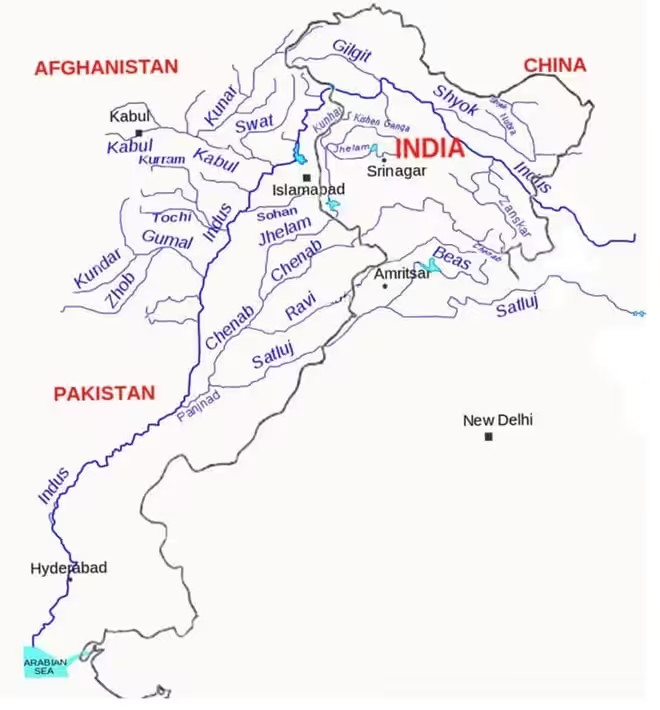
Source:
- The Indus (In Tibetan called Sengge Chu/‘Lion River’), a major river in South Asia, originates in Tibet near Mansarovar Lake in the Trans-Himalaya.
- The river flows through Tibet, India and Pakistan and about 200 million people live in the area of its drainage basin.
Course and Major Tributaries:
- It enters India through Ladakh and flows through Jammu and Kashmir before reaching Pakistan’s Gilgit-Baltistan region.
- The major left-bank tributaries of the Indus River are the Zaskar, Suru, Soan, Jhelum, Chenab, Ravi, Beas, Sutlej, and Panjnad rivers.
- The major right-bank tributaries are Shyok, Gilgit, Hunza, Swat, Kunnar, Kurram, Gomal, and Kabul rivers.
- The Indus River empties into the Arabian sea near the city of Karachi in southern Pakistan.
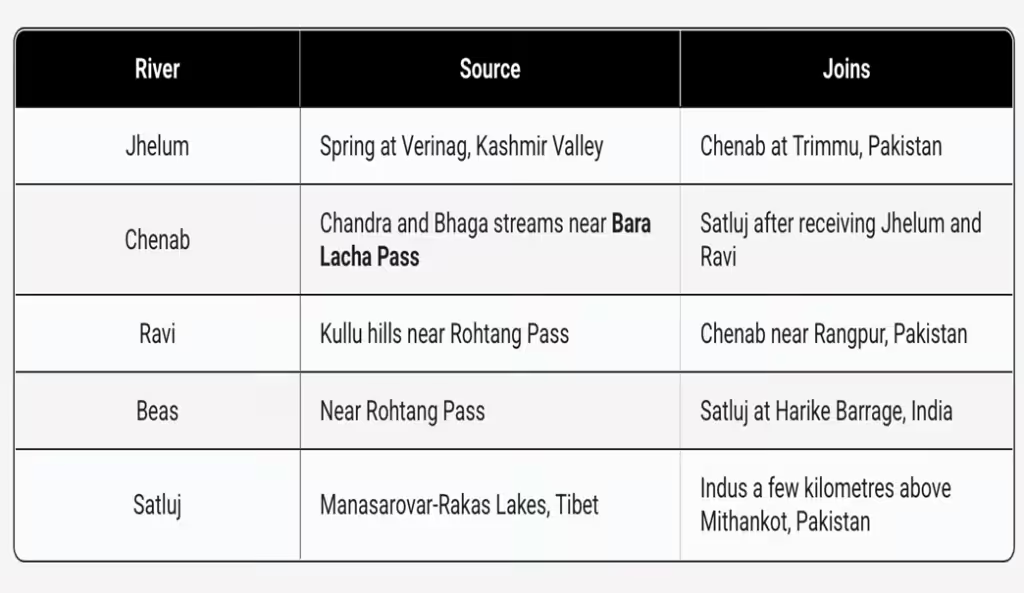
About Indus Water treaty:
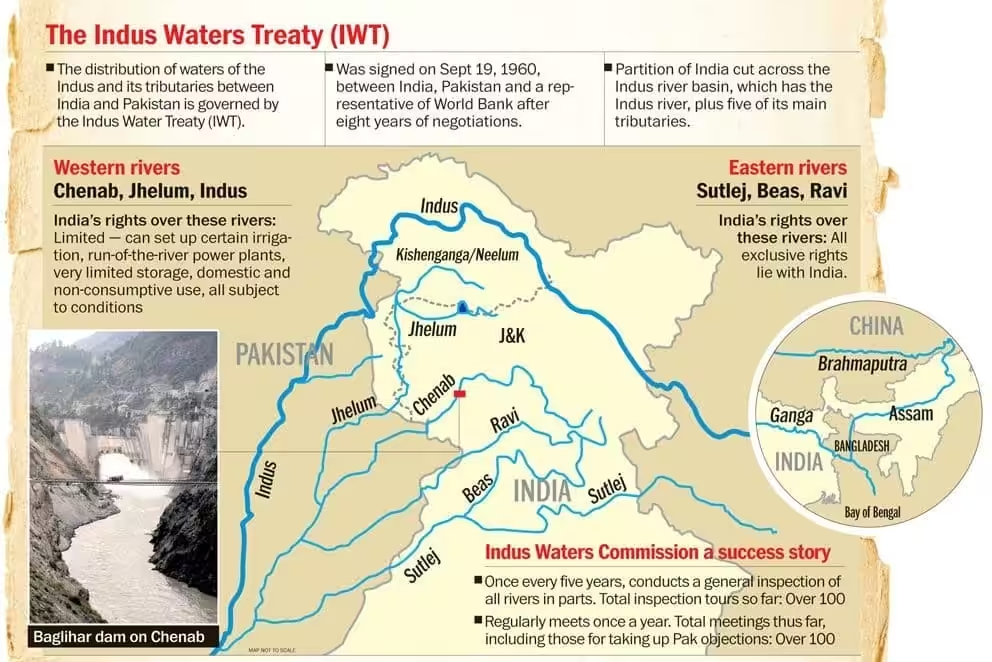
Key Provisions of Indus Water Treaty:
Water Sharing
- IWT prescribed how water from the six rivers would be shared between India and Pakistan.
- It allocated the three western rivers (i.e., Indus, Chenab, and Jhelum) to Pakistan for unrestricted use, barring certain non-consumptive, agricultural and domestic uses by India.
- It allocated the three eastern rivers, (i.e., Ravi, Beas and Sutlej) to India for unrestricted usage.
- This meant that 80% of the share of water went to Pakistan, leaving 20% of water for use by India.
Annexure C and D
- Though Pakistan has rights over waters of Jhelum, Chenab and Indus, but:
- Annexure C of the IWT allows India certain agricultural uses
- Annexure D allows India to build ‘run of the river’ hydropower projects (projects not requiring live storage of water).
- However IWT also provides,
- Design specifications that India has to follow while developing HEPs.
- India has to share the project design or alterations made to it with Pakistan.
- Pakistan can raise objections, if any, within three months of receipt.
- IWT also allowed India to have a minimum storage level on the western rivers for conservation and flood storage purposes.
Permanent Indus Commission
- The treaty also required that both countries should establish a Permanent Indus Commission constituted by permanent commissioners of both sides.
- It functions as first stop for resolution of conflicts.
- It should meet at least once a year.
Dispute Resolution Mechanism
- The IWT also provides a three step graded dispute resolution mechanism.
- First Step: Disputes can be resolved at Permanent Commission, or at inter-government level.
- Second Step: For unresolved disputes, either side can approach the World Bank to appoint a Neutral Expert (NE) to come to a decision.
- Third Step: If either party is not satisfied with NE’s decision or in case of disputes” in the interpretation of the treaty, matters can be referred to a Court of Arbitration (CoA).
India’s Stand on Dispute Redressal
- India has been abstaining from participating in the proceedings at the Permanent CoA.
- But India has been participating in the Neutral Expert’s proceedings.
Reason:
- India alleges that Pakistan has violated IWT’s dispute resolution mechanism.
- India says that in 2015, Pakistan asked for the appointment of a Neutral Expert. But later in 2016, Pakistan changed its request and requested that the CoA should examine the issue.
- According to India, such parallel considerations on the same issues were not covered under any provision of the IWT.
- On July, 2023, the Permanent CoA, rejected India’s objections and confirmed its competence to resolve the dispute.
- But India has been still maintaining that it will not join the Pakistan-initiated proceedings at the CoA as the dispute is being already examined by a Neutral Expert under the framework of the IWT.
Indus Water Treaty: A Success
- Diplomatic Success: Rare example of successful transboundary water cooperation despite conflicts.
- India’s Concession: Grants 80% water to Pakistan, shows India’s cooperative upper riparian state role.
- Regional Stability: Maintained even amid heightened tensions (2001, 2008 and Uri/Pulwama incidents).
Reasons Behind India’s Demand for Treaty Modification
- Demographic and Environmental Pressures: Rapid population growth and climate change have intensified water needs, prompting India to seek treaty updates for sustainability.
- Clean Energy Goals: India’s focus on hydropower aligns with its climate and emission targets, highlighting the need for greater flexibility in river usage.
- Cross-Border Tensions: Ongoing terrorism in Jammu & Kashmir hampers cooperation and impacts India’s ability to utilise its river resources fully.
- Developmental Projects: India’s compliant “run-of-the-river” hydropower projects (ex. Ratle HEP) face Pakistani objections, exposing treaty limitations in addressing modern developmental needs.
- Article XII (3) permits treaty modification via mutual agreement, and India’s recent notification underlines the need for formal revision.
Disputes and Legal Proceedings
- Hydropower Project (HEP) Disputes: Kishanganga on Jhelum and Rattle on Chenab.
- Pakistan’s Action: Sought arbitration via the Permanent Court of Arbitration (PCA) after initially suggesting a Neutral Expert.
- India’s Position: Opposed PCA’s jurisdiction under the IWT, opting not to participate in proceedings.
- World Bank Intervention: Suspended dual processes (Neutral Expert and PCA) to encourage bilateral talks. Later, in 2022, both were reactivated at Pakistan’s request, despite India’s objections.
Other Objections Raised by Pakistan Under IWT
- Salal Dam Project: Built on the Chenab River in the Reasi district, J&K.
- Baglihar Hydropower project: Built on the Chenab River in the Doda district, J&K.
- Pakal Dul Project: Built on the Chenab River in the Kishtwar district, J&K.
- Lower Kalnai Project: Built on Kalnai River (tributary of Chenab) in Kishtwar and Doda districts, J&K
- Kiru Project: Built on the Chenab River in the Kishtwar district, J&K.
Divergent Perspectives and Challenges
- Riparian Interests: India (Upper Riparian) prioritises resource optimisation for development, while Pakistan (Lower Riparian) emphasises uninterrupted downstream flow for its water security.
- Environmental Gaps: The treaty lacks provisions to address modern climate challenges, such as changing glacial reserves and affecting consistent river flows.
Pakistan’s concerns
- Water Scarcity Concerns: Fears potential reduction in downstream flow due to India’s projects.
- Flow Maintenance: Emphasizes uninterrupted downstream flow maintenance, as upheld by the 2013 PCA ruling.
- “Water Terrorism”: Alleges India manipulates water resources politically, despite IWT compliance.
Proposed Modifications and Suggestions
- Equitable and Reasonable Utilisation (ERU): Following the 1997 UN Watercourses Convention, ERU principles could address climate change and water scarcity issues.
- Transboundary Environmental Impact Assessment (EIA): EIA protocols could ensure due diligence for HEP affecting shared waters, following the 2010 International Court of Justice precedent.
- Potential for Joint Projects: Article VII.1c of IWT allows collaborative engineering projects, potentially enabling joint responses to river variability.
- Enhanced Cooperative Mechanisms: Implementing MoUs and cooperative frameworks within IWT’s structure could improve dispute resolution and collaborative water management.
Significance of the Revision
- India’s call for treaty revision reflects evolving regional needs and could address both nations’ contemporary environmental, security, and developmental priorities.
- Revisiting it allows South Asia to promote sustainable resource-sharing and bolster regional stability.
Implications of Unilateral Withdrawal by India
- Regional Instability: Increased risks of conflict in a nuclear-armed region.
- Impact on Third-Party States: Potential spillover effects on China and Afghanistan.
- India’s Global Standing: Unilateral treaty withdrawal may affect India’s international reputation.
Path to a Sustainable and Cooperative Indus Water Treaty
- Incorporate Environmental Flows (EF): Align with global norms (e.g., Brisbane Declaration) to ensure the ecological health of rivers, supporting both biodiversity and sustainable water use.
- Climate Adaptation Provisions: Integrate clauses for adaptability to climate change, accounting for unpredictable water flow shifts and enhancing resilience to extreme weather impacts on water resources.
- Global Treaty Standards: Update the treaty to align with international frameworks, such as the 1997 UN Watercourses Convention, to address modern water-sharing and environmental standards.
- Optimizing India’s Allocation: Enable India to fully utilise its allocation rights over Western rivers, supporting development needs in Punjab and Rajasthan.
- Diplomatic Leverage: India could consider suspending PIC meetings to prompt serious re-negotiations
Source: https://anantamias.com/current-affairs/indus-water-treaty/
Groundnut


Context:
This news relates to the dispute between India and Indonesia over groundnut exports, after Indonesia suspended imports citing the presence of aflatoxins.
UPSC Relevance:
UPSC CSE in prelims examination has focused on different boards like Tea Board, Coffee Board and Turmeric Board etc. A case in point is a following PYQ.
UPSC Prelims PYQ 2022
Consider the following States:
- Andhra Pradesh
- Kerala
- Himachal Pradesh
- Tripura
How many of the above are generally known as tea-producing States?
(a) Only one State
(b) Only two States
(c) Only three States
(d) All four States
Issue:
- Indonesia suspended the import of Indian groundnuts. The reason cited was contamination by aflatoxins in the shipments.
What are Aflatoxins?
They are genotoxic and carcinogenic, posing serious risks to human and animal health. Aflatoxins are toxic moulds produced by fungi Aspergillus flavus and Aspergillus parasiticus. They thrive in warm and humid conditions.
About Groundnut:

- Peanut or groundnut (Arachis hypogaea) is a species in the legume or “bean” – (Fabaceae) family.
- The peanut was probably first domesticated and cultivated in the valleys of Paraguay.
- India is the second-largest producer of groundnuts in the world.
- Indian groundnuts are available in different varieties: Bold or Runner, Java or Spanish and Red Natal.
- Groundnut is the major oil seed crop in India, and it plays a major role in bridging the vegetable oil deficit in the country.
- Groundnuts in India are available throughout the year due to a two-crop cycle harvested in March and October.
Areas of Cultivation:
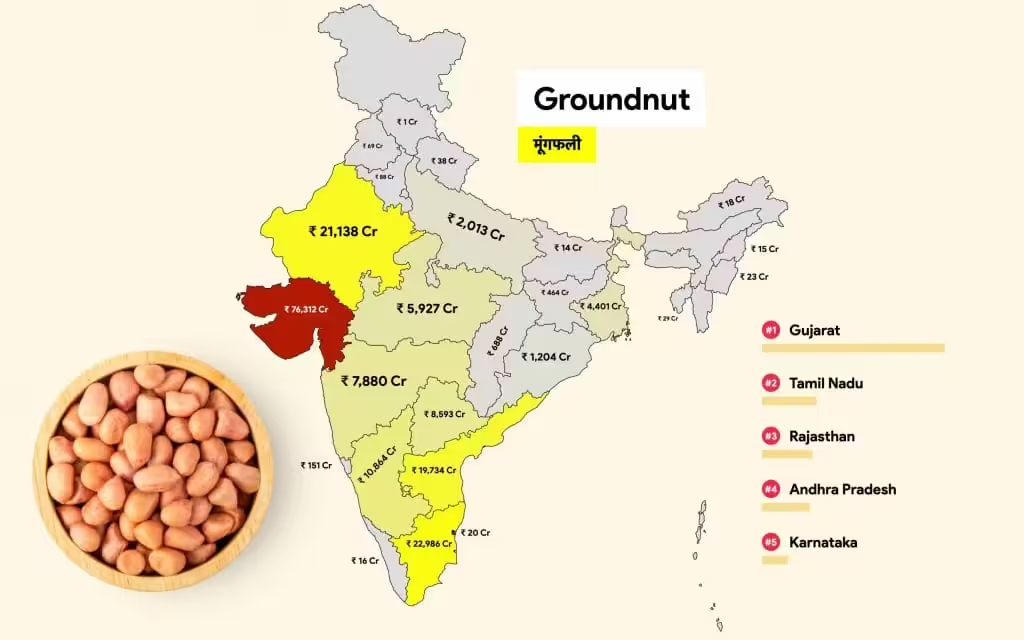
- Gujarat
- Andhra Pradesh,
- Tamil Nadu
- Karnataka
- Maharashtra
- Rajasthan
- Madhya Pradesh
- Orissa
- Uttar Pradesh
Major Exporting Destinations (2023-2024):Indonesia, Vietnam, Philippines, Malaysia and Thailand.
Growing Conditions:
- Warm and moist conditions are favorable for healthy growth.
- Peanut crops will not tolerate long periods of frost, severe droughts, or stagnated water.
- Peanuts require a relatively high temperature and a frost-free period of about 160 days.
- Anything above 35°C inhibits growth, and below 15°C growth stops entirely.
- Although peanuts are typically grown in areas with 600-1,500 mm of rainfall, 1,250 mm is optimal.
- Peanuts grow best in well-drained, yellow-red or red-coloured, fertile, sandy-to-loam soils with a pH range of 5.5 to 7.0.
Adjusted Gross Revenue

Context:
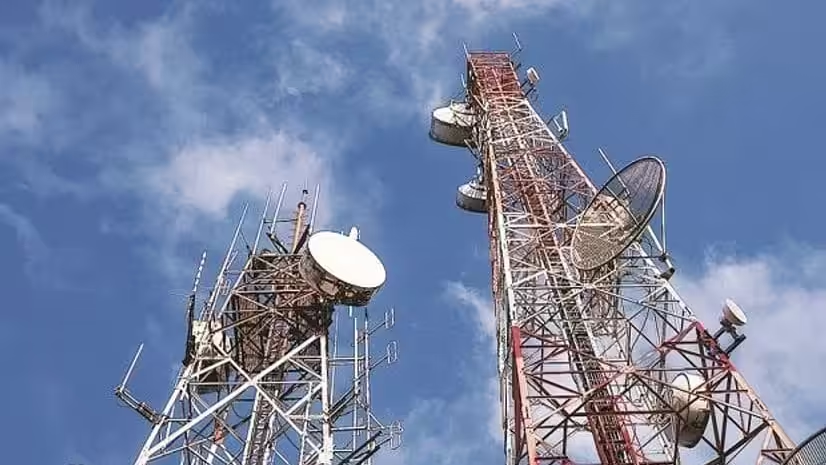
The matter currently involves Vodafone Idea (VI), which is challenging an additional AGR demand of ₹25,000 crore for the 2016–2017 period. The Supreme Court (SC) has stressed the need for finality in the long-running AGR (Adjusted Gross Revenue) dispute between telecom companies and the Department of Telecommunications (DoT).
UPSC CSE Relevance:
Key terms in news.
UPSC PYQ
Which of the following best describes the term ‘import cover’, sometimes seen in the news?
A) It is the ratio of value of imports to the Gross Domestic Product of a country
B) It is the total value of imports of a country in a year
C) It is the ratio between the value of exports and that of imports between two countries
D) It is the number of months of imports that could be paid for by a country’s international reserves
What is AGR?
Definition:
AGR is the measure of the revenue earned by India’s telecom sector from their licensed services. AGR is used to calculate the license fee and spectrum usage charges the telecom operators must pay to the government.
AGR non-core revenue refers to income earned by Indian telecom operators from non-telecom services, such as interest, rent, dividend, and the sale of assets.
Key Financial Implications of AGR
- Legal Disputes: Misinterpretations of AGR calculations have led to prolonged legal battles between telecom operators and the government.
- License Fees: Telecom companies are required to pay a percentage of their AGR as annual license fees.
- Spectrum Usage Charges (SUC): A portion of the AGR is also allocated to SUC, which varies depending on the amount of spectrum held.
Challenges Faced by Telecom Operators
- Operational Constraints: Increased financial obligations limit investments in new technologies and infrastructure.
- Financial Burden: High AGR calculations increase financial liabilities, reducing profit margins.
- Legal Complexity: Ambiguous definitions of AGR lead to legal disputes and uncertainty.
changes:
- Initially, the calculation of AGR (Adjusted Gross Revenue) covered both core revenues from telecom services as well as non-core revenues such as interest income, sale of assets, etc.
- In 2019, the Supreme Court ruled that AGR would include both core and non-core revenues, significantly raising the share of revenue payable by telecom operators to the Government
- After this Judgment GOI change the definition of AGR in Telecom Relief Package of 2021. and under this package telecom operators have the option to convert deferred interest dues into equity at the end of the moratorium period.
Source: https://anantamias.com/current-affairs/adjusted-gross-revenue/