Context:
This news relates to the dispute between India and Indonesia over groundnut exports, after Indonesia suspended imports citing the presence of aflatoxins.
UPSC Relevance:
UPSC CSE in prelims examination has focused on different boards like Tea Board, Coffee Board and Turmeric Board etc. A case in point is a following PYQ.
UPSC Prelims PYQ 2022
Consider the following States:
- Andhra Pradesh
- Kerala
- Himachal Pradesh
- Tripura
How many of the above are generally known as tea-producing States?
(a) Only one State
(b) Only two States
(c) Only three States
(d) All four States
Issue:
- Indonesia suspended the import of Indian groundnuts. The reason cited was contamination by aflatoxins in the shipments.
What are Aflatoxins?
They are genotoxic and carcinogenic, posing serious risks to human and animal health. Aflatoxins are toxic moulds produced by fungi Aspergillus flavus and Aspergillus parasiticus. They thrive in warm and humid conditions.
About Groundnut:
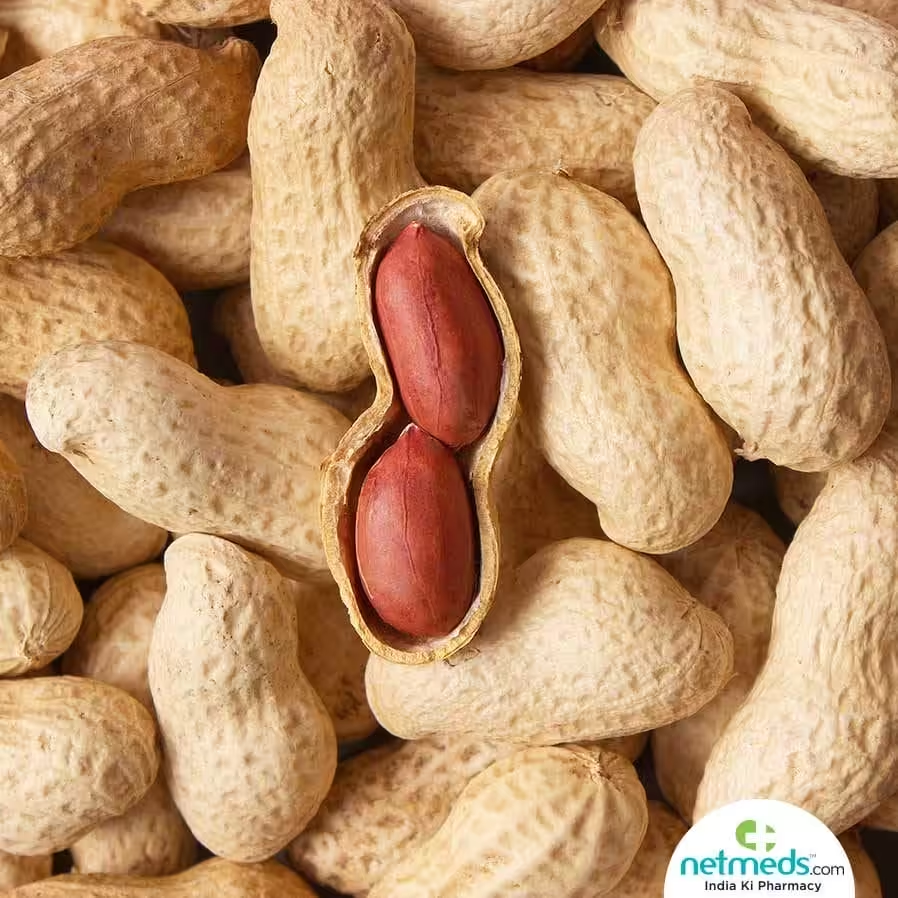
- Peanut or groundnut (Arachis hypogaea) is a species in the legume or “bean” – (Fabaceae) family.
- The peanut was probably first domesticated and cultivated in the valleys of Paraguay.
- India is the second-largest producer of groundnuts in the world.
- Indian groundnuts are available in different varieties: Bold or Runner, Java or Spanish and Red Natal.
- Groundnut is the major oil seed crop in India, and it plays a major role in bridging the vegetable oil deficit in the country.
- Groundnuts in India are available throughout the year due to a two-crop cycle harvested in March and October.
Areas of Cultivation:
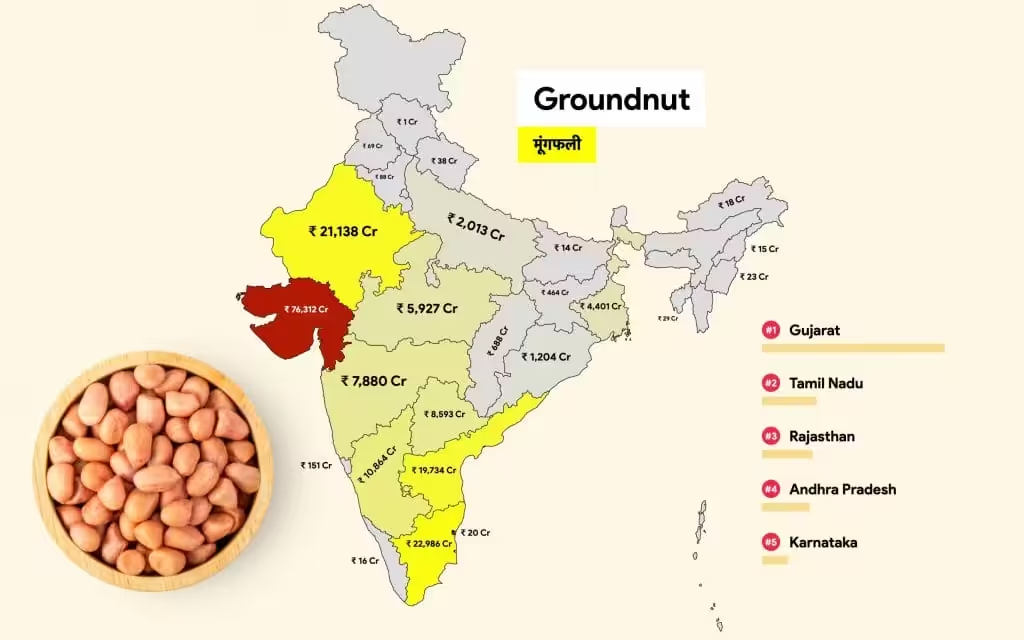
- Gujarat
- Andhra Pradesh,
- Tamil Nadu
- Karnataka
- Maharashtra
- Rajasthan
- Madhya Pradesh
- Orissa
- Uttar Pradesh
Major Exporting Destinations (2023-2024):Indonesia, Vietnam, Philippines, Malaysia and Thailand.
Growing Conditions:
- Warm and moist conditions are favorable for healthy growth.
- Peanut crops will not tolerate long periods of frost, severe droughts, or stagnated water.
- Peanuts require a relatively high temperature and a frost-free period of about 160 days.
- Anything above 35°C inhibits growth, and below 15°C growth stops entirely.
- Although peanuts are typically grown in areas with 600-1,500 mm of rainfall, 1,250 mm is optimal.
- Peanuts grow best in well-drained, yellow-red or red-coloured, fertile, sandy-to-loam soils with a pH range of 5.5 to 7.0.
Tell Google you want more of this.
Add Anantam IAS as a preferred sourceOne tap, and this site shows up more often in your own Top Stories, AI Overviews and AI Mode. Remove it any time.