PSIR Optional PYQ Analysis Paper 2 (2015-2025): IR Theory, Foreign Policy & Strategy
PSIR optional PYQ Paper 2 analysis (2015-2025). Topic weightage for IR theory, comparative politics, India's foreign policy. Strategy for 150+ marks.
PSIR optional PYQ Paper 2 analysis shows that Paper 2 repeats its core themes more than most aspirants expect. Across the 11 papers from 2015 to 2025, India-China relations came up in Section B in 10, India's nuclear policy in 10, and UN reform or India's Security Council claim in 8. Map these patterns and you stop treating Paper 2 as "current affairs plus theory."
Paper 2 splits into Section A (Comparative Politics & International Relations Theory) and Section B (India and the World). Between them, UPSC has clear favorites. China came up in every paper from 2015 to 2025. Realism was tested in 7 of the 11. NAM or non-alignment came up in 10 of the 11.
This analysis pairs with our Paper 1 PYQ analysis to give you the complete picture for PSIR optional preparation.
Paper 2 Structure: The Scoring Landscape
Paper 2 carries 250 marks and runs for three hours, identical to Paper 1. It has 8 questions across two sections, and you attempt 5: Questions 1 and 5 are compulsory, plus any three others with at least one from each section. The compulsory questions have five 10-mark parts of about 150 words each, and the rest usually split 20 + 15 + 15.
- Section A: Comparative Political Analysis (approaches, the State, parties and social movements, globalization) + International Politics (idealist, realist, Marxist, functionalist and systems approaches, key concepts, the UN, regional organizations)
- Section B: India's Foreign Policy, bilateral relations, multilateral engagements, regional and global issues
Critical difference from Paper 1: Paper 2 rewards current affairs knowledge far more heavily. A Realism answer without reference to the Ukraine-Russia war or Indo-Pacific competition will score average marks at best. An India-China answer without Galwan, LAC standoff specifics, or Wuhan/Mamallapuram informal summits is incomplete.
Critical difference from GS Paper II: GS asks "What is India's position on X?" PSIR Paper 2 asks "Analyze India's position on X through the lens of Y theory, evaluate its effectiveness, and compare with Z country's approach." The theoretical depth expected is substantially higher.
Topic-Wise Weightage: Section A
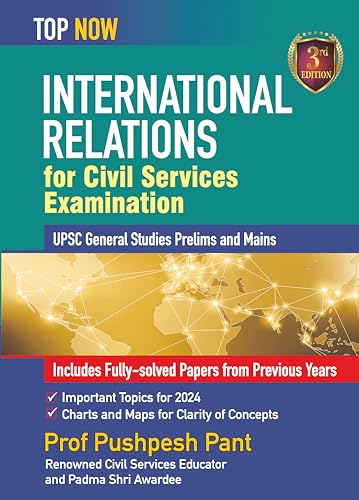
International Relations for Civil Services — Pushpesh Pant
- 552 pages, the one foundational IR textbook for the exam
- Historical grounding before contemporary policy
- Written for candidates, not for IR postgraduates
Comparative Politics
| Topic | Papers With a Question (of 11) | Avg. Marks Set Per Paper | Trend |
|---|---|---|---|
| British Political System | 0 | 0 | Not asked as a system; Brexit came up as an EU and IR question (2016, 2017, 2021) |
| American Political System | 0 | 0 | Not asked as a system; the US shows up as an IR power |
| Chinese Political System | 0 | 0 | Not asked as a system; China's rise came up as an IR question (2022) |
| Comparative Methodology | 11 | 12 | Every year, usually Q1(a) |
| Regime Types & Transitions | 5 | 8 | Democratic backsliding in 2025 |
| State in Comparative Perspective | 6 | 7 | Changing nature of the State |
| Parties, Pressure Groups & Movements | 11 | 20 | Every year |
What most students get wrong about Comparative Politics: They prepare it as a tour of the British, American and Chinese systems. The syllabus doesn't list those systems, and no paper from 2015 to 2025 asked about them as systems. What UPSC tests is approaches and concepts: an approach or method of comparative politics came up in every one of those 11 papers, from the political economy approach (2015, 2016, 2018, 2021) to the interpretive (2024) and psychological (2025) approaches.
Key thinkers for Comparative Politics: Arend Lijphart (consensus vs majoritarian), Samuel Huntington (political order), Gabriel Almond (structural functionalism), Barrington Moore (social origins of democracy/dictatorship).
International Relations Theory
| Theory/Approach | Papers With a Question (of 11) | Avg. Marks Set Per Paper | Trend |
|---|---|---|---|
| Realism (Classical & Neo) | 7 | 10 | Most years; again in 2026 |
| Liberalism, Idealism & Functionalism | 7 | 9 | Consistent; idealism in 2020 and 2024 |
| Marxist/Dependency Approaches | 6 | 10 | World-systems and Gramscian angles (2017, 2024) |
| Constructivism | 0 | 0 | Not asked by name; identity came up in 2026 |
| Feminist IR | 5 | 7 | Steady (2015, 2017, 2018, 2024, 2025) |
| Globalization Debates | 11 | 17 | Every year |
| Security Studies (Traditional & Non-Traditional) | 9 | 15 | Collective security and non-traditional threats |
Realism: The Anchor of IR Theory Questions
Realism anchors IR theory in Section A the way Rawls anchors the justice questions in Paper 1. It came up in 7 of the 11 papers from 2015 to 2025. Here are actual questions:
- 2015: "Identify the major differences between the classical realism of Hans J. Morgenthau and the neorealism of Kenneth Waltz. Which approach is best suited for analysing international relations after the Cold War?" (10 marks)
- 2017: "Is Realist Approach the best method to understand International Relations? Examine this in the context of Classical Realism." (20 marks)
- 2021: "Discuss the emergence of neo-realism and its basic tenets." (15 marks)
- 2023: "What do you mean by offensive and defensive realism?" (15 marks)
- 2026: "Does power transition theory reflect the dynamics of US-China relations?" (15 marks)
Thinkers you must know cold: Hans Morgenthau (6 principles), Kenneth Waltz (structural realism, 3 images), John Mearsheimer (offensive realism, "Tragedy of Great Power Politics"), Stephen Walt (balance of threat).
Common student mistake: Writing a generic "realism says states seek power" answer. Examiners want you to distinguish between classical, structural, offensive, and defensive variants. They want case studies. They want you to identify what realism fails to explain.
Constructivism: Not Yet Asked by Name
Alexander Wendt's "Anarchy is what states make of it" is worth knowing, but constructivism isn't named in the Paper 2 syllabus, and no paper from 2015 to 2025 asked about it by name. Its ideas about identity and the limits of objectivity did surface in 2026:
- 2026: "What role does identity and technology play in the conceptualisation of Defensive realism?" (10 marks)
- 2026: "Theories of international relations which claim objectivity inevitably harbour subjective biases. Elucidate." (15 marks)
Prepare Wendt, Martha Finnemore, Kathryn Sikkink (norm entrepreneurs), and Peter Katzenstein (culture of national security) as a critique you can bring into realism and liberalism answers, not as a standalone topic.
Topic-Wise Weightage: Section B (India and the World)
This is where PSIR Paper 2 becomes a goldmine of predictability.
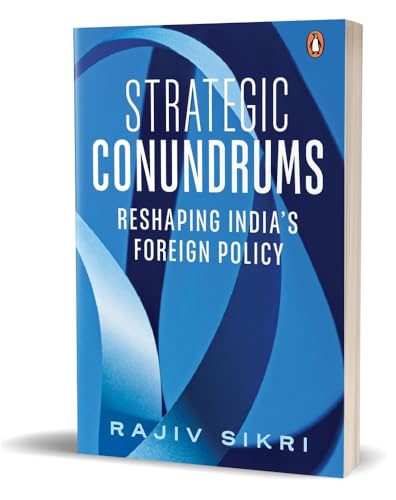
Strategic Conundrums: Reshaping India's Foreign Policy — Rajiv Sikri
- 296 pages from a former Secretary in the MEA
- Region-by-region assessment of India's neighbourhood
- Practitioner judgement rather than academic survey
| Topic | Papers With a Question (of 11) | Avg. Marks Set Per Paper | Trend |
|---|---|---|---|
| India-China Relations | 10 | 24 | Every paper except 2022, which asked about China's rise in Section A |
| India-USA Relations | 8 | 12 | Most years |
| India-Pakistan Relations | 4 | 5 | Sporadic (2016, 2017, 2018, 2025) |
| India’s Nuclear Doctrine | 10 | 14 | Every paper except 2018 |
| Non-Aligned Movement (NAM) | 6 | 8 | Perennial “relevance” question; Section A adds 2017, 2018, 2020 and 2023 |
| UN Reform & Global Governance | 8 | 11 | Mostly India's Security Council claim |
| South Asian Relations (SAARC, neighbors) | 10 | 32 | Every paper except 2019; the biggest block |
| India & Multilateral Forums (BRICS, SCO, QUAD) | 2 | 2 | Only QUAD (2021, 2023); BRICS and SCO not asked |
| Indo-Pacific Strategy | 3 | 3 | New since 2019 (2019, 2024, 2025) |
| India’s Act East Policy | 4 | 5 | Consistent until 2022 |
| Climate Diplomacy | 1 | 2 | Mostly asked in Section A (2017, 2018, 2020, 2021) |
| BRI/CPEC | 2 | 4 | BRI in 2017 and 2019; CPEC not asked by name |
India-China: Asked in 10 of 11 Papers
India-China relations came up in Section B in 10 of the 11 papers from 2015 to 2025. The exception, 2022, asked about the rise of China as a great power in Section A instead. The angles shift dramatically:
- 2015: "'Economic interest has emerged as the main component of India's foreign policy.' Discuss the statement in the light of India's initiatives to improve relations with China, Japan and the Central Asian republics." (15 marks)
- 2017: "How is the 'Belt and Road Initiative' of China going to affect India-China relations?" (20 marks)
- 2019: "Describe briefly China's 'One Belt One Road (OBOR)' Initiative and analyze India's major concerns." (20 marks)
- 2020: "Explain the defence and foreign policy options of India to address the challenges emerging out of the current India-China standoff at the Line of Actual Control (LAC)." (20 marks)
- 2021: "Examine the Geo-strategic points of contention in the bilateral relationship between India and China." (15 marks)
- 2024: "Does the idea of the 21st century as 'Asian century' continue to remain feasible given the growing friction between India and China?" (15 marks)
For detailed analysis, see our dedicated page on India-China relations.
What examiners reward: Specific references to LAC agreements (1993, 1996, 2005, 2013), trade figures, Malabar exercises, BRI opposition rationale, and theoretical framing (structural realism explains competition; liberal institutionalism explains continued engagement).
India-USA: The Transformed Relationship
India-USA relations came up in 8 of the 11 papers, with questions evolving from why the relationship was marked more by estrangement than cordiality before 2000 (2015) to whether the two need to become formal allies at all (2024).
- 2016: "Comment on India's growing relationship with USA in the background of constrained relations between India and China." (15 marks)
- 2020: "Discuss the significance of Indo-US strategic partnership and its implications for India's security and national defence." (15 marks)
- 2022: "Explain the significance of Basic Exchange and Co-operation Agreement (BECA) for Indo-US strategic relations." (10 marks)
- 2025: "India continues to invoke its time-tested policy of strategic autonomy vis-à-vis both the United States of America and Russia by rejecting US' offer of mediation on Kashmir issue and by refusing to criticize Russia in its ongoing war against Ukraine. Comment." (20 marks)
Key frameworks: Ashley Tellis on the India-US strategic relationship, de-hyphenation from Pakistan, the 2+2 dialogue mechanism, LEMOA/COMCASA/BECA foundational agreements.
Multilateral Forums: BRICS, SCO, QUAD
Of QUAD, BRICS, and SCO, only QUAD has had questions of its own. Prepare all three, but know where the papers have actually gone.
- QUAD first appeared as a standalone question in 2021 ("Write about the growing significance of QUAD"), came back in 2023 as part of India's balancing against China, and again in 2026.
- BRICS hasn't been asked by name from 2015 to 2026. The closest questions are on IBSA (2019) and India as a voice of the Global South (2023, 2024).
- SCO hasn't been asked by name either. Regional-grouping questions have gone to SAARC, BIMSTEC and ASEAN instead.
Common student mistake: Treating these as purely descriptive answers. UPSC wants theoretical engagement. Frame QUAD through balance of power theory. Frame BRICS through counter-hegemonic institutionalism. Frame SCO through regional security complex theory (Barry Buzan).
Year-Wise Question Distribution Table
| Year | Comparative Politics + IR Theory Sub-Questions | India & the World Sub-Questions | Key Themes |
|---|---|---|---|
| 2015 | 14 | 14 | Morgenthau vs Waltz, Indo-US estrangement before 2000, NPT and CTBT, Non-alignment's relevance |
| 2016 | 14 | 14 | Crisis of the nation-state, Brexit's consequences, India-China tensions, Pathankot and Pakistan policy |
| 2017 | 14 | 14 | Classical realism, US exit from the Paris Agreement, BRI and India-China, Indus Waters Treaty |
| 2018 | 14 | 14 | NAM's contribution to world politics, Trump-Kim Singapore summit, Look East and the North-East |
| 2019 | 14 | 14 | Comparative method, OBOR and India's concerns, Indo-Pacific, No First Use |
| 2020 | 14 | 14 | Balance of power, UN Security Council reform, India-China LAC standoff, No First Use |
| 2021 | 14 | 14 | Neo-realism, QUAD, Taliban in Afghanistan |
| 2022 | 14 | 14 | Rise of the PRC, WTO fisheries deadlock, BECA |
| 2023 | 14 | 14 | Offensive and defensive realism, India-Russia, QUAD and China, Nuclear policy |
| 2024 | 14 | 14 | Deglobalization, NATO and US hegemony, Asian century and India-China, Israel-Hamas and Palestine policy |
| 2025 | 14 | 14 | Democratic backsliding, US exit from WHO, Pahalgam and India's posture, Strategic autonomy |
How Paper 2 Differs From GS Paper II
Aspirants often blur the two papers. The difference is fundamental:
| Dimension | GS Paper II | PSIR Paper 2 |
|---|---|---|
| Depth | Factual + policy-level | Theoretical + analytical |
| Theory | Not expected | Essential (realism, liberalism, constructivism) |
| Thinkers | Rarely cited | Must cite 2-3 per answer |
| Word count | 150-250 words | About 150 words for the 10-mark parts; no word limit printed for 15- and 20-mark parts |
| Scoring | Facts + structure | Analysis + theoretical grounding |
| Current affairs | Dominant | Important but must connect to theory |
Practical implication: Your GS Paper II preparation gives you the raw material. PSIR Paper 2 demands you process that material through theoretical lenses. The same India-China answer in GS might list recent developments and suggest a way forward. In PSIR, it must analyze why the relationship follows certain patterns (structural realism), whether institutions can mitigate conflict (liberal institutionalism), and how identity narratives shape threat perception (constructivism).
Pattern Analysis: Four Key Insights
Insight 1: The Bilateral Relations Triad Is Non-Negotiable
India-China, India-USA, and India-Pakistan questions together carried 440 of the 2,200 marks set in Section B from 2015 to 2025, about 20%. Skipping any one of these is not a strategic choice. It is negligence.
For India-Pakistan analysis, see our detailed coverage of India's foreign policy.
Insight 2: IR Theory Questions Mix Definition and Application
The papers still ask plain theory, and they increasingly pair it with a live case:
- Definition: "What do you mean by offensive and defensive realism?" (2023)
- Application: "Does power transition theory reflect the dynamics of US-China relations?" (2026)
Prepare every IR theory with 3-4 contemporary case studies ready for deployment.
Insight 3: New Topics Enter, Old Topics Never Leave
BRI appeared first in 2017. Indo-Pacific appeared in 2019. QUAD became standalone in 2021. Climate questions go back to 2016 and the US exit from the Paris Agreement (2017), and India's own COP-26 proposals came up in 2021. But NAM, nuclear doctrine, and UN reform continued to appear alongside these new topics.
Strategy: Never assume an "old" topic is dead. UPSC keeps asking whether NAM is still relevant: 2015, 2016, 2017 and, as "does NAM have any future," 2025.
Insight 4: China Questions Are Expanding Across Both Sections
China now appears in Section A (Xi's "Chinese Dream" in 2018, Sino-American rivalry in 2020, the rise of the PRC in 2022, power transition in 2026) AND in bilateral relations (Section B: India-China). In 2016 and 2025, China-related questions carried 40 marks each. This is the single highest-value country to prepare.
Strategy for 150+ Marks in Paper 2
Priority Preparation Matrix
Tier 1 (Prepare 5+ answer variations):
- India-China relations
- Realism (all variants)
- India-USA relations
- India-Pakistan relations
- Liberalism and institutions
- Approaches to comparative politics (asked in every paper, 2015 to 2025)
Tier 2 (Prepare 3-4 answer variations):
- Constructivism
- QUAD and Indo-Pacific
- BRICS and SCO
- Nuclear doctrine
- UN reform
- Globalization debates
- NAM relevance
Tier 3 (Prepare 2 answer outlines):
- State in comparative perspective
- Feminist IR
- Climate diplomacy
- BRI/CPEC
- Act East Policy
- SAARC and neighborhood policy
Answer Writing Framework for Paper 2
For IR Theory questions: Introduction (define the theory in 2 lines) –> Core propositions (3-4 key claims) –> Strengths with examples –> Limitations with examples –> Relevance to current world order –> Conclusion with assessment
For Bilateral Relations questions: Historical context (2-3 lines max) –> Key dimensions (strategic, economic, multilateral) –> Recent developments (last 2-3 years) –> Theoretical analysis (which IR theory explains the pattern?) –> Prognosis –> Conclusion
For Comparative Politics questions: Identify the system feature being asked about –> Compare across 2-3 systems –> Use a theoretical framework (Lijphart, Almond, Huntington) –> Indian relevance –> Assessment
For detailed political science optional notes that cover these frameworks, refer to our comprehensive guide.
The 80/20 Rule for Paper 2
Most of your marks will come from the themes asked in at least 8 of the 11 papers from 2015 to 2025: approaches to comparative politics, parties and social movements, globalization, NAM, nuclear policy, UN reform, and India's relations with China, the USA and South Asia. Realism (7 of 11) sits just below that line.
The rest comes from: lesser bilateral relations, regional organizations, and topics that come and go (climate, BRI, feminist IR).
Prepare the core exhaustively. Cover the rest with basic familiarity and the ability to improvise using your theoretical toolkit.
Emerging Trends for 2026 and Beyond
- AI governance and technology competition — India-US tech partnership vs China decoupling is ripe for a PSIR question.
- Global South diplomacy — India's G20 presidency legacy, "Voice of the Global South" summit.
- BRICS expansion — implications of new members, challenge to Western-led order.
- Ukraine war's long-term impact — on European security architecture, on India's strategic autonomy.
- Climate diplomacy as IR theory test case — cooperation vs free-riding, global commons governance.
- Minilateral groupings — I2U2, AUKUS, Quad-Plus as alternatives to multilateralism.
UPSC Relevance
Paper 2 PYQ analysis is your competitive advantage. While many candidates prepare by reading newspapers and hoping for the best, you prepare knowing that China comes up in every paper, that realism came up in 7 of the last 11, and that UPSC wants theoretical depth married to current affairs specificity.
The difference between an average and a high Paper 2 score usually isn't more knowledge. It is better pattern recognition and answer structuring. Use this analysis to build modular answer frameworks for high-frequency topics, practice applying IR theory to current events weekly, and track which thinkers and themes recur so you're never caught off guard.