India and China are the world's two most populous countries, two of the largest economies, and two nuclear neighbours with an unsettled 3,488 km boundary. The relationship has carried two parallel identities since the 1950s — "Hindi-Chini bhai bhai" and the trauma of the 1962 war — and the Galwan clash of June 2020 snapped the equilibrium that had held since the 1988 Rajiv Gandhi visit. For UPSC GS II, this file tests boundary geography, connectivity politics (CPEC, BRI), trade dependence, and how India positions itself in a US-China bipolarity.
Historical context
Formal relations began with India's recognition of the PRC in 1950. The Panchsheel (1954) agreement on Tibet codified peaceful coexistence. The 1962 war — triggered by competing claims in Aksai Chin and NEFA plus India's refuge to the Dalai Lama — broke trust for a generation. Rajiv Gandhi's 1988 visit restarted border mechanisms; agreements in 1993, 1996, 2005 (political parameters) and 2013 built confidence measures along the LAC. The Doklam standoff (2017) and Galwan (2020) re-drew the threat perception.
Areas of convergence
- Multilateralism: Both uphold the UN Charter, work together within BRICS, SCO, G20 and the WTO, often pushing back against G7 positions.
- Climate: Coordinate in BASIC (Brazil, South Africa, India, China) on differentiated responsibilities.
- Economic interdependence: Total bilateral trade of USD 118.4 billion in 2024 — China is India's largest trade partner.
Structural drivers of rivalry
US-China contest: Beijing sees the US as the only peer challenger to its rise; Washington sees India as the swing state in the Indo-Pacific. India's tilt into the Quad and towards defence cooperation with the US raises Beijing's alarm.
Capability asymmetry: China's GDP is roughly 5× India's; its defence spending is about 3-4× larger. India responds with internal (military modernisation) and external (Quad, bilateral partnerships) balancing.
Demographic shift: India overtook China in population in 2023 and is projected to grow faster for at least two decades.
The boundary dispute
India shares a 3,488 km boundary with China, split into three sectors:
| Sector | States | Status |
|---|---|---|
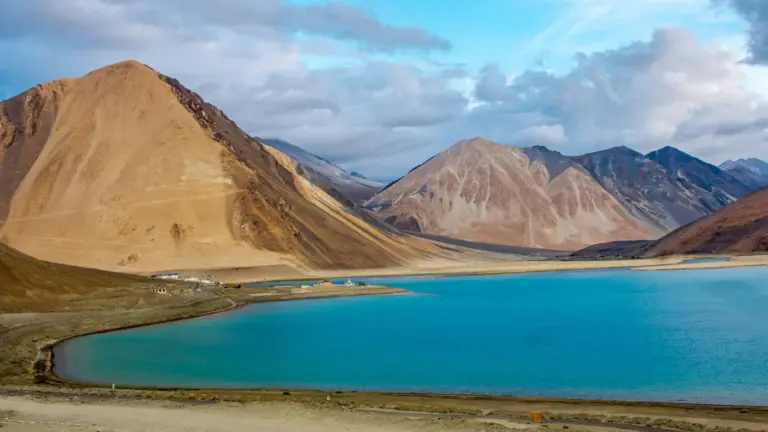
| Western | Ladakh | Disputed; Aksai Chin under Chinese control; friction points like Galwan, Hot Springs, Depsang |
| Middle | Himachal Pradesh, Uttarakhand | Largely settled |
| Eastern | Arunachal Pradesh | China claims entire state as "South Tibet"; Tawang is the flashpoint |
There is no mutually agreed Line of Actual Control (LAC). China rejects the McMahon Line, arguing it was imposed by British India on a weak Qing and Tibetan authority.
Infrastructure race
China has built high-grade roads, railways and dual-use Xiaokang ("well-off") villages — over 600 along the border — that double as military logistics nodes. India accelerated its border infrastructure through the Border Roads Organisation (BRO) and the Sela tunnel (opened 2024). The Darbuk-Shyok-Daulat Beg Oldie (DSDBO) road was central to triggering Chinese aggression in 2020.
The Galwan crisis (June 2020)
A violent clash in Galwan Valley killed 20 Indian soldiers and an unknown number of PLA troops — the first combat fatalities at the border since 1975. Triggers: India's infrastructure push, Article 370 abrogation rhetoric around Aksai Chin, and Xi Jinping's departure from the "peaceful rise" doctrine. Disengagement began at Galwan, Hot Springs and Pangong; friction persisted at Depsang and Demchok.
2024 disengagement framework
In October 2024, ahead of the BRICS Summit in Kazan, India and China announced a disengagement understanding restoring patrolling rights at Depsang and Demchok. Prime Minister Modi and President Xi met bilaterally — their first since 2019. This is a thaw, not a settlement.
One China Policy and the Dalai Lama
India's adherence to the One China Policy has become more ambiguous. PM Modi's exchange with Taiwan's President Lai Ching-te (2024) on social media angered Beijing. The US Resolve Tibet Act (2024) challenges Chinese claims on Tibet; India has engaged Tibetan leadership in Dharamshala with less inhibition. The Dalai Lama succession remains a latent flashpoint.
China-Pakistan axis
- Nuclear and missile help since the 1970s-80s enabled Pakistan's deterrent.
- CPEC passes through Gilgit-Baltistan, which India claims as its sovereign territory — a key reason India rejected the BRI.
- China routinely blocks UNSC 1267 sanctions on Pakistan-based terrorists (eased slightly after 2022).
- Fighter aircraft (JF-17), submarines, and frigate exports.
Economic friction
- Trade deficit: India exports roughly USD 16 bn, imports USD 101 bn — a USD 85 bn deficit.
- Strategic dependence on telecom, pharma APIs, lithium-ion cells, solar components.
- India banned 300+ Chinese apps post-Galwan and tightened FDI scrutiny (Press Note 3, 2020).
- India stayed out of RCEP (2019) citing China-led dumping risk.
- India is the likely winner of "China+1" diversification — though slower than Vietnam.
Rivers as a source of conflict
China, as the upper riparian on the Yarlung Tsangpo (Brahmaputra) and the Sutlej, has built the Zangmu dam and cleared three more (Dagu, Jiacha, Jeixu). In 2024, Beijing greenlit a mega-dam at the Great Bend — potentially 60 GW capacity — alarming India. There is no bilateral water treaty, only a 2013 MoU on hydrological data sharing.
China's engagement with India's neighbours
Hambantota (Sri Lanka), Kyaukphyu (Myanmar), Gwadar (Pakistan), Chabahar-rival Djibouti base — the String of Pearls ring. Political leverage in Nepal's left parties, Muizzu's Maldives, and Bangladesh's Teesta bid. India counters via SAGAR, Neighbourhood First, I2U2, and deeper Quad cooperation.
Latest developments (2024-26)
- October 2024 disengagement at Depsang and Demchok; resumption of diplomatic channels.
- G20 New Delhi Summit (2023) — Xi Jinping skipped, signalling the chill; G20 Rio (2024) saw Modi-Xi handshake.
- BRICS expansion (2024) with the UAE, Egypt, Iran, Ethiopia — a Chinese push India accommodated carefully.
- Quad Summit Wilmington (2024) doubled down on maritime domain awareness, semiconductor chains, and infrastructure financing.
- Red Sea crisis (2024) briefly benefitted both as shipping rerouted via the Cape, but underlined vulnerability.
- AI Action Summit (Paris 2025) — India and China diverged on governance language.
- Russia-Ukraine update: China's ongoing support to Moscow indirectly constrains India's Russian defence imports.
- Xi announced the Brahmaputra mega-dam in late 2024; India raised concerns through diplomatic channels.
- Operation Sindhu Thakur style preparedness emphasised in northern and eastern sectors.
India's geopolitical approach
India pursues strategic autonomy — balancing, not bandwagoning. It deepens Quad, US, Japan, Australia, and European ties while protecting the Russia channel. It builds border infrastructure and trains for two-front contingencies. It cuts economic dependence in strategic sectors (semiconductors, telecom) while keeping everyday imports open. Above all, it avoids provoking a crisis at a time when its economy must grow faster.
Key bilateral agreements
| Agreement | Year | Purpose |
|---|---|---|
| Panchsheel | 1954 | Five principles of peaceful coexistence (now partly obsolete) |
| Agreement on Peace and Tranquillity along the LAC | 1993 | Status quo maintenance |
| CBM Agreement | 1996 | Border troop caps, UAV restrictions |
| Political Parameters and Guiding Principles | 2005 | Boundary framework |
| Border Defence Cooperation Agreement | 2013 | Incident management |
| Working Mechanism on Consultation and Coordination (WMCC) | 2012 | Regular Diplomatic-Military consultations |
Trade basket — structural issues
India imports from China include:
- Electronics and telecom (smartphones, servers, components): 25%+ of basket.
- Machinery and mechanical appliances.
- Organic chemicals, particularly pharmaceutical APIs (India imports 60-70% of APIs from China).
- Plastics and articles thereof.
- Iron and steel, aluminum.
- Solar cells and modules — India imports over 70% from China.
- Active Pharmaceutical Ingredients (APIs), lithium-ion cells, rare earth magnets.
India's exports to China are dominated by iron ore, raw cotton, organic chemicals, petroleum products, and fish — low value-add. PLI schemes for electronics, semiconductors, batteries, and solar aim to reduce this dependence.
Key summits and dialogue mechanisms
| Mechanism | Purpose |
|---|---|
| Special Representatives Talks | Boundary negotiation |
| Working Mechanism on Consultation and Coordination (WMCC) | LAC de-escalation |
| Strategic Economic Dialogue (SED) | Economic coordination (on hold since 2020) |
| Cultural Exchange Programme | Academic, people-to-people |
| BRICS, SCO, G20 | Multilateral coordination |
Why 'strategic autonomy' matters here
The core discipline in managing China is to avoid two extremes. Alignment with the US turns India into a front-line state; accommodation of China accepts Chinese spheres in South Asia. Strategic autonomy keeps both levers available — deeper Quad cooperation when China pushes; selective dialogue when it makes space. This is also why India does not join Western sanctions on China, even when it supports Western technology controls, and why BRICS is useful in parallel to Quad.
UPSC Relevance
India-China is tested across GS II (effect of policies of developed and neighbouring countries), GS III (border security), and Essay. Prelims has tested Panchsheel, McMahon Line, and BRI components. Mains prompts focus on LAC management, trade dependence, Indo-Pacific balancing, and strategic autonomy.
Practice question (Mains): "The India-China relationship is shaped by asymmetry of power and absence of a settled boundary." Examine, with reference to the post-Galwan trajectory. (250 words)
Tell Google you want more of this.
Add Anantam IAS as a preferred sourceOne tap, and this site shows up more often in your own Top Stories, AI Overviews and AI Mode. Remove it any time.