Disclosure: this guide contains Amazon affiliate links. As an Amazon Associate, Anantam IAS earns from qualifying purchases — at no extra cost to you.
Political Science optional notes work best when they follow the UPSC PSIR syllabus and lead directly to revision. This page gives you eight free PSIR PDFs covering political theory, Indian politics, comparative politics, international relations, and India’s foreign policy.
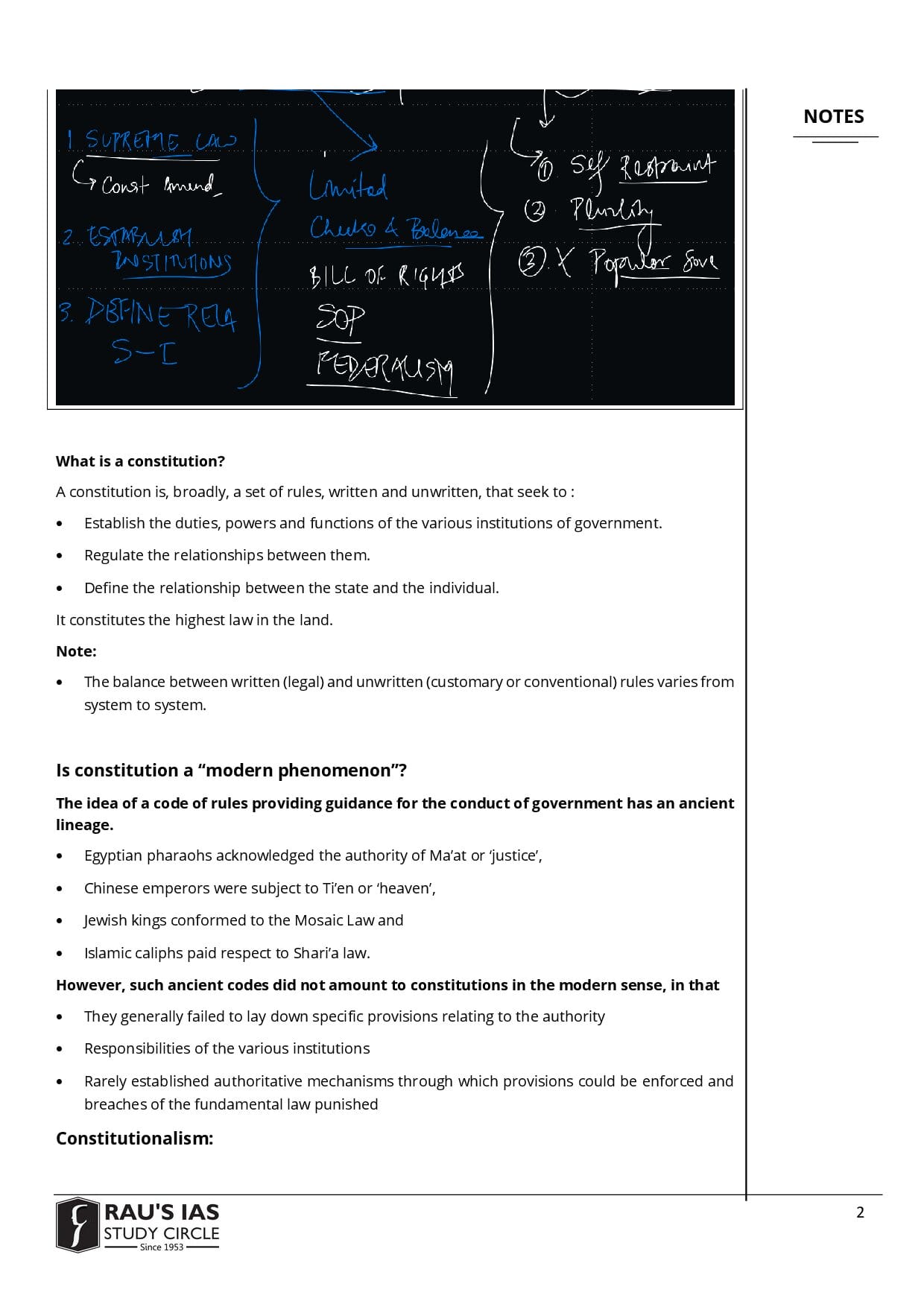
Start with the IGP Updated Edition for a complete first pass. Then use the five dated class notes to strengthen individual Paper 1 and Paper 2 areas before solving previous-year questions from memory.
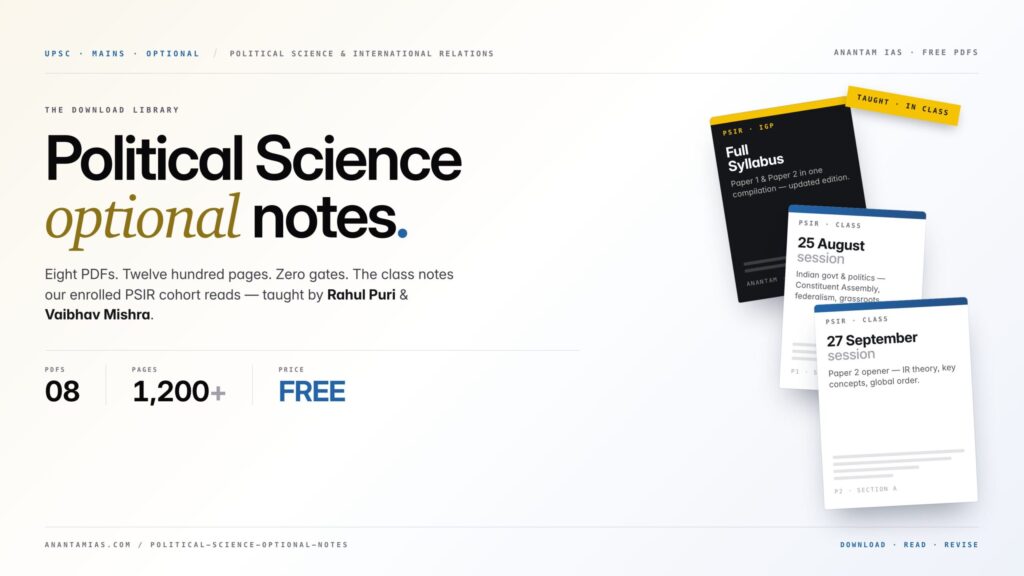
Download 8 Free PSIR PDFs for UPSC
These are the same notes used in our PSIR classes: three Integrated Guidance Programme compilations and five dated teaching sessions. Every item below is priced at ₹0. Use the Updated Edition first, then open only the class notes that match the syllabus area you are revising.
| Free PSIR PDF | Coverage | Best use |
|---|---|---|
| IGP Notes: Updated Edition | Paper 1 and Paper 2 | Start here for the current full-syllabus compilation |
| IGP Notes: Compiled | Paper 1 and Paper 2 | Use for a second pass and consolidated revision |
| IGP Notes: 2023 Compilation | Paper 1 and Paper 2 | Use for cross-reference and older syllabus mapping |
| Class Notes: 30 January | Political theory and the state | Build the Paper 1 foundation |
| Class Notes: 4 July | Rawls, justice, and communitarianism | Revise a high-use Paper 1 debate |
| Class Notes: 25 August | Indian government and politics | Connect institutions, federalism, and democracy |
| Class Notes: 27 September | International relations theory | Start Paper 2 concepts and frameworks |
| Class Notes: 7 December | India and the world | Revise foreign policy and global power centres |

IGP Compilations — full syllabus in one PDF
Start with the Updated Edition. The other two exist for cross-reference and historical syllabus mapping.
IGP Notes · Updated Edition
The latest full-syllabus PSIR compilation — reviewed against CSE 2024 & 2025 question patterns. Start here.
IGP Notes · Compiled
Consolidated Paper 1 + Paper 2 coverage across both sections — useful for a first-read and for last-mile revision.
IGP Notes · 2023 Compilation
The 2023 edition — retained for reference and for tracking how the syllabus mapping has evolved.
Class Notes — dated sessions (read in order)
Each note is a single teaching session. Follow the calendar order below — the January & July sessions cover theory, August is Indian politics, September is IR, December is India & the world.
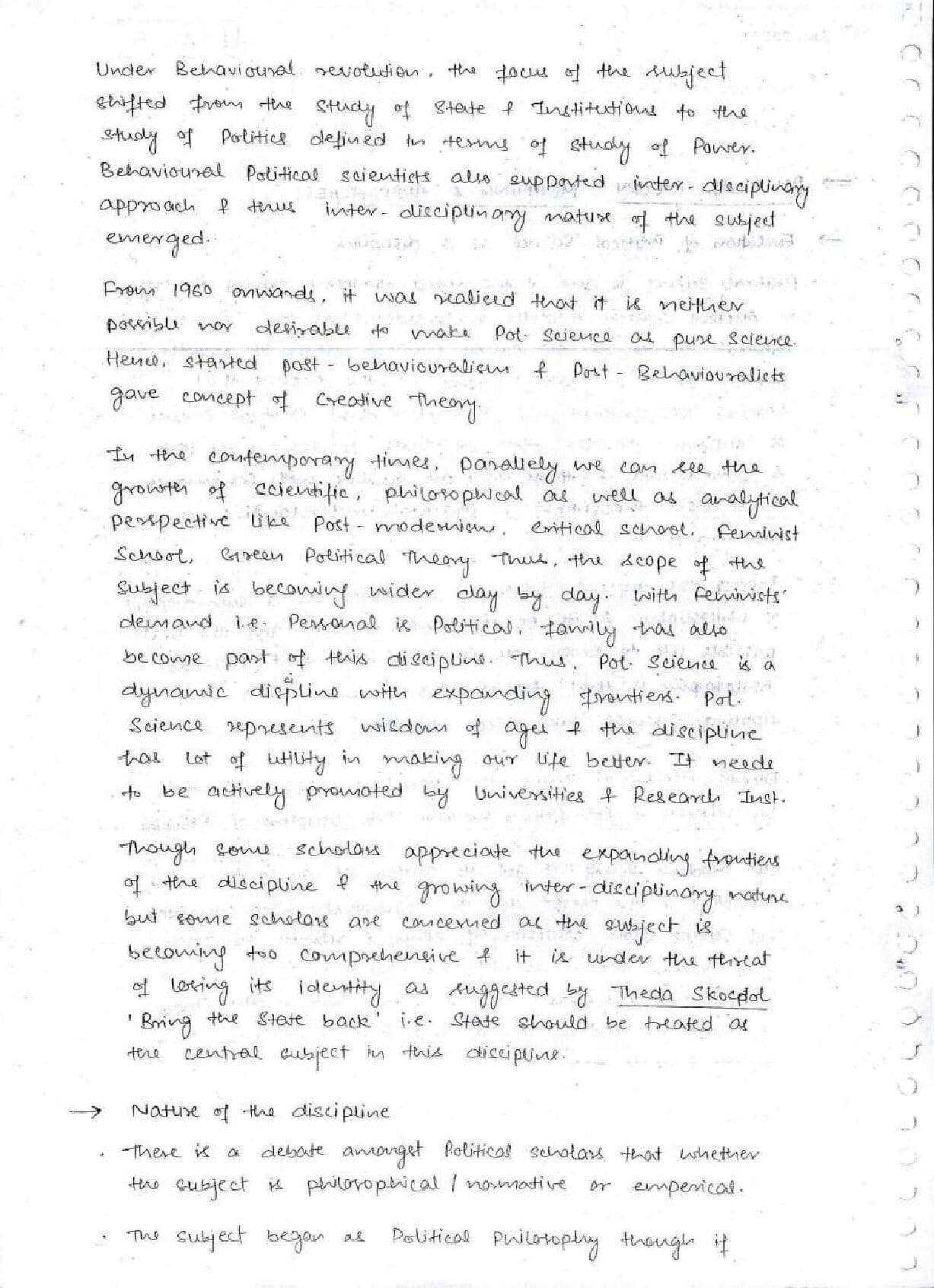
PSIR Class · 30 January
Opening political-theory session — meaning, approaches and the state debate (Liberal → Marxist).
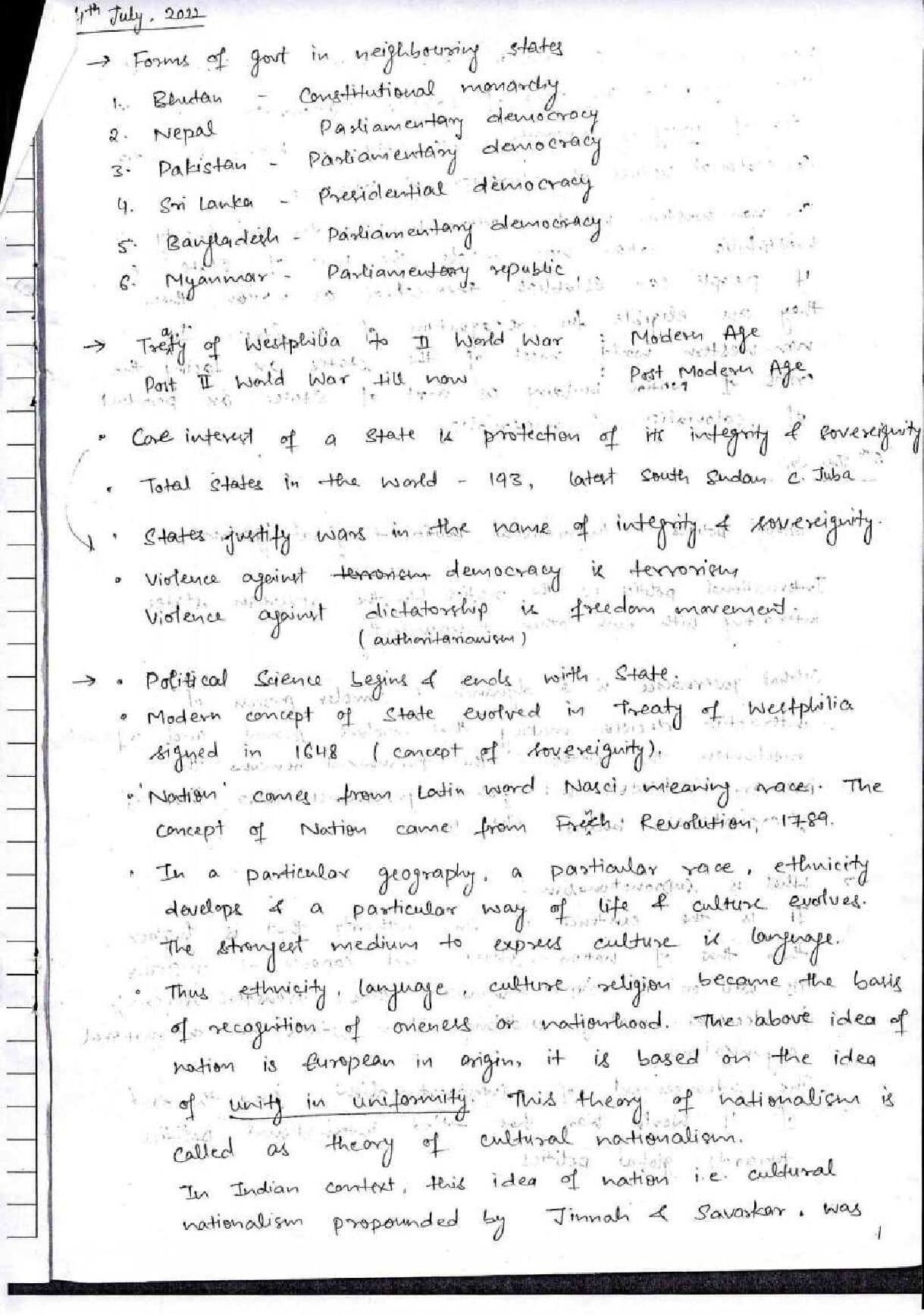
PSIR Class · 4 July
Rawls, justice and the communitarian critique — the conceptual core of Paper 1 Section A.
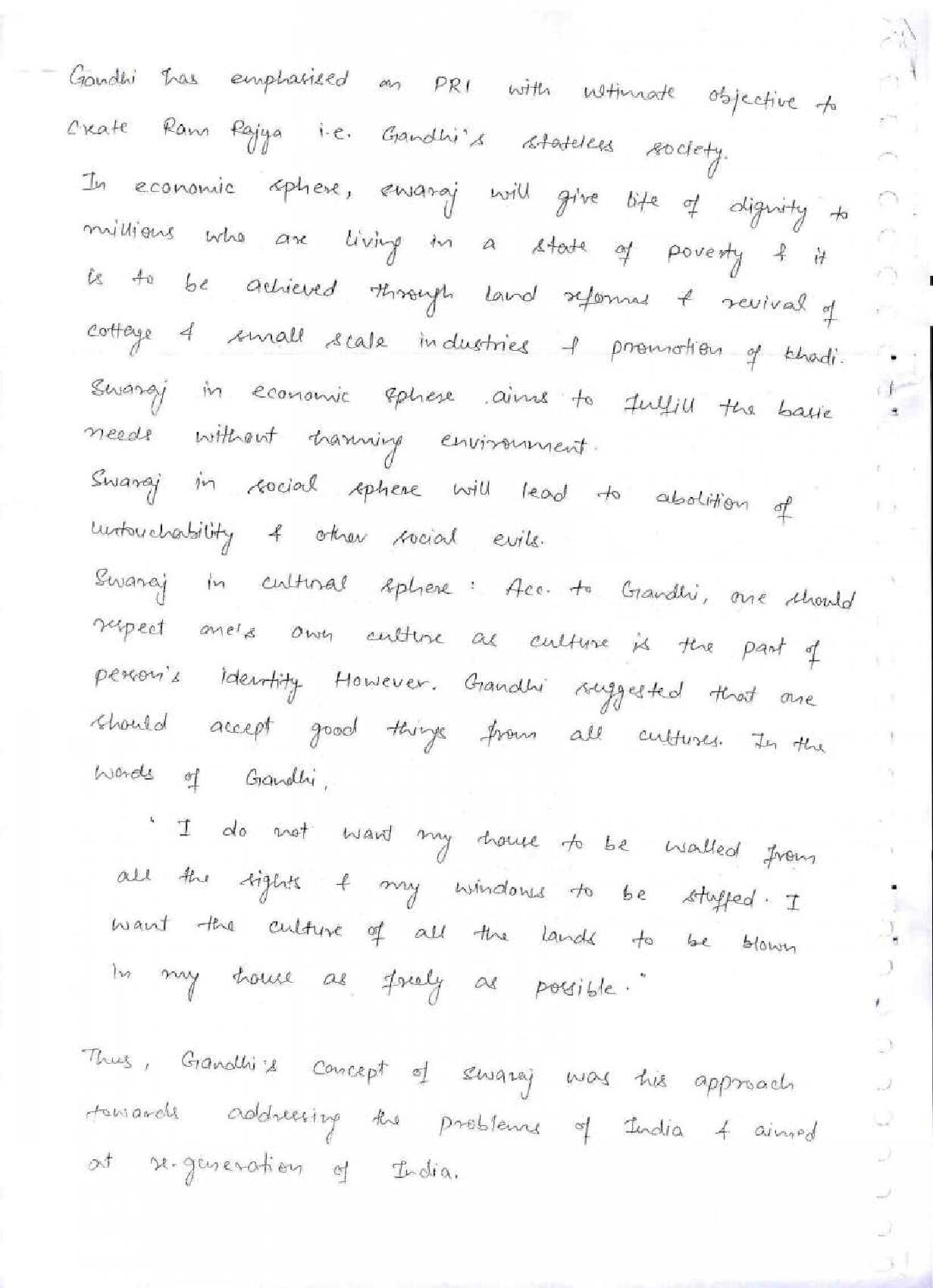
PSIR Class · 25 August
Indian government & politics — Constituent Assembly debates, federalism and grassroots democracy.
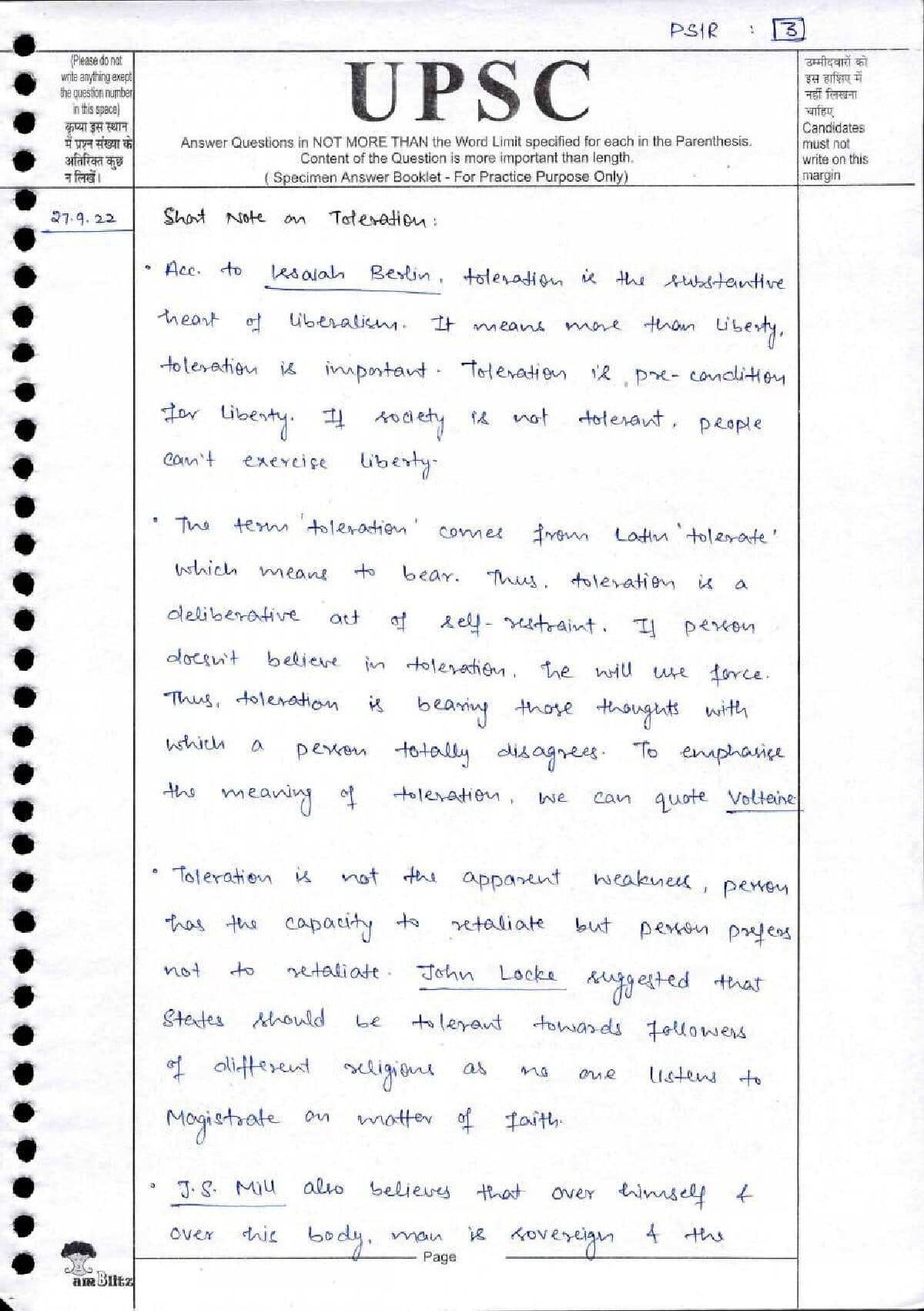
PSIR Class · 27 September
Paper 2 opener — IR theory, key concepts (security, balance of power, globalisation).
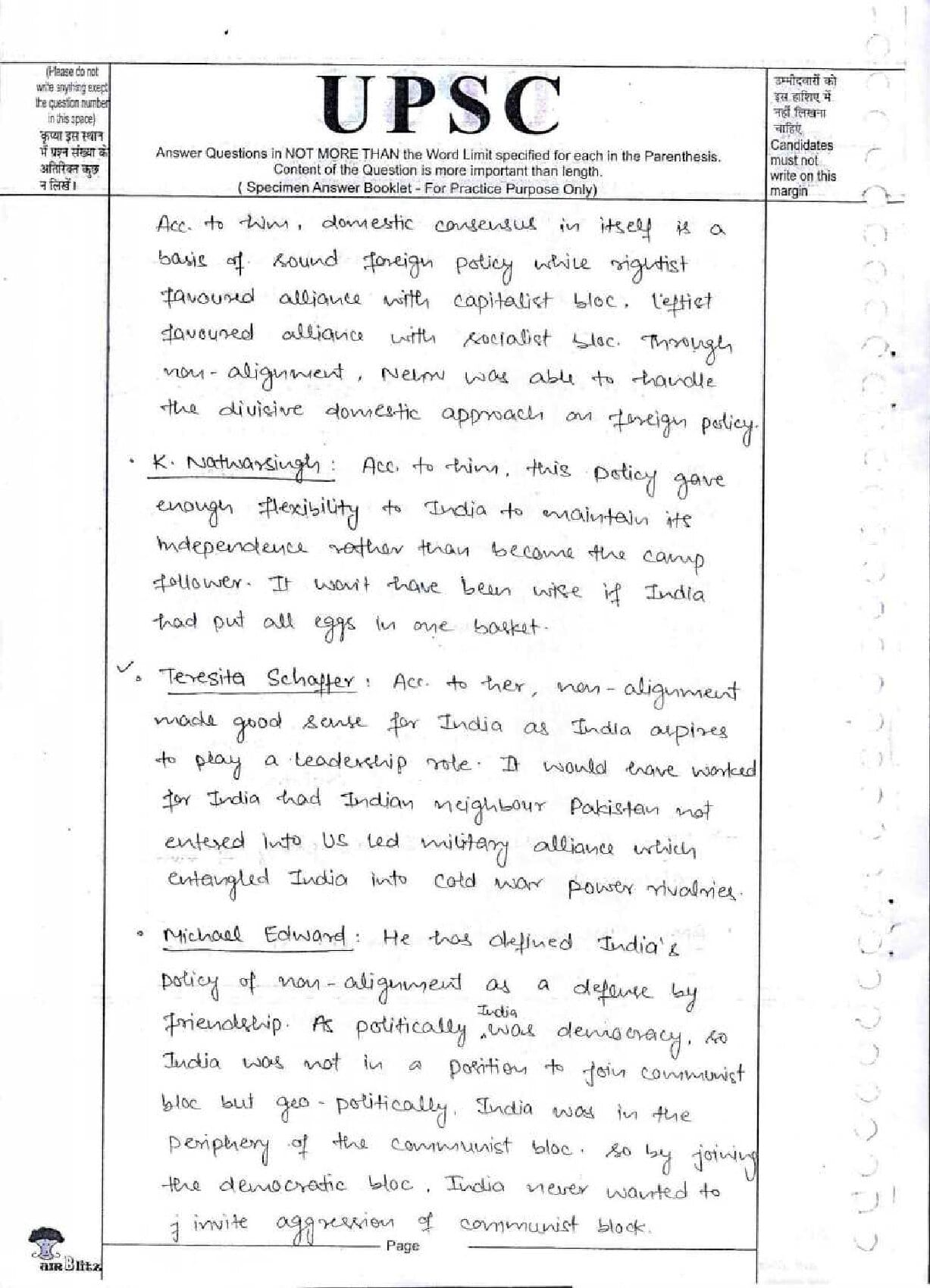
PSIR Class · 7 December
India and the world — foreign policy, neighbourhood, global centres of power.
Perspective — monthly PSIR magazine (free archive)
Every issue of Anantam IAS’ Perspective PSIR magazine — the monthly current-affairs companion our enrolled cohort uses for Paper 2 Section B linkages. Direct download links, newest issue first. See the full magazine archive for context.
- Perspective · July 2025
- Perspective · June 2025
- Perspective · May 2025
- Perspective · April 2025
- Perspective · January to March 2025
- Perspective · November 2024
- Perspective · October 2024
- Perspective · July 2024
- Perspective · June 2024
- Perspective · April 2024
- Perspective · March 2024
- Perspective · February 2024
How to use these notes. Read the IGP Updated Edition cover-to-cover first (four weekends). Then return to the dated class notes in order for the second pass — each one is annotated with the answer-writing drill we ran in class. Pair with the PYQ archive and the full syllabus page.
Need a different optional? Browse the free UPSC optional notes directory. For guided PSIR classes, answer writing, and feedback, see the PSIR Optional programme.
What Is PSIR Optional? Syllabus Overview
PSIR stands for Political Science and International Relations. UPSC divides it into two papers, each carrying 250 marks, for a total of 500 marks.
Paper 1 covers Western and Indian political thought — the philosophical foundations of the state, rights, democracy, and justice. Paper 2 focuses on comparative politics and international relations — how states interact, the structure of global governance, and India’s foreign policy. Together, the papers test both theory and its real-world application.
Paper 1: Political Theory and Indian Politics
Paper 1 has two sections. Section A covers political theory, Western political thought, and Indian political thought. Section B covers Indian government and politics, including constitutional institutions, federalism, parties, and social movements.
Section A: Political Theory and Political Thought (key topics):
- Political Theory: Meaning, approaches (normative, empirical, post-behavioural)
- Theories of the State: Liberal, Neoliberal, Marxist, Pluralist, Post-colonial
- Justice, Equality, Rights, Democracy, Concepts of Power and Ideology
- Thinkers: Plato, Aristotle, Machiavelli, Hobbes, Locke, Rousseau, Mill, Marx, Gramsci, Rawls, Habermas, Nozick
Section B: Indian Government and Politics:
- Making of the Indian Constitution, National Movement
- Salient features: Secularism, Federalism, Emergency provisions
- Political Parties and Party System: Congress dominance, coalition era
- Social Movements: Dalit movement, Women's movement, Naxalism
- Indian Political Thought: Tilak, Gandhi, Nehru, Ambedkar, M.N. Roy, Lohia
Paper 2: Comparative Politics and International Relations
Paper 2 is where current affairs integration directly pays off. Every IR concept connects to something happening in the world right now.
Section A: Comparative Political Analysis and International Politics:
- Comparative Methods; Political Development; Modernisation
- Authoritarianism and Democracy; State in developing societies
- Revolution and Social Change; Ethnicity, Nationalism, Class
Section B: India and the World:
- Evolution of international system; Westphalian Order
- Cold War; Non-Alignment; Post-Cold War world order
- UN, IMF, World Bank, WTO — role and limitations
- India's foreign policy: Nehru to Modi, SAARC, SCO, BRICS, Indo-Pacific
- Nuclear issues; Terrorism; Climate change as security threat
Topic-Wise Notes Structure for PSIR
Good PSIR notes aren't just summaries — they're structured to answer questions directly. Every topic note should have: core concept definition, key arguments, important thinkers who addressed it, criticism of the concept, and a contemporary example.
How to Structure Your Notes for Each Thinker
Each political thinker needs a dedicated one-page note. The template that works:
- Context — When did they write? What problem were they solving?
- Key Works — Name the actual books (examiners notice this)
- Core Arguments — 3–5 bullet points, in your own words
- Critique — Who challenged this thinker and how?
- Relevance today — How does this connect to Paper 2 or GS II?
This format stops you from rote-learning and forces you to understand relationships between ideas.
Key Thinkers: What UPSC Actually Asks
UPSC doesn't ask you to list thinkers. It asks you to use them. Questions like "How does Rawls' theory of justice address the concerns of the marginalised?" expect you to explain Rawls, apply the Difference Principle, and connect it to Indian affirmative action — all in one answer.
Ancient and Medieval Political Thought
Plato (428–348 BCE): The Republic presents the Philosopher-King as the ideal ruler — someone with knowledge of the Good. The Allegory of the Cave is central. Plato distrusted democracy because he believed the masses were governed by appetite, not reason. UPSC asks about Plato's theory of Justice (each class doing its own function) and his concept of the Ideal State.
Aristotle (384–322 BCE): Unlike Plato, Aristotle was empirical. He studied 158 constitutions before writing Politics. His definition of man as a "political animal" (zoon politikon) is foundational. Aristotle preferred the "Polity" — a mixed constitution blending oligarchy and democracy. His concept of distributive justice remains relevant to contemporary debates.
Machiavelli (1469–1527): The first modern political thinker. The Prince separated politics from morality — a ruler must be a lion (force) and a fox (cunning). Machiavelli is important for questions on realism, power politics, and the secularisation of political thought.
Social Contract Theorists
Thomas Hobbes (1588–1679): Leviathan argues that natural life is "nasty, brutish and short." People surrender rights to an absolute sovereign for security. Hobbes justifies unlimited state authority — relevant to questions on authoritarianism and the basis of political obligation.
John Locke (1632–1704): The father of liberalism. Two Treatises of Government argues people have natural rights to life, liberty, and property. Government is a trust — if it breaks the trust, revolution is justified. Locke’s influence on the US Constitution and Indian Fundamental Rights is direct.
Jean-Jacques Rousseau (1712–1778): The Social Contract opens with "Man is born free, but everywhere he is in chains." His concept of the General Will — the collective good that transcends individual interests — distinguishes him from Locke. Rousseau influences participatory democracy theory.
Liberal and Marxist Traditions
John Stuart Mill (1806–1873): On Liberty draws the Harm Principle — the state can only restrict liberty to prevent harm to others. Considerations on Representative Government advocates for proportional representation and educated suffrage. Mill's Utilitarianism (greatest good for greatest number) is a standard UPSC topic.
Karl Marx (1818–1883): Historical materialism, base-superstructure, class struggle, alienation, surplus value — each of these needs a dedicated note. UPSC links Marx to questions on ideology, capitalism, socialism in India, and the Indian Left. His collaboration with Engels on The Communist Manifesto (1848) and Das Kapital (1867) are key works.
Antonio Gramsci (1891–1937): Prison Notebooks introduces Hegemony — the way ruling classes maintain power through cultural and ideological consent, not just force. Civil society as a site of ideological struggle. Gramsci is increasingly asked in questions about media, education, and social movements.
20th Century: Rawls, Nozick, Habermas
John Rawls (1921–2002): A Theory of Justice (1971) uses the Veil of Ignorance thought experiment. Behind the veil — not knowing your place in society — rational people would choose the Difference Principle: inequalities are only just if they benefit the least advantaged. Rawls is perhaps the most frequently asked thinker in recent UPSC papers.
Robert Nozick (1938–2002): Anarchy, State and Utopia is the libertarian counter to Rawls. The minimal state — restricted to protecting individual rights — is the only legitimate state. Redistributive taxation violates rights. Nozick vs. Rawls is a classic UPSC debate question.
Jürgen Habermas (1929–present): Communicative action and the public sphere. Legitimacy comes from rational discourse in the public sphere, not from force or tradition. Habermas matters for questions on democracy, deliberation, and civil society.
Indian Political Thought
Mahatma Gandhi (1869–1948): Swaraj, Satyagraha, Non-violence, Swadeshi, Trusteeship, Gram Swaraj. Gandhi’s critique of modern civilization (Hind Swaraj, 1909) remains a distinct voice. UPSC connects Gandhi to ethics (GS IV), environment, and decentralised governance.
B.R. Ambedkar (1891–1956): Annihilation of caste, constitutional democracy, critique of Gandhi's approach to caste. Annihilation of Caste (1936), What Congress and Gandhi Have Done to the Untouchables (1945). Ambedkar argued for constitutional safeguards because social democracy without political democracy is meaningless.
Jawaharlal Nehru (1889–1964): Democratic socialism, secularism, non-alignment, scientific temper. The Discovery of India and Glimpses of World History reveal Nehru’s vision. The Nehruvian consensus — mixed economy, state-led development, foreign policy autonomy — shaped post-Independence India for decades.
M.N. Roy (1887–1954): Radical Humanism — individual freedom over collective ideologies. Roy broke from Marxism to argue for a party-less democracy. His New Humanism (1947) advocates 22 theses of radical democracy.
Paper 2 Strategy: International Relations
IR is the most dynamic paper because it directly overlaps with current affairs. But current affairs without theoretical grounding score poorly. The key is to use IR theory to explain events.
Theoretical Frameworks to Master
| Theory | Key Thinkers | Core Argument | UPSC Application |
|---|---|---|---|
| Realism | Morgenthau, Waltz | States pursue power; anarchy drives conflict | India-China border, Nuclear deterrence |
| Liberalism | Kant, Keohane | Institutions, trade, democracy promote peace | UN role, WTO disputes |
| Constructivism | Wendt | Identity and norms shape state behaviour | India's non-alignment, nuclear doctrine |
| Marxism/Dependency | Lenin, Wallerstein | Capitalism creates global inequality | North-South divide, debt trap diplomacy |
| Feminism | Tickner | Gender blindness in IR theory | Women in conflict, UN peacekeeping |
India's Foreign Policy — A Topic You Can't Skip
India's foreign policy is tested almost every year. Structure your notes chronologically and thematically:
- Nehru Era (1947–1964): Non-Alignment, Panchsheel (1954), NAM founding (1961), India-China War (1962)
- Indira Gandhi (1966–1984): Indira Doctrine, Bangladesh War 1971, Pokhran I (1974), SAARC formation (1985 under Rajiv)
- Post-Cold War: Economic reforms → Look East Policy (1991) → Strategic autonomy
- Modi Era: Neighbourhood First, Act East, Vaccine Maitri, Quad, Indo-Pacific
For every foreign policy concept, link to a specific treaty, agreement, or event. Vague answers don't score.
Best Books for PSIR Optional
| Book | Author | Best For |
|---|---|---|
| An Introduction to Political Theory | O.P. Gauba | Paper 1 — Political Theory (essential) |
| Contemporary Political Theory | Rajeev Bhargava & Ashok Acharya | Advanced theory, Rawls, Nozick, Habermas |
| Political Theory | Andrew Heywood | Conceptual clarity, quick revision |
| International Relations | Pavneet Singh | Paper 2 — standard reference |
| India's Foreign Policy | Rajiv Sikri | India-specific IR |
| IGNOU BA/MA Political Science | IGNOU | Free, covers basics systematically |
| Shubhra Ranjan PSIR Notes | Shubhra Ranjan | Widely used classroom notes |
O.P. Gauba's book is non-negotiable for Paper 1. Read it at least twice — once to understand, once to note down quotes and arguments you can reproduce in answers.

An Introduction to Political Theory — O.P. Gauba
- 694 pages, the Paper 1A concept book almost every PSIR candidate owns
- Concepts in plain prose: state, liberty, equality, justice, rights
- Chapter-end summaries that turn straight into answer frames

Strategic Conundrums: Reshaping India's Foreign Policy — Rajiv Sikri
- 296 pages from a former Secretary in the MEA
- Region-by-region assessment of India's neighbourhood
- Practitioner judgement rather than academic survey
Previous Year UPSC Questions: PSIR Trends
Tracking previous year questions (PYQs) is the most reliable way to identify high-priority topics. Here are the patterns from 2018–2024:
Paper 1 — Frequently Asked:
- Rawls' theory of justice (asked 3 times in different forms since 2015)
- Gandhi vs. Ambedkar on caste
- Gramsci's concept of hegemony
- Indian federalism — cooperative vs. competitive
- Secularism in India vs. Western secularism
Paper 2 — Frequently Asked:
- India-China relations and the border dispute
- India's nuclear doctrine
- BRICS and its relevance in a multipolar world
- United Nations reform and India's UNSC bid
- Regional organisations: SAARC, SCO, Quad, ASEAN
Solve at least 5 years of PYQs under timed conditions. Don't just read them — write full answers and get them evaluated.
Scoring Potential: Can You Cross 300?
A 300-plus score is possible, but it is exceptional rather than a safe baseline. The practical target is to improve answer quality through accurate thinker use, current examples, clear structure, and repeated timed practice.
What separates 200-mark answers from 280-mark answers:
- Thinker integration — Citing the right thinker with the right concept, not just dropping names
- Current affairs linking — Every theory question has a contemporary application
- Structure — Answer maps with intro, body, conclusion. No rambling.
- Diagrams and flow charts — Political theory diagrams aren't common but IR maps and timelines work
- Word count discipline — 10-mark answers: 150 words. 15-mark: 200–250 words. 20-mark: 300–350 words.
Anantam IAS PSIR Coaching
Anantam IAS specialises in PSIR optional. The faculty includes former Rau’s IAS educators with deep expertise in both political theory and international relations. The programme covers complete syllabus with structured notes, answer writing practice, PYQ analysis, and monthly current affairs integration sessions specifically mapped to the PSIR syllabus.
Structured guidance is most useful when you need a fixed syllabus sequence, evaluated answers, and help connecting political theory with current affairs. Self-study remains viable if you can reproduce those three systems consistently.
Related: UPSC Optional Subject Selection Guide
PSIR Preparation Timeline
| Phase | Duration | Focus |
|---|---|---|
| Foundation | 2 months | Complete O.P. Gauba + Pavneet Singh, make basic notes |
| Deep Dive | 2 months | Thinkers in depth, PYQ analysis, IR theory |
| Current Affairs Integration | Ongoing | Monthly Hindu/IR review mapped to syllabus |
| Answer Writing | 3 months | 2 answers/day, weekly full tests |
| Revision | 1 month | Notes revision + mock tests |
FAQs: Political Science Optional UPSC
Is PSIR a good optional for non-political science graduates? Yes. PSIR doesn't require a political science degree. Graduates from many disciplines choose PSIR because it rewards analytical thinking and structured writing rather than prior university specialization. The time required depends on reading speed, optional familiarity, and answer-writing practice.
How much does PSIR overlap with GS papers? The overlap is significant. Indian Polity (GS II), international relations and governance (GS II), social movements and political philosophy (GS IV ethics) — all draw from PSIR content. This makes PSIR an efficient choice: you prepare for both optional and GS simultaneously.
Is coaching necessary for PSIR optional? Coaching isn't strictly necessary but it accelerates preparation. The main benefit is structured notes, answer writing feedback, and current affairs integration. Self-study is viable if you're disciplined, but most high-scorers have used structured guidance at some stage.
What's the best strategy for IR current affairs in Paper 2? Read The Hindu international pages daily and map each news item to a syllabus topic. Keep a running document with headings matching the Paper 2 syllabus. When an event occurs — say, India joining a new multilateral grouping — write 3–4 lines connecting it to IR theory (liberalism, constructivism, etc.).
How many mock tests should I write before Mains? Minimum 5 full PSIR mock tests under exam conditions (3 hours per paper). Beyond that, topic-wise answer writing is more valuable — write 2–3 answers daily, focusing on one section per week. Get at least 10 answers evaluated by an expert before the exam.
Watch on YouTube
Related video from the Anantam IAS YouTube channel.
Tell Google you want more of this.
Add Anantam IAS as a preferred sourceOne tap, and this site shows up more often in your own Top Stories, AI Overviews and AI Mode. Remove it any time.