The SCO (Shanghai Cooperation Organisation) is a Eurasian political, security, and economic alliance — one of the world's largest regional organisations by geographic coverage and population. India joined in 2017 and has since become an active, sometimes contrarian, member.
Understanding the SCO is essential for UPSC. It sits at the intersection of India's security concerns, its Eurasian diplomacy, and the geopolitical competition between the US-led West and the China-Russia axis.
SCO: Origin and Establishment
The SCO's roots go back to the Shanghai Five — a grouping formed in 1996 between China, Russia, Kazakhstan, Kyrgyzstan, and Tajikistan. Its original purpose was purely security-focused: demarcating post-Soviet borders with China and building confidence measures along these newly drawn lines.
In 2001, Uzbekistan joined, and the grouping was formally constituted as the Shanghai Cooperation Organisation at a summit in Shanghai on 15 June 2001.
| Particulars | Details |
|---|---|
| Full name | Shanghai Cooperation Organisation |
| Founded | 15 June 2001 |
| Founding | Based on Shanghai Five (1996) |
| Headquarters | Beijing, China |
| Secretary-General | Zhang Ming (China, 2023–2026) |
| Official languages | Russian, Chinese |
| Legal basis | SCO Charter (2002) |
SCO Member Countries
The SCO has expanded significantly from its original six members:
| Country | Status | Year Joined |
|---|---|---|
| China | Full member | Founder (2001) |
| Russia | Full member | Founder (2001) |
| Kazakhstan | Full member | Founder (2001) |
| Kyrgyzstan | Full member | Founder (2001) |
| Tajikistan | Full member | Founder (2001) |
| Uzbekistan | Full member | Founder (2001) |
| Pakistan | Full member | 2017 |
| India | Full member | 2017 |
| Iran | Full member | 2023 |
| Belarus | Full member | 2024 |
Observer States: Afghanistan (inactive), Mongolia
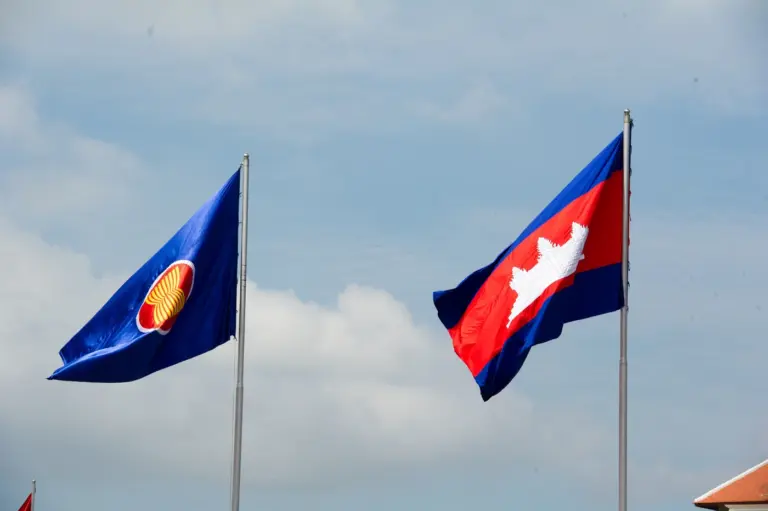
Dialogue Partners: Armenia, Azerbaijan, Cambodia, Egypt, Myanmar, Nepal, Saudi Arabia, Sri Lanka, Turkey, Qatar, UAE, Bahrain, Kuwait, and others
The simultaneous admission of India and Pakistan in 2017 was diplomatically complex. China and Pakistan are close allies; India and Pakistan are adversaries. This creates an inherent tension within the SCO that every meeting must navigate.
SCO's Size and Significance
- Combined population: ~3.5 billion (about 43% of world population)
- Combined GDP: ~$23 trillion (about 20% of global GDP)
- Geographic coverage: About 60% of Eurasian landmass
- It is the world's largest regional organisation by geographic area
SCO Structure
Council of Heads of State (CHS): The supreme decision-making body. Annual summit of leaders, rotating presidency.
Council of Heads of Government (CHG): Prime ministers meet annually, focusing on trade and economic cooperation.
Council of Foreign Ministers: Meets before the Heads of State summit to prepare agenda.
SCO Secretariat: Based in Beijing. Handles administrative, analytical, and coordination functions.
RATS (Regional Anti-Terrorist Structure): Based in Tashkent, Uzbekistan. This is the SCO's counter-terrorism arm — see below.
SCO Business Council and Interbank Consortium: Promote economic and business cooperation.
RATS: Regional Anti-Terrorist Structure
RATS (Regional Anti-Terrorist Structure) is one of the SCO's most substantive operational mechanisms. Headquartered in Tashkent, RATS:
- Facilitates information exchange on terrorist organisations, groups, and individuals
- Maintains a database of designated terrorist entities
- Coordinates counter-terrorism exercises
- Provides legal assistance between member states on terrorism cases
SCO and RATS use a broad definition of terrorism that includes separatism and religious extremism — which aligns with China's approach to Xinjiang (Uyghurs) and Russia's approach to Chechnya. Critics, especially from the West, argue this definition can be used to suppress legitimate political dissent.
India uses RATS primarily to coordinate intelligence on cross-border terrorism originating from Pakistan — though the complexity of India-Pakistan dynamics within the SCO makes this awkward.
SCO Cyber Norms
The SCO has also developed a framework for “information security” — which, unlike Western norms of an open internet, emphasises state sovereignty over cyberspace and information space. China and Russia have pushed this framework as an alternative to the Western multi-stakeholder internet governance model.
India has a more nuanced position — it participates in SCO discussions but also engages with Western internet governance forums.
Security Cooperation in the SCO
Counter-Terrorism
The SCO's founding rationale was addressing the "three evils" — terrorism, separatism, and extremism. This framing was shaped by the post-9/11 context and Central Asian concerns about militant Islam spreading from Afghanistan.
Annual SCO joint military exercises — Peace Mission — are held to practice counter-terrorism operations. India has participated in these exercises.
Afghanistan: The Common Concern
Afghanistan is the one security challenge all SCO members share. All border states (China, Pakistan, Tajikistan, Uzbekistan) fear Taliban-origin terrorism spilling over. The Taliban's control of Afghanistan since 2021 has made SCO discussions on Afghanistan particularly charged.
India's position is unique: it has historical ties to Afghan civil society, concerns about Pakistan-sponsored terrorism routed through Afghanistan, and strategic interest in Central Asian connectivity. India advocates for an "Afghan-led, Afghan-owned" political process.
Economic Cooperation in the SCO
Economic cooperation has been aspirational more than actual. The main obstacles are:
- Competing connectivity visions: China's BRI (Belt and Road Initiative) vs India's concerns about sovereignty (the China-Pakistan Economic Corridor passes through Pakistan-occupied Kashmir)
- Currency and payment systems: Russia and China push for de-dollarisation and trade in national currencies; India is cautious
- No free trade agreement: Unlike ASEAN, the SCO has no FTA
But trade among SCO members does flow — Central Asian energy reaches China; Indian pharmaceuticals reach Central Asia; Russian commodities flow across the region.
India’s Chabahar Port ambition — connecting to Central Asia via Iran, bypassing Pakistan — is part of India’s alternative connectivity vision within the SCO space.
India's SCO Presidency 2023
India held the SCO Chairmanship in 2022-23. The year's theme was: "Towards a SECURE SCO" — Security, Economy, Connectivity, Unity, Respect for Sovereignty and Territorial Integrity, and Environment.
Key events:
June 2023 SCO Summit (Virtual): The Summit was held virtually — an unusual format that India chose. PM Modi hosted. The joint statement was adopted. Pakistan's PM Shehbaz Sharif and China's Xi Jinping participated.
India conducted many SCO sectoral meetings in person during its presidency: on education, tourism, startups, traditional medicine, and digital economy.
India's divergence at the Summit: India did not endorse the joint statement section on BRI/connectivity that referenced Pakistani corridors. India did not sign the paragraph on the China-Pakistan Economic Corridor (CPEC) as it passes through Pakistan-occupied Kashmir — a consistent Indian position.
This reflected India's complex SCO reality: engaging with the organisation while firmly protecting its core interests.
India-SCO: The Fundamental Tension
India's SCO membership involves a genuine strategic contradiction:
- India joined to gain access to Central Asian markets and security dialogues
- But the SCO is effectively China-led, and China is India's biggest strategic competitor
- Pakistan's membership means India's adversary is in the same room
- India's concerns about Chinese influence in the neighbourhood are heightened, not reduced, by SCO participation
Why does India stay? Because exiting would cede influence. Central Asia matters for India's energy access, connectivity, and counter-terrorism. Staying in gives India a voice — even if that voice is often a dissent.
SCO vs Other Groupings
| Feature | SCO | NATO | ASEAN |
|---|---|---|---|
| Geographic base | Eurasia | North Atlantic | Southeast Asia |
| Core function | Security + economic | Collective defence | Economic integration + political |
| USA membership | No | Yes | No (dialogue partner) |
| China role | Dominant | No | Dialogue partner |
| India membership | Yes | No | Dialogue partner |
| Binding obligations | Limited | Article 5 (NATO) | Non-binding (ASEAN) |
Related: ASEAN Full Form: Association of Southeast Asian Nations
Related: QUAD: Quadrilateral Security Dialogue and India
Frequently Asked Questions
What is SCO and when was it founded?
SCO stands for Shanghai Cooperation Organisation. It was founded on 15 June 2001 in Shanghai, China, evolving from the Shanghai Five grouping (1996). Its headquarters are in Beijing.
When did India join the SCO?
India became a full member of the SCO in June 2017 at the Astana Summit in Kazakhstan. Pakistan joined at the same time — making both India and Pakistan members simultaneously.
What is RATS in the SCO?
RATS stands for Regional Anti-Terrorist Structure — the SCO's counter-terrorism arm, headquartered in Tashkent, Uzbekistan. It facilitates intelligence sharing, maintains a terrorism database, and coordinates counter-terrorism exercises among member states.
What was India's role during its 2023 SCO Chairmanship?
India chaired the SCO in 2022-23. The June 2023 summit was held virtually. India promoted themes of connectivity, startups, and traditional medicine. But India declined to endorse the BRI/CPEC references in the joint declaration — reflecting its consistent position on Pakistan-administered Kashmir.
Why is India's SCO membership strategically complex?
India is in the SCO alongside China (its main strategic competitor) and Pakistan (its adversary). The organisation is effectively China-led and promotes connectivity frameworks (BRI) that India has reservations about. India stays to maintain influence in Central Asia and engage in security dialogues, while carefully protecting its national interests.
Tell Google you want more of this.
Add Anantam IAS as a preferred sourceOne tap, and this site shows up more often in your own Top Stories, AI Overviews and AI Mode. Remove it any time.