The QUAD (Quadrilateral Security Dialogue) is the grouping of four democracies — the United States, India, Japan, and Australia — that has become the most significant minilateral security forum in the Indo-Pacific.
China calls it an "Asian NATO." India insists it's not a military alliance. The truth is more nuanced — and more interesting.
QUAD: Basic Facts
| Particulars | Details |
|---|---|
| Full name | Quadrilateral Security Dialogue |
| Members | United States, India, Japan, Australia |
| Founded | 2007 (first iteration); 2017 (revival) |
| Summit level | Leaders' Summit since March 2021 |
| Secretariat | None (informal grouping) |
| Official languages | English |
| Binding obligations | None — voluntary and cooperative |
The QUAD has no formal charter, no secretariat, and no binding commitments. It's a consultative forum — but one with growing ambition and deliverables across multiple domains.
QUAD: Origins in 2007
The QUAD’s first iteration came from an unlikely event: the 2004 Indian Ocean Tsunami. The scale of destruction (250,000 deaths across 14 countries) overwhelmed individual country response capabilities. The US, India, Japan, and Australia coordinated their tsunami relief — and discovered they worked well together.
This maritime cooperation planted a seed. In 2007, Japanese Prime Minister Shinzo Abe formalised this into a security dialogue — the first QUAD meeting. Abe's vision was explicitly about maintaining a "free and open" Indo-Pacific, with democratic values as a shared foundation.
But the 2007 QUAD collapsed within months. Why?
- Australia pulled out under PM Kevin Rudd, who didn't want to provoke China. Australia was deeply economically dependent on China.
- India was cautious — unwilling to be seen as part of an anti-China coalition. India's traditional non-alignment instincts were still strong.
- China protested vigorously, calling the QUAD a hostile encirclement.
The QUAD went dormant. For a decade, it existed only in think-tank papers.
QUAD Revival: 2017
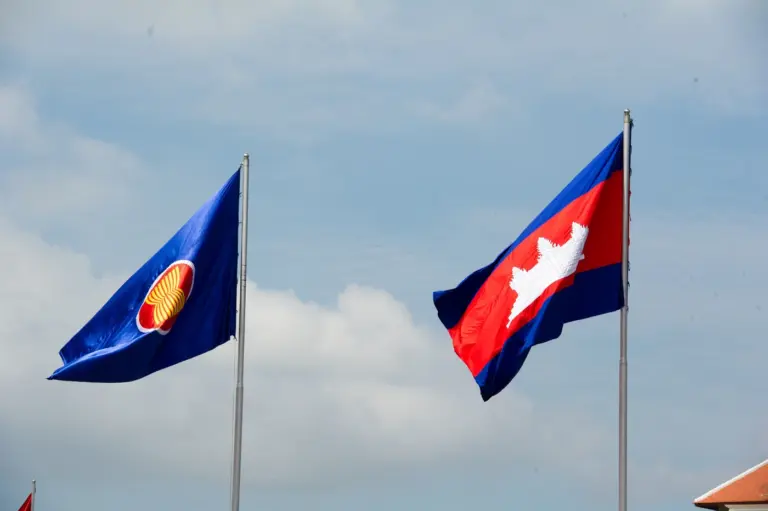
The QUAD was revived in November 2017 — officials from all four countries met on the sidelines of the ASEAN Summit in Manila, Philippines.
What changed between 2007 and 2017?
China's assertiveness escalated dramatically:
- South China Sea: China built artificial islands, militarised them, and rejected the 2016 arbitration ruling
- Doklam standoff (2017): China attempted to extend a road on Bhutan territory near India's strategic Siliguri Corridor
- BRI (Belt and Road Initiative) raised concerns about debt diplomacy across Asia
- China's military budget tripled; its naval power expanded dramatically
Australia's calculus shifted as Chinese interference in Australian domestic politics (political donations, academic freedom, port ownership) became undeniable. The Australia-China relationship deteriorated sharply.
India's 2017 Doklam standoff with China hardened New Delhi's assessment. India moved from cautious non-alignment to active strategic hedging.
Japan under Abe continued to push the "free and open Indo-Pacific" vision — now adopted by the US.
The 2017 revival was modest — senior officials, not leaders. But it was a signal.
QUAD at Leaders' Level: 2021 Onwards
The Biden administration elevated the QUAD dramatically. On 12 March 2021, the first-ever QUAD Leaders' Virtual Summit was held — Presidents Biden and Modi, PM Morrison (Australia), and PM Suga (Japan) met at head-of-state level.
This was a milestone. The QUAD moved from officials-level to the highest diplomatic level in one step.
In-person Leaders' Summit (September 2021): The first in-person QUAD Leaders' Summit at the White House — Biden hosted Modi, Morrison, and Suga in Washington D.C.
| QUAD Summit | Date | Format | Key Outcome |
|---|---|---|---|
| Virtual Leaders' Summit | March 2021 | Virtual | Vaccine initiative; climate; supply chains |
| In-Person Leaders' Summit | September 2021 | Washington D.C. | QUAD Vaccine Partnership; semiconductor supply chains |
| Tokyo Summit | May 2022 | Tokyo | IPEF alongside QUAD; infrastructure |
| Hiroshima Summit | May 2023 | G7 margins | Technology; health; maritime |
| Wilmington Summit | September 2024 | Biden's Delaware home | Cancer Moonshot; maritime security; tech |
The Wilmington Summit (September 2024) was notable as Biden's last major diplomatic hosting. PM Modi's attendance — breaking India's tradition of not attending events at personal residences of foreign leaders — signalled the relationship's depth.
QUAD Focus Areas
The QUAD is explicitly not a military alliance — there is no Article 5-type mutual defence commitment. It focuses on positive cooperation across multiple domains:
1. Maritime Security and Freedom of Navigation
The Indo-Pacific's seas — especially the South China Sea and Indian Ocean — are at the heart of QUAD. China's island-building in the South China Sea and expanding naval presence in the Indian Ocean are the shared concerns.
QUAD cooperation includes:
- Information sharing on maritime domain awareness
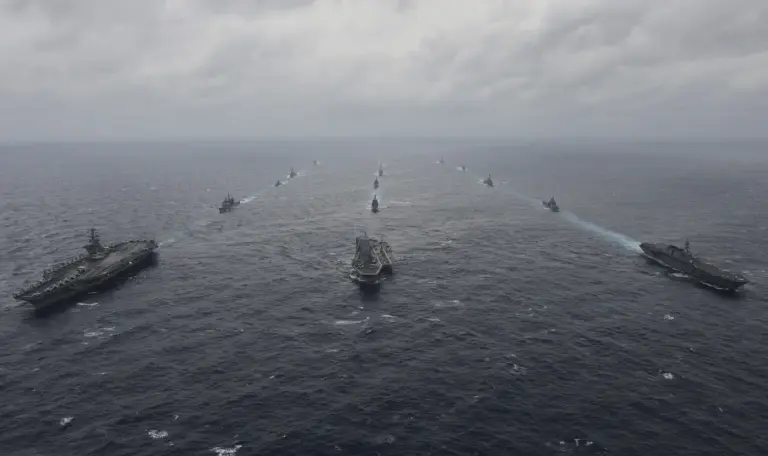
- Joint naval exercises — MALABAR exercise (originally India-US; Japan joined in 2015; Australia rejoined in 2020 after QUAD revival)
- Humanitarian Assistance and Disaster Relief (HADR) coordination
- Maritime information fusion — sharing ship tracking data
India's invitation for Australia to rejoin MALABAR in 2020 was a significant signal — India had previously excluded Australia to avoid provoking China.
2. Technology and Supply Chains
QUAD established a Critical and Emerging Technology Working Group focused on:
- Semiconductor supply chains (reducing dependence on China and Taiwan single-point risks)
- 5G/6G technology standards
- Artificial intelligence governance
- Quantum computing cooperation
- Cybersecurity coordination
The semiconductor push aligns with the US CHIPS Act (2022), India’s Semicon India programme, Japan’s $13 billion chip investment plans, and Australia’s critical minerals advantage.
3. Vaccine and Health Security
The QUAD Vaccine Partnership — announced March 2021 — was the Biden administration's most concrete early QUAD deliverable. The plan:
- India manufactures (Biological E, Serum Institute)
- US provides raw materials, technology, and funding
- Japan and Australia provide logistics and financing
- Target: 1 billion COVID-19 vaccines for Indo-Pacific countries by end of 2022
In practice, the partnership ran into problems — India's devastating second COVID wave (April-May 2021) required India to pause exports to manage domestic demand. But the framework signalled health cooperation intent.
Quad Cancer Moonshot (2024): At the Wilmington Summit, QUAD launched a cancer initiative — particularly focused on cervical cancer across the Indo-Pacific — combining diagnostics, treatment access, and genomics.
4. Climate and Clean Energy
QUAD's Climate Working Group focuses on:
- Clean hydrogen cooperation
- Climate-resilient infrastructure for small island developing states
- Methane reduction
- Climate finance for Indo-Pacific developing nations
This dimension reflects India's Green Hydrogen Mission and the US Inflation Reduction Act's clean energy push.
5. Infrastructure
QUAD Infrastructure Coordination Group coordinates development finance across the Indo-Pacific — positioning democratic alternatives to BRI-style projects. This involves the US DFC (Development Finance Corporation), Japan's JICA, Australia's development finance, and India's Lines of Credit programme.
India's QUAD Strategy: The Balancing Act
India's QUAD participation involves genuine strategic tension — and India manages it deliberately.
India's hedging approach:
- India participates actively in QUAD but rejects the "alliance" label
- India maintains the Russian relationship — Russia is India's largest arms supplier and vetoed a UNSC resolution that would have harmed India during the 1971 war
- India is in the SCO (with China and Russia)
- India does not host QUAD military bases
- India insists QUAD is "positive" cooperation, not China-containment
When asked about QUAD and China, Indian officials consistently say: "QUAD is not directed against any country." This formulation is deliberate.
Why India is committed anyway:
- China's aggression in Ladakh (2020) — killing 20 Indian soldiers at Galwan Valley — was a turning point
- China's economic coercion of Australia demonstrated a pattern
- India's technology and defence needs align with QUAD partners
- The Indo-Pacific security environment genuinely benefits India from QUAD maritime cooperation
China's Response to QUAD
China has consistently and strongly opposed the QUAD:
- Called it an "Asian NATO" and an attempt to contain China
- Pressured QUAD members bilaterally to reduce participation
- Described QUAD vaccine partnership as "geopoliticising vaccines"
- Increased military pressure on each QUAD member (Taiwan Strait for US/Japan; South China Sea for Australia; LAC for India)
Russia has also expressed opposition — characterising QUAD as a destabilising, bloc-based approach to regional security.
But these objections haven't stopped QUAD's evolution. If anything, Chinese pressure on each member has strengthened QUAD's rationale.
QUAD vs Other Indo-Pacific Frameworks
India participates in multiple overlapping Indo-Pacific frameworks:
| Forum | Members | Focus |
|---|---|---|
| QUAD | US, India, Japan, Australia | Security, tech, health, maritime |
| AUKUS | Australia, UK, USA | Nuclear submarines, advanced military tech |
| I2U2 | India, Israel, UAE, USA | Food, water, energy, tech |
| IPEF | 14 Indo-Pacific countries | Trade, supply chains, clean energy |
| Five Eyes | US, UK, Australia, Canada, NZ | Intelligence sharing |
India is in QUAD and I2U2 but not AUKUS or Five Eyes. India's position is to participate in frameworks that advance its interests without creating binding defence commitments that could constrain its strategic autonomy.
Related: SCO: Shanghai Cooperation Organisation and India
Related: United Nations: Structure, Agencies and India's Role
Frequently Asked Questions
What is QUAD?
QUAD stands for Quadrilateral Security Dialogue — a grouping of four democracies: United States, India, Japan, and Australia. It was founded in 2007, went dormant, and was revived in 2017. It became a Leaders' Summit in 2021.
When was QUAD formed?
QUAD was first formed in 2007 by Japanese PM Shinzo Abe. It collapsed within months due to Australia's withdrawal. It was revived in November 2017 on the sidelines of the ASEAN Summit in Manila and elevated to Leaders' Summit level in March 2021.
Why is QUAD important for India?
QUAD is important for India because it provides a framework for maritime security cooperation in the Indo-Pacific, technology partnerships (semiconductors, AI), vaccine and health cooperation, and diplomatic alignment with three major democracies. After the 2020 Galwan Valley clash with China, QUAD's strategic relevance for India increased sharply.
What does China say about QUAD?
China calls QUAD an "Asian NATO" and views it as an attempt to contain China. China has pressured each QUAD member to reduce engagement and has used economic coercion (especially against Australia) as leverage.
Is QUAD a military alliance like NATO?
No. QUAD has no formal treaty, no permanent secretariat, no binding mutual defence commitments, and no Article 5-type collective defence clause. India specifically insists QUAD is not a military alliance. It's a consultative forum focused on positive cooperation — maritime security, technology, health, climate — rather than deterrence or military coordination.
Tell Google you want more of this.
Add Anantam IAS as a preferred sourceOne tap, and this site shows up more often in your own Top Stories, AI Overviews and AI Mode. Remove it any time.