🎉 Introducing free Online Practice Tests.
I · The PSIR OptionalCSE 2026 · Batch live
Optional · 500 marks · Paper I + II

PSIR Optional for UPSC, taught the Rahul Puri way.

Political Science & International Relations — the optional with the deepest overlap into GS II and Essay, now taught in small batches from Old Rajinder Nagar by Rahul Puri, ex-Rau's IAS faculty of a decade. Answer-writing-first. Current-affairs-linked. Built to score.

GS overlap
~40% Polity, IR, Essay
Faculty
10+ yrs at Rau's IAS
Batch size
35–45 aspirants
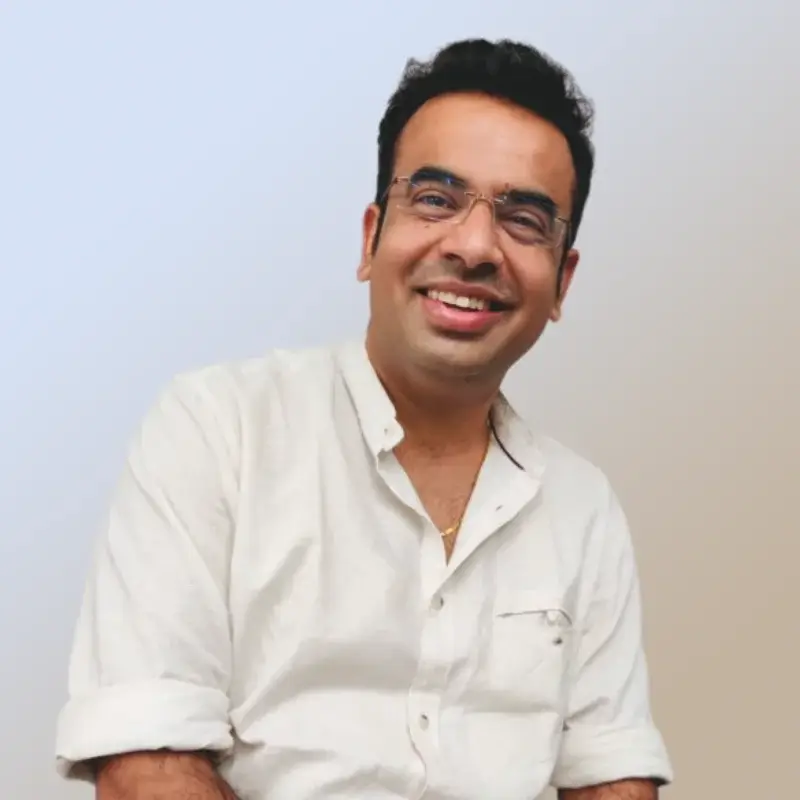
Rahul Puri
Director · PSIR Faculty
Mains weight500 / 1750
2025 topper marks~300 /500 possible
Syllabus cost5–6 months
2026 batch fee₹45,500
II · Why PSIR

Why serious aspirants keep returning to PSIR.

~40% overlap with GS II & III.

Polity and Governance are already on your reading list for GS II. IR and India-and-the-world are GS II staples. Internal Security and Economic Development echo Paper 2 Section B. Nothing you learn for PSIR is wasted on Mains.

Essay paper, unlocked.

The Philosophy section of the essay paper (Liberty, Justice, Democracy, Nationalism) draws directly from PSIR Paper 1. Most aspirants scramble for quotes — PSIR students already have frameworks.

Current affairs linkage.

Every headline — a cabinet reshuffle, a G-20 summit, a Supreme Court judgment on federalism — is PSIR. Answer writing becomes analytical the moment you have the theoretical vocabulary.

Consistent, writeable scoring.

PSIR has been a 280–310 scorer for a decade. No fashion-cycle collapses like PubAd after 2013. Marks come from structure and argument, not one-line factual recall.

Already convinced? See 2026 batch details, the full syllabus, the booklist, or jump to our faculty spotlight.

III · The faculty

Rahul Puri has been teaching PSIR in
Old Rajinder Nagar for over a decade.

Rahul Puri — PSIR faculty at Anantam IAS, ex-Rau's IAS

Rahul Puri sir taught PSIR at Rau's IAS for ten years before co-founding Anantam IAS as the flagship initiative of its ex-faculty. His approach is the opposite of what most UPSC aspirants expect from a political theory class — theory is not a syllabus to finish, it is a framework to argue with. Every Rawlsian paragraph links to a Supreme Court judgment, every Gramsci reference lands on yesterday's editorial.

Subjects
PSIR · Polity & Governance · International Relations · Internal Security
Classroom experience
10+ years, including a decade at Rau's IAS, Old Rajinder Nagar
Notable students
Meghna Chakravarthy, Kashish Kalra (AIR 111, CSE 2024 PSIR topper), plus 2025 class mentees
Philosophy
Conceptual clarity first, answer-writing second, rote reproduction never
Public work
YouTube —
Anantam IAS & Rahul Puri PSIR
channel

Vaibhav Mishra co-leads Polity and mentorship, supporting the PSIR cohort on Paper 1 Section B and Paper 2 Section B content.

IV · The syllabus

Two papers. 500 marks. A syllabus you can map in one sitting.

Download full syllabus

Paper I · Mains

Political Theory & Indian Politics

250 marks

Section A · Political Theory & Thought

  1. Political Theory — meaning and approaches
  2. Theories of the State — Liberal, Neo-liberal, Marxist, Pluralist, Post-colonial, Feminist
  3. Justice (Rawls and after) · Equality · Rights
  4. Democracy — Classical and Contemporary theories
  5. Power, Hegemony, Ideology, Legitimacy
  6. Political Ideologies — Liberalism, Socialism, Marxism, Fascism, Gandhism, Feminism
  7. Indian Political Thought — Dharamshastra, Arthashastra, Buddhist; Sir Syed, Aurobindo, Gandhi, Ambedkar, M.N. Roy
  8. Western Political Thought — Plato to Hannah Arendt

Section B · Indian Government & Politics

  1. Indian Nationalism — National Movement, social & economic dimensions, Partition
  2. Making of the Indian Constitution
  3. Salient Features of the Constitution
  4. Principal Organs of the Union & State Governments
  5. Grassroots Democracy
  6. Statutory Institutions & Commissions (EC, CAG, FC, UPSC, NCW, NHRC, NCM, NCBC, NCST, NCSC)
  7. Federalism
  8. Planning & Economic Development
  9. Caste, Religion & Ethnicity in Indian Politics
  10. Party System · Social Movements

Paper II · Mains

Comparative Politics & International Relations

250 marks

Section A · Comparative Politics & IR

  1. Comparative Politics — nature and major approaches
  2. State in Comparative Perspective — capitalist, socialist, developing societies
  3. Politics of Representation and Participation
  4. Globalisation — responses from developed and developing societies
  5. Approaches to the study of International Relations
  6. Key Concepts — national interest, security, power, balance of power, deterrence, collective security, globalisation
  7. Changing International Political Order — Cold War, collapse of USSR, unipolarity, NAM
  8. Evolution of the International Economic System — Bretton Woods to WTO, G-77, G-20
  9. United Nations & its Specialised Agencies
  10. Regionalisation — EU, ASEAN, APEC, SAARC, NAFTA
  11. Contemporary Global Concerns — democracy, human rights, environment, gender justice, terrorism, nuclear proliferation

Section B · India and the World

  1. Indian Foreign Policy — determinants, non-alignment, Nehru
  2. India's contribution to NAM
  3. India and South Asia — neighbours, SAARC, Look/Act East
  4. India and the Global South
  5. India and the Global Centres of Power — US, EU, Japan, China, Russia
  6. India and the UN System — peacekeeping, UNSC reforms
  7. India and the Nuclear Question
  8. Recent developments in Indian Foreign Policy

Deep-dive pages: PSIR Paper 1 expanded · PSIR Paper 2 expanded · Official syllabus PDF.

VI · The reading list

Sixteen essential books. The rest is noise.

i.

An Introduction to Political Theory

O.P. Gauba

ii.

Modern Indian Political Thought

V.P. Verma & Bidyut Chakrabarty

iii.

Western Political Thought

Bhagwan · Vidya Bhushan

iv.

Indian Government and Politics

B.L. Fadia

v.

Introduction to the Constitution of India

D.D. Basu

vi.

Politics in India since Independence

NCERT (Class XII)

vii.

Global Politics

Andrew Heywood

viii.

Comparative Government and Politics

Rod Hague & Martin Harrop

ix.

International Relations

Peu Ghosh

x.

Challenge and Strategy — Rethinking India's Foreign Policy

Rajiv Sikri

xi.

Does the Elephant Dance? Contemporary Indian Foreign Policy

David M. Malone

xii.

India's Foreign Policy — Retrospect & Prospect

Sumit Ganguly (ed.)

xiii.

The Economist · Foreign Affairs · IDSA commentary

Periodicals

xiv.

Perspective — PSIR Monthly Magazine

Anantam IAS

xv.

PSIR PYQ bank (2013–2024)

Anantam IAS

xvi.

Class notes · Rahul Puri

Batch material (enrolled students)

Full list with chapter-level guidance on the PSIR booklist page.

VII · The strategy

A phased, six-month roadmap to PSIR readiness.

Phase 1 · Months 1–2

Foundation & thinkers

  • Paper 1 Section A — Gauba, Western & Indian Thought
  • Build a thinker-quote bank (50 quotes)
  • Weekly answer-writing · 2 per week · 150 words
  • Class concept maps for Liberty, Justice, Democracy

Phase 2 · Months 3–4

Indian polity deep dive

  • Paper 1 Section B — Fadia, D.D. Basu, NCERT XII
  • Link to Supreme Court judgments of the last 3 years
  • Weekly answer-writing · 3 per week · 200 words
  • First thematic test (Paper 1 full)

Phase 3 · Month 5

IR & comparative

  • Paper 2 Section A — Heywood, Hague & Harrop
  • Daily editorial · The Hindu + Foreign Affairs
  • Three thinker integration per answer
  • Second thematic test (Paper 2 Section A)

Phase 4 · Month 6

India & world + revision

  • Paper 2 Section B — Sikri, Malone, periodicals
  • Four full-length mocks · evaluated by faculty
  • Previous-year-question second pass · model answers
  • Interview linkage notes for DAF
VIII · The honest comparison

PSIR against the three other popular choices.

DimensionPSIRSociologyPublic AdministrationHistory
GS overlapHigh (~40%) — GS II, III, EssayModerate — GS I, IIModerate — GS IIModerate — GS I
Syllabus lengthMedium · readable in one sittingShort · ~150 conceptsMediumLong · ancient to modern
Scoring consistencyHigh · 280–310 band for a decadeHigh · 290+ band since 2017Dropped post-2013 · 250–270 bandVolatile · factuality penalised
Current affairs linkageDaily · every headline is PSIRModerate · periodicWeakWeak
Prelims transferStrong · Polity + IRWeak · only SocietyWeakStrong · Ancient, Medieval, Modern
Best fit forAspirants who follow news & institutionsAspirants drawn to social theoryServing officers · few new takersLiterature & history readers

Deep reads: When & why to choose PSIR.

IX · Rankers who wrote PSIR

The case study is the evidence.

All India Rank96

"For Polity and PSIR, just trust Rahul Sir and Vaibhav Sir. That was the whole strategy. I stopped collecting books after the third month. Class notes, answer writing, and two rounds of PYQ — that was it."

Alongside Kashish, Meghna Chakravarthy also wrote PSIR in CSE 2024 as an Anantam mentee. 2025 class PSIR students — Samiksha Dwivedi (AIR 56), Aniket Ranjan (AIR 48) and others — feature below with their rank badges.

Prachi Honey, AIR 28 CSE 202528
Prachi Honey
Aniket Ranjan, AIR 48 CSE 202548
Samiksha Dwivedi, AIR 56 CSE 202556
Anantam IAS rank holder, AIR 96 CSE 202596
Anantam IAS rank holder, AIR 106 CSE 2025106

Read long-form interviews on the results page.

X · The 2026 batch

Morning cohort, Old Rajinder Nagar.
Zoom parallel for everyone else.

Batch
2026 Morning
Mode
Offline · Zoom parallel
Schedule
Mon–Fri, 9:00 AM – 12:00 PM
Duration
~6 months
Campus
53/1 Buda Bazaar Road, Old Rajinder Nagar, Delhi 110060
Medium
English · Hindi cohort runs in parallel
Includes
16 tests · Mains Crash · Prelims Test Series · Mains Test Series
Faculty
Rahul Puri · Vaibhav Mishra

2026 Morning · one-time programme fee

₹45,500

Inclusive of 16 tests, Mains Crash Course & dedicated Prelims and Mains test series.

Call 9844556580 or 6350381242 · WhatsApp +91 87969 87675

XIII · Ready for 2026

Sit through one lecture. Then commit to PSIR.

Book a free demo class — no counsellor call, no brochure in your inbox. Show up on Zoom, watch Rahul Puri teach a real Paper 1 Section A topic, then decide if this is the year you write PSIR.