Daily Digest
UPSC · Civil Services Examination
Current Affairs · Monday, 6 October 2025
Current affairs curated and edited by Anantam IAS faculty — pulled from The Hindu, PIB, IDSA, Foreign Affairs and the ministries. Read, annotate, revise.
Old Rajinder Nagar · Delhi 110005 · anantamias.com
India-EFTA trade agreement
Context:
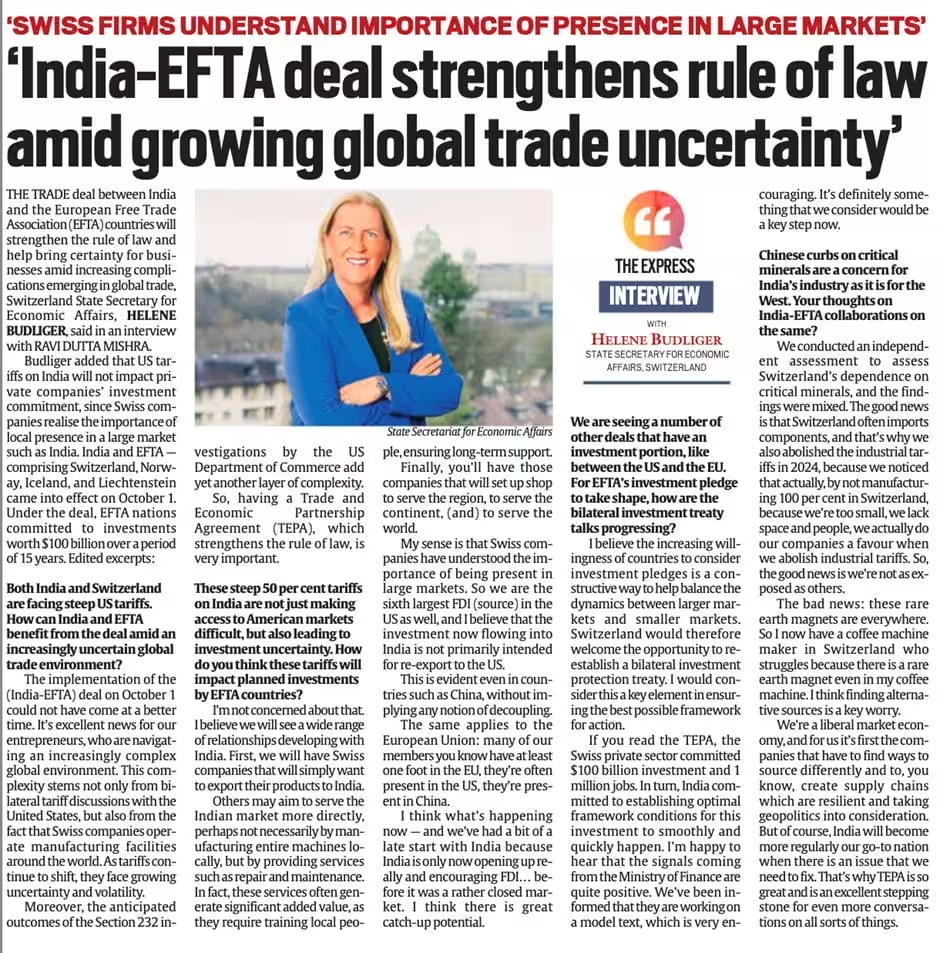
India has signed the free trade agreement with EFTA regarding which recently analysis was done by the Switzerland state secretary for economic affairs.
UPSC Relevance:
Indian Economy; International Relations
UPSC PYQ:
Q1. Consider the following countries: (2018)
- Australia
- Canada
- China
- India
- Japan
- USA
Which of the above are among the ‘free-trade partners’ of ASEAN?
(a) 1, 2, 4 and 5
(b) 3, 4, 5 and 6
(c) 1, 3, 4 and 5
(d) 2, 3, 4 and 6
About EFTA:
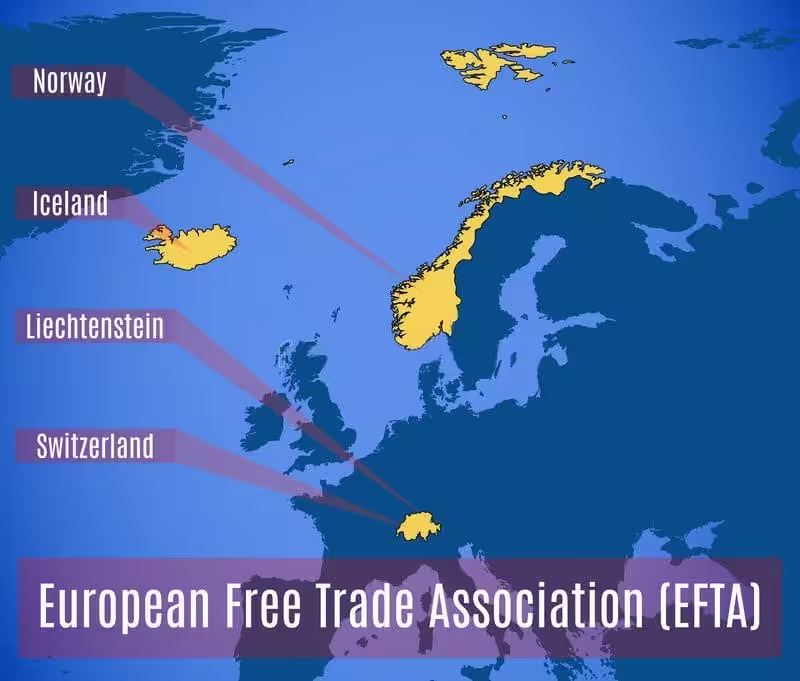
- The EFTA is the intergovernmental organization of Iceland, Liechtenstein, Norway and Switzerland.
- It was set up in 1960 (by the Stockholm Convention in 1960) by its then seven Member States for the promotion of free trade and economic integration between its members.
- The organization operates in parallel with the European Union (EU), and all four member states participate in the European Single Market and are part of the Schengen Area.
However, they are not a party to the European Union Customs Union.
The main tasks of EFTA
- Maintaining and developing the EFTA Convention, which regulates economic relations between the four EFTA States.
- Managing the Agreement on the European Economic Area (EEA Agreement), which brings together the EU and 3 of the EFTA States – Iceland, Liechtenstein and Norway – in a single (internal) market.
- Developing EFTA’s worldwide network of free trade agreements.
Trade relation between India and EFTA countries:
Trade and Economic Partnership Agreement (TEPA)
About:
- India signed a trade agreement with the four-nation EFTA. This agreement is officially dubbed Trade and Economic Partnership Agreement (TEPA).
- The agreement comprises of 14 chapters with main focus on market access related to goods, rules of origin, trade facilitation, trade remedies, etc.
- This is India’s fourth such agreement since 2014. The previous agreements were signed with Mauritius, the UAE, and Australia.
- Aim: For the first time in history of FTAs, binding commitment of $100 bn investment and 1 million direct jobs in the next 15 years has been given.
Key highlights of the TEPA:
- Legal commitment for promoting target-oriented investment and creation of jobs
- EFTA has committed to promote investments with the aim to:
- increase the stock of FDI by USD 100 billion in India in the next 15 years, and
- to facilitate the generation of 1 million direct employment in India, through such investments.
- The investments do not cover foreign portfolio investment (FPI).
Coverage:
- EFTA is offering 92.2% of its tariff lines which covers 99.6% of India’s exports.
- The EFTA’s market access offer covers 100% of non-agri products and tariff concession on Processed Agricultural Products (PAP).
- India is offering 82.7% of its tariff lines which covers 95.3% of EFTA exports of which more than 80% import is Gold.
- The effective duty on Gold remains untouched.
- Sensitivity related to PLI in sectors such as pharma, medical devices & processed food etc. have been taken while extending offers.
- Sectors such as dairy, soya, coal and sensitive agricultural products are kept in exclusion list.
Sub-sectors included:
- India has offered 105 sub-sectors to the EFTA and secured commitments in 128 sub-sectors from Switzerland, 114 from Norway, 107 from Liechtenstein, and 110 from Iceland.
Inclusion of Services:
- Services offer from EFTA include better access through digital delivery of Services (Mode 1), commercial presence (Mode 3) and improved commitments and certainty for entry and temporary stay of key personnel (Mode 4).
- TEPA has provisions for Mutual Recognition Agreements in Professional Services like nursing, chartered accountants, architects etc.
- Robust IPR regime
- The IPR chapter with Switzerland, which has high standard for IPR, shows India’s robust IPR regime.
- India’s interests in generic medicines and concerns related to evergreening of patents have been fully addressed.
Significance of TEPA for India:
Trade opportunities
- It will empower Indian exporters access to specialized inputs and create conducive trade and investment environment.
- This would boost exports of Indian made goods as well as provide opportunities for services sector to access more markets.
- Opportunity to integrate into EU markets
- Over 40% of Switzerland’s global services exports are to the EU.
- Indian companies can look to Switzerland as a base for extending its market reach to EU.
- Diversified supply chain: It will help India diversify imports away from China.
- Boost to Make in India and Atmanirbhar Bharat by encouraging domestic manufacturing in various sectors.
- These include Infrastructure and Connectivity, Manufacturing, Machinery, Pharmaceuticals, Chemicals, Food Processing, Transport and Logistics, Banking and Financial Services and Insurance.
- Creation of large number of direct jobs
- Including better facilities for vocational and technical training.
Challenges for India:
- India runs a trade deficit with most of its top trade partners except for the US.
- This is also true in the case of FTAs that India has signed in the past, especially with ASEAN nations.
- This is due to high average tariffs in India which hovers around 18%, among the highest in the world.
- The India-EFTA deal is also expected to widen the trade gap.
- That is why India pushed for investment commitment in the EFTA deal.
- Such investment could help India generate economic activity and jobs in exchange for giving market access to EFTA.
- Also, India could see gains in the services sector and the deal could help India power its services sector further.
- Difficulty for India to access the EFTA market
- Switzerland, which is India’s biggest trade partner among EFTA countries, decided to eliminate import duties on all industrial goods for all countries starting from January 1, 2024.
- The abolition of tariffs on all industrial products, including chemicals, consumer goods, vehicles and clothing is a concern for India.
- Industrial goods accounts for 98% of India’s $1.3 billion merchandise exports to Switzerland in FY2023.
- India’s goods will face stiffer competition despite any tariff elimination that would be part of the deal.
- Also, exporting agricultural produce to Switzerland remains challenging due to the complex web of tariffs, quality standards, and approval requirements.
- EFTA has not shown any inclination to make agriculture tariffs zero on most basic agricultural produce.
Source: https://anantamias.com/current-affairs/india-efta-trade-agreement/
Disaster Resilience

Context:
In this article writer discuss about India’s evolving strategy for disaster risk reduction (DRR) and resilience building, focusing on the integration of technology, finance, and institutional coordination.
UPSC Relevance:
Disaster and Disaster management
UPSC PYQ:
Q. Vulnerability is an essential element for defining disaster impacts and its threat to people. How and in what ways can vulnerability to disasters be characterized? Discuss different types of vulnerability with reference to disasters. (2019)
What is Disaster resilience:
Definition:
Disaster resilience is our ability to prevent, withstand and recover from the harmful impacts of natural hazards on people, places and the natural environment.
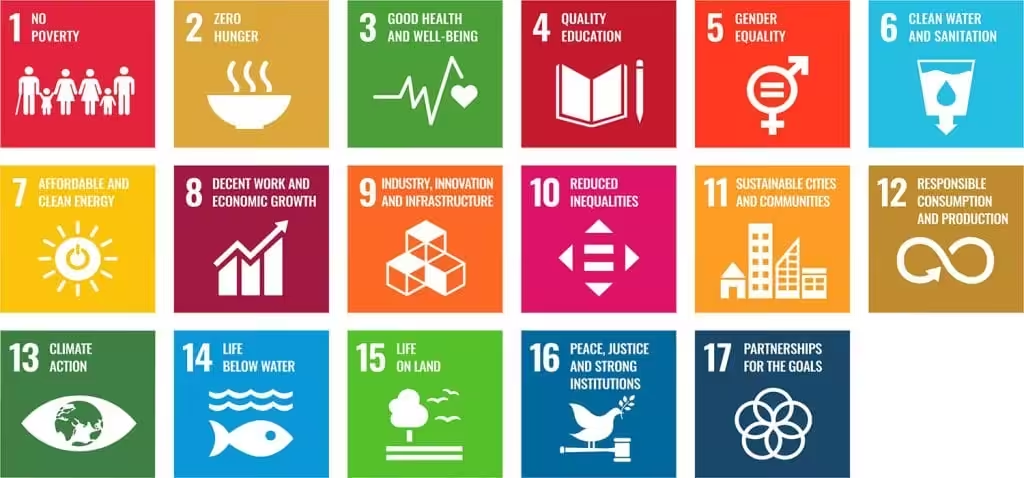
SDG 11 focuses explicitly on making cities and human settlements inclusive, safe, resilient, and sustainable. This goal underscores the importance of developing urban areas that can effectively anticipate and manage challenges posed by natural disasters, such as floods, earthquakes, and hurricanes.
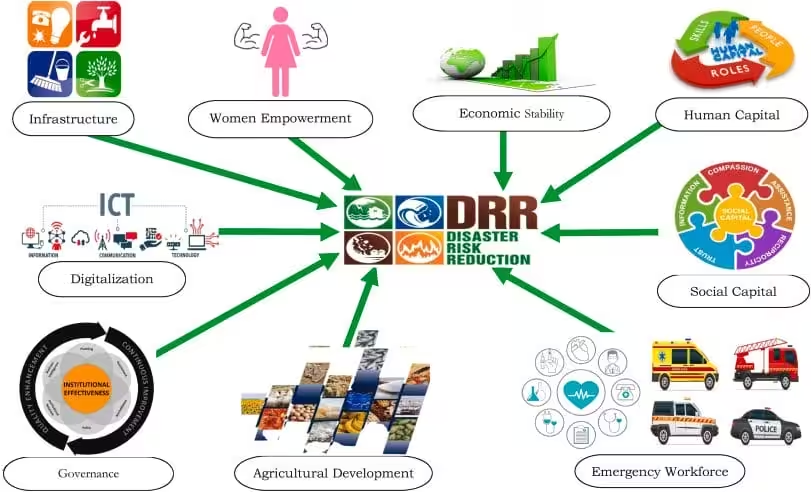
India Approach for Disaster Risk Reduction:
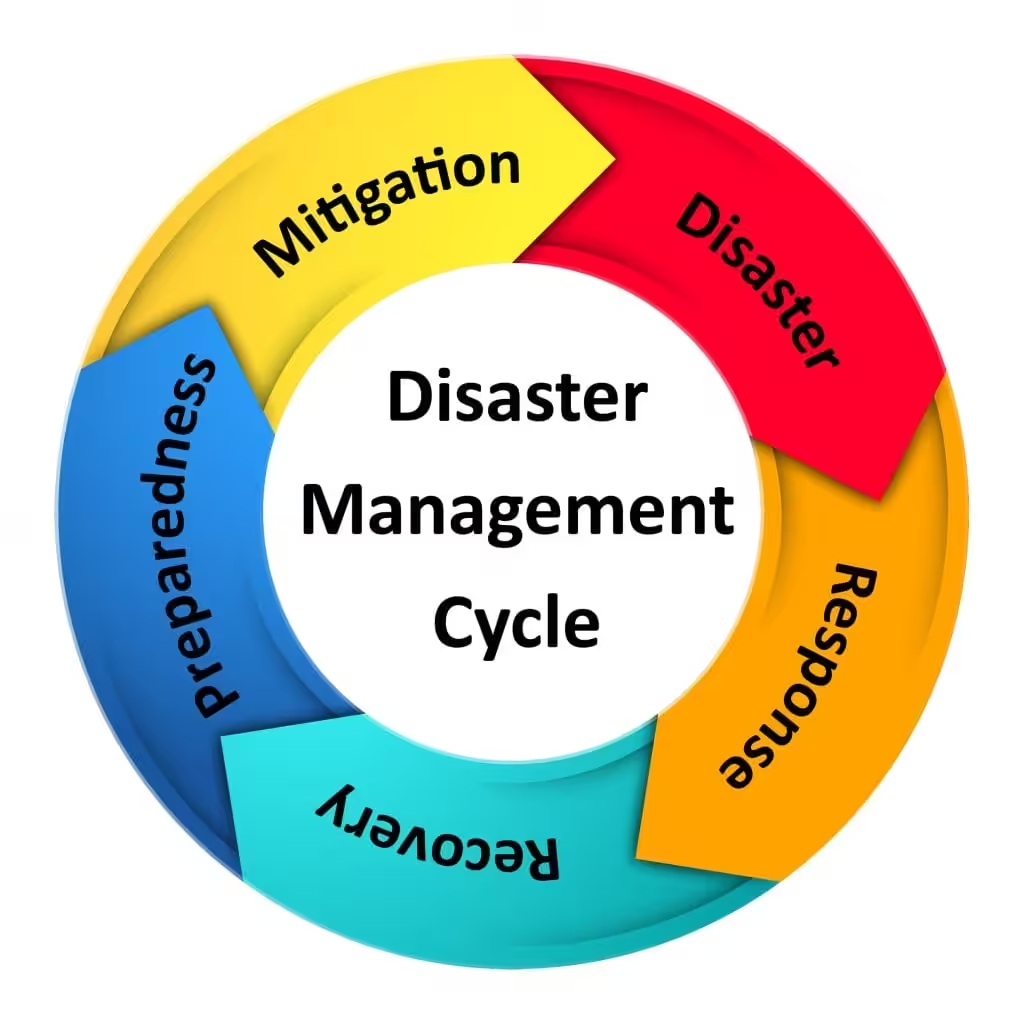
- India’s approach now covers pre-disaster, during disaster, and post-disaster phases.
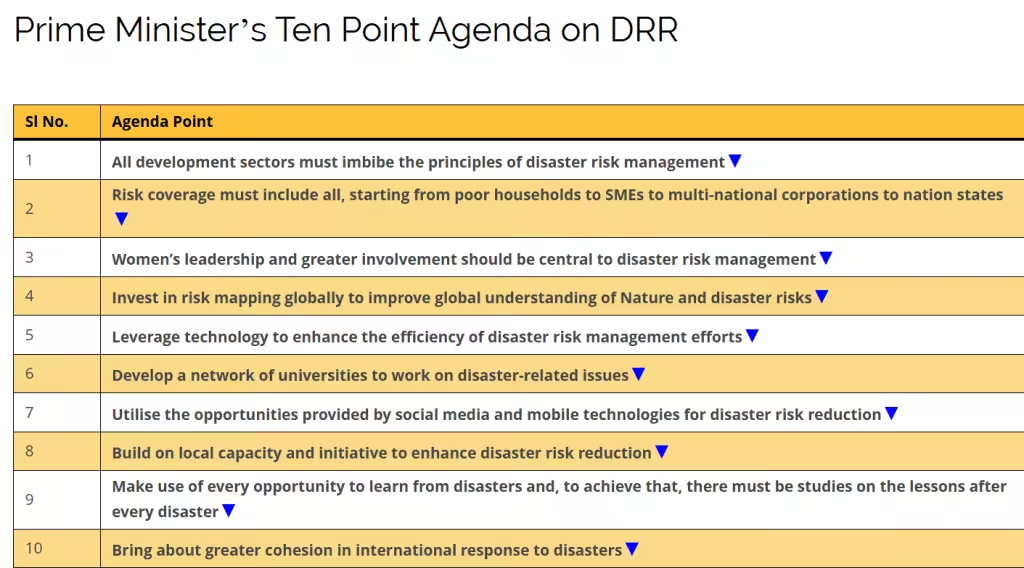
- Guided by the Prime Minister’s 10-Point Agenda on DRR (2016) and implemented by the Home Ministry (MHA) and NDMA.
Source: NDMA
15th Finance Commission & Budget Allocation:
- In 2021, the 15th Finance Commission allocated ₹22,184 crore ($3 billion) for DRR over 5 years.
- Emphasis shifted from post-disaster relief to prevention, mitigation, preparedness, capacity building, and reconstruction.
Funds distribution:
- 30% for first segment (preparedness 10%, capacity building 10%, mitigation 10%)
- 70% for post-disaster (response 40%, reconstruction 30%)
- Capacity Building and Institutional Strengthening:
- Establishment of geo-spatial training labs, faculty-led modules, and action-based learning at NIDM (National Institute of Disaster Management).
- A standard course covering 36 streams of disaster management launched.
- Creation of specialised volunteer groups like Apda Mitra and Yuva Apda Mitra.
- Leveraging Science and Technology:
- Use of remote sensing, scientific rainfall assessment, and bio-engineering for landslide prevention.
- Community-Level Disaster Preparedness
- Over ₹10,000 crore ($1.2 billion) approved for state-level DRR plans.
- International Collaboration
- India is contributing to the Coalition for Disaster Resilient Infrastructure (CDRI) to share best practices globally.
Source: https://anantamias.com/current-affairs/disaster-resilience/
Sir Creek
Context:
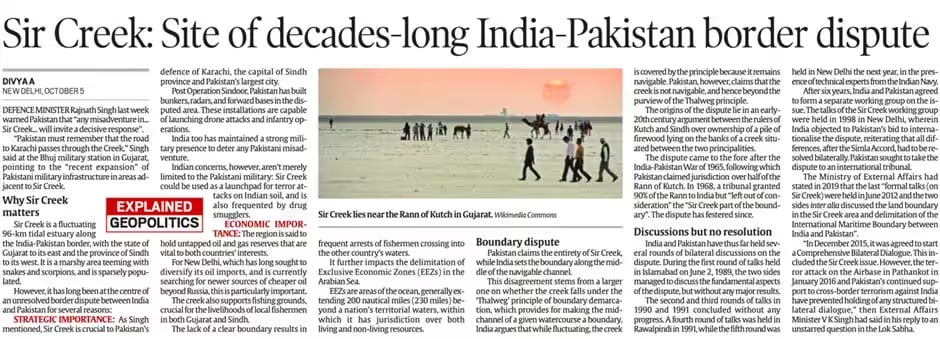
The Indian defense minister recently warned Pakistan against any misadventure in Sir Creek area.
UPSC Relevance:
India and its neighborhood- relations.
About Sir Creek:
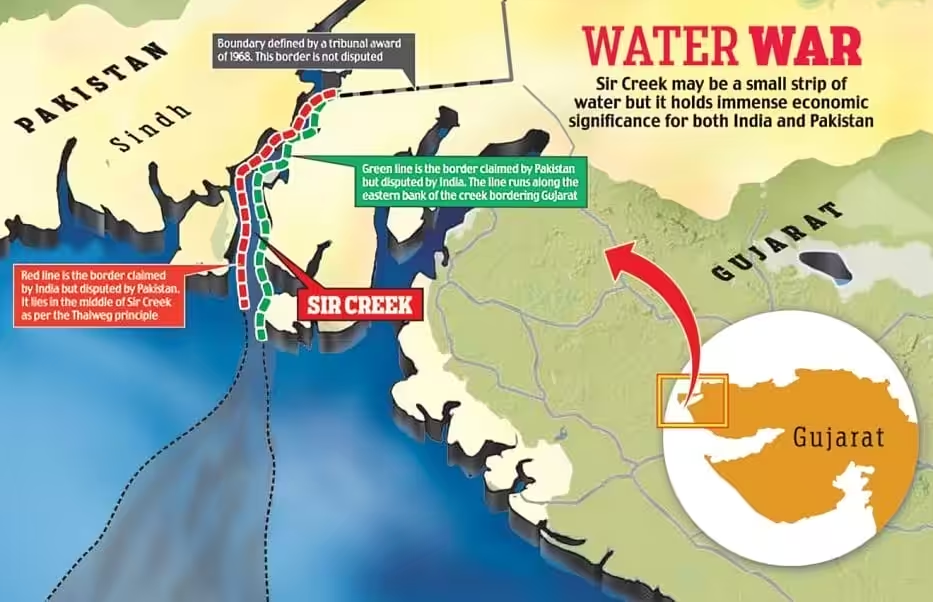
Sir Creek is a 96-kilometre strip of water located in the marshlands of the Rann of Kutch in Gujarat. Geographically, it forms a boundary between India’s Kutch region and Pakistan’s Sindh province before opening into the Arabian Sea. Historically, it was known as Ban Ganga and acquired the name “Sir Creek” during the colonial era, named after a British official.
Sir Creek dispute:
- The Sir Creek Dispute dates back to 1908, when disagreements arose between the ruler of Kutch and the Sindh government over firewood collection in the creek area. To settle the issue, the Bombay Government Resolution of 1914 was issued. The resolution contained conflicting provisions:
- Paragraph 9 said that the boundary should be to the east of the creek, implying the entire creek would belong to Pakistan.
- Paragraph 10, however, applied the Thalweg Principle, noting that Sir Creek is navigable most of the year, making the mid-channel the effective boundary.
This inherent contradiction has been the basis of prolonged disagreement between the two countries.
- The core of the Sir Creek Dispute lies in the differing interpretations of the maritime boundary between India and Pakistan. Before India’s independence, the region was part of the Bombay Presidency. Post-partition in 1947, Kutch remained with India while Sindh became part of Pakistan.
- Pakistan claims the entirety of Sir Creek based on the Bombay Government Resolution of 1914, signed between the Rao of Kutch and the Sindh provincial government. According to Pakistan, the eastern flank of the creek forms the boundary. India, however, considers this green line indicative rather than definitive. Instead, India relies on a 1925 map, along with the mid-channel pillars constructed in 1924, to argue that the boundary lies along the mid-channel of the creek (red line on the map).
- India invokes the Thalweg Principle of international law, which stipulates that the boundary between two political entities along a waterway should follow the center of the principal navigable channel. Pakistan rejects this argument, claiming that Sir Creek is non-navigable, whereas India maintains that the creek is navigable during high tides, and fishing trawlers regularly use it to reach the Arabian Sea.
Sir Creek Importance:
- Strategic Importance: The creek lies near the Rann of Kutch, an area where India and Pakistan clashed during the 1965 war. Control over this region influences maritime security and surveillance.
- Economic Significance: It is one of the largest fishing grounds in Asia, supporting the livelihoods of thousands of fishermen. Furthermore, potential oil and gas reserves under the seabed could provide significant economic benefits, though exploration remains stalled due to the dispute.
- Ecological Value: Sir Creek is an ecologically sensitive area, home to flamingoes and other migratory birds during winter, making it important for biodiversity conservation.
Attempts at Resolution of dispute:
Several attempts have been made to resolve the Sir Creek issue:
- After the 1965 war, British Prime Minister Harold Wilson intervened, leading to the establishment of a tribunal. The 1968 verdict granted Pakistan only 10% of its claim.
- During the 1997 composite dialogue, Sir Creek was discussed as a part of broader efforts to improve bilateral relations.
- Tensions increased in 1999 when an Indian fighter plane shot down a Pakistani surveillance aircraft over the creek. India alleged an airspace violation, while Pakistan denied it.
- Between 2005 and 2007, joint surveys were conducted to assess the area for potential resolution.
- Despite these efforts, a final agreement has remained elusive, largely due to differing interpretations of historical maps and legal principles.
Way Forward:
Resolving the Sir Creek dispute is important for many reasons:
- Strategic and Economic Gains: A resolution would allow exploration of oil and gas reserves and better control of maritime boundaries.
- Low-Hanging Fruit: Among the numerous Indo-Pakistan disputes, Sir Creek is often considered a simpler, less politically charged issue, making it a potential candidate for early resolution.
- Humanitarian Aspect: Fishermen from both countries are frequently detained for accidentally crossing perceived borders, creating tensions and disrupting livelihoods.
Small Modular Reactors

Context:
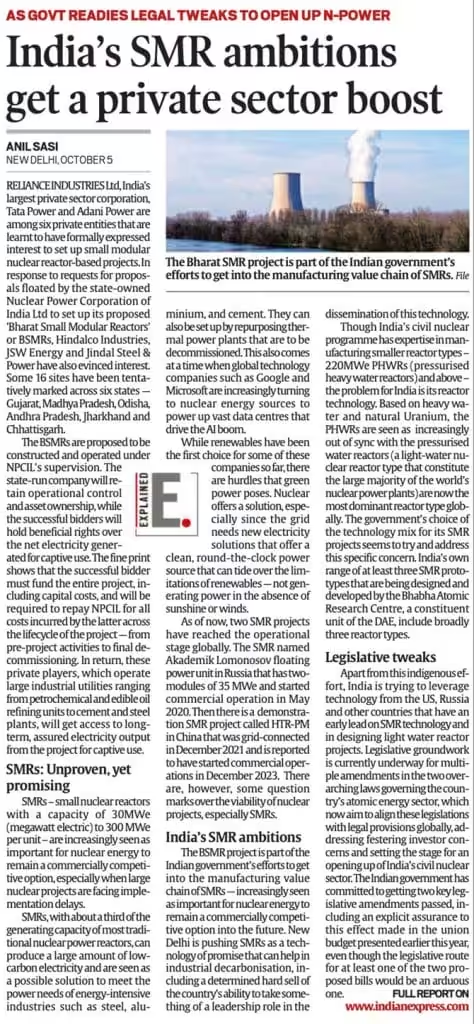
Government of India is advancing its efforts in clean energy transition by focusing on new technologies such as Small Nuclear Reactors (SMRs).
UPSC Relevance:
Science and technology
PYQ:
Q. Consider the following statements regarding “Small modular reactors (SMRs)”:
1.SMRs are advanced nuclear reactors that have a power capacity of up to 300 MW(e) per unit.
2.SMRs can be sited on locations not suitable for larger nuclear power plants.
Which of the statements given above is/are correct?
[A] 1 only
[B] 2 only
[C] Both 1 and 2
[D] Neither 1 nor 2
About Small Modular Reactors:
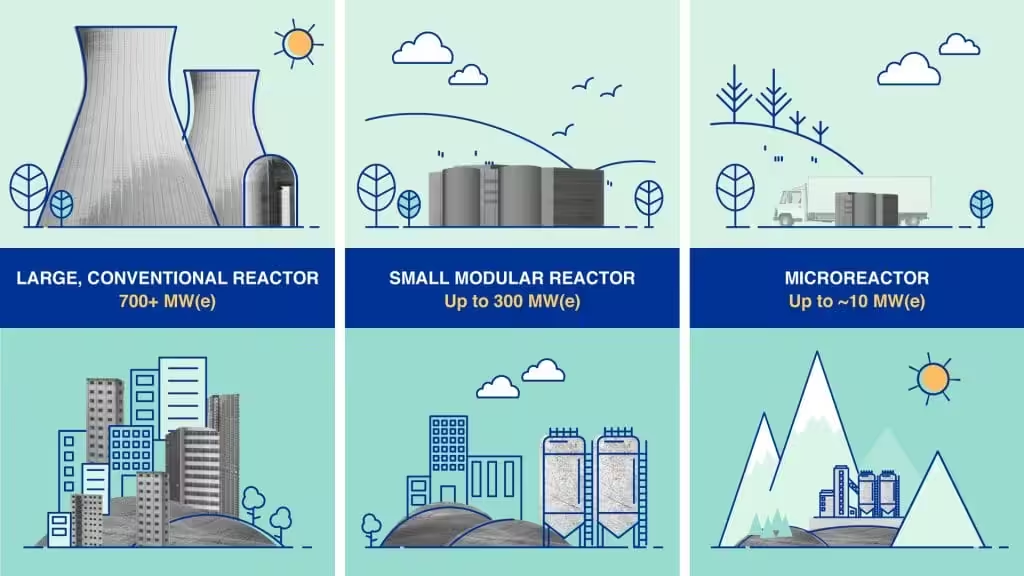
- They typically have a power capacity of up to 300 MW(e), which is about 1/3rd of the generating capacity of traditional nuclear power reactors.
- Harness nuclear fission to generate heat to produce energy.
- They can start from a completely de-energized state without receiving energy from the grid.
| Reactor | Capacity |
| Large, conventional reactor | 700+ MW(e) |
| Small modular reactor | 300 MW(e) |
| Microreactor | Up to ̴ 10 MW(e) |
Advantages of Small Modular Reactors:
- Realising the goal of ‘Power for All’ as they can be installed into an existing grid and in areas lacking sufficient lines of transmission and grid capacity.
- Contribute to grid stability and reliability by providing a stable baseload power supply that complements intermittent renewable energy sources.
- Climate change mitigation: They have a smaller environmental footprint due to their compact size and reduced water consumption.
- Environment Friendly: As per Nuclear Energy Institute, it consumes 30-60% less water per megawatt-hour compared to traditional nuclear plants.
- Fuel efficient: Power plants based on SMRs may require less frequent refuelling, every 3 to 7 years, in comparison to between 1 and 2 years for conventional plants.
- Greater deployment flexibility due to smaller, modular units allowing SMRs to be scaled up or down.
- Land use efficiency: SMRs can repurpose retiring coal-based thermal power station sites.
Concerns with Small Modular Reactors:
- Costly: SMRs will not be cost competitive due to the need to build thousands of such high priced reactors to achieve factory-based cost reductions → higher cost per unit of electricity generated.
- Security risk: “nuclear backpacks” highlights concerns about the security risks associated with the portability and small size of SMRs.
- Nuclear waste: According to a study, SMRs produce radioactive waste up by 30 percent compared to conventional reactors.
- Other challenges: Limited fuel options, lack of proven experience as they are still in early stages of development, uncertainty about reliability, environmental impact.
Way Ahead:
- The Atomic Energy Act must be amended to allow the private sector to set up SMRs.
- To ensure safety, security, and safeguards, control of nuclear fuel and radioactive waste must remain with the Government of India.
- can negotiate with foreign suppliers to reprocess nuclear waste from all SMRs in a state-controlled facility under IAEA safeguards.
- The Department of Atomic Energy must improve the public perception of nuclear power in India. Schemes like the Production Linked Incentive (PLI) scheme for SMRs can be introduced.
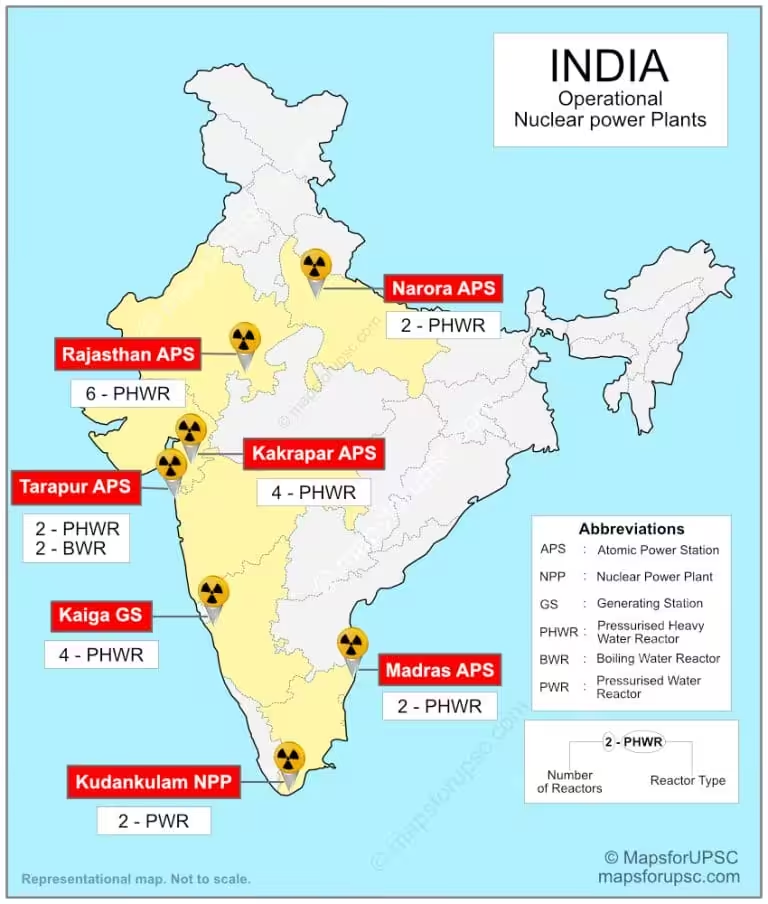
Operation Nuclear plant in India:
Source: https://anantamias.com/current-affairs/small-modular-reactors/
Coral Larvae Cryobank to protect reef

Context:
Known as the “Amazon of the Seas,” the Coral Triangle is the world’s richest marine ecosystem — now under grave threat from climate change, pollution, and destructive fishing practices. To address this, the Philippines is setting up Southeast Asia’s first Coral Larvae Cryobank to conserve and restore coral reefs.
UPSC Relevance:
CSE in prelims as well as in mains examination has focused on Coral Reef, Symbiotic Relation between different species and coral reef related technology. A case in point is a following PYQ
PYQ Prelims 2022
“Biorock technology” is talked about in which one of the following situations ?
A) Restoration of damaged coral reefs
B) Development of building materials using plant residues
C) Identification of areas for exploration/extraction of shale gas
D) Providing salt licks for wild animals in forests/protected areas
Coral Triangle?
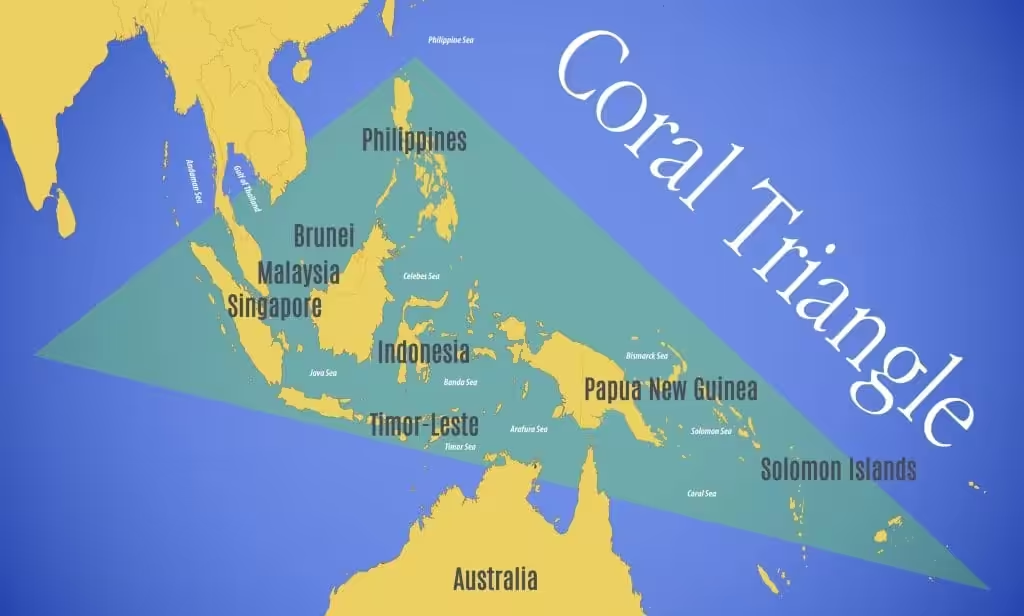
- It spans 5.7 million sq. km across the waters of Indonesia, Malaysia, Papua New Guinea, the Philippines, the Solomon Islands, and Timor-Leste.
- It is home to:
- Over 75% of the world’s coral species
- One-third of all reef fish species
- Vast mangrove forests
- 6 of the world’s 7 marine turtle species
Supports food security and livelihoods for over 120 million people in the region.
Issues:
- Rising carbon emissions and global warming
- Destructive fishing and coastal pollution
- Coral bleaching caused by higher sea temperatures
- Habitat loss and species extinction
Philippines’ Coral Cryobank Initiative:
The facility will freeze and preserve coral larvae (the “seeds” of corals) at –196°C using liquid nitrogen. This process, called vitrification, prevents ice crystals from forming and damaging the coral cells. The preserved larvae can later be used to revive damaged reefs or for scientific research, maintaining genetic diversity.
The project aligns with UN SDG 14: Life Below Water and the UN Decade of Ocean Science (2021–2030).
About Coral Reef:
Source: https://anantamias.com/current-affairs/coral-larvae-cryobank-to-protect-reef/