Why in News?
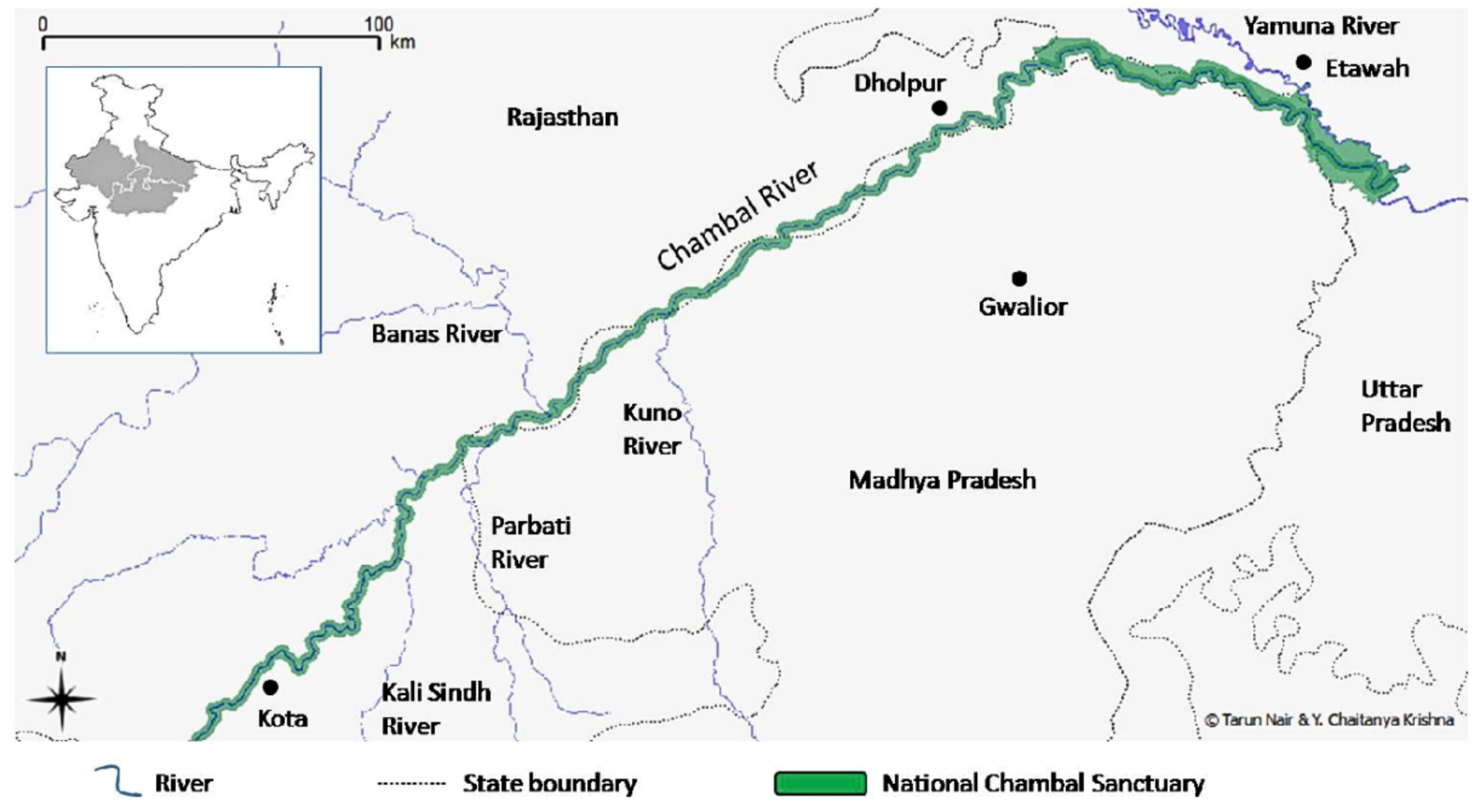
The Supreme Court has asked the states of Madhya Pradesh, Rajasthan, and Uttar Pradesh to take “concrete measures” to curb illegal sand mining in the ecologically fragile and protected National Chambal Gharial Sanctuary. Failing which, the court has warned of the deployment of paramilitary forces and a complete ban on sand mining.
- The SC has directed the installation of high-resolution, Wi-Fi-enabled CCTV cameras across vulnerable stretches and routes used by mining operators. GPS tracking to be installed in mining vehicles and equipment; specialised patrolling teams equipped with modern arms and communication gear to be deployed in high-risk areas.
| UPSC Relevance: GS-3 Environment and Biodiversity: Protected Areas; Biodiversity Prelims: National Chambal Gharial Sanctuary; Chambal River; Gharial |
National Chambal Gharial Sanctuary:
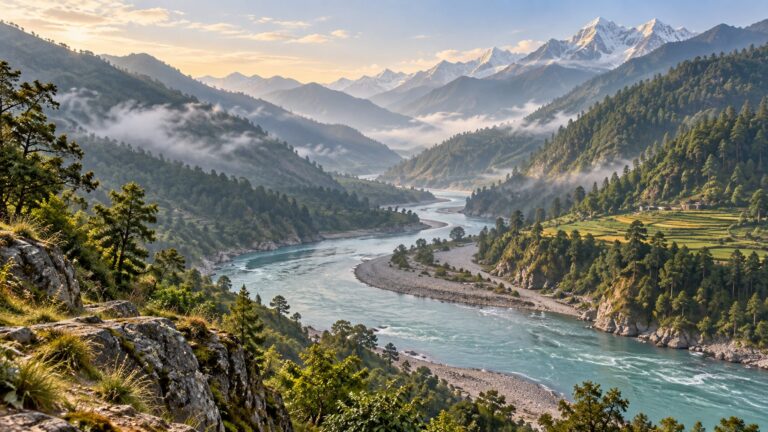
- National Chambal Gharial Sanctuary is located along the Chambal River, near the tri-junction of:
- Rajasthan
- Madhya Pradesh
- Uttar Pradesh
- Nature: A linear (riverine) sanctuary, stretching ~ 400-425 km along the river.
- Administration: Tri-state protected area
- Conservation Status:
- Recognised as an Important Bird Area (IBA) by BirdLife International (s proposed Ramsar wetland site)
- Part of India’s efforts under the Gharial Conservation Programme
- Fauna:
- Flagship Species:
- Gharial: Critically Endangered. It is one of the last viable habitats of the gharial in the wild.
- Ganges River Dolphin: Endangered
- Sanctuary supports 8 turtle species: Red-crowned Roofed Turtle (Critically Endangered), Indian Narrow-headed Softshell Turtle, Three-striped Roofed Turtle, etc.
- Other Important Fauna: Mugger Crocodile, Smooth-coated Otter, Indian Skimmer (Endangered), Striped Hyena, Indian Wolf
- Flagship Species:
- Flora: Dominated by dry deciduous vegetation. It is part of the Khathiar-Gir dry deciduous forests. It overlaps with ravine/badland ecosystems, which are ecologically unique.
- Key Threats: Illegal sand mining, Water abstraction from the Chambal river (dams upstream), & Fishing nets (dolphin & gharial mortality).
Key facts about the Chambal River:
- Origin: Vindhya Range, specifically near Janapav Hills (south of Mhow) in western Madhya Pradesh.
- It flows northward through Madhya Pradesh, Rajasthan, and Uttar Pradesh. Finally, it joins the Yamuna River in UP.
- Chambal is one of the major tributaries of the Yamuna, and hence part of the Ganges drainage system.
- Physiographic Features:
- The Chambal basin is famous for badland topography (ravines).
- Presence of sandbanks, crucial for: Gharial nesting & Turtle breeding.
- Chambal is considered one of the least polluted rivers in India, due to (i) Low industrialisation along its course, (ii) Historical inaccessibility of ravine regions.
- Fauna: Known for endangered species: Gharial, Ganges River Dolphin, Indian Skimmer
Key Facts about Gharials:
- Species of long-snouted fish-eating crocodilians.
- Physical Characteristics:
- Bulbous snout tip of adult males, resembling an inverted pot.
- Males grow 3-6 meters, and females 2.6-4.5 meters in length.
- Distribution: Chambal River (~90% population in wild); other freshwater river systems of India.
- Conservation status:
- IUCN status: Critically Endangered
- Schedule I of the Wildlife Protection Act 1972
- CITES: Appendix I
UPSC PYQ 2017
Q. If you want to see gharials in their natural habitat, which one of the following is the best place to visit?
(a) Bhitarkanika Mangroves
(b) Chambal River
(c) Pulicat Lake
(d) Deepor Beel
Answer: (b)
Tell Google you want more of this.
Add Anantam IAS as a preferred sourceOne tap, and this site shows up more often in your own Top Stories, AI Overviews and AI Mode. Remove it any time.