Daily Digest
UPSC · Civil Services Examination
Current Affairs · Wednesday, 23 July 2025
Current affairs curated and edited by Anantam IAS faculty — pulled from The Hindu, PIB, IDSA, Foreign Affairs and the ministries. Read, annotate, revise.
Old Rajinder Nagar · Delhi 110005 · anantamias.com
Nuclear Energy
Context: The Union Budget for 2025-26 marked a significant shift in India’s nuclear energy plan by announcing an ambitious target of 100 GW of nuclear power generating capacity by 2047, up from the present 8.18 GW. However, the path is not going to be free from hurdles.
Significance of Nuclear Power
- A major pillar for achieving twin goals:-
- emerging as a developed country (Viksit Bharat) by 2047 as there is a well-established correlation between economic growth and energy consumption. In 2022, India’s per capita electricity consumption stood at 1,208 kWh, compared to 4,600 kWh for China, and over 12,500 kWh for the U.S.
- achieving “net zero emissions” by 2070.
- Nuclear Energy Mission announced a special allocation of *20,000 crore to develop “at least five indigenously designed and operational Small Modular Reactors (SMR) by 2033.”
- To fulfill the growing energy demand- India’s electricity generation capacity, currently at 480 GW (divided almost equally between fossil fuels and renewables), will have to grow five-fold, accounting for growth in population and urbanisation.
- Achieve Aatmanirbharta in Energy Security by reducing reliance on imported fossil fuels and developing the capacity to utilize indigenously available reserves of nuclear fuels like Thorium.
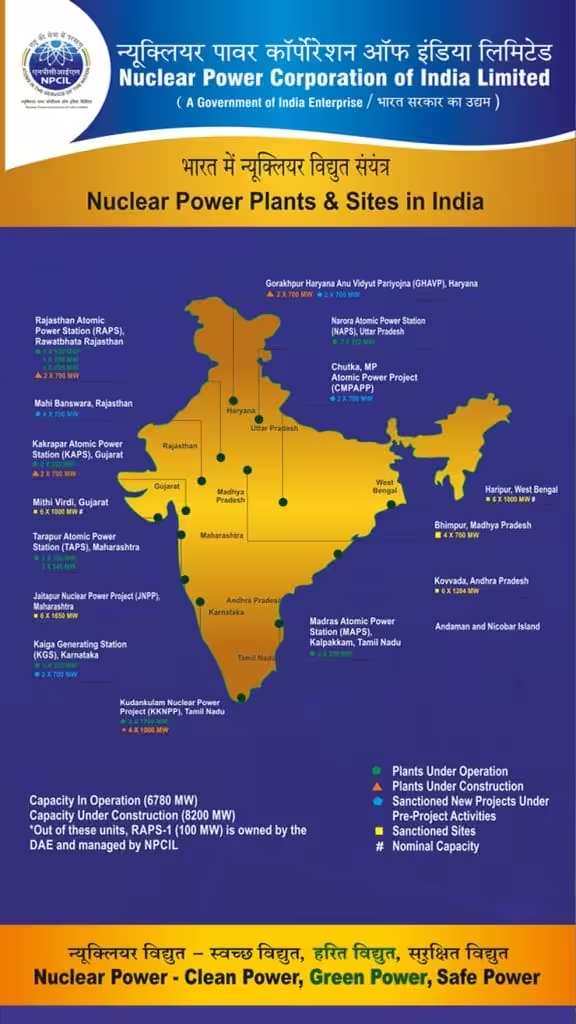
Unreliability of Renewables – solar, wind, and small hydro projects provide only intermittent power. That is why out of 2030 terrawatt-hours (TWh) – the total electricity generated in 2024 – renewable energy, with half the generation capacity, accounted for only 240 TWh. Coal fired thermal plants accounted for 75% of energy generation.
Renewed global interest in nuclear power – This is reflected in the Dubai 2023 COP28‘Declaration to Triple Nuclear Energy’, acknowledging nuclear power as a critical input in reducing reliance on fossil fuels, enhancing energy security, and a move towards a low carbon future.
In June, the International Atomic Energy Agency (IAEA) and the World Bank agreed to work together to support nuclear energy in developing countries.
India’s nuclear journey
An early start : setting up Asia’s first nuclear research reactor, Apsara, in 1956, and beginning work on Asia’s first nuclear power reactors at Tarapore in 1963. As early as 1954, Dr. Homi Bhabha, the architect of India’s nuclear programme, presented a target of generating 8 GW of nuclear power by 1980.
Exclusion of India from Global Nuclear Order : Following India’s war with China in 1962; its entry into the nuclear club in 1964; the decision to stay out of the nuclear Non-Proliferation Treaty (NPT) in 1968; and the Peaceful Nuclear Explosion (PNE) test in 1974, India was excluded from the emerging nuclear order. International cooperation ceased and export controls slowed down the nuclear power programme. This led to the nuclear power target being pushed to 10 GW by 2000
Acceptance as a responsible Nuclear Power : After the nuclear tests in 1998, followed by intense negotiations with the U.S. and other strategic partners, India finally gained acceptance as a responsible nuclear power. It also got a special waiver from the Nuclear Suppliers Group (NSG). India was thus ready to resume exchanges with other nuclear powers to import both nuclear fuel and more advanced reactors to expand its nuclear energy programme.
Issues with CLNDA : The CLNDA puts liability on both the operator as well as the supplier creating new difficulties that have prevented external participation from countries like France and USA. Russia is the only country that is partnering with us at Kudankulum with six VVER-1000 power reactors because the government-to-government agreement, signed in 1988, predated the CLNDA.
Key Challenges Limiting Nuclear Power Growth in India:
Human Resource Development: Ensuring a sufficient supply of skilled manpower for operating and managing advanced nuclear technologies and safety protocols is a crucial bottleneck.
High Capital Costs and Long Gestation Periods with limited private participation Nuclear power plants are extremely capital-intensive, requiring massive investments with construction and commissioning taking many years to complete, often leading to cost overruns and deterring private investment.
Limited Uranium Supply and Import Dependence: India has insufficient domestic uranium reserves, necessitating reliance on imported uranium, which introduces vulnerabilities related to global market conditions and geopolitical risks.
Nuclear Waste Management: The safe and permanent disposal of radioactive waste remains a significant challenge, as spent nuclear fuel is highly radioactive for thousands of years.
Public Opposition and Safety Concerns: Public perception, particularly regarding radiation exposure and environmental impact, has led to significant opposition to nuclear projects, often delaying or halting their development.
Regulatory Hurdles and Liability Issues: Complex regulatory frameworks, including the Civil Liability for Nuclear Damage Act of 2010, have created concerns for foreign suppliers regarding liability for accidents, hindering access to advanced international technologies and financing.
Technological Bottlenecks: While India aims for a three-stage nuclear program utilizing thorium, the advancement of technologies required for the later stages, particularly thorium utilization, faces technical and expertise challenges.
Scaling Nuclear Power in India
In May 2025 the country’s Minister for Power set out the steps needed to scale the country’s nuclear energy capacity:
Building skilled manpower capacity by strengthening nuclear education and training infrastructure.
Amending the Atomic Energy Act, 1962 and Civil Liability for Nuclear Damage Act, 2010 to enable broader participation by private and state sectors
Strengthening public perception and enhancing awareness about nuclear energy’s safety and benefits
Facilitating faster land acquisition through brownfield expansions and repurposing retired thermal sites.
Streamlining regulatory approval processes to reduce project timelines.
Introducing tax concessions, green power classification, and long-term financing to ensure competitive nuclear tariffs.
While nuclear energy is a low-carbon energy source, it is not classified as “renewable”, like solar or wind. Revising this classification would make nuclear power projects eligible for tax incentives and specially designed ‘green financing’ instruments.
Diversifying technology choices through competitive bidding and promoting indigenous manufacturing under Make in India.
Securing diversified uranium fuel sources and expanding the vendor base for specialized nuclear equipment
Some other measures suggested by the author
The sector also needs to be opened up to foreign direct investments, perhaps up to 49%, to ensure Indian ownership and control.
One is to standardise the 220 MW PHWR design and apply it to Bharat Small Modular Reactors, which would significantly reduce costs and commissioning time.
The second track is to scale up the Nuclear Power Corporation of India Limited (NPCIL) plans for the 700 MW PHWR by facilitating land acquisition, streamlining licensing, and strengthening indigenous supply chains.
The third track is to accelerate negotiations with partners in France and U.S. that have been moving at a glacial pace for the last 15 years.
Discussion with potential stakeholders that include major players like Tatas, Adani, Ambani, Vedanta etc. on ownership, management and responsibility of private partners.
A set of comprehensive amendments will also be needed for the 2010 CLNDA especially with regards to its liability clause which affects not just the ‘operator’ but also the ‘supplier’ of nuclear power.
Atomic Energy Regulatory Board (AERB) that is ‘autonomous’ but not a legal entity and is subordinate to the Department of Atomic Energy. In 2011, a draft Bill was circulated to establish AERB as an independent regulator, but the Bill lapsed. With the entry of the private sector, the need for an independent regulator becomes paramount.
Source: https://anantamias.com/current-affairs/nuclear-energy/
Hazardous Cleaning and Manual Scavenging
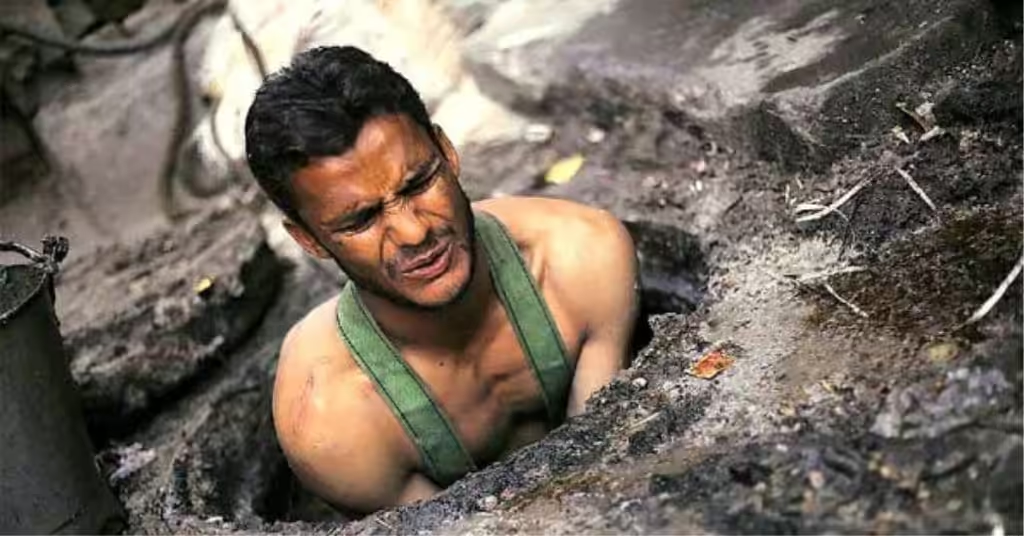
Context : Over 90% of workers who died while cleaning sewers did not have any safety gear or personalised protective equipment (PPE) kits, according to a recent social audit commissioned by the Union government to look into hazardous sewer and septic tank cleaning across the country.
Observations of study
In September 2023, the Social Justice Ministry commissioned a study into hazardous cleaning deaths, which analysed the circumstances surrounding 54 such deaths in 17 districts across eight States and Union Territories that occurred in 2022 and 2023.
- Government data show 150 people across the country died due to hazardous cleaning in 2022 and 2023.
- No safety gear in 49 out of 54 deaths i.e. 90%.
- In 5 cases merely boots and gloves were given.
- No consent was taken in 27 cases while in 18 cases the consent was not backed with awareness of the hazards involved in the work.
Does Manual Scavenging exist in India?
Government of India : Manual scavenging has ended in the country, and it is the problem of hazardous cleaning of sewers and septic tanks that now needs attention.
- It draws this distinction based on a technical difference in how manual scavenging and hazardous cleaning are defined in the Prohibition of Employment as Manual Scavengers and their Rehabilitation Act.
- Under the previous Self Employment Scheme for Rehabilitation of Manual Scavengers (SRMS) scheme, the government had identified 58,098 manual scavengers till 2018. Since then, it has insisted that no other manual scavengers have been identified, claiming that none of the 6,500-plus complaints reporting manual scavenging could be verified.
Social Activists and Critics: Today the term ‘manual scavenging’ has taken another form. When a person enters a sewer line, he is drenched in dirt.
What does the law say?
- Any form of discriminatory practice such as Manual scavenging and forced hazardous cleaning, forcing an individual or group to do an undignified job based on birth or a job which threatens his/ her life and well being clearly violates Article 14, 15, 19 and 21 of the Constitution.
- As per the Prohibition of Employment as Manual Scavengers and their Rehabilitation (PEMSR) Act, 2013, no person, local authority or any agency shall employ any person for hazardous cleaning of either a sewer or septic tank.
- Contravening the provisions will result in imprisonment for up to five years and a fine of up to ₹5 lakh
The Supreme Court on January 29, 2025 ordered a complete stop to the practice of manual scavenging and hazardous manual cleaning of sewers and septic tanks in top metros across the country. The court appropriately observed that the claims of fraternity, equality and dignity among citizens remain a mere illusion if a sizeable section of society was forced to enter sewers for a living and die trapped in them even a decade after the introduction of the Prohibition of Employment as Manual Scavengers and their Rehabilitation Act 2013.
Government Initiative
National Action for Mechanised Sanitation Ecosystem (NAMASTE) : This scheme aims at the formalization and rehabilitation of manual scavengers and their dependents.
Launched by the Union Ministries of Social Justice and Empowerment and Housing and Urban Affairs in 2023-24.
It includes components such as:
- Profiling of Sewer/Septic Tank Workers (SSWs).
- Occupational safety training and distribution of Personal Protective Equipment (PPE) kits.
- Health insurance coverage under the Ayushman Bharat-Pradhan Mantri Jan Arogya Yojana (AB-PMJAY).
- Upfront capital subsidy for sanitation-related projects and enterprises under the SRMS and SUY, aiming to make individuals “Saniprenures“.
So far, the NAMASTE scheme has identified 84,902 sewer and septic tank workers in 36 States and UTs across the country, of which a little over half have been provided with PPE kits and safety gear.
Challenges in eliminating manual hazardous cleaning:
- Technological and Financial Barriers: Modern sanitation technologies like automated sewer cleaning machines and robots are expensive, making them unaffordable for many municipalities. Additionally, the lack of locally produced equipment and specialized skills for maintenance can lead to operational failures.
- Administrative and Political Hurdles: In many regions, a lack of political will and administrative inefficiencies hinder the widespread adoption of mechanized solutions. Sally Cawood and Amita Bhakta note in their blog that administrative hurdles can delay progress in mechanization.
- Caste-Based Discrimination and Social Stigma: Manual scavenging and sewage cleaning are deeply rooted in a caste system, with individuals from marginalized communities traditionally performing these tasks. This historical association creates a social stigma, leading to discrimination and a reluctance from some to engage in sanitation work, even with improved conditions or training.
- Of the identified manual scavengers, the government said it had data on the social categories of 43,797, showing that 97.2% of them were from SC communities. The share of STs, OBCs, and others were each around 1%.
- Worker Protests and Resistance: Workers may protest against mechanization due to concerns about job security, as seen in some regions where they fear losing their livelihoods if machines replace manual labor.
- Lack of Enforcement and Rehabilitation: Despite laws prohibiting manual scavenging and promoting alternatives, enforcement remains weak. Comprehensive rehabilitation programs that include education, skill development, and access to dignified employment for those engaged in manual cleaning are crucial but not always fully implemented.
Solutions for Eliminating Manual Sewage Cleaning:
Technology-driven Solutions:
- Sewer Camera Inspections: Utilizing drain cameras and sewer camera inspections to assess the condition of pipes and identify blockages non-intrusively.
- Septic Tank Cleaning Robots: Introducing robotic solutions for cleaning septic tanks, such as the Homosep Atom, to efficiently remove waste.
- Innovation in Sewer Cleaning Devices: Encouraging the development of cost-effective and technologically advanced sewer cleaners, like the “Sewage Squad” developed by students, capable of operating in various environments. Deploying robots like Bandicoot for manhole and sewer line cleaning.
Policy and Legal Frameworks:
- Amending Laws: The government has announced amendments to the Prohibition of Employment as Manual Scavengers and their Rehabilitation Act, 2013, to mandate mechanized cleaning.
- Strengthening Enforcement: Ensuring strict enforcement of existing laws like the SC/ST (Prevention of Atrocities) Act, 1989, which criminalizes manual scavenging.
- Safaimitra Suraksha Challenge: A government initiative encouraging cities to adopt mechanized cleaning for septic tanks and sewer lines.
Infrastructure Upgrades:
- Modern Sanitation Infrastructure: Investing in the construction of modern toilets, sewage treatment plants, and efficient waste management systems.
- Improving Existing Systems: Upgrading older sewage systems to accommodate mechanized cleaning and reduce the reliance on manual intervention.
Skill Development and Rehabilitation:
- Strengthening Emergency Response Sanitation Units (ERSUs): Equipping these units to ensure safe and mechanized delivery of sanitation services.
- Vocational Training: Providing training to affected individuals in safer and more dignified professions like plumbing, electrical work, and entrepreneurship.
- Empowering Sanitation Workers: Training sanitation workers to run sanitation enterprises and promote mechanization of cleaning operations.
Source: https://anantamias.com/current-affairs/hazardous-cleaning-and-manual-scavenging/
Presidential Reference
Context: A five-judge Constitution Bench of the Supreme Court has issued notices to the Union and all State governments on a Presidential Reference seeking clarity on whether the court can impose timelines and lay down guidelines for the conduct of Governors and the President in dealing with State Bills submitted for assent or reserved for their consideration.
What is Presidential reference?

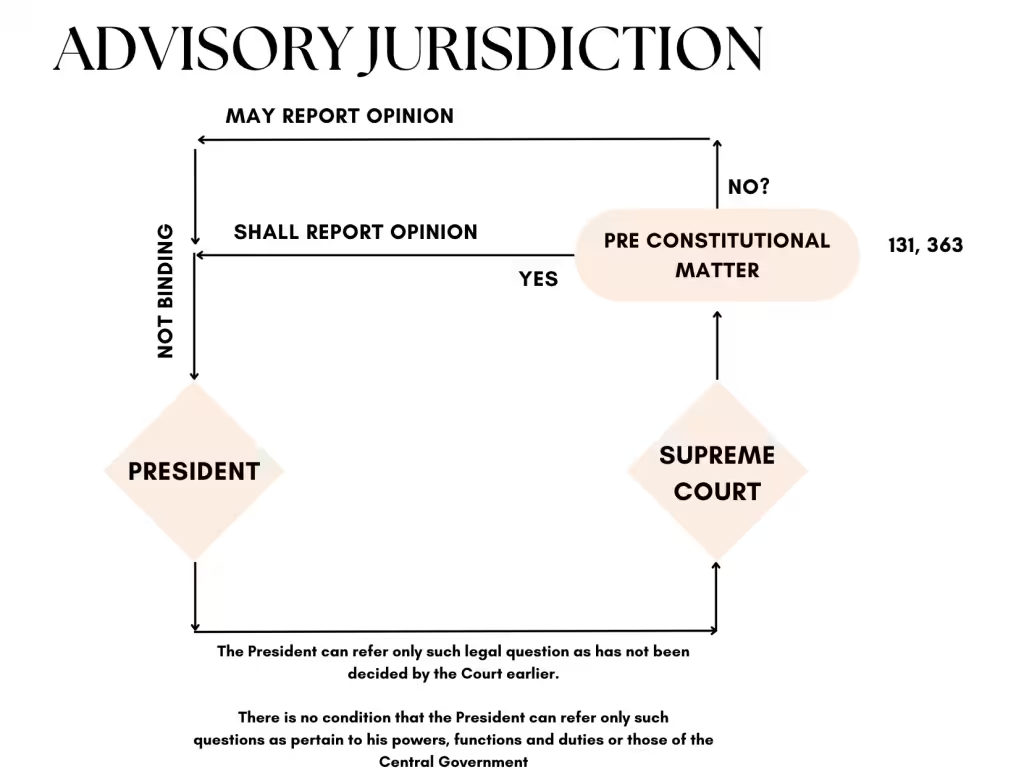
According to Article 143, the President may refer to the Supreme Court any question of law or fact of public importance for its opinion. The President refers such a matter on the advice of the Union council of ministers. Article 145 of the Constitution makes a provision that any reference shall be disposed of by a bench of at least five judges.
The Supreme Court can render its opinion following such hearing as it deems fit. The opinion is not binding in law on the President and is not precedential in value for the courts to apply in subsequent cases. It has a strong persuasive value and is generally obeyed by the executive and the courts.
What is the historical background?
The advisory jurisdiction of the Supreme Court under Article 143 is a leftover of the Government of India Act, 1935. It gave the Governor-General discretionary authority to refer any question of law of public importance to the federal court for its views.
Such a provision exists in the Canadian constitution as well. Under this mechanism, the Supreme Court of Canada can provide opinion on legal issues referred to it by the federal or provincial governments. The U.S. Supreme Court, however, has always refused to render any advisory opinion to the executive as it would be against the strict separation of powers contemplated in its constitution.
What were previous instances?
There have been approximately fifteen references since 1950 prior to the present reference. Some of the milestone judgments of such references are encapsulated herein.
The initial reference was given in the Delhi Laws Act case (1951) and provided the parameters of ‘delegated legislation’, in which the legislature could vest legislative authority upon the executive for smooth implementation of any law.
The mention of the Kerala Education Bill (1958) led to the court formulating the doctrine of harmonious construction of Fundamental Rights and Directive Principles of State Policy and protection afforded to minority educational institutions under Article 30.
In Berubari case (1960), the court believed that the ceding or the acquisition of territory by India would require a constitutional amendment under Article 368. In the Keshav Singh case (1965), the court interpreted legislative powers and privileges.
In the case of Presidential poll (1974), the court expressed the view that Presidential elections must be conducted despite vacancies in the electoral college because of dissolution of State legislatures.
The view expressed in the Special Courts Bill (1978) was notable on numerous scores. It enshrined that the court can refuse to answer a reference; that questions sent for reference should be clear and not ambiguous; and that the court, in answering a reference, should not infringe on the functions and privileges of Parliament.
The Third Judges case reference of 1998 established exhaustive guidelines for the collegium system in regard to appointing judges to the higher judiciary. It is not mandatory for the Supreme Court to give its opinion. Still, of the references made so far, the court has refused to give its opinion for just one reference in 1993 regarding the Ram Janmabhoomi case.
What is the current reference?
The current reference is a consequence of a recent Supreme Court ruling which had mandated specific timelines for Governors and the President to take action on Bills sent by State legislatures. The court had also ruled that actions by Governors and the President on such Bills could be judicially reviewed.
The current reference has posed 14 questions, mainly regarding the interpretation of Articles 200 and 201, to the court’s view. The government questioned the jurisdiction of the courts to sanction timelines where the Constitution does not mention them. It questioned whether Governors’ and President’s actions can be made justiciable at a stage earlier than enactment of a Bill into a law. The case also invites opinion on the scope of powers exercisable by the Supreme Court under Article 142.
Political divergence between the Union government and Opposition-governed State governments have been the main cause of this conflict. The Supreme Court had followed the timeframes specified under the President in the Office Memorandum of the Home Ministry while delivering its ruling.
In the Cauvery dispute reference (1992), the court had expressed the view that it cannot sit in appeal over earlier judgments in its advisory jurisdiction. But an authoritative ruling on this reference will hopefully resolve the questions regarding these constitutional provisions that are important to the smooth working of our democracy and federalism.
Source: https://anantamias.com/current-affairs/presidential-reference/
Remote work assesment after 4 years
Context: Millions of workers across the world dream of the freedom and the flexibility that come with working from home. However, in reality, fewer actually enjoy it. This gap between aspiration and practice reflects a dense web of cultural expectations, managerial hesitation, infrastructural challenges, and the hidden costs of working outside the traditional office.
Survey findings, gender issues
- The “Global Survey of Working Arrangements”, conducted by the Stanford University, across 40 countries between 2024 and 2025
- In countries such as the United States, the United Kingdom, and Canada, people average 1.6 remote workdays per week
- In much of Asia, the figure is only 1.1 a little more than half of what employees there say they ideally want. Africa and Latin America fall somewhere in between.

Why the lag in Asia?
- In India, China, Japan, South Korea and elsewhere, physical presence in the office still signals loyalty, discipline and seriousness. Cramped living conditions, shared spaces and unreliable Internet, all of which make remote work unattractive or even unfeasible, for many urban dwellers.
- In most countries, women, particularly mothers, tend to work from home more often than men and desire it more strongly. For them, remote work offers a partial answer to the long-standing struggle of balancing paid work with care-giving.
- Survey data show that mothers express the highest ideal number of remote days per week (2.66 days), closely followed by childless women (2.53).
- It is only in Europe that men do report slightly more actual remote workdays than women.
- For many mothers, the chance to work remotely may reflect not freedom of choice but hard necessity: the only practical way to manage two full-time roles (employee and caregiver) under the same roof. Many men without children say they prefer remote work not because of family obligations but because they value freedom: there is time for health, hobbies, creativity, or simply relief from the daily grind of office life.
The unease of employers:
- They worry about falling team spirit, lost oversight, and declining innovation. Data from Statista Consumer Insights (2023) reveal that remote workers are more prone to physical ailments: backaches, headaches, eye strain and joint pains, more so than their factory or office-bound counterparts. The mental toll, Isolation, blurred boundaries and constant digital connection are serious issues.
Its real advantages:
- Greater autonomy,
- Better work-life balance,
- Less commuting stress,
- Higher job satisfaction.
Possible alternatives
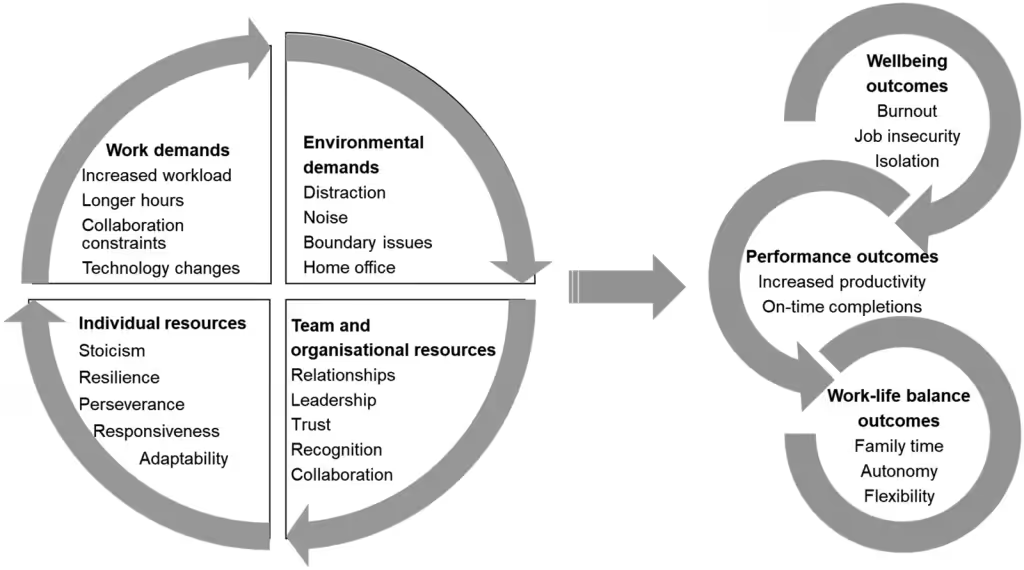
Remote work demands fresh protections: universal broadband access, stipends for home-office upgrades, and enforceable health standards. Hybrid work, a carefully designed mix of home and office time offers the best path for most jobs. Companies must invest in making home offices safer and more productive, support healthy routines and breaks, and create clear digital boundaries to prevent burnout.
Custodial deaths
Context: A significant number of custodial deaths take place, of which a considerable number of them are reported, a few of the policemen are arrested, and none of them are convicted.

Data show that Tamil Nadu has a long history of police brutality. According to data from Parliament, 490 deaths were reported while suspects were in judicial or police custody between 2016-17 and 2021-22 (up to March 31, 2022). Uttar Pradesh reported the highest number of fatalities (2,630) in judicial/police custody among all the States, while Tamil Nadu reported the highest number among the southern States. Dalits are disproportionately targeted for police brutality. Across India, no police officer has been held accountable for such deaths in this period. Data also show that convictions of State police personnel have been rare, not just in the case of custodial deaths, but also in any human rights violations case. Policemen arrested for human rights violations is disproportionately low compared to the actual cases.

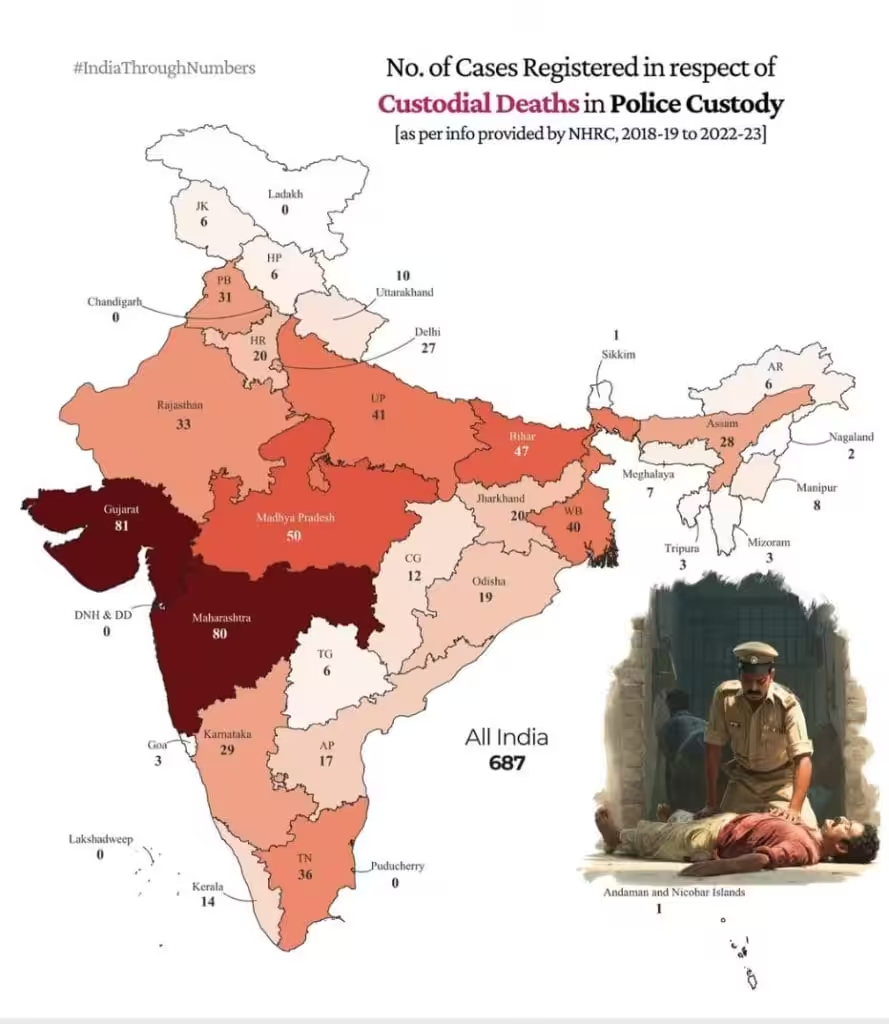
Difference between judicial custody and police custody
| Police custody | Judicial custody |
| Primarily for investigation, interrogation, and gathering evidence | To ensure the accused is not subjected to undue police influence and to safeguard their rights. |
| Held at a police station lock-up. | Held in jail. |
| Duration is maximum of 15 days from the date of initial detention. | Can extend beyond 15 days, up to 90 days for serious offenses or 60 days for others, if the magistrate deems it necessary. |
| Police have direct physical control and can interrogate the accused. | The magistrate has overall control, and police need court permission to interrogate the accused |
Rights of individual if being accused
Article 20(1): This clause prevents the retrospective application of criminal laws. It means that a person cannot be punished for an act that was not an offense at the time it was committed, nor can they be subjected to a penalty greater than what was prescribed at the time of the offense.
Double Jeopardy Article 20(2): This clause prohibits the prosecution and punishment of a person more than once for the same offense.
Self-Incrimination Article 20(3): This clause protects individuals from being compelled to be a witness against themselves.
Key Rights of a Person in Custody:
- Right to be Informed of the Grounds of Arrest
- Right to Consult with legal practitioner and be Defended by a Lawyer
- Right to be Produced before the nearest Magistrate within 24 hours of their arrest
- Right to Remain Silent and courts cannot presume guilt based on silence.
- Right to be Free from Torture and Inhuman Treatment (Article 21)
- Right to a Fair and impartial Trial, with equal opportunities and treatment.
- Right to have Someone Informed of the Arrest (a friend, relative, or other interested person)
Source: https://anantamias.com/current-affairs/custodial-deaths/
Urban Climate Resilience in India: World Bank Report, Pluvial Flooding, Heat Stress & Local Governance Reforms
Context: Indian cities will need some autonomy to invest effectively in climate change adaptation and mitigation, according to the World Bank’s Country Director for India. The report, prepared by the World Bank with the Union Ministry of Housing and Urban Affairs, estimates Indian cities will require $2.4 trillion by 2050 to build climate-resilient infrastructure and services.
Current scenario of India
- The 74th Constitutional Amendment Act of 1992 gave constitutional status to Urban Local Bodies (ULBs) to strengthen local self-governance.
- Official audits of 2022 have found that several states have yet to fully implement its provisions.
- Local conditions are better addressed by local Administration
- Devolution of power also improves accountability
- Towards Resilient and Prosperous Cities Report states that
- Country’s urban population will nearly double to 951 million by 2050, and that by 2030, cities will account for 70% of all new employment generated.
- In addition to the rapid pace of urbanisation, Indian cities will face two major shocks in a business-
- flooding and extreme heat
- Flood risk is growing rapidly.
- Cities are growing into areas that are exposed to flooding
- Building more concrete structures and pavings restrict the amount of rainwater the ground can absorb called as pluvial flooding.
- Annual pluvial flood-related losses can amount to $5 billion by 2030 and $30 billion by 2070 if cities don’t invest in adaptation.
Heat-related deaths can double to over 3 lakh each year by 2050 due to global warming and the urban heat island phenomenon. Exposure to dangerous extreme heat stress has increased by 71 per cent. Urban heat island impact- which makes cities warmer at night because they have concrete structures and roads that absorb heat and release it at night.
Measures that can be taken to save over 1.3 lakh lives
For cities, it calls for risk evaluation and the mobilisation of capital including private investment to support mitigation and adaptation efforts.
- Shifting working hours to early morning and late afternoon
- urban greening,
- early warning systems,
- cool roofs
- boosting private sector engagement
- creating a financing roadmap,
- setting standards to build municipal capacities.
Global case studies
Kuala Lumpur (Malaysia’s capital city)
- Constructed extensive water discharge tunnels.
- Tunnels divert excess floodwater away from the city’s densely populated areas.
Tokyo
- It has installed sensors in more than 30,000 stormwater drains to issue flood warnings in advance.
- Constructed a stormwater management system that includes the construction of reservoirs, underground storage facilities, and permeable surfaces to help capture excess rainwater and prevent it from overwhelming the drainage system.
- prioritized green infrastructure, which can absorb rainwater and reduce runoff.
- Installed Early Warning Systems
Buenos Aires
- It has installed sensors in more than 30,000 stormwater drains to issue flood warnings in advance.
Measures Taken by the Government
Standard Operating Procedures (SOP) for mitigating Urban Flooding by the Central Government under AMRUT
- National Guidelines on Management on Urban Flooding by the National Disaster Management Authority (NDMA)
- It lays down a predefined set of directives or responsibilities for public agencies in a city/town in 3 phases:
- Pre-Monsoon Phase: Preparedness and Planning for Disaster Reduction.
- During Monsoon Phase: Early Warning, Effective Response and Management, and Relief planning and execution
- Post-Monsoon Phase: Restoration and Rehabilitation.
Sponge Cities Plan by Urban Local Bodies and State Governments to make cities more permeable.
- Use of permeable material for roads and pavement, contiguous open green spaces, green roofs, etc.