
Context: Millions of workers across the world dream of the freedom and the flexibility that come with working from home. However, in reality, fewer actually enjoy it. This gap between aspiration and practice reflects a dense web of cultural expectations, managerial hesitation, infrastructural challenges, and the hidden costs of working outside the traditional office.
Survey findings, gender issues
- The “Global Survey of Working Arrangements”, conducted by the Stanford University, across 40 countries between 2024 and 2025
- In countries such as the United States, the United Kingdom, and Canada, people average 1.6 remote workdays per week
- In much of Asia, the figure is only 1.1 a little more than half of what employees there say they ideally want. Africa and Latin America fall somewhere in between.

Why the lag in Asia?
- In India, China, Japan, South Korea and elsewhere, physical presence in the office still signals loyalty, discipline and seriousness. Cramped living conditions, shared spaces and unreliable Internet, all of which make remote work unattractive or even unfeasible, for many urban dwellers.
- In most countries, women, particularly mothers, tend to work from home more often than men and desire it more strongly. For them, remote work offers a partial answer to the long-standing struggle of balancing paid work with care-giving.
- Survey data show that mothers express the highest ideal number of remote days per week (2.66 days), closely followed by childless women (2.53).
- It is only in Europe that men do report slightly more actual remote workdays than women.
- For many mothers, the chance to work remotely may reflect not freedom of choice but hard necessity: the only practical way to manage two full-time roles (employee and caregiver) under the same roof. Many men without children say they prefer remote work not because of family obligations but because they value freedom: there is time for health, hobbies, creativity, or simply relief from the daily grind of office life.
The unease of employers:
- They worry about falling team spirit, lost oversight, and declining innovation. Data from Statista Consumer Insights (2023) reveal that remote workers are more prone to physical ailments: backaches, headaches, eye strain and joint pains, more so than their factory or office-bound counterparts. The mental toll, Isolation, blurred boundaries and constant digital connection are serious issues.
Its real advantages:
- Greater autonomy,
- Better work-life balance,
- Less commuting stress,
- Higher job satisfaction.
Possible alternatives
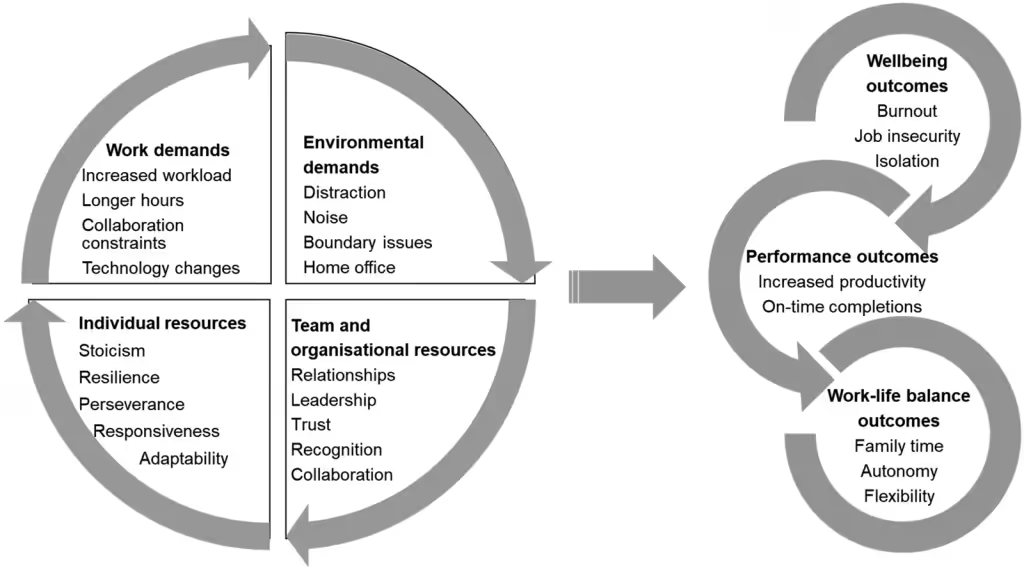
Remote work demands fresh protections: universal broadband access, stipends for home-office upgrades, and enforceable health standards. Hybrid work, a carefully designed mix of home and office time offers the best path for most jobs. Companies must invest in making home offices safer and more productive, support healthy routines and breaks, and create clear digital boundaries to prevent burnout.
Tell Google you want more of this.
Add Anantam IAS as a preferred sourceOne tap, and this site shows up more often in your own Top Stories, AI Overviews and AI Mode. Remove it any time.