





Opens in a new tab
Join Anantam IAS Channel on Telegram

Current Affairs Compass · UPSC 2026

News, mapped to your syllabus.

Every article opens with Why in News?, tells you the exact GS paper it feeds, and closes with a UPSC-style practice question. 2,616+ articles indexed · daily, monthly and subject-wise compilations · PDFs you can actually revise from.

10
published today
293
this month
2,074
this year
2,616+
all-time archive

Compass compilations

Year-long PDFs, stitched by subject.

Every high-yield news item from a full calendar year, grouped by theme, cross-referenced to the syllabus. The three subjects that dominate UPSC current affairs, first — the rest follow through the monthly archive.

All months →
  • GS IIIJan – Dec 2025

    Environment, Ecology & Biodiversity

    Every Why-in-News item, organised into chapters you can read end-to-end — or dip into topic by topic when a question surfaces.

    ⬇ Download PDF
  • GS IIJan – Dec 2025

    Indian Polity & Governance

    Every Why-in-News item, organised into chapters you can read end-to-end — or dip into topic by topic when a question surfaces.

    ⬇ Download PDF
  • GS IIIJan – Dec 2025

    Science & Technology

    Every Why-in-News item, organised into chapters you can read end-to-end — or dip into topic by topic when a question surfaces.

    ⬇ Download PDF

Just published

The latest current affairs from our desk.

A live feed of the nine most recent UPSC current affairs articles published on AnantamIAS — each opens with Why-in-News, the GS paper it feeds, a practice question, and an FAQ accordion.

All daily digests →

Browse by subject

Current affairs grouped by GS paper.

Twelve subject hubs, each with the ten most recent articles laid out in a scannable list. Click any title to read the full Why-in-News + GS-mapping breakdown, or open the subject hub to see every article we've ever published in that paper.

GS II · 885 articles

Polity & Governance

View all
  1. 01The need for a national media council
  2. 02Municipal Reform: Matching City Responsibilities With Authority
  3. 03Railway Complaints: Connecting Response With Police Investigation
  4. 04Vehicle Data Audit: Controlling Access Beyond the Original Portal
  5. 05When police officers wield powers of Special Executive Magistrate
  6. 06Municipal Nominations: Evidence-Based Remedies for Obstructed Candidates
  7. 07Oppn. accuses BJP govt. in Odisha of ‘silence’ on disputed region with A.P 
  8. 08How conversion affects reservation
  9. 09Revamp functioning of Parliament
  10. 10Voter Reinstatement: When Form 6 and Form 8 Serve Different Purposes
GS III · 1107 articles

Economy

View all
  1. 01Municipal Reform: Matching City Responsibilities With Authority
  2. 02RBI Digital Infrastructure: Keeping Critical Payments Reliable
  3. 03Samudra Manthan: Sharing Exploration Risk and Recovering Support
  4. 04Rail Travel Insurance: Extending Cover to Counter Bookings
  5. 05Helium: Why Industrial Supply Depends on More Than Reserves
  6. 06Inland Fisheries Plan: Linking Fishing Rights With Healthy Waters
  7. 07PLFS Redesign: Making Platform and Unpaid Work Visible
  8. 08Rural Water Finance: Matching Tied Grants to Maintenance
  9. 09NSDC Social Finance: Separating Donations From Outcome Payments
  10. 10Agrivoltaics on 10% land can meet 2050 power need: Joshi 
GS III · 867 articles

Environment & Ecology

View all
  1. 01AATAL Laboratory: From Pollution Levels to Source Evidence
  2. 02Inland Fisheries Plan: Linking Fishing Rights With Healthy Waters
  3. 03UN climate damages fund pledges $21 million to Nepal
  4. 04Shah pledges to clean Yamuna by May 2029, launches infra projects worth ₹8,941 crore
  5. 05Yamuna Sewage Projects: Connecting Drains to Effective Treatment
  6. 06Sustainable Aviation Fuel (SAF) and CORSIA
  7. 07The whales never stopped coming to Gujarat’s beaches, the watchers did
  8. 08Agrivoltaics: Sharing Sunlight Without Displacing Farming
  9. 09GRAP Stage I: Turning Air-Quality Warnings Into Regional Action
  10. 10Mandovi Water Quality: Why Chemical Compliance Can Miss Microbial Risk
GS II · 691 articles

International Relations

View all
  1. 01Satellite Connectivity: Who Controls an Operational Link?
  2. 02Tumaini Trial: Testing Vaccines Against Bundibugyo Virus
  3. 03UN Security Council faces a ‘legitimacy deficit’, says India
  4. 04India–Poland Dialogue: From Defence Contacts to Industrial Cooperation
  5. 05China imposes restrictions on export of tunnel-boring, high-altitude machinery
  6. 06Health in NDCs: From Recognition to Funded Climate Action
  7. 07Dental Amalgam Transition: Keeping Mercury Out of Wastewater
  8. 08India–New Zealand FTA: How Asymmetric Market Access Works
  9. 09SCO Action Plan: Turning Consensus Into Economic Cooperation
  10. 10UN Liquidity: Why Approved Budgets Can Lack Cash
GS III · 989 articles

Science & Technology

View all
  1. 01NCERT AI Module: Learning to Question Machine Outputs
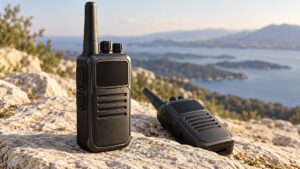
  2. 02Walkie-Talkie Regulation: Why Licence Exemptions Have Conditions
  3. 03RBI Digital Infrastructure: Keeping Critical Payments Reliable
  4. 04Satellite Connectivity: Who Controls an Operational Link?
  5. 05AATAL Laboratory: From Pollution Levels to Source Evidence
  6. 06Submarine AIP: Testing Power for Longer Submerged Endurance
  7. 07Tumaini Trial: Testing Vaccines Against Bundibugyo Virus
  8. 08Vehicle Data Audit: Controlling Access Beyond the Original Portal
  9. 09BB-PPDR Proposal: Connecting Emergency Services Reliably
  10. 10Helium: Why Industrial Supply Depends on More Than Reserves
GS I · 312 articles

History

View all
  1. 01CERD General Recommendation 40 and Reparatory Justice
  2. 02Vaishya Tekri: Testing Ujjain’s Mauryan Stupa Hypothesis
  3. 03Gyan Bharatam Survey Reports More Than 1.19 Crore Manuscripts
  4. 04Sarnath: UNESCO Inscription Recognises a Living Buddhist Heritage
  5. 05Keeladi Excavations: New Brick Structures Deepen the Sangam-Age Record
  6. 06Lothal Heritage Complex: Recreating a Harappan Maritime Town
  7. 07Prambanan temple: Indonesia’s Hindu heritage site and the India connection
  8. 08Syama Prasad Mookerjee: 125th birth anniversary of the Jana Sangh founder
  9. 09Rakhigarhi Ancient DNA: What Harappan Skeletons Reveal About India’s Ancestry
  10. 10The ‘Dancing Girl’ of Mohenjo-daro: Art, Identity and a Naming Debate
GS I · 509 articles

Geography

View all
  1. 01Heat Storms: Measuring Extreme Heat Across Space and Time
  2. 02El Niño and Forest Stress: Why Local Rainfall Still Matters
  3. 03Karela Lake: Reconstructing Monsoon and Farming Adaptation
  4. 04Mars Analogues: Reading Water–Rock History in Hydrous Sulphates
  5. 05India’s China+1 lessons lie within its own States
  6. 06Electric mobility – the way ahead
  7. 07Warming Himalayas demand a rethink on development
  8. 08Cyclone Decision Support: Reading Tracks and Multiple Hazards
  9. 09Invasive Species: Preventing Entry Before Managing Spread
  10. 10IARRF: Studying the Atmosphere and Ionosphere With Radar
GS I · 364 articles

Society

View all
  1. 01Free bus travel has given women more mobility
  2. 02Advancing the Women-led Development Model
  3. 03Education Gender Parity: Why Equal Enrolment Can Hide Exclusion
  4. 04Are legal guarantees insufficient in abolishing untouchability?
  5. 05AI companions and child safety
  6. 06Tribal Heritage Archives: Preserving Living Knowledge With Communities
  7. 07Authorities lax in ensuring Women’s Safety in Delhi: SC
  8. 08Long Wait for Justice as Pendencies in Rape Cases Mount
  9. 09Film Certification: Drug Warnings and Parental Guidance
  10. 10Secularism is a ‘modern’ concept, does not fit India’s tradition, says RSS chief
GS IV · 319 articles

Ethics & Integrity

View all
  1. 01AI companions and child safety
  2. 02Long Wait for Justice as Pendencies in Rape Cases Mount
  3. 03UN Iran Findings: Civilian Protection and the Limits of Fact-Finding
  4. 04Doping is now a deep-rooted culture in Indian Sports
  5. 05AI in Mathematics: Proof Verification, Understanding and Research Ethics
  6. 06Judicial Integrity and Corruption
  7. 07Return of Profanation as a New Political Language
  8. 08SC calls on students to educate elders in Waste Management
  9. 09AI Agents, Consumer Control and Accountability
  10. 10AI-Designed Viruses: Scientific Promise and the Biosecurity Governance Gap
GS I · 279 articles

Art & Culture

View all
  1. 01After a decade of disruption, Pattanam needs a renewed vision 
  2. 02Sourashtra Text-to-Speech: Turning Written Characters Into Spoken Access
  3. 03World Heritage Climate Toolkit: Protecting the Attributes That Matter
  4. 04Tribal Language Corpora: From Recordings to Reliable Learning Tools
  5. 05Nobel Peace Prize 2026 
  6. 06Anne Carson Wins Nobel Prize in Literature 2026
  7. 07Coal mining near Ramappa Temple may harm the Heritage Site and Lake
  8. 08Classical Language Centres: Turning Recognition Into Research Capacity
  9. 09Tribal Heritage Archives: Preserving Living Knowledge With Communities
  10. 10Dadasaheb Phalke Award for Kannada film artist Anant Nag
GS III · 319 articles

Internal Security

View all
  1. 01Operation Trident: Following Drug Networks Beyond Seizures
  2. 02Walkie-Talkie Regulation: Why Licence Exemptions Have Conditions
  3. 03Satellite Connectivity: Who Controls an Operational Link?
  4. 04Submarine AIP: Testing Power for Longer Submerged Endurance
  5. 05Railway Complaints: Connecting Response With Police Investigation
  6. 06Theatre Commands: Joint Planning and Flexible Air-Power Allocation
  7. 07Vehicle Data Audit: Controlling Access Beyond the Original Portal
  8. 08BB-PPDR Proposal: Connecting Emergency Services Reliably
  9. 09India–Poland Dialogue: From Defence Contacts to Industrial Cooperation
  10. 10Border Shelters: Protecting Personnel in Drone-Exposed Terrain
GS III · 127 articles

Disaster Management

View all
  1. 01BB-PPDR Proposal: Connecting Emergency Services Reliably
  2. 02Cyclones, floods and landslides threaten telecom resilience 
  3. 03Crowd Management at Mass Gatherings: Lessons from the Kolkata Tragedy
  4. 04Heat Storms: Measuring Extreme Heat Across Space and Time
  5. 05Climate Services: Turning Projections Into Sector Decisions
  6. 06World Heritage Climate Toolkit: Protecting the Attributes That Matter
  7. 07Bridge Design Checks: Independent Review Before Construction
  8. 08Cyclone Decision Support: Reading Tracks and Multiple Hazards
  9. 09High-Altitude Health: Why Mountain Populations Need Field Research
  10. 10IPU Climate Resolution: From Shared Warnings to Parliamentary Oversight

Yearly archive

Every year, indexed.

The full searchable table of every article we've published in a calendar year — with subjects, publish date, and per-article PDF download.

How we do current affairs

Three rules every article on AnantamIAS follows.

Because current affairs for UPSC without the syllabus mapping is just news. And news without a question to answer is just noise.

  1. 01

    Open with Why in News?

    The hook is never the headline — it's the trigger. What event, judgement, or policy decision brought this topic into the UPSC crosshair this week? That context survives; the headline doesn't.

  2. 02

    Map it to the GS paper — and the sub-topic.

    Every article explicitly states which Mains GS paper it feeds, and which syllabus sub-topic it sits under. So when you revise a topic, the article is already indexed against your notes.

  3. 03

    Close with a practice question.

    A 15-marker or a Prelims MCQ, depending on the topic's exam load. Written by the faculty who reads Mains answer copies, not scraped from a bank. That's why they read as if UPSC could have asked them.

FAQ

What aspirants ask us about current affairs.

Which source should I follow — AnantamIAS or a newspaper?

Both. Read The Hindu or Indian Express daily for raw reading habit and diverse opinions. Use the Compass digest to know which of the day’s stories actually matter for UPSC, mapped to the syllabus with context.

How many current affairs articles do I need to read a day for UPSC?

About 5–10 substantive items in Foundation year, 10–15 closer to Prelims. We publish ~20 a day across subjects — don’t read all, read the ones that fall inside your active revision window.

Is the monthly current affairs PDF enough, or do I need the daily?

Monthly is revision-ready. Daily is learning-ready. Use daily to add fresh material to your notes, then re-read the monthly PDF in the final 60-day Prelims sprint — by which point the story has settled into its lasting takeaway.

Do you cover state-specific current affairs?

We cover state-level developments only when they carry national significance — federal-dispute rulings, inter-state river issues, Governor–state conflicts. For state PSC preparation, state-specific papers still have the edge.

Will current affairs from 2024 / 2025 still matter in the 2026 UPSC exam?

Yes — for any topic where the policy or framework continues (e.g., DPDP Act 2023, Women’s Reservation Bill, Kuno cheetahs, G20 legacy). UPSC increasingly asks for trend recall, not just the freshest news.

Can I download all current affairs as a single PDF?

Every daily archive page has a Print / Save as PDF button that bundles all of that day’s articles into a single print-ready document. Monthly PDFs are available from the Compass section above for the three biggest subjects.

Current affairs, taught — not just posted

Every programme's live classes integrate the Compass.

Foundation, PSIR Drona, and Mains Crash — all weave this week's current affairs into the theory class they accompany. Sit in a free demo to see it in action.