Context:
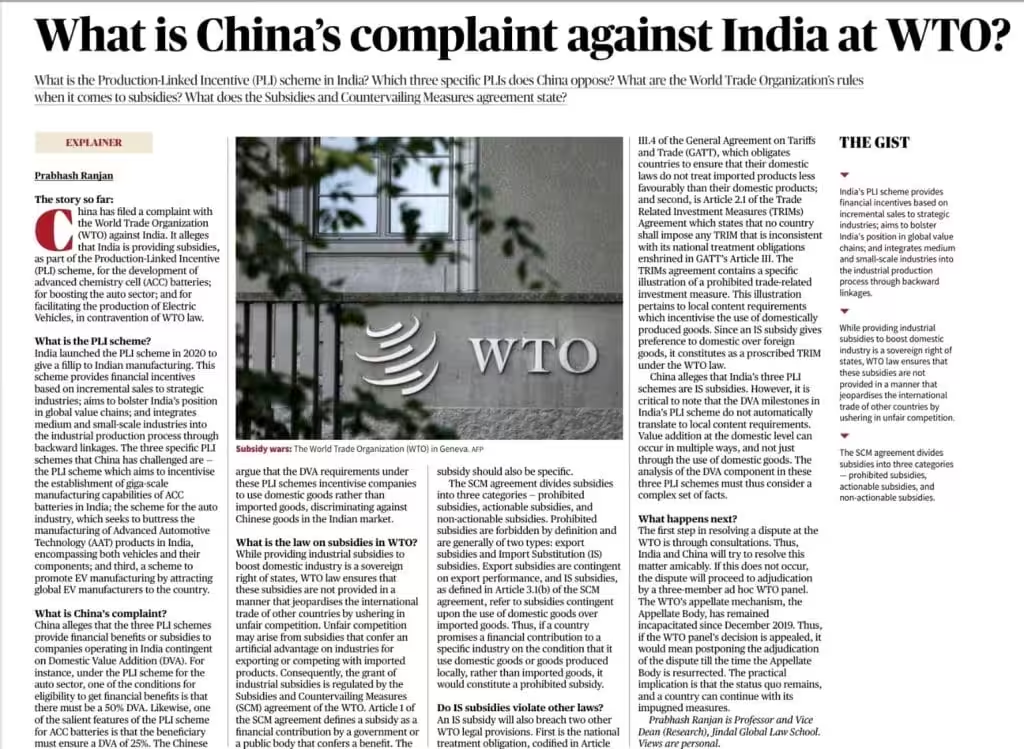
China has filed a complaint with the World Trade Organization (WTO) against India’s Production Linked Incentive (PLI) schemes. This schemes discriminate against imported goods (including Chinese products) by providing subsidies linked to Domestic Value Addition (DVA) — allegedly violating WTO subsidy norms.
UPSC Relevance:
Economy (International Organization and it’s related issues)
UPSC PYQ:
Q1. What are the key areas of reform if the WTO has to survive in the present context of ‘Trade War’, especially keeping in mind the interest of India? (2018)
China’s Core Complaint:
China file a complaint against India at WTO particularly target the India’s Production Linked Incentive (PLI) schemes. These schemes discriminate against imported goods:
- PLI for Advanced Chemistry Cell (ACC) batteries
- PLI for Auto and Advanced Automotive Technology (AAT)
- PLI for Electric Vehicles (EVs)
India’s PLI schemes make financial benefits contingent upon using domestic goods — thus constituting Import Substitution (IS) subsidies.
Example:
- ACC battery PLI: requires 25% DVA.
- Auto sector PLI: requires 50% DVA.
About WTO:
The World Trade Organization (WTO) is the only international organization dealing with the rules of trade between nations. At its heart are the WTO agreements, negotiated and signed by the bulk of the world’s trading nations and ratified in their parliaments. The fundamental goal of the WTO, as set out in the organization’s founding agreement, is to use trade as a means to improve people’s living standards, create better jobs and promote sustainable development.
- The WTO, established in 1995 under the Marrakesh Agreement (1994), following the Uruguay Round of negotiations 1986-94.It succeeded the GATT, which had regulated global trade since 1948.
- It’s headquartered in Geneva, Switzerland.
- The WTO is run by its member governments. All major decisions are made by the membership as a whole, either by ministers (who meet at least once every two years)
- The WTO has 166 members, accounting for 98% of world trade.
- WTO Secretariat: The WTO has approximately 630 staff on its regular budget and is headed by a Director-General.
- The working languages of the WTO are English, French and Spanish.
Functions:
- Administering WTO trade agreements
- Forum for trade negotiations
- Handling trade disputes
- Monitoring national trade policies
- Technical assistance and training for developing countries
- Cooperation with other international organizations
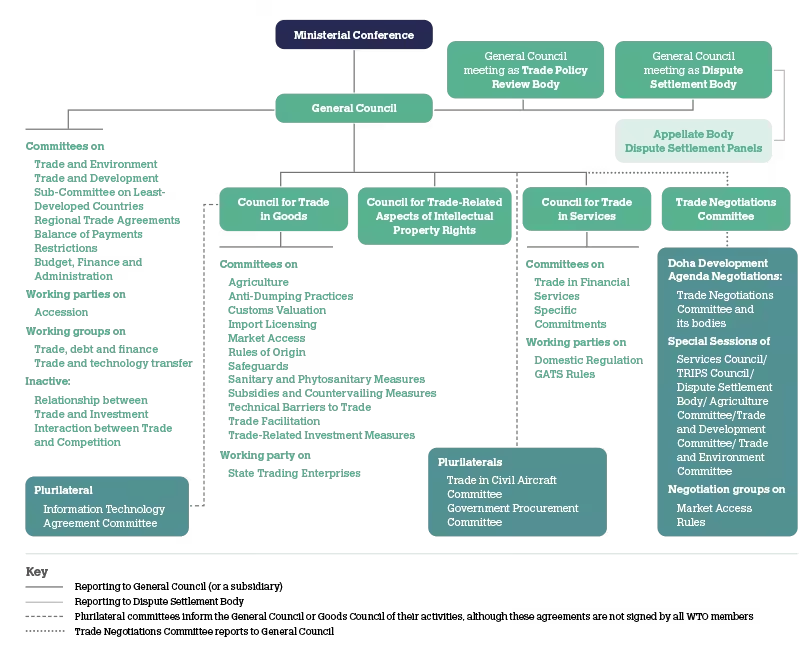
Organization:
WTO Law on Subsidies:
Governed by the Subsidies and Countervailing Measures (SCM) Agreement.
Subsidy Definition (Article 1): A financial contribution by a government or public body that confers a benefit and is specific to an enterprise or industry.
Types of Subsidies under SCM:
| Type | Description | Legal Status |
|---|---|---|
| Prohibited Subsidies | 1. Export subsidies (linked to export performance) 2. Import substitution (IS) subsidies (linked to use of domestic goods) | Illegal under WTO |
| Actionable Subsidies | May be challenged if they harm another country’s trade interests (e.g., injury to domestic industry). | Allowed but can be contested. |
| Non-actionable Subsidies | For general welfare purposes like R&D or environment-friendly projects. | Permitted. |
India’s Possible Defence:
- PLI’s DVA clause ≠ Local Content Requirement:
- Value addition can arise from assembly, technology transfer, innovation, or skill enhancement, not just domestic inputs.
- Legitimate Industrial Policy Objective:
- To attract investment, build domestic capacity, and support the green transition (e.g., EVs, batteries).
- Precedent: Many developed countries (e.g., US with Inflation Reduction Act) have adopted green subsidies with domestic production incentives — which China itself has criticized globally.
WTO Dispute Settlement Process:
| Stage | Description |
|---|---|
| 1. Consultations | India and China discuss the issue bilaterally. |
| 2. WTO Panel | If unresolved, a three-member panel is constituted to adjudicate. |
| 3. Appeal | The losing party can appeal to the Appellate Body — but it has been non-functional since Dec 2019, leading to procedural deadlocks. |
| 4. Practical Implication: Status quo continues until the Appellate Body resumes functioning. |
Tell Google you want more of this.
Add Anantam IAS as a preferred sourceOne tap, and this site shows up more often in your own Top Stories, AI Overviews and AI Mode. Remove it any time.