Introduction
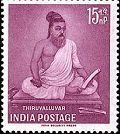
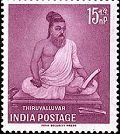
Thiruvalluvar, usually shortened to Valluvar, is the Tamil poet-philosopher whose 1,330 couplets form the Tirukkural, one of the most translated non-religious works in world literature. For more than two millennia his verses have guided Tamil speakers on questions of virtue, wealth, governance and love, and today they are inscribed on everything from the reverse of the 10-rupee coin to the walls of the United Nations in New York.
For an UPSC aspirant, Thiruvalluvar sits at the intersection of ancient Indian philosophy, classical Tamil literature, ethics (GS4) and art and culture (GS1). Questions on Sangam and post-Sangam literature, on Tamil Nadu’s cultural heritage and on Indian ethical traditions frequently draw on the Tirukkural. This article gives you a complete, exam-ready profile of Valluvar and his text.
Quick Facts at a Glance
| Parameter | Detail |
|---|---|
| Name | Thiruvalluvar (Valluvar), honorific title meaning “holy Valluvar” |
| Probable period | Between 3rd century BCE and 5th century CE, most scholars place him around the 4th-5th century CE |
| Birthplace (traditional) | Mylapore, Chennai, or Madurai, Tamil Nadu |
| Principal work | Tirukkural (Sacred Kural) |
| Number of couplets | 1,330 kurals |
| Sections | 3: Aram (Virtue), Porul (Wealth), Inbam (Love) |
| Chapters | 133 chapters of 10 couplets each |
| Metre | Kural venpa, a short two-line Tamil metre |
| Language | Classical Tamil |
| Status | A Patiṉeṇkīḻkaṇakku (Eighteen Lesser Texts) in Tamil canon |
| Global recognition | UNESCO-endorsed translations; 133-foot statue at Kanyakumari (2000) |
| Annual observance | Thiruvalluvar Day, 15 or 16 January, part of Pongal celebrations in Tamil Nadu |
Background and Historical Context
The exact period of Thiruvalluvar is one of the most debated problems in Tamil literary history. Traditional Tamil dating, based on the Kanda Puranam and later hagiographies, places him around 31 BCE and assigns him a life of 102 years. Modern scholarship, led by figures like K. A. Nilakanta Sastri, G. U. Pope and Kamil Zvelebil, favours a date in the early centuries of the Common Era, most often the 4th or 5th century CE, based on language, metre and references within the text.
Valluvar is associated with Mylapore in present-day Chennai, where an ancient shrine, the Valluvar Kottam, continues to mark his memory. Some traditions, including the Madurai-centred account, place his life in the Pandya heartland. Hagiographies describe him as a weaver-philosopher who lived an ascetic life with his wife Vasuki, whose devotion is celebrated in later Tamil literature as a model of marital virtue. These details are legendary rather than historical, but they shape how the Tamil tradition remembers its foremost ethical teacher.
The Tirukkural is preserved within the Patiṉeṇkīḻkaṇakku, or Eighteen Lesser Texts of post-Sangam literature, composed after the main Sangam anthologies. It is the most celebrated text in that collection and one of only a handful of Tamil works canonised across Shaiva, Vaishnava, Jaina and Buddhist communities, all of which have sought to claim Valluvar for themselves. The Tirukkural’s universal tone, which names no single deity and prescribes no ritual, is partly responsible for this wide appeal.
In 1812, a complete manuscript of the Tirukkural was edited by Ellis and the scholar Francis Whyte Ellis of the Madras College, which began the modern printing history of the text. In 1886, the Reverend G. U. Pope published his landmark English translation, opening the Kural to a global readership. Since then the text has been translated into more than 80 languages and remains continuously in print.
Key Features of the Tirukkural
Structure: Three Sections, 133 Chapters, 1,330 Couplets
The Tirukkural is organised into three parts, or pals. Aram, or virtue, contains 380 couplets in 38 chapters and sets out the ethical foundations of life: domestic duties, ascetic virtues, compassion, truth and non-violence. Porul, or wealth and statecraft, is the longest section at 700 couplets across 70 chapters. It lays down rules for rulers, ministers, diplomacy, warfare, agriculture and civic life. Inbam, or love, closes the work with 250 couplets in 25 chapters that explore the secret phase (kalavu) and the married phase (karpu) of romantic love.
Each couplet has exactly seven cirs, or metrical feet, four on the first line and three on the second. This tight kural venpa form is one of the hardest Tamil metres to master and gives the Tirukkural its distinctive aphoristic punch. Every kural can stand alone, yet the chapter structure builds a wider ethical argument.
Teachings and Ethical Framework
Valluvar’s ethics are strikingly secular and universal. He emphasises:
- Anbu (love) and Arul (compassion) as the root of all virtues.
- Aram (dharma) as a life-guiding principle applicable to both householder and ascetic.
- Non-violence (kollamai) and refusal to eat meat (pulaal marutal).
- Honesty, truth-telling and the power of kind speech.
- Just kingship, with detailed guidance on governance, tax moderation, spy-craft and diplomacy.
- Married love as a legitimate ethical pursuit, equal in dignity to austerity.
Valluvar never mentions caste by name and never privileges one sect. His pragmatism is visible throughout Porul, where political realism sits comfortably beside ethical advice to rulers.
Language and Style
The Tamil of the Tirukkural is dense, elliptical and rhetorically charged. Ellipsis and compound nouns allow Valluvar to pack a whole argument into two lines. Scholars have counted over 40 distinct rhetorical figures in the text. This combination of economy and depth is why the Tirukkural is often called the Ulaga Podhu Marai, or the Universal Scripture.
Significance for UPSC and General Knowledge
- The Tirukkural is the single most-cited ancient Tamil text in UPSC essays on Indian ethical traditions and classical literature.
- It is a canonical example for GS1 Indian culture questions on the diversity of Indian philosophical thought beyond Sanskrit sources.
- The Statue of Valluvar at Kanyakumari (133 feet tall, inaugurated on 1 January 2000) is a frequent Prelims factoid.
- Couplets from the Tirukkural are commonly used as quotations in GS4 ethics answers on compassion, integrity and public service.
- Thiruvalluvar’s birthday is observed as Thiruvalluvar Day in Tamil Nadu, part of the Pongal festival calendar.
- The text provides material for comparative philosophy with the Arthashastra, Manusmriti and Confucian Analects.
Detailed Analysis: Thiruvalluvar in Indian Intellectual Tradition
The Tirukkural is more than a poetic anthology. It is a compact manual on how to live and how to rule, and it has been read and adapted across Indian traditions for two thousand years. Mahatma Gandhi read the Kural in Yeravda jail and translated several verses, calling it a textbook of indispensable authority on moral life. Rajaji (C. Rajagopalachari) produced a condensed English version called The Kural: Tiruvalluvar’s Indian Guide on Right Action. Vinoba Bhave described it as the essence of the Vedas without their apparatus. Leo Tolstoy cited Valluvar in his correspondence with Gandhi, and the G. U. Pope translation of 1886 brought the text into the Victorian conversation on comparative ethics.
Within Tamil Nadu, the Kural has been invoked across the ideological spectrum. The Dravidian movement led by Periyar E. V. Ramasamy and later by C. N. Annadurai and M. Karunanidhi adopted Valluvar as an emblem of Tamil rationalism and humanism, precisely because his verses transcend sectarian religion. Shaiva commentators from Parimelalagar (13th century) onwards have read him within a Shaivite frame. Jaina scholars have claimed him as a fellow renouncer based on the Kural’s vegetarian and ahimsa-oriented chapters. This contested ownership is itself a mark of the text’s richness.
The modern afterlife of the Tirukkural is extensive. Couplets are inscribed inside the United Nations building in New York, at Valluvar Kottam in Chennai (constructed 1976, shaped like a temple chariot), and on the reverse of the 10-rupee coin issued in 2020 by the Reserve Bank of India. The Tirukkural has been translated into Sanskrit, Latin, French, Russian, German, Arabic, Mandarin and more than 80 languages in total, making it one of the most translated non-religious works globally. In 2000, the 133-foot Valluvar statue at Kanyakumari, designed by sculptor V. Ganapati Sthapati and inaugurated by then Prime Minister Atal Bihari Vajpayee, became a landmark of the Tamil seafront and a tribute to the 133 chapters of the Kural.
Comparative Perspective
How does the Tirukkural compare with contemporary Indian and world classics of ethics and statecraft? The comparison is instructive for UPSC answers.
| Text | Approx. date | Author | Focus | Length |
|---|---|---|---|---|
| Tirukkural | 4th-5th c. CE | Thiruvalluvar | Virtue, wealth, love | 1,330 couplets |
| Arthashastra | 4th c. BCE (compiled) | Kautilya | Statecraft, economics | Roughly 15 books, 6,000 sutras |
| Manusmriti | 2nd c. BCE-3rd c. CE | Various | Dharma, social code | 2,684 verses |
| Confucian Analects | 5th c. BCE | Disciples of Confucius | Virtue, governance | 20 chapters |
| Bhagavad Gita | 2nd c. BCE-2nd c. CE | Vyasa (tradition) | Duty, yoga, devotion | 700 verses |
Relative to the Arthashastra, the Tirukkural is far more compact and more explicitly ethical. Where Kautilya is amoral in pursuit of state power, Valluvar subordinates political craft to virtue. Compared with the Manusmriti, the Tirukkural is silent on caste and inclusive in audience. Compared with the Confucian Analects, the Tirukkural is more poetic and covers conjugal love, a theme absent from Confucius. This uniqueness is what gives the Tirukkural its enduring appeal across cultures.
Controversies and Debates
The Tirukkural’s universality is also the source of its biggest debates. The first concerns religious identity. Shaiva commentaries read Valluvar as a devotee of Shiva, Jaina scholars claim him as a Jaina, and Christian missionaries in the 19th century even argued that he was influenced by early Syrian Christianity. The text itself does not settle the question. UPSC answers should note this plurality without endorsing any single claim.
The second debate concerns dating. Traditional Tamil chronology places Valluvar around 31 BCE, a view celebrated in popular Tamil calendars. Modern philology argues for a later date in the first half of the first millennium CE. The gap matters because it shapes how one places the Tirukkural in relation to the Arthashastra, early Sanskrit dharma-shastra and the Sangam corpus.
The third debate is about appropriation. In recent decades, political parties across Tamil Nadu have invoked Valluvar for competing purposes. The Dravidian movement highlights his rational humanism, while revivalist Hindu groups emphasise the Shaiva commentary tradition. A balanced reading recognises that the Tirukkural’s refusal of sectarianism is exactly what makes it available to so many interpretations.
Finally, feminist scholars have begun to revisit Valluvar’s treatment of women, particularly in the Inbam section, where certain chapters idealise a domestic model that may sit uneasily with contemporary gender ethics. Recent Tamil scholarship offers a nuanced reading that separates timeless insights on love and intimacy from culturally dated assumptions.
Prelims Pointers
- Thiruvalluvar is the author of the Tirukkural, written in classical Tamil.
- The Tirukkural has 1,330 couplets in 133 chapters, arranged in three sections: Aram, Porul and Inbam.
- The metre used is kural venpa, with seven metrical feet per couplet.
- The text is part of the Patiṉeṇkīḻkaṇakku (Eighteen Lesser Texts) of post-Sangam literature.
- The 133-foot statue of Valluvar at Kanyakumari was unveiled on 1 January 2000 by PM Atal Bihari Vajpayee.
- The statue was sculpted by V. Ganapati Sthapati.
- Valluvar Kottam in Chennai, built in 1976, is shaped like a temple chariot and contains all 1,330 couplets inscribed on granite.
- Thiruvalluvar Day is celebrated on 15 or 16 January, as part of the Pongal festival in Tamil Nadu.
- The Reverend G. U. Pope published the first complete English translation of the Tirukkural in 1886.
- Parimelalagar (13th century) is the most influential classical commentator on the Kural.
- The Tirukkural is inscribed at the United Nations building in New York.
- The text is often called Ulaga Podhu Marai, “the universal scripture.”
Mains Practice Questions
Q1. “The Tirukkural offers a secular ethic that has outlasted sectarian commentaries.” Examine with reference to Thiruvalluvar’s treatment of virtue, wealth and love. (250 words)
- Briefly introduce Valluvar, the three-fold structure of the Tirukkural and its canonical place.
- Show how Aram, Porul and Inbam address ethics, statecraft and love without privileging a specific sect.
- Conclude that the universality of the Kural explains its adoption by Shaiva, Jaina, Dravidian and global readers alike.
Q2. Compare the ethical vision of Thiruvalluvar’s Tirukkural with Kautilya’s Arthashastra, bringing out the differences in purpose, style and moral emphasis. (250 words)
- Contrast purposes: Kautilya writes for a ruler on how to acquire and preserve power, Valluvar writes for every reader on how to live rightly.
- Contrast style and scale: the Arthashastra is prose, encyclopaedic, amoral in places, while the Kural is poetic, compact, and morally grounded.
- Conclude by noting that both texts remain relevant: the Arthashastra for realpolitik, the Kural for ethical self-governance in public life.
Conclusion
Thiruvalluvar stands at the heart of Tamil cultural identity and at the summit of India’s ethical literature. The Tirukkural distils a complete philosophy of life into 1,330 couplets that can be read in a single afternoon and pondered over a lifetime. Its refusal to pick a sect, its moral clarity and its poetic economy explain why it has travelled so far, from the weaver’s loom in Mylapore to the halls of the United Nations, from Gandhi’s prison cell to the 10-rupee coin in our pockets.
For the UPSC aspirant, Thiruvalluvar offers three useful things. He provides a distinctive, non-Sanskrit voice for answers on classical Indian culture and literature. He supplies quotable, exam-friendly couplets for ethics and essay papers. And he gives a vivid example of how a 2,000-year-old text can remain continuously relevant, shaping public debate on virtue, governance and love in twenty-first-century India.
Frequently Asked Questions
Who is Thiruvalluvar?
Thiruvalluvar, also called Valluvar, is the ancient Tamil poet-philosopher who composed the Tirukkural, a 1,330-couplet treatise on virtue, wealth and love. Most modern scholars date him between the 3rd century BCE and the 5th century CE, with a leading opinion placing him in the 4th-5th century CE. He is a central figure of Tamil literary and ethical heritage.
Why is Thiruvalluvar important for UPSC?
Thiruvalluvar is tested across GS1 Indian culture, GS4 ethics and general essays on Indian philosophy. The Tirukkural provides quotable couplets on integrity, compassion and public service, and the Kanyakumari statue and Valluvar Kottam are standard Prelims factoids. He represents a non-Sanskrit, secular ethical tradition that enriches answers on India’s intellectual diversity.
How is Thiruvalluvar related to the Sangam literature?
Thiruvalluvar’s Tirukkural is not a Sangam anthology but belongs to the Patiṉeṇkīḻkaṇakku, the Eighteen Lesser Texts of post-Sangam literature. It is closely linked to the Sangam world by language and style, and it is usually dated to the centuries immediately after the main Sangam corpus. Many Sangam ethical themes recur in the Kural in condensed aphoristic form.
What is the structure of the Tirukkural?
The Tirukkural contains 1,330 couplets arranged in 133 chapters of 10 couplets each. It is divided into three sections: Aram (virtue) with 38 chapters, Porul (wealth and statecraft) with 70 chapters and Inbam (love) with 25 chapters. Each couplet follows the kural venpa metre, with seven metrical feet distributed over two lines.
Where is the Thiruvalluvar statue located?
The famous 133-foot Thiruvalluvar statue is located at Kanyakumari in Tamil Nadu, on an islet adjoining the Vivekananda Rock Memorial. Sculpted by V. Ganapati Sthapati, it was inaugurated on 1 January 2000 by Prime Minister Atal Bihari Vajpayee. Its height commemorates the 133 chapters of the Tirukkural. Another major memorial is Valluvar Kottam in Chennai, built in 1976.
When is Thiruvalluvar Day observed?
Thiruvalluvar Day is observed in Tamil Nadu on 15 or 16 January, immediately after Pongal. The date falls on the second day of the Tamil month Thai and is a government holiday in the state. Cultural programmes, poetry recitations, debates and school competitions are held across Tamil Nadu to celebrate the poet and his 1,330 Kural couplets.
What are the main teachings of the Tirukkural?
The Tirukkural teaches universal virtues: compassion, truthfulness, non-violence, self-control, kind speech and humility in Aram; just and moderate kingship, honest administration and moral realism in Porul; and the dignity of love and conjugal harmony in Inbam. Valluvar does not name any deity and offers an ethical framework that is accessible across castes, sects and eras.
Who translated the Tirukkural into English?
The first complete English translation of the Tirukkural was published in 1886 by the Reverend G. U. Pope, a Scottish missionary and Tamil scholar in Madras. His rhymed verse translation remains influential. Later notable translations include those by V. V. S. Iyer, K. M. Balasubramaniam, P. S. Sundaram and Gopalkrishna Gandhi, and the text has been rendered into more than 80 languages worldwide.
Tell Google you want more of this.
Add Anantam IAS as a preferred sourceOne tap, and this site shows up more often in your own Top Stories, AI Overviews and AI Mode. Remove it any time.