Artificial Intelligence (AI) is the simulation of human cognitive abilities — learning, reasoning, perception and decision-making — by machines, especially computer systems. Since 2022, the release of large language models like ChatGPT, Gemini and Claude has turned AI from a niche research field into a general-purpose technology comparable to electricity. For UPSC, AI is now a compulsory topic under GS Paper III (Science & Technology, Internal Security), with spill-overs into GS II (governance, ethics) and GS IV (ethical dilemmas).
What is Artificial Intelligence?
AI is an umbrella term covering several overlapping sub-fields:
| Sub-field | What it does | Examples |
|---|---|---|
| Machine Learning (ML) | Algorithms learn patterns from data | Fraud detection, recommendation engines |
| Deep Learning | Multi-layered neural networks | ImageNet classifiers, speech recognition |
| Natural Language Processing | Understanding and generating text | ChatGPT, translation, chatbots |
| Computer Vision | Interpreting images and video | Face recognition, medical imaging |
| Generative AI (GenAI) | Creating new content | DALL-E, Midjourney, Suno, Sora |
| Reinforcement Learning | Learning by trial-and-error with rewards | AlphaGo, robotic control |
AI is also classified by generality:
- Narrow AI (ANI): Good at one task. Everything deployed today.
- General AI (AGI): Human-level intelligence across all domains. Still theoretical.
- Super AI (ASI): Beyond human intelligence. Hypothetical.
India's AI policy framework
India has climbed from policy papers to funded missions in under seven years.
Key milestones:
- 2018 — NITI Aayog National Strategy for AI (“AIforAll”): identified healthcare, agriculture, education, smart cities and smart mobility as focus sectors.
- 2020 — National AI Portal (INDIAai) launched jointly by MeitY, NeGD and NASSCOM.
- 2021 — Responsible AI principles (NITI Aayog) stressing safety, privacy, equality and accountability.
- March 2024 — IndiaAI Mission approved with an outlay of Rs 10,372 crore over five years.
- 2024-25 — Digital India Act drafting picks up momentum to replace the IT Act, 2000.
IndiaAI Mission pillars
The IndiaAI Mission has seven pillars:
- IndiaAI Compute Capacity — public GPU cluster of 10,000+ GPUs.
- IndiaAI Innovation Centre — indigenous foundation models.
- IndiaAI Datasets Platform — curated Indian language and sectoral datasets.
- IndiaAI Application Development Initiative — problem-statement led AI products.
- IndiaAI FutureSkills — AI courses at UG/PG and Tier-2/3 cities.
- IndiaAI Startup Financing — deep-tech AI startup funding.
- Safe & Trusted AI — frameworks, watermarking, bias testing.
Applications in India
Governance and public services
- Bhashini — AI-based translation across 22 scheduled languages; powering Digital India initiatives.
- DigiYatra — facial-recognition based airport entry at over 20 airports.
- Crime & Criminal Tracking Network System (CCTNS) — pattern recognition for unsolved cases.
Agriculture
- AI-Sowing App (ICRISAT-Microsoft) — sowing advisory for smallholder farmers in Andhra Pradesh and Karnataka.
- Kisan e-Mitra chatbot for PM-Kisan grievance redressal.
- Crop health monitoring using satellite imagery.
Healthcare
- AI-assisted tuberculosis and diabetic retinopathy screening under the Ayushman Bharat Digital Mission.
- eSanjeevani tele-consultation supported by AI-based triage.
- Drug discovery partnerships (CSIR + IIT-Delhi AI labs).
Finance and governance
- Project Jevaan (Income Tax) — automated assessment.
- UPI fraud detection using ML at NPCI.
- SEBI's surveillance systems for market manipulation.
Defence
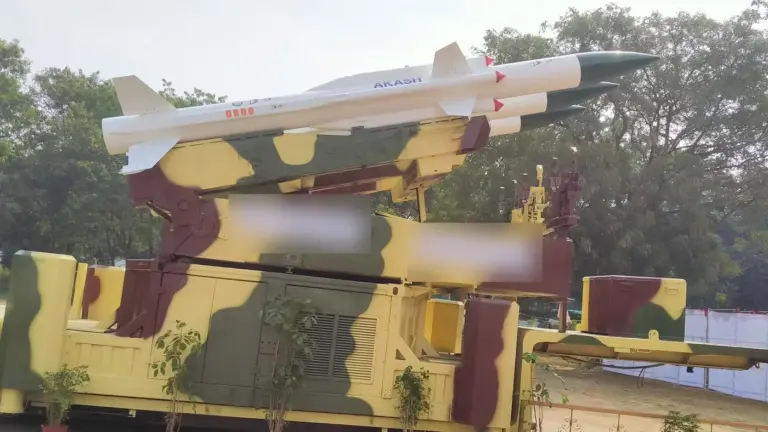
- AI in Defence roadmap (2019) identified 75 priority products; ~$100 million allocated annually via DRDO and iDEX.
Ethical and policy concerns
AI's dual-use nature has created several first-order concerns that UPSC frequently examines.
| Concern | Explanation |
|---|---|
| Algorithmic bias | Training data reflects social biases — can discriminate in loans, hiring, policing |
| Job displacement | IMF (2024) says 40% of global jobs exposed; white-collar jobs at new risk |
| Deepfakes | Synthetic media already used in Indian elections (2024 Lok Sabha) |
| Autonomy & accountability | Who is liable for harm caused by an autonomous system? |
| Mass surveillance | Facial recognition creeping without data protection backbone |
| Intellectual property | Training on copyrighted text/images; ongoing lawsuits (NYT v. OpenAI) |
| Concentration of power | Compute, talent and data locked inside a few US-China firms |
| Existential / frontier risk | Misaligned AGI — still contested but flagged by Bletchley Declaration |
India's regulatory stance
- MeitY advisory (March 2024): GenAI platforms to seek explicit government permission before deploying "unreliable" models — later softened after industry pushback.
- Digital Personal Data Protection Act, 2023 — lays base for data-driven AI use but rules still under notification.
- Draft Digital India Act proposes tiered regulation: high-risk AI (healthcare, elections, finance) to face ex-ante audits.
- Sectoral guardrails — SEBI on AI in markets, RBI on AI in credit scoring, ICMR on AI in biomedical research.
India is attempting a middle path between the EU AI Act (risk-based, prescriptive) and the US executive order (market-led, voluntary).
India's position in the global AI race
- Talent: India has the world's second-largest AI talent pool (Stanford AI Index 2024).
- Research output: 3rd highest in AI publications, but lags in top-tier conference citations.
- Compute: Severe deficit. India has fewer than 2,000 high-end AI accelerators in public hands; US leads with over 1 million.
- Start-ups: ~4,500 AI start-ups, concentrated in Bengaluru, Hyderabad, NCR, Pune.
- Foundation models: Krutrim, Sarvam AI, Ola AI building indigenous models; BharatGPT initiative under TDIL.
Latest developments (2024-26)
- Bletchley Declaration (Nov 2023) — India signed the first global AI safety declaration at the UK AI Safety Summit.
- AI Seoul Summit (May 2024) — India reaffirmed Safe, Secure & Trustworthy AI principles; DeepMind, OpenAI pledged Frontier AI Safety Commitments.
- AI Action Summit, Paris (Feb 2025) — co-chaired by India; adopted the Statement on Inclusive and Sustainable AI for People and the Planet. India announced hosting the next AI Action Summit in 2026.
- India Semiconductor Mission — four fabs approved by end-2024, including the Tata-PSMC Dholera fab (28 nm); critical for domestic AI compute.
- IndiaAI Compute tender (Jan 2025) — procurement of 18,693 GPUs announced; Yotta, Tata Communications, CtrlS among empanelled providers.
- National Quantum Mission funding — Rs 6,003 crore reinforced India's quantum-AI linkage.
- DeepTech Policy 2024 — fiscal and regulatory incentives for AI, quantum, biotech, space startups.
- Chandrayaan-4 plan and Gaganyaan progress — both rely heavily on AI-based autonomous guidance, navigation and control modules developed by ISRO.
- Sora, Veo & Sovereign video AI — IndiaAI invited proposals (2025) for Indian video-generation foundation models to counter external dependency.
- Election deepfake incidents (2024 LS elections) — ECI flagged 50+ manipulated political videos; Ministry of I&B and MeitY now mandate watermarking for AI-generated political content.
UPSC Relevance
GS Paper III — Science & Technology
- Developments and applications, indigenisation, neural networks, IndiaAI Mission architecture.
GS Paper III — Internal Security
- AI in cyber-warfare, deepfake-driven misinformation, autonomous weapons.
GS Paper II — Governance
- AI-enabled public service delivery, Digital India Act, surveillance and privacy.
GS Paper IV — Ethics
- Algorithmic bias, accountability gap, AI and Dharma, moral status of autonomous agents.
Essay
- "Artificial Intelligence: servant, partner or successor?"
- "Technology should serve humanity, not shape it."
Prelims pointers — IndiaAI Mission (Rs 10,372 crore, seven pillars), Bletchley Declaration, AI Action Summit 2025 co-chair, Bhashini, Krutrim/Sarvam, Responsible AI principles.
Interview probes — jobs impact on Indian IT services, AI regulation model India should adopt, compute sovereignty, deepfake elections.
AI will be the single biggest force reshaping Indian governance, economy and national security through the 2030s. For the civil servant of tomorrow, AI literacy is no longer optional — it is the baseline.
Tell Google you want more of this.
Add Anantam IAS as a preferred sourceOne tap, and this site shows up more often in your own Top Stories, AI Overviews and AI Mode. Remove it any time.