Daily Digest
UPSC · Civil Services Examination
Current Affairs · Monday, 15 June 2026
Current affairs curated and edited by Anantam IAS faculty — pulled from The Hindu, PIB, IDSA, Foreign Affairs and the ministries. Read, annotate, revise.
Old Rajinder Nagar · Delhi 110005 · anantamias.com
US-Iran Peace Deal: What It Means for Oil, Hormuz and India
Why in News?
The United States and Iran announced a peace deal with a stated permanent end to military action, closing the recent flare-up in West Asia. The agreement is reported to bundle an oil-sanctions waiver, the reopening of the Strait of Hormuz to shipping, fresh limits on Iran’s nuclear programme, and a release of frozen assets.
For India, which imports close to 85% of its crude oil, the headline matters less for the diplomacy than for the sea lane: roughly a fifth of the world’s oil moves through the Hormuz chokepoint, and any easing of tension there feeds straight into pump prices, inflation and the current-account math.
- Deal reported to declare a permanent end to military action between the two sides.
- Reported components: an oil-sanctions waiver, reopening of the Strait of Hormuz, nuclear limits, and release of frozen assets.
- Caps a short, sharp West Asia war that had spiked freight, insurance and crude-oil benchmarks.
- India’s exposure is structural: about 85% dependence on crude imports and heavy reliance on Gulf sea lanes.
- The Strait of Hormuz carries roughly a fifth of globally traded oil and most of India’s Gulf-sourced crude and LNG.
The development matters in the context of:
- Reopening Hormuz removes a tail risk that had driven up war-risk insurance and tanker-rerouting costs.
- An eased Iran reconnects a sanctioned barrel back toward global supply, softening prices over the medium term.
- For India, the question is durable: how to keep energy flowing while preserving strategic autonomy across US, Iran and Gulf-Arab ties.
UPSC Relevance
Prelims Relevance
- Strait of Hormuz — connects the Persian Gulf to the Gulf of Oman and the Arabian Sea; a global oil chokepoint.
- OPEC and OPEC+ — an oil producers’ cartel that coordinates output and influences crude prices.
- JCPOA (2015) — the Iran nuclear deal between Iran and the P5+1; the US exited in 2018.
- Chabahar port — India-operated port on Iran’s Makran coast, outside the Strait of Hormuz.
- INSTC — International North-South Transport Corridor linking India, Iran, Central Asia and Russia.
- India’s crude-import dependence — about 85% of requirement met by imports.
- Persian Gulf, Gulf of Oman, Arabian Sea — the maritime geography around Hormuz.
- Current Account Deficit (CAD) — widens when the oil-import bill rises.
Mains Relevance
GS Paper 2
- India’s West Asia balancing — managing simultaneous ties with the US, Iran, Israel and the Gulf Arab states.
- Strategic autonomy as a design principle when great-power agreements reshape a region that India depends on.
GS Paper 3
- Energy security and the economics of a crude-price shock — inflation, CAD and the import bill.
- Sea-lane security and chokepoint risk for a trade-dependent, energy-importing economy.
Essay
- Peace is cheaper than war — the economics of de-escalation for energy-importing nations.
- A nation’s foreign policy is the shadow cast by its energy needs.
Background and Context
Why the Strait of Hormuz Decides So Much
The deal’s market power comes from one narrow stretch of water, not from the diplomacy itself.
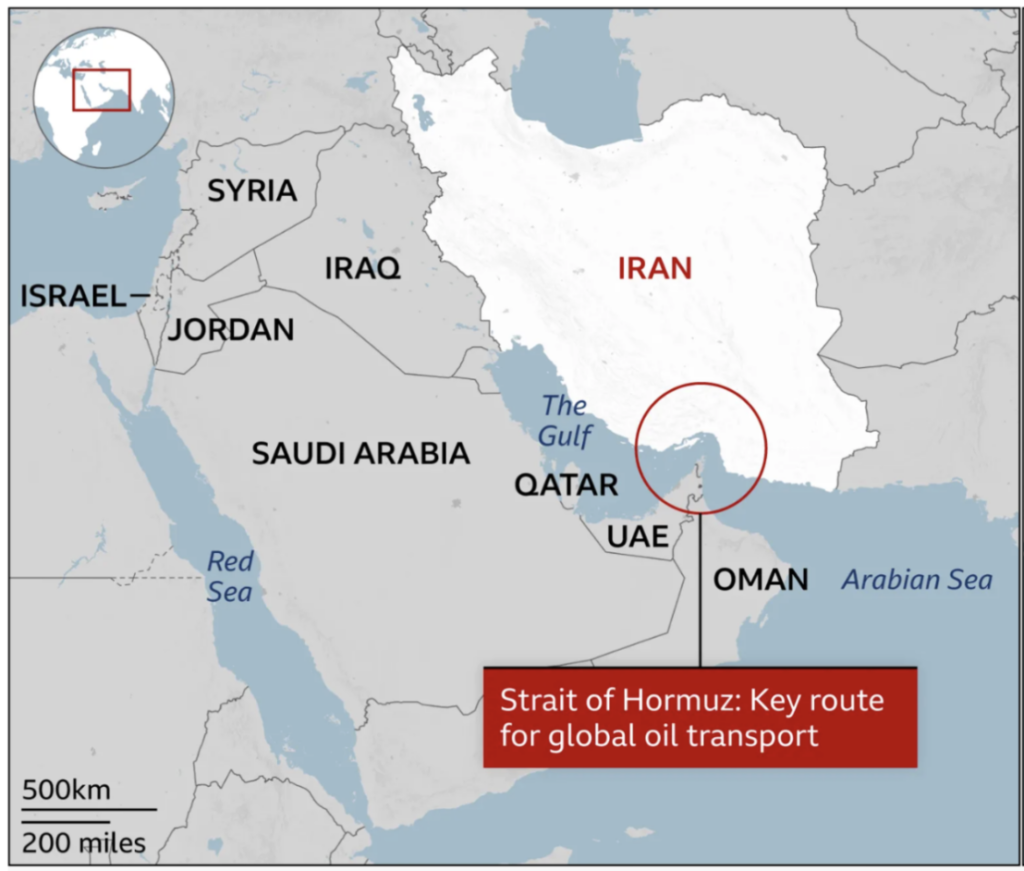
- The Strait of Hormuz links the Persian Gulf to the Gulf of Oman and onward to the Arabian Sea, the only sea exit for Gulf oil — see why the Strait of Hormuz is critical to global energy flows.
- Roughly a fifth of the world’s oil and a large share of seaborne LNG transit the strait each day.
- At its narrowest, the navigable shipping lanes are only a few kilometres wide, so even the threat of disruption moves prices.
- Iran sits on the strait’s northern shore, which is why any Iran flare-up is read by markets as a chokepoint risk.
- Reopening Hormuz to normal traffic lets tankers drop costly detours and lowers war-risk insurance premiums.
What the Deal Reportedly Contains
The reported terms touch oil, the nuclear file, money and the sea lane at once.
- A declared permanent end to military action between the United States and Iran.
- An oil-sanctions waiver that would let more Iranian crude return to the legal market.
- Fresh nuclear limits on Iran’s programme, echoing the architecture of the earlier deal.
- Reopening of the Strait of Hormuz to civilian shipping and energy cargo.
- Release of frozen Iranian assets held abroad as part of the bargain.
From JCPOA to Now — the Nuclear Backstory
This is the latest turn in a decade-long standoff over Iran’s nuclear programme.
- The JCPOA of 2015 capped Iran’s enrichment in exchange for sanctions relief, agreed with the P5+1.
- The United States exited the deal in 2018 and reimposed sanctions under a maximum-pressure approach.
- Iran then expanded enrichment beyond JCPOA limits, raising proliferation concerns.
- The new arrangement is reported to restore nuclear caps alongside the wider peace package.
- For UPSC, the durable thread is the non-proliferation bargain — limits in return for economic normalisation.
India’s Energy Stakes
India is one of the most exposed economies to anything that happens around the Gulf.
- India imports about 85% of its crude oil, much of it sourced from or shipped through the Gulf.
- A sustained crude spike feeds inflation, widens the Current Account Deficit and pressures the rupee.
- Cheaper, calmer oil eases the subsidy and import-bill burden and supports the growth path.
- Indian seafarers crew a large share of Gulf-transiting vessels, so their safety is a direct human stake.
- A reopened strait restores predictable freight and insurance costs for refiners and importers.
Chabahar, INSTC and the India-Iran Channel
India’s Iran links run through connectivity projects that survive even sanctions friction.
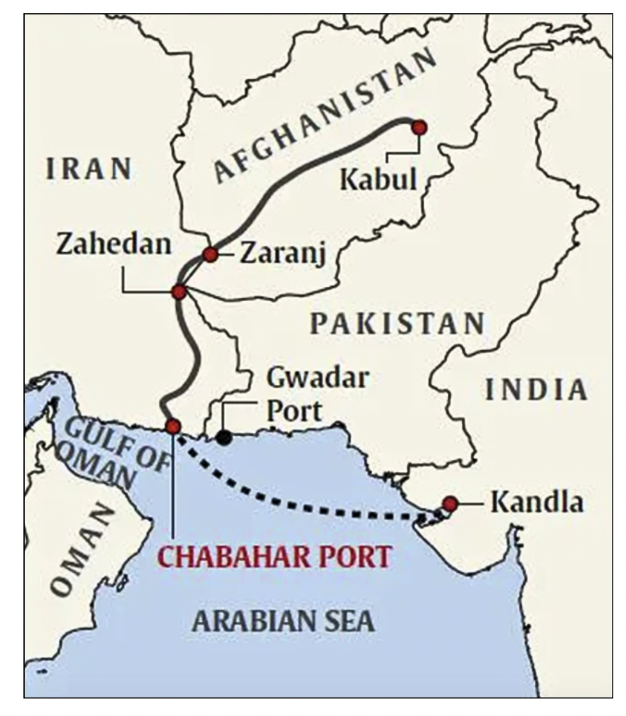
- Chabahar port on Iran’s Makran coast is India-operated and sits outside the Strait of Hormuz, a built-in chokepoint hedge.
- It gives India a route to Afghanistan and Central Asia that bypasses Pakistan.
- The INSTC ties India through Iran to Central Asia and Russia, cutting transit time versus the Suez route.
- Sanctions relief on Iran could smooth payments, shipping and investment around these projects.
- Defining the durable asset: connectivity infrastructure outlasts the news cycle of any single deal.
India’s Balancing Act in West Asia
Every Gulf development tests India’s ability to hold several relationships at once.
- India runs simultaneous ties with the United States, Iran, Israel and the Gulf Arab states.
- The Gulf hosts a large Indian diaspora and is a major source of remittances and energy.
- Strategic autonomy lets India engage all sides without being locked into one camp.
- A US-brokered peace narrows the chance of a forced choice between partners.
- India’s interest is stability and open sea lanes, not the internal politics of the deal.
Way Forward
Diversify energy sources
- Keep widening crude suppliers across regions to dilute Gulf-chokepoint dependence.
- Scale strategic petroleum reserves and renewables to blunt future price shocks.
Secure the sea lanes
- Sustain naval presence and anti-piracy cooperation across the Arabian Sea and the Gulf of Oman.
- Protect Indian seafarers through evacuation plans and shipping-safety protocols.
Bank the connectivity hedges
- Use any sanctions easing to deepen Chabahar operations and the INSTC.
- Lock in payment and logistics arrangements while the window is open.
India should treat the deal as a chance to stabilise its import bill while quietly reinforcing the alternatives — reserves, routes and partners — that protect it if calm in West Asia proves short-lived.
Conclusion
A US-Iran peace deal that reopens the Strait of Hormuz and eases oil sanctions is, for India, primarily an energy and sea-lane story. Calmer crude eases inflation and the current-account strain, while a reopened strait restores predictable freight and insurance for refiners.
The deeper lesson is about design, not the day’s diplomacy: India’s exposure to one narrow waterway argues for diversified supply, fuller reserves and live connectivity hedges like Chabahar and the INSTC. Strategic autonomy lets India welcome the calm without surrendering its room to manoeuvre if it does not last.
UPSC Practice Questions
Prelims MCQ 1
With reference to the Strait of Hormuz, consider the following statements:
- It connects the Persian Gulf with the Gulf of Oman and the Arabian Sea.
- Iran lies along its northern shore.
- A significant share of globally traded oil transits through it.
How many of the above statements are correct?
(a) Only one (b) Only two (c) All three (d) None
Answer: (c) All three
Explanation:
The Strait of Hormuz links the Persian Gulf to the Gulf of Oman and onward to the Arabian Sea, has Iran on its northern shore, and carries roughly a fifth of the world’s oil, so all three statements are correct.
Prelims MCQ 2
Which of the following is correctly matched?
(a) Chabahar port — located inside the Strait of Hormuz (b) INSTC — connects India through Iran to Central Asia and Russia (c) JCPOA — a free-trade agreement between India and Iran (d) OPEC — a UN agency regulating maritime traffic
Answer: (b) INSTC — connects India through Iran to Central Asia and Russia
Explanation:
The INSTC links India via Iran to Central Asia and Russia. Chabahar lies outside Hormuz on the Makran coast, the JCPOA is the Iran nuclear deal, and OPEC is an oil producers’ cartel, not a UN maritime body.
UPSC Mains Questions
- India imports nearly 85% of its crude oil and depends heavily on Gulf sea lanes. Examine how a US-Iran peace deal that reopens the Strait of Hormuz affects India’s energy security and macroeconomic stability.
- “India’s West Asia policy is an exercise in balancing.” In light of recent US-Iran developments, discuss how India can preserve its strategic autonomy while engaging the US, Iran, Israel and the Gulf Arab states.
- Chokepoints like the Strait of Hormuz expose trade-dependent economies to disproportionate risk. Evaluate the connectivity and supply-diversification measures India can adopt to reduce this vulnerability.
Sources: The Hindu and The Hindu.
Frequently Asked Questions
Why does the US-Iran deal matter to India?
India imports about 85% of its crude oil, much of it through or from the Gulf. A peace deal that reopens the Strait of Hormuz and eases oil sanctions tends to calm crude prices, which lowers India’s import bill, eases inflation and reduces pressure on the current-account deficit and the rupee.
What is the Strait of Hormuz?
The Strait of Hormuz is a narrow waterway connecting the Persian Gulf to the Gulf of Oman and the Arabian Sea. Iran lies on its northern shore. Roughly a fifth of the world’s traded oil and a large share of seaborne LNG pass through it, which makes it one of the most important global oil chokepoints.
How does the deal affect oil prices?
Reopening Hormuz lets tankers stop costly detours and lowers war-risk insurance, while an oil-sanctions waiver returns more Iranian crude toward the market. Together these tend to ease prices over the medium term, though the actual move depends on how quickly the reported terms are implemented.
What is India’s stake in Chabahar and the INSTC?
Chabahar is an India-operated port on Iran’s Makran coast, located outside the Strait of Hormuz, giving India a chokepoint hedge and a route to Afghanistan and Central Asia. The INSTC links India through Iran to Central Asia and Russia. Any sanctions easing on Iran could smooth payments and investment in both.
How does this connect to the JCPOA?
The JCPOA of 2015 capped Iran’s nuclear programme in return for sanctions relief. The US exited in 2018 and Iran later expanded enrichment. The new arrangement is reported to restore nuclear limits alongside the wider peace package, continuing the same limits-for-normalisation bargain.
What is India’s interest in the outcome?
India’s core interest is regional stability and open sea lanes rather than the internal politics of the deal. Calmer Gulf conditions protect Indian seafarers, steady the energy supply, and let India keep engaging all parties while preserving its strategic autonomy.
Source: https://anantamias.com/current-affairs/us-iran-peace-deal-2026/
How a Tiny Memory Chip Is Driving Up India’s Inflation
Why in News?
A The worldwide shortage of memory chips is filtering into the prices of phones, laptops, home appliances and cars. Because India imports most of its semiconductors, the squeeze shows up as imported inflation in consumer-electronics and durable-goods prices.
The trigger is the chip-makers’ pivot toward high-bandwidth memory (HBM) for artificial-intelligence servers. As Samsung, SK Hynix and Micron shift fabrication capacity to feed AI data-centres, the supply of ordinary DRAM and NAND memory has tightened and prices have climbed across global markets.
- Memory chips come in two main types — DRAM (working memory) and NAND flash (storage); both are now in short supply.
- AI data-centres consume large volumes of high-bandwidth memory, so producers have diverted wafer capacity away from commodity memory.
- India imports the overwhelming share of its semiconductors, so global price rises pass through to local device prices almost directly.
- The cost of memory feeds into smartphones, laptops, televisions, appliances and cars, which sit inside India’s consumer-price and wholesale-price baskets.
The development matters in the context of:
- Why it matters for prices: Durable goods and electronics carry real weight in the household budget, so a memory squeeze can nudge core inflation.
- Why it matters for policy: it underscores why the India Semiconductor Mission targets domestic fabrication and assembly to cut import dependence.
- Why it matters strategically: memory supply is concentrated in a few firms and geographies, exposing India to the global ‘chip war’.
UPSC Relevance
Prelims Relevance
- Difference between DRAM (volatile working memory) and NAND flash (non-volatile storage)
- High-bandwidth memory (HBM) and its link to AI/GPU servers
- Leading memory producers: Samsung, SK Hynix, Micron
- India Semiconductor Mission (ISM) under MeitY
- Meaning of imported inflation and pass-through to domestic prices
- Difference between a fab (fabrication) and OSAT/ATMP (assembly, test, packaging)
- CPI and WPI baskets, and where electronics/durables sit
- Design-Linked Incentive (DLI) and the semiconductor-package incentives
Mains Relevance
GS Paper 3
- How global semiconductor supply chains transmit price shocks into India’s inflation
- Role of the India Semiconductor Mission in building self-reliance in critical electronics
GS Paper 3
- AI-driven demand for compute as a new source of resource and supply-chain stress
GS Paper 2
- Technology supply chains, the ‘chip war’ and India’s strategic-autonomy choices
Essay
- Technology, trade and the price of self-reliance in a connected world
- When the smallest components decide the largest outcomes
Background and Context
What a memory chip is — DRAM vs NAND
Memory chips store the data a device works with, and they fall into two families.
- DRAM (Dynamic Random-Access Memory) is fast, volatile working memory — it holds the data a phone or laptop is actively using and clears when power is off.
- NAND flash is non-volatile storage — it keeps photos, apps and files even when the device is switched off; it is what an SSD or phone storage is built from.
- Almost every modern electronic product — smartphones, laptops, servers, cars, TVs, washing machines — carries both DRAM and NAND.
- Memory is a commodity good: largely interchangeable across brands, so its price swings with the global supply-demand balance, not with branding.
Why prices are rising — the AI compute boom
The shortage is a demand-and-allocation story, not a factory shutdown.
- Training and running large AI models need vast data-centres packed with accelerators that pair with high-bandwidth memory (HBM). For the policy backdrop, see artificial intelligence in India.
- HBM is far more profitable per wafer than commodity memory, so producers shift fabrication capacity toward it.
- That diversion tightens the supply of ordinary DRAM and NAND, pushing their prices up across global markets.
- A handful of firms — Samsung, SK Hynix and Micron — dominate memory, so their capacity choices move the whole market.
- Memory pricing is famously cyclical (boom-and-bust); the current up-cycle is amplified by the AI surge.
How a global chip price becomes Indian inflation
The pass-through runs through India’s heavy reliance on imported electronics.
- India imports the bulk of its semiconductors; very little memory is made domestically, so global prices land here with little buffer.
- Costlier memory raises the bill of materials for phones, laptops, appliances and cars, which manufacturers eventually pass to buyers.
- These durable and electronic goods sit inside the Consumer Price Index (CPI) and Wholesale Price Index (WPI) baskets.
- Because the cost rise originates abroad, economists call this imported inflation — a price shock transmitted through trade rather than domestic demand. See our note on types and measurement of inflation.
- A weaker rupee would magnify the effect, since imports are dollar-priced.
India’s self-reliance push — the Semiconductor Mission
Policy aims to cut this exposure by building chips at home.
- The India Semiconductor Mission (ISM), under the Ministry of Electronics and IT (MeitY), anchors incentives for fabs, display fabs and assembly.
- Schemes support fabrication (fabs) and OSAT/ATMP — outsourced assembly, test, marking and packaging units that finish chips.
- A Design-Linked Incentive (DLI) scheme backs domestic chip-design start-ups and IP.
- Early OSAT/ATMP plants are quicker to set up than leading-edge fabs and reduce the import bill on packaging.
- The strategic logic ties to the wider goals of Atmanirbhar Bharat and resilient critical supply chains. See the India Semiconductor Mission guide.
The strategic backdrop — the ‘chip war’
Semiconductors are now a front line of geopolitics, not just commerce.
- Advanced chip and memory output is concentrated in a few firms and geographies, chiefly in East Asia.
- Export controls and friend-shoring among major economies have made supply a question of strategy and security.
- Concentration means any disruption — capacity shift, geopolitical shock or natural event — ripples worldwide.
- For India, this raises the value of diversified sourcing and a credible domestic electronics value chain.
Why it matters for the wider economy
A small component carries outsized macro and welfare weight.
- Electronics and durables are aspirational purchases for India’s expanding middle class, so price rises bite into consumption.
- Higher input costs squeeze margins for domestic assemblers operating under thin-margin incentive schemes.
- Persistent imported price pressure complicates the RBI‘s inflation-management mandate.
- It strengthens the case for moving up the electronics value chain from assembly toward components and design.
Way Forward
Deepen the value chain
- Move beyond final assembly toward components, packaging and design so more value is captured at home.
- Scale OSAT/ATMP capacity first, since it is faster to build than leading-edge fabs.
Diversify and de-risk supply
- Pursue trusted-partner sourcing and trade pacts so India is not hostage to a single geography.
- Build buffer resilience for critical memory inputs used by domestic manufacturers.
Build skills and design IP
- Expand chip-design talent and back start-ups through the Design-Linked Incentive route.
- Tie incentives to genuine technology transfer, not just box-assembly.
Macro-policy should treat episodes like this as a reminder that supply-side, import-linked shocks need structural answers — domestic capability and diversification — rather than demand management alone.
Conclusion
A memory chip the size of a fingernail is showing how tightly India’s prices are stitched into global technology supply chains. When AI data-centres soak up the world’s high-bandwidth memory, the spillover reaches Indian shop shelves as costlier phones, laptops, appliances and cars.
The episode is a textbook case of imported inflation and a strong argument for the India Semiconductor Mission. Reducing import dependence in critical electronics is not only an industrial-policy goal — it is, increasingly, a question of price stability and strategic autonomy.
UPSC Practice Questions
Prelims MCQ 1
With reference to semiconductor memory, consider the following statements:
- DRAM is volatile working memory, while NAND flash is non-volatile storage.
- High-bandwidth memory is used mainly to feed AI and data-centre servers.
- India currently manufactures the bulk of the memory chips it consumes.
How many of the above statements are correct?
(a) Only one (b) Only two (c) All three (d) None
Answer: (b) Only two
Explanation:
Statements 1 and 2 are correct: DRAM is volatile, NAND is non-volatile, and HBM serves AI/data-centre demand. Statement 3 is wrong — India imports most of its memory chips, which is exactly why global prices pass through as imported inflation.
Prelims MCQ 2
The India Semiconductor Mission (ISM) is implemented under which ministry?
(a) Ministry of Commerce and Industry
(b) Ministry of Electronics and Information Technology (MeitY)
(c) Ministry of Heavy Industries
(d) Ministry of Science and Technology
Answer: (b) Ministry of Electronics and Information Technology (MeitY)
Explanation:
ISM operates under MeitY, anchoring incentives for fabs, display fabs, OSAT/ATMP units and the Design-Linked Incentive (DLI) scheme to build domestic semiconductor capability.
UPSC Mains Questions
- Explain how a shortage in global semiconductor memory can transmit into domestic inflation in India. What does this reveal about the limits of demand-side monetary policy in tackling supply-driven price shocks? (250 words)
- The India Semiconductor Mission seeks to reduce import dependence in critical electronics. Evaluate the strategy of prioritising assembly and packaging over leading-edge fabrication, and discuss its implications for price stability and strategic autonomy. (250 words)
- Discuss how the surge in artificial-intelligence compute demand is reshaping global supply chains for memory chips, and assess its consequences for a major importer like India. (150 words)
Sources: The Indian Express (Explained) and India Semiconductor Mission, MeitY.
Frequently Asked Questions
What is a memory chip?
A memory chip stores the data an electronic device works with. There are two main kinds: DRAM, the fast working memory a device uses while running, and NAND flash, the non-volatile storage that keeps files, apps and photos even after the device is switched off. Almost every phone, laptop, car and appliance contains both.
Why are memory chip prices rising?
Makers like Samsung, SK Hynix and Micron are shifting fabrication capacity toward high-bandwidth memory for AI data-centres, which is more profitable per wafer. That diverts capacity away from ordinary DRAM and NAND, tightening their supply. With demand strong and supply squeezed, prices climb across global markets.
How does this raise inflation in India?
India imports most of its semiconductors, so when global memory prices rise the cost lands here with little buffer. Costlier memory raises the price of phones, laptops, appliances and cars, which sit inside India’s consumer and wholesale price baskets. Because the shock comes from abroad through trade, economists call it imported inflation.
What is high-bandwidth memory (HBM)?
HBM is a high-performance type of memory that stacks chips to move data very fast, making it ideal for the accelerators in AI and data-centre servers. Because it earns more per wafer than commodity memory, producers prioritise it, which is the core reason ordinary memory has gone into shortage.
What is the India Semiconductor Mission?
The India Semiconductor Mission, run under the Ministry of Electronics and IT, offers incentives to build chip fabrication units, display fabs and assembly-and-packaging (OSAT/ATMP) plants in India, alongside a Design-Linked Incentive scheme for chip design. Its goal is to cut import dependence in critical electronics and strengthen supply-chain resilience.
What is imported inflation?
Imported inflation is a rise in domestic prices caused by costlier imports rather than by domestic demand. When a good India relies on buying from abroad becomes more expensive globally — or when the rupee weakens against the dollar — that higher cost passes through into local prices, as is happening now with memory chips.
Source: https://anantamias.com/current-affairs/memory-chip-shortage-inflation-2026/
Cooling Without Heating the Planet: India’s Sustainable-Cooling Challenge
Why in News?
An Indian Express Explained piece (“Can India cool down without heating up?”) flagged a sharpening paradox: as heat waves lengthen and incomes rise, the country’s demand for air-conditioning and refrigeration is exploding, yet the energy and refrigerants this cooling consumes themselves push warming higher.
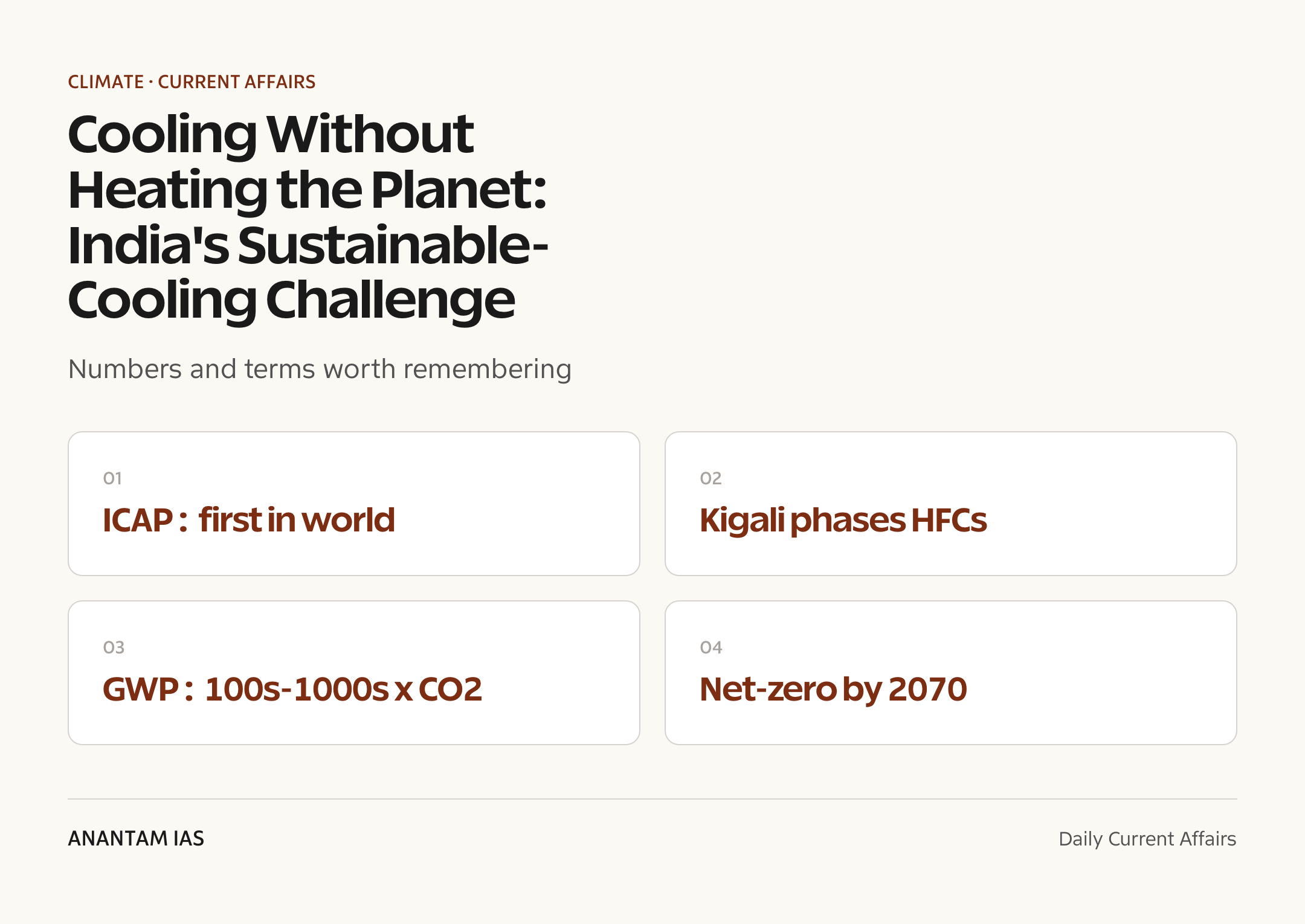
The cooling-warming loop has moved to the centre of India’s climate planning, anchored by the India Cooling Action Plan (ICAP, 2019) — the world’s first comprehensive national cooling strategy — and by treaty commitments under the Montreal Protocol and its Kigali Amendment.
- Space cooling is one of the fastest-growing sources of electricity demand in India, driven by hotter, longer summers and rising AC ownership.
- Most cooling runs on coal-heavy grid power, so more AC means more carbon dioxide emissions unless the grid and appliances get cleaner.
- Refrigerants used in ACs and fridges are potent greenhouse gases — many HFCs have global-warming potential (GWP) hundreds to thousands of times that of CO2.
- The India Cooling Action Plan (ICAP) targets a steep cut in cooling demand, refrigerant demand and cooling energy by 2037-38 against a 2017-18 baseline.
The development matters in the context of:
- Why this matters for living standards: cooling is shifting from a luxury to a health and productivity necessity as wet-bulb temperatures climb.
- Why this matters for climate goals: uncontrolled cooling growth could erode India’s net-zero by 2070 pathway and its Nationally Determined Contributions.
- Why this matters for equity: heat hits outdoor workers and the poor hardest, yet they have the least access to cooling — a classic climate-justice gap.
UPSC Relevance
Prelims Relevance
- India Cooling Action Plan (ICAP, 2019) — first national cooling plan; lead ministry is MoEFCC
- Montreal Protocol (1987) — phases out ozone-depleting substances like CFCs and HCFCs
- Kigali Amendment (2016) to the Montreal Protocol — phases down HFCs, which are greenhouse gases, not ozone-depleters
- Global-warming potential (GWP) — warming impact of a gas relative to CO2 over a time horizon
- Bureau of Energy Efficiency (BEE) — runs the Star Labelling programme and Standards & Labelling
- Minimum Energy Performance Standards (MEPS) for appliances
- Urban heat island effect; passive cooling and district cooling
- Cold chain — temperature-controlled supply chain for food, vaccines and pharma
- Heat Action Plans (HAPs) — city/state early-warning and response frameworks (Ahmedabad pioneered India’s first in 2013)
Mains Relevance
GS Paper 3
- Sustainable cooling as a climate-mitigation and energy-efficiency challenge: the cooling-energy-emissions nexus.
- Refrigerant transition under the Kigali Amendment and its bearing on India’s climate commitments.
- Role of energy efficiency (BEE star labels, MEPS), passive design and district cooling in demand reduction.
GS Paper 2
- India’s obligations under multilateral environmental agreements (Montreal Protocol, Paris Agreement) and how they shape domestic policy.
- Cooling access as a question of health, equity and disaster management (heat-wave governance).
Essay
- Development creates the very comforts that threaten the planet that sustains it.
- Adaptation and mitigation are not rivals but two halves of the same survival strategy.
Background and Context
The cooling paradox
Cooling protects people from a warming climate while, done badly, accelerating that same warming.
- Demand surge: hotter summers, urbanisation and a growing middle class are driving rapid uptake of air-conditioners, fans, refrigerators and cold storage.
- Two emission channels: the electricity an appliance uses (mostly coal-fired in India) plus the refrigerant it leaks over its life.
- Peak-load stress: AC use spikes on the hottest afternoons, forcing utilities to keep dirty, expensive peaking plants ready and straining the grid.
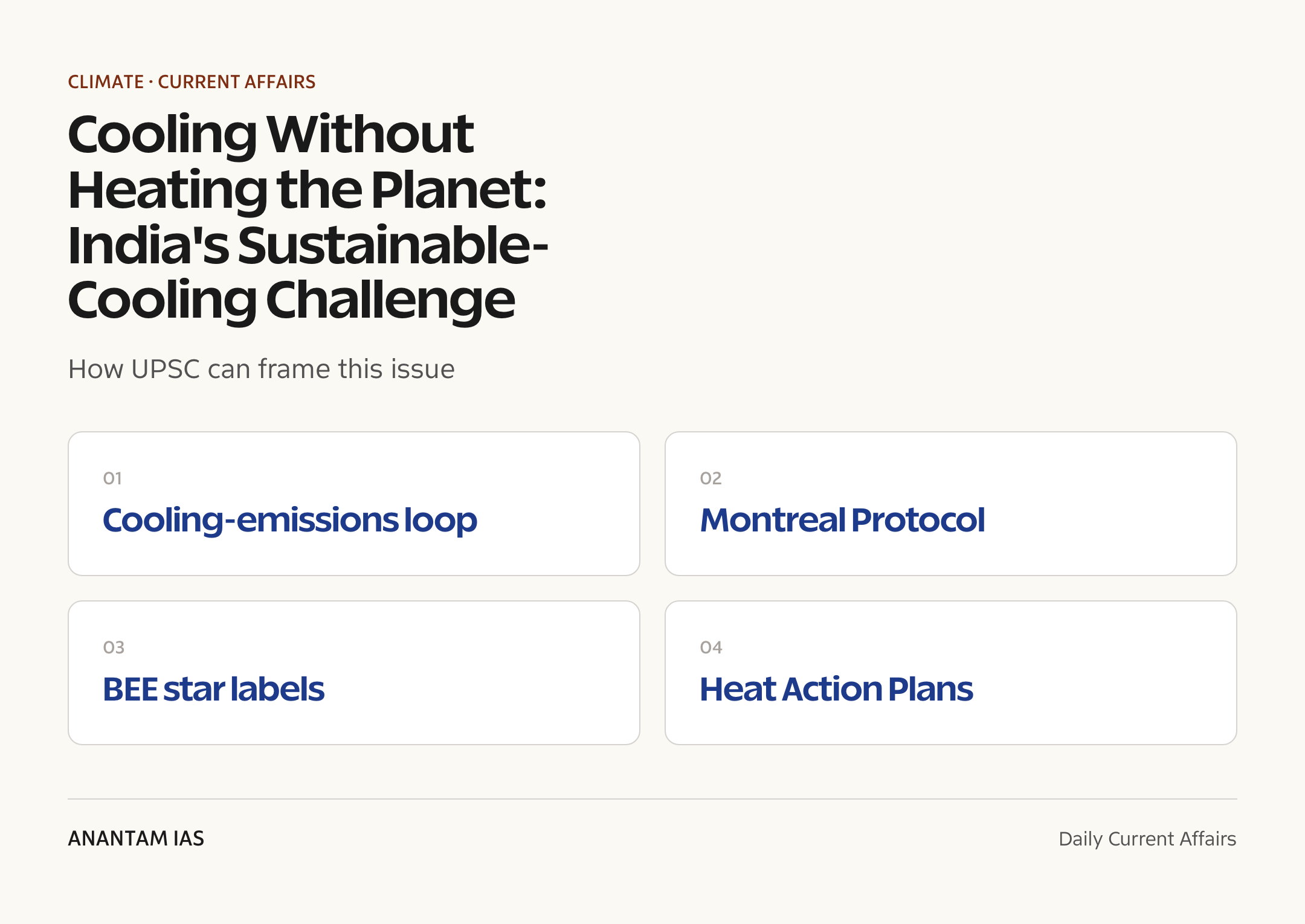
- Feedback loop: more emissions raise temperatures, which raises cooling demand — a self-reinforcing cycle, the Indian Express piece highlighted.
India Cooling Action Plan (ICAP), 2019
India’s MoEFCC released the world’s first comprehensive national cooling strategy, covering a 20-year horizon.
- First-of-its-kind: the India Cooling Action Plan was the first national plan to take an integrated, cross-sectoral view of cooling — buildings, cold chain, refrigeration, transport, air-conditioning and refrigerants.
- Goal architecture: reduce overall cooling demand, cut refrigerant demand, and lower cooling energy requirements by 2037-38 against a 2017-18 baseline.
- Twin track: it links mitigation (efficiency, low-GWP refrigerants) with access (affordable cooling as a basic need).
- Skilling: ICAP also flagged training servicing technicians, since refrigerant leaks during servicing are a major emissions source.
Refrigerants, GWP and the Kigali Amendment
The chemicals that move heat are themselves a climate problem, governed by the Montreal Protocol family of treaties.
- The chemistry chain: CFCs and HCFCs harmed the ozone layer and were phased out/down under the Montreal Protocol (1987).
- HFCs replaced them — they spare the ozone layer but are potent greenhouse gases, with GWP often hundreds to thousands of times that of CO2.
- Kigali Amendment (2016): brought HFCs under the Montreal Protocol and set a phased HFC phase-down; India ratified it and follows a differentiated, later timeline.
- Next-gen options: low-GWP refrigerants and natural refrigerants (ammonia, CO2, hydrocarbons) plus tighter leak control are central to compliance.
Energy efficiency and standards
The cheapest cooling is the cooling you never need; the next-cheapest is the most efficient unit available.
- BEE Star Labelling: the Bureau of Energy Efficiency rates appliances 1-5 stars, guiding consumers toward efficient ACs and fridges.
- MEPS: Minimum Energy Performance Standards bar the least-efficient models from the market and ratchet up over time.
- Default-temperature push: a recommended AC default of around 24 degrees Celsius cuts energy use sharply with little comfort loss.
- Cold chain efficiency: better-designed cold storage and refrigerated transport reduce both food loss and cooling energy.
Passive cooling, district cooling and urban heat
Beyond appliances, how we build and plan cities decides how much active cooling is even needed.
- Passive cooling: design strategies — shading, insulation, reflective roofs, cross-ventilation, traditional materials — that lower indoor heat without machines.
- District cooling: a central plant chills water and pipes it to many buildings, far more efficient than thousands of individual units.
- Urban heat island: dense concrete, glass and asphalt make cities several degrees hotter than their surroundings, raising cooling loads.
- Cool roofs and green cover: reflective surfaces and urban greenery cut surface temperatures and demand cheaply.
Heat as a health and equity issue
Cooling is not just comfort — it is increasingly a question of survival, productivity and fairness.
- Heat Action Plans (HAPs): Ahmedabad pioneered India’s first HAP in 2013; many cities and states now run heat-wave early-warning and response systems.
- Wet-bulb risk: high heat plus humidity (wet-bulb temperature) can exceed the limits the human body can tolerate.
- Vulnerable groups: outdoor workers, the elderly and the poor face the greatest exposure with the least access to cooling.
- Access gap: ensuring affordable cooling for all is itself a climate-justice and adaptation priority, not a luxury question.
Way Forward
Cut the demand first
- Mainstream passive-cooling design and thermal-comfort norms in building codes and affordable housing.
- Scale cool roofs, urban greening and shading to blunt the urban heat island effect.
Make every unit efficient and clean
- Keep ratcheting up BEE star ratings and MEPS, and promote efficient super-efficient ACs.
- Accelerate the shift to low-GWP and natural refrigerants with strong leak-control and technician training under the Kigali timeline.
Decarbonise the supply and protect people
- Pair cooling growth with renewable energy, storage and demand-side management to flatten peak load.
- Expand and resource Heat Action Plans and equitable cooling access for vulnerable communities.
Conclusion
India’s cooling challenge captures the larger development dilemma: the comforts that make a warming country liveable can, if powered and refrigerated carelessly, deepen the very crisis they ease.
The way out is not less cooling but smarter cooling — cutting demand through design, cleaning up appliances and refrigerants, greening the grid and treating cooling access as a basic right. Get this right, and India can keep its people cool while keeping faith with its climate goals.
UPSC Practice Questions
Prelims MCQ 1
With reference to the cooling-climate nexus in India, consider the following statements:
- The India Cooling Action Plan was among the first national-level cooling strategies in the world.
- The Kigali Amendment to the Montreal Protocol deals with the phase-down of hydrofluorocarbons (HFCs).
- Hydrofluorocarbons (HFCs) damage the ozone layer but have negligible global-warming potential.
How many of the above statements are correct?
(a) Only one (b) Only two (c) All three (d) None
Answer: (b) Only two
Explanation:
Statements 1 and 2 are correct: ICAP (2019) was the world’s first comprehensive national cooling plan, and the Kigali Amendment phases down HFCs. Statement 3 is wrong — HFCs do NOT deplete ozone but are potent greenhouse gases with high GWP.
Prelims MCQ 2
The Standards and Labelling (star-rating) programme for energy-efficient appliances in India is run by which body?
(a) Central Pollution Control Board (b) Bureau of Energy Efficiency (c) Bureau of Indian Standards (d) Central Electricity Authority
Answer: (b) Bureau of Energy Efficiency
Explanation:
The Bureau of Energy Efficiency (BEE), under the Ministry of Power, runs the Standards & Labelling programme and assigns 1-5 star ratings to appliances such as air-conditioners and refrigerators.
UPSC Mains Questions
- “India cannot cool its people without first cooling its cooling.” Examine the cooling-energy-emissions nexus and discuss how the India Cooling Action Plan seeks to break it. (15 marks, 250 words)
- Explain how the Montreal Protocol and its Kigali Amendment together address both ozone protection and climate change, and assess India’s strategy for a low-GWP refrigerant transition. (10 marks, 150 words)
- Access to cooling is becoming a question of health, productivity and equity, not merely comfort. Discuss, with reference to heat waves and Heat Action Plans in India. (15 marks, 250 words)
Sources: Ministry of Environment, Forest and Climate Change and The Indian Express.
Frequently Asked Questions
What is sustainable cooling?
Sustainable cooling means meeting people’s cooling needs — for comfort, health, food and medicines — while minimising the energy used and the greenhouse gases emitted. It combines cutting demand through better building design, using highly efficient appliances, switching to low-warming-potential refrigerants and powering cooling with clean energy, so comfort does not come at the planet’s cost.
What is the India Cooling Action Plan (ICAP)?
ICAP, released in 2019 by the Ministry of Environment, Forest and Climate Change, was the world’s first comprehensive national cooling strategy. Spanning a 20-year horizon, it aims to reduce overall cooling demand, refrigerant demand and cooling energy use by 2037-38 against a 2017-18 baseline, while ensuring affordable cooling access for all.
Why do air-conditioners worsen climate change?
Air-conditioners contribute to warming in two ways. First, they consume large amounts of electricity, which in India is still largely coal-based, releasing carbon dioxide. Second, they use refrigerants that are powerful greenhouse gases — many leak over a unit’s life and have global-warming potential hundreds to thousands of times that of carbon dioxide.
What is the Kigali Amendment?
The Kigali Amendment (2016) to the Montreal Protocol commits countries to phase down hydrofluorocarbons (HFCs). HFCs do not harm the ozone layer but are strong greenhouse gases. India has ratified Kigali and follows a differentiated, later phase-down schedule, shifting industry toward low-GWP and natural refrigerants.
What is passive cooling?
Passive cooling lowers indoor temperatures without mechanical systems. It uses design strategies such as shading, insulation, reflective or cool roofs, cross-ventilation, courtyards and appropriate materials. By reducing how much heat enters a building, passive cooling cuts the need for air-conditioning, saving both energy and money while easing pressure on the power grid.
What are Heat Action Plans?
Heat Action Plans (HAPs) are early-warning and response frameworks that help cities and states protect people during heat waves. Ahmedabad pioneered India’s first HAP in 2013. They include heat-wave alerts, public awareness, adjusting work hours, opening cooling shelters and readying hospitals, focusing on vulnerable groups like outdoor workers and the elderly.
Source: https://anantamias.com/current-affairs/india-sustainable-cooling-2026/
Why Hybrid Paddy Divides Punjab’s Farmers
Why in News?
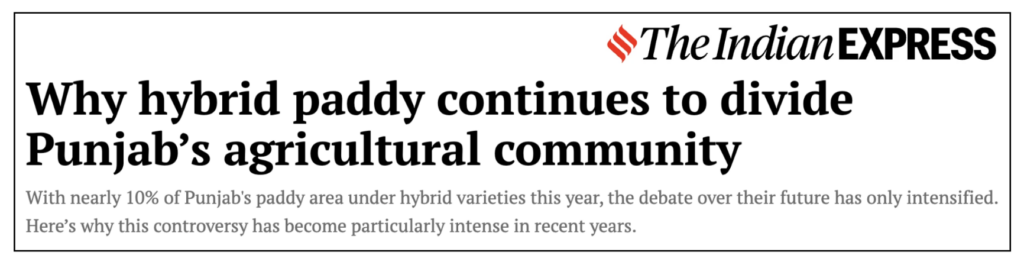
The debate over hybrid paddy has resurfaced in Punjab, with the state’s farming community sharply divided on whether to sow it for the 2026 kharif season. The Indian Express reported that hybrid varieties keep splitting opinion because the agronomic gains and the marketing losses pull in opposite directions.
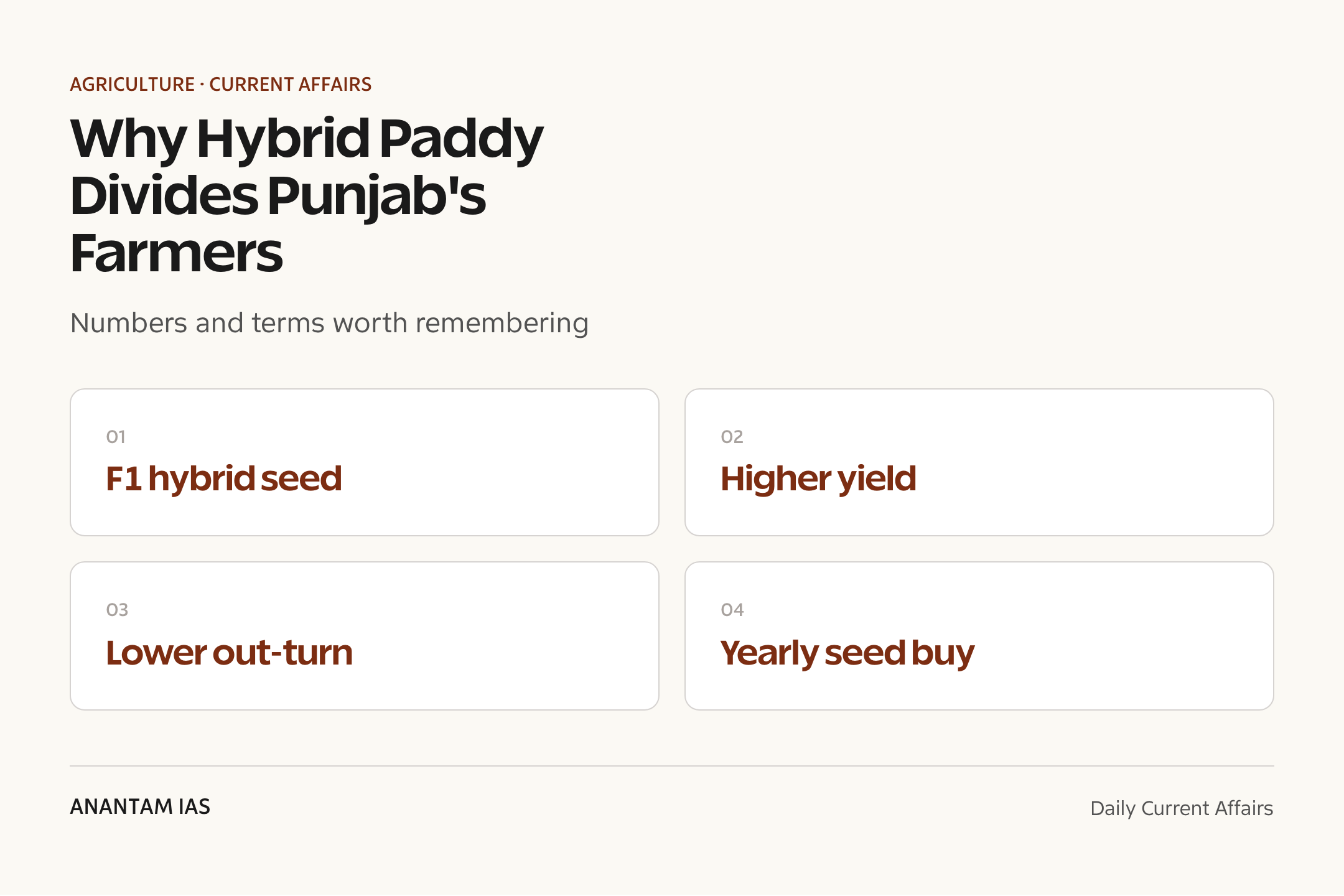
Supporters point to higher yields and a shorter crop duration that saves irrigation water and widens the window before stubble burning; sceptics counter that hybrids deliver a lower milling out-turn ratio (OTR), cost far more in seed, and raise grain-quality doubts at the procurement gate.
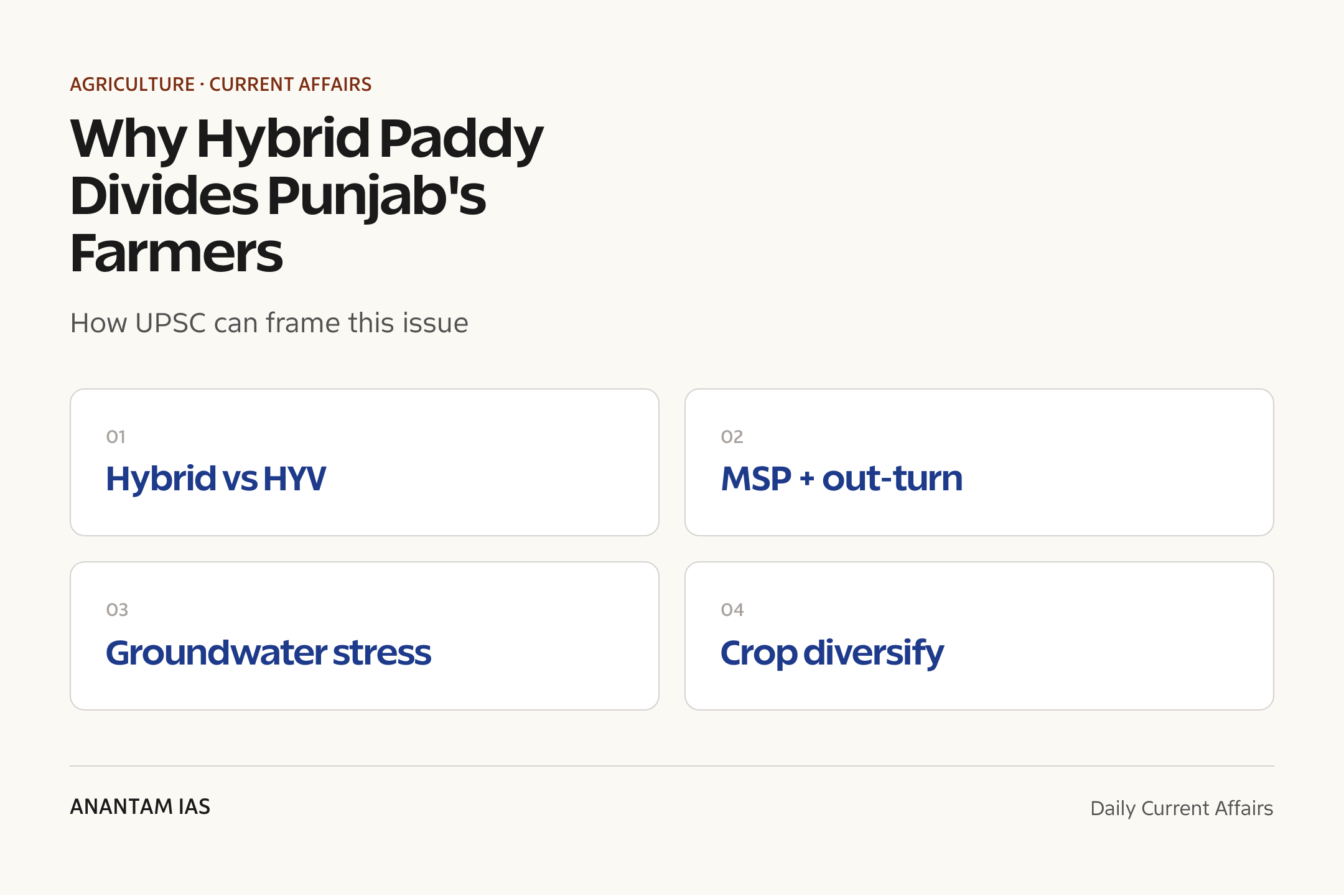
- Hybrid paddy can out-yield conventional high-yielding varieties (HYVs) but typically shows a lower milling/out-turn recovery of whole rice.
- Procurement agencies and millers judge paddy on the out-turn ratio — the share of intact milled rice — so a weaker OTR can hold up MSP purchase.
- Hybrid seed cannot be saved and resown each year, forcing farmers to buy fresh seed annually at a much higher cost.
- Some hybrids mature faster, trimming the groundwater drawn for transplanted rice in a state where the water table is falling sharply.
- Concerns over cooking quality and broken-grain percentage have led to periodic state-level curbs on selling specific hybrid varieties.
The development matters in the context of:
- In the context of groundwater depletion, any variety that shortens the paddy’s standing period reduces the number of irrigation cycles a tube well must run.
- In the context of crop diversification, the hybrid-paddy row underlines how deeply the rice-wheat cycle is locked in by assured MSP procurement.
UPSC Relevance
Prelims Relevance
- Hybrid vs HYV (inbred) seeds — hybrid (F1) seed is the first-generation cross of two parent lines and loses vigour if resown; HYVs breed true.
- Out-turn ratio (OTR) — the percentage of whole milled rice recovered from paddy, the basis on which millers and the FCI accept grain.
- Minimum Support Price (MSP) and the role of the Food Corporation of India (FCI) in procurement.
- Custom Milling of Rice (CMR) — the system under which millers convert procured paddy into rice for the central pool.
- Punjab Agricultural University (PAU), Ludhiana — its varietal recommendations and the PR series of rice varieties.
- Rice-wheat cropping system of the Indo-Gangetic plains and its link to groundwater stress.
- Stubble (parali) burning and the link between paddy maturity dates and the rabi sowing window.
- Seeds Act, 1966 and seed certification/notification of varieties.
- Protection of Plant Varieties and Farmers’ Rights (PPV&FR) Act, 2001 — the right of farmers to save and exchange seed.
Mains Relevance
GS Paper 3
- Examine why hybrid paddy divides Punjab’s farmers, weighing yield and water gains against milling out-turn, seed cost and quality concerns.
- Assess how MSP-led procurement and the out-turn ratio shape the varietal choices farmers actually make.
GS Paper 3
- Discuss crop diversification as a route out of the water-intensive rice-wheat cycle in north-west India.
Essay
- Technology can raise the yield, but not always settle the price.
- The cost of cheap water: agriculture in a depleting aquifer.
Background and Context
Hybrid vs HYV: what actually differs
The split starts with the seed and how it is bred.
- A hybrid (F1) is the first-generation cross of two distinct parent lines, bred for hybrid vigour (heterosis) that lifts yield in year one.
- HYVs are inbred, true-breeding varieties; their saved seed reproduces the same plant, so farmers can keep and resow it.
- Hybrid vigour does not carry to the next generation, so hybrid seed must be bought fresh every season at a steep premium.
- Hybrids often promise higher per-acre yield and, in several cases, a shorter duration to maturity than popular non-basmati HYVs.
The out-turn ratio problem
Higher field yield does not always mean more sellable rice.
- Paddy is bought and milled on its out-turn ratio (OTR) — the share of whole, unbroken rice recovered after milling.
- Farmers and millers complain that many hybrids give a lower milling recovery and a higher broken-grain percentage.
- Under Custom Milling of Rice (CMR), millers must hand a fixed quantity of rice to the central pool from the paddy they take, so a poor OTR squeezes their margins.
- A weaker out-turn can slow or complicate procurement, the very assurance that draws farmers to paddy in the first place.
Why procurement and MSP drive the choice
In Punjab, the buyer’s yardstick decides the seed.
- Assured MSP purchase by the FCI and state agencies makes paddy a near risk-free crop, anchoring the rice-wheat cycle.
- Because grain is graded on quality and out-turn, varieties that fail those tests struggle even if they yield more in the field.
- Quality and broken-grain doubts have at times prompted state-level curbs on selling specific unrecommended hybrids.
- The farmer’s real calculation is not yield alone but an assured, hassle-free sale at MSP.
Water, duration and stubble
Crop duration ties the seed debate to Punjab’s deepest problems.
- Punjab’s groundwater table is falling fast as transplanted paddy is irrigated through the hot months from over-exploited aquifers.
- A shorter-duration variety needs fewer irrigation cycles and frees up the tube well, easing water draw.
- Earlier maturity also widens the gap before wheat sowing, giving farmers time to manage residue and reduce stubble burning.
- PAU and policy have pushed shorter-duration PR-series varieties precisely to cut water use and the parali-burning rush.
The seed cost and seed industry angle
Hybrids change the economics of who controls the seed.
- Hybrid seed costs many times more than self-saved HYV seed and must be repurchased annually.
- This shifts value toward the private seed industry and away from farmer seed-saving protected under the PPV&FR Act, 2001.
- Variety notification and quality fall under the Seeds Act, 1966 and state certification machinery.
- Sceptical farmers see recurring seed bills as a new input dependence with uncertain payback.
PAU’s role and the diversification debate
The science and the policy goals do not always line up with the market.
- Punjab Agricultural University (PAU) recommends specific varieties; farmers weigh its advice against millers’ real-world acceptance.
- The hybrid row exposes how hard crop diversification is when paddy alone carries an MSP-backed guarantee — a legacy of the Green Revolution in Punjab.
- Alternatives such as maize, pulses, oilseeds and basmati save water but lack the same assured procurement.
- Genuine diversification needs market and price support for non-paddy crops, not just better paddy seed.
Way Forward
Fix the quality-and-payment gap
- Calibrate procurement so a fair out-turn ratio is rewarded and farmers are not penalised for variety alone.
- Back varietal release with transparent milling-recovery data so growers know the trade-off before sowing.
Tie seed choice to water saving
- Promote tested short-duration varieties that cut irrigation cycles and ease the stubble-burning window.
- Pair seed advice with incentives for direct-seeded rice (DSR) and metered groundwater use.
Make diversification real
- Extend assured procurement and price support to maize, pulses and oilseeds so farmers can leave paddy without losing income.
- Strengthen PAU extension so that varietal and agronomic advice reaches every cluster.
Treat the hybrid-paddy question as a symptom, not the disease: the deeper fix is to loosen the MSP-locked rice-wheat cycle through credible markets for water-light crops, so that seed choice is no longer a gamble between yield in the field and acceptance at the procurement gate.
Conclusion
Hybrid paddy divides Punjab because it forces a single decision to carry two opposite truths — it can raise the yield and save water through a shorter duration, yet it can also lower the milling out-turn, cost more in seed and raise quality doubts that matter at the MSP counter.
The real argument is less about a seed than about a system: as long as procurement and the out-turn ratio decide a farmer’s income, technology that gains in the field but loses at the mandi will keep splitting opinion. The durable answer lies in crop diversification and fair pricing, not in the hybrid debate alone.
UPSC Practice Questions
Prelims MCQ 1
With reference to hybrid and high-yielding varieties (HYVs) of seed, consider the following statements:
- Hybrid seed is the first-generation cross of two parent lines and loses its yield advantage if resown.
- HYVs are inbred, true-breeding varieties whose saved seed reproduces the same plant.
- The out-turn ratio measures the percentage of whole milled rice recovered from paddy.
How many of the above statements are correct?
(a) Only one (b) Only two (c) All three (d) None
Answer: (c) All three
Explanation:
Hybrid (F1) seed does not pass on hybrid vigour, so it is bought fresh each year; HYVs breed true and can be saved; and the out-turn ratio is exactly the share of whole milled rice recovered from paddy. All three are correct.
Prelims MCQ 2
In India’s paddy procurement system, the ‘out-turn ratio’ primarily refers to which of the following?
(a) The proportion of whole, unbroken rice obtained on milling a given quantity of paddy (b) The ratio of MSP to the open-market price of paddy (c) The share of paddy area irrigated by tube wells (d) The percentage of the harvest sold outside the mandi system
Answer: (a) The proportion of whole, unbroken rice obtained on milling a given quantity of paddy
Explanation:
The out-turn ratio (OTR) is the recovery of intact milled rice from paddy. Millers and the FCI use it to grade and accept paddy under custom milling, which is why a low OTR worries growers.
UPSC Mains Questions
- Hybrid paddy offers Punjab higher yields and a shorter, water-saving duration, yet it divides farmers over milling out-turn, seed cost and quality. Examine this trade-off and explain why procurement norms ultimately shape varietal choice. (250 words)
- Assured MSP procurement has locked north-west India into a water-intensive rice-wheat cycle. Discuss the barriers to crop diversification and suggest measures to make water-light alternatives economically attractive. (250 words)
- Distinguish between hybrid and high-yielding (inbred) varieties of seed, and analyse the implications of rising hybrid-seed dependence for farmers’ seed rights and input costs. (150 words)
Sources: Punjab Agricultural University (PAU) and The Indian Express (Explained).
Frequently Asked Questions
What is hybrid paddy?
Hybrid paddy is grown from first-generation (F1) seed produced by crossing two distinct parent rice lines. This cross gives ‘hybrid vigour’, often lifting first-year yield above conventional high-yielding varieties. But the vigour does not pass to the next generation, so farmers must buy fresh hybrid seed every season rather than saving and resowing it.
How is hybrid paddy different from a high-yielding variety?
A high-yielding variety (HYV) is an inbred, true-breeding line: its saved seed grows into the same plant, so it can be reused for years. A hybrid is a one-time cross that loses its yield edge if resown. Hybrids may yield more or mature faster, but they cost far more in seed and cannot be saved on the farm.
Why do Punjab’s farmers disagree over hybrid paddy?
The gains and losses pull in opposite directions. Hybrids can yield more and mature faster, saving irrigation water and easing the stubble-burning rush. But farmers report a lower milling out-turn, costly seed that must be bought yearly, and grain-quality doubts that can complicate sale at MSP. The choice becomes a gamble between field yield and acceptance at the mandi.
What is the out-turn ratio and why does it matter?
The out-turn ratio (OTR) is the percentage of whole, unbroken milled rice recovered from a quantity of paddy. Millers and the Food Corporation of India use it to grade and accept paddy under custom milling. If a hybrid gives a low OTR with more broken grain, millers lose margin and farmers may face delays or resistance at procurement.
How does hybrid paddy connect to Punjab’s groundwater crisis?
Transplanted paddy is heavily irrigated from falling aquifers through the hot months. A shorter-duration variety needs fewer irrigation cycles, so it draws less groundwater and frees up tube wells sooner. Earlier maturity also widens the gap before wheat sowing, giving farmers more time to manage crop residue instead of burning it.
Why is crop diversification so hard in Punjab?
Assured MSP purchase by the FCI makes paddy a near risk-free crop, anchoring the rice-wheat cycle. Water-light alternatives such as maize, pulses and oilseeds save groundwater but lack the same guaranteed procurement and price. Until those crops get credible markets and price support, farmers have little reason to leave paddy, hybrid or not.
Source: https://anantamias.com/current-affairs/hybrid-paddy-punjab-2026/
Xuanzang’s Legacy: India and China Weigh a Joint UNESCO Nomination
Why in News?
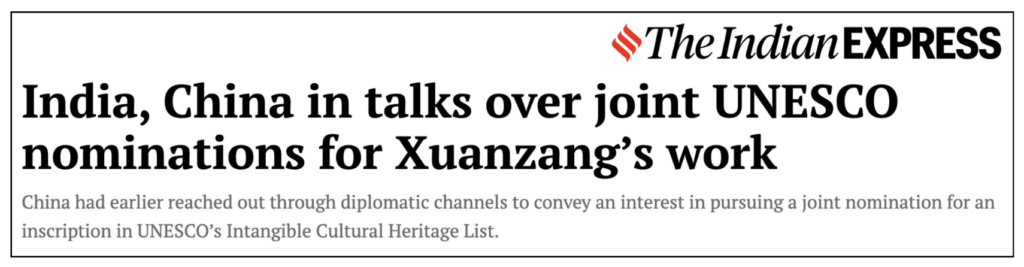
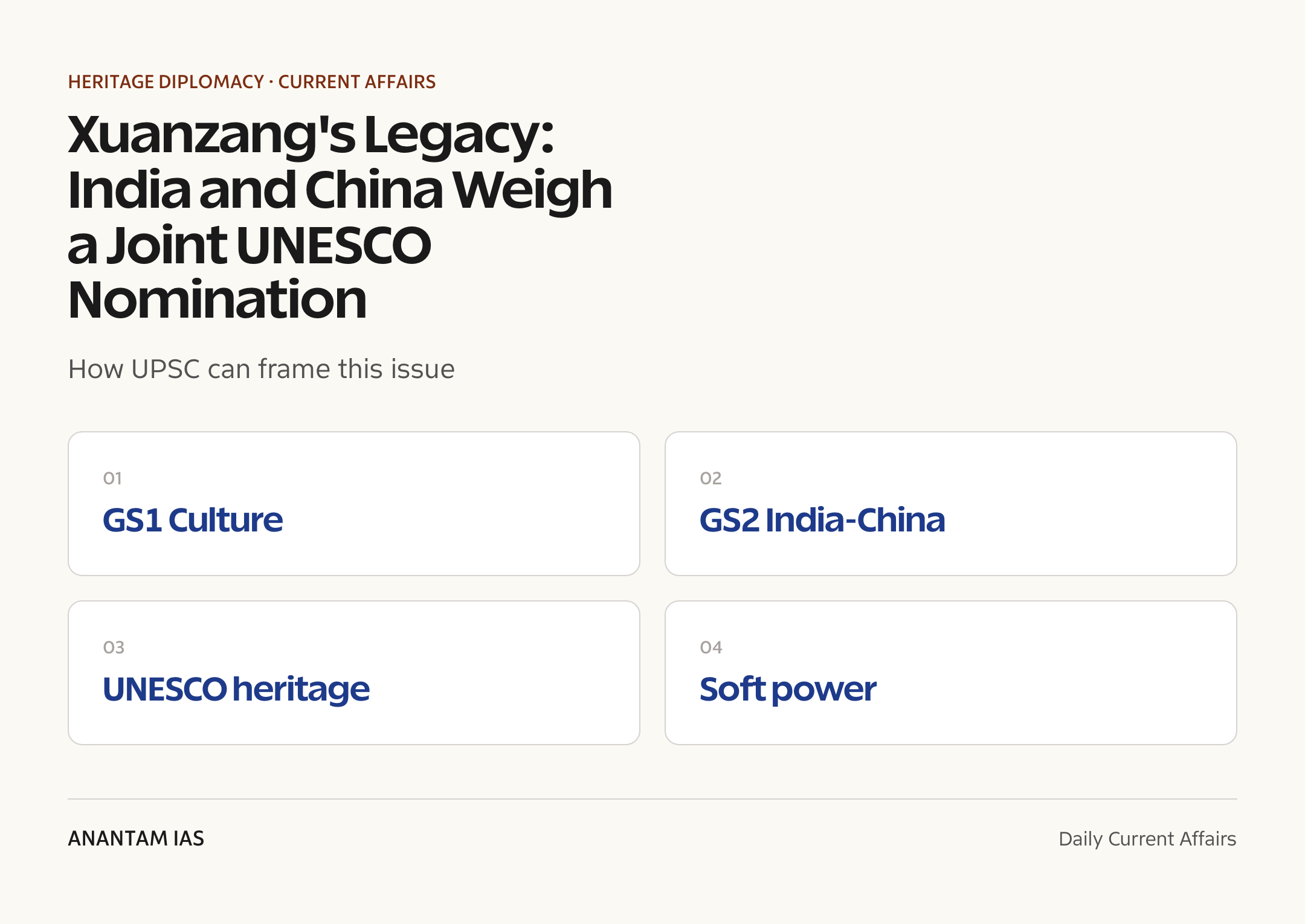
India and China are in early talks over a joint UNESCO nomination linked to the writings of Xuanzang (also rendered Hiuen Tsang), the 7th-century Chinese Buddhist pilgrim who studied at Nalanda Mahavihara and wrote the most detailed surviving outsider account of early-medieval India. The Indian Express reported on 14 June 2026 that the two sides are exploring a shared submission to the UNESCO Memory of the World Register.
The move treats Xuanzang’s record as a piece of shared documentary heritage rather than a contested artefact — a rare convergence point between two civilisational neighbours whose modern ties are dominated by the border question.
- Reported by The Indian Express on 14 June 2026: India and China in talks for a joint nomination of Xuanzang-linked work.
- The likely vehicle is the UNESCO Memory of the World Register (documentary heritage), not the World Heritage List (sites/monuments).
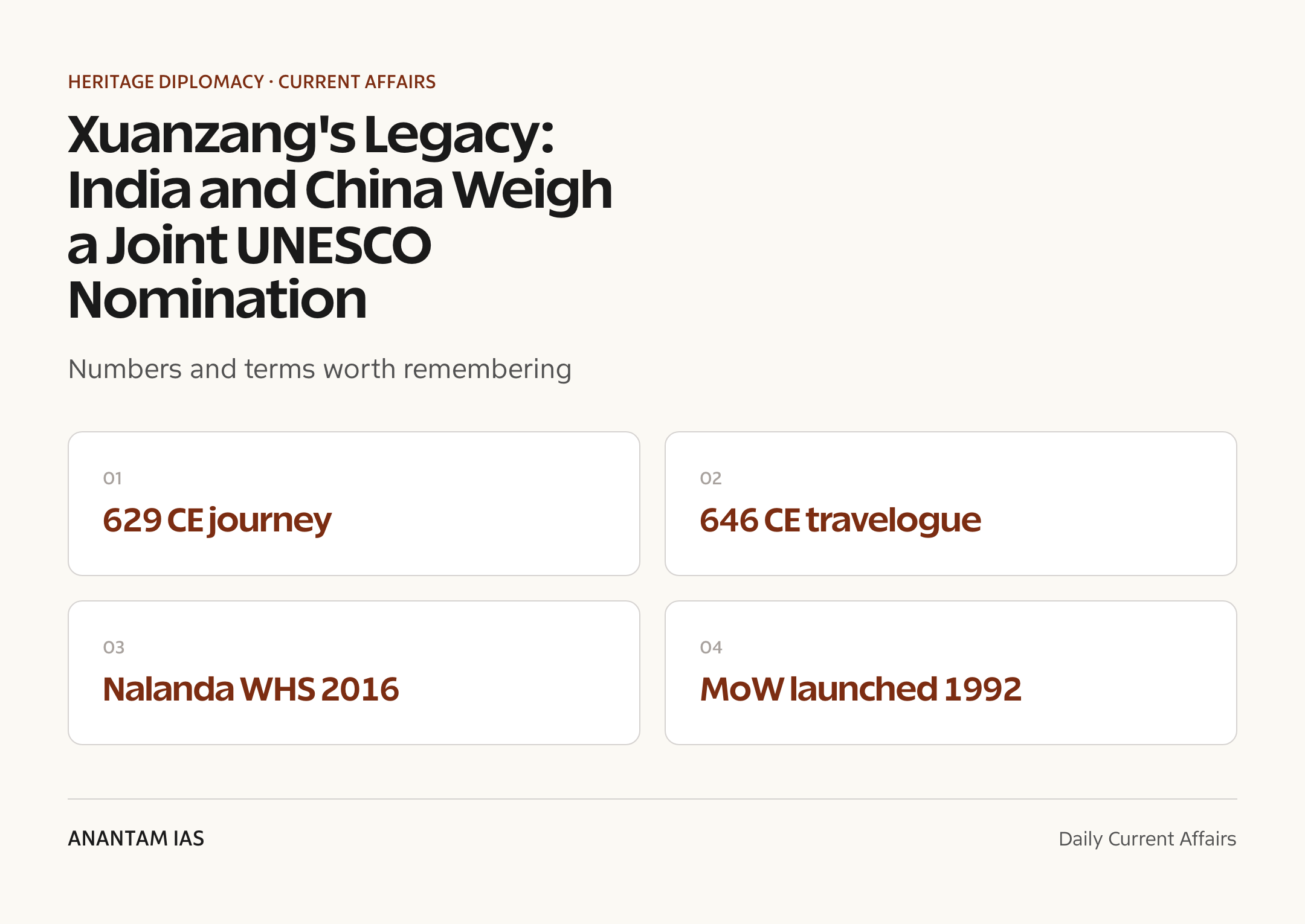
- The core text is the Great Tang Records on the Western Regions (Da Tang Xiyu Ji, 646 CE), Xuanzang’s travelogue of his journey to India.
- Xuanzang studied for years at Nalanda Mahavihara under the abbot Shilabhadra during the reign of Harshavardhana (c. 606-647 CE).
- Nalanda was inscribed as a UNESCO World Heritage Site in 2016 (the archaeological ruins in Bihar).
The development matters in the context of:
- Cultural and documentary heritage offers a low-friction track for India-China engagement when security and trade ties are strained.
- A joint nomination would formalise Buddhism and the ancient knowledge-exchange of the Silk routes as a connecting thread rather than a competing claim.
UPSC Relevance
Prelims Relevance
- Xuanzang (Hiuen Tsang) — 7th-century Chinese pilgrim; studied at Nalanda
- Great Tang Records on the Western Regions (Da Tang Xiyu Ji), 646 CE
- Harshavardhana (Pushyabhuti dynasty, capital Kannauj); Banabhatta’s Harshacharita
- Nalanda Mahavihara — UNESCO World Heritage Site (2016), Bihar
- Shilabhadra — abbot of Nalanda who taught Xuanzang
- Faxian (Fa-Hien) and I-Tsing (Yijing) — other Chinese pilgrim-chroniclers
- UNESCO Memory of the World Register vs World Heritage List — the difference
- Memory of the World Programme launched in 1992; documentary heritage
- Yoga Vasistha / Buddhist canon translations Xuanzang carried back to China
- Kannauj Assembly and Prayag (Allahabad) Kumbh under Harsha
Mains Relevance
GS Paper 1
- Xuanzang’s account is a primary source for reconstructing the polity, society and economy of Harsha’s India.
- Nalanda and the role of Buddhist monastic universities in ancient India’s knowledge systems.
GS Paper 2
- Cultural and heritage diplomacy as an instrument in India-China relations amid a fraught strategic equation.
- India’s use of UNESCO platforms and soft power to project civilisational influence.
Essay
- Shared heritage as a bridge between rival neighbours.
- The pilgrim’s gaze: how outsiders shaped India’s own historical memory.
Background and Context
Who Xuanzang was, and why he matters
Xuanzang is the single most important foreign witness to early-medieval India.
- A Chinese Buddhist monk who left Tang China around 629 CE and travelled overland through Central Asia to India to collect authentic Buddhist scriptures.
- He spent roughly fifteen years abroad, much of it studying Yogachara philosophy at Nalanda under the aged abbot Shilabhadra.
- On returning, he carried back hundreds of manuscripts and led a vast translation project that shaped East Asian Buddhism.
- His travelogue, the Great Tang Records on the Western Regions (646 CE), records distances, rulers, climate, crops, customs and the state of monasteries across the subcontinent.
- Earlier pilgrim Faxian (Gupta era) and later I-Tsing left comparable, if briefer, accounts.

India under Harshavardhana through Xuanzang’s eyes
His record is the backbone of how historians reconstruct Harsha’s reign.
- Harshavardhana (c. 606-647 CE) of the Pushyabhuti dynasty ruled much of north India from Kannauj.
- Xuanzang describes Harsha as a patron of both Buddhism and Brahmanical traditions, hosting the great religious assembly at Kannauj and the quinquennial charity gathering at Prayag.
- Cross-read with Banabhatta’s Harshacharita, the account lets historians triangulate Harsha’s polity, administration and economy.
- He notes a thriving but already declining Buddhism in parts of India alongside resurgent Hindu devotional currents — a key chronological marker.
- His mileage figures and route notes help locate ancient sites and trade arteries.
Nalanda — the monastic university at the centre
Nalanda is where Xuanzang’s India story and India’s knowledge heritage intersect.
- Nalanda Mahavihara in present-day Bihar was a residential Buddhist monastic university that flourished from the Gupta period to roughly the 12th century.
- It drew scholars from across Asia and taught logic, grammar, medicine, metaphysics and the Buddhist canon.
- The archaeological ruins were inscribed as one of the UNESCO World Heritage Sites in India in 2016; the modern Nalanda University revives the name.
- Xuanzang’s detailed description of its layout and curriculum is a prime reason the site’s significance is so well understood.
- The university recently revived the ancient debate tradition of Śāstrārtha, underscoring its living link to that scholastic past.
Memory of the World vs World Heritage
The likely route is documentary heritage, which is distinct from the famous site list.
- The UNESCO World Heritage List (under the 1972 Convention) protects sites and monuments of outstanding universal value — Nalanda’s ruins are on it.
- The Memory of the World Register (programme launched 1992) protects documentary heritage — manuscripts, archives, texts and recordings.
- A nomination tied to Xuanzang’s writings would fit the Memory of the World track, not the World Heritage List.
- A separate UNESCO instrument, the 2003 Convention, covers Intangible Cultural Heritage (living practices) — e.g. India’s Deepavali entry — a third, distinct category.
- Clarifying these three tracks is a frequent Prelims trap.
Why a joint nomination is diplomatically notable
Heritage offers neutral ground between two neighbours otherwise locked in rivalry.
- India-China ties are dominated by the unresolved boundary question and post-2020 strategic mistrust.
- A shared submission frames Xuanzang’s journey as civilisational connectivity — Buddhism travelling from India to China and a Chinese scholar honouring India.
- It is a textbook exercise in soft power and cultural diplomacy: low cost, high symbolism, reversible.
- Buddhism is a recurring diplomatic bridge for India across East and Southeast Asia, from the World Buddhist forums to heritage circuits.
- Even an exploratory talk signals that both capitals see value in keeping a people-to-people and cultural channel open.
Caveats and what to watch
The proposal is early-stage and carries genuine sensitivities.
- Reporting describes talks, not a finalised, lodged nomination — outcomes can stall.
- Custody of the manuscripts and the framing of the citation could become points of negotiation.
- Domestic critics may question heritage cooperation while border issues stay unresolved.
- The precise documentary set (the travelogue, translation records, or both) is still to be defined.
Way Forward
Insulate culture from the security track
- Treat the Xuanzang nomination as a discrete, professionally curated heritage exercise that does not hinge on border progress.
- Channel it through archivists, the Archaeological Survey and academic institutions rather than purely political negotiation.
Build on the Buddhist-circuit advantage
- Link any nomination to India’s wider Buddhist heritage diplomacy and the Nalanda revival to maximise soft-power returns.
- Use the moment to digitise and openly publish India-side documentary heritage on Xuanzang and Nalanda.
A measured, scholarship-led approach — clear on custody, citation and the documentary scope — lets India gain the soft-power dividend while keeping strategic guardrails intact.
Conclusion
A joint India-China bid around Xuanzang’s writings is small in scale but large in symbolism: it reframes a 7th-century pilgrimage as shared heritage at a time when the two neighbours agree on little else.
For UPSC, the value is in the linkages — Xuanzang to Harsha and Nalanda, documentary versus site heritage at UNESCO, and culture as an instrument of statecraft between rivals.
UPSC Practice Questions
Prelims MCQ 1
With reference to the Chinese pilgrim Xuanzang (Hiuen Tsang), consider the following statements:
- He visited India during the reign of Harshavardhana.
- He studied at the Nalanda Mahavihara.
- His travel account is titled the Great Tang Records on the Western Regions.
How many of the above statements are correct?
(a) Only one (b) Only two (c) All three (d) None
Answer: (c) All three
Explanation:
Xuanzang travelled in the 7th century during Harsha’s reign, studied at Nalanda under Shilabhadra, and wrote the Da Tang Xiyu Ji (Great Tang Records on the Western Regions). All three are correct.
Prelims MCQ 2
The UNESCO ‘Memory of the World’ Register is best described as a programme to safeguard which of the following?
(a) Sites and monuments of outstanding universal value (b) Documentary heritage such as manuscripts and archives (c) Living intangible cultural practices and traditions (d) Natural biosphere reserves
Answer: (b) Documentary heritage such as manuscripts and archives
Explanation:
Memory of the World (launched in 1992) protects documentary heritage. Sites fall under the World Heritage List (1972), living practices under the Intangible Cultural Heritage Convention (2003), and biosphere reserves under the MAB Programme.
UPSC Mains Questions
- Xuanzang’s account is indispensable for reconstructing the history of Harshavardhana’s India. Discuss its value as a primary source and its limitations as an outsider’s record. (250 words)
- Cultural and documentary heritage can serve as a stabilising channel in an otherwise contested bilateral relationship. Examine this with reference to a possible joint India-China UNESCO nomination linked to Xuanzang. (250 words)
- Evaluate the role of Buddhism and ancient knowledge institutions like Nalanda in India’s soft-power projection across Asia. (150 words)
Sources: The Indian Express and UNESCO Memory of the World Programme.
Frequently Asked Questions
Who was Xuanzang?
Xuanzang (also written Hiuen Tsang) was a 7th-century Chinese Buddhist monk who travelled overland from Tang China to India around 629 CE to collect authentic Buddhist scriptures. He spent about fifteen years abroad, studied at Nalanda, and on his return led a major translation effort that deeply shaped East Asian Buddhism.
What is the Great Tang Records on the Western Regions?
It is Xuanzang’s travelogue (Da Tang Xiyu Ji), completed in 646 CE, recording his journey across Central Asia and India. It describes distances, rulers, climate, customs and the state of monasteries, and remains one of the most detailed outsider accounts of early-medieval India used by historians today.
Why is Xuanzang linked to Harshavardhana?
Xuanzang travelled through India during the reign of Harshavardhana (c. 606-647 CE), the Pushyabhuti ruler based at Kannauj. His firsthand descriptions of Harsha’s patronage, assemblies and administration, read alongside Banabhatta’s Harshacharita, form the backbone of how historians reconstruct that reign.
What is the difference between the Memory of the World Register and the World Heritage List?
The World Heritage List (1972 Convention) protects sites and monuments of outstanding universal value, like Nalanda’s ruins. The Memory of the World Register (programme launched 1992) protects documentary heritage such as manuscripts, archives and texts. A nomination tied to Xuanzang’s writings would fall under Memory of the World.
Is Nalanda a UNESCO World Heritage Site?
Yes. The archaeological ruins of Nalanda Mahavihara in Bihar were inscribed on the UNESCO World Heritage List in 2016. Nalanda was a residential Buddhist monastic university that flourished from the Gupta period to around the 12th century and is where Xuanzang studied.
Why does a joint India-China nomination matter?
India-China relations are dominated by an unresolved boundary dispute and strategic mistrust. A shared heritage nomination around Xuanzang reframes the pilgrimage as civilisational connectivity, offering a low-cost, high-symbolism cultural channel that can stay open even when security and trade ties are strained.
Source: https://anantamias.com/current-affairs/india-china-xuanzang-unesco-2026/
The Silence Around Child Sexual Abuse: POCSO and the Reporting Gap
Why in News?
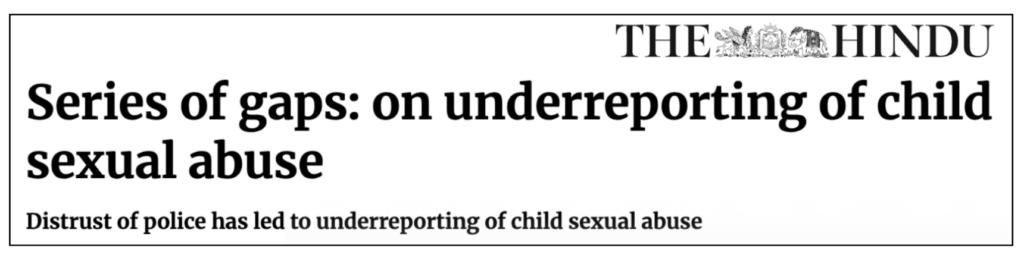
The Hindu, in its editorial ‘Series of gaps: on underreporting of child sexual abuse’, argued that despite a decade of the POCSO Act, 2012, the vast majority of child sexual abuse in India is never reported, prosecuted, or counted. The editorial reads the visible case numbers not as the true scale of the problem but as the small tip of a much larger, hidden one.
The core fact is uncomfortable but durable: most child sexual abuse goes unreported because the offender is usually someone the child knows and trusts, and fear, stigma and family pressure silence disclosure. The law exists, the duty to report exists, but the system around the child is leaking at every stage.
- The editorial frames underreporting as a series of gaps — at disclosure, at the police station, in medical examination, in trial, and in rehabilitation — not a single failure.
- Most offences are committed by a known offender — a relative, neighbour, teacher or acquaintance — which is why families often suppress complaints to protect ‘honour’ or relationships.
- Section 19 of POCSO makes reporting of known or suspected child sexual abuse mandatory for every person, yet awareness and compliance remain weak.
- Recorded NCRB POCSO cases run into tens of thousands a year (see the NCRB report), but surveys of childhood experiences suggest true prevalence is far higher.
- Even reported cases face low conviction rates and long delays despite the law’s one-year trial target, deterring families from coming forward.
- Support structures — counselling, victim compensation, and protection from the accused during trial — reach only a fraction of survivors.
The development matters in the context of:
- Underreporting matters because policy, budgets and policing are sized to recorded numbers — so an invisible problem gets invisible resources.
- It sits at the intersection of the child’s right to life with dignity under Article 21, the right to protection, and the state’s duty under Article 39(f) to protect childhood against exploitation.
- The gap is a governance test of whether a strong, gender-neutral special law can actually change outcomes when social silence and weak institutions work against it.
UPSC Relevance
Prelims Relevance
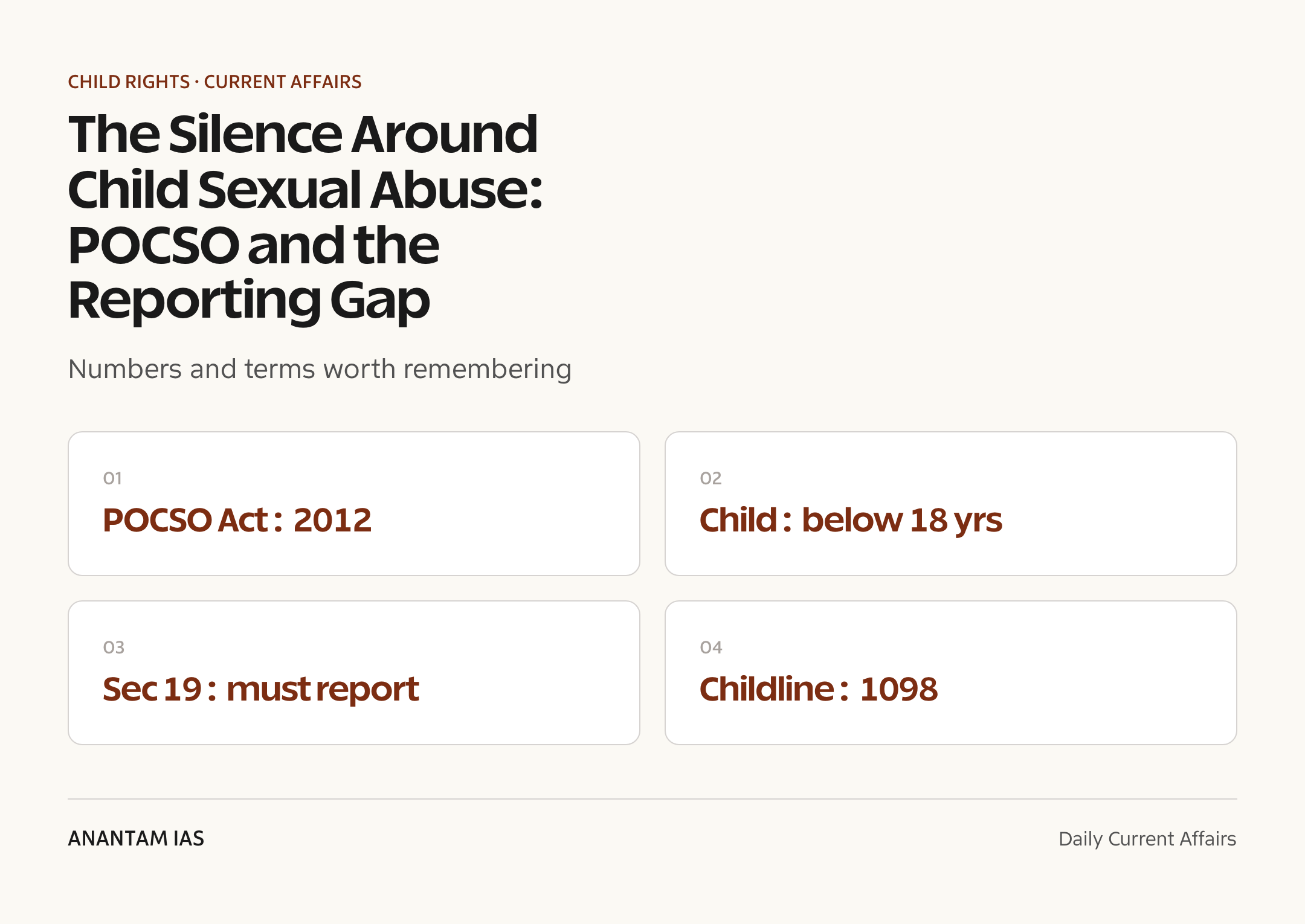
- POCSO Act, 2012: gender-neutral, defines a child as any person below 18 years, covers penetrative and non-penetrative assault, harassment and pornography.
- Section 19, POCSO: mandatory reporting duty on any person with knowledge of an offence; failure to report is itself punishable.
- POCSO mandates Special Courts and child-friendly procedures, with trial ideally completed within one year.
- NCRB (National Crime Records Bureau) compiles annual ‘Crime in India’ data, including POCSO cases.
- Childline 1098: 24×7 national emergency helpline for children in distress.
- NCPCR and SCPCRs are statutory bodies under the Commissions for Protection of Child Rights Act, 2005.
- Juvenile Justice (Care and Protection of Children) Act, 2015, governs Child Welfare Committees and the care of children in need of protection.
- POCSO trials use in-camera proceedings, support persons, and bar disclosure of the child’s identity (Section 23).
Mains Relevance
GS Paper 2
- Mechanisms, laws, institutions and bodies for the protection and betterment of vulnerable sections — evaluate POCSO implementation and the reporting gap.
- Issues relating to the development and management of social-sector services relating to children and child protection.
GS Paper 1
- Social empowerment and the role of family, stigma and patriarchy in suppressing disclosure of abuse against children.
Essay
- Silence is not safety: protecting children means hearing them.
- A law is only as strong as the system that enforces it.
Background and Context
What the POCSO Act actually does
The Protection of Children from Sexual Offences Act, 2012, is India’s dedicated, child-centred criminal law for sexual offences against minors.
- The POCSO Act defines a child as anyone below 18 years and is gender-neutral — boys and girls are equally protected.
- Criminalises a graded set of offences: penetrative and aggravated penetrative assault, sexual assault, sexual harassment, and use of children for pornography.
- Creates designated Special Courts and Special Public Prosecutors, with child-friendly recording of evidence.
- Mandates that the child’s statement be recorded by a woman officer, where possible, at the child’s home, avoiding repeated questioning.
- Bar’s disclosure of the child’s identity by the media presumes certain facts against the accused once foundational evidence is shown.
The mandatory-reporting duty and why it underperforms
POCSO is unusual in placing a legal duty to report on every citizen, not just officials, but the duty rarely converts into FIRs.
- Section 19 obliges any person who knows or apprehends that an offence has been committed to inform the police or the Special Juvenile Police Unit.
- Failure to report by a person in charge of an institution is separately punishable under Section 21.
- Doctors, teachers and counsellors are bound to report — yet fear of police, court appearances and reprisal keeps many silent.
- Families often choose private settlement or silence to protect marriage prospects and ‘family honour’, especially when the offender is a relative.
- Mandatory reporting can also deter adolescents seeking help, since it removes the child’s control over disclosure — a recognised tension the editorial flags.
The ‘known offender’ reality and the culture of silence
Underreporting is driven less by ignorance of the law than by who the abuser usually is.
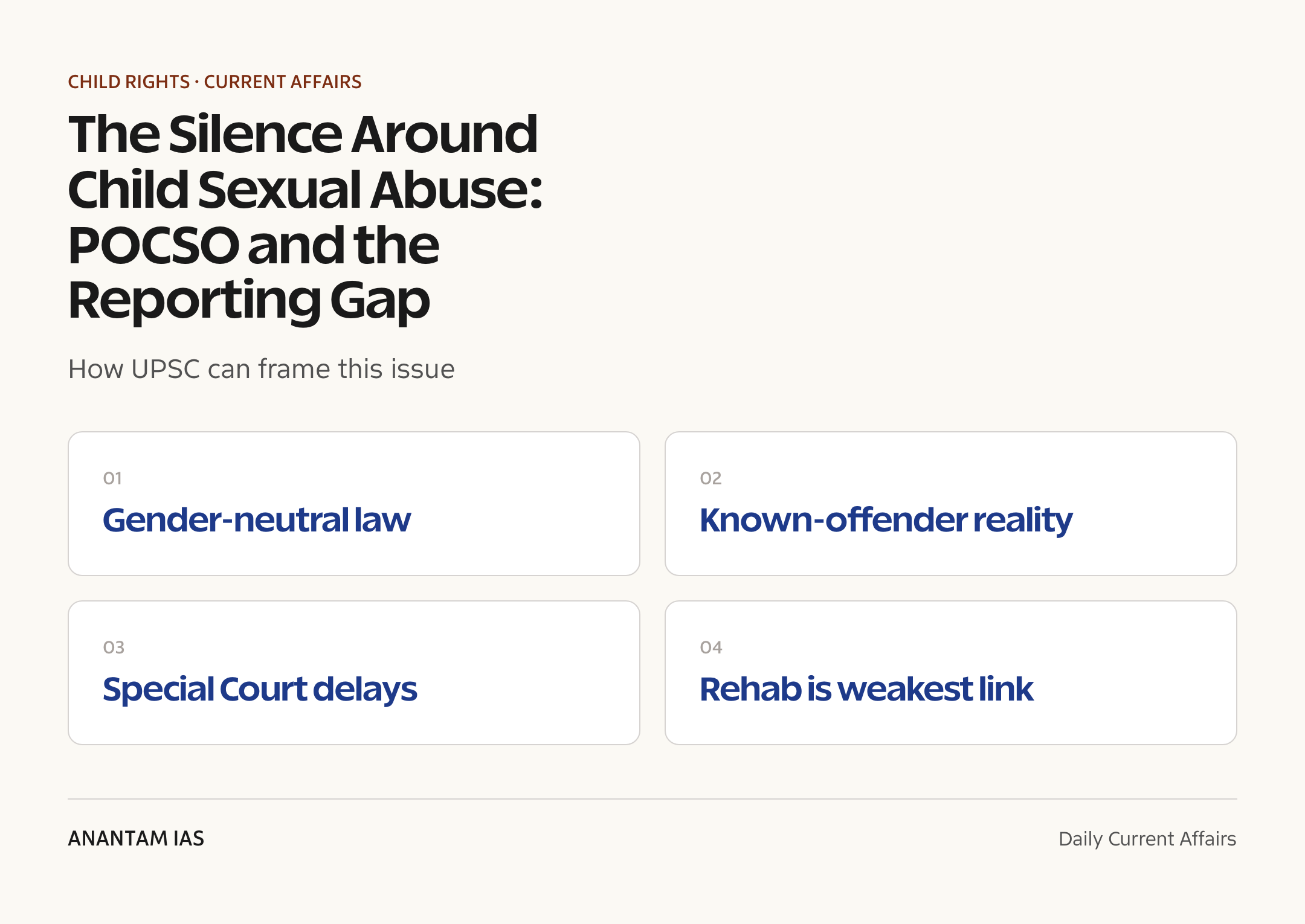
- In most substantiated cases, the offender is a known and trusted person — parent, relative, neighbour, tutor or caregiver.
- Disclosure threatens the family’s relationships, finances and reputation, so adults around the child often suppress it.
- Children fear they will not be believed, will be blamed, or will be punished — classic barriers to disclosure documented in child-protection research.
- Stigma attaches to the survivor rather than the offender, deterring reporting and prolonging trauma.
- Boys are especially under-counted because of the assumption that abuse happens only to girls, despite the law’s gender-neutral design.
The institutional architecture is meant to catch a child
Several bodies and a helpline are supposed to form a safety net, but coverage and capacity are uneven.
- Childline 1098 offers a 24×7 helpline for children in distress and is integrated with district child-protection systems.
- NCPCR and state SCPCRs, statutory bodies under the 2005 Act, can monitor POCSO implementation and inquire into violations.
- Under the Juvenile Justice Act, 2015, Child Welfare Committees decide care and protection for children, including abuse survivors, part of the wider child-rights and child-protection framework.
- Special Juvenile Police Units and child-welfare police officers are meant to make first contact child-sensitive.
- The Mission Vatsalya umbrella scheme funds district child-protection units, but staffing, training and counsellor availability remain thin in many districts.
Where the system leaks: from FIR to verdict
Even when a child reports, the process loses cases at each stage:
- Judicial pendency: Despite the one-year trial target, POCSO Special Courts carry heavy backlogs, and trials stretch for years.
- Low conviction rates follow from hostile witnesses, ‘compromise’, poor investigation and weak forensic and medical evidence.
- Repeated court appearances and confronting the accused re-traumatises the child, pushing families to abandon cases.
- Victim compensation and interim relief under POCSO Rules and state schemes reach only a minority of survivors.
- Rehabilitation — counselling, education continuity and reintegration — is the weakest link, treated as optional rather than core.
Constitutional and policy anchors
Child protection is not charity but a constitutional obligation, which is why the reporting gap is a rights failure.
- Article 21 guarantees life with dignity, read to include protection from sexual abuse and a child-sensitive justice process.
- Article 39(f) directs the state to protect childhood and youth against exploitation and moral and material abandonment.
- Article 15(3) permits special provisions for children, the basis for child-specific laws and schemes.
- India is a party to the UN Convention on the Rights of the Child, committing to protection from all forms of sexual exploitation.
- The Right to Education framework and school safety guidelines link directly to early detection of abuse.
Way Forward
Make reporting safe, not just mandatory
- Pair Section 19 awareness with confidential, child-led disclosure channels in schools and clinics so reporting does not feel like a threat.
- Train teachers, doctors and Anganwadi workers as trusted first responders who know exactly where a child’s complaint goes next.
- Publicise Childline 1098 in every school and panchayat so a child has a memorable, non-police route to help.
Fix the process so cases survive to verdict
- Fully staffed and fast-track POCSO Special Courts, using one-stop centres, vulnerable-witness deposition rooms and video evidence.
- Strengthen child-sensitive investigation and forensics to reduce reliance on the child re-testifying.
- Guarantee interim victim compensation and protection from the accused during trial to keep families engaged.
Build rehabilitation as a right
- Treat counselling, education continuity and reintegration as standard entitlements, not discretionary add-ons.
- Resource district child-protection units under Mission Vatsalya with trained counsellors and case managers.
- Track survivors through structured follow-up so support does not end at the verdict.
And the deepest fix is cultural: shifting shame from the survivor to the offender, so that families report rather than hide, and a child who speaks is believed and protected.
Conclusion
The reporting gap is the real story of POCSO. A strong, gender-neutral law with a mandatory-reporting duty has not, on its own, broken the silence, because abuse is usually intimate, stigma falls on the child, and the system loses cases between the complaint and the verdict.
Closing the gap is less about new offences than about safe disclosure, staffed special courts, real compensation and serious rehabilitation — backed by a culture that no longer treats a child’s suffering as a family secret. Protecting children is the clearest test of whether constitutional promises reach the most vulnerable.
UPSC Practice Questions
Prelims MCQ 1
With reference to the Protection of Children from Sexual Offences (POCSO) Act, 2012, consider the following statements:
- The Act is gender-neutral and protects all persons below 18 years of age.
- It places a legal duty on any person to report knowledge or suspicion of a sexual offence against a child.
- It provides for the establishment of Special Courts to try offences under the Act.
How many of the above statements are correct?
(a) Only one (b) Only two (c) All three (d) None
Answer: (c) All three
Explanation:
POCSO is gender-neutral and defines a child as anyone below 18 (statement 1). Section 19 imposes a mandatory duty to report (statement 2). The Act mandates designated Special Courts for child-friendly, time-bound trials (statement 3). All three are correct.
Prelims MCQ 2
The Childline 1098 service and the National Commission for Protection of Child Rights (NCPCR) are best described as:
(a) A 24×7 helpline for children in distress and a statutory child-rights body, respectively (b) Two statutory courts that try offences under POCSO (c) Schemes funded entirely by the United Nations (d) Bodies created under the Right to Education Act
Answer: (a) A 24×7 helpline for children in distress and a statutory child-rights body, respectively
Explanation:
Childline 1098 is a 24×7 emergency helpline for children. The NCPCR is a statutory body under the Commission for Protection of Child Rights Act, 2005. Neither is a court, a UN scheme, or created under the RTE Act.
UPSC Mains Questions
- Despite a strong, gender-neutral POCSO Act with a mandatory-reporting duty, most child sexual abuse in India goes unreported. Examine the social and institutional reasons for this reporting gap and suggest measures to close it.
- Child protection is a constitutional obligation, not a welfare charity. In this light, evaluate the effectiveness of India’s child-protection architecture in detecting, prosecuting and rehabilitating survivors of child sexual abuse.
- Mandatory reporting can both protect children and deter adolescents from seeking help. Discuss this tension and how child-protection systems can be designed so that reporting becomes safe rather than threatening.
Sources: The Hindu (Editorial) and NCRB, Ministry of Women and Child Development.
Frequently Asked Questions
What is the POCSO Act in simple terms?
The Protection of Children from Sexual Offences Act, 2012 is India’s dedicated law against sexual offences targeting anyone below 18. It is gender-neutral, defines a graded set of offences, sets up child-friendly Special Courts, and protects the child’s identity throughout the process.
Why does child sexual abuse go unreported?
The offender is usually someone the child knows and trusts, so families fear stigma, broken relationships and loss of ‘honour’. Children fear disbelief and blame. Low conviction rates, long trials and repeated court appearances further discourage families from coming forward.
Is reporting child sexual abuse legally compulsory?
Yes. Section 19 of POCSO makes it mandatory for any person who knows or suspects an offence to inform the police or the Special Juvenile Police Unit. Section 21 separately punishes failure to report by those in charge of institutions, such as schools.
Who can a child or adult turn to for help?
Childline 1098 is a 24×7 national helpline for children in distress. Cases can also reach the Special Juvenile Police Unit, Child Welfare Committees under the Juvenile Justice Act, and the NCPCR or state SCPCRs, which are statutory child-rights bodies.
What constitutional rights protect children from abuse?
Article 21 guarantees life with dignity, including a child-sensitive justice process. Article 39(f) directs the state to protect childhood against exploitation, and Article 15(3) allows special laws for children. India is also bound by the UN Convention on the Rights of the Child.
What reforms would reduce the reporting gap?
Safe, confidential disclosure channels in schools and clinics, fully staffed and fast-tracked Special Courts, child-sensitive investigation, guaranteed victim compensation, and proper rehabilitation. Above all, shifting shame from the survivor to the offender so families report rather than hide abuse.
Source: https://anantamias.com/current-affairs/child-sexual-abuse-underreporting-2026/
When the Seabed Rose Two Metres: The Science of the Philippine Quake
Why in News?
The Hindu reported that a deadly earthquake in the Philippines lifted the seabed by up to two metres, a dramatic instance of what geologists call coseismic uplift – the permanent rise of the ground that happens during the rupture itself.
The detail matters for the syllabus because it is a clean, real-world illustration of how the Philippines sits astride the Pacific Ring of Fire, where converging plates and active faults make it one of Earth’s most earthquake- and volcano-prone nations.
- Coseismic uplift: the sudden, permanent rise of the crust along a fault when an earthquake ruptures, here pushing the offshore seabed up by up to two metres.
- Setting: the Philippines lies on the Pacific Ring of Fire, a horseshoe-shaped belt of subduction zones, trenches and volcanoes around the Pacific basin.
- Plate context: the country is squeezed between the westward-moving Philippine Sea Plate and the Sunda (Eurasian) Plate, with the Philippine Fault running through the islands.
- Why uplift: at a subduction zone, one plate is thrust over another; when the locked interface slips, the overriding plate springs up, raising the seafloor and coastline.
- Tsunami link: vertical displacement of the seabed displaces the water column above it, which is the classic trigger for a tsunami.
- Hazard profile: the islands face frequent strong quakes, volcanic eruptions and typhoons, making layered disaster management essential.
The development matters in the context of:
- Comparative learning: the event is a live demonstration of subduction-zone mechanics that UPSC tests through Indian examples like the Andaman-Sumatra region.
- India link: India’s own high-risk zones – the Himalaya and the Andaman trench – share the same convergent-margin physics.
- Preparedness: coastal uplift and tsunami risk underline why early-warning systems and seismic building codes save lives.
UPSC Relevance
Prelims Relevance
- Coseismic uplift/subsidence: permanent vertical change of the ground caused by fault slip during an earthquake.
- Ring of Fire: a horseshoe-shaped Pacific-rim belt of subduction zones, deep trenches, frequent earthquakes and about three-quarters of the world’s active volcanoes.
- Subduction zone: a convergent boundary where a denser oceanic plate sinks beneath another plate, building a trench and volcanic arc.
- Philippine Sea Plate vs Sunda Plate: the two main plates whose convergence shapes Philippine seismicity.
- Philippine Fault: a major left-lateral strike-slip fault running the length of the archipelago.
- Focus (hypocentre) vs epicentre: the underground point of rupture versus the point on the surface directly above it.
- Magnitude vs intensity: magnitude (Moment Magnitude, Mw) measures energy released; intensity (e.g. Modified Mercalli) measures shaking felt at a place.
- Tsunami generation: caused mainly by vertical seabed displacement, undersea landslides or volcanic activity, not by the shaking alone.
- Seismic waves: P-waves (primary, fastest), S-waves (secondary), and surface waves (Love and Rayleigh) that cause most damage.
- India’s seismic zones: the Bureau of Indian Standards code maps the country into Zones II-V, with Zone V the most hazardous.
Mains Relevance
GS Paper 1
- Plate tectonics: explain how convergent boundaries and subduction produce earthquakes, trenches, volcanic arcs and coseismic uplift or subsidence.
- Distribution of seismicity: map the global pattern of earthquakes along the Ring of Fire and the Alpine-Himalayan belt and account for it.
- Geomorphic effects: discuss how repeated coseismic uplift builds coastlines, marine terraces and island arcs over geological time.
GS Paper 3
- Disaster management: evaluate earthquake and tsunami early-warning, seismic building codes and community preparedness in high-risk regions.
- Risk in India: assess India’s exposure in the Himalaya and the Andaman-Nicobar arc and the adequacy of NDMA’s mitigation framework.
Essay
- Living with a restless Earth: argue how scientific understanding of plate tectonics turns natural hazards into manageable risks through preparedness.
- Nature’s reminders: use coseismic uplift to reflect on humanity’s place on a dynamic planet and the ethics of building safely.
Background and Context
Why the seabed rose: subduction-zone mechanics
The two-metre rise is not magic – it is the predictable spring-back of crust that had been bent and locked for centuries.
- Convergent boundary: at a subduction zone, a denser oceanic plate dives beneath an overriding plate, but the contact often gets stuck (locked).
- Strain build-up: while locked, the overriding plate is slowly dragged down and squeezed, storing elastic strain like a bent ruler.
- The rupture: when friction is overcome, the fault slips suddenly; the overriding plate lurches up and seaward, releasing energy as an earthquake.
- Coseismic uplift: that lurch permanently raises the seafloor and nearby coast, here by as much as two metres, while areas farther inland may sink (coseismic subsidence).
- Elastic rebound: this stick-slip cycle of slow loading and sudden release is the classic elastic rebound theory of how earthquakes work.
The Philippines on the Ring of Fire
Few places concentrate tectonic hazards like the Philippine archipelago.
- Pacific Ring of Fire: a roughly 40,000 km horseshoe of subduction zones and volcanoes ringing the Pacific, source of most of the world’s large earthquakes.
- Plate squeeze: the islands are caught between the converging Philippine Sea Plate and the Sunda (Eurasian) Plate, producing trenches on both flanks.
- Philippine Fault: a major strike-slip fault threading the length of the country, adding horizontal-slip quakes to the subduction quakes offshore.
- Volcanic company: the same convergence feeds active volcanoes such as Mayon and Taal, so quakes and eruptions share a cause.
- Frequent shaking: the country records hundreds of felt earthquakes a year, most small but periodically large and destructive.
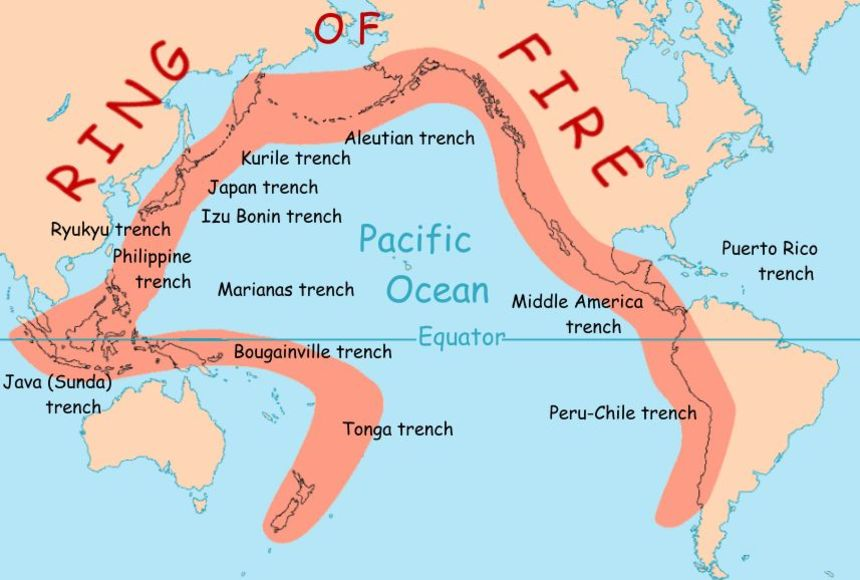
Reading an earthquake: focus, magnitude and intensity
Exam questions hinge on a few precise distinctions about how quakes are described.
- Focus and epicentre: the focus (hypocentre) is the underground point where rupture begins; the epicentre is the surface point directly above it.
- Magnitude: measured today on the Moment Magnitude scale (Mw), it captures the total energy released and is a single number for the whole event.
- Intensity: measured on scales like the Modified Mercalli scale, it describes the shaking and damage felt at a particular place, so it varies with distance and soil.
- Depth matters: shallow quakes shake the surface harder than deep ones of the same magnitude.
- Seismic waves: fast P-waves arrive first, slower S-waves follow, and surface waves trailing them cause most structural damage.
From seabed uplift to tsunami
The same vertical motion that lifts the seabed can launch a wall of water.
- The trigger: a tsunami forms mainly when the seafloor moves vertically, suddenly displacing the entire column of water above it.
- Other causes: undersea landslides, volcanic eruptions and, rarely, meteorite impacts can also generate tsunamis.
- Wave behaviour: in deep water, the wave is low and fast; as it nears shore, it slows and piles up into a destructive surge.
- Not every quake: purely horizontal strike-slip quakes rarely make large tsunamis, which is why offshore thrust quakes are the dangerous kind.
- Warning needed: this is why Pacific and Indian Ocean tsunami-warning systems track seabed-displacing quakes within minutes.
What it means for India
India shares the same physics and must apply the same lessons across its own high-risk belts.
- Himalayan front: the Indian Plate’s collision with the Eurasian Plate makes the Himalaya a zone of great earthquake potential.
- Andaman-Nicobar arc: the islands sit on a subduction zone linked to the 2004 Indian Ocean tsunami, India’s own coseismic uplift event.
- Seismic zoning: the Bureau of Indian Standards divides India into Zones II to V, with the northeast, Himalaya and Kachchh in the highest-risk Zone V.
- Preparedness: the National Disaster Management Authority (NDMA) frames earthquake-safety guidelines and retrofitting drives.
- Building safety: enforcing earthquake-resilient design and the building code is the single biggest lever to cut deaths, since quakes don’t kill – collapsing buildings do.
Building to survive the shaking
Engineering, not luck, separates a survivable quake from a catastrophe.
- Resilient design: ductile detailing, soft-storey avoidance and proper reinforcement let structures flex and absorb shaking rather than snap.
- Base isolation and dampers: advanced buildings use isolators and dampers to decouple the structure from ground motion.
- Microzonation: mapping soil and ground-shaking risk, city-by-city guides on where and how to build.
- Early warning: fast detection of P-waves can give seconds of warning to halt trains, lifts and gas lines before strong shaking arrives.
- Community readiness: drills, awareness and clear evacuation routes turn engineering into saved lives during the actual event.
Way Forward
Science and monitoring
- Strengthen dense seismic and GPS networks to track strain build-up and detect coseismic deformation in near-real time.
- Invest in seafloor sensors and ocean-bottom geodesy that catch seabed uplift and tsunami risk at the source.
- Improve hazard mapping and microzonation, so risk is understood neighbourhood by neighbourhood.
Building and codes
- Enforce earthquake-resilient building codes and retrofit vulnerable schools, hospitals and lifeline structures.
- Promote affordable, safe-construction techniques for informal and rural housing where most casualties occur.
- Mandate seismic safety audits for critical infrastructure in high-risk zones.
Warning and community
- Expand and integrate tsunami and earthquake early-warning systems with last-mile alerting.
- Run regular community drills and embed disaster education in schools.
- Strengthen regional cooperation on Pacific and Indian Ocean warning networks.
Conclusion
A planet in motion: a seabed rising two metres in moments is a vivid reminder that the Earth’s crust is alive, driven by the slow grind of plates at subduction zones.
From hazard to risk: the science of coseismic uplift, magnitude and tsunami generation lets societies turn an unstoppable natural force into a manageable, prepared-for risk.
The Indian takeaway: with the Himalaya and the Andaman arc on the same restless margins, India’s safety rests on seismic zoning, resilient building and warning systems built well before the next big one strikes.
UPSC Practice Questions
Prelims MCQ 1
With reference to earthquakes and plate tectonics, consider the following statements:
- Coseismic uplift is the permanent rise of the ground caused by fault slip during an earthquake.
- A tsunami is generated mainly by the vertical displacement of the seabed during an undersea earthquake.
- The Philippines lies along the Pacific Ring of Fire, a belt of subduction zones and volcanoes.
How many of the above statements are correct?
(a) Only one (b) Only two (c) All three (d) None
Answer: (c) All three
Explanation:
All three are correct. Coseismic uplift is the permanent vertical rise from fault slip; tsunamis are triggered chiefly by vertical seabed displacement, and the Philippines sits on the Pacific Ring of Fire between the Philippine Sea and Sunda plates.
Prelims MCQ 2
Which one of the following statements about the magnitude and intensity of an earthquake is correct?
(a) Magnitude varies from place to place, while intensity is a single value for the whole event
(b) Magnitude measures the energy released, while intensity measures the shaking felt at a given location
(c) Both magnitude and intensity are measured on the Modified Mercalli scale
(d) Intensity measures the total energy released at the focus
Answer: (b) Magnitude measures the energy released, while intensity measures the shaking felt at a given location
Explanation:
Magnitude (e.g. Moment Magnitude, Mw) is one number for the energy released by the whole event. Intensity (e.g. Modified Mercalli) describes the shaking and damage felt at a particular place, so it varies with distance, depth and local soil.
UPSC Mains Questions
- Explain how plate tectonics at convergent boundaries produces earthquakes, coseismic uplift and tsunamis. Using a recent subduction-zone earthquake as a reference, discuss why such margins are among the most hazardous regions on Earth.
- Distinguish between the magnitude and the intensity of an earthquake, and between its focus and epicentre. Why are these distinctions important for disaster planning and damage assessment?
- India shares the same convergent-margin physics that make the Pacific rim so seismically active. Examine India’s earthquake-risk profile and assess the adequacy of its seismic zoning, building codes and early-warning systems.
Sources: United States Geological Survey (USGS) earthquake hazards programme and The Hindu.
Frequently Asked Questions
What is coseismic uplift?
Coseismic uplift is the sudden, permanent rise of the ground that happens during an earthquake when a locked fault finally slips. At a subduction zone the overriding plate springs upward as it releases stored strain, lifting the seabed and nearby coastline – in the Philippine event by as much as two metres. It is the same process, in reverse, that can also make other areas sink.
Why is the Philippines so earthquake-prone?
The Philippines sits on the Pacific Ring of Fire, squeezed between the converging Philippine Sea Plate and the Sunda (Eurasian) Plate, with the major Philippine Fault running through the islands. This combination of subduction offshore and active faulting onshore produces frequent earthquakes and feeds active volcanoes, making the archipelago one of the world’s most tectonically restless regions.
How does an earthquake cause a tsunami?
A tsunami forms mainly when an undersea earthquake suddenly moves the seafloor up or down, displacing the entire column of water above it. That displaced water spreads outward as long, fast waves. In deep ocean the waves are low and barely noticeable, but as they reach shallow coastal water they slow and pile up into a destructive surge. Purely horizontal slip rarely makes large tsunamis.
What is the difference between magnitude and intensity?
Magnitude measures the total energy released by an earthquake and is a single value for the whole event, today usually given on the Moment Magnitude scale. Intensity measures the shaking and damage actually felt at a particular place, on scales such as the Modified Mercalli scale, so it changes with distance from the source, depth and local soil conditions.
What does this Philippine quake teach India?
India lies on similar convergent margins – the Himalaya, where the Indian Plate collides with Eurasia, and the Andaman-Nicobar subduction arc linked to the 2004 tsunami. The lesson is that seismic zoning, strict earthquake-resilient building codes, microzonation and tsunami early-warning systems must be built and enforced before a major quake, since collapsing buildings, not the shaking itself, cause most deaths.
What is the Pacific Ring of Fire?
The Pacific Ring of Fire is a horseshoe-shaped belt roughly 40,000 km long that rings the Pacific Ocean, marking the boundaries where oceanic plates dive beneath others at subduction zones. It hosts the majority of the world’s large earthquakes and about three-quarters of its active volcanoes, which is why countries along it, including the Philippines, Japan and Indonesia, face such intense tectonic hazards.
Source: https://anantamias.com/current-affairs/philippine-earthquake-seabed-uplift-2026/
The Hidden Cost of Lead: Protecting Children’s Brains and India’s Future
Why in News?
A recent The Hindu op-ed framed the fight against childhood lead exposure as a “seven-point IQ opportunity” for Indian children — arguing that removing lead from everyday products and environments could lift the average child’s cognitive ability by several points, with large gains in lifetime productivity.
The piece spotlights lead as a silent, preventable neurotoxin that damages developing brains, and reframes the issue from a niche pollution problem into a question of human capital and India’s demographic dividend.
- Lead is a cumulative neurotoxin with no known safe blood level, per the World Health Organisation (WHO).
- Major exposure routes flagged: adulterated spices and turmeric, lead-based paint, informal lead-acid battery recycling, adulterated cosmetics (kajal/surma, sindoor), and contaminated water.
- Children absorb a far larger share of ingested lead than adults and are most vulnerable in the first years of brain development.
- Cutting exposure is presented as a high-return public-health investment — small per-child spending against large gains in IQ, schooling and earnings.
The development matters in the context of:
- Lead exposure is largely preventable, yet remains under-measured because it shows no obvious symptoms.
- It links environmental health, food safety and child-protection policy — a classic GS2 governance challenge cutting across ministries.
UPSC Relevance
Prelims Relevance
- Lead (Pb) — heavy metal, cumulative neurotoxin; no safe blood-lead level (WHO)
- Blood Lead Level (BLL) — measured in micrograms per decilitre (µg/dL)
- WHO — UN specialised agency for global public health
- BIS (Bureau of Indian Standards) — regulates lead content in paints
- FSSAI — Food Safety and Standards Authority of India; food/spice contamination
- NEERI — National Environmental Engineering Research Institute (CSIR)
- ICMR — Indian Council of Medical Research
- Lead-acid battery recycling as an informal-sector exposure source
- Demographic dividend — growth potential from a young working-age population
- Hazardous and Other Wastes (Management) Rules, 2016 — govern battery/lead waste
Mains Relevance
GS Paper 2
- Issues relating to the development and management of the health sector; preventive public health as a governance priority.
- Welfare of vulnerable sections (children); role of regulators (FSSAI, BIS) and inter-ministerial coordination.
GS Paper 3
- Environmental pollution and its human-health impacts; informal-sector recycling and hazardous-waste management.
- Conserving human capital as an input to economic growth and the demographic dividend.
Essay
- Health is wealth: why prevention beats cure for a young nation.
- Invisible harms: protecting children from what we cannot see.
Background and Context
Why lead is uniquely dangerous to children
Lead is a cumulative poison that targets the developing brain, and children are far more exposed than adults.
- The WHO states there is no known safe blood-lead level — harm can occur even at low concentrations (see our explainer on lead pollution in India).
- Children absorb a much larger fraction of ingested lead and retain more of it in growing tissues and bone.
- Effects include lower IQ, shorter attention span, behavioural problems and impaired learning — often irreversible.
- Because symptoms are usually silent, exposure goes undetected without deliberate blood-lead screening.
- Damage in early childhood compounds over a lifetime, lowering educational attainment and future earnings.
Where the lead comes from
Exposure in India is driven by everyday consumer and industrial sources rather than any single factory.
- Adulterated spices and turmeric — lead chromate added to brighten colour; part of a wider food-adulteration concern for FSSAI.
- Lead-based paint on walls, toys and furniture, shedding dust that young children ingest.
- Informal lead-acid battery recycling — backyard smelting that releases lead into soil, air and water.
- Adulterated cosmetics — traditional kajal/surma and some sindoor can carry high lead content.
- Contaminated drinking water from old pipes, solder and fittings; and contaminated soil near recycling sites.
The regulatory and institutional landscape
Several Indian bodies already hold mandates over lead, but coverage is fragmented across food, products and waste.
- BIS sets the permissible lead-in-paint limit and product standards for household paints.
- FSSAI regulates contaminants in food, including heavy metals in spices and processed items.
- NEERI (under CSIR) and ICMR conduct environmental and health research on lead.
- The Hazardous and Other Wastes (Management) Rules, 2016, govern the collection and recycling of used batteries.
- Enforcement gaps persist in the informal sector, where most unsafe battery recycling occurs outside formal oversight.
The economics: a human-capital argument
The op-ed’s central insight is economic — reducing lead is among the cheapest ways to raise national productivity.
- Even a few points of lost IQ across a cohort translate into large aggregate losses in earnings and output.
- Cutting childhood exposure could lift the average child’s IQ by several points — the “seven-point” framing.
- Prevention costs little per child compared with the lifetime cost of impaired learning and lower wages.
- Healthy young brains are the foundation of India’s demographic dividend; protecting them protects future growth.
- This reframes leads from an environmental nuisance into a core human-capital investment question.
Why the problem stays invisible
Lead exposure is under-recognised because it is silent, diffuse and rarely measured.
- No routine national blood-lead surveillance means the true burden is poorly mapped.
- Sources are scattered across food, paint, cosmetics and recycling — no single villain to regulate.
- Low public awareness of household sources, such as kajal/surma and old paint.
- Informal recycling is hard to police and often invisible in official pollution data.
- Without symptoms or screening, affected children are never identified as harmed.
Way Forward
Measure the burden
- Build routine blood-lead surveillance in children, anchored in ICMR and state health systems.
- Map high-risk clusters around informal recycling and contaminated water.
Tighten and enforce standards
- Strictly enforce BIS lead-in-paint limits and FSSAI contaminant rules for spices.
- Formalise and regulate lead-acid battery recycling under the 2016 waste rules with extended producer responsibility.
Inform and protect
- Run public-awareness campaigns on household sources — paint dust, adulterated turmeric and traditional cosmetics.
- Integrate lead screening and counselling into child-health and immunisation touchpoints.
Conclusion
Lead exposure is a textbook case of a preventable harm hiding in plain sight — silent, scattered across everyday products, and rarely measured, yet capable of quietly draining a child’s potential for life.
Treating it as a human-capital investment, not just a pollution problem, lets India convert a low-cost intervention into large, durable gains in IQ, schooling and earnings — strengthening the very demographic dividend the country is counting on.
UPSC Practice Questions
Prelims MCQ 1
With reference to childhood lead exposure in India, consider the following statements:
- The World Health Organisation recognises a safe lower threshold of blood-lead level below which no harm occurs.
- The Bureau of Indian Standards prescribes permissible limits for lead content in household paints.
- Informal recycling of lead-acid batteries is a recognised source of environmental lead contamination.
How many of the above statements are correct?
(a) Only one (b) Only two (c) All three (d) None
Answer: (b) Only two
Explanation:
Statement 1 is wrong — the WHO holds that there is no known safe blood-lead level. Statements 2 (BIS lead-in-paint limits) and 3 (informal battery recycling) are correct.
Prelims MCQ 2
Which one of the following bodies is primarily responsible for regulating heavy-metal contaminants such as lead in food items, including spices, in India?
(a) Bureau of Indian Standards (BIS)
(b) Food Safety and Standards Authority of India (FSSAI)
(c) National Environmental Engineering Research Institute (NEERI)
(d) Indian Council of Medical Research (ICMR)
Answer: (b) Food Safety and Standards Authority of India (FSSAI)
Explanation:
FSSAI sets and enforces limits for contaminants in food, including heavy metals in spices. BIS handles product standards like paint, NEERI does environmental research, and ICMR conducts health research.
UPSC Mains Questions
- “Reducing childhood lead exposure is one of the highest-return public-health investments available to India.” Discuss this claim in the context of human capital and the demographic dividend. (250 words)
- Childhood lead exposure in India is driven by everyday consumer and informal-sector sources. Examine the regulatory gaps and suggest a coordinated way forward. (250 words)
- Why does lead poisoning remain an under-recognised public-health challenge in India despite being largely preventable? Critically analyse. (150 words)
Sources: The Hindu and The Hindu.
Frequently Asked Questions
Why is lead dangerous for children?
Lead is a cumulative neurotoxin that damages the developing brain. Children absorb and retain more of it than adults, and the WHO holds there is no known safe blood-lead level. Exposure can lower IQ, shorten attention span and impair learning, with effects that are often permanent and rarely show visible symptoms.
What are the main sources of lead exposure in India?
The leading everyday sources are adulterated spices and turmeric, lead-based paint, informal lead-acid battery recycling, adulterated cosmetics such as kajal or surma, and contaminated drinking water from old pipes or solder. Soil near recycling sites can also be heavily contaminated, exposing children who play outdoors.
What is the “seven-point IQ opportunity”?
It is the argument that cutting childhood lead exposure could raise the average child’s IQ by several points. Because even small IQ gains across a whole cohort translate into large lifetime gains in schooling and earnings, removing lead is framed as one of the cheapest, highest-return investments in human capital a young nation can make.
Which Indian bodies regulate lead?
Responsibilities are split: BIS sets lead-in-paint and product standards, FSSAI regulates lead in food and spices, and the Hazardous and Other Wastes (Management) Rules, 2016 cover battery recycling. NEERI and ICMR carry out environmental and health research. The gaps lie mainly in enforcement within the informal sector.
How is lead linked to the demographic dividend?
India’s growth hopes rest on a large young population. If many of those children grow up with lead-impaired brains, their learning and earning potential falls, weakening the dividend. Protecting young brains from lead is so a way of protecting the country’s future productivity and economic growth.
Can lead poisoning be prevented?
Yes — it is largely preventable. Routine blood-lead surveillance in children, strict enforcement of BIS and FSSAI standards, formalising battery recycling, and public-awareness campaigns on paint, turmeric and traditional cosmetics can sharply cut exposure. Integrating screening into existing child-health services makes prevention low-cost and scalable.
Source: https://anantamias.com/current-affairs/lead-exposure-child-iq-2026/