SDMA stands for the State Disaster Management Authority and DDMA for the District Disaster Management Authority — the state- and district-level tiers of India’s disaster-management system created by the Disaster Management Act, 2005, alongside the NDMA (National Disaster Management Authority) at the Centre. The NDMA is chaired by the Prime Minister, the SDMA by the Chief Minister, and the DDMA by the District Collector/Magistrate.
India's disaster management architecture is a three-tier system created by the Disaster Management Act 2005. The structure is straightforward: NDMA at the centre, SDMA at the state level, and DDMA at the district level. The district collector is the actual first responder. Everything else is coordination and guidelines.
This is one of the most frequently tested topics in GS Paper III. UPSC has asked about it in Prelims 2009, 2013, 2015 (NDRF specifically), and Mains 2013, 2017, and 2022. If you do not know the DM Act 2005 structure cold, you are leaving marks on the table.
Why the DM Act 2005 Was Enacted
The 2004 Indian Ocean Tsunami killed over 10,000 people in India and exposed a catastrophic gap: India had no unified disaster management law. Response was ad hoc, coordination between centre and states was chaotic, and there was no permanent force trained specifically for disaster response.
Before 2005, disaster management fell under the Ministry of Agriculture (for droughts and famines — a colonial hangover). The Orissa Super Cyclone of 1999 and the Gujarat Earthquake of 2001 had already demonstrated the need for a dedicated framework, but it took the tsunami to force legislative action.
The Disaster Management Act 2005 created a complete institutional framework from the national to the district level. It also established dedicated response forces and training institutions. The Act defines "disaster" broadly — covering natural, man-made, and technological hazards.
NDMA: National Disaster Management Authority
The NDMA is the apex body for disaster management in India. Here are the facts you need:
- Chairperson: Prime Minister (ex-officio)
- Members: Maximum 9, nominated by the PM. One member designated as Vice-Chairperson
- Established: 2005 under the DM Act
- Headquarters: New Delhi
Functions:
- Lay down policies and plans for disaster management
- Approve the National Disaster Management Plan
- Issue guidelines for different types of disasters
- Coordinate enforcement and implementation
- Recommend provision of funds for mitigation
- Provide support to other countries affected by major disasters (if requested by the central government)
The NDMA is primarily an advisory and coordination body. It sets guidelines, approves plans, and coordinates. It does not directly manage on-ground operations.
The Executive Committee — The Real Operational Body
This is what most students miss. The National Executive Committee (NEC), chaired by the Home Secretary, is the body that actually coordinates and monitors implementation. The NEC includes secretaries from key ministries — Agriculture, Atomic Energy, Defence, Environment, Health, and others.
The NEC prepares the National Plan, coordinates response during disasters, and monitors preparedness. For Mains answers, always mention the NEC when discussing NDMA's operational mechanisms. UPSC expects you to know that the PM does not operationally manage disasters — the NEC and the Home Secretary do.
Common student mistake: Writing that the PM "manages" disasters through NDMA. The PM chairs NDMA for policy and guidelines. Day-to-day operations run through the NEC chaired by the Home Secretary, and actual on-ground response happens through DDMA and NDRF.
SDMA: State Disaster Management Authority
Every state has its own SDMA, mirroring the national structure:
- Chairperson: Chief Minister (ex-officio)
- Members: Maximum 9, nominated by the CM
- Function: Lay down state policies and plans, coordinate with NDMA, approve state disaster management plan
The SDMA is supposed to be the state-level equivalent of NDMA — setting state-specific guidelines, approving the State Disaster Management Plan, and coordinating state-level response.
The reality is mixed. Some states like Gujarat, Odisha, and Kerala have strong SDMAs with dedicated staff and budgets. These three states learned from catastrophic disasters (Gujarat 2001 earthquake, Orissa 1999 cyclone, Kerala 2018 floods) and built capacity. Other states treat SDMA as a formality. Many SDMAs have not updated their state disaster management plans in years.
State Executive Committee (SEC)
Like the NEC at the centre, each state has a State Executive Committee chaired by the Chief Secretary. The SEC coordinates implementation of NDMA guidelines, prepares the state plan, and monitors state-level preparedness.
State Disaster Response Fund (SDRF)
Each state maintains an SDRF for immediate disaster response. The centre contributes 75% of the SDRF corpus for general category states and 90% for special category states and UTs. This is a frequently tested Prelims fact.
DDMA: District Disaster Management Authority
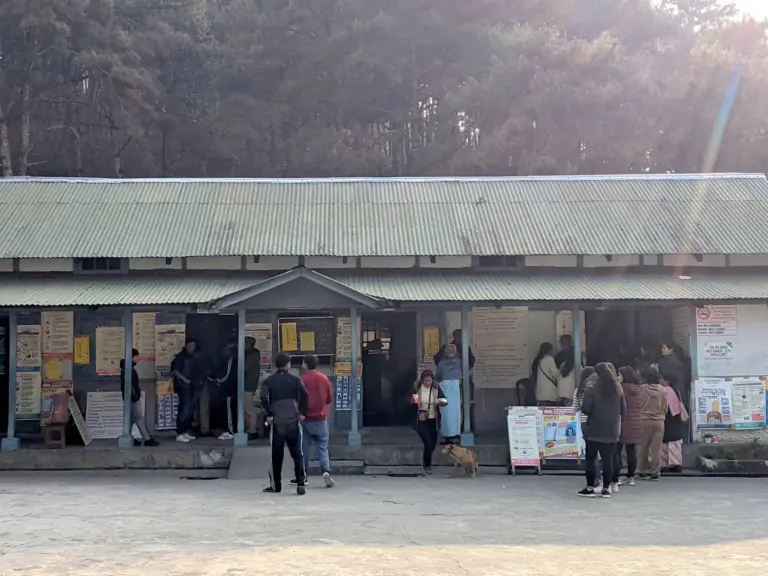
The DDMA is where disaster management actually happens. India's districts are the operational units for disaster response.
- Chairperson: District Collector / District Magistrate
- Co-Chairperson: Elected representative (Chairperson of Zila Parishad in rural areas, Municipal head in urban areas)
- Function: Prepare and implement the District Disaster Management Plan, coordinate response, conduct mock drills, ensure early warning dissemination
The District Collector has enormous power during disasters — they can requisition resources, direct evacuations, and coordinate all agencies within the district. This is the person who actually manages the crisis on the ground.
District Disaster Management Plans should be context-specific documents covering hazard mapping, vulnerability assessment, resource inventory, standard operating procedures, and communication protocols. In practice, many district plans are generic templates that have not been updated to reflect local realities.
Common student mistake: Ignoring the DDMA in answers and focusing only on NDMA and NDRF. UPSC specifically values the district-level perspective. The 2017 Mains question on disaster management expected discussion of local-level institutional capacity.
NDRF: National Disaster Response Force
The NDRF is India's specialized disaster response force, also created under the DM Act 2005.
- Current strength: 16 battalions (12 operational + 4 being raised)
- Personnel per battalion: Approximately 1,149
- Parent forces: Battalions drawn from BSF, CRPF, CISF, ITBP, and SSB
- Headquarters: New Delhi
- Training: Specialized in 12 types of disasters including floods, earthquakes, CBRN (chemical, biological, radiological, nuclear), and building collapse
The NDRF has been deployed for every major disaster since its creation — Uttarakhand floods (2013), Chennai floods (2015), Kerala floods (2018, 2019), Cyclone Amphan (2020), Cyclone Biparjoy (2023), and numerous landslide and flood operations.
NDRF battalions are pre-positioned during disaster seasons. Before cyclone season, battalions move to vulnerable coastal areas. Before monsoon, they deploy to flood-prone districts. This proactive positioning has significantly reduced response times.
Each battalion is trained and equipped for specific disaster types. Some battalions specialize in CBRN response (chemical, biological, radiological, nuclear), which is increasingly important given industrial hazards and the threat of technological disasters.
NIDM: National Institute of Disaster Management
The National Institute of Disaster Management is the training and capacity-building arm of India's DM framework.
- Location: New Delhi
- Function: Training, research, documentation, and policy advisory
- Mandate: Develop training modules, conduct programmes for DM officials at all levels, undertake research on disaster risk reduction
NIDM runs training programmes for NDMA, SDMA, and DDMA officials. It also works on integrating DRR into school and university curricula — a Sendai Framework priority.
NDMA vs SDMA vs DDMA: Comparison Table
| Parameter | NDMA | SDMA | DDMA |
|---|---|---|---|
| Level | National | State | District |
| Chairperson | Prime Minister | Chief Minister | District Collector/Magistrate |
| Max Members | 9 (nominated by PM) | 9 (nominated by CM) | 7 |
| Executive Body | NEC (Home Secretary) | SEC (Chief Secretary) | District-level officers |
| Primary Role | Policy, guidelines, national coordination | State plans, state coordination | Operational response, local implementation |
| Plan Approved | National DM Plan | State DM Plan | District DM Plan |
| Funding | NDRF, PM's National Relief Fund | SDRF (75% centre, 25% state) | Through SDRF allocation + local resources |
| Operational Strength | Advisory — does not deploy directly | Coordination — activates state forces | Direct operations — the first responder |
Key Issues and Challenges
Overlapping jurisdictions. During major disasters, coordination between NDMA, SDMA, DDMA, NDRF, armed forces, and state police creates confusion. The Kerala floods (2018) saw initial coordination failures between state agencies and central forces before the response stabilized.
Poor state-level capacity. Most SDMAs are understaffed and underfunded. Bihar, Assam, and Uttar Pradesh face annual floods but their state-level DM infrastructure remains inadequate relative to the scale of risk.
Fund utilization gaps. States often fail to utilize SDRF allocations fully. The 15th Finance Commission noted that several states had significant unspent SDRF balances even as disaster-affected populations waited for relief.
Missing local planning. District Disaster Management Plans are supposed to be living documents, updated annually. In practice, many districts have not updated their plans since they were first drafted. Integration with environmental impact assessments and climate risk data is virtually absent.
Urban disaster management gap. The DM Act's framework was designed for a rural-administrative paradigm. Cities like Mumbai, Chennai, and Bengaluru face unique disaster risks — urban flooding, heat waves, air pollution emergencies — that the existing framework handles poorly. Municipal corporations are not adequately integrated into the DDMA structure.
NDRF limitations. 16 battalions for a country of 1.4 billion people across diverse hazard zones is insufficient. Pre-positioning helps, but simultaneous disasters in multiple regions stretch capacity thin.
UPSC Relevance
Prelims: NDMA chairperson (PM), NDRF battalion count (16), SDRF funding ratio (75:25/90:10), DM Act year (2005), DDMA chair (District Collector). These are frequently asked factual questions.
Mains GS3: Questions on institutional effectiveness, centre-state coordination during disasters, and reforms needed in DM architecture. Always include the district level in your answers — that is where UPSC sees depth.
Mains GS2: The DM Act intersects with federalism (centre-state relations during disasters), local governance (role of Zila Parishad in DDMA), and governance reform topics.
Tell Google you want more of this.
Add Anantam IAS as a preferred sourceOne tap, and this site shows up more often in your own Top Stories, AI Overviews and AI Mode. Remove it any time.