1 current affairs published on Wednesday, 3 September 2025
3 September 2025 Current Affairs for UPSC — every
Why-in-News article AnantamIAS published on Wednesday, 3 September 2025, broken down with
Why in News?, the exact GS paper it feeds, sub-topic mapping, MCQ-ready facts and a
UPSC-style practice question. 1 article in total, covering Polity, Economy, Environment, S&T, IR, Geography, History, Society and Internal
Security — the same Why-in-News + GS-paper-mapping + practice-question format the Compass uses across
every daily digest on the site.
Daily current affairs for UPSC is where new material enters your prep stream. Read this
3 September 2025 digest end-to-end in 25–35 minutes, attempt the practice question
at the foot of each article (it's MCQ for some, 10/15-marker for others), then bookmark the entries
that fall inside your active revision window. Everything stays cross-linked: tap any subject pill to jump
to that subject's hub, or use the table of contents above to skip straight to a specific story.
Why we publish daily current affairs separately from the monthly compilation: daily is learning,
monthly is revision. Use the daily page to add fresh material to your notes the day it breaks;
come back to the September 2025 compilation 60 days before Prelims when the
noise has settled and only the lasting takeaway is worth re-reading.
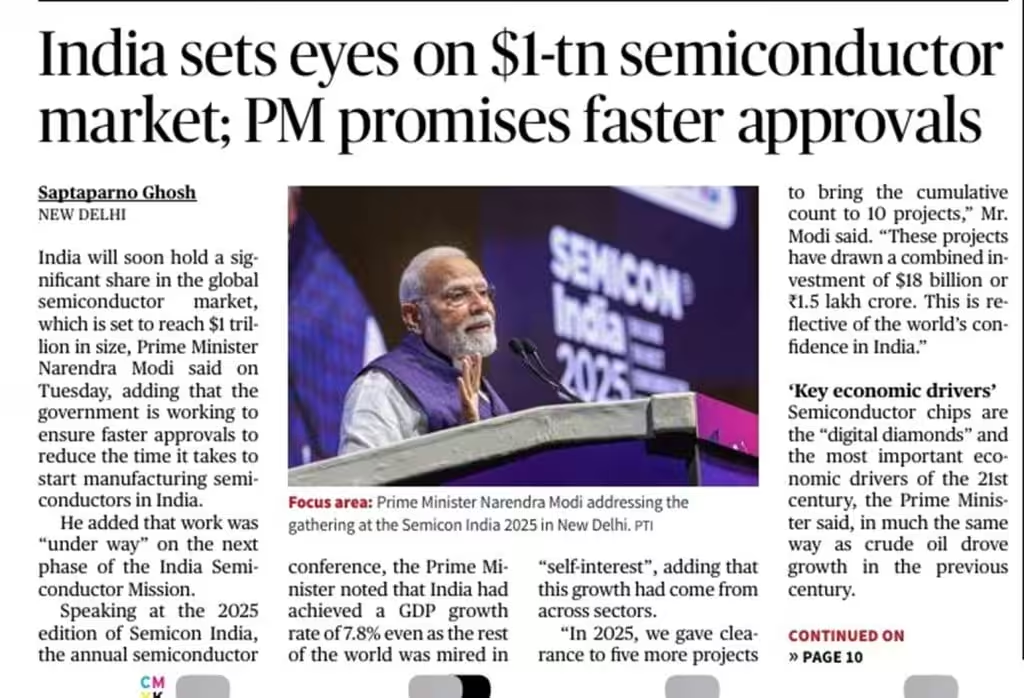
At the Semicon India 2025 conference in New Delhi, Prime Minister Narendra Modi announced that India will soon secure a significant share in the $1 trillion global semiconductor market. The government is working to ensure faster approvals to reduce the time required to start semiconductor manufacturing in India. In 2025, five new projects were cleared, taking the total count to 10 projects.
UPSC Relevance:
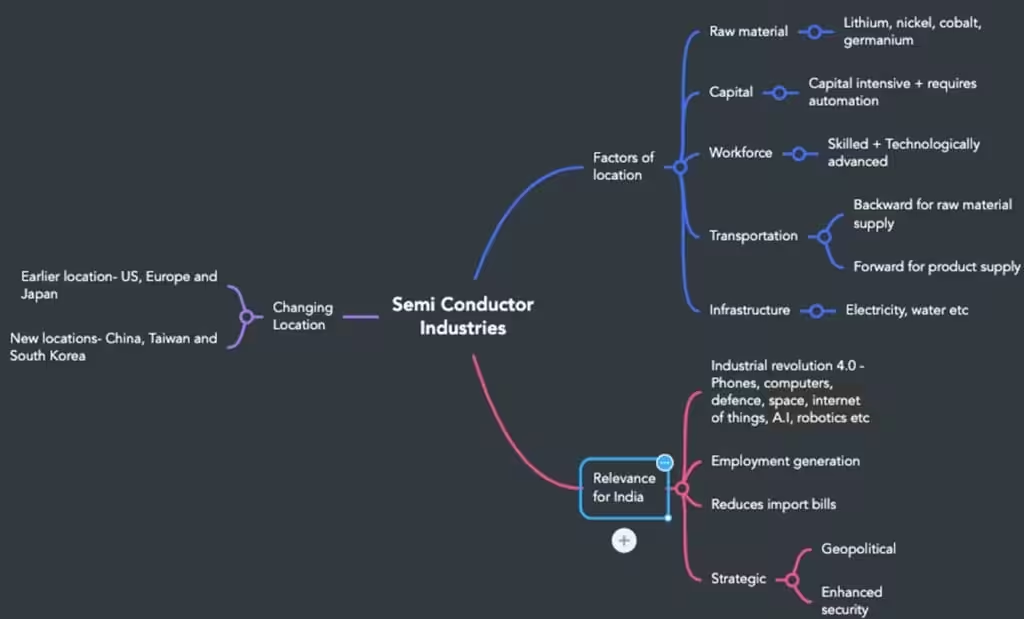
Factors responsible for the location of primary, secondary, and tertiary sector industries in various parts of the world (including India).
UPSC PYQ 2020:
Q: Account for the present location of iron and steel industries away from the source of raw material, by giving examples.
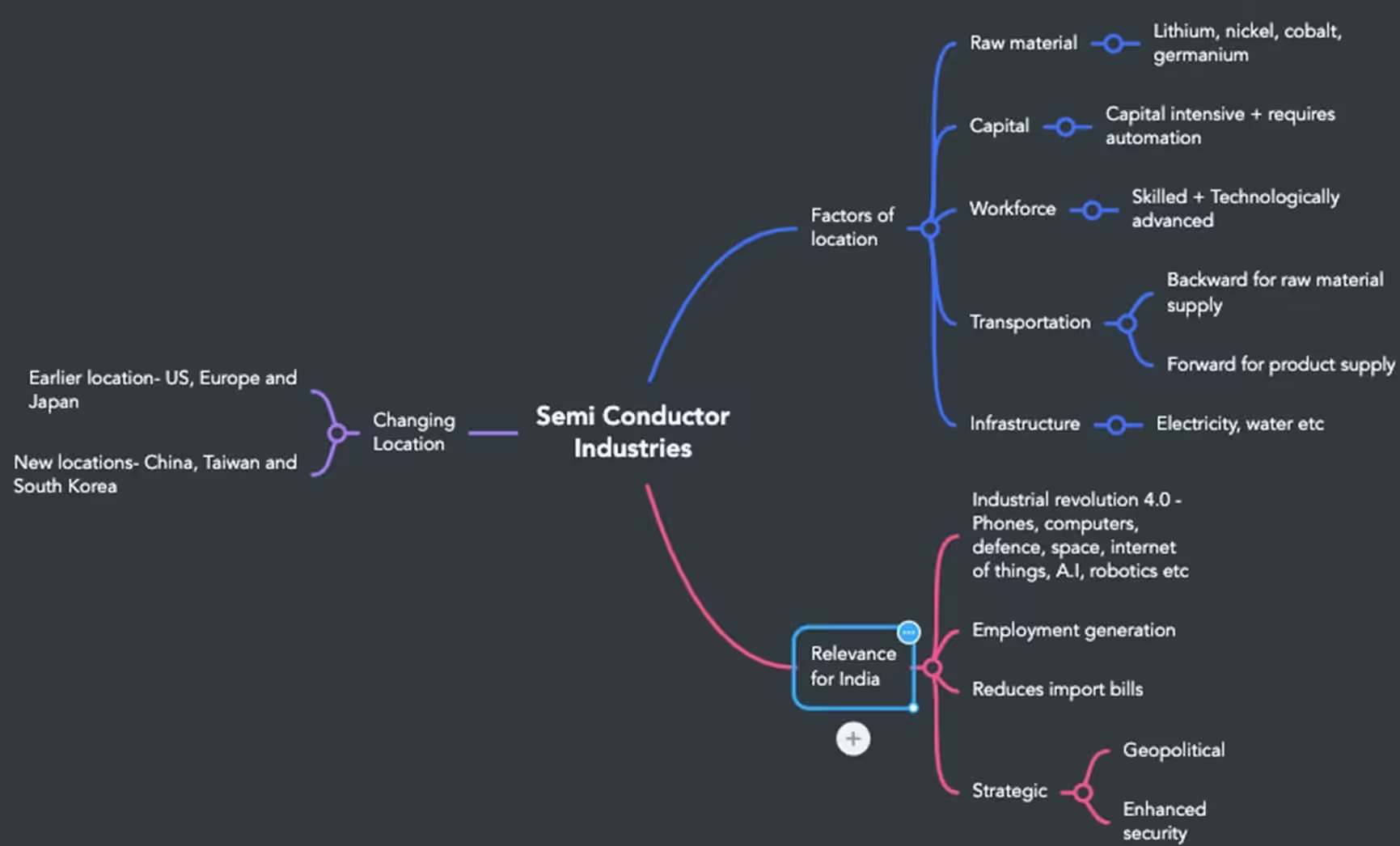
About Semiconductor Industry:
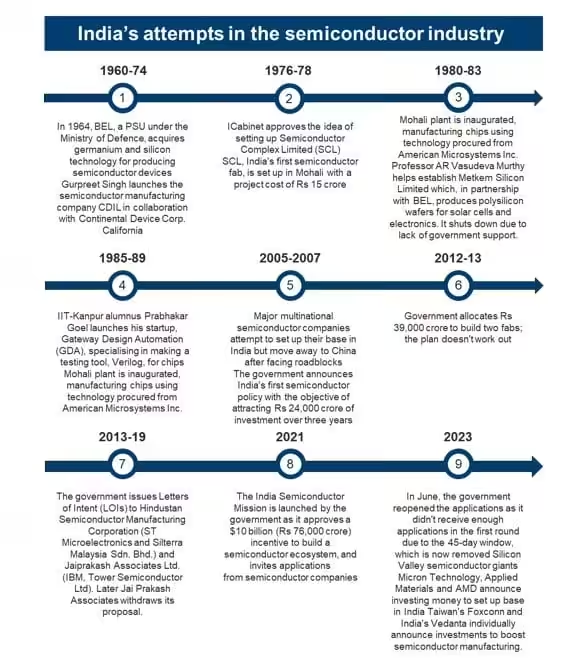
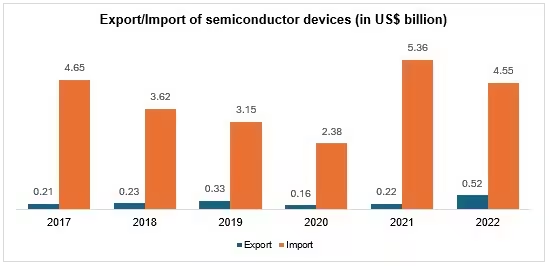
India depends on imports to fulfil its need of semiconductor devices. Major reason behind this highly dependent behaviour is the absence of semiconductor fabrication facility in India.
India’s semiconductor ecosystem is still in the initial stages – currently forming only 3% of the overall market – the country is at a crucial point to seize the rising demand for chips across fields such as electronics, automotive, telecommunications, and AI.
Semiconductor industry in India
In 2022, the Indian semiconductor market was valued at US$ 26.3 billion and is projected to expand at a CAGR of 26.3% to US$ 271.9 billion by 2032.
Factors Favouring India:
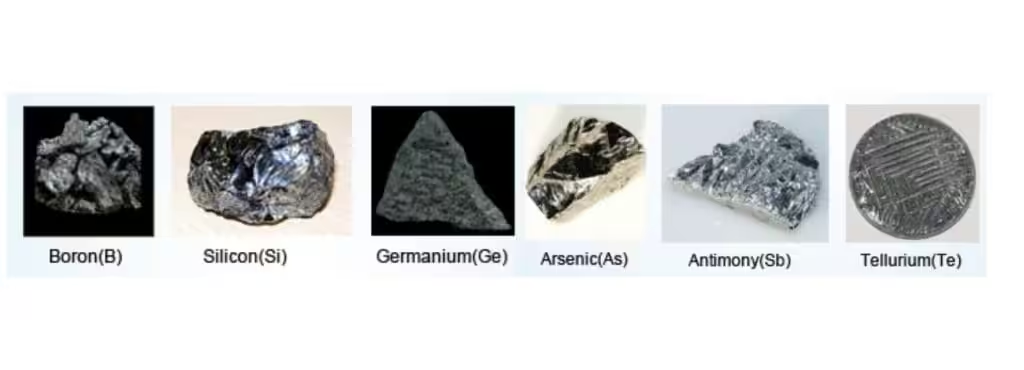
Raw Material:
Materials such as silicon (Si), germanium (Ge), gallium arsenide (GaAs), phosphorus (P), boron, gallium, etc.,
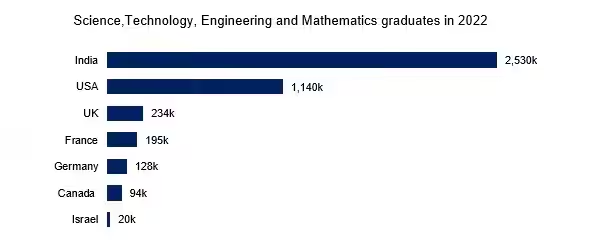
2. Skilled workforce:
India leads the world with record number of Science, Technology, Engineering and Mathematics (STEM) graduates, offering the much-needed skilled workforce required in semiconductor manufacturing, design, research, and development.
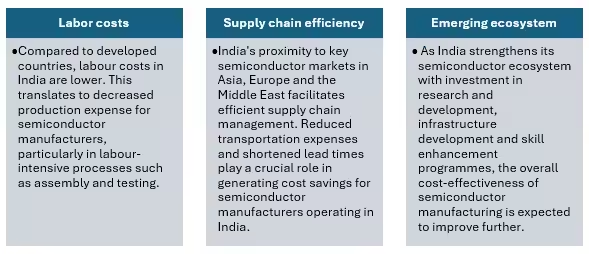
2. Cost advantage:
India offers a substantial cost advantage for semiconductor manufacturing due to the following factors:
3. Global supply chain diversification:
India has become a preferred destination for back-end assembly and testing operations amidst this industry relocation, with potential for future front-end manufacturing. India’s entry into this ecosystem is strategically significant for global supply chain diversification, given its stable political environment and vast domestic market, which are appealing factors for technology companies seeking greenfield expansion opportunities.
4. Policy support
The Indian government has promptly seized the opportunity following the global semiconductor supply chain glut after the pandemic and showed great intent through policy support to present India as an alternative to China in the global semi supply chain. We discuss the government initiatives in detail in the section below.
Factors of location and relevance in India:
Government initiatives:
India Semiconductor Mission:
The India Semiconductor Mission (ISM) functions as a dedicated division within the Digital India Corporation. Its main goal is to nurture a strong semiconductor and display ecosystem to position India as a prominent global player in electronics manufacturing and design.
SEMICON India: (Sept 2–4, New Delhi)- a flagship event organised in partnership with SEMI (Semiconductor Equipment and Materials International). The platform brings together global industry leaders, policymakers, academia, and startups to foster investment, dialogue, and strategic partnerships. will unite global leaders, academia, and industry to drive collaboration, research, and supply chain advancements.
National Policy on Electronics 2019: It envisions positioning India as a global hub for Electronics System Design and Manufacturing (ESDM) sector. It aims to encourage the development of core components, including chipsets.
Production Linked Incentive Scheme(PLI): Under this, the government will provide an incentive of 4% to 6% on goods manufactured in India and covered under target segments to eligible companies for a period of five years.
Foreign Direct Investment: The Government of India has allowed 100 percent (FDI) under the automatic route in the Electronics Systems Design & Manufacturing sector.
The government offers incentives for manufacturing setup in India:
Under the Compound Semiconductor Scheme, fiscal support of 50% of the capital expenditure on a pari-passu basis, including support for discrete semiconductor fabs.
Under the Semiconductor Fab Scheme, fiscal support of 50% of the project cost on a pari-passu basis for all technology nodes.
Under the Display Fab Scheme, fiscal support of 50% of the project cost on a pari-passu basis.
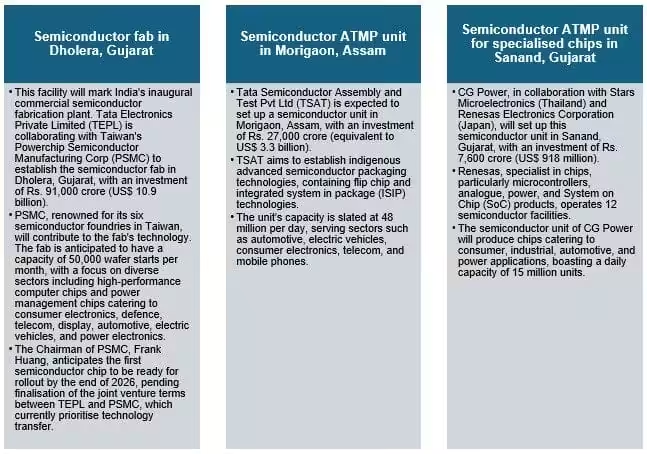
Investments announced by foreign companies in 2023: