Disclosure: this guide contains Amazon affiliate links. As an Amazon Associate, Anantam IAS earns from qualifying purchases — at no extra cost to you.
Sociology optional notes are easiest to revise when Paper 1 theory and Paper 2 Indian society stay mapped to the UPSC syllabus. This page gives you Anantam IAS’s complete free set plus 18 topic-wise PDFs, with no sign-up and no watermark.
Download the complete book for one continuous read, or choose a single unit for focused revision. The library contains 11 Paper 1 files and seven Paper 2 files, covering the discipline, methods, thinkers, stratification, kinship, religion, rural change, politics, movements and social challenges.
Before building a schedule, compare Sociology with the other UPSC optional subjects. If you have already chosen it, start with the downloads below.
Sociology Optional Notes PDF: Paper 1 and Paper 2
Choose the complete Sociology optional notes PDF for a single book, or download only the Paper 1 and Paper 2 units you need. Every file is our own syllabus-mapped resource and is free to download without an email gate.
Prefer to grab one unit at a time? Every unit is a separate PDF below.
| Syllabus unit | Free PDF |
|---|---|
| Paper 1: Fundamentals of Sociology | |
| Sociology: The Discipline | Download PDF |
| Sociology as Science | Download PDF |
| Research Methods and Analysis | Download PDF |
| Thinkers I: Marx, Durkheim, Weber | Download PDF |
| Thinkers II: Parsons, Merton, Mead | Download PDF |
| Stratification and Mobility | Download PDF |
| Work and Economic Life | Download PDF |
| Politics and Society | Download PDF |
| Religion and Society | Download PDF |
| Systems of Kinship | Download PDF |
| Social Change in Modern Society | Download PDF |
| Paper 2: Indian Society | |
| Introducing Indian Society | Download PDF |
| Rural/Agrarian Structure and the Caste System | Download PDF |
| Tribal Communities and Social Classes | Download PDF |
| Kinship, Religion and Society in India | Download PDF |
| Visions of Change; Rural Transformation | Download PDF |
| Industrialisation, Urbanisation and Politics | Download PDF |
| Movements, Population and Challenges | Download PDF |
Sociology Optional Syllabus Overview
UPSC Sociology optional has two papers, each 250 marks. Paper 1 is theoretical: the foundations of sociology, major thinkers, and key concepts. Paper 2 is applied: Indian society, its structures, challenges, and change processes.
This split is important for your strategy. Paper 1 needs conceptual depth. Paper 2 needs factual grounding in Indian social reality plus theoretical framing.
Paper 1: Fundamentals of Sociology
Paper 1 covers the discipline's intellectual history and core frameworks. It's divided into multiple units:
Unit 1: Sociology: The Discipline
- Modernity and social change in Europe, and the emergence of sociology
- The scope of sociology and its relationship with other social sciences
- Sociology and common-sense explanations
Unit 2: Sociology as Science
- Scientific method and debates about studying society scientifically
- Theoretical approaches to research, including positivist and non-positivist perspectives
- Objectivity and the relationship between facts and values
Unit 3: Research Methods and Analysis
- Qualitative and quantitative research approaches
- Methods for collecting data
- Variables, sampling and hypotheses
- How reliability and validity affect research conclusions
Unit 4: Sociological Thinkers. Prioritize Karl Marx, Emile Durkheim, Max Weber, Talcott Parsons, Robert K. Merton and George Herbert Mead as listed in the syllabus. Other thinkers can provide context when relevant; they are not all separate compulsory units.
Unit 5: Stratification and Mobility
- Concepts, theories, dimensions
- Class, status, power (Weber's three-part stratification)
- Caste as a form of stratification
Unit 6: Works and Economic Life
- Social organisation of work; Formal and informal economy
- Labour and society
Unit 7: Politics and Society
- Power, authority, legitimacy
- Political parties, pressure groups
- Nation, state, citizenship, democracy
Unit 8: Religion and Society
- Sociological theories of religion: Durkheim's sacred/profane, Weber's Protestant Ethic
- Religion and politics; Secularism; Religious movements
Unit 9: Systems of Kinship
- Family, household, marriage
- Lineage, descent, types of kinship systems
- Changing family patterns in India
Unit 10: Social Change
- Theories of social change: evolutionary, cyclic, conflict
- Development and dependency; Social movements
Paper 2: Indian Society: Structure and Change
Paper 2 is where India-specific knowledge matters. The syllabus covers:
A: Introducing Indian Society
- Perspectives on the study of Indian society: Indology (G.S. Ghurye), Structural-Functionalism (M.N. Srinivas), Marxist (A.R. Desai)
B: Social Structure
- Rural and agrarian social structure; Land reforms
- Caste system: Features, perspectives, changes
- Tribal communities: Issues and integration
- Social classes in India
- Systems of kinship in India
- Religion and society
C: Social Changes in India
- Visions of social change: Nehru, Ambedkar, Gandhi
- Rural and agrarian transformation: Green Revolution, cooperatives
- Industrialisation and urbanisation
- Politics and society: Democracy, Decentralisation (Panchayati Raj), political parties
D: Social Problems in India
- Poverty, inequality, deprivation
- Women and society: Feminist movements, legal status
- Population dynamics
- Environmental issues; Displacement and rehabilitation
- Violence, crime, juvenile delinquency
- Caste conflicts; Communalism, Ethnicity, Regionalism
E: Social Movements in India
- Peasant and farmers' movements
- Women's movement
- Backward classes and Dalit movements
- Environmental movements
- Ethnicity and Identity movements
Key Thinkers: What You Need to Know
UPSC Sociology questions are built around thinkers. Every answer in Paper 1 and most answers in Paper 2 should reference at least one sociologist. Here's what matters for each.
Émile Durkheim (1858-1917)
Durkheim established sociology as a distinct discipline separate from psychology and philosophy. His core idea: social facts are things external to individuals and constrain behaviour: study them objectively.
Key works and concepts:
- The Division of Labour in Society (1893): Mechanical solidarity (similarity-based, traditional) vs. Organic solidarity (interdependence-based, modern). Anomie occurs when the normative framework breaks down.
- Suicide (1897): Proved that even the most individual act has social causes. Four types: egoistic, altruistic, anomic, fatalistic. This work established sociological method.
- The Elementary Forms of Religious Life (1912): Religion as collective representation. The sacred/profane distinction. Religion reinforces social cohesion.
UPSC relevance: Anomie connects to social problems; collective conscience to nationalism and communalism questions.
Max Weber (1864-1920)
Weber is the thinker of meaning, action, and power. Where Durkheim focused on social facts, Weber focused on Verstehen: understanding the subjective meaning actors give to their actions.
Key works and concepts:
- The Protestant Ethic and the Spirit of Capitalism (1905): Calvinist theology (predestination, asceticism) created a mindset conducive to capital accumulation. Weber argues ideas, not just material conditions, shape social change.
- Ideal Types: Analytical constructs for comparison: Bureaucracy is his most famous ideal type
- Types of Authority: Traditional, Charismatic, Legal-Rational
- Class, Status, Party: Three separate dimensions of stratification
- Rationalisation and Disenchantment: Modern world increasingly governed by formal rationality, losing meaning
UPSC relevance: Bureaucracy, authority, capitalism origins, secularisation: all standard questions.
Karl Marx (1818-1883)
Marx's sociology is inseparable from his political economy. Social structure is shaped by economic relations.
Key concepts for sociology:
- Base (forces + relations of production) and Superstructure (law, religion, ideology, culture)
- Class consciousness vs. false consciousness
- Alienation: Workers estranged from their labour, its product, fellow workers, and human potential
- Historical materialism: History is the history of class struggle
- Ideology: Ideas of the ruling class become the ruling ideas
UPSC relevance: Class, inequality, social movements, capitalism, agrarian structure: Marx is inescapable.
Talcott Parsons (1902-1979) and Robert Merton (1910-2003)
Parsons built Structural Functionalism into a grand theory. His AGIL scheme: every social system must meet four needs: Adaptation, Goal attainment, Integration, Latency. Institutions serve functions that maintain social order.
Merton modified Parsons. He introduced middle-range theories: limited, testable propositions rather than grand theory. His key contributions:
- Manifest vs. Latent Functions
- Dysfunction
- Social Structure and Anomie: Strain between cultural goals and legitimate means produces deviance (innovation, ritualism, retreatism, rebellion)
- Reference Group Theory
George Herbert Mead (1863-1931)
Mead's symbolic interactionism focuses on how the self is formed through social interaction. The "I" and the "Me": the impulsive self vs. the socialised self. The "Generalised Other": internalised expectations of society.
Language and symbols are the medium of social interaction. Meaning is not inherent: it's created and negotiated in interaction. This tradition is important for questions on socialisation, identity, and deviance.
Indian Sociologists: M.N. Srinivas and André Béteille
M.N. Srinivas (1916-1999): The most important Indian sociologist for UPSC. His fieldwork-based concepts are central to Paper 2:
- Sanskritisation: Lower castes imitate upper-caste practices (rituals, diet, lifestyle) to claim higher social status. A process of mobility within the caste hierarchy.
- Westernisation: Changes in Indian society due to British colonial contact: technology, values, institutions.
- Dominant Caste: A caste that dominates a village or region through numerical strength, land ownership, and political power. Not necessarily the highest ritual rank.
- His village studies (Rampura village, Mysore) pioneered participant observation in Indian sociology.
André Béteille (1934-2023): Known for his work on inequality and democracy in India.
- Caste, Class and Power (1965): Detailed study of a Tamil village showing how caste, class, and political power don't always overlap: they're separate but interacting hierarchies.
- His distinction between "harmonic" and "disharmonic" systems of inequality is important.
- Work on the relationship between equality and democracy in India.
A.R. Desai (1915-1994): Marxist perspective on Indian nationalism and society. Social Background of Indian Nationalism (1948): nationalism driven by class interests of the bourgeoisie. Critiqued Srinivas's approach as idealist.
G.S. Ghurye (1893-1983): Father of Indian sociology. Indological approach: studying Indian society through classical texts. His work on caste, tribes, and culture is foundational.
Topic-Wise Notes Approach
Good sociology notes have a specific structure for each topic. Don't write paragraphs: write structured notes you can revise in 10 minutes.
Template for each topic:
- Definition/Concept (2-3 lines)
- Key thinker and argument
- Types/dimensions (if applicable)
- Indian example
- Critique
- Contemporary relevance
Example: Caste:
- Definition: Closed, hierarchical system of social stratification based on birth, ritual purity, and occupational specialisation
- Key thinkers: Ghurye (Indological), Srinivas (Structural-Functional), Ambedkar (historical-political), Dumont (Homo Hierarchicus: purity/pollution axis)
- Types: Varna system (4 varnas) vs. Jati (thousands of endogamous groups)
- Indian example: Mandal Commission (1980, implemented 1990): OBC reservations; creamy layer exclusion
- Critique: Dumont's pure/impure binary over-simplifies; ignores regional variation; doesn't explain Dalit resistance
- Contemporary: Caste and electoral politics; untouchability despite legal abolition; honour killings
Scoring Pattern and What Examiners Look For
Sociology UPSC Papers are evaluated by senior academics. They look for:
- Conceptual precision: Use the right sociological term, define it, then explain
- Thinker attribution: Don't just state ideas; attribute them ("As Durkheim argued in The Division of Labour…")
- Indian examples: Paper 2 expects data: NFHS, NSSO, Census figures
- Critical analysis: Don't just describe; evaluate. What are the limitations?
- Contemporary links: Every classic concept should connect to something current
| Mark Range | What It Indicates |
|---|---|
| 240-280 | Conceptual clarity + Indian examples + critical analysis |
| 200-240 | Good coverage but weak analysis or thin examples |
| 160-200 | Descriptive, low thinker integration, few data points |
| Below 160 | Incomplete answers, poor syllabus coverage |
Best Books for Sociology Optional
Choose one main explanation for a topic and use another source only for a specific gap. The free notes above and IGNOU resources remain useful options; these book links are optional purchases, not a requirement to access the downloads.
| Book or Source | Role | How to Choose |
|---|---|---|
| Sociology: Themes and Perspectives by Haralambos and Holborn | Paper 1 concepts and explanations | Read selected syllabus topics rather than treating the entire textbook as mandatory. |
| Sociology by Anthony Giddens and Philip W. Sutton | Alternative conceptual reference | Consult a library copy first; imported editions can be costly. Check the edition and contents. |
| IGNOU sociology material on eGyanKosh | Free supplementary study material | Select units against the syllabus. Do not assume one programme covers every optional requirement. |
| Society in India by Ram Ahuja | Selected Paper 2 background | The linked title is Society in India, not the NCERT Indian Society. Check the contents for your topic. |
| Social Change in Modern India by M.N. Srinivas | Concepts and Indian social change | Use for relevant sociological explanations and examples. |
| Sociology: A Brief Introduction by Richard T. Schaefer | Optional introductory reference | Consider only if you need another explanation; it is not an additional compulsory book. |
Haralambos is the standard reference for Paper 1. It's detailed: you don't read it cover to cover; you use it topic by topic when making notes. IGNOU MSO materials are free from the IGNOU website and provide good systematic coverage.
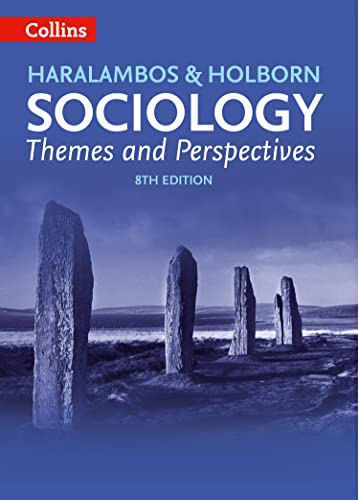
Sociology: Themes and Perspectives: Haralambos & Holborn
- The standard reference for Sociology optional Paper 1
- Theory presented through competing perspectives
- Written for teaching, so the explanations hold up
Sociology and GS Overlap
This is Sociology's biggest advantage as an optional. The GS papers draw heavily from sociology content.
| Sociology Topic | GS Paper | Specific GS Topic |
|---|---|---|
| Caste, Reservation | GS I | Social issues, Indian society |
| Urbanisation, Migration | GS I | Urbanisation; GS II: urban governance |
| Gender and Women | GS I, II | Women empowerment, Feminist movements |
| Poverty, Inequality | GS II, III | Government schemes, Economic growth |
| Environment and Society | GS III | Environmental degradation, Displacement |
| Social Movements | GS I | Important movements in India |
| Communalism, Regionalism | GS I | Social challenges |
| Tribal Issues | GS I, II | Tribal governance, Forest Rights Act |
Preparing Sociology optional doesn't just score 250 marks: it actively strengthens 4-5 GS II questions and several GS I answers. The effective mark return is much higher.
Paper 2 High-Yield Topics
These topics appear most frequently in UPSC Paper 2 questions:
Caste and Its Transformations
- Ambedkar's views vs. Gandhi's views on caste
- Dominant caste and vote bank politics
- Dalit movements: Mahad Satyagraha (1927), Conversion movements
- Reservation policy: Constitutional provisions, Mandal Commission, 103rd Amendment (EWS)
Agrarian Society and Change
- Modes of production in Indian agriculture
- Land reforms: Zamindari abolition, tenancy reforms, ceiling laws: successes and failures
- Green Revolution: social impact: new agrarian classes, regional inequality
- Farmer suicides: Vidarbha, Punjab: sociological explanations
Women and Patriarchy
- Forms of gender inequality: Paid/unpaid work, public/private divide
- Legal changes: Hindu Marriage Act (1955), Dowry Prohibition Act (1961), POCSO (2012), Protection of Women from Domestic Violence Act (2005)
- Women's movements: Self-Employed Women's Association (SEWA), Chipko Movement, anti-arrack movement
Tribal Communities
- Scheduled Tribe criteria; ST population: 8.6% of India (2011 Census)
- Problems: Land alienation, displacement, forest rights
- Forest Rights Act 2006: What it does and its implementation gaps
- Integration vs. assimilation debate: Ghurye vs. Nehru's Panch Sheel for tribes
Preparation Timeline for Sociology Optional
| Stage | Work | Review Check |
|---|---|---|
| Syllabus mapping | Read both papers and organize the latest available official questions by topic. | Can you identify where a question belongs? |
| Paper 1 | Study the prescribed thinkers, concepts and research methods. | Can you explain a concept and distinguish it from a competing view? |
| Paper 2 | Study Indian society with relevant theoretical framing and dated evidence. | Can you connect the example to the sociological argument? |
| Answer practice | Write selected past questions and compare the answer with the demand. | Did you explain and evaluate rather than only list facts? |
| Revision | Revisit weak concepts, uncertain examples and recurring answer problems. | Can you improve the answer without copying the source? |
FAQs: Sociology Optional UPSC
Preparation time depends on your background, available hours and answer-writing practice. Plan by syllabus units and review your progress through questions, rather than assuming the same month count applies to every beginner.
Does Sociology overlap enough with GS to justify choosing it? Yes, more than most optionals. GS I (Indian society, social issues) and parts of GS II (governance, social sectors) draw directly from Paper 2 content. You'll cover women, caste, tribes, poverty, and social movements for both GS and optional: a significant time saving.
Haralambos can provide useful explanations for Paper 1, but compare the selected edition with the complete syllabus and official questions. Use other sources for gaps, including relevant Indian sociological perspectives for Paper 2. No textbook should be treated as a complete syllabus checklist on its own.
Use a diagram or comparison table when it makes the relationship clearer. It should support the argument and answer the question; there is no fixed number of words or marks that a diagram replaces.
What's the right mix of thinkers to cite in answers? For Paper 1 questions, cite 2-3 thinkers with specific works and concepts. For Paper 2 questions, cite at least 1 Indian thinker (Srinivas, Béteille, Ghurye, Ambedkar) plus supporting data. Examiners notice when answers cite both Western theory and Indian sociology: it shows a sophisticated understanding of the discipline.
Tell Google you want more of this.
Add Anantam IAS as a preferred sourceOne tap, and this site shows up more often in your own Top Stories, AI Overviews and AI Mode. Remove it any time.