

Why in News?
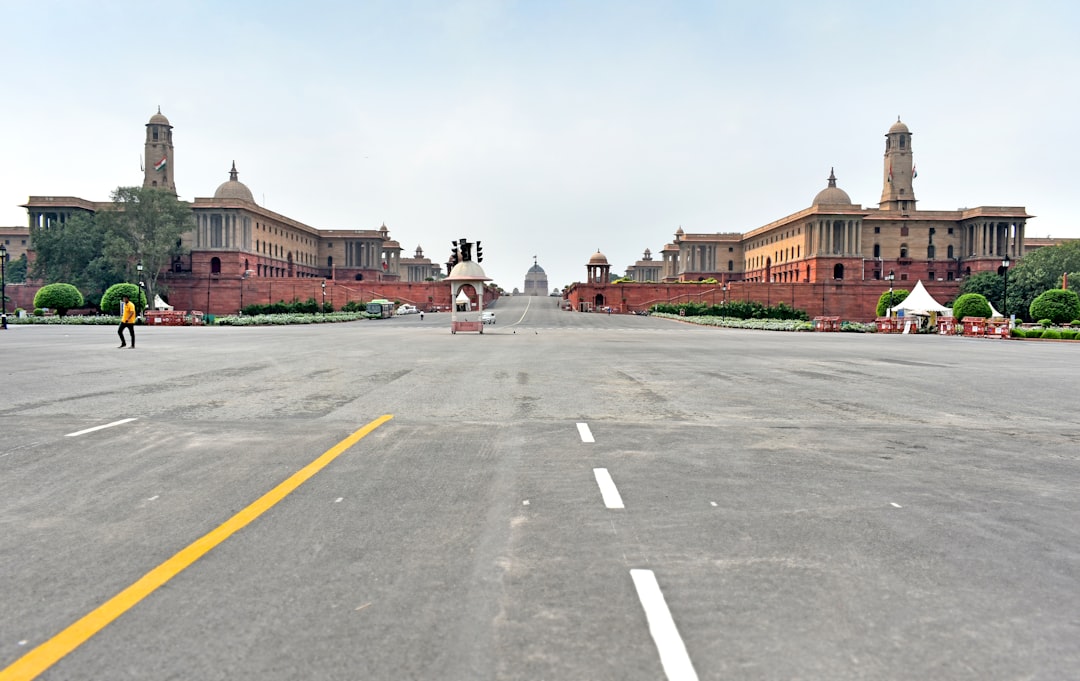
A two-judge bench of the Delhi High Court ruled on July 1 that private media houses perform a public function and can face a writ petition in a High Court for violating an individual’s right to privacy. The Indian Express reported that the bench of Justice C Hari Shankar and Justice O P Shukla upheld a single-judge order of 2013 directing TV Today Network to pay Rs 5 lakh as compensation for a broadcast that could identify a minor victim of sexual assault.
The judgment extends the horizontal application of fundamental rights — enforcing them against private actors, not just the State — to the press. It builds on the Supreme Court’s Kaushal Kishor (2023) Constitution Bench ruling and directly reframes how Article 19(1)(a) press freedom is balanced against Article 21 privacy.
- The dispute dates to August 2005: news channel Aaj Tak broadcast a segment on a child sexual-assault complaint despite the mother’s explicit refusal to interact with the crew.
- The broadcast disclosed the accused father’s name and official designation, the colony’s address board, visuals of the house and the mother’s voice — enough to identify the minor victim.
- The mother moved a writ petition under Article 226 against the private channel; the core legal question was whether such a petition is even maintainable against a non-State broadcaster.
- The court held the media’s role in disseminating news and shaping public opinion is so central to society that it is a public function, carrying an inherent public duty not to injure the public’s rights.
- On this reasoning the court applied the right to privacy horizontally, held the consent-less broadcast an illegal intrusion, and sustained monetary compensation in a writ court.
The development matters in the context of:
- Fundamental rights have traditionally operated vertically — a citizen versus the State. This ruling is among the first to operationalise Kaushal Kishor specifically against the media, a classic non-State actor.
- It opens a faster constitutional-court route for privacy claims that earlier went through slow civil suits for defamation or tort — a structural shift in media litigation.
- It sharpens a live GS2 tension: an unfettered press is a check on the State, yet the same press can injure the dignity and privacy of private individuals, especially vulnerable victims.
UPSC Relevance
Prelims Relevance
- Article 226: High Courts issue writs for enforcement of fundamental rights AND ‘for any other purpose’ — against the State and against authorities or persons discharging public duties; wider than the Supreme Court’s Article 32.
- Article 19(1)(a): freedom of speech and expression; freedom of the press is implied within it (Romesh Thappar, 1950), subject to Article 19(2) reasonable restrictions.
- Right to privacy: declared a fundamental right intrinsic to Article 21 by a unanimous nine-judge bench in Justice K S Puttaswamy v Union of India (2017).
- Kaushal Kishor v State of UP (2023): a five-judge Constitution Bench held that rights under Articles 19 and 21 are enforceable even against persons other than the State.
- Textually horizontal rights: Article 15(2) (access to shops, public places), Article 17 (untouchability), Articles 23–24 (exploitation) bind private actors by design.
- Section 23, POCSO Act 2012: bars media from disclosing a child victim’s identity; Section 72, Bharatiya Nyaya Sanhita (earlier IPC 228A) criminalises disclosing identities of victims of sexual offences.
- Nipun Saxena v Union of India (2018): Supreme Court guidelines protecting the identity of victims of sexual offences, including in media reporting.
- Media self-regulation bodies: Press Council of India (print, statutory), NBDSA (TV news, self-regulatory), Programme Code under the Cable Television Networks (Regulation) Act, 1995.
Mains Relevance
GS Paper 2
- Horizontal versus vertical application of fundamental rights — how Kaushal Kishor and this ruling redraw the citizen–private actor rights map.
- Balancing press freedom (Article 19(1)(a)) with the right to privacy and dignity (Article 21) of private individuals and victims.
- Scope of writ jurisdiction under Article 226 — the ‘public function/public duty’ test for non-State bodies.
- Judicial remedies versus media self-regulation: adequacy of PCI, NBDSA and the Programme Code.
GS Paper 4
- Media ethics: consent, victim identity, and the public-interest test in journalism — TRP-driven reporting versus the duty of care to vulnerable persons.
Essay
- Freedom of the press is not an end in itself but a means to responsible public discourse.
- Rights that check the State must not become weapons against the citizen — the ethics of power without accountability.
Background and Context
The case: from a 2005 broadcast to writ compensation
A two-decade-old privacy injury has produced a precedent-setting constitutional remedy.
- In August 2005, a woman filed a police complaint accusing her husband of sexually assaulting their minor daughter; a TV crew from Aaj Tak visited despite her explicit refusal to interact.
- The channel aired identifying details — the father’s name and designation, the colony address board, house visuals and the mother’s voice — effectively exposing the child victim’s identity.
- The mother filed a writ petition before the Delhi High Court; in 2013 a single judge directed TV Today Network to pay Rs 5 lakh in compensation.
- On July 1, the division bench of Justice C Hari Shankar and Justice O P Shukla upheld that order, authoring detailed principles on the media’s constitutional accountability.
- The maintainability question was decisive: can a writ — a public-law remedy — run against a purely private broadcaster at all?
Article 226 and the 'public function' test
The judgment turns on the breadth of High Court writ jurisdiction, which has always been wider than Article 32.
- Article 226 empowers High Courts to issue writs for enforcing fundamental rights and ‘for any other purpose’ — to the State AND to any person or authority performing a public duty.
- In Andi Mukta Sadguru (1989), the Supreme Court held that mandamus can issue to a private body if it discharges a public duty; the form of the entity matters less than the function.
- In Zee Telefilms v Union of India (2005), the BCCI was held not to be ‘State’ under Article 12, yet its public functions remained amenable to Article 226 review.
- The Delhi HC reasoned it would be ‘unrealistic’ to hold that the media performs no public function: news dissemination and shaping public opinion are central to a democratic society.
- That public function, the court held, carries an inherent public duty to ensure the rights of the public are not ‘prejudiced or injured’ by how the function is performed.
Vertical vs horizontal application of fundamental rights
The ruling sits in a longer doctrinal shift from rights-against-the-State to rights-against-power.
- Classically, fundamental rights apply vertically: the citizen invokes them against the State as defined in Article 12.
- Some rights are textually horizontal: Article 15(2), Article 17 (abolition of untouchability) and Articles 23–24 (prohibition of exploitation) bind private persons directly.
- In Kaushal Kishor v State of UP (January 2023), a five-judge Constitution Bench held that rights under Articles 19 and 21 can be enforced even against non-State actors.
- Kaushal Kishor arose from a minister’s speech; the Delhi HC has now carried its logic into a new field — the privately owned press — and paired it with the writ route.
- Senior Advocate Madhavi Goradia Divan told The Indian Express the legal groundwork existed, but this is the first time the principles are ‘actively put together’ in the context of the media.
Privacy, press freedom and victim-identity law
The clash here is between two constitutional values the Supreme Court has repeatedly ranked contextually, not absolutely.
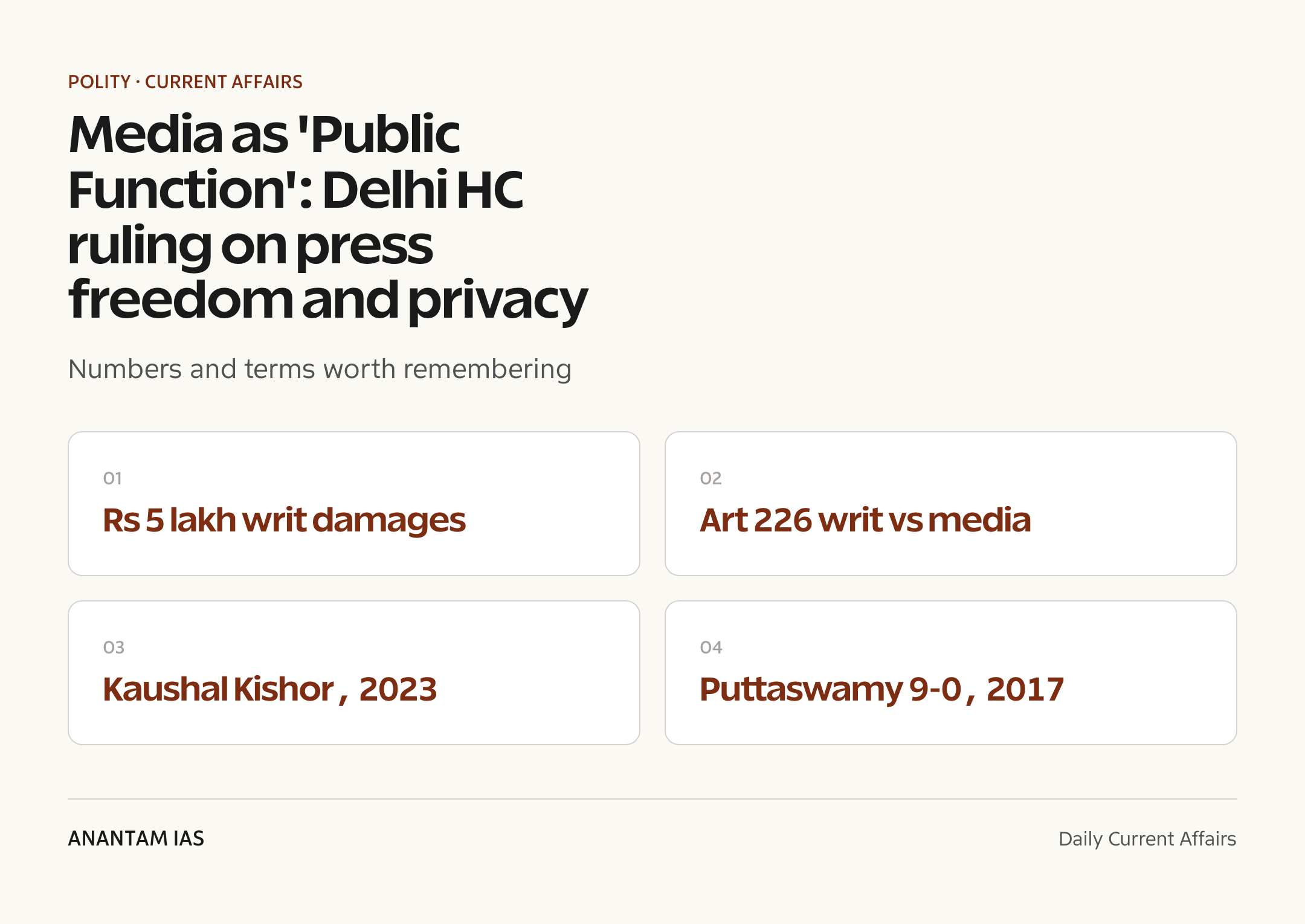
- Puttaswamy (2017): a unanimous nine-judge bench held privacy is a fundamental right intrinsic to Article 21 — covering informational privacy, dignity and decisional autonomy.
- Freedom of the press flows from Article 19(1)(a) (Romesh Thappar, 1950; Bennett Coleman, 1973) and can be restricted only on Article 19(2) grounds, which include decency and defamation.
- For child victims the statute is categorical: Section 23 of the POCSO Act, 2012 bars any report that discloses a child’s identity, and Section 72 BNS (earlier IPC 228A) criminalises naming victims of sexual offences.
- In Nipun Saxena (2018) the Supreme Court issued detailed directions shielding victim identity even in indirect forms — addresses, family details, photographs.
- The Delhi HC’s strict insistence on consent was anchored in these heightened protections for a minor sexual-assault victim, not in a general licence to censor reporting.
Why experts are worried: the chilling-effect argument
The concern is not this case’s outcome but what the maintainability doctrine could enable.
- Law professor Shameek Sen (WBNUJS) called the ruling a ‘logical corollary’ of Kaushal Kishor but warned against equating the media with the State: the press is designed to keep the State in check.
- He argued journalistic wrongs belong in private law — defamation suits and tort claims — and that writ jurisdiction ‘constitutionalises’ what should be a civil dispute.
- Kaushik Moitra (Bharucha & Partners) warned that declaring all press activity a public function ‘hands future litigants an easier maintainability argument’, inviting more privacy-linked writs, pre-publication writs, and defamation claims repackaged as privacy claims.
- The feared result is a chilling effect: docile, defensive journalism and over-cautious editorial gatekeeping under the shadow of constitutional litigation.
- Divan noted the shift to writ courts is partly a symptom of civil-justice delay: damages after a full civil trial can take years, making the faster writ route attractive to genuine victims too.
What remains protected: the public-interest filter
Experts converge on one safeguard — context and public interest will decide future cases.
- Genuine investigative journalism on matters of public concern remains protected: a public figure who abuses office cannot, in Divan’s words, hide behind privacy and call ill-gotten gains ‘private wealth’.
- Courts are expected to apply a strict public-interest analysis so privacy does not become ‘a tool for prior restraint‘ against adverse reporting.
- The ruling’s own facts — a non-consenting family, a minor victim, zero public interest in identification — mark the outer boundary of legitimate reporting, not its core.
- Existing accountability layers stay relevant: Press Council of India censure for print, NBDSA orders for TV news, and the Programme Code under the Cable TV Networks Act, 1995.
Way Forward
Doctrinal clarity from the Supreme Court
- An authoritative ruling should define WHEN media activity is a public function — distinguishing news gathering in public interest from commercial or sensational broadcasting.
- Courts should codify a public-interest and proportionality test for privacy writs against the press, with strong presumptions against pre-publication restraint.
- Maintainability screens can filter SLAPP-style petitions by powerful litigants seeking to suppress critical coverage.
Fix the remedies ecosystem
- Speed up civil defamation and tort adjudication — dedicated benches and timelines — so constitutional courts stop being the default forum for private-law injuries.
- Strengthen statutory self-regulation: give NBDSA-type bodies enforceable compensation powers and make newsroom consent-and-victim-identity protocols auditable.
- Newsrooms should institutionalise POCSO/Nipun Saxena compliance — blur-and-anonymise defaults, consent logs, and pre-broadcast legal review for victim-related stories.
Conclusion
The Delhi High Court’s ruling is best read as a rights-protective response to an egregious fact pattern: a channel identifying a minor sexual-assault victim against her family’s explicit refusal. By routing the remedy through Article 226 and the public function doctrine, the court gave a genuine victim a faster, constitutional remedy that the civil system could not deliver in time.
But doctrine outlives its facts. If every newsroom decision is potentially a ‘public function’ reviewable in writ jurisdiction, the same tool can be turned against the press by those it investigates. The task ahead — for the Supreme Court and for High Courts applying this precedent — is to keep the public-interest filter strict, so that privacy protects the vulnerable without becoming an instrument of prior restraint on free speech.
UPSC Practice Questions
Prelims MCQ 1
With reference to the application of fundamental rights in India, consider the following statements:
- Fundamental rights are traditionally enforced vertically, i.e., by citizens against the State as defined in Article 12.
- In Kaushal Kishor v State of UP (2023), the Supreme Court held that rights under Articles 19 and 21 can be enforced even against persons other than the State.
- A writ under Article 226 can be issued only against the State and its instrumentalities.
How many of the above statements are correct?
(a) Only one (b) Only two (c) All three (d) None
Answer: (b) Only two
Explanation:
Statements 1 and 2 are correct. Statement 3 is wrong: Article 226 is wider — High Courts can issue writs to ‘any person or authority’ performing a public duty, and for ‘any other purpose’ beyond fundamental rights (Andi Mukta Sadguru, 1989).
Prelims MCQ 2
The right to privacy was declared a fundamental right intrinsic to Article 21 of the Constitution in which of the following cases?
(a) Kaushal Kishor v State of Uttar Pradesh (2023) (b) Justice K S Puttaswamy v Union of India (2017) (c) Maneka Gandhi v Union of India (1978) (d) Nipun Saxena v Union of India (2018)
Answer: (b) Justice K S Puttaswamy v Union of India (2017)
Explanation:
A unanimous nine-judge Constitution Bench in Puttaswamy (2017) held privacy is a fundamental right under Article 21. Kaushal Kishor (2023) dealt with horizontal application of Articles 19 and 21; Nipun Saxena (2018) laid down victim-identity protection guidelines.
UPSC Mains Questions
- The Delhi High Court has held that private media houses perform a ‘public function’ and are amenable to writ jurisdiction for privacy violations. Examine the implications of this ruling for the balance between press freedom under Article 19(1)(a) and the right to privacy under Article 21.
- The horizontal application of fundamental rights extends constitutional protection against private power, but risks chilling the very freedoms it draws upon. Discuss with reference to the Kaushal Kishor judgment and recent judicial trends concerning the media.
- Media self-regulation in India has failed to protect the privacy and dignity of victims of crime, forcing constitutional courts to step in. Critically evaluate, suggesting reforms to the media-accountability ecosystem.
Sources: Indian Express Explained and Delhi High Court.
Frequently Asked Questions
What did the Delhi High Court rule about the media?
A division bench held on July 1 that private media houses perform a public function and can face writ petitions under Article 226 for violating the right to privacy. It upheld Rs 5 lakh compensation against TV Today Network for a 2005 broadcast identifying a minor sexual-assault victim.
What is horizontal application of fundamental rights?
It means enforcing fundamental rights against private (non-State) actors, not just the government. The Supreme Court’s five-judge bench in Kaushal Kishor (2023) held that rights under Articles 19 and 21 are enforceable against persons other than the State.
Why is Article 226 wider than Article 32?
Article 32 lets the Supreme Court enforce only fundamental rights. Article 226 lets High Courts issue writs both for fundamental rights and ‘for any other purpose’, and against any person or authority performing a public duty — not just the State.
Which laws protect the identity of sexual-offence victims?
Section 23 of the POCSO Act, 2012 bars media disclosure of a child victim’s identity; Section 72 of the Bharatiya Nyaya Sanhita (earlier IPC 228A) criminalises naming victims of sexual offences; Nipun Saxena (2018) added Supreme Court guidelines covering indirect identification.
Why do critics fear a chilling effect from this ruling?
Because calling all press activity a public function makes writ petitions against newsrooms easier to file. Politicians and corporations could repackage defamation grievances as privacy claims, seek pre-publication orders, and push journalists toward defensive, over-cautious reporting.
Does the ruling end investigative journalism into public figures?
No. Experts note courts will apply a public-interest test: a public figure misusing office cannot hide behind privacy to block scrutiny. The ruling’s strict consent standard was rooted in protecting a minor victim, where no public interest justified identification.
Tell Google you want more of this.
Add Anantam IAS as a preferred sourceOne tap, and this site shows up more often in your own Top Stories, AI Overviews and AI Mode. Remove it any time.






