Why in News?
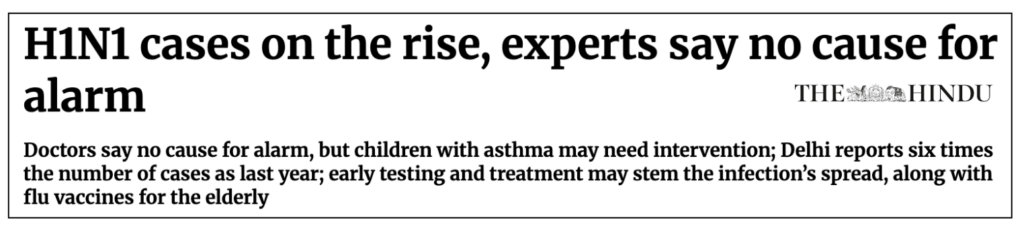
Several States are reporting increased influenza-like illnesses during the monsoon. Delhi recorded 1,344 H1N1 cases by early August, while Mumbai reported 309 cases between June and mid-August. Kerala has recorded 7,421 influenza cases and 88 deaths in 2026, though these are not all necessarily H1N1 cases.
Understanding H1N1:
- Influenza viruses are enveloped, single-stranded RNA viruses belonging to the Orthomyxoviridae family. They are classified into four types:
- Influenza A: infects humans and several animal species and can cause epidemics and pandemics. E.g., H1N1 (Swine Flu), H5N1 (Bird Flu)
- Influenza B: primarily infects humans and generally evolves more slowly.
- Influenza C: usually causes mild illness.
- Influenza D: mainly affects cattle and is not known to cause human disease.
- H1N1 is a subtype of Influenza A virus. “H” and “N” refer to its surface proteins: haemagglutinin and neuraminidase.
- Influenza viruses undergo frequent antigenic drift (gradual mutations in H and N proteins enable the virus to partially evade existing immunity) and produce seasonal outbreaks. This necessitates periodic updating of vaccines.
Transmission and Control:
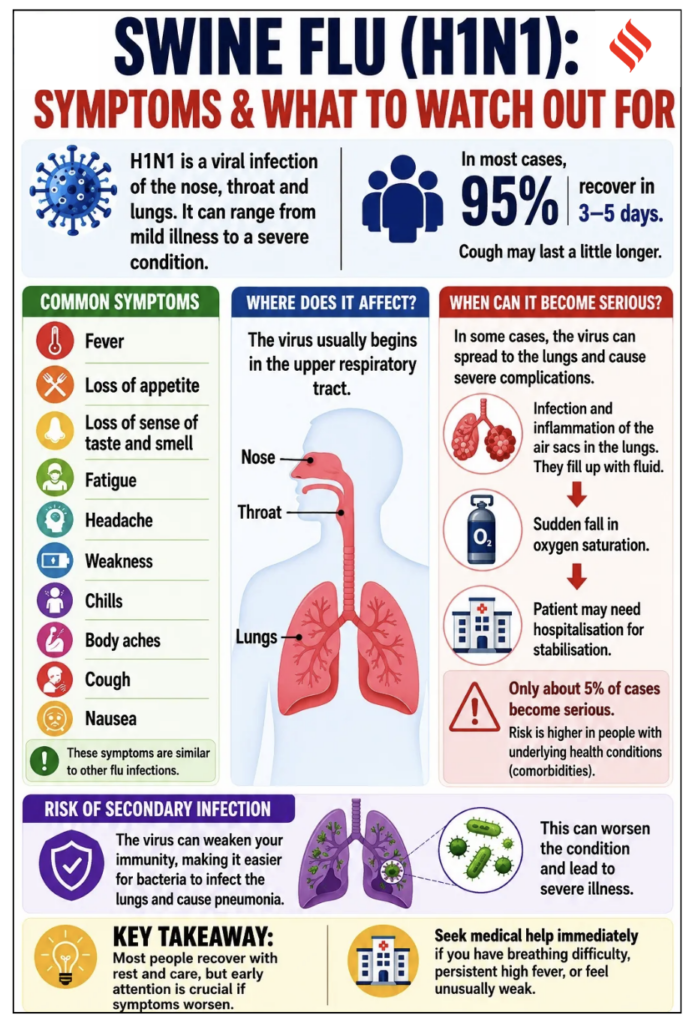
- Transmission: The infection spreads mainly through respiratory droplets and aerosols, particularly in crowded spaces such as schools.
- Symptoms: Fever, cough, sore throat, nasal congestion, body ache and fatigue. Severe cases may cause pneumonia, respiratory failure or aggravation of existing illnesses.
- Control: Oseltamivir is a commonly used antiviral and is most beneficial when started early under medical supervision. Other influenza-specific antivirals also exist. Most patients recover without hospitalisation.
On June 11, 2009, the WHO declared H1N1 a pandemic; 74 countries and territories had already
The rise in cases does not indicate a new pandemic, but limited testing and deaths among vulnerable groups justify preparedness without public alarm.
UPSC PYQ 2015:
Q. H1N1 virus is sometimes mentioned in the news with reference to which one of the following diseases?
(a) AIDS
(b) Bird flu
(c) Dengue
(d) Swine flu
Answer: (d)
Tell Google you want more of this.
Add Anantam IAS as a preferred sourceOne tap, and this site shows up more often in your own Top Stories, AI Overviews and AI Mode. Remove it any time.