Why in News?
US hydraulic-cylinder investigations involving India appear in official notices filed for public inspection on September 11, 2026, with Federal Register publication scheduled for September 14.
- Both notices state an applicable date of September 8, 2026; filing for public inspection and scheduled publication are separate events.
- The antidumping investigation covers the specified products from Canada, China, India, the Republic of Korea and Mexico.
- The parallel countervailing-duty investigation covers China, India and Mexico; Canada and Korea appear only in the antidumping notice.
- These are initiation notices, not final dumping, subsidy or injury determinations and not final duty orders.
- For Indian manufacturers, a product-specific investigation can create evidence and compliance demands even before any final remedy is decided.
- The distinction between pricing, government support and injury prevents a trade investigation from being misread as a blanket tariff on all exports from a country.
UPSC Relevance
Prelims Relevance
- Antidumping: examines sales at less than fair value through the relevant price comparison.
- Countervailing duty: concerns imports benefiting from countervailable subsidies.
- US Department of Commerce: investigates dumping and countervailable subsidies.
- US International Trade Commission: examines material injury or its threat to the domestic industry.
- Product scope: the written description determines which goods the investigation covers.
Mains Relevance
GS Paper 3
- External trade: export competitiveness and evidence-based responses to trade-remedy proceedings.
- Industrial policy: distinguish allegations about government support from established countervailable subsidies.
GS Paper 2
- International economic relations: specialised administrative investigations alongside wider bilateral trade relations.
Essay
- Fair competition: a credible remedy needs a defined harm and an evidentiary process.
Background and Context
The product and the boundaries of the investigation
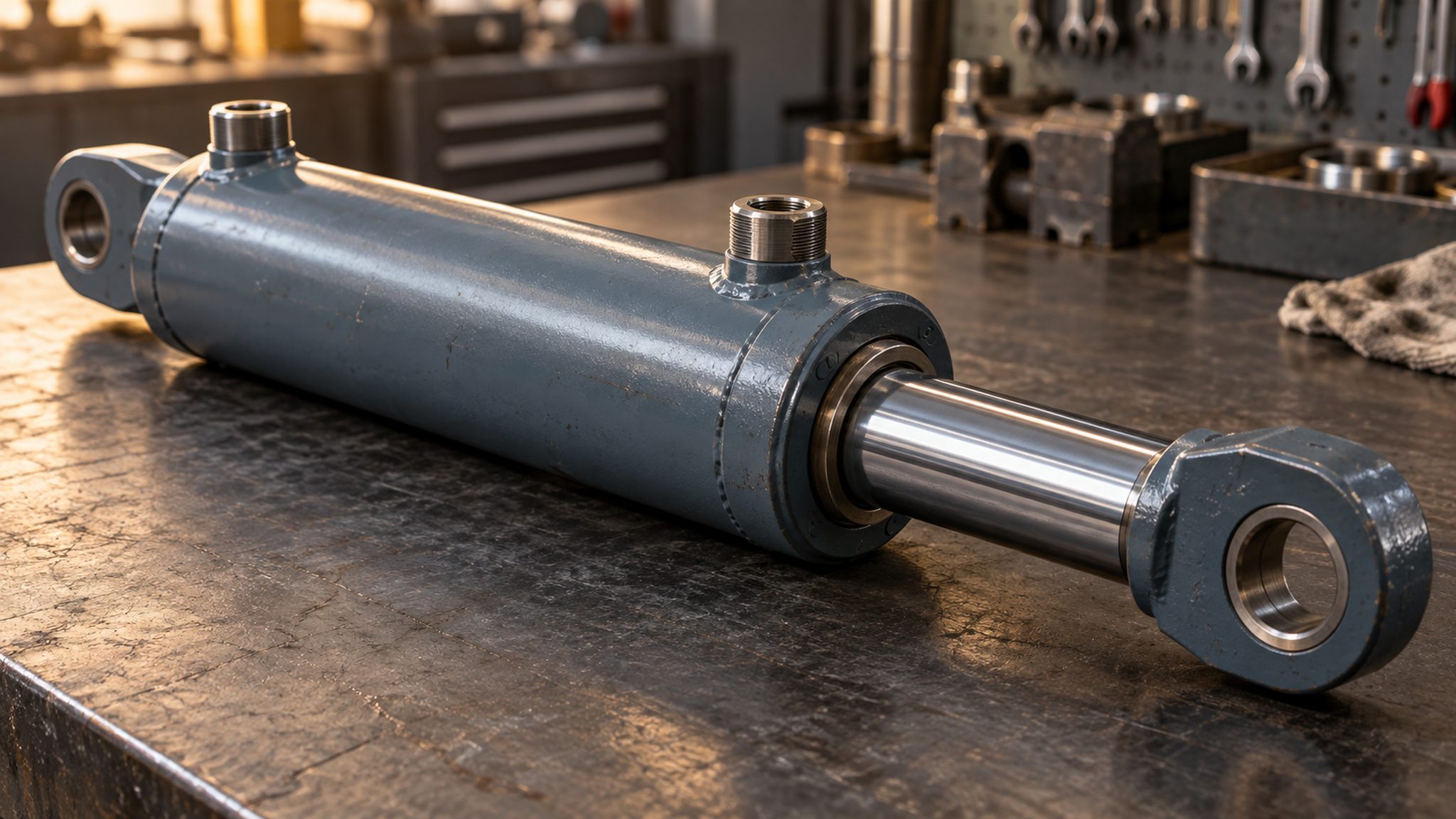
A hydraulic cylinder is a linear actuator using pressurised fluid to move a piston and rod; the notice covers only a defined product category.
- The covered category is certain linear hydraulic cylinders and parts, including specified steel barrels and piston rods. The wording matters: this proceeding concerns defined industrial goods, not every hydraulic component or every Indian engineering export.
- The scope can include a cylinder attached to machinery, but the notice specifies that only the cylinder is covered in that situation. Inclusion of one component does not automatically bring the entire machine within scope.
- The notices list customs tariff classifications for convenience, while making the written product description decisive. Matching a code alone is an incomplete coverage test; physical characteristics and the stated inclusions and exclusions must also be checked.
- Commerce flags an unresolved question about the administrability of some steel-barrel scope language. It adopted that wording for initiation while inviting comments and allowing possible clarification, showing that coverage details remain open to examination.
- A country-and-product-specific probe differs from an across-the-board tariff announcement. These notices identify particular merchandise and origins, so their existence cannot support a claim that every import from India faces a new duty.
Dumping, subsidies and injury ask different questions
The US system divides the investigation between Commerce and the International Trade Commission, preventing different legal questions from being compressed into one accusation.
- For antidumping, Commerce examines whether goods are sold in the United States at less than fair value. The notice compares export price with normal value, using adjustments and product comparisons rather than a cheapness test.
- For India, the petition’s normal-value allegation uses home-market pricing information from market research. Those inputs support initiation; they are not a final verified dumping finding or a duty rate that exporters must already pay.
- The countervailing-duty inquiry examines whether the covered imports benefit from countervailable government subsidies. It asks a different question from the price comparison, so starting both proceedings does not merge their evidence or establish either allegation.
- The US International Trade Commission examines whether the imports materially injure, or threaten material injury to, the US industry. Its injury assessment is separate from Commerce’s dumping or subsidy inquiry and concerns the relevant domestic industry.
- The petitions cite lost sales, price pressure and weaker performance as evidence of alleged harm. These remain allegations here; checking their link to the investigated imports matters, rather than assuming every business loss proves injury.
Why initiation is an intermediate procedural step
Accepting a petition for investigation means the initiating requirements were met, while the contested economic claims still require examination through the relevant proceedings.
- Commerce assessed domestic-industry support before initiating these investigations, including polling producers. Establishing adequate support answers who may bring the petition; it does not independently prove dumping, a countervailable subsidy or injury from the imports.
- The notices describe preliminary determinations as subsequent stages in the investigations. Initiation begins a process with evidence gathering and responses; it should not be reported as the completed assessment or the imposition of a final remedy.
- A negative preliminary injury determination for a country would terminate the relevant investigation for that country, according to the notices. This illustrates why the injury inquiry is an operative safeguard rather than merely a procedural formality.
- Interested parties can address product coverage and factual evidence through the prescribed proceedings. Commerce requires accuracy and completeness certifications for factual submissions, making a documented record more useful than a general assertion that exports are competitive.
- The response is case-specific preparation: identify covered products and preserve usable transaction and support records. The notices do not establish a final cost increase for buyers, an export collapse or a proven violation by India.
Way Forward
Prepare evidence before drawing conclusions
- Map the written product scope against actual goods and components, including any machinery attachments, before estimating commercial exposure.
- Keep pricing and government-support records distinct because antidumping and countervailing inquiries ask different questions.
- Follow the Commerce and USITC proceedings separately, identifying which issue each determination actually resolves.
- Use verified procedural status in public communication: allegation, initiation, preliminary determination and final order are not interchangeable descriptions.
Conclusion
- The hydraulic-cylinder investigations offer a concrete way to distinguish price discrimination, countervailable government support and domestic-industry injury. India’s inclusion in both proceedings identifies exposure to scrutiny, while leaving the contested findings to the investigation process.
- For an exam answer, connect trade defence with evidentiary discipline: define the product, identify the investigating authority and separate each legal test. Avoid treating an initiation notice as proof of wrongdoing or as an already imposed final tariff.
UPSC Practice Questions
Prelims MCQ 1
With reference to the US hydraulic-cylinder initiation notices, consider the following statements:
- India is included in both the antidumping and countervailing-duty investigations.
- Canada and the Republic of Korea are included in both investigations.
- The notices themselves constitute final duty orders.
How many of the above statements are correct?
(a) Only one (b) Only two (c) All three (d) None
Answer: (a) Only one
Explanation:
Only statement 1 is correct. Canada and Korea appear in the antidumping notice, not the parallel countervailing-duty notice. Initiation is not a final duty order.
Prelims MCQ 2
Which institution examines material injury or threat of material injury to the domestic US industry in these proceedings?
(a) Reserve Bank of India (b) US International Trade Commission (c) International Monetary Fund (d) UN Conference on Trade and Development
Answer: (b) US International Trade Commission
Explanation:
The USITC examines domestic-industry injury. Commerce separately investigates sales at less than fair value and countervailable subsidies.
UPSC Mains Questions
- Distinguish antidumping and countervailing-duty investigations. Why is a separate assessment of domestic-industry injury important?
- How should Indian engineering exporters respond to product-specific trade-remedy investigations without assuming that initiation is a final adverse determination?
Sources: US Department of Commerce, antidumping initiation notice and US Department of Commerce, countervailing-duty initiation notice.
Frequently Asked Questions
Have these notices imposed final duties on Indian hydraulic cylinders?
No. The notices initiate investigations; they are not final duty orders. They identify allegations for examination and outline subsequent stages, rather than establishing final dumping, subsidy or injury findings.
How is antidumping different from a countervailing-duty investigation?
Antidumping examines sales at less than fair value through a price comparison. A countervailing-duty investigation examines whether covered imports benefit from countervailable government subsidies. The two inquiries require different evidence.
Are all hydraulic products from India covered?
No. The investigations concern certain linear hydraulic cylinders and specified parts. Their written product descriptions contain relevant inclusions and exclusions; the notices do not announce a remedy against every hydraulic or engineering product.
Does Commerce decide the injury question as well?
The US International Trade Commission separately examines material injury or its threat to the domestic industry. Commerce’s dumping and subsidy investigations do not replace that assessment in these proceedings.
What is the correct date sequence for these notices?
Both state September 8, 2026 as the applicable date. They were filed for public inspection on September 11, with Federal Register publication scheduled for September 14; these are distinct procedural dates.
Tell Google you want more of this.
Add Anantam IAS as a preferred sourceOne tap, and this site shows up more often in your own Top Stories, AI Overviews and AI Mode. Remove it any time.