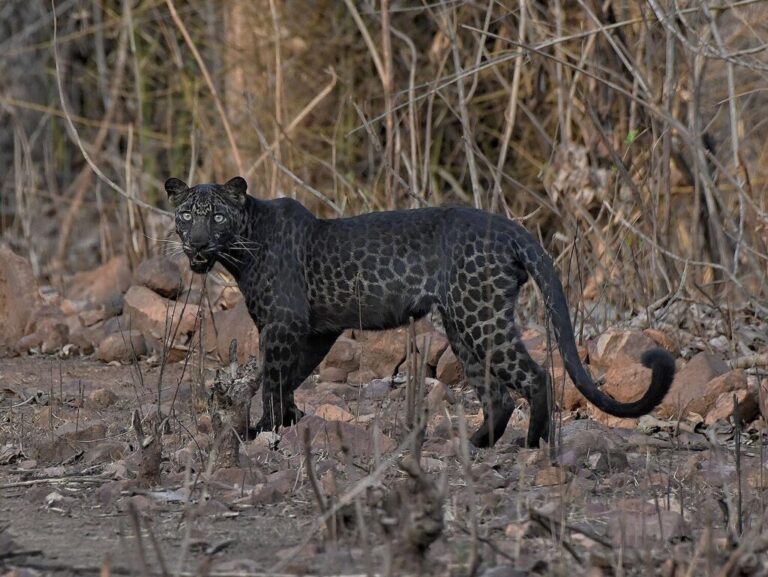
Why in the News?
The Odisha government has constituted a high-level committee to investigate allegations of forced and procedurally irregular relocation of villages from the Satkosia Tiger Reserve (STR).
Formed at the direction of the Odisha Human Rights Commission, the committee will examine all village relocations except Raiguda and submit its report within six weeks. It will verify beneficiary selection, compensation, livelihood rehabilitation and compliance with wildlife and forest rights laws.
| UPSC Relevance: GS-3 Environment: Protected Areas- Tiger Reserves Prelims: Satkosia Tiger Reserve, Tiger, Wildlife Conservation |
Legal Safeguards for Relocation:
Relocation from a tiger reserve cannot be treated as an ordinary eviction:
- Wildlife (Protection) Act, 1972: Section 38V permits relocation from critical tiger habitats only on mutually agreed terms. It requires informed consent of the Gram Sabha and affected persons, proof that coexistence is not reasonably possible, and completion of rehabilitation facilities.
- Forest Rights Act, 2006: Individual and community forest rights must first be recognised and settled. No forest dweller can be evicted until the recognition process is complete.
- National Tiger Conservation Authority (NTCA) guidelines: Relocation must be voluntary and provide affected families a choice between monetary compensation (currently ₹15 lakh per family) and State-assisted resettlement with land, housing and livelihood facilities.
The committee may recommend differential compensation, restoration of rights, livelihood assistance and departmental or criminal action against responsible officials.
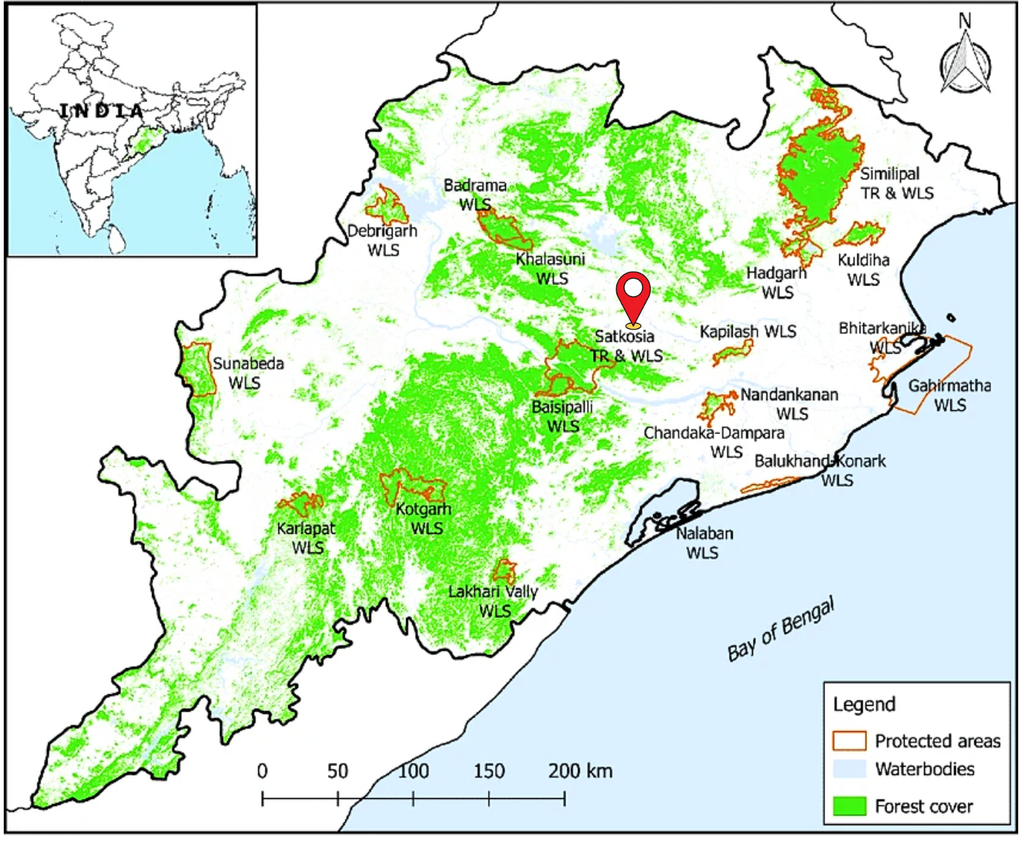
About Satkosia Tiger Reserve:
- Created in 2007 by combining the Satkosia Gorge and Baisipalli Wildlife Sanctuaries.
- Spread across Angul, Cuttack, Boudh and Nayagarh districts of Odisha. Covers 1,136.70 sq. km, including a core area of 523.61 sq. km.
- Located at the meeting point of the Deccan Peninsula and Eastern Ghats biogeographic regions.
- The Mahanadi forms the approximately 22-km-long Satkosia Gorge, which is also a Ramsar site.
- Fauna: It supports elephants, leopards, gharials, mugger crocodiles, wild dogs and diverse riverine biodiversity.
Despite recording 12 tigers in 2007, the reserve had no recorded tigers in the 2022 estimation. This demonstrates that village relocation alone cannot ensure conservation without adequate prey, habitat connectivity, protection and local community participation.
Key Facts about Tigers:
- The tiger is an apex predator, flagship and umbrella species. Protecting its large habitats helps conserve numerous associated species, forests, watersheds and carbon stocks.
- India contains the world’s largest wild tiger population: over 70% of the global population.
- The All India Tiger Estimation is conducted once every four years by the NTCA in collaboration with the Wildlife Institute of India and State Forest Departments.
- The latest completed estimation, AITE 2022, placed India’s tiger population at an average of 3,682. The corresponding 2018 estimate was 2,967.
- The State-wise leaders (AITE 2022) were:
- Madhya Pradesh: 785
- Karnataka: 563
- Uttarakhand: 560
- Maharashtra: 444
- Conservation status:
- IUCN Red List: Endangered
- Wildlife (Protection) Act, 1972: Schedule I
- CITES: Appendix I
Conservation must move beyond the “fortress conservation” model. Durable tiger recovery requires rights-based, scientifically justified and genuinely voluntary relocation, with forest communities treated as conservation partners rather than encroachers.
Tell Google you want more of this.
Add Anantam IAS as a preferred sourceOne tap, and this site shows up more often in your own Top Stories, AI Overviews and AI Mode. Remove it any time.