Why in News?
The QS World Future Skills Index, published by global higher-education analytics firm QS Quacquarelli Symonds, has put fresh focus on how prepared national economies and education systems are for an AI-driven, skills-led future. The index benchmarks more than 190 countries on the skills the labour market will demand next, rather than on past educational attainment alone.
For India, the findings are a double-edged signal. QS reported that India scored highly on labour-market demand for future skills yet lagged on the supply-side measures of skills fit and economic transformation. That gap is exactly the policy space that NEP 2020, Skill India and the FutureSkills ecosystem are meant to close, making the index a useful frame for the education, skilling and emerging-tech sections of the syllabus.
- QS Quacquarelli Symonds released the QS World Future Skills Index, a global benchmark of future-skills readiness built on job-posting, employer-survey and economic data.
- The index ranks countries on four equally weighted pillars — Skills Fit, Academic Readiness, Future of Work and Economic Transformation.
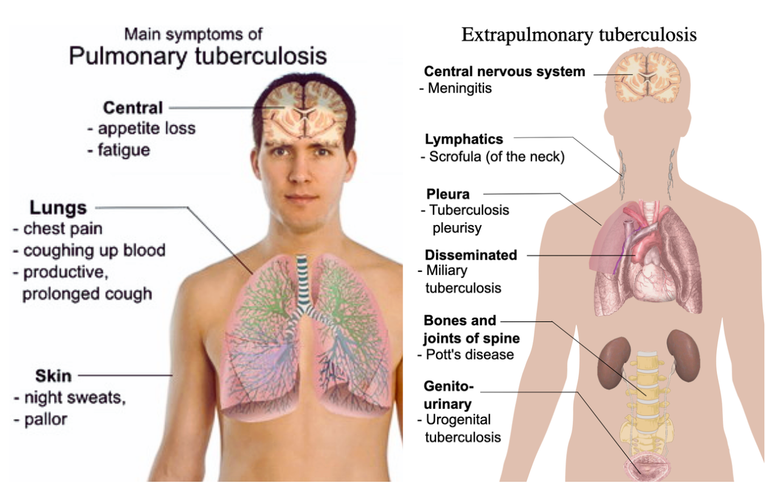
- QS reported India in the band of ‘future skills contenders’, ranking 25th overall with an aggregate score of 76.6.
- India’s standout result was on Future of Work, where QS placed it second globally behind the United States, reflecting strong employer demand for AI, digital and green skills.
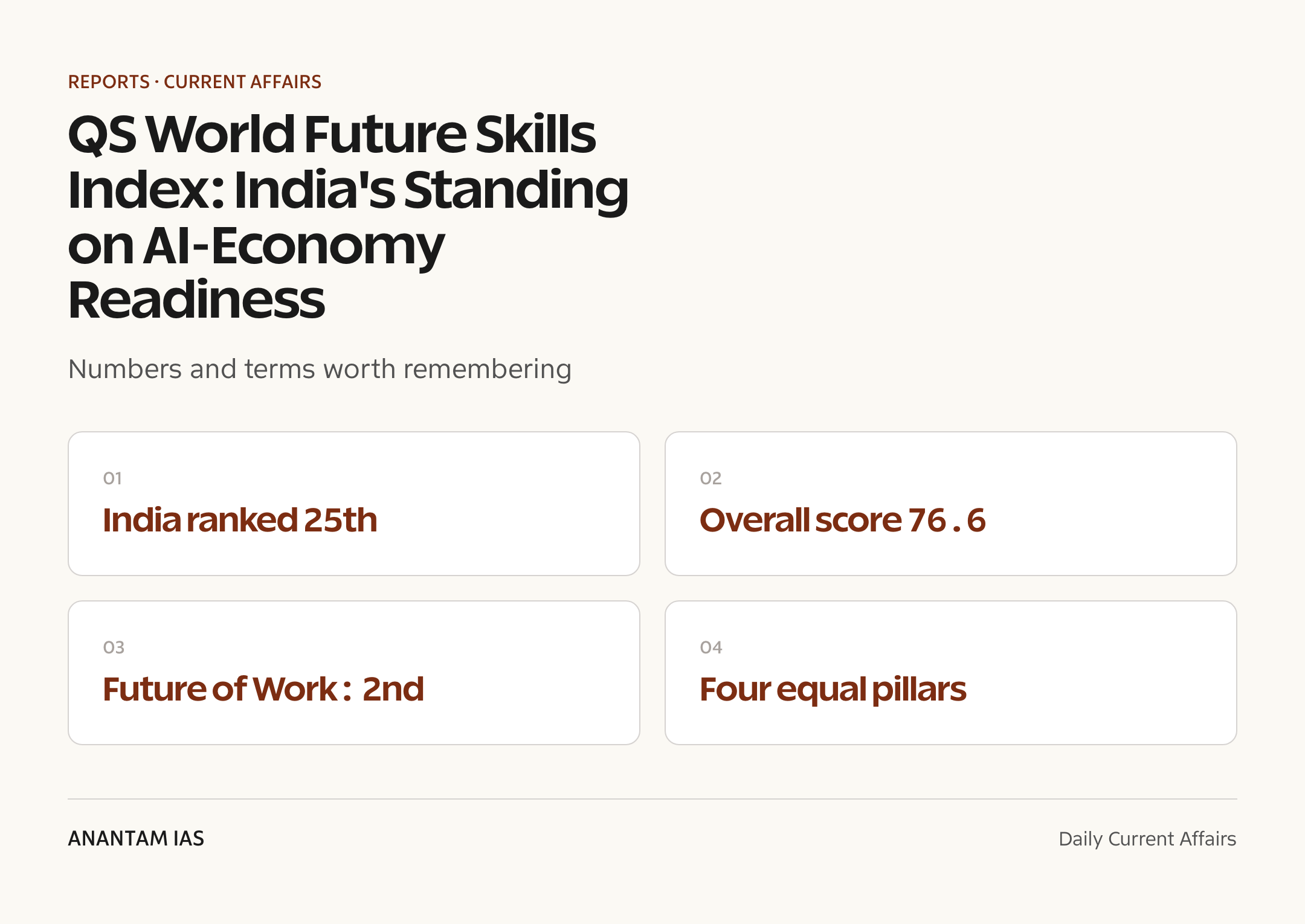
- India ranked lower on Skills Fit and Economic Transformation, pointing to a mismatch between labour-market demand and the skills graduates actually bring.
The development matters in the context of:
- The inaugural edition was led by the United States, followed by the United Kingdom, Germany, Australia and Canada among the top performers.
- QS analysed data spanning over 280 million job postings, around 5,000 universities and millions of employer skill requirements to build the rankings.
- The index reframes competitiveness around future readiness, not legacy reputation, which is why a young-workforce economy like India scores unevenly across the four pillars.
UPSC Relevance
Prelims Relevance
- Publisher: the index is produced by QS Quacquarelli Symonds, the British firm also known for the QS World University Rankings.
- Four pillars: Skills Fit, Academic Readiness, Future of Work and Economic Transformation, each weighted at 25%.
- Future of Work measures a job market’s readiness to recruit for AI, digital and green skills, drawn largely from live job-posting volumes.
- Skills Fit captures the gap between what employers value and how satisfied they are with graduate skills.
- Data engine: QS used job-posting analytics, the QS Global Employer Survey and World Bank economic and demographic statistics.
- India’s national skilling architecture includes Skill India Mission, the National Skill Development Corporation (NSDC) and the Pradhan Mantri Kaushal Vikas Yojana (PMKVY).
- NEP 2020 mandates vocational exposure from school and a credit-based Academic Bank of Credits to support flexible, multidisciplinary learning.
- The FutureSkills Prime programme, run with NASSCOM and MeitY, targets reskilling in emerging technologies such as AI, cloud and cybersecurity.
Mains Relevance
GS Paper 2
- Use the index to discuss education reform and the alignment of higher education with labour-market needs under NEP 2020.
- Frame the skills gap as a governance and human-development challenge — quality of schooling, teacher capacity and equitable access.
- Link to employability and social justice: weak Skills Fit hits first-generation learners and rural youth hardest.
GS Paper 3
- Connect future-skills readiness to economic growth, the demographic dividend and the risk of jobless growth.
- Examine AI, digital and green skills as drivers of the next industrial wave and India’s Economic Transformation score.
- Argue for industry-academia linkages, apprenticeships and reskilling to convert demand-side strength into supply-side capacity.
Essay
- Education and skilling themes: ‘Skills define a nation’s future more than degrees’ or the demographic dividend as opportunity versus liability.
Background and Context
The index and its methodology
The QS World Future Skills Index is built to answer one question — how ready is a country to supply and absorb the skills of the future.
- Published by QS Quacquarelli Symonds, the index benchmarks more than 190 countries on forward-looking skills demand.
- It rests on four equally weighted pillars: Skills Fit, Academic Readiness, Future of Work and Economic Transformation, powered by 13 sub-indicators.
- The evidence base is large and live — over 280 million job postings, the QS Global Employer Survey and World Bank economic data.
- By weighting live demand signals, the index rewards economies that are actively hiring for AI, digital and green roles, not just those with strong legacy universities.
India's standing on the index
India’s profile is sharply uneven, with a clear strength on demand and clear weakness on supply.
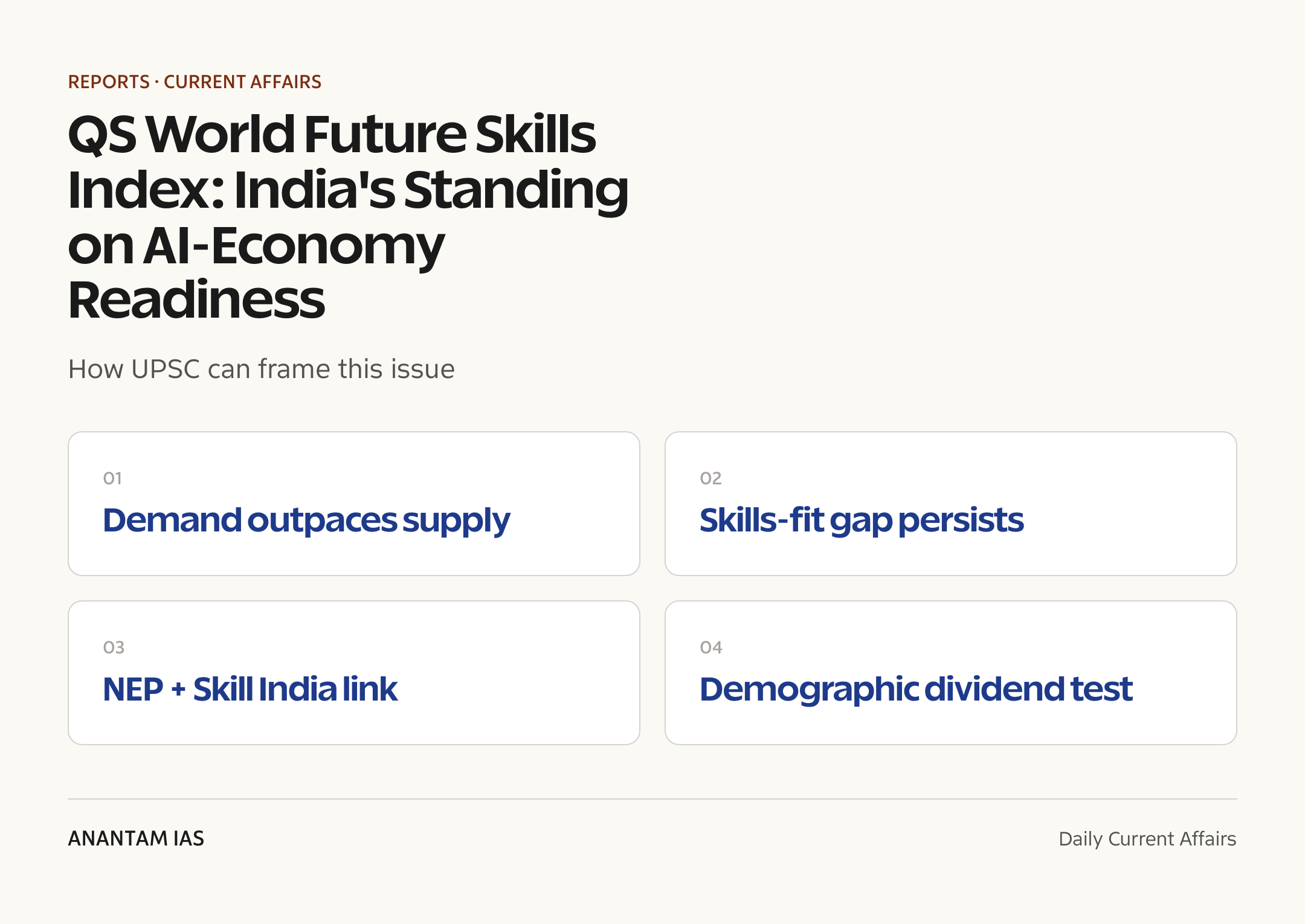
- QS reported India in the ‘future skills contenders’ tier, ranking 25th overall with a score around 76.6.
- Its strongest pillar was Future of Work, where it placed second globally behind the United States on a score close to 99.
- India ranked far lower on Skills Fit and Economic Transformation, signalling that supply of job-ready skills trails employer demand.
- The top of the table was led by the United States, the United Kingdom, Germany, Australia and Canada — mature, high-income skills economies.
The AI-economy and future-skills context
The index lands amid a structural shift in what work requires across the global economy.
- Demand is moving fast toward artificial intelligence, data, cloud and cybersecurity competencies across sectors.
- Green skills tied to the energy transition and sustainability are emerging as a parallel growth area.
- India’s large, young workforce gives it a strong demand-side signal — employers are actively posting for these roles.
- The challenge is converting that demand into a steady supply of trained, employable graduates and workers.
India's skilling ecosystem
A web of national programmes already targets the supply-side gap the index exposes.
- Skill India Mission, through NSDC and PMKVY, anchors short-term vocational training and certification.
- NEP 2020 embeds vocational exposure from school and pushes multidisciplinary, credit-based learning.
- FutureSkills Prime, run with NASSCOM and MeitY, focuses on reskilling in emerging technologies.
- Apprenticeship schemes and the Academic Bank of Credits aim to make learning modular and industry-linked. See the anantamias.com guide on National Education Policy 2020 (NEP).
The gaps that remain
Headline schemes have not yet closed the quality and alignment gap.
- Persistent skills mismatch means many graduates are not seen as job-ready by employers, despite high enrolment numbers.
- Uneven quality of training, weak certification credibility and thin industry linkages limit real-world outcomes.
- Regional and gender disparities in access to quality skilling deepen inequality of opportunity, especially for rural and first-generation learners.
- Slow economic transformation toward high-value, skills-led industries caps how much trained talent the domestic economy can absorb.
Why the index matters for India
Beyond a rank, the index offers a diagnostic frame for India’s growth strategy and its place in the global skills race.
- It reframes national competitiveness around future readiness rather than legacy university reputation, where India has long trailed.
- India’s demand-side strength shows global employers already see the country as a hub for AI, digital and green hiring.
- The supply-side weakness is a direct test of whether NEP 2020 and Skill India can deliver outcomes, not just enrolment.
- Compared with the top-ranked economies — the United States, the United Kingdom and Germany — India’s challenge is depth and quality of skilling at scale.
- For aspirants, the index ties together education policy, employment, the demographic dividend and emerging technology in a single, examinable theme.
Way Forward
Strengthen industry-academia linkages so curricula, apprenticeships and certifications track live employer demand rather than legacy syllabi.
Scale quality assurance in skilling — credible certification, trainer capacity and outcome tracking — to lift the Skills Fit pillar.
Prioritise AI, digital and green-skill pathways for first-generation learners, rural youth and women to make the demographic dividend inclusive.
Pair skilling with economic transformation — investment in high-value manufacturing and services so trained workers find domestic roles.
Conclusion
The QS World Future Skills Index captures India’s central skilling paradox: a labour market hungry for future skills sitting atop an education and training system that does not yet supply them at scale or quality. Its near-top finish on Future of Work is a genuine strength, but the lower Skills Fit and Economic Transformation scores are the warning lights.
For policymakers, the index is less a verdict than a map. Converting India’s demographic dividend into durable growth will depend on closing the supply-side gap — through quality skilling, tighter industry linkages and an economy that can absorb a future-ready workforce.
UPSC Practice Questions
Prelims MCQ 1
With reference to the QS World Future Skills Index, consider the following statements: 1. It is published by QS Quacquarelli Symonds. 2. It assesses countries on four equally weighted pillars including Future of Work and Skills Fit. 3. It ranks countries solely on the number of universities in the global top 500. Which of the statements given above are correct?
1 and 2 only 2 and 3 only 1 and 3 only 1, 2 and 3
Answer: 1 and 2 only
Explanation:
QS Quacquarelli Symonds publishes the index, which uses four equally weighted pillars — Skills Fit, Academic Readiness, Future of Work and Economic Transformation. It is built on job-posting, employer-survey and economic data, not on university counts alone, so statement 3 is incorrect.
Prelims MCQ 2
Consider the following programmes: 1. FutureSkills Prime 2. Pradhan Mantri Kaushal Vikas Yojana 3. Academic Bank of Credits Which of the above are associated with India’s skilling and education reform ecosystem?
1 and 2 only 2 and 3 only 1 and 3 only 1, 2 and 3
Answer: 1, 2 and 3
Explanation:
FutureSkills Prime (NASSCOM-MeitY reskilling), PMKVY (Skill India flagship training scheme) and the Academic Bank of Credits (introduced under NEP 2020) are all part of India’s skilling and education-reform architecture.
UPSC Mains Questions
- The QS World Future Skills Index shows India’s labour-market demand for future skills outpacing its supply. Examine the structural reasons for this gap and suggest measures to bridge it. (GS2, 250 words)
- “India’s demographic dividend will be realised only if skilling matches the demands of an AI-led economy.” Discuss in the light of recent global future-skills assessments. (GS3, 250 words)
- Evaluate the role of NEP 2020 and the Skill India Mission in improving the employability of Indian graduates. (GS2, 150 words)
Sources: QS Quacquarelli Symonds and The Pie News.
Frequently Asked Questions
What is the QS World Future Skills Index?
It is a global benchmark, published by QS Quacquarelli Symonds, that ranks countries on how ready they are for an AI-driven, skills-led economy. It assesses more than 190 countries using job-posting analytics, employer surveys and economic data.
What are the four pillars of the index?
The index rests on four equally weighted pillars — Skills Fit, Academic Readiness, Future of Work and Economic Transformation — each contributing 25% to a country’s overall score.
Where did India rank on the index?
QS reported India in the ‘future skills contenders’ tier, ranking 25th overall with an aggregate score of around 76.6. Its strongest pillar was Future of Work, where it placed second globally behind the United States.
Why did India score lower on some pillars?
India ranked lower on Skills Fit and Economic Transformation. This reflects a mismatch between strong employer demand for future skills and the supply of job-ready graduates, along with a slower shift toward high-value, skills-led industries.
Which country topped the index?
The United States led the inaugural edition, followed by the United Kingdom, Germany, Australia and Canada among the top performers — mature, high-income skills economies.
How does this connect to India’s skilling policy?
The supply-side gap the index exposes is the policy space targeted by NEP 2020, the Skill India Mission, PMKVY and FutureSkills Prime, all of which aim to make Indian learning more job-ready and industry-linked.
Tell Google you want more of this.
Add Anantam IAS as a preferred sourceOne tap, and this site shows up more often in your own Top Stories, AI Overviews and AI Mode. Remove it any time.