Why in News?
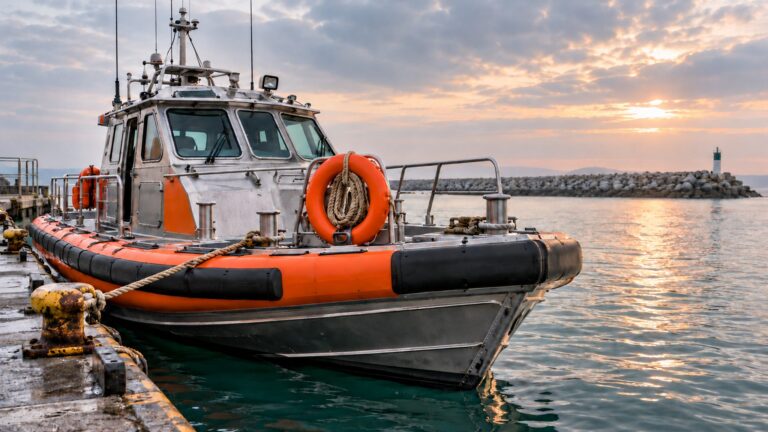
The Ministry of Defence announced on 13 October that the Indian Navy is scheduled to commission Samarthak, a multipurpose vessel, at Karwar on 16 October 2026.
- Larsen and Toubro built the vessel; the announcement describes maritime surveillance and patrol as its primary design roles.
- Announced additional roles include a target deployment and trials platform and an unmanned or autonomous system mothership.
- The release also lists humanitarian assistance and disaster relief and possible conversion to a limited hospital ship; it does not establish that such a conversion has occurred.
- The trials focus differs from fleet replenishment and shallow-water anti-submarine craft: supporting equipment evaluation is a distinct contribution to naval capability.
- The useful distinction is between an announced role, successful trials and a demonstrated operational capability; they are not interchangeable stages.
UPSC Relevance
Prelims Relevance
- Samarthak: multipurpose vessel built by Larsen and Toubro.
- Commissioning announced for 16 October 2026 at Naval Base, Karwar.
- Target deployment and trials platform: one of its stated roles.
- Unmanned does not necessarily mean autonomous.
- Hospital conversion is a stated possibility, not confirmed completed conversion.
Mains Relevance
GS Paper 3
- Role of support and trials infrastructure in indigenous defence technology.
- Human oversight, verification and operational limits of unmanned maritime systems.
Essay
- Technological self-reliance depends on testing capacity as well as manufacturing.
Background and Context
What Has Been Announced About Samarthak?
The announcement identifies a versatile naval vessel, but a list of intended roles is not evidence of every role being operationally demonstrated.
- The Ministry of Defence release describes surveillance and patrol as primary design purposes. These concern maintaining awareness and presence at sea, rather than proving that the ship possesses every specialised combat capability.
- The trials-platform role is particularly relevant to defence innovation. A vessel used for evaluating equipment provides a maritime setting for testing; the announcement alone does not disclose test protocols, results or acceptance standards.
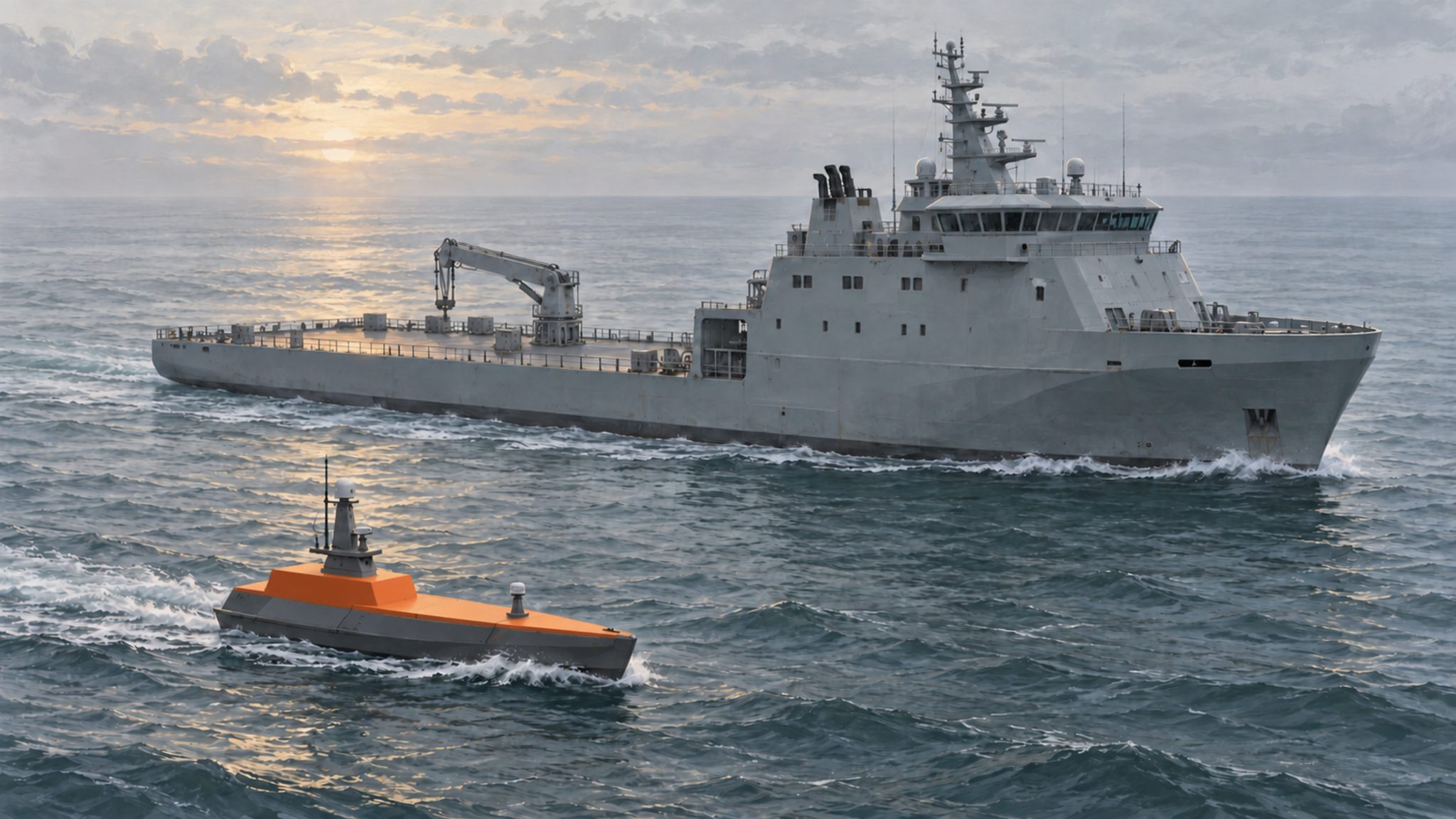
- The stated mothership role concerns supporting unmanned or autonomous systems. Read this as an assigned utility function, not confirmation of particular onboard vehicles, their operating range, endurance, payloads or an already deployed autonomous fleet.
- The release mentions an integrated combat suite combining indigenous sensors, weapons and electronic systems. It does not name those systems, so specific radar models, weapon types or performance figures cannot be inferred from this description.
- Commissioning is scheduled for 16 October at Karwar. The announcement sets out the intended induction and utility roles; it does not report completed commissioning or provide results from operational deployments.
How Does a Mothership Support Unmanned Systems?
Mothership, unmanned and autonomous describe different concepts: the supporting platform, the absence of onboard crew and the degree of independent operation.
- A mothership, in general maritime usage, supports smaller craft or systems away from shore. Possible support functions depend on its design; the label by itself does not verify which facilities Samarthak actually carries.
- An unmanned system operates without a person aboard the vehicle itself. Human operators may still direct it remotely, making the absence of onboard personnel different from the absence of human involvement in a mission.
- An autonomous system can perform specified functions with some independence from continuous commands. Autonomy is task-dependent; describing a platform this way does not establish independent decision-making across all navigation, sensing or other operational functions.
- A trials platform can help examine how equipment behaves in realistic maritime conditions. Conceptually, testing links a design claim to observations, enabling engineers to identify limitations before treating a prototype as dependable operational equipment.
- Target deployment and system testing are connected but distinct functions. Deploying a target creates a test condition; evaluating the resulting observations determines what was demonstrated, under which conditions, and what still requires further examination.
Why Utility Platforms Need Careful Capability Claims
A multipurpose vessel offers flexibility, but flexibility is not unlimited capability: each additional mission requires suitable equipment, personnel and validated procedures.
- Multipurpose describes the breadth of possible assignments. It should not be interpreted as the ability to perform every listed mission simultaneously, because equipment arrangements, trained personnel and operating conditions can constrain practical mission choices.
- The announcement lists humanitarian assistance and disaster relief among the vessel’s roles. That supports discussing utility beyond combat, but does not justify inventing relief cargo capacities, evacuation numbers or particular onboard medical facilities.
- Possible conversion to a limited hospital ship is conditional language. It signals an adaptation envisaged in the announcement, not evidence that hospital facilities have been installed, staffed, certified or used in an actual response.
- Manufacturing and verification address different questions. Domestic construction identifies where a platform is built; trials examine whether equipment performs as intended. Neither fact alone establishes complete technological independence or readiness for every assigned operational task.
- For unmanned maritime technology, human oversight remains an important analytical question. An assessment should ask who authorises tasks, monitors performance and intervenes during failure, rather than assuming “autonomous” means that responsibility disappears from naval operations.
Way Forward
Assess Roles Against Demonstrated Performance
- Publish appropriate non-sensitive trial outcomes so announced functions can be distinguished from tested and accepted capabilities.
- Evaluate mission-specific readiness, including trained crews and support arrangements, before treating a flexible platform as ready for every listed role.
- Build human oversight and failure procedures into evaluation of unmanned systems, alongside their technical performance.
Conclusion
- Samarthak’s significance lies in the announced combination of patrol, trials and unmanned-system support functions; the important current development is its planned commissioning, not proof that every listed role has already been demonstrated.
- Use the example to explain that defence self-reliance involves platforms for testing and supporting technology as well as building it, while keeping design intentions, verified performance and operational employment clearly separated.
UPSC Practice Questions
Prelims MCQ 1
With reference to Samarthak and unmanned maritime systems, consider the following statements:
- The Ministry of Defence lists a target deployment and trials platform among Samarthak’s roles.
- An unmanned vehicle must necessarily operate without any remote human control.
- As of 14 October 2026, Samarthak’s commissioning was scheduled for 16 October.
How many of the above statements are correct?
(a) Only one (b) Only two (c) All three (d) None
Answer: (b) Only two
Explanation:
Statements 1 and 3 match the announcement. Unmanned means no person aboard the vehicle; it does not exclude remote human control.
Prelims MCQ 2
Which interpretation of an announced multipurpose naval vessel is most accurate?
(a) Every listed role has already been demonstrated in operations. (b) The vessel can necessarily perform every role simultaneously. (c) Each listed role requires assessment of suitable equipment, personnel and procedures. (d) A mothership is necessarily itself an unmanned vessel.
Answer: (c) Each listed role requires assessment of suitable equipment, personnel and procedures.
Explanation:
A broad list of roles describes utility; it does not demonstrate simultaneous readiness or remove mission-specific requirements.
UPSC Mains Questions
- Explain how naval trials and support platforms contribute to indigenous defence technology development. Distinguish manufacturing capability from demonstrated operational performance.
- Differentiate unmanned and autonomous maritime systems. Discuss why human oversight and mission-specific evaluation matter in their naval use.
Source: PIB, Ministry of Defence.
Frequently Asked Questions
Has Samarthak already been commissioned?
As of 14 October 2026, no completed commissioning is established by the cited announcement. The Ministry of Defence said on 13 October that commissioning was scheduled at Karwar for 16 October.
What are Samarthak’s announced roles?
The release identifies surveillance and patrol as primary design roles, alongside functions including target deployment, trials, unmanned-system support and disaster relief. These statements should be distinguished from verified operational results.
Is an unmanned system always autonomous?
No. Unmanned means there is no person aboard the vehicle itself. It may still be remotely controlled. Autonomy concerns the degree to which specified functions can proceed without continuous commands.
Does the announcement confirm an operational hospital ship?
No. The release lists conversion to a limited hospital ship as a possibility. It does not establish that medical facilities have been installed or that a hospital conversion has already occurred.
Tell Google you want more of this.
Add Anantam IAS as a preferred sourceOne tap, and this site shows up more often in your own Top Stories, AI Overviews and AI Mode. Remove it any time.